
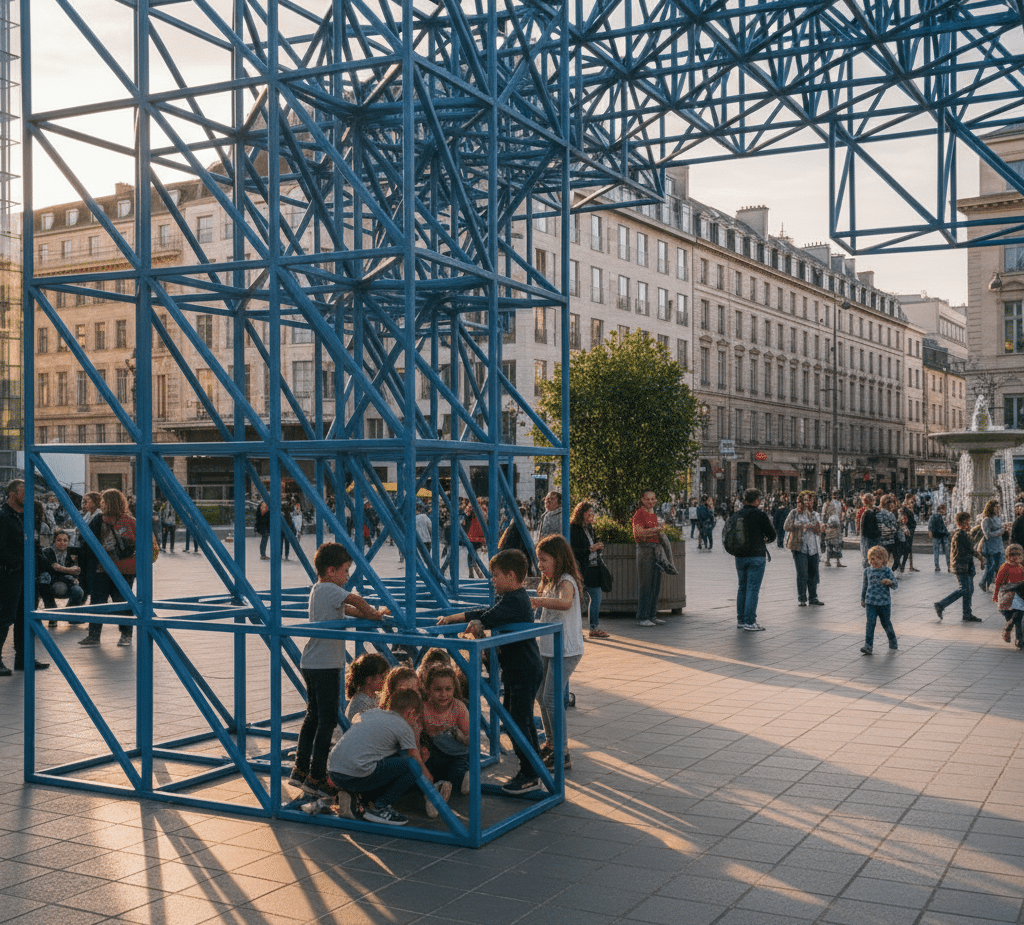
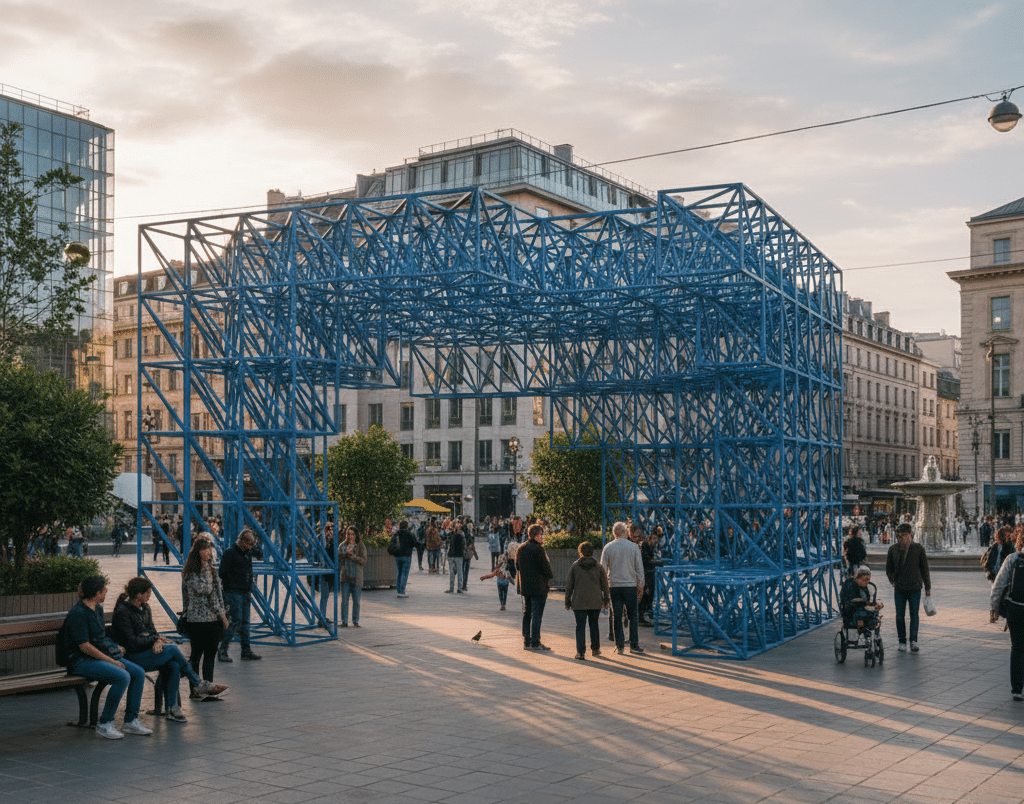
Enscape/Nano Banana AI Generated
INTRODUCTION: LATTICE STRUCTURE
Lattice structure is a highly ordered, repeating arrangement composed of one or more fundamental unit cells in two or three dimensions. The unit cell represents the smallest group of particles that defines the repeating pattern of the material. It fully embodies the symmetry and structural logic of the entire crystal, which is formed through the repetitive translation of the unit cell along its principal axes.
These structures are characterized by their open porosity and are intentionally engineered to achieve an exceptional combination of properties, most notably a high strength-to-weight ratio and enhanced energy absorption capacity.
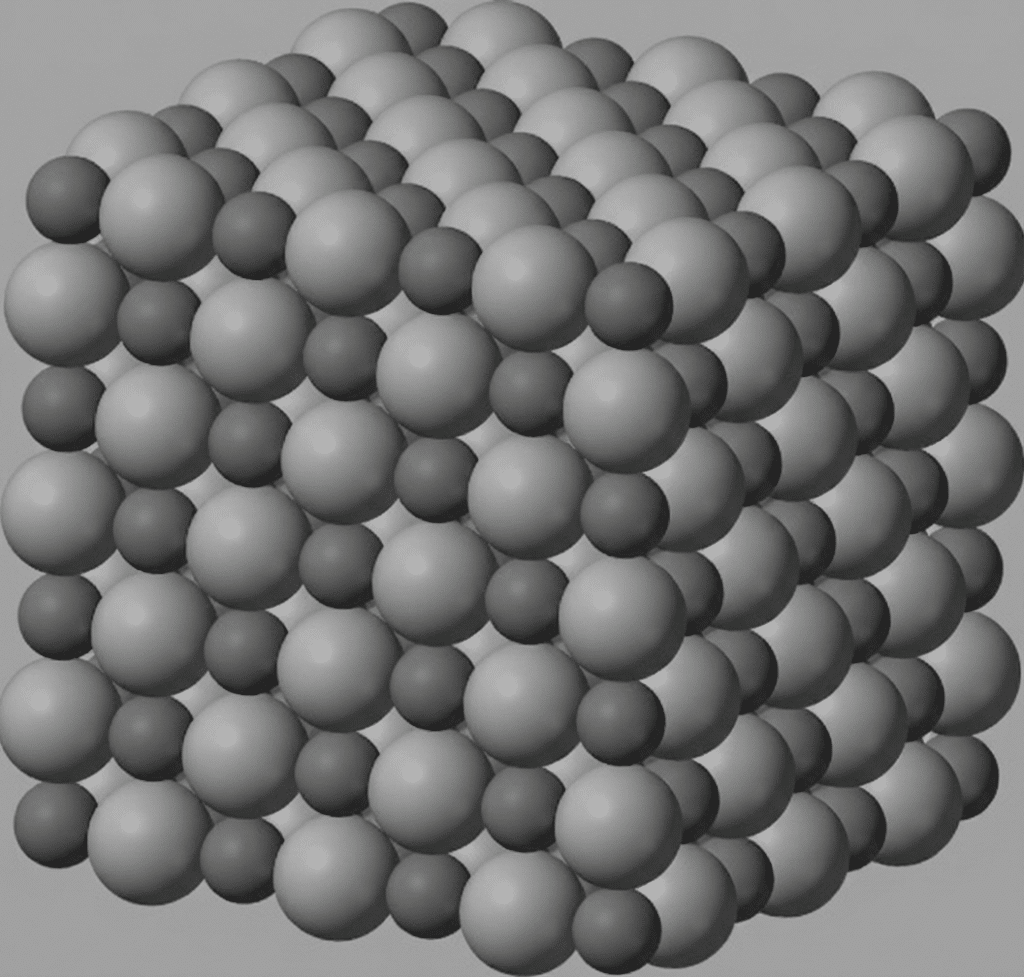
Crystal structure of table salt
PAVILION DESIGN
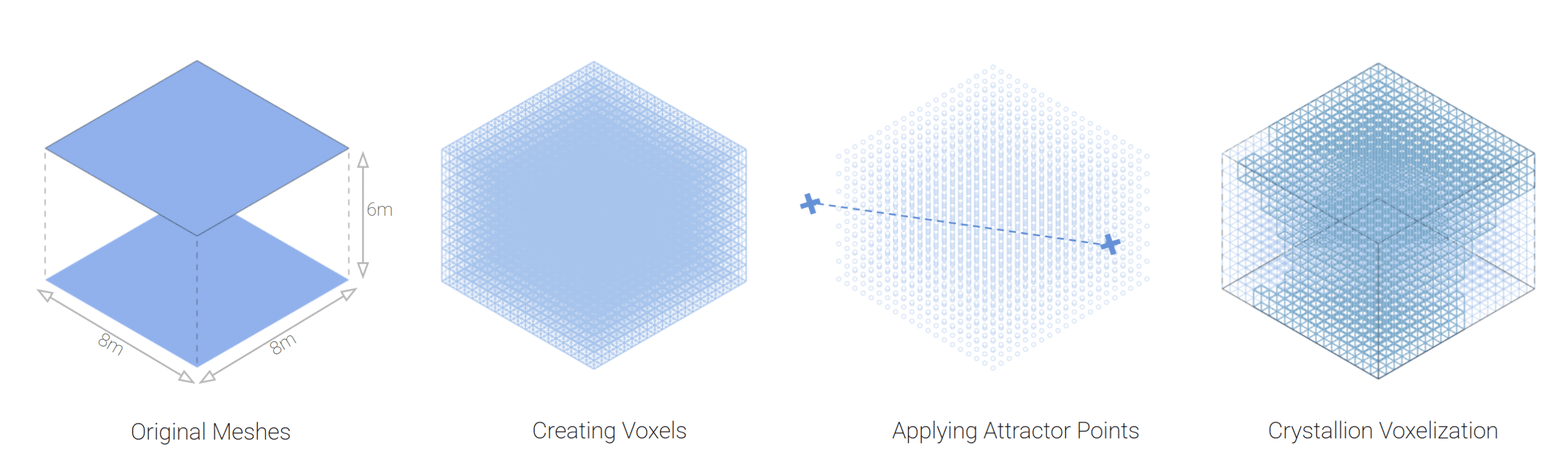
The concept explored the lattice structure itself and its expression as a pavilion. We voxelized the entire volume within the maximum allowable dimensions. Then we introduced two control points. These points generated a curve that guided the selective culling of voxels within a defined radius.
This approach allowed for multiple design iterations. We adjusted grid resolution, point positions, and culling radius. These parameters enabled systematic exploration within the defined spatial constraints.
ALGORITHMIC WORKFLOW
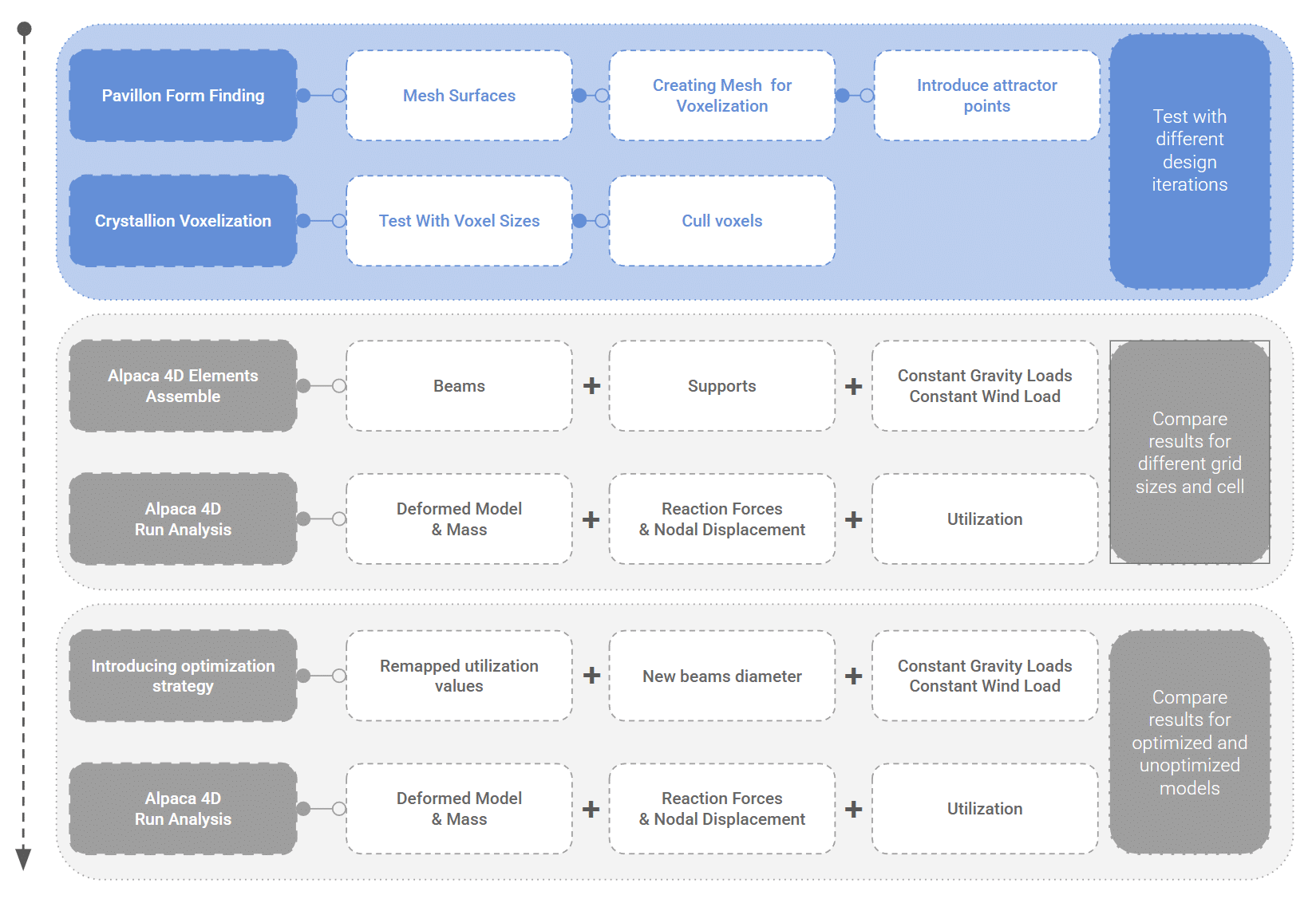
The design process began with mesh inputs that defined the maximum allowable dimensions, and this mesh established the bounding volume, which we then fully voxelized. We introduced attractor points directly in Rhino, and these points defined a guiding curve that drove the selective culling of voxels within a specified radius.
Next, we embedded a cellular structure within each remaining voxel, and this step transformed the abstract volume into a coherent lattice system. This workflow enabled extensive design iteration, as we varied grid resolution, cell typologies, attractor point locations, and culling radius. After completing the initial setup, we assembled an Alpaca model to further develop and evaluate the system. The results of the first run of analysis were used to guide the beam diameter optimization. The utilization factors for each beam were remapped into new diameters for the secund alpaca model. With this step the lattice structure adopted bigger diameters where the utilization was higher providing additional step that optimized the structural logic and allowed us better performing structure
RESULTS COMPARAISON
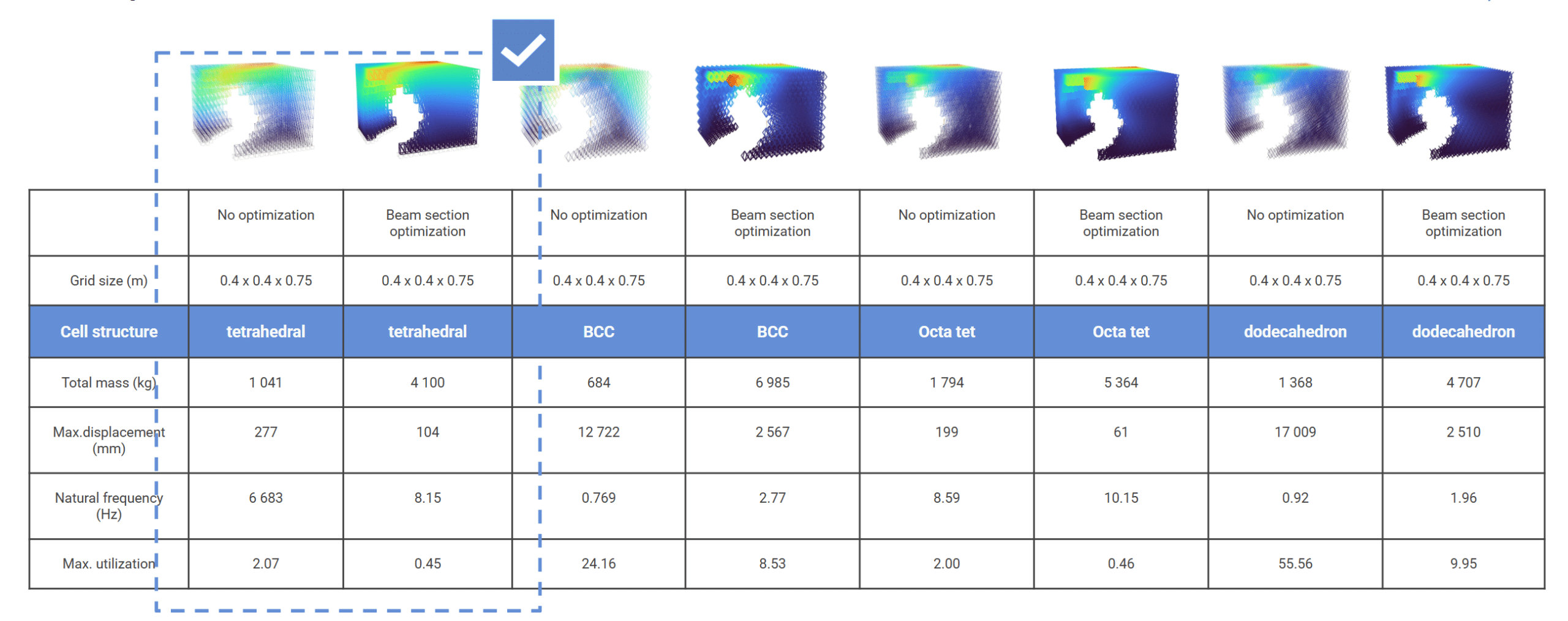
To better understand our pavilion we run different set of analysis with and without the beam section optimization. We tested how different cell structures and different grid sizes bring different results. The first set of analysis focused on the 0.4 x0.4 x 0.75 grid size. Only two of the 4 tested cell structures performed withing the acceptable results however both of them achieved those results after the beam section optimization strip was applied.
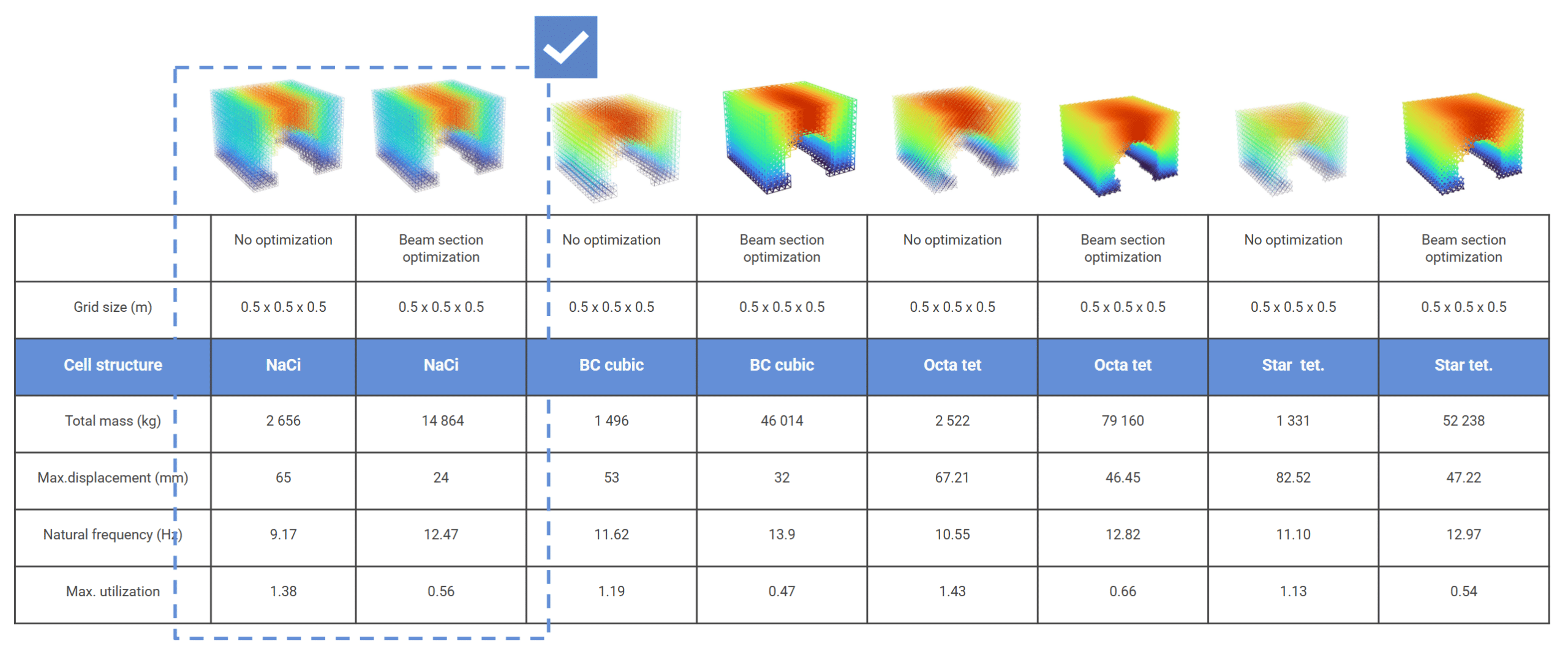
In the secund set of analysis the focus was on different design iteration, with different location of the attractor points. The analysis were run for a grid size of 0.5 x 0.5 x 0.5. All of the cell structures performed within the acceptable results for the beam section optimization archiving utilization factors bellow 1. However the best performing cell structure was NaCi which got the least displacement in relation to having the lightest total mass.
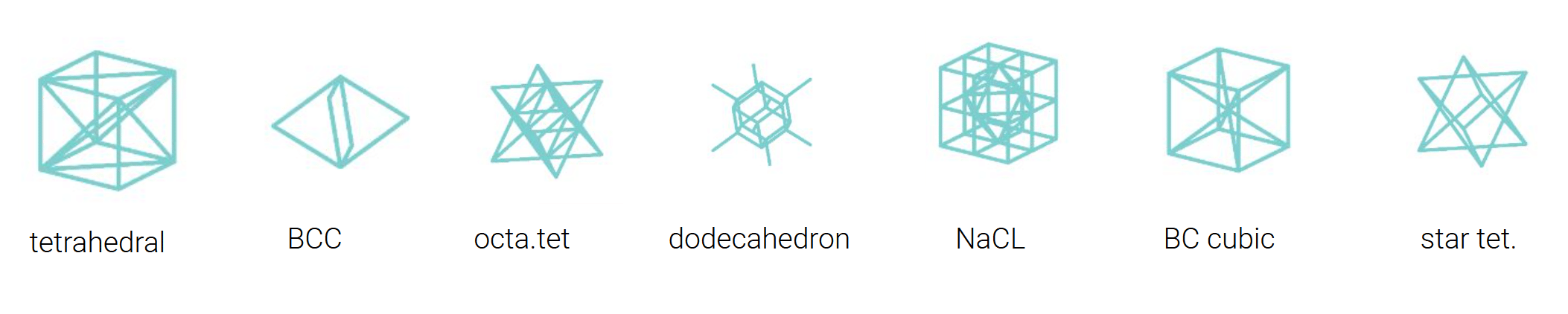
The following cell structures were taken into considerations:
DESIGN ITERATIONS
After conducting a Structural Analysis to understand how different geometric configurations would perform, we explored several Design Iterations: Our core concept involved using an Attractor Point to organically shape the cubic grid, resulting in the distinctive forms. Crucially, throughout these iterations, we maintained 1x1x1 Tetrahedral Cell type. We chose this cell geometry specifically because it allows for more interesting interaction.
In parallel, we also experimented with applying Galapagos to the positioning of the points, aiming to minimize displacement. This allowed us to explore how optimization-driven approaches could inform the design process, helping achieve more efficient and controlled geometric outcomes while still maintaining design intent.
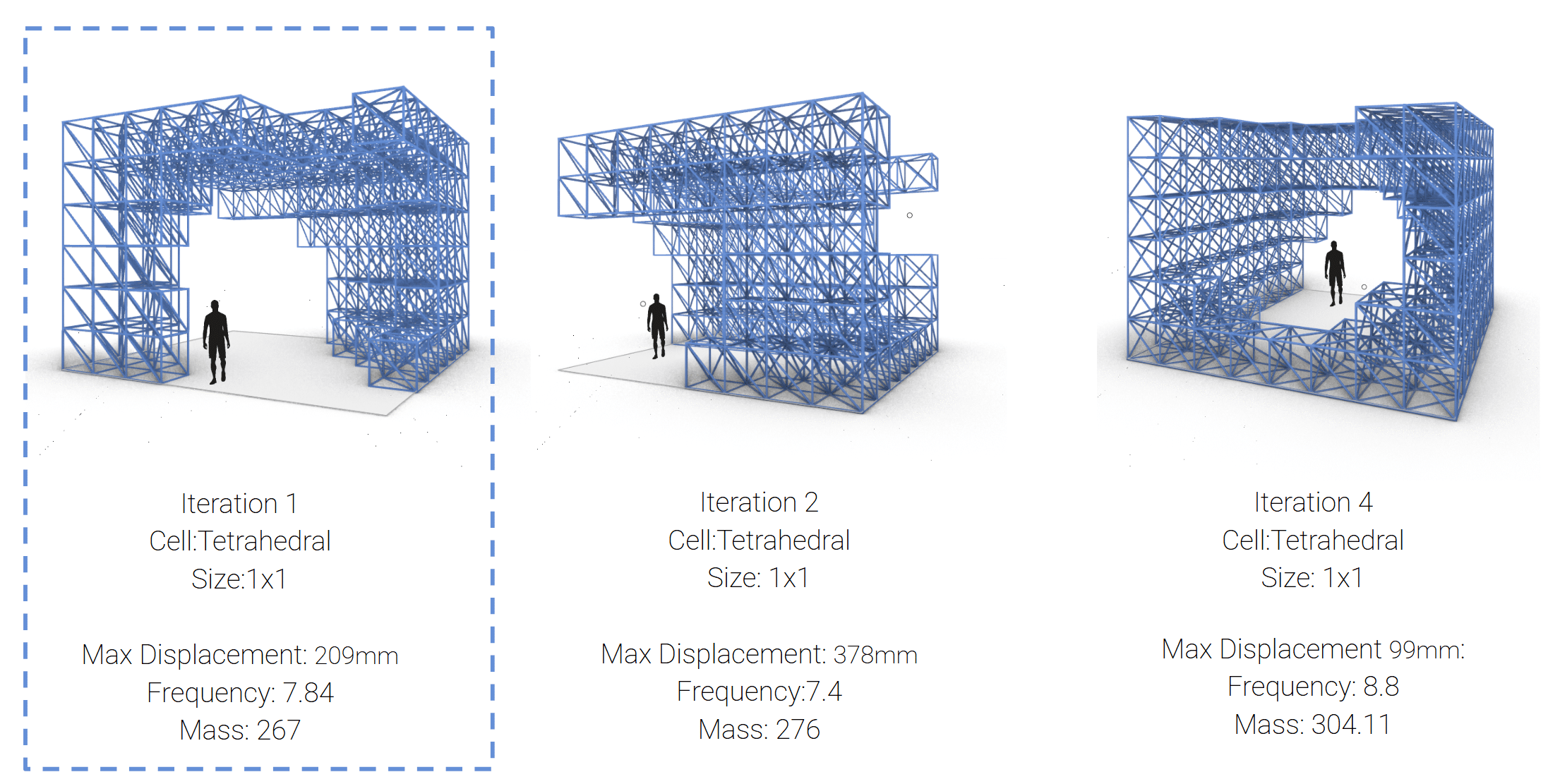
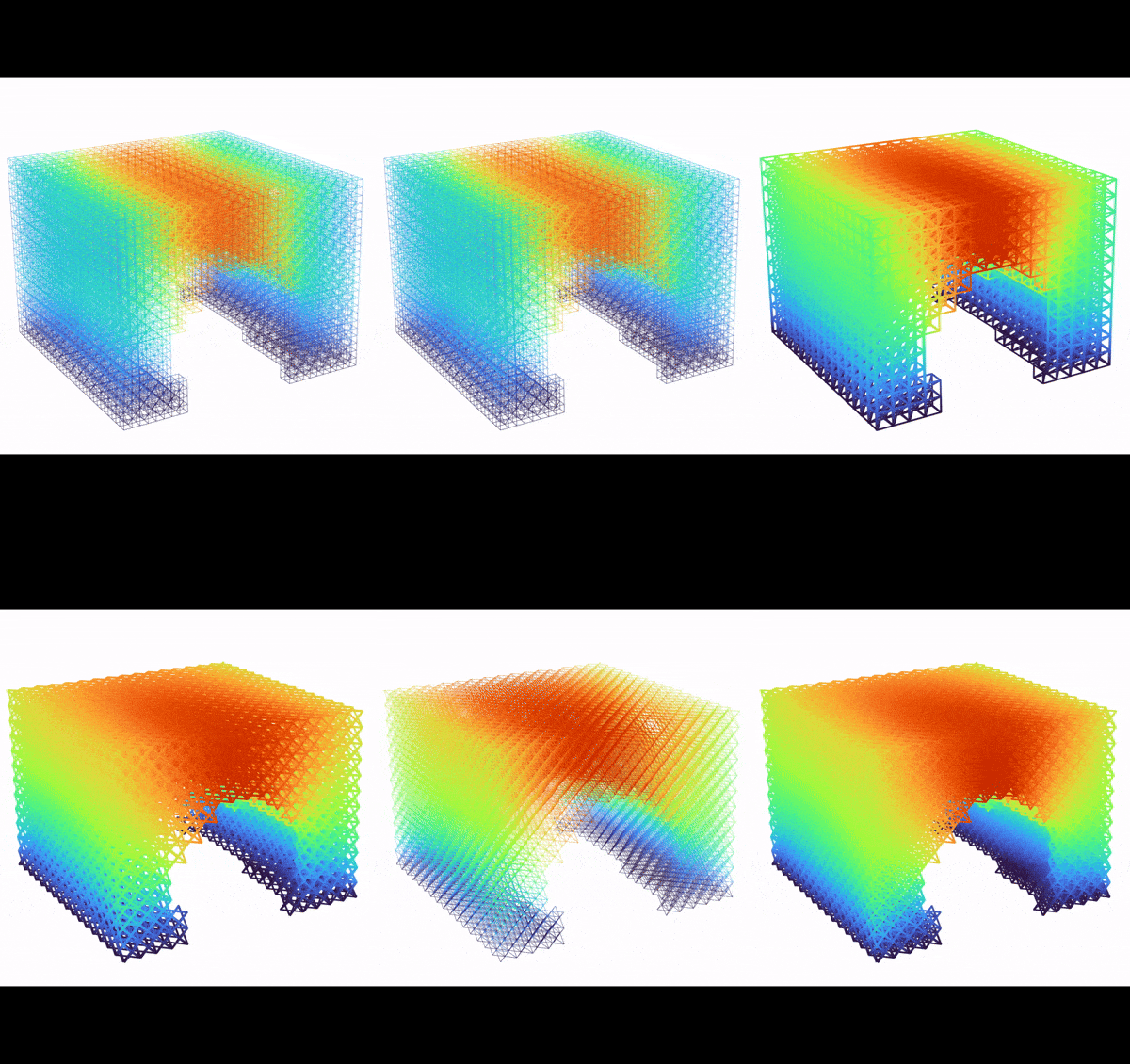
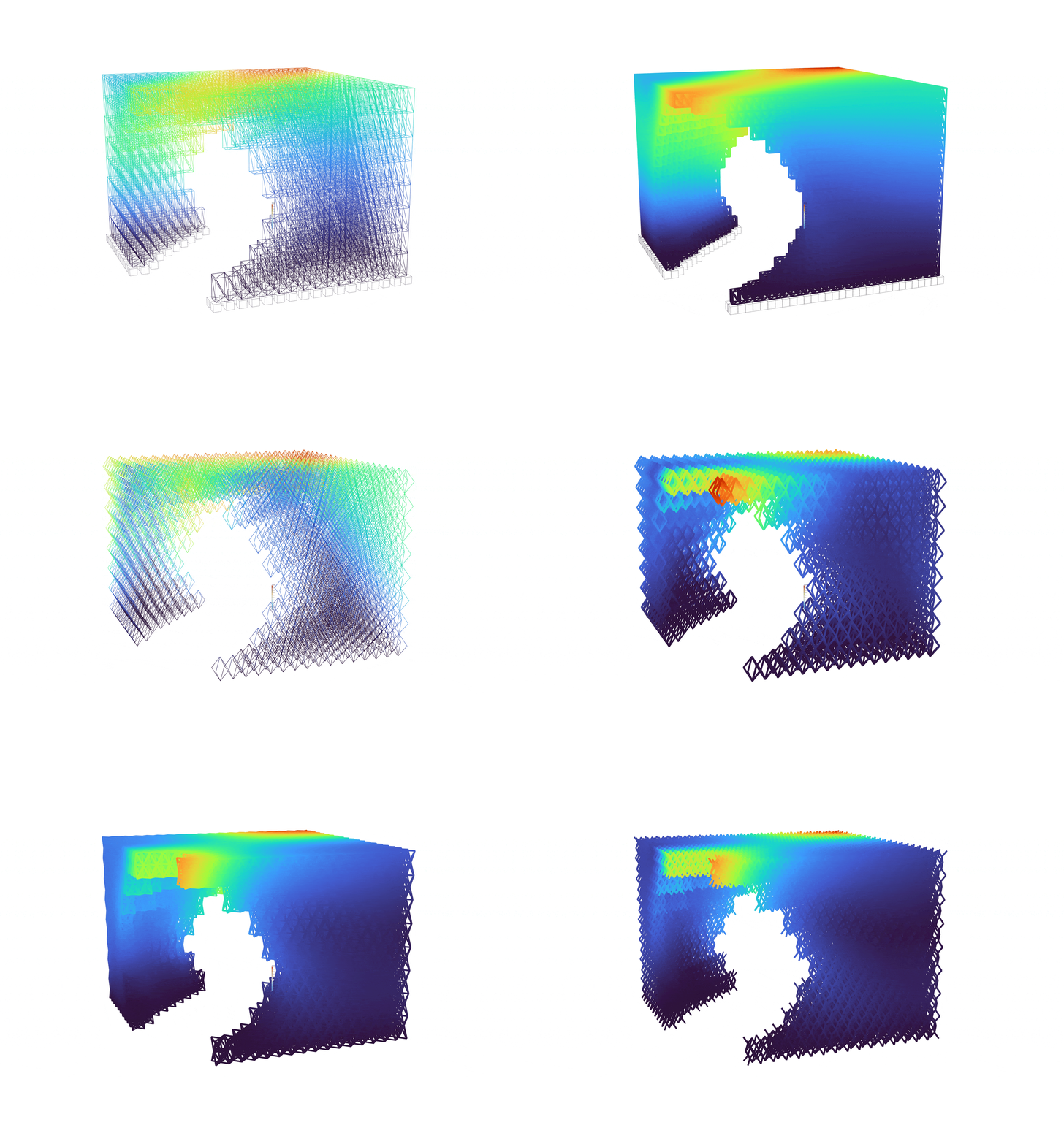
The gifs show the comparison between different design iterations and cell shapes. The heatmaps visualize stress and displacement across the structure when using different constant grid sizes and cell types.
STRUCTURAL ANALYSIS
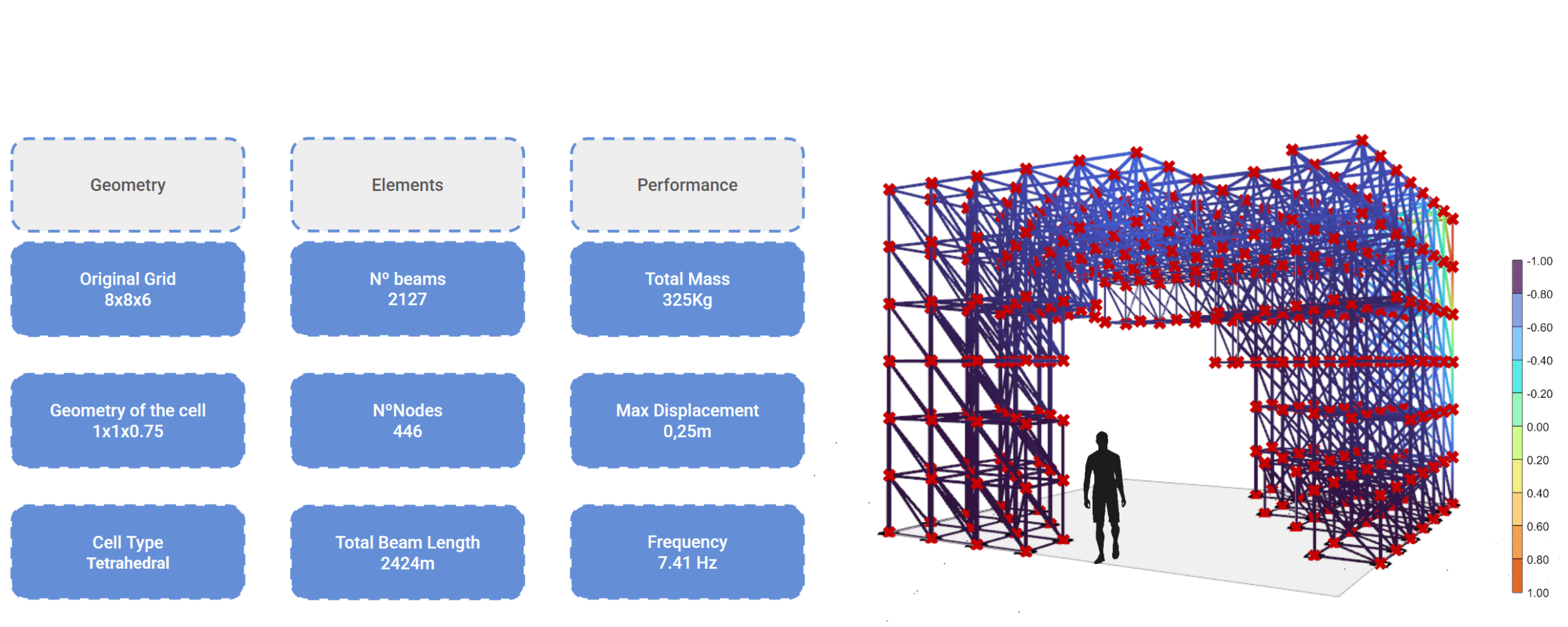
Our final design, built from an Original Grid 8x8x6 and the selected Tetrahedral Cell, performed accordingly. While our earlier structural analysis comparisons might have pointed to a slightly more optimum cell structure in terms of purely technical metrics, we deliberately chose the 1x1x1 tetrahedral cell type. It was the one we chose for design and use wise.
CONCLUSION
The structure is intentionally configured as a “Spiky Cube”. the name of our project. That name captures the essence of the design, it’s not a passive object, but a dynamic, inviting form that allows people to play around it, especially children.
Although the we ended up using not the most optimum cell for mere structural metrics, it was the one we chose for design and use wise because it perfectly delivers on our goal: a highly interactive piece of public art.
Enscape/Nano Banana AI Generated
