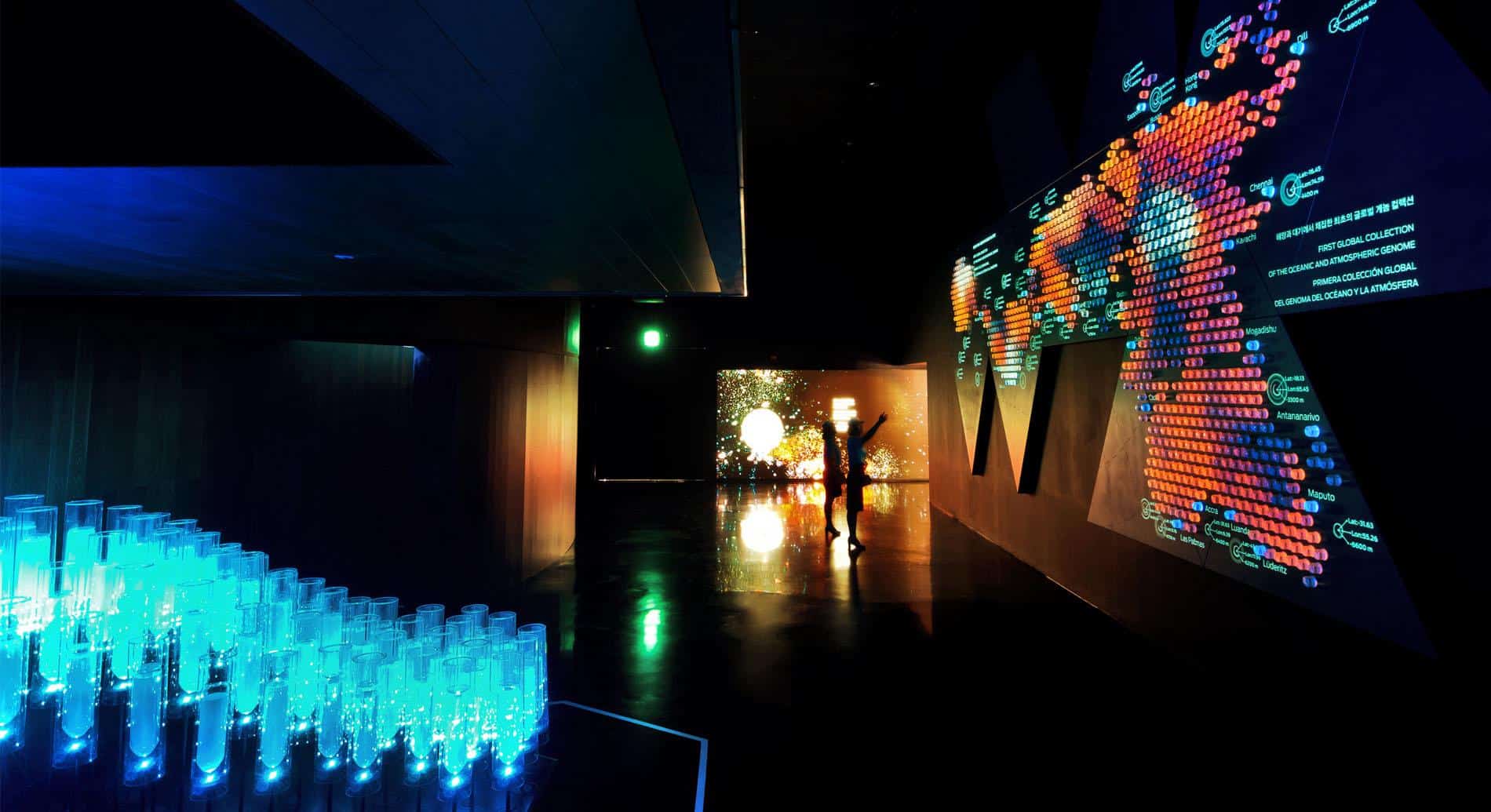
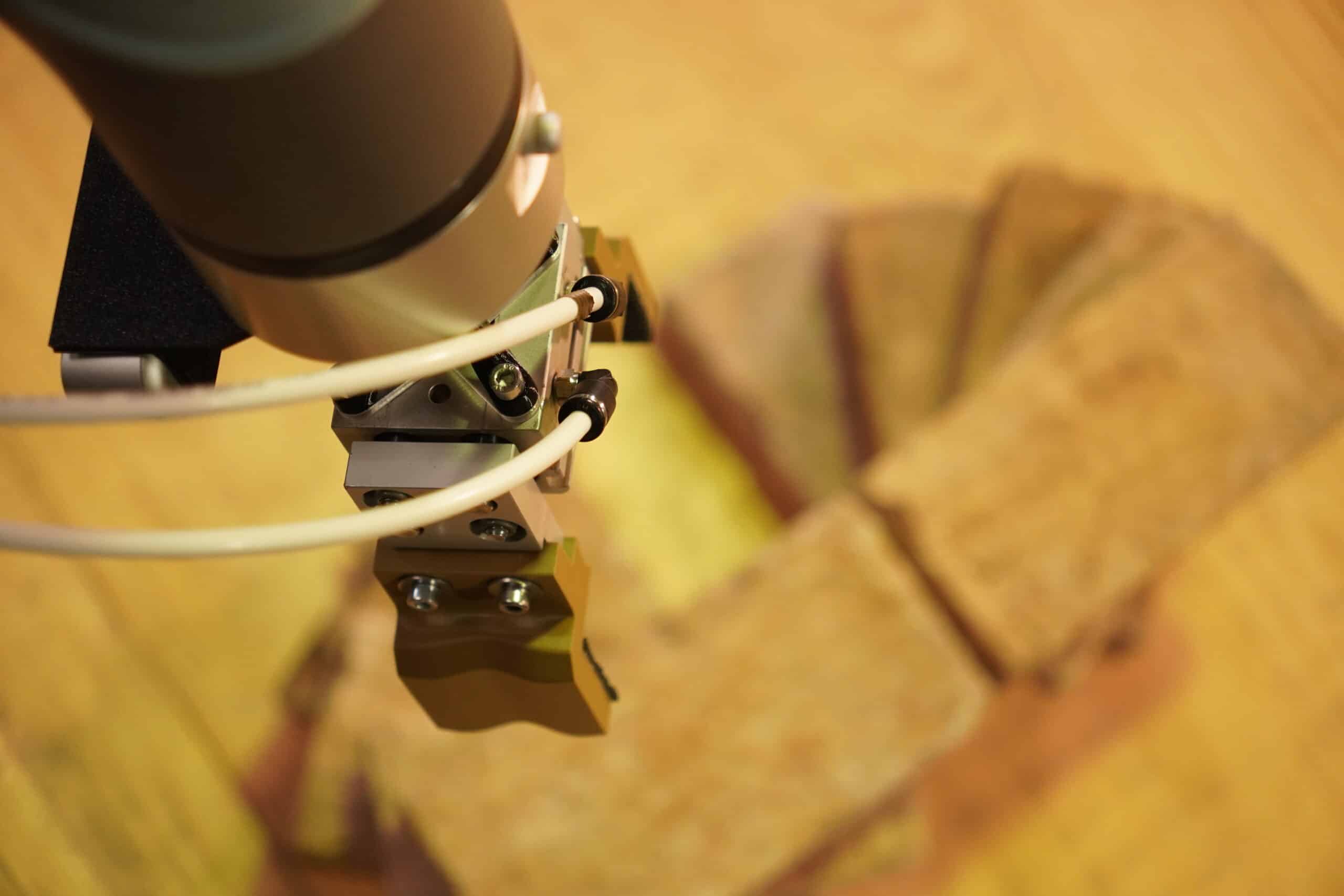
The Master Programme in Robotics and Advanced Construction is an innovative educational format that offers interdisciplinary skills and understanding through a series of class seminars that are put into practice through hands-on workshops. IAAC gives students the opportunity to create individual studio agendas and develop Pilot Thesis Projects based on the knowledge acquired during the seminars and workshops split into 3 Modules. In this way, IAAC puts together an experimental learning environment for the training of professionals with both theoretical and practical responses to the increasing complexity of the construction sector.

Filters
Course

Workshop 3.1 – Robot – Human Collaboration in Metal Fabrication

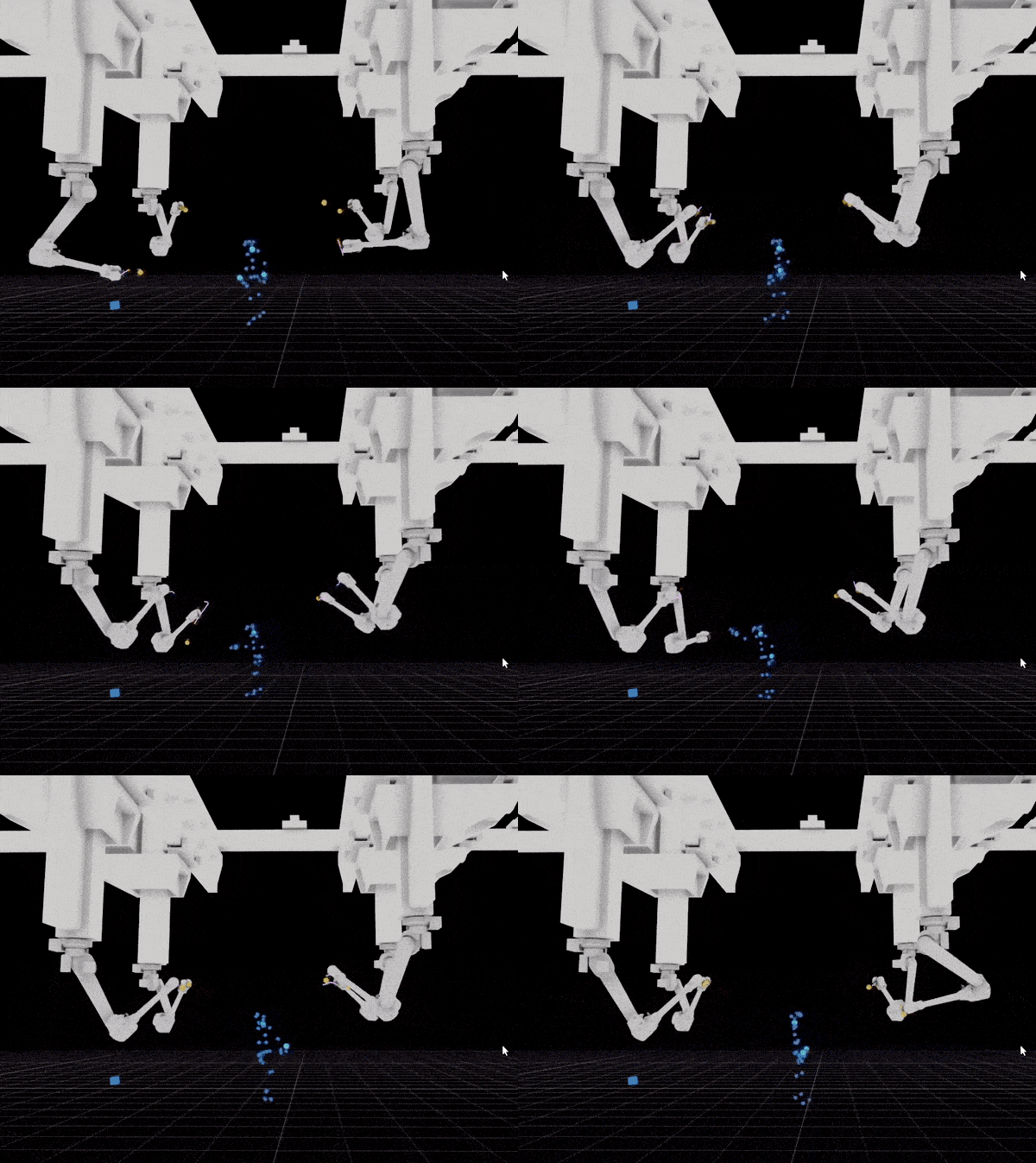
Faculty: Nacho Monereo & Prottay Roy ChowdhuryGuest Artist: Maria Mallo The project focused on creating a dynamic feedback loop between digital design, robotic positioning, and human craftsmanship. Instead of treating the robot as a fully autonomous machine, the workflow emphasized continuous interaction and mutual dependency between human and machine during fabrication. The installation was fabricated … Read more

Workshop 3.1_Human-Robot Collaboration (HRC) in metal fabrication

Introduction This workshop explores new modes of architectural production through active collaboration between humans and robots, shifting away from traditional models of automation toward hybrid systems of shared decision-making. Rather than understanding the robot as a fully autonomous tool, it is framed as an agent that cooperates with the human in real time, creating a … Read more

NEURON – Workshop 3.1

HRC

Neuron is a project developed during the IAAC MRAC 3.1 Welding Workshop that explores human–robot collaboration in the assembly of space-frame structures. The project focuses on the interaction between a Universal Robots UR10e robotic arm and a human welder, working together to assemble pre-cut steel bars through a continuous exchange between robotic precision and human … Read more

Robotics for Ecological Buildings : WOOD

Catalonia is 50.6% forest. Within that territory, Aleppo Pine and Common Beech offer two contrasting structural profiles that can be processed with minimal industrial transformation — provided the right techniques are recovered and updated. This mid-term review documents the first half of our Studio II research into robotic steam-bending: a workflow that pairs a vernacular … Read more

Enterprise Architecture: A conversation with Col Ashwin

Col Ashwin – SITA (left) and Taisuke Minagawa (right) Col Ashwin – SITA Col Ashwin is a Senior Lead Enterprise Architect for the Barcelona SITA office and is originally from Kernow (Cornwall, UK). He has worked across the industry as an expert in Robotics, Open Source development, ROS development, Cybersecurity, Systems Engineering, and company compliance. … Read more
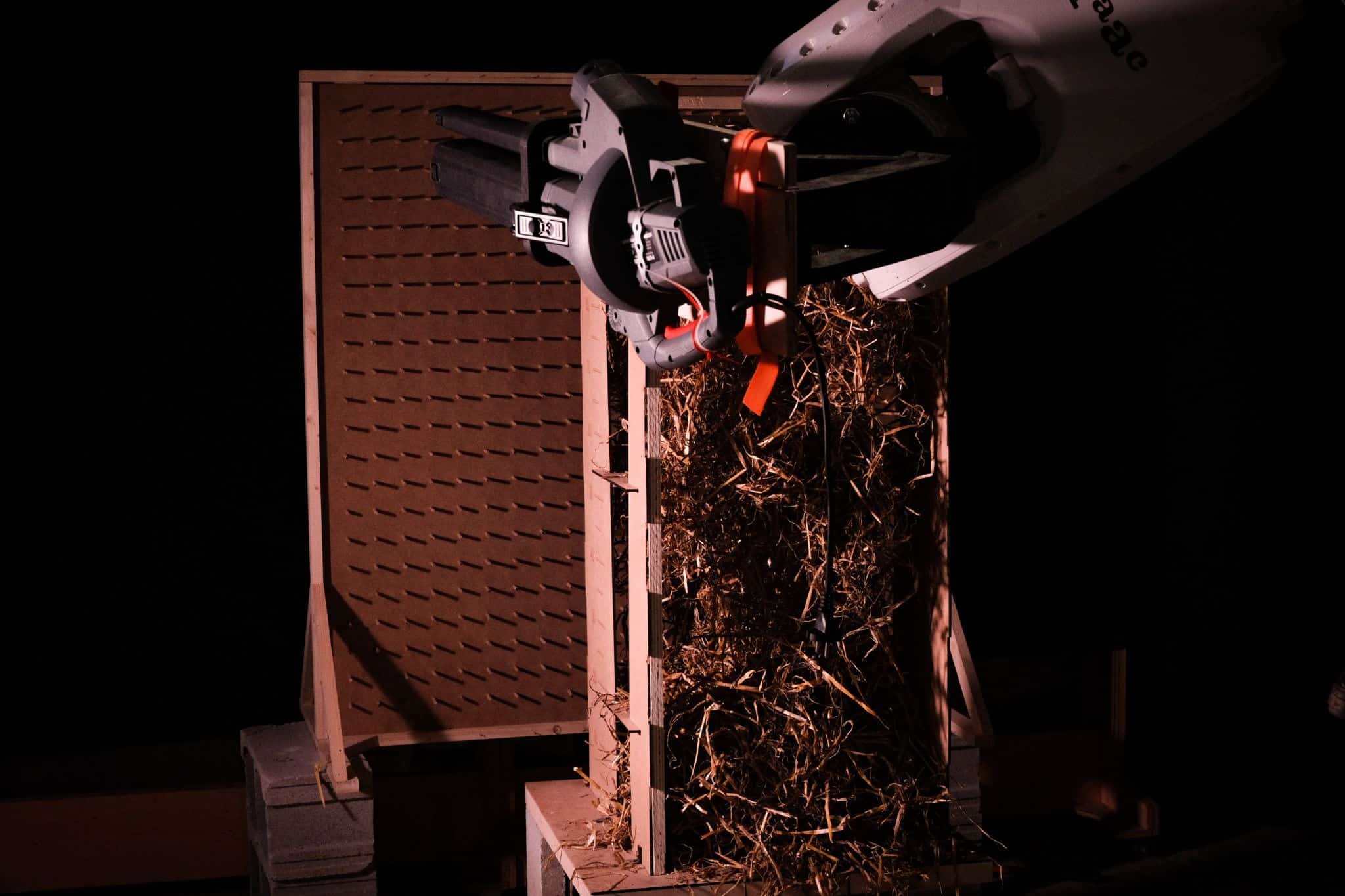
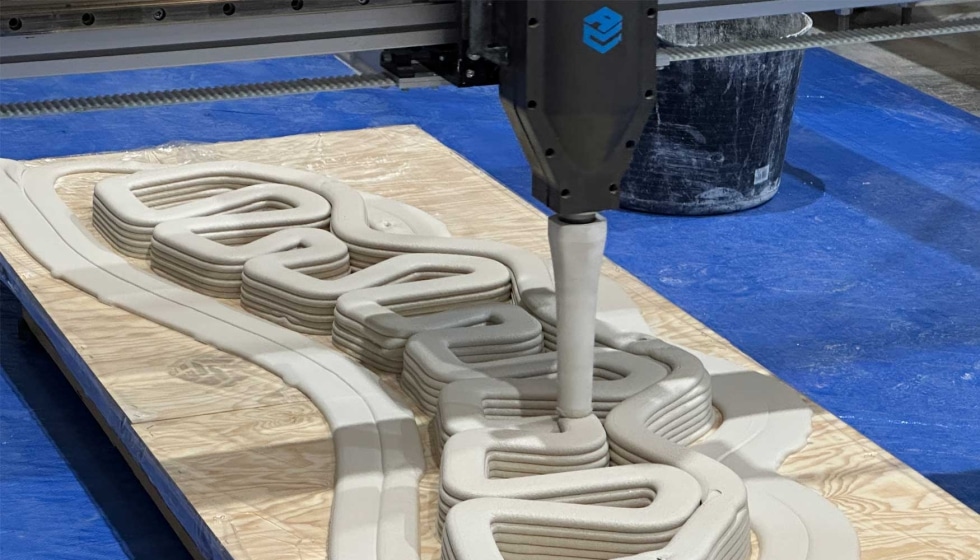
Robotics for Ecological Buildings: STRAW

This work investigates the structural potential of straw in its raw, unprocessed state — exploiting its natural wilderness and fibrous friction to build systems from its inherent properties. By coupling these material behaviors with robotic fabrication, the process becomes parameterized, enabling a vernacular material to be deployed within a precise and predictable architectural system. Introduction … Read more

Manufacturing as a Service – A Conversation with Valentino Tagliaboschi

The lecture was conducted by Valentino Tagliaboschi, architect and building engineer whose career is situated at the intersection of computational design, digital fabrication, and robotics applied to architecture. Trained at the University of Pisa, his approach to the field is characterized by a methodology based on constant experimentation, iterative prototyping, and the intensive use of … Read more

The Illusion of Life: A conversation with Madeline Gannon

Rethinking Robotics Through Experience Reflections on a lecture by Madeline Gannon Introduction “Somehow, someway, I have built a career out of misusing technology.” Madeline Gannon has spent over a decade working at the intersection of industrial robotics, art, and human interaction. This text presents a thematic synthesis of her lecture for the MRAC, followed by … Read more

Robotics for Ecological Buildings : CLAY

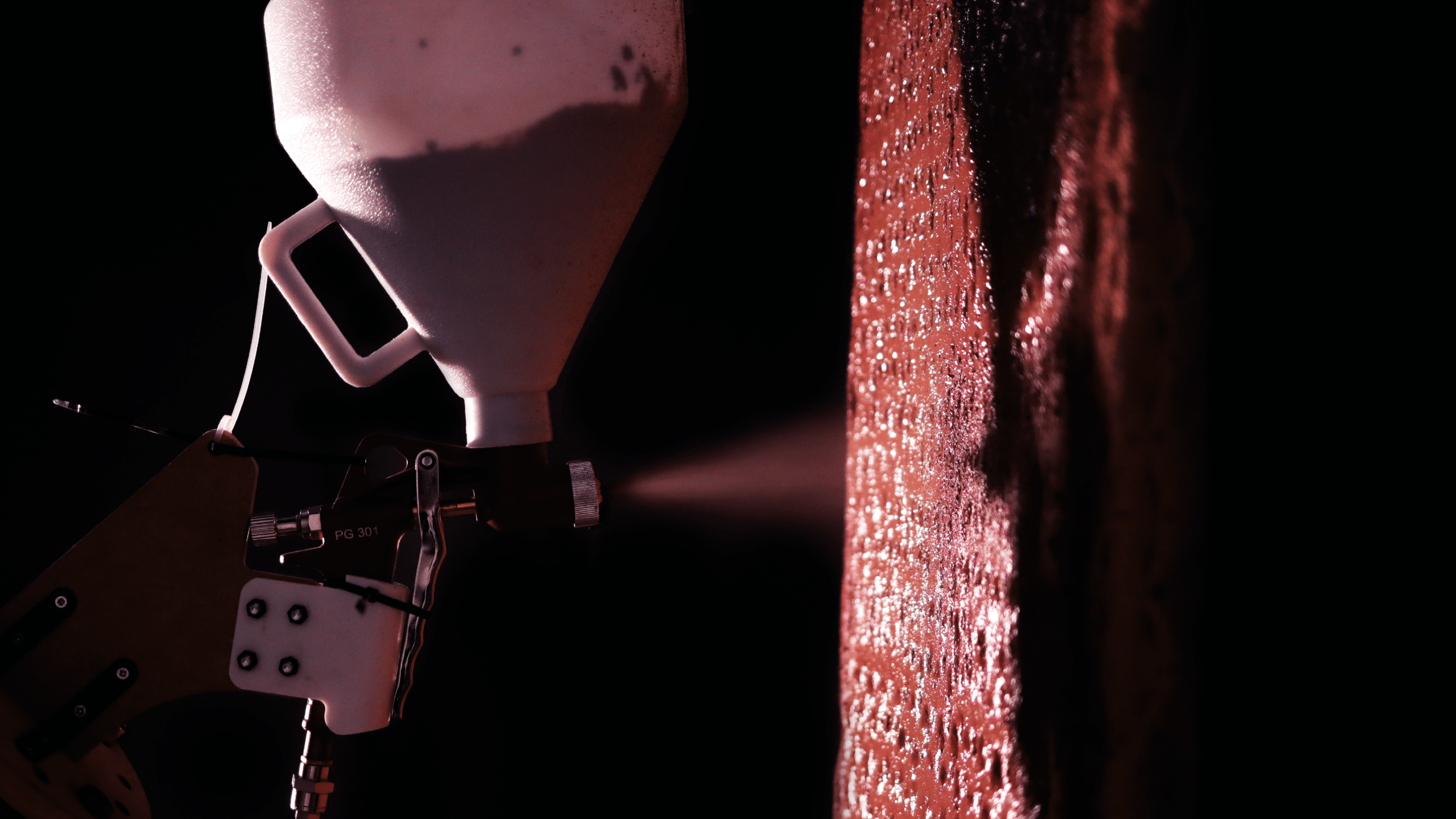
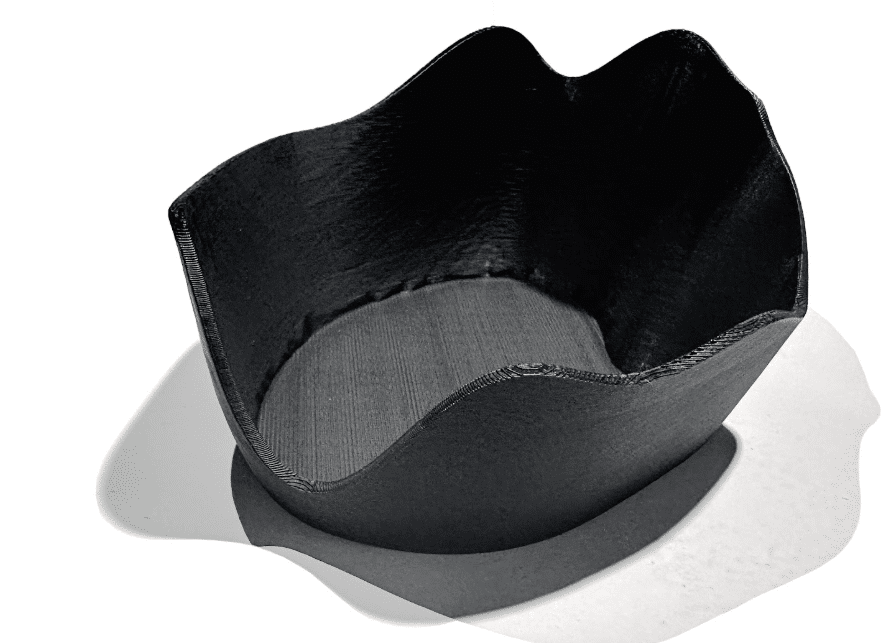
This work explores how clay can be used to introduce compression strength into flexible surfaces. By using robotics for controlled deposition, the process becomes parameterised, allowing a traditional material to be developed into a precise and predictable building system. Introduction This project proposes a system that transforms a flexible surface into a rigid, three-dimensional structure. … Read more

Robotics for ecological buildings: Willow Protocols

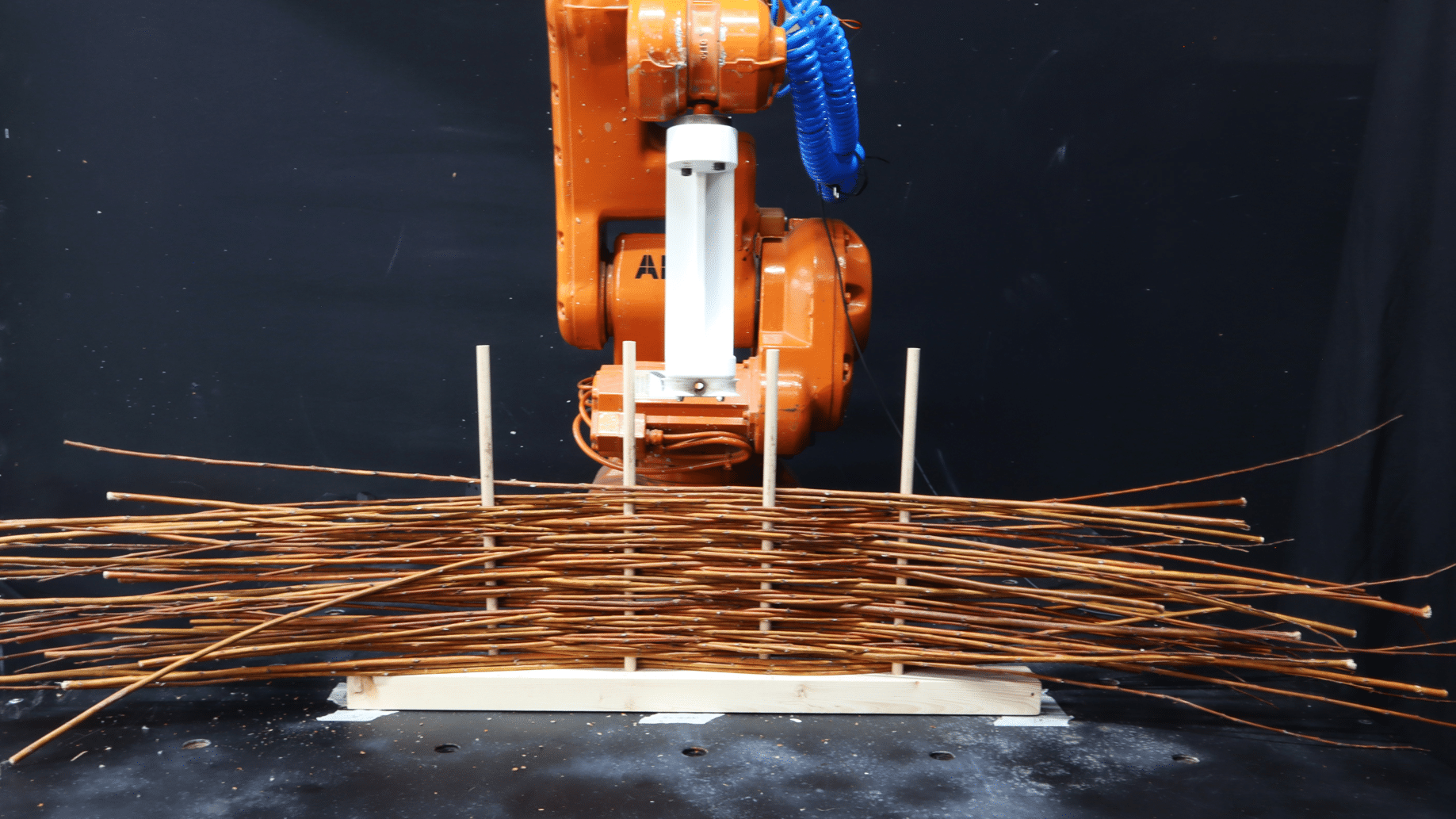
Introduction Can centuries-old vernacular intelligence inform the future of robotic construction? Willow Protocols is a research project developed at the Institute for Advanced Architecture of Catalonia (IAAC) that bridges traditional Catalan basketry techniques with advanced robotic fabrication. By re-evaluating historical construction methods like Zarzo and Wattle and Daub, this project proposes a highly sustainable, hyper-local … Read more

Mathilde Marengo from External References: Designing Experience through Technology

The lecture by Mathilde Marengo, Head of Studio Operations at External References, offered an in-depth overview of how contemporary architectural practice operates at the intersection of computation, fabrication, storytelling, and experiential design. Rather than presenting technology as an isolated tool, Mathilde framed it as an integral part of design thinking. Digital tools, parametric workflows, and … Read more

Mark Burry: Vernacular Architecture, Parametric Thinking, and the Legacy of Gaudí

Mark Burry describes his professional identity as transcending the traditional boundaries of an architect, acting equally as an activist and a researcher. Early in his career, he sought out remote environments, moving to the Western Isles of Scotland. There, he designed fundamental community facilities, such as a waiting room for a ferry at Eriskay, and … Read more

Workshop 1.2 Data to Motion – DRYING RIVERS

This article presents my Workshop 1.2 individual assignment, which focuses on analyzing data and translating it into robotic movements to control an ABB IRB 6700-150/3.20 industrial robot equipped with a plastic pellet extruder for additive manufacturing. The core concept of the project involved studying the drying and shrinkage of the Aral Sea over time, extracting … Read more

WORKSHOP 2.2_Disassembly & Reassembly

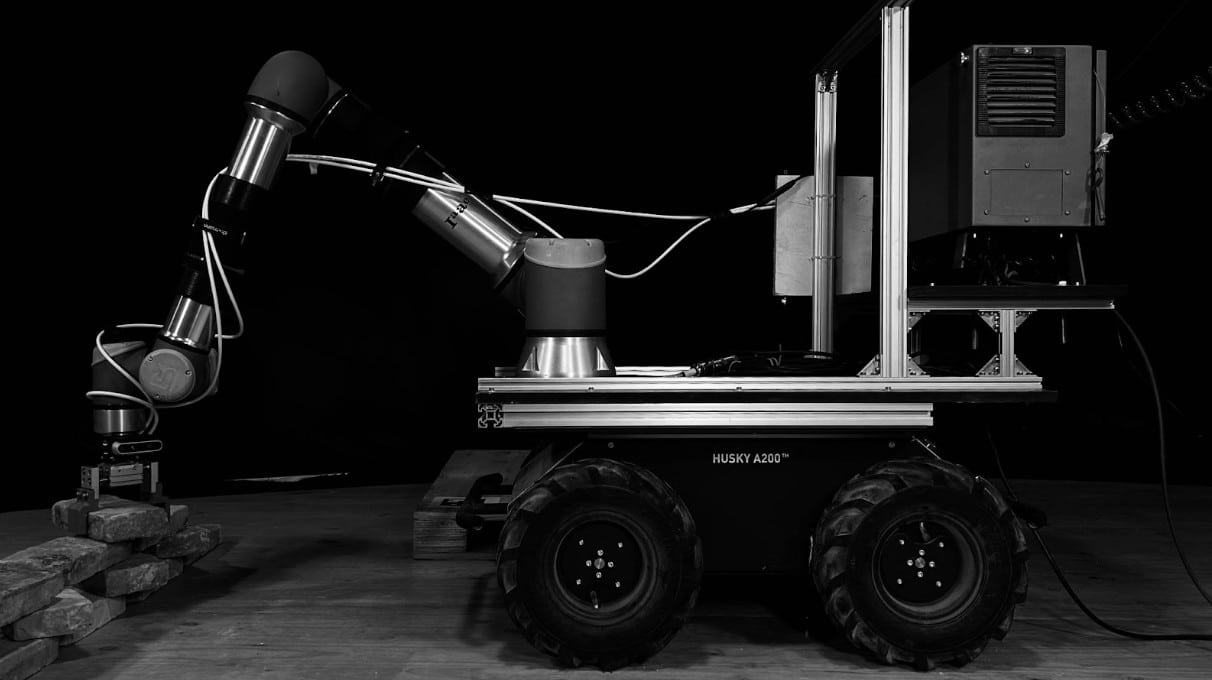
Robotic Disassembly& Reassembly with Spatial AI In this blog post, we’re presenting the project developed during IAAC 2026 Workshop 2.2 in collaboration with the Augmented Fabrication Lab. Our focus was to step beyond purely digital design and engage directly with physical processes, using robotic systems and sensor-based feedback. Through hands-on experimentation with robotic fabrication and … Read more

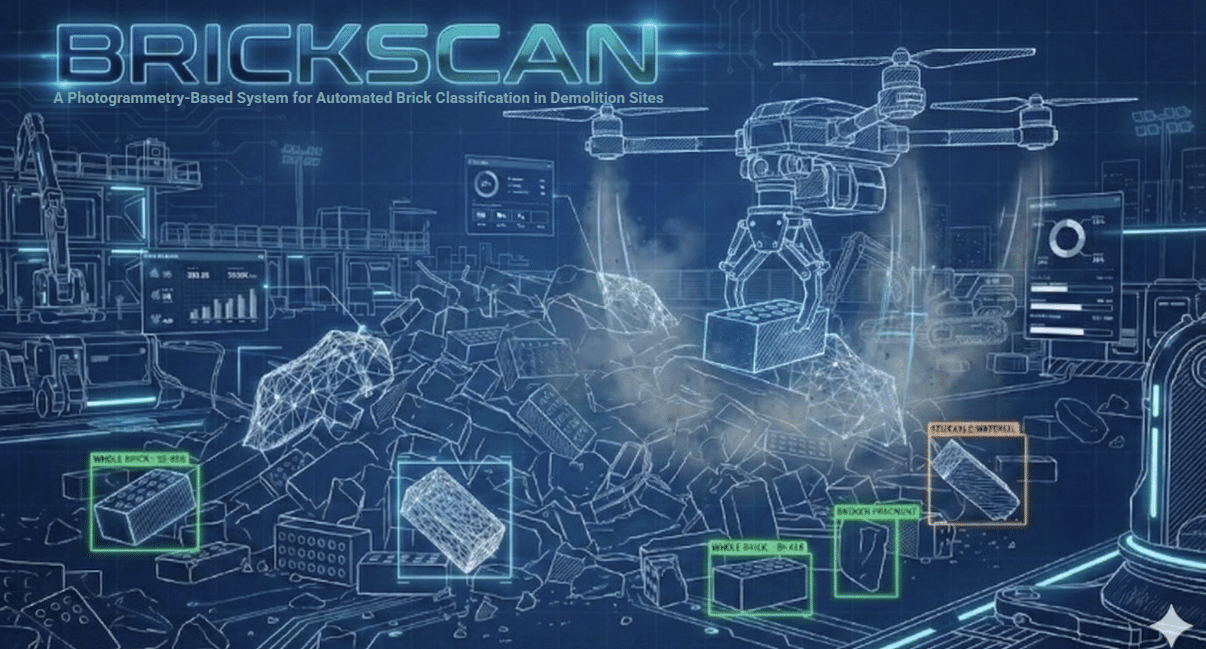
Smart Demolition: AI-Driven Construction Material Identification & Sorting System

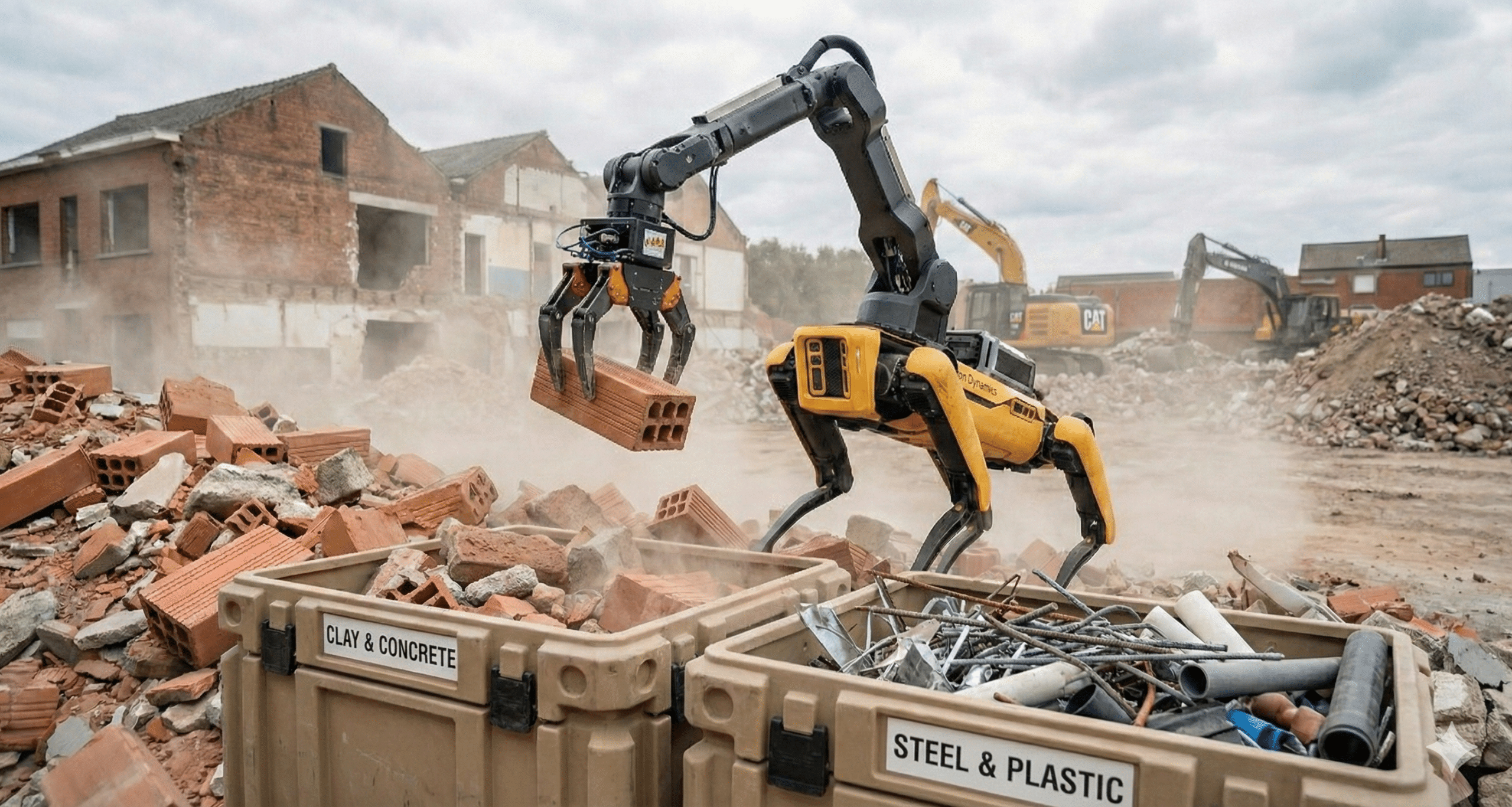
The global construction industry currently faces a significant sustainability crisis, characterized by the massive generation of material waste that often bypasses recycling streams. This challenge stems primarily from a technological gap: the lack of real-time identification, sorting, and decision-making systems on active demolition sites. Without an efficient way to distinguish between various debris types, valuable … Read more