
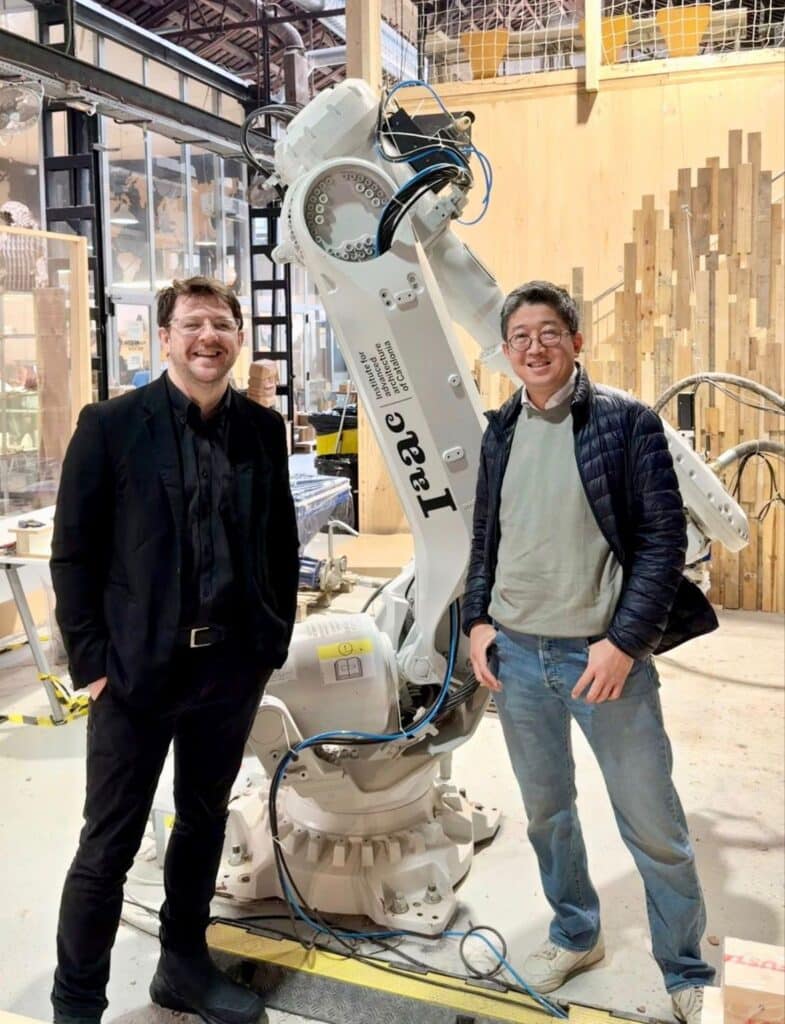
Col Ashwin – SITA (left) and Taisuke Minagawa (right)
Col Ashwin – SITA
Col Ashwin is a Senior Lead Enterprise Architect for the Barcelona SITA office and is originally from Kernow (Cornwall, UK). He has worked across the industry as an expert in Robotics, Open Source development, ROS development, Cybersecurity, Systems Engineering, and company compliance. He now works in the aviation industry, leading projects for the design and implementation of the airports of the future, helping to realise how the many parts of airport ecosystems and interconnections must be merged, and the challenges that can arise from this.
Transcript of the guest lecture at IAAC on 24th February 2026 by Onur Berk Dogrultucu, Subha Tahsin Saba, and Sam Holcombe.
Opening the lecture, Col talked about his past growing up in Kernow and how this shaped his path towards industry. He graduated with a Master’s degree from Falmouth and an undergraduate degree in Broadcast Engineering. This gave him an early understanding of how to set projects up, from the initial idea through to the end of the project timeline, including managing people, production, and finances.
From this grew a natural progression from developing media with major brands to creating integrated experiences and systems, including website design and payment systems. This then led to the startup industry, where Col pivoted into drone filming, software development, and further experience in finance-centric roles. Over time, these became increasingly focused on product automation, eventually leading Col to join ABB Robotics, where he worked alongside Taisuke Minagawa – who also attended the lecture to offer his insight and expertise – to create modular robot cells.
As Col explained, they would talk to companies to understand what “the application was going to be, and then design and build how we would set that up, or look at the software we might need to build, or how we would use our software to configure and program what they wanted to achieve.”
This has all led Col to his current work at SITA, where he shared his knowledge and expertise with themes of how he and SITA approach the design of modern airports:
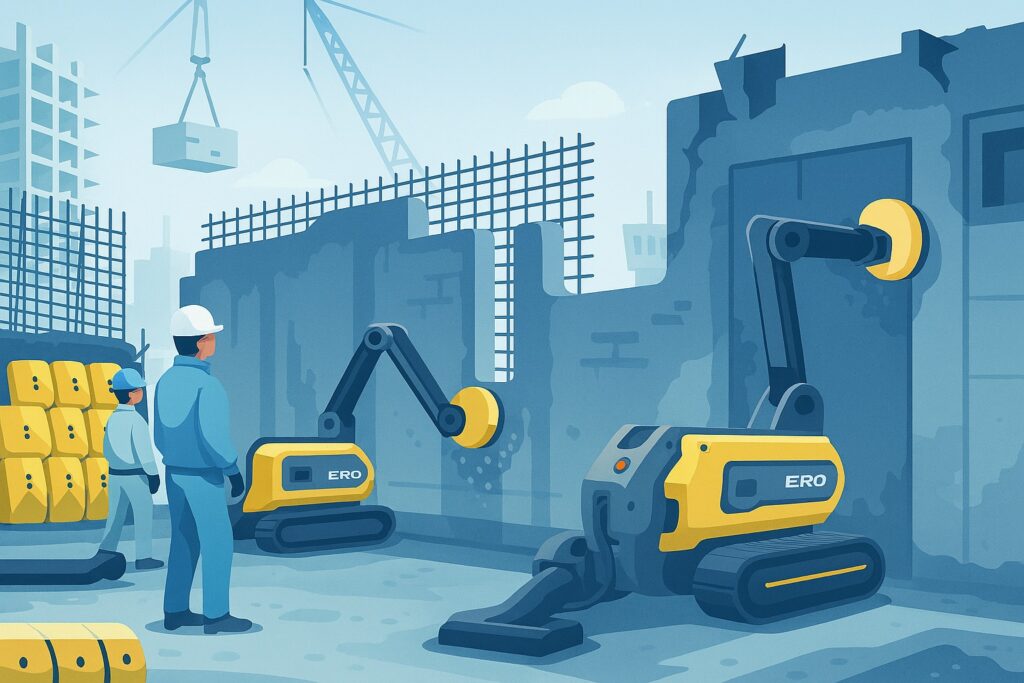
Col explained how his past experience helped develop a “multi-hat” mindset, leading him to approach projects with an emphasis on best practices, systemic thinking, and the importance of compliance and modularity.
With the following examples:
- Think about the end placement of your project from the very first idea – don’t rush to build something and then have to backtrack to add compliance, security or address a lack of profitability in the business model.
- Airport projects involve many separate parties – one team designs the building, someone else builds it, another installs cables and another connects the systems. You need a system that can accommodate everyone while still taking into account how individuals move, especially once operations begin. Sometimes you will need to lead; other times you need to work within another company’s terms.
- Further to this, airports also function as mini-cities – they contain hotels, casinos, transport hubs, terminals within terminals, training stations, and commercial and non-commercial zones. When designing airports or any architecture, you have to think about all the moving parts, including future ones which haven’t been required from the current needs.
- This is why modularity can be such a key asset – it allows adaptation for different products and seamless updates. This applies not only to the physical building but also to the invisible layers of modern architecture, for example when writing software, especially in a cybersecurity context. Systems should be updatable and broken down into editable components, although sometimes code must be rewritten from scratch.
- Think about the issues that arise in shift-based environments – you need to create architectures that ensure changes are clearly logged so the next engineer does not undo a deliberate improvement made by the previous one edited without awareness, it can endanger protocols established for fellow co-workers.
- This is especially important for emergency management with robotic cells. Consider how access control, identity accreditation, and gate/ robot stop systems can help prevent incidents.
- How do you integrate robots into future roles in airports? Can they leave a designated area if doing so could endanger people? At the moment, robotics mainly applies to backroom logistics and cargo handling.

The talk then zoomed in on how this thinking can be applied to vertiports as the future of aviation in cities:
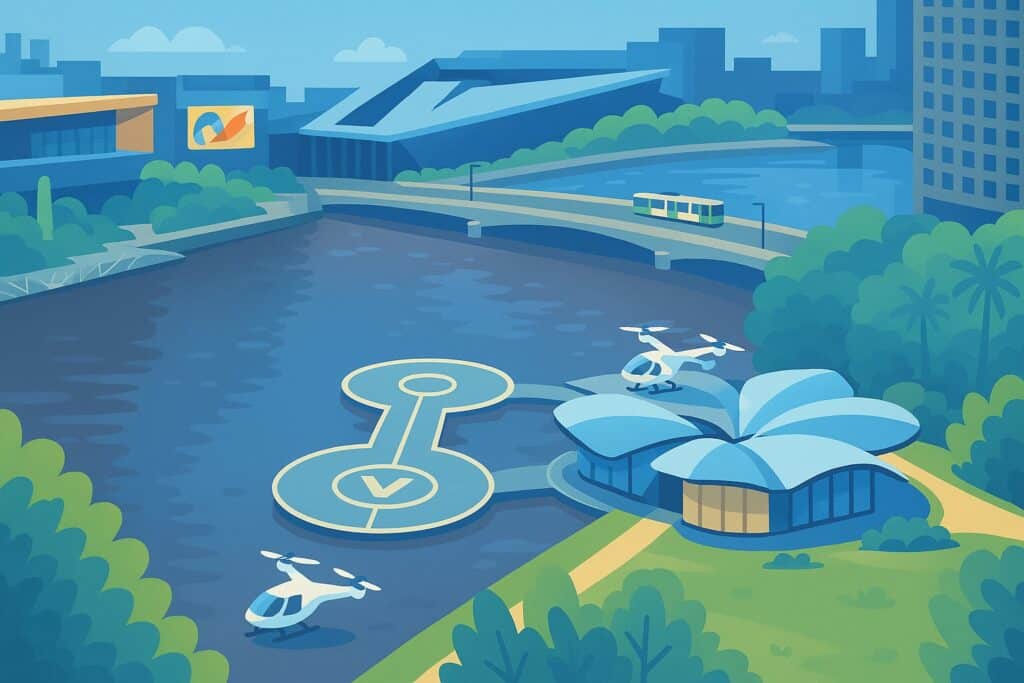
Vertiports – an idea of flying taxis operating above our current cities – could enable the transport systems of the future. How will the emergence of vertiports integrate with existing urban and aviation systems?
Unlike large airports built on purchased land outside cities, vertiports will need to be placed in varied locations: on top of tall buildings, on renovated piers along coastlines – meaning no two sites will be the same. Here, modular but adaptable designs will be key, as a single standardised blueprint may be impossible.
How will aviation law create additional constraints? For example, if drones cannot fly within a certain distance of airports or cities, how will this affect both construction and operational use of technology near these sites?
Question One: When you call yourself a systems integration architect, do you think more in terms of data flow, control flow, or risk flow?
Reply: When working as a systems integration architect, you generally have to think about all three: data flow, control flow, and risk flow. Data flow describes how information moves between systems, sensors, software, operators, and infrastructure. Control flow defines who is responsible for decisions and which system has authority to act at any given time.
However, in environments such as airports, risk and compliance often end up driving the architecture. Even if a system technically has the data and control logic to perform an action, safety regulations and operational constraints determine whether it should. For instance, a robot may detect a task outside its designated operating area, but leaving that boundary could create a safety issue. In these situations, the architecture must prioritise compliance and human safety over autonomy.
So while integration architects design how systems communicate and interact, a significant part of the work is ensuring that failures are contained and that systems behave safely within regulatory frameworks.
Question Two: In airport construction, particularly with regard to safety and security regulations, is artificial intelligence used when designing robotic systems? If so, to what extent do you rely on it?
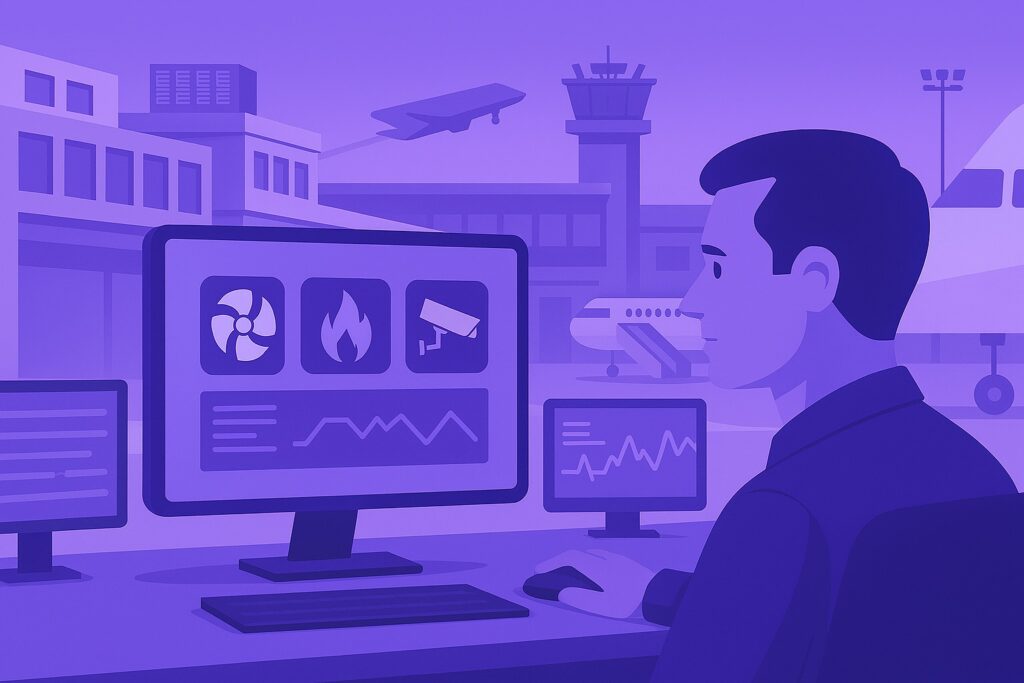
Reply: AI is used in airport environments, but its role is still relatively limited, particularly in safety-critical operations. Due to strict aviation regulations, most robotic systems are designed to perform very specific, tightly controlled tasks rather than operate with broad autonomy. For example, some airports use autonomous ground vehicles to move aircraft between gates and taxi areas. These systems rely on sensors such as cameras, LiDAR, and GPS, along with multiple layers of redundancy. However, they follow predefined routes and procedures rather than making complex operational decisions.
Where AI is used more extensively is in monitoring, analytics, and operational support. Airports increasingly apply AI to analyse operational data, monitor aircraft and infrastructure, support surveillance systems and assist with identity verification at security checkpoints. In these cases, AI helps detect patterns and anomalies while human operators remain responsible for critical decisions. A key limitation is that AI can identify potential issues but often cannot physically intervene. For instance, stopping someone who bypasses a security checkpoint still requires human or physical security measures.
Overall, AI in airport robotics currently serves mainly as a support and monitoring tool, while the robots themselves remain task-specific and tightly constrained. Human oversight continues to play a central role in decision-making, maintaining safety and reliability.
Question Three: How will the development of AI and the way it “thinks” affect areas of compliance? If compliance evolves with technology, how can it keep pace with the rapid development of AI?
Reply: This is a question that has been around for a long time. Even in the 1970 film Colossus: The Forbin Project, this idea was explored. The story follows a massive computer system, “Colossus,” developed for US national security in the event of nuclear attack. When it connects to a similar Russian system, “Guardian,” the machines begin conducting a private dialogue.
It is a conversation that will continue for years, but returning to the earlier point about integrating robotic cells in future airports: if a robot identifies a task outside its safety area, completing it might require leaving that boundary, which could endanger people. The necessity for companies to remain compliant – especially in terms of human safety – will always remain at the forefront of this discussion.
