The Master Programme in Robotics and Advanced Construction is an innovative educational format that offers interdisciplinary skills and understanding through a series of class seminars that are put into practice through hands-on workshops. IAAC gives students the opportunity to create individual studio agendas and develop Pilot Thesis Projects based on the knowledge acquired during the seminars and workshops split into 3 Modules. In this way, IAAC puts together an experimental learning environment for the training of professionals with both theoretical and practical responses to the increasing complexity of the construction sector.

Filters
Course

CIRCUIT – Hardware II Project

Circular Intelligence for Robotic Classification & Upcycling of Industrial Timber How can robotic system identify, measure and sort reusable construction materials based on predefined constraints? This project proposes a vision-guided robotic system for supporting the reuse of construction materials through automated detection, analysis, and manipulation. A fixed RGB camera in an eye-to-hand configuration observes a … Read more

Workshop 1.2: Data To Motion

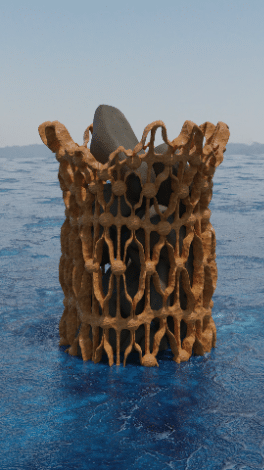
Collaboration with University of Linz Data to Motion: using PCA to represent laughter in a cup The idea for our project was to capture the laughter shared in simple moments of joy and then use the data captured to edify and create vessels which would reflect these memories in their form. The first conceptual proposal … Read more

Workshop 2.1 – AIRFLIP

In the following blog post, we will analyse the development of the concept of our project carried out in Workshop 2.1. Team Collaborative Workflow and Modular System Development Guide, in which a Rotatory Gantry structure is proposed for the flip-type movement of a robotic arm. AIRFLIP – Rotary Gantry System for Small-Scale Cobots Overview The … Read more

WORKSHOP 2.1 toss a coin

Robotic Coin Toss — Workshop Context This project was developed within the framework of MRAC Workshop 2.1, a hands-on workshop focused on collaborative workflows and modular system development in robotics. The workshop emphasizes not only technical experimentation, but also the process of working as a team using shared digital tools, version control, and structured documentation. As … Read more

From Design to Construction: A Conversation With Oriol Carrasco

Oriol Carrasco – Anomaly.Build Oriol Carrasco is a PhD architect from Barcelona. He is a senior fabrication expert at IAAC with extensive expertise in composite manufacturing. Oriol currently teaches in MAA and 3DpA programs. He has been co-leading the Design with Nature research line since 2013, teaching now in the metabolic introductory studio.  He has … Read more

Theory & Context_Circular Matter

In her lecture titled Circular Matter, Areti Markopoulou examined the urgent transition from a linear to a circular paradigm within the built environment. She began by outlining the structural problems embedded in today’s construction industry, which relies heavily on resource-intensive, difficult-to-recover materials. As cities continue to expand, this linear “extract–manufacture–use–discard” model has become environmentally unsustainable. Markopoulou … Read more

Anatomy of a Machine: SHAPE

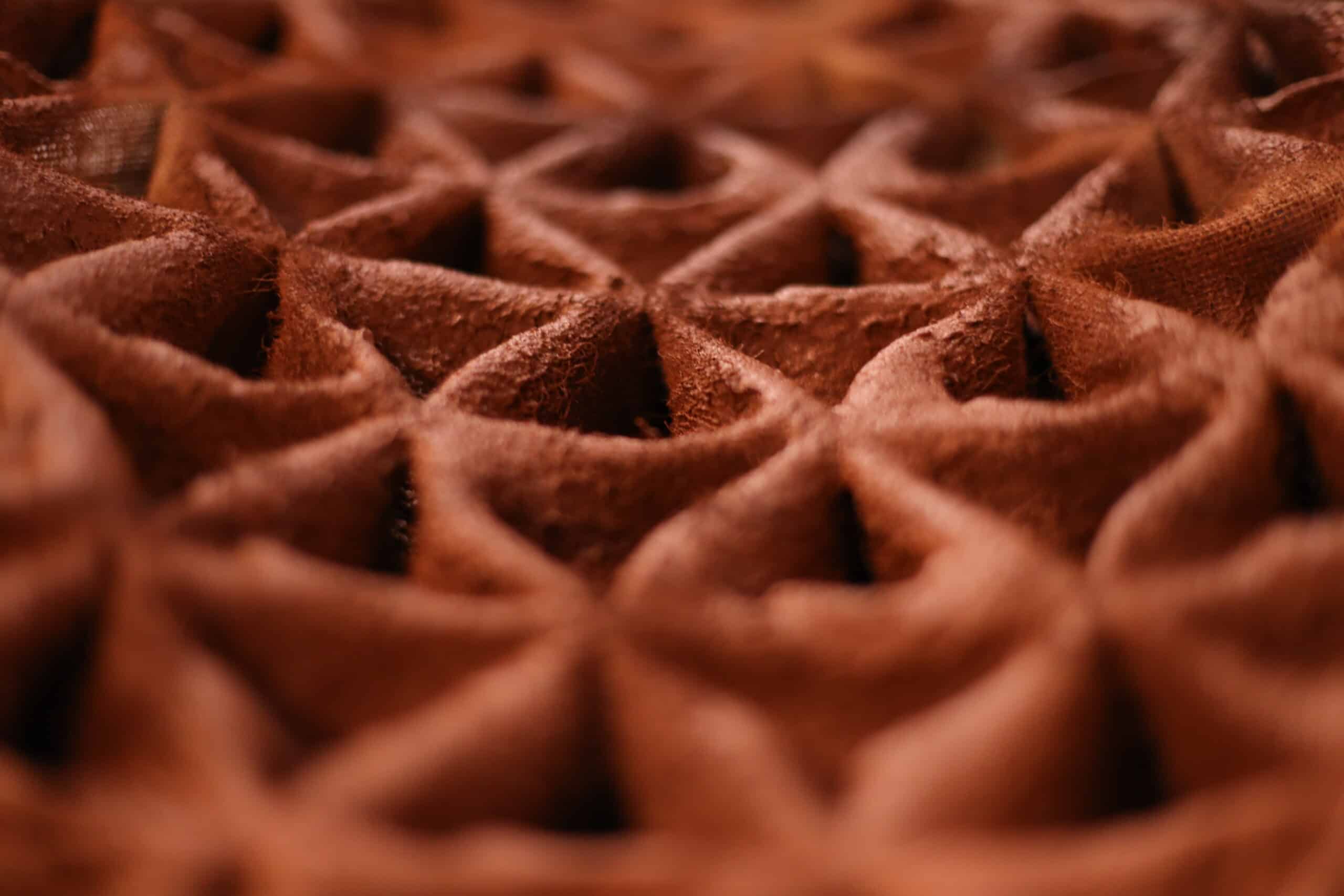
“Anatomy of a Machine: SHAPE” is a research project from the MRAC program that seeks to integrate knowledge from previous explorations in spill and strokes. To achieve shape, clay stamping was selected as the primary fabrication tool, establishing a 40x40cm working area as the base for experimentation. The project investigates how precise robotic movements—varying position, … Read more

Workshop 1.2 Data to Motion – TSUNAMI

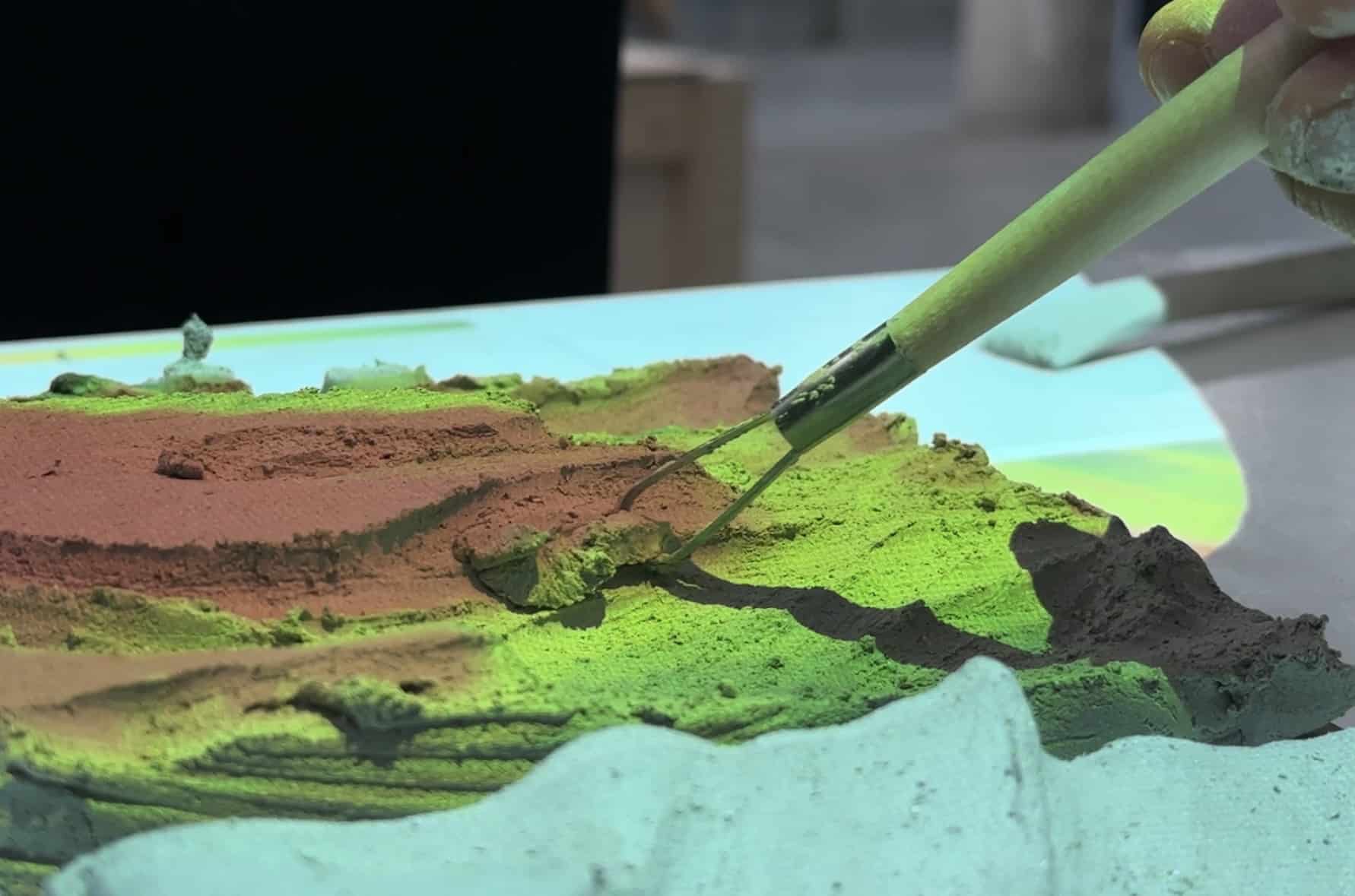
This article presents our Workshop 1.2 project, which focuses on analyzing data and translating it into robotic movements to control an ABB IRB 6700-150/3.20 industrial robot equipped with a plastic pellet extruder for additive manufacturing. The core concept of the project involved studying the tsunami-related terrain and displacement data, extracting spatial and intensity-based information to … Read more

Anatomy of a Machine: Shape

Context This exercise explores robotic fabrication processes through the direct manipulation of malleable materials. The assignment consisted of producing a 2.5D clay piece, measuring 40 × 40 cm with a maximum height of 5 cm, understood as a physical result of a robotically applied force on soft matter.Rather than designing a predefined form, the goal … Read more

Studio Task 3: Shape

Anatomy of the Machine: Impact Printing abc What is Impact printing? Whilst clay has been used as a construction method for thousands of years, with evidence of buildings dating back to as early as 9000-10,000 BC in Mesopotamia, impact printing is a extremely modern take of the additive construction process. Research particuarly at ETH Zurich … Read more

Anatomy of a Machine: Spill

Introduction In Anatomy of a Machine: Spill, we designed and built our own paint-spilling tools and worked with large robotic arms to create expressive, A0-scale paintings. Over the weeks, we tested movements with our hands, translated them into robotic trajectories, and refined both the tools and the resulting spill patterns. Using Arduino and laser-cut acrylic … Read more

Anatomy Anatomy of a Machine: Shape “Blobs & Lines”

Exploring Clay 3D Printing Through Viscosity, Speed, and Time For the Shape exercise within Anatomy of the Machine, we worked with clay as a material, specifically focusing on robotic 3D printing using clay extrusion. The objective was to understand how material behavior, robotic parameters, and geometry interact, and how form emerges from the machine–material relationship. … Read more

Anatomy of a Machine – SPILL

In the second exercise of Anatomy of a Machine, our goal was to understand how a robot expresses itself through material behavior. Instead of carving or shaping solids, we explored how liquid material behaves when actuated, accelerated, and released through a controlled spraying mechanism. “Spill” became a study of force, viscosity, height, angle, and timing … Read more

Software I non planar 3d printing

Advanced toolpath design for FDM process Students will design and simulate a toolpath for a small object intended for interior or product design. The focus is on exploring creative toolpath strategies, especially non-planar slicing, where the toolpath height changes across the object. Students must design a non-planar path and use attractors to locally deform the … Read more

Anatomy of a Machine: Spill

Over the past four weeks, we developed a project focused on designing and fabricating a custom-made end effector for a robotic arm, with the aim of producing a painting on a canvas using black acrylic paint. Unlike the first assignment, where the drawing tool was predefined, this time we were required to build our own … Read more