
This work investigates the structural potential of straw in its raw, unprocessed state — exploiting its natural wilderness and fibrous friction to build systems from its inherent properties. By coupling these material behaviors with robotic fabrication, the process becomes parameterized, enabling a vernacular material to be deployed within a precise and predictable architectural system.
Introduction
This project transforms loose straw into a self-supporting architectural surface. Using directed spray onto velcro mesh screens, straw accumulates through natural fibrous friction — building up in layers without baling or compression. Wire meshes and structural stakes hold the geometry in place, enabling walls, curved forms, and fluid surfaces that are lightweight, insulating, and ecologically sound.
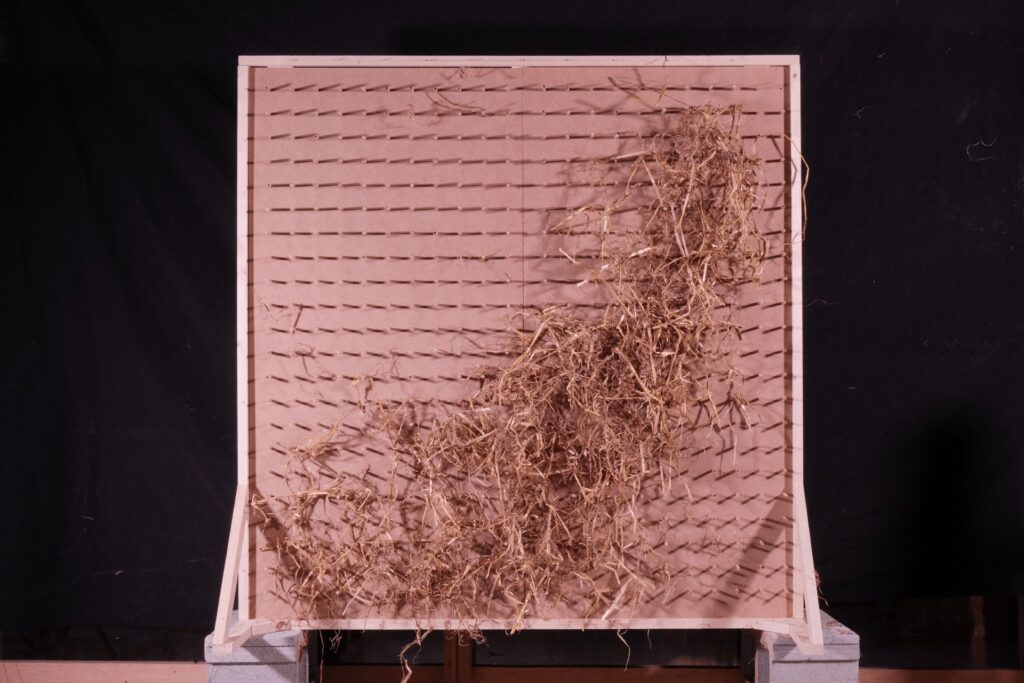
Context & Properties
Wheat straw and Dandelion straw as a Local Material
This work rethinks architectural design and production through the use of straw as a local material. In Catalonia, straw is widely abundant, ecologically sound, and deeply rooted in vernacular building traditions. The project explores how this overlooked agricultural byproduct can be digitally re-imagined and integrated into contemporary robotic fabrication processes.
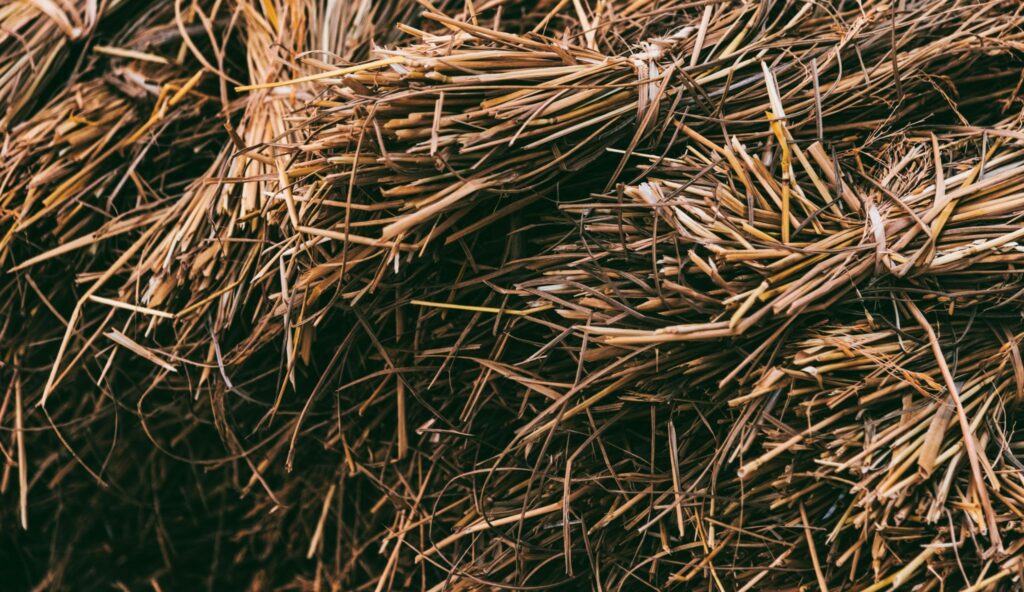
Hollow, lightweight, naturally hydrophobic
Density: 60–180 kg/m³, anisotropicTensile: 21–31 MPa, Compressive: ~70 MPa
Thermal conductivity: 45–65 mW/m·K
Weakens significantly with moisture
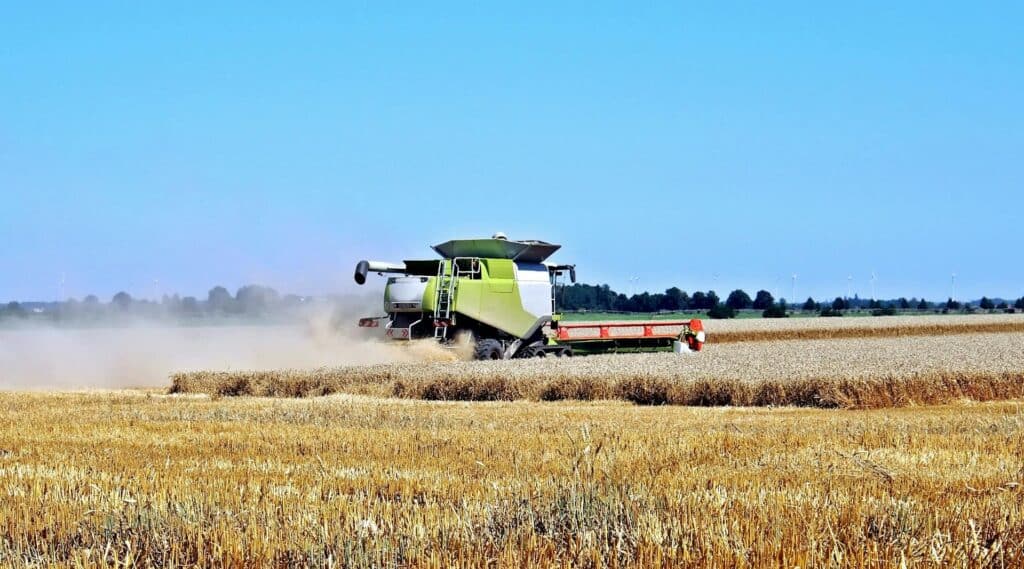
Abundant agricultural byproduct: minimises transport emissions and cost
Material reflects local farming cycles: enables context-driven design language
Supports local resource cycles: strengthens regional self-sufficiency
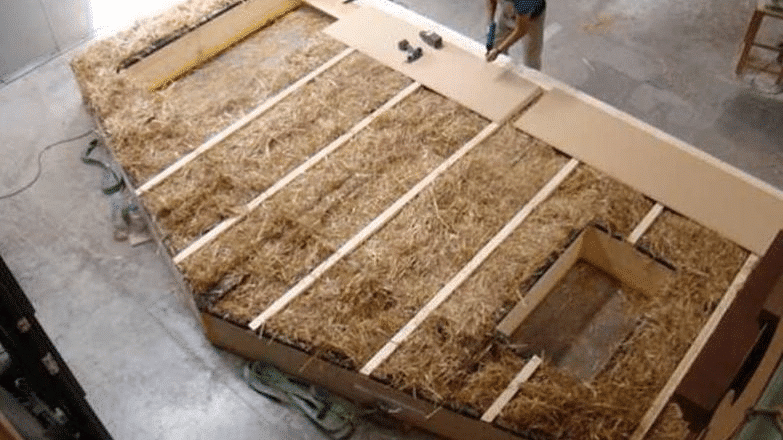
Proven vernacular performance: climate-adapted building solutions refined over centuries
Local craftsmanship integration: preserves agricultural knowledge and supports rural communities
Passive design intelligence: natural insulation and thermal mass embedded in material form
Straw Construction : From Vernacular Technique to Controlled Deposition
Traditional Methods of Straw Construction
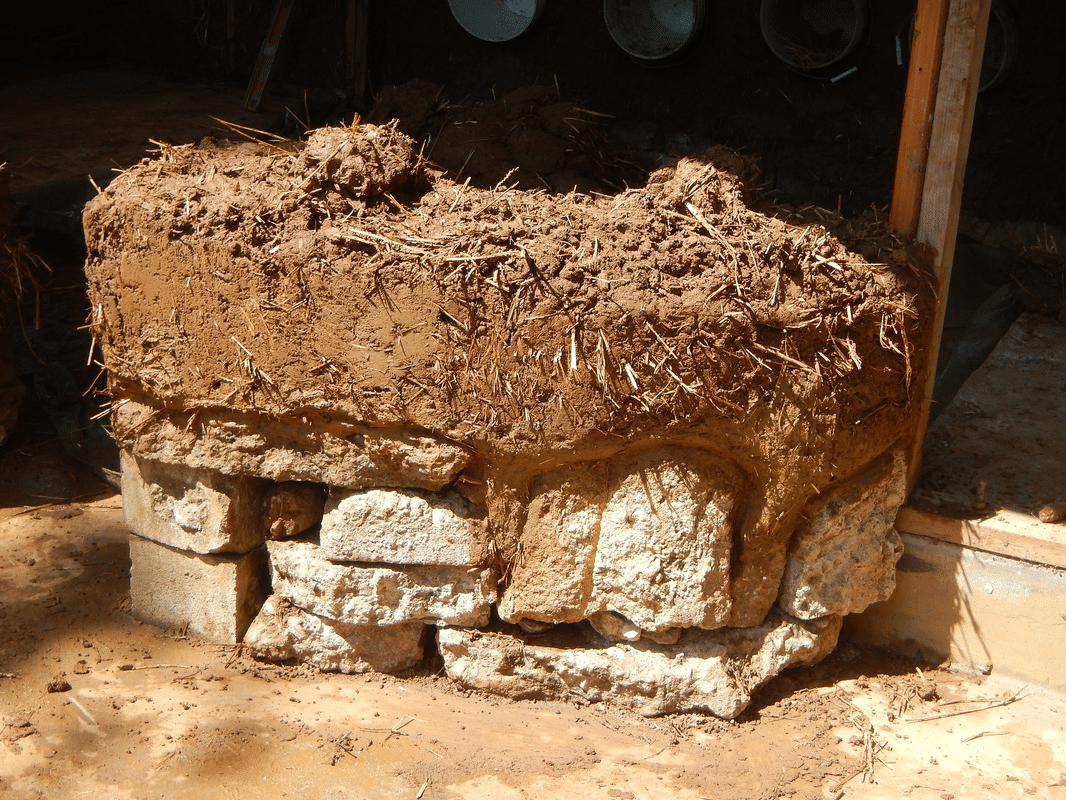
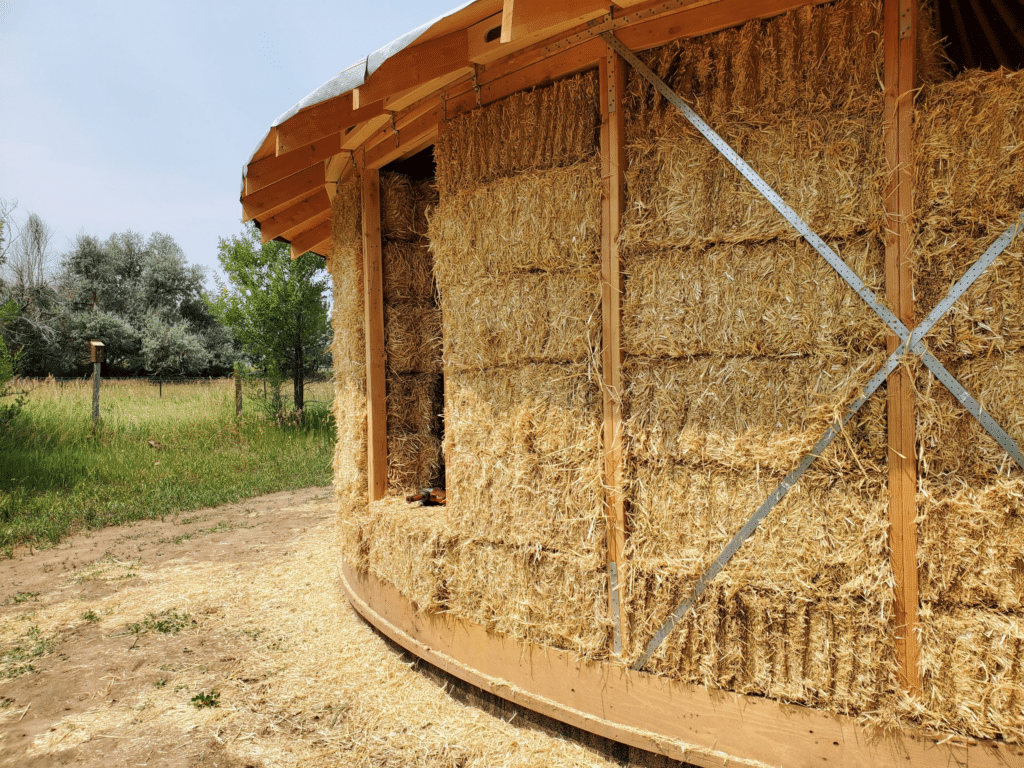
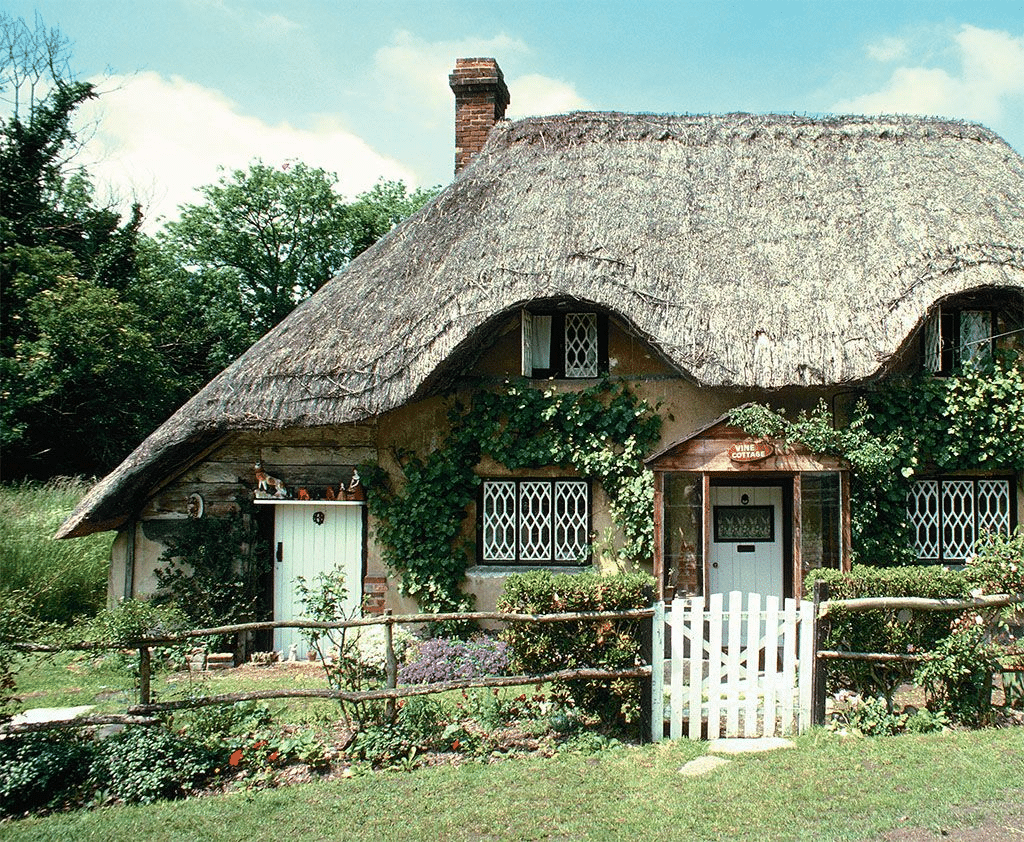
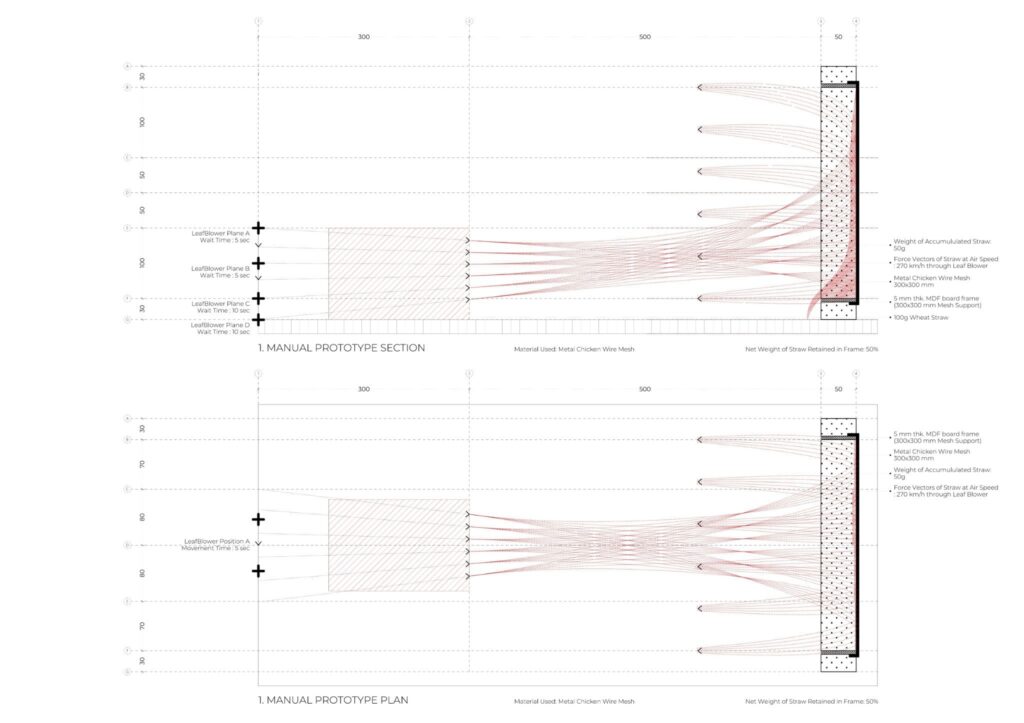
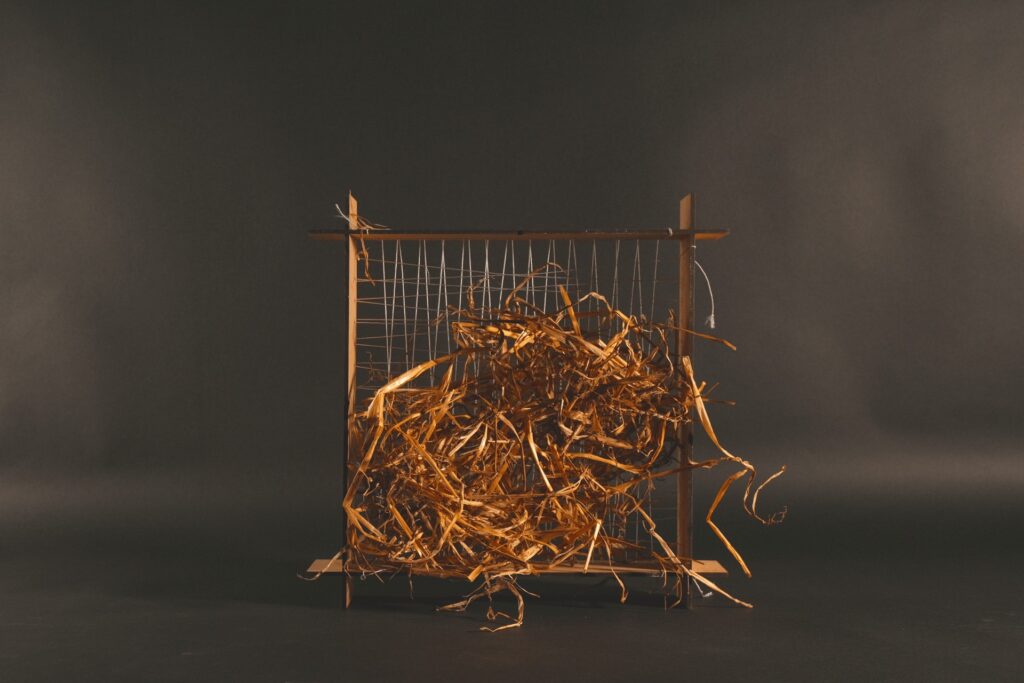
Manual Prototypes for Testing Properties
Robotic and Manual Testing of material
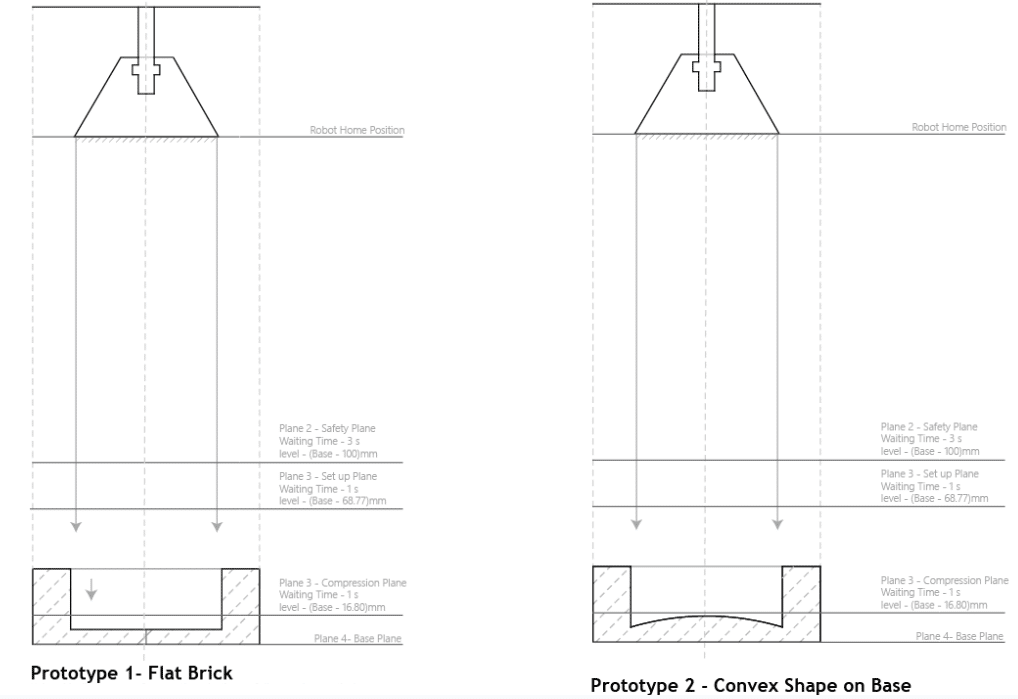
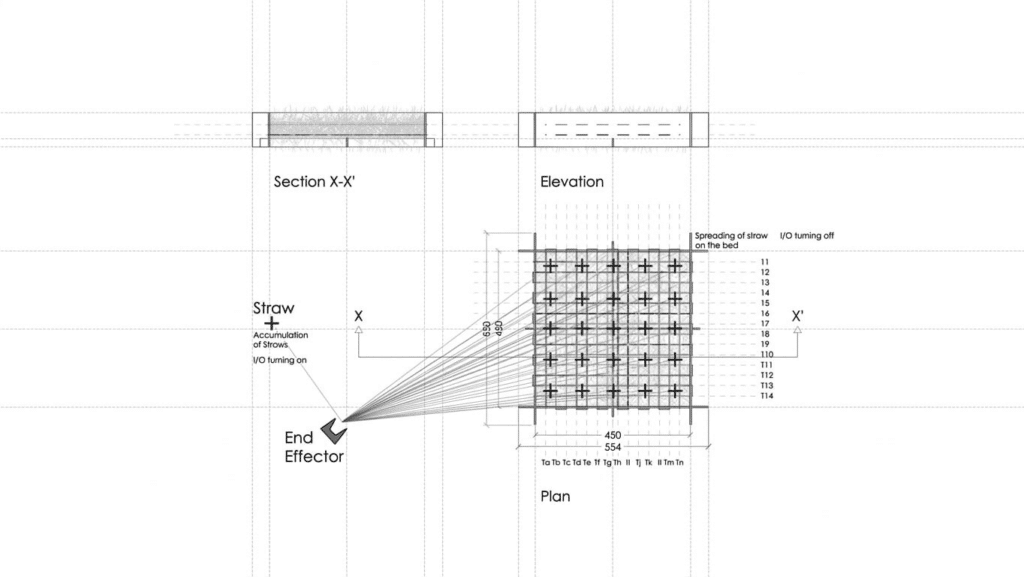
End-Effector

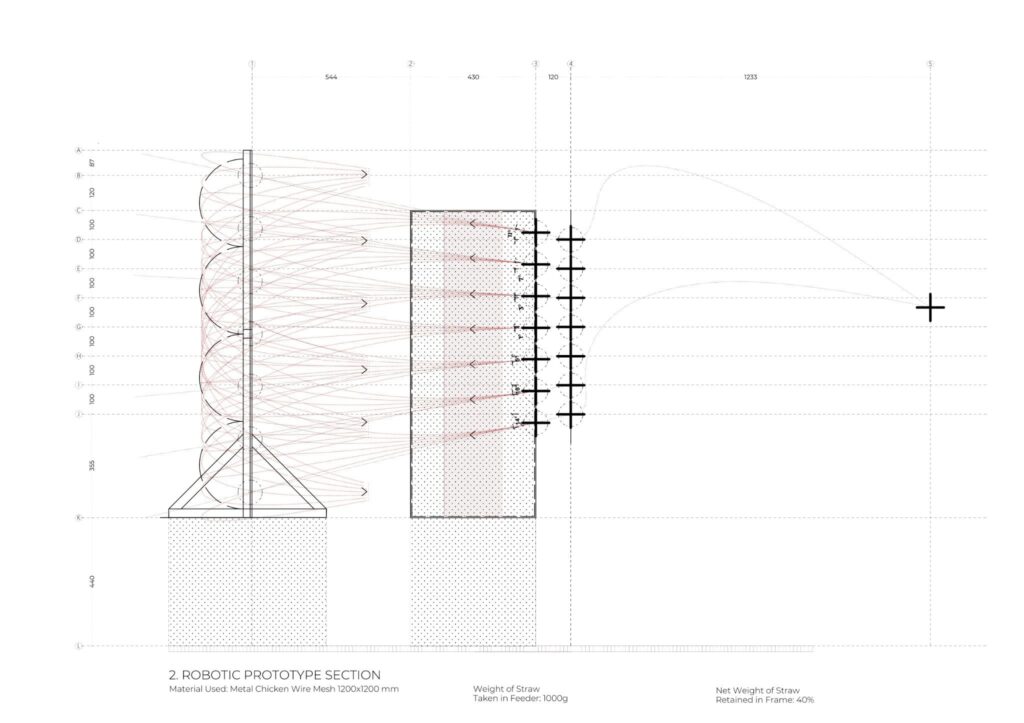
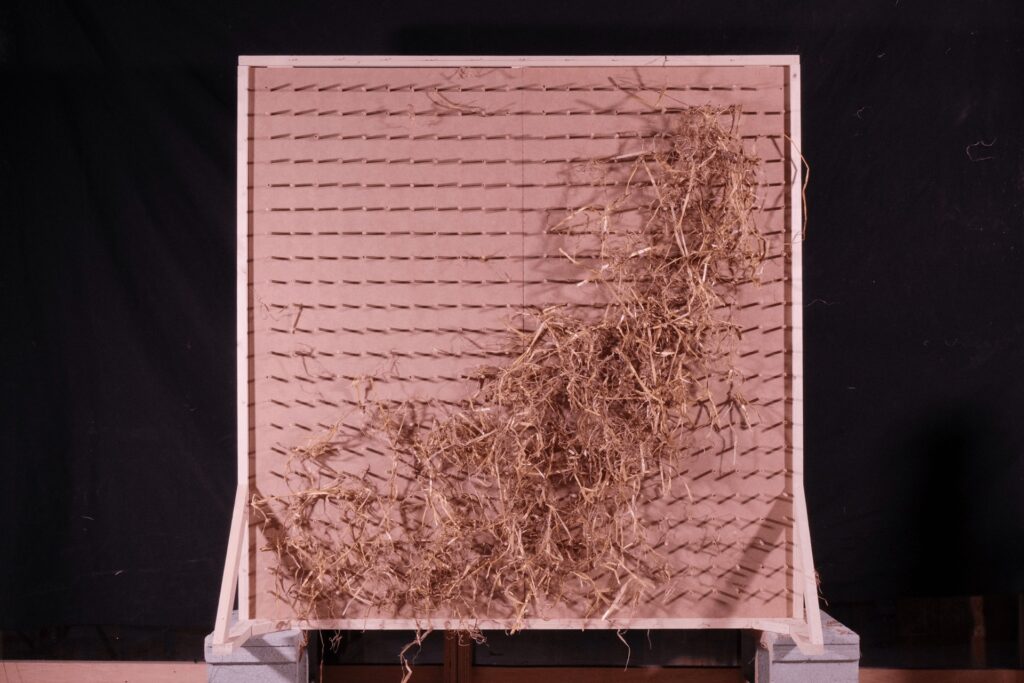
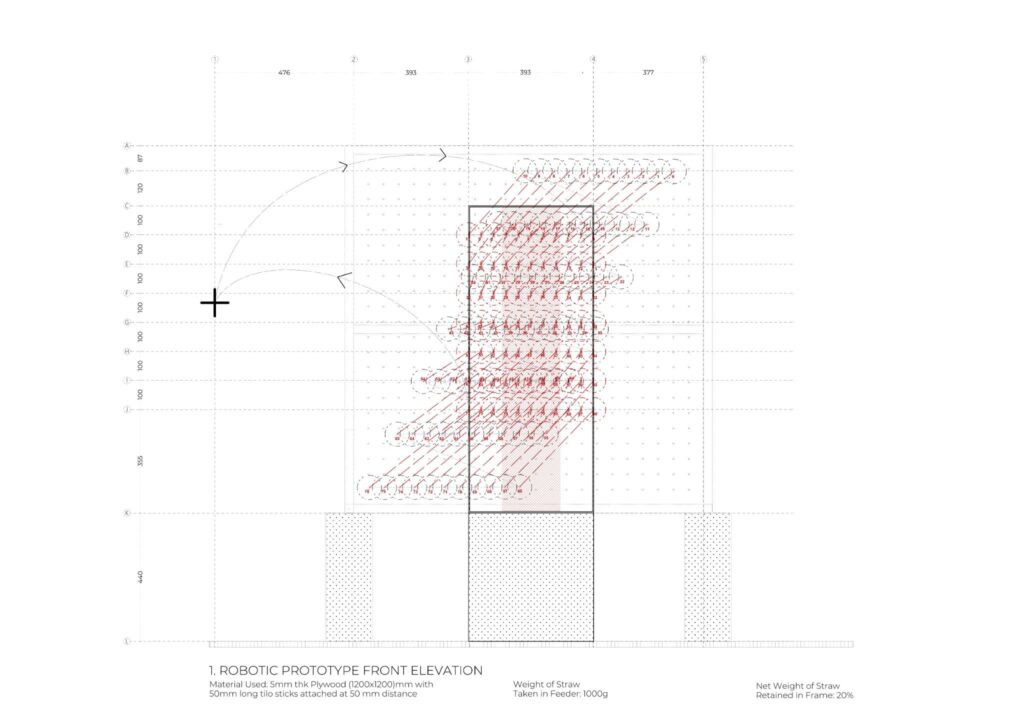
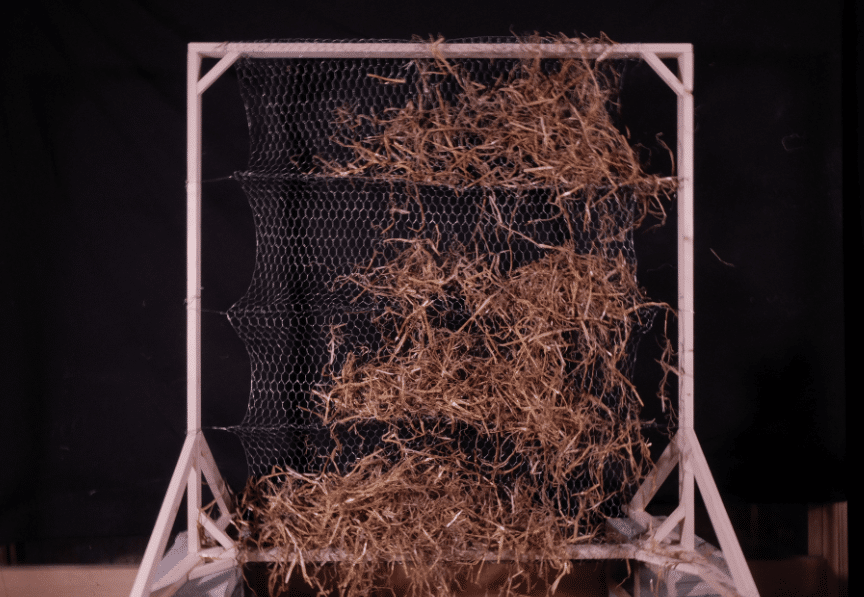
Straw Blowing on Mesh as Fabrication Methodology
Method Selection
This method was selected as the primary fabrication strategy for building a structural straw system. Through material testing, the following properties were determined:
- Adhesion capacity — the ability of straw to bond and accumulate after being blown onto a surface
- Mesh aperture — the optimal hole size of the mesh to catch and retain straw fibres
- Stick geometry — the dimensions of structural stakes acting as a velcro-like catching system
- Surface friction — the friction coefficient between surfaces to maximise straw retention without adhesive
- Form and curvature — the variation of vertical mesh geometry to allow for entrapment and structural buildup through curvature alone
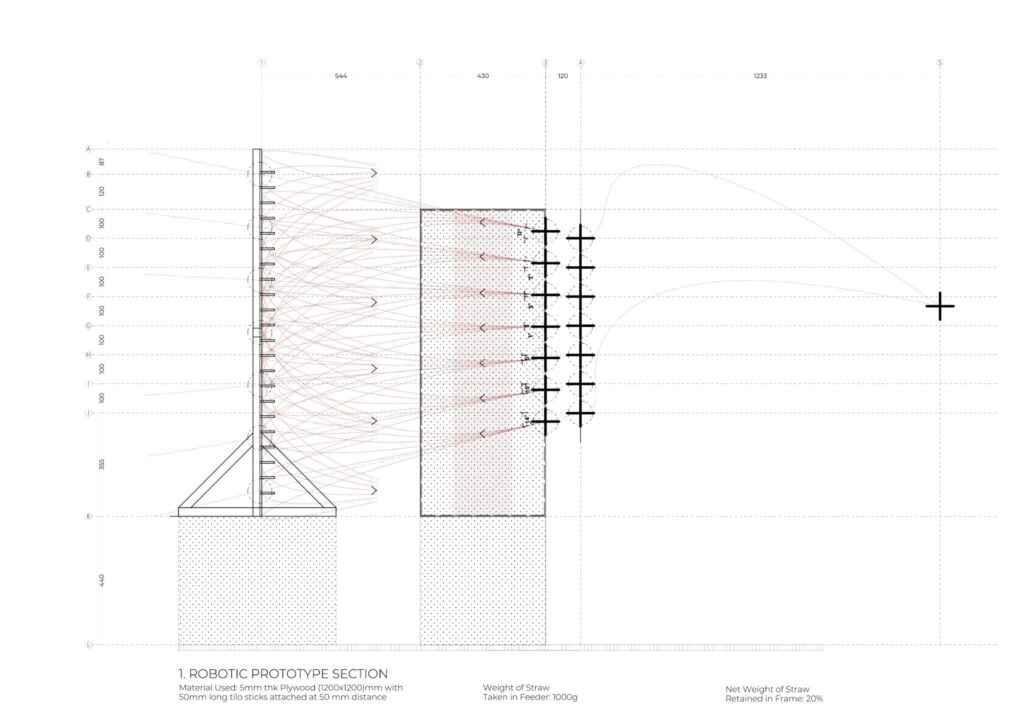
Large-scale Robotic Tests
Future Steps – Prototypes
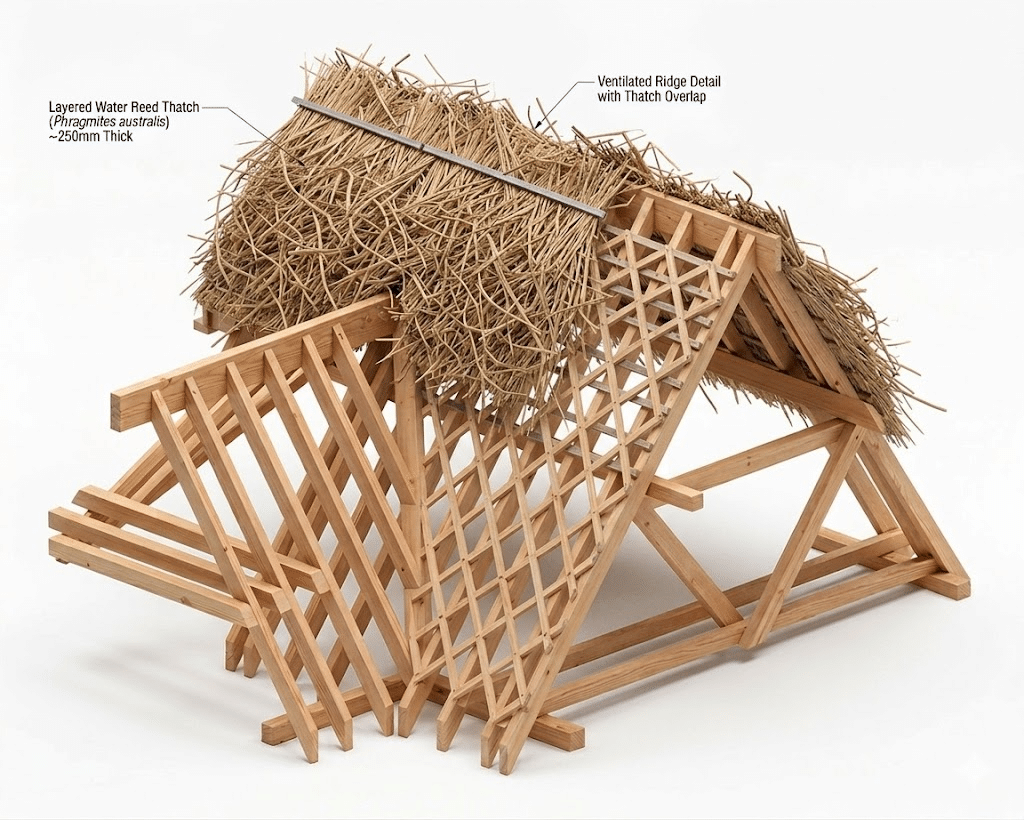
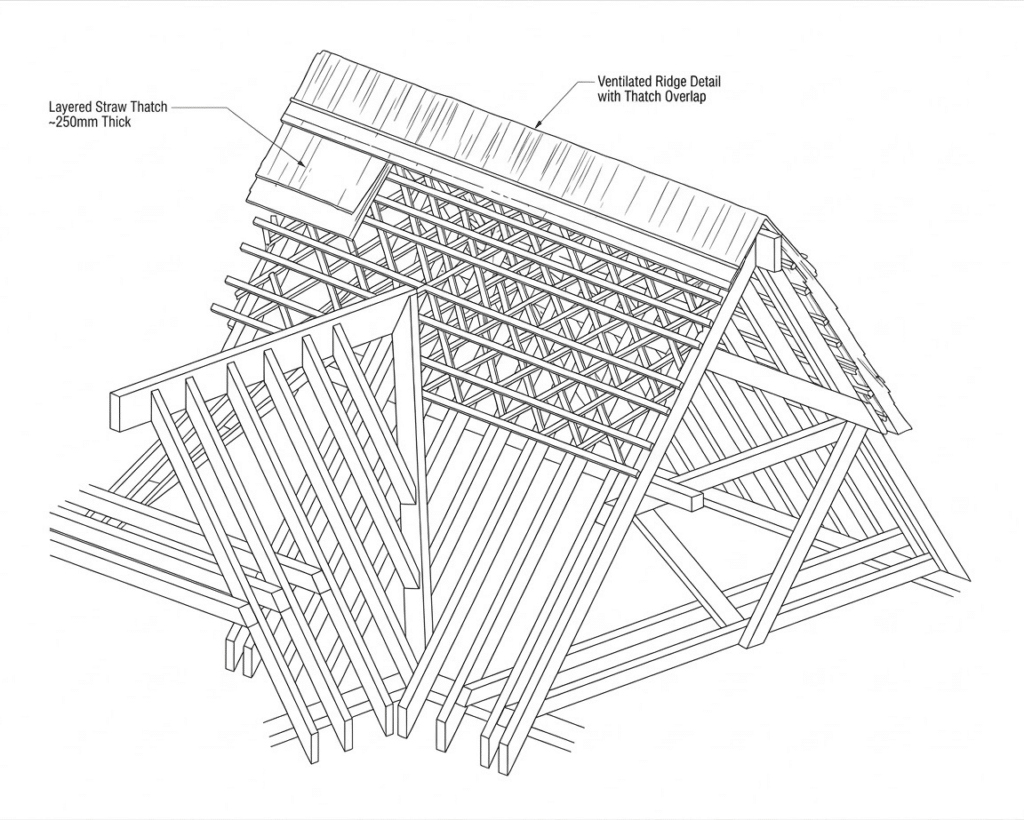
Roof A latticed timber frame designed to carry straw as a roofing layer. The diagonal grid structure distributes load while creating pockets that trap and hold straw in place. The system demonstrates how straw can function as both insulation and weather skin within a structural frame.
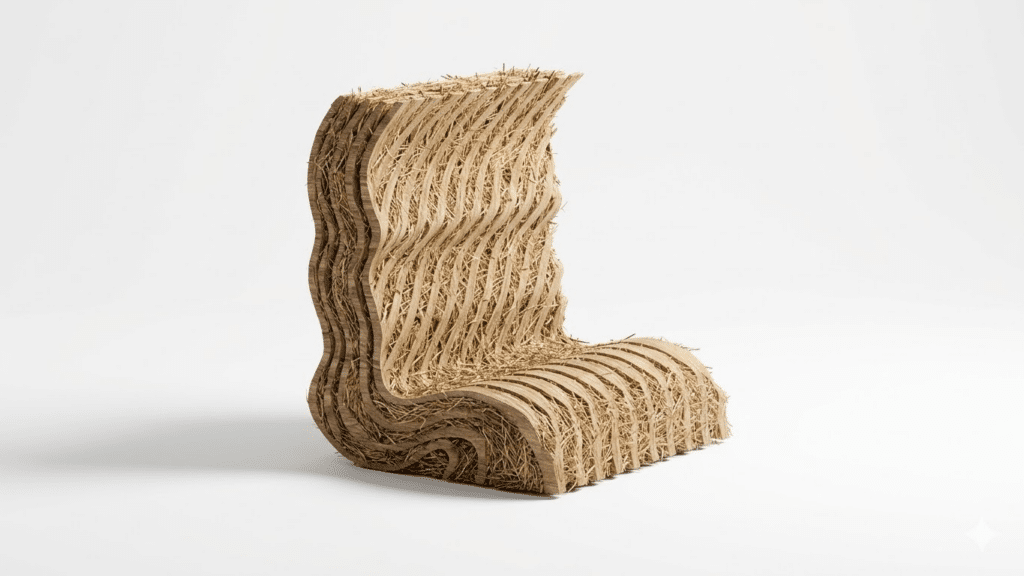
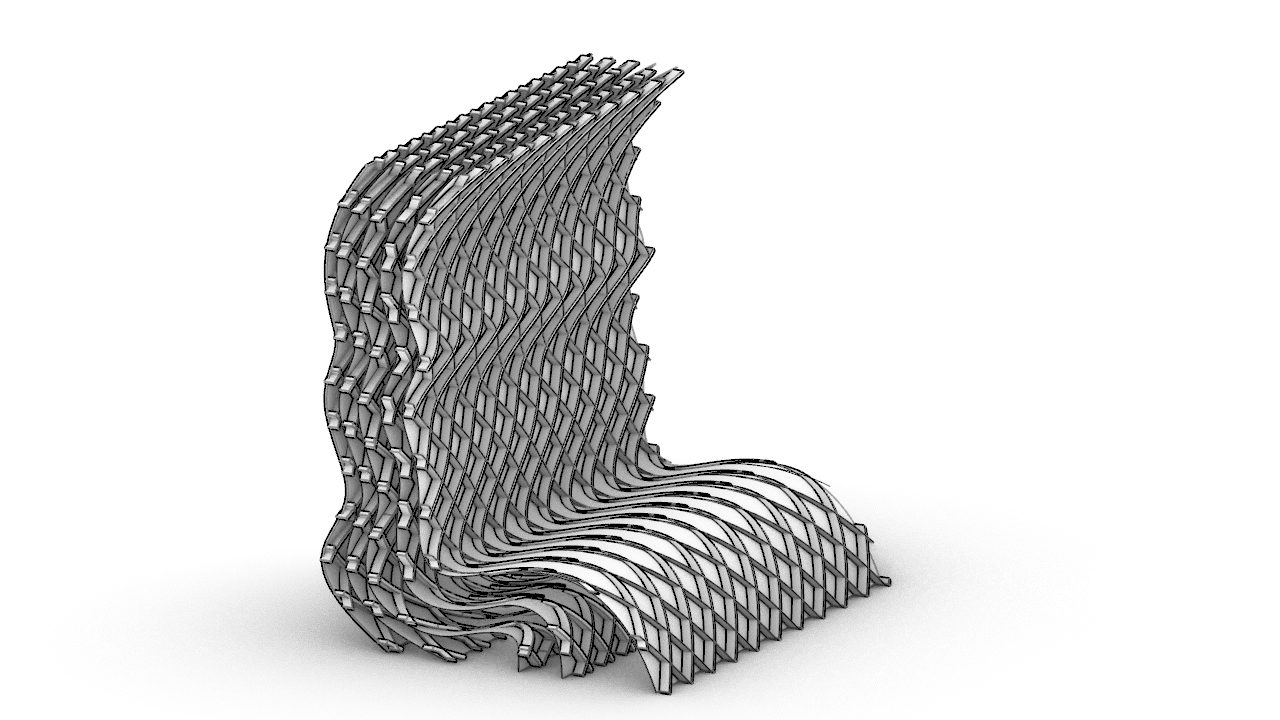
Wall – Chair system A self-supporting form that uses compressed straw layers to create both structural rigidity and surface texture. The stacked fibrous geometry allows the material to carry load without a secondary frame. It demonstrates straw’s capacity to transition from a loose material into a load-bearing, mouldable mass.
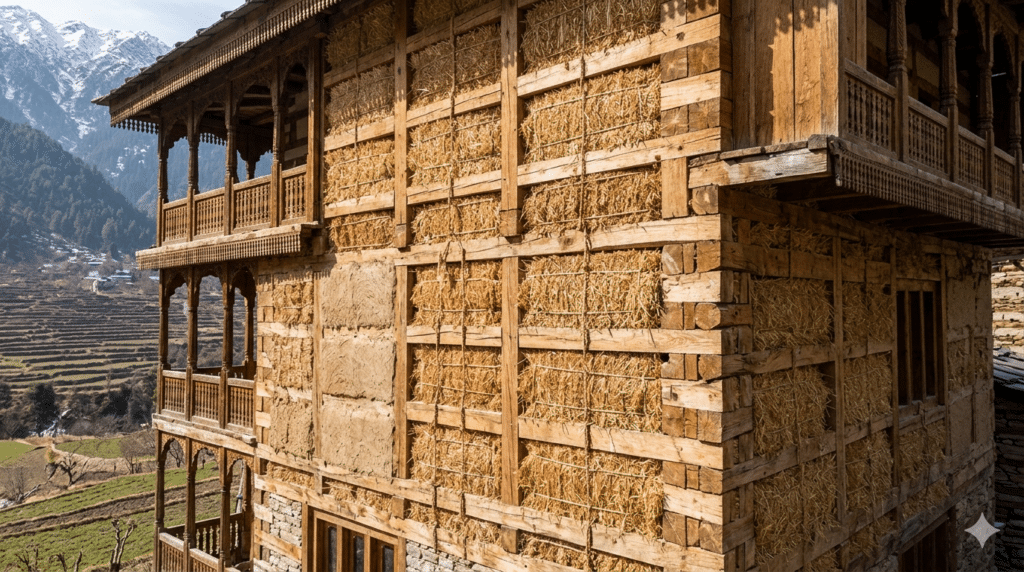
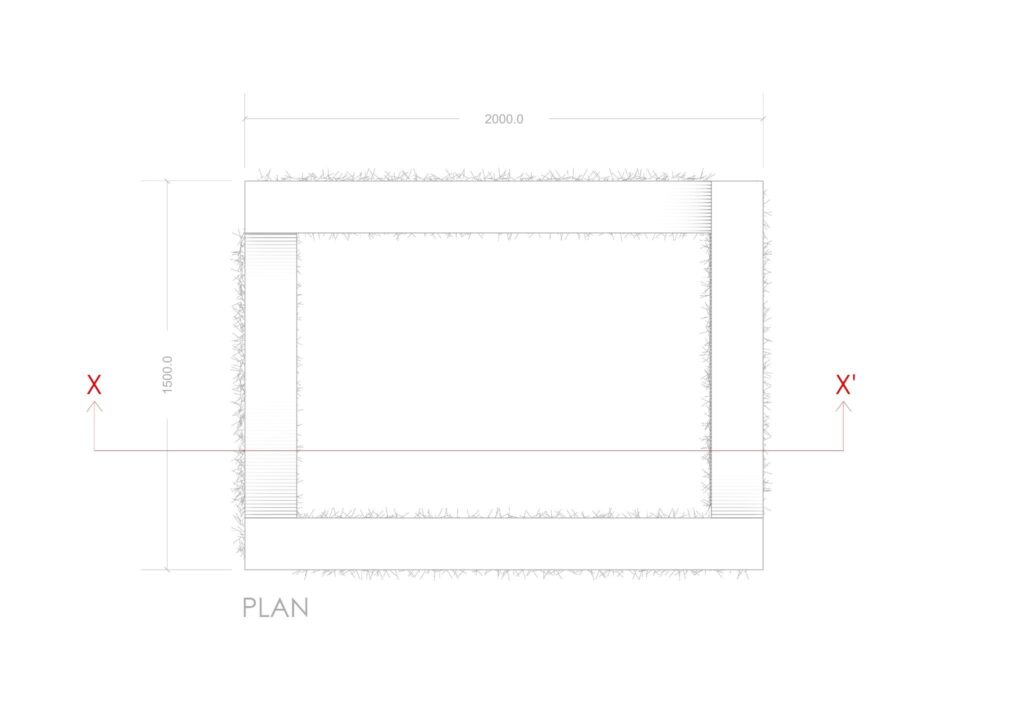
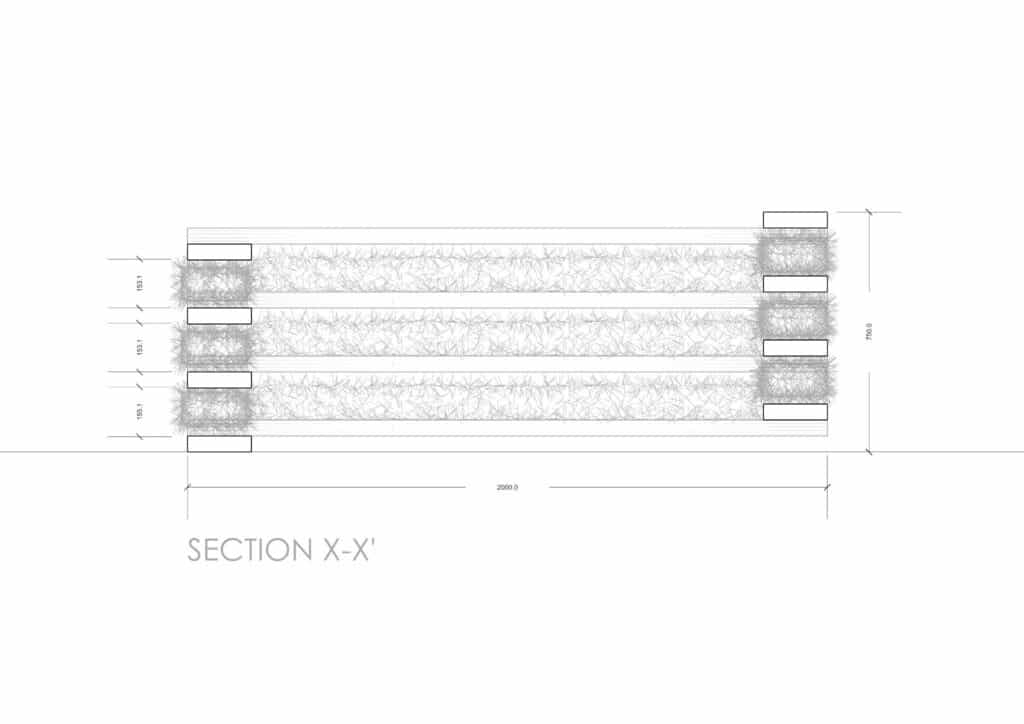
Kath Kunni matrix A traditional Himalayan timber-straw interlocking wall system using horizontal wood members with straw infill. The alternating layers of timber and straw create a composite wall with high seismic resistance and thermal performance. It is a precedent for how straw can be integrated into modular, stackable construction logic.
