Rebuilding reality from fragments of memory and lived experience
01 Introduction
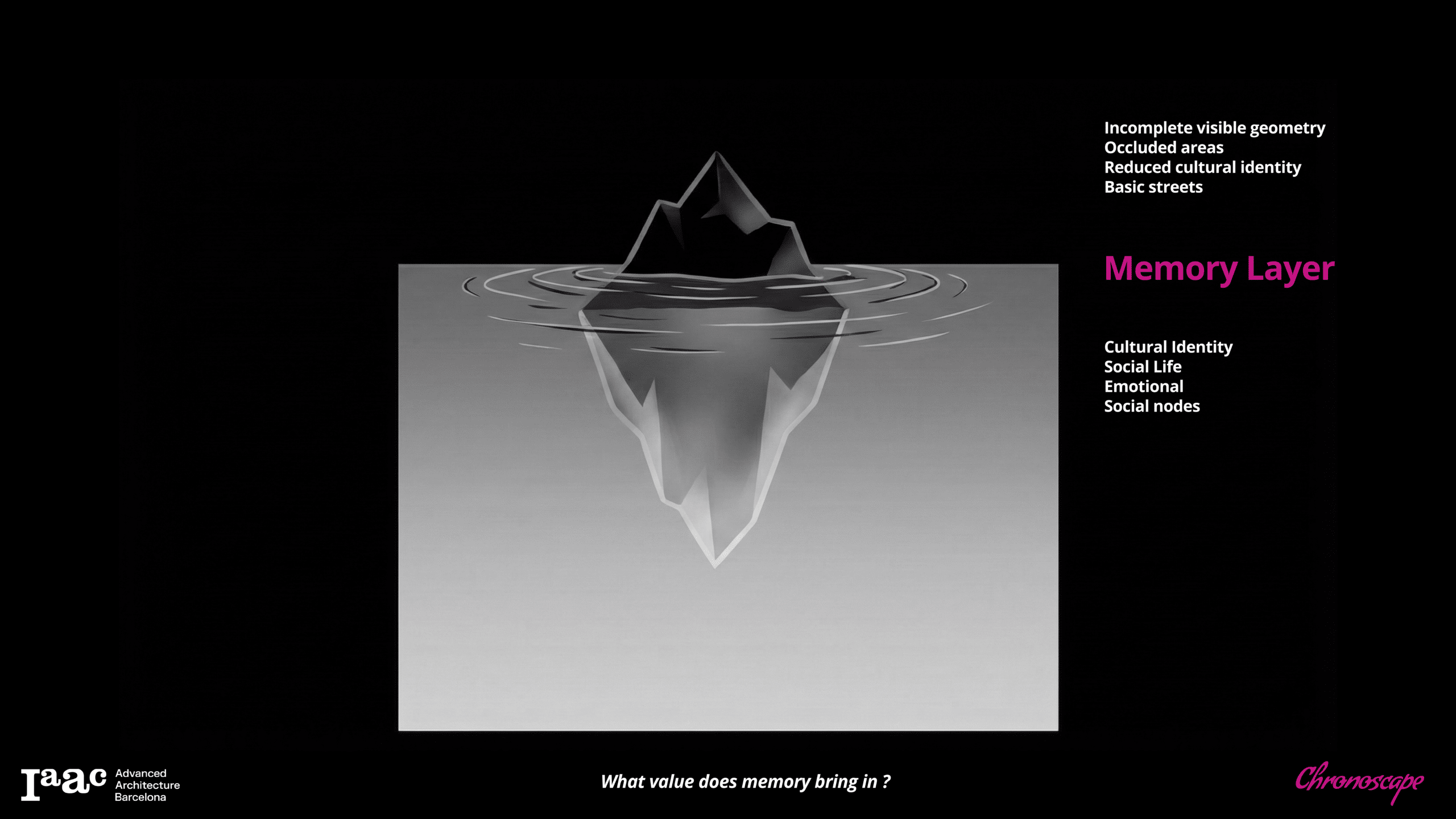
Incorporating memory into 3D reconstruction makes it possible to move beyond purely geometric recovery and towards environments that retain traces of how spaces were actually lived, remembered, and transformed over time. By combining conventional datasets with oral histories, subjective narratives, and experiential accounts, memory-augmented models can infer missing relationships, atmospheres, and micro-scales of use that image-only or text-only pipelines tend to flatten out.
02 What is memory ?
Memory can be understood as the dynamic capacity to encode, store, and reconstruct past experiences, allowing people and communities to maintain continuity of identity across time. In architecture, memory turns space into place by anchoring emotions, narratives, and cultural meanings to specific spatial situations, so that buildings and landscapes operate as “mnemonic devices” that record and transmit history.
03 What value does memory bring in ?
04 Workflow
05 LA Palisades – 2025 Wild fire
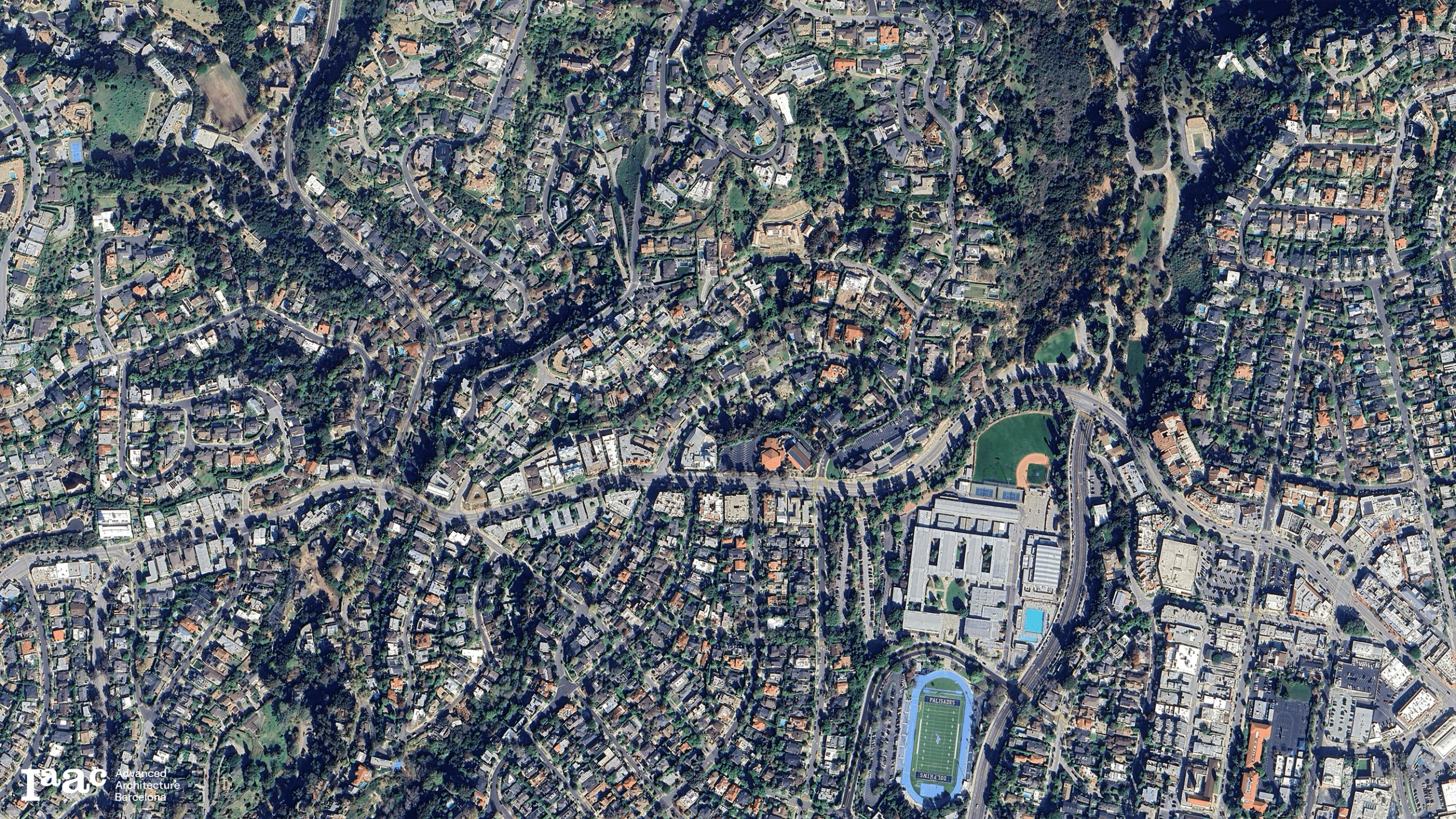
In 2025, the Palisades Fire in the Santa Monica Mountains became one of the year’s emblematic wildfires, rapidly spreading under extreme drought and powerful Santa Ana winds to burn more than 23,000 acres, destroy thousands of structures, and cause multiple fatalities. This event unfolded in parallel with an exceptionally severe wildfire season globally, widely cited as a visible symptom of accelerating climate instability and the expansion of fire-prone conditions.
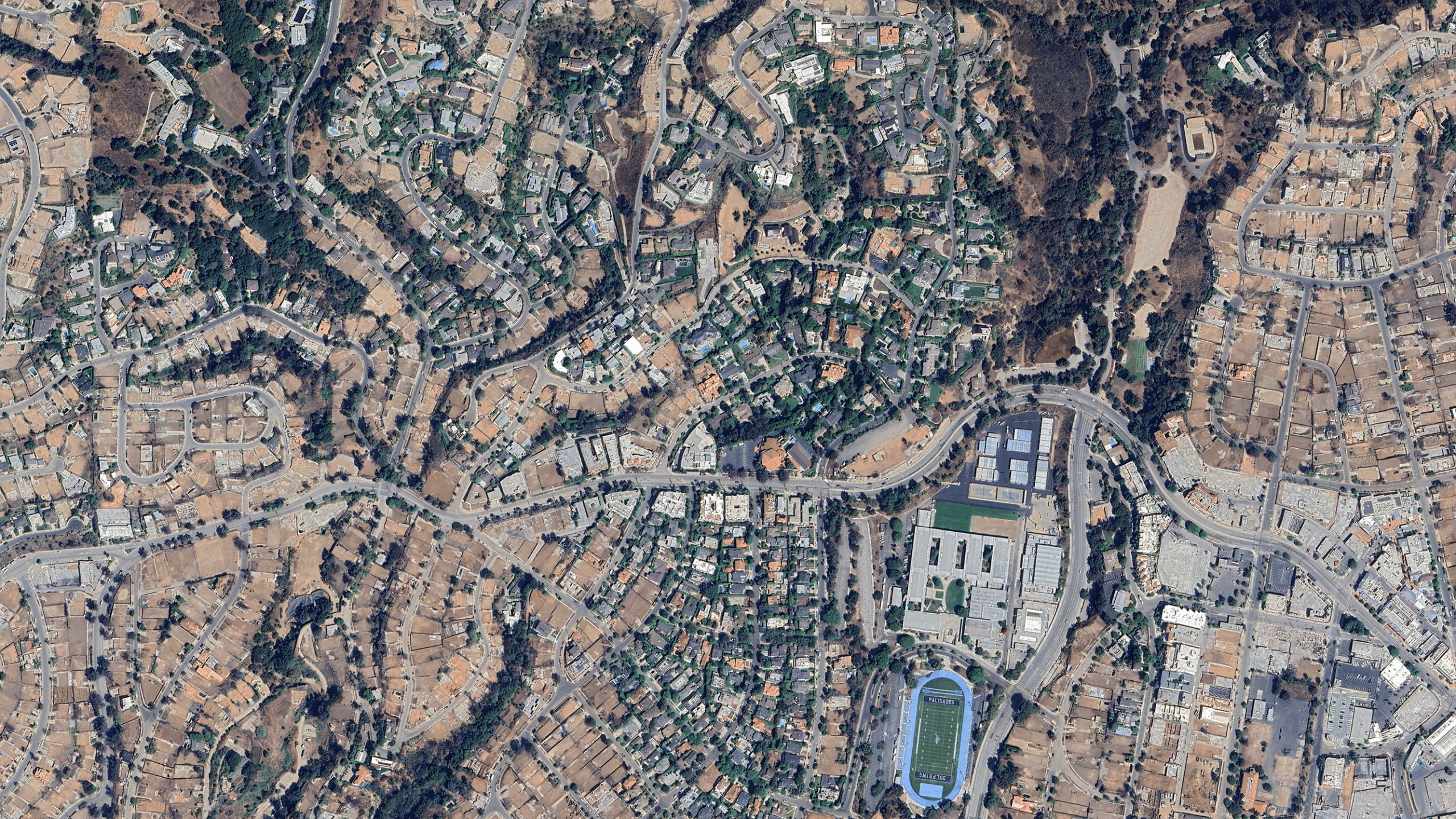
This wildfire is chosen as a study site because its scale, media documentation, and dramatic landscape transformation offer a rich testbed for exploring how memory-based 3D reconstruction can record not only the lost physical fabric, but also the lived experiences, trauma, and evolving narratives of communities who inhabited and witnessed this changing terrain.
06 Data
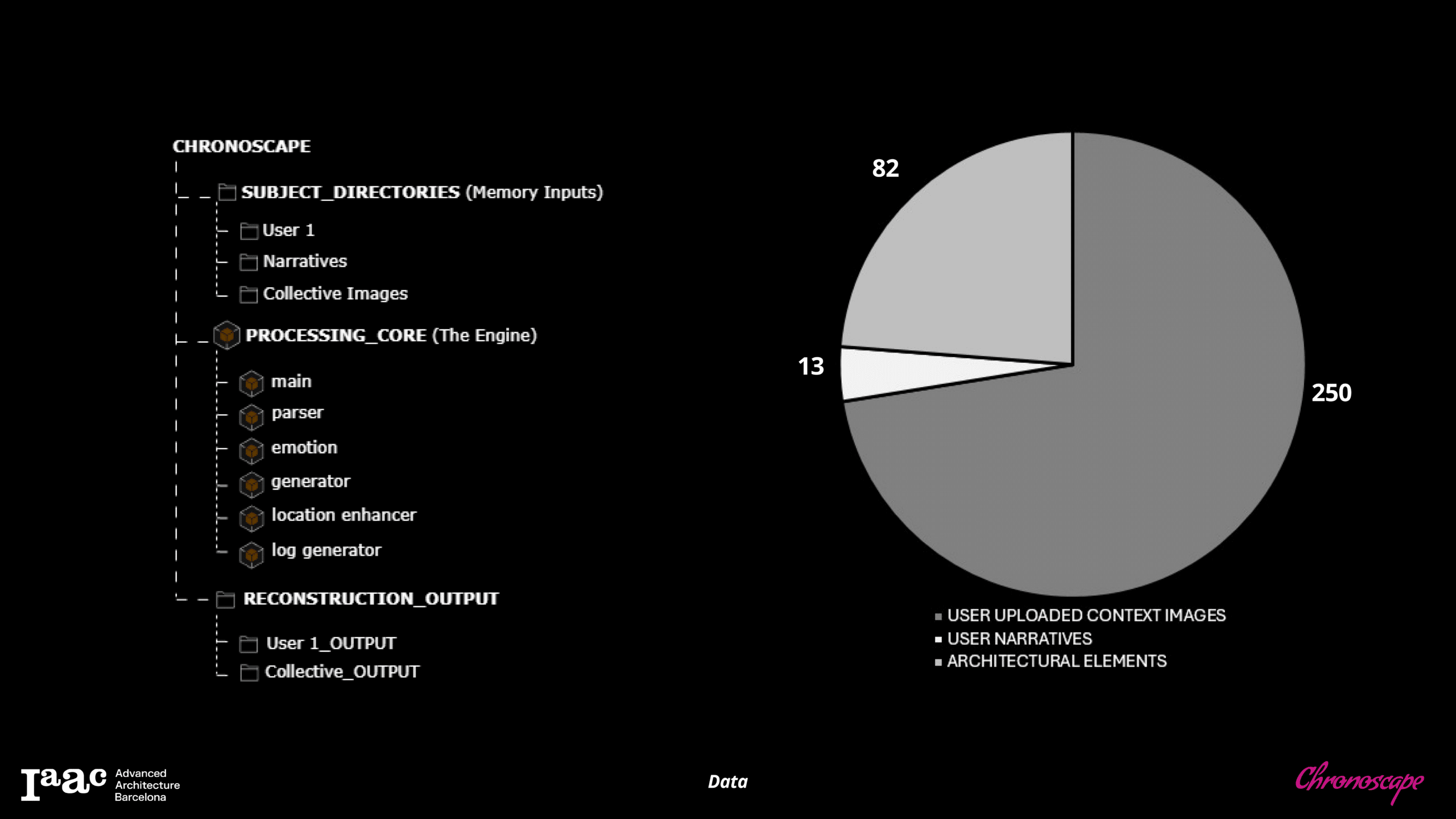
This diagram shows the Chronoscape data pipeline, where individual and collective memories are structured as directories, processed by an AI “engine,” and transformed into reconstructed spatial outputs. User-uploaded context images form the largest part of the dataset, while user narratives and extracted architectural elements provide additional qualitative and geometric detail for the reconstruction process.
07 Single User – Output
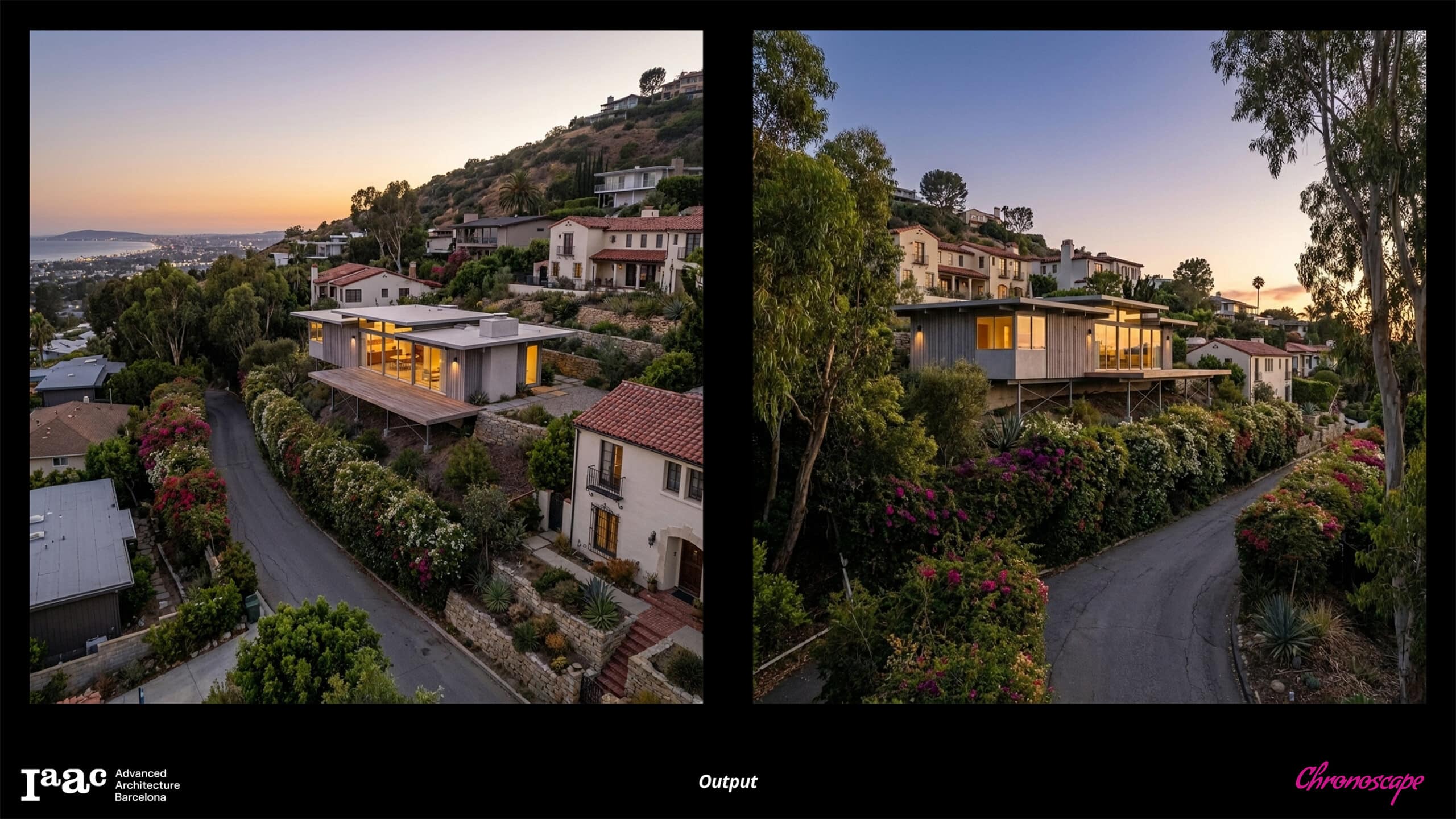
Comparison
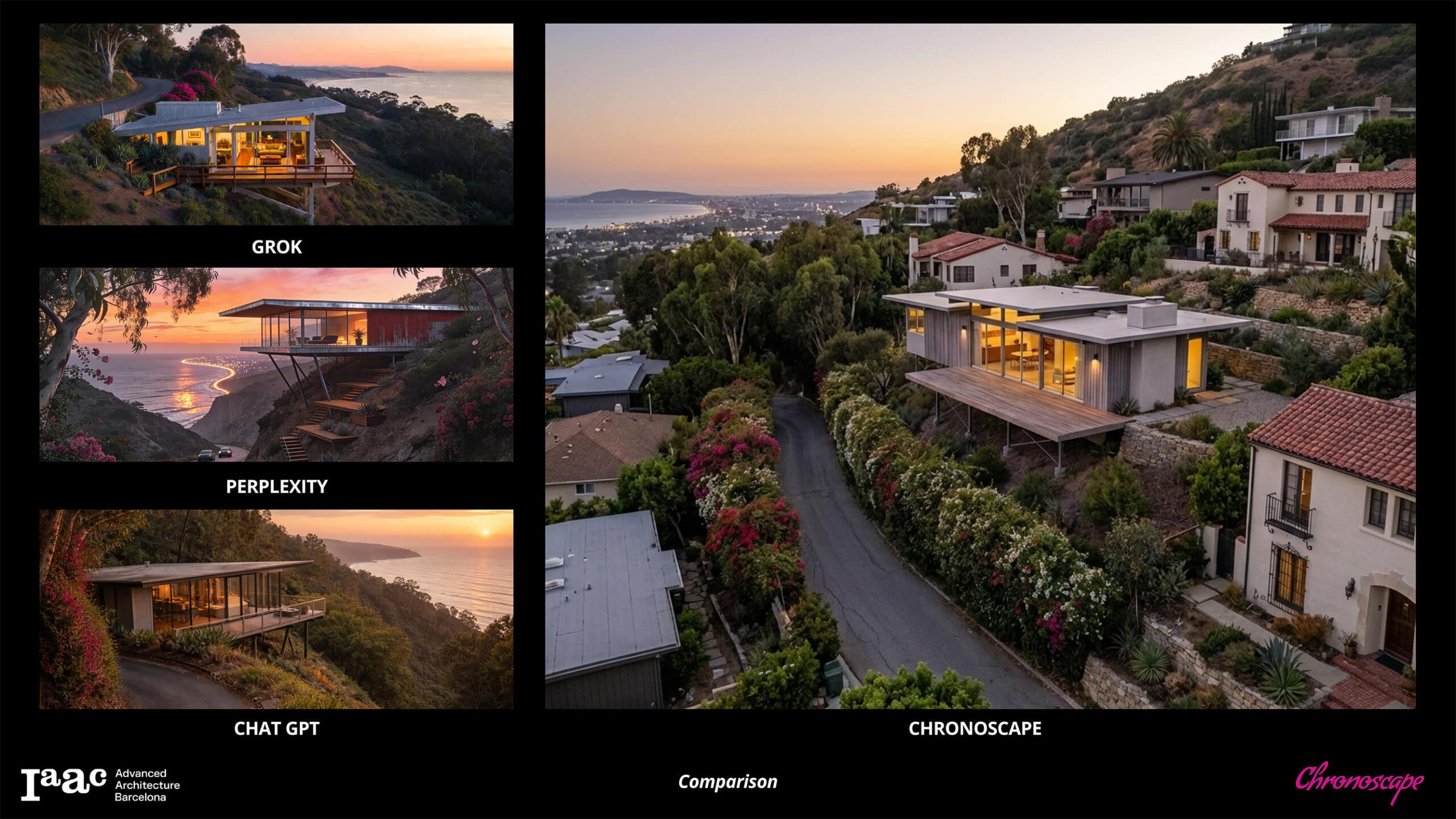
This comparison panel places Chronoscape alongside image generation models like Grok, Perplexity, and ChatGPT to highlight how memory-enriched reconstruction can remain truer to an existing site while still conveying atmosphere and narrative. On the left, the AI images respond stylistically to the prompt, a coastal modern house on a steep hillside at sunset, but each freely reimagines structure, topography, and urban context, drifting away from the specific spatial reality. On the right, the Chronoscape output anchors the same house within its real neighbourhood fabric, preserving street geometry, vegetation, and adjacent buildings, and demonstrating how memory-grounded workflows can bridge imaginative rendering with situated architectural accuracy.
08 Model Timeline
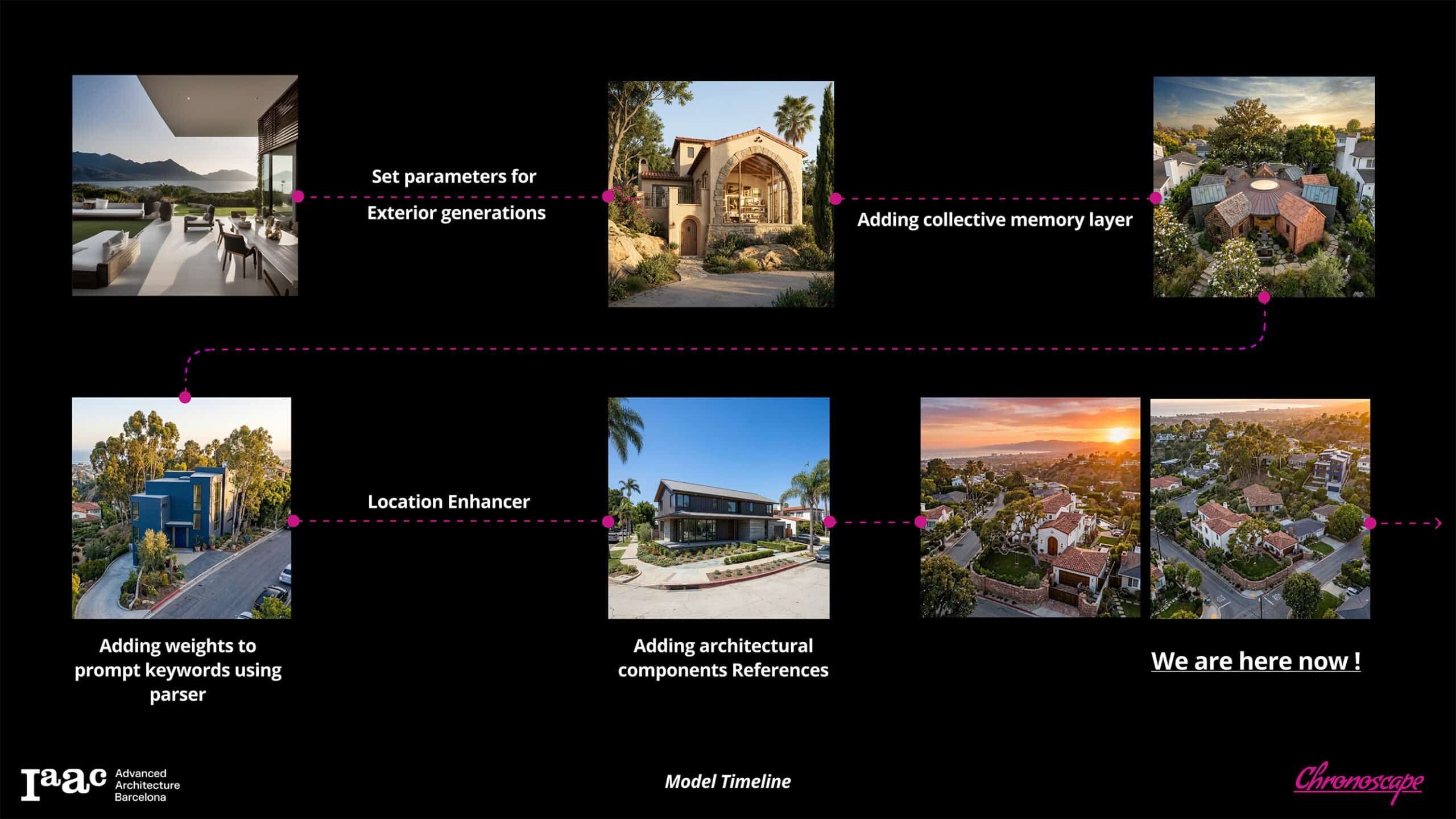
The diagram shows a “Model Timeline” for Chronoscape that explains how exterior image generation becomes progressively more context-aware and memory-driven. It begins with a stage called “Adding weights to prompt keywords using parser,” where textual prompts are refined so that certain architectural and spatial terms influence the output more strongly. The next stage, “Set parameters for Exterior generations,” focuses on defining the main controls for generating building exteriors, such as composition, lighting, and overall style. After this, “Location Enhancer” introduces geographic and site-related information, so the generated architecture responds more effectively to its surroundings. The process then moves to “Adding architectural components References,” where specific typologies and elements from architectural precedents are incorporated as guidance. Finally, “Adding collective memory layer” integrates a layer of shared memories and narratives, where the model produces richer neighbourhood-scale exteriors informed by both architectural references and collective memory.
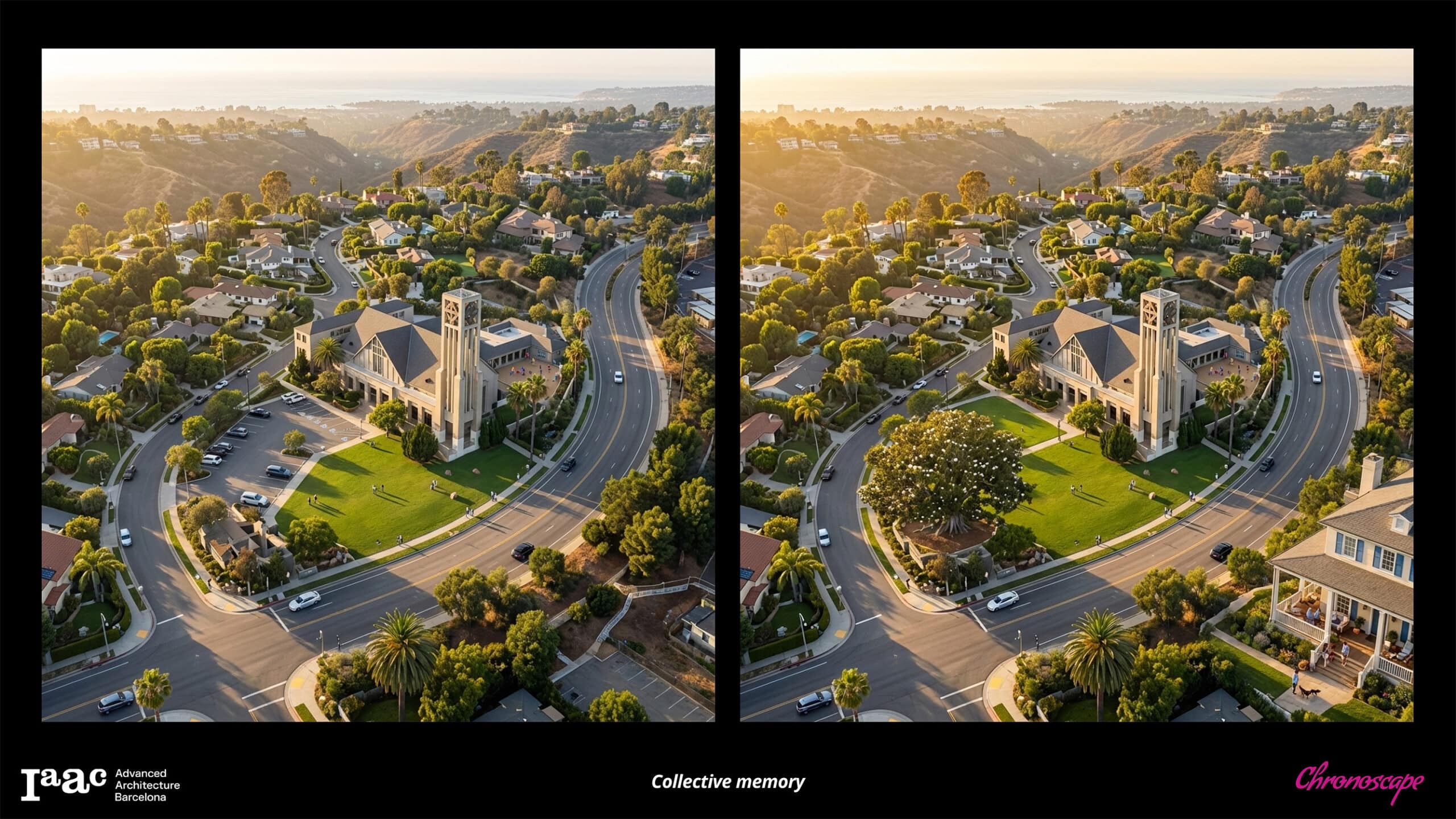
09 Collective memory
10 Collective memory – Workflow
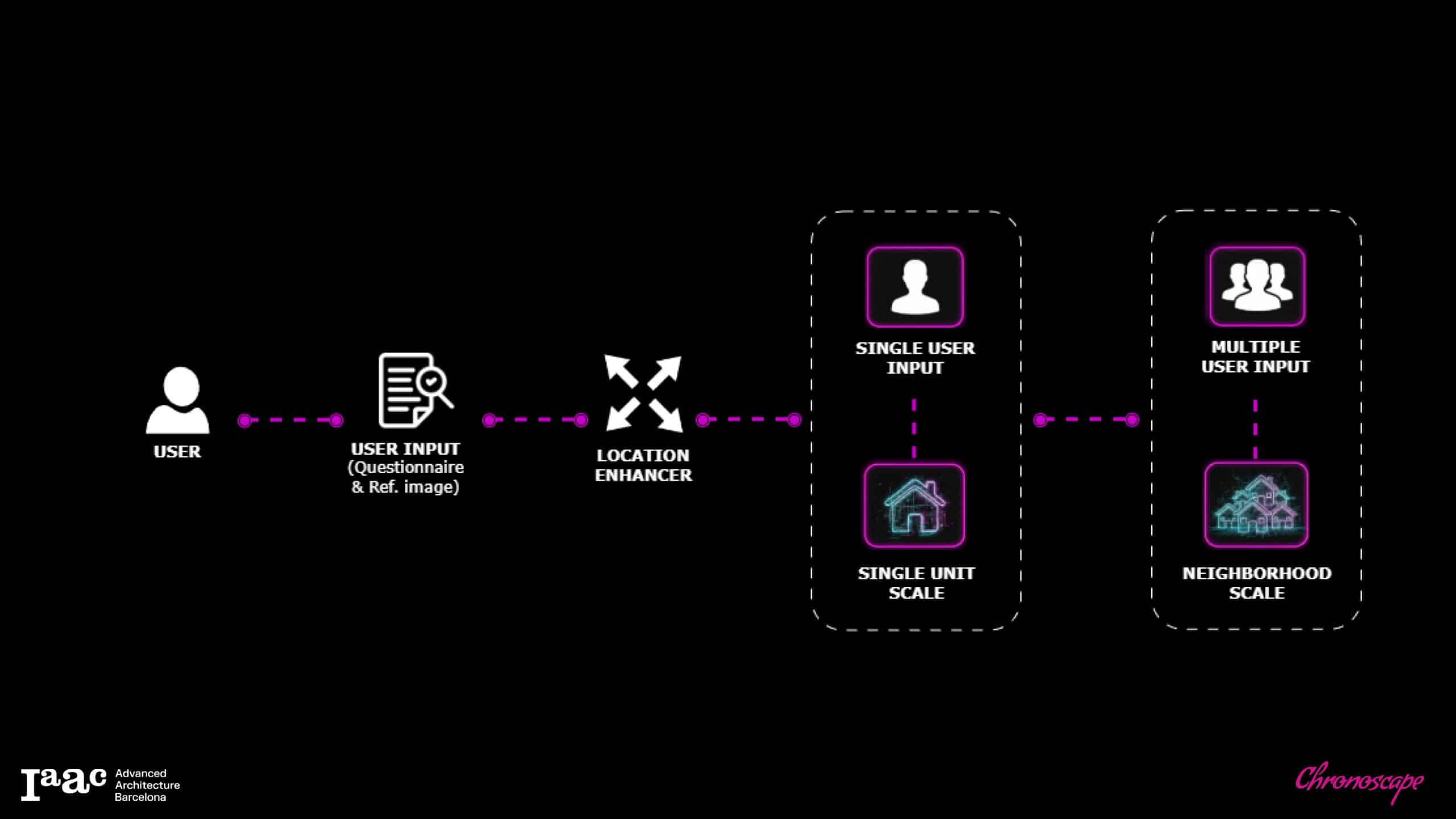
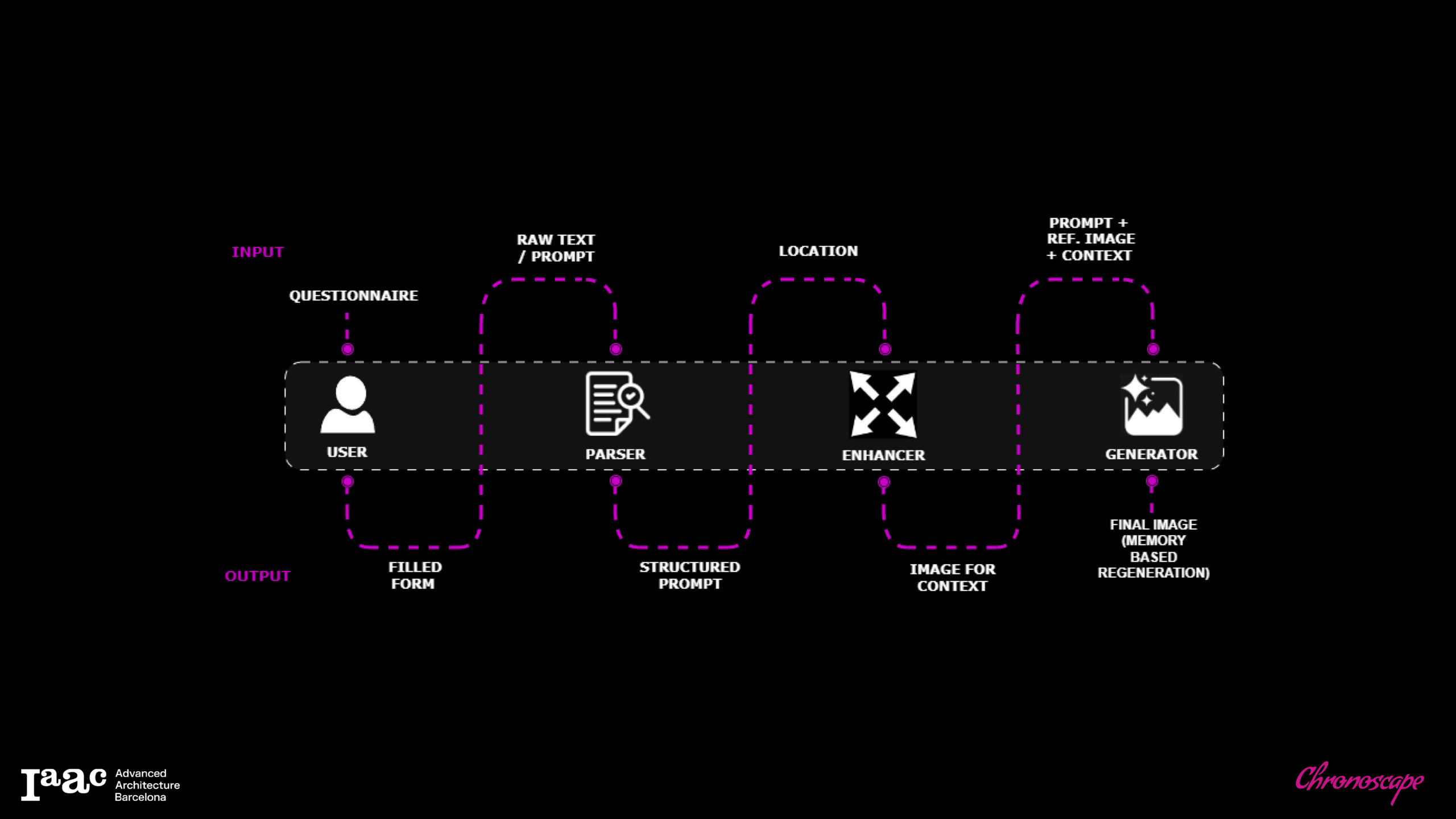
Individual memories become collective memory in Chronoscape. It starts with a single user who provides input through a questionnaire and reference images, which capture personal memories and spatial preferences at the scale of a single housing unit. That information passes through a location enhancer, situating the memories in a specific geographic and urban context. From there, the workflow branches into two dashed boxes: one where a single user input generates outcomes at a single unit scale, and another where multiple user inputs are aggregated to produce designs at the neighbourhood scale. Together, these steps show how the system scales from personal recollections to shared, community-level spatial narratives.
11 Collective Memory – Output
12 Future
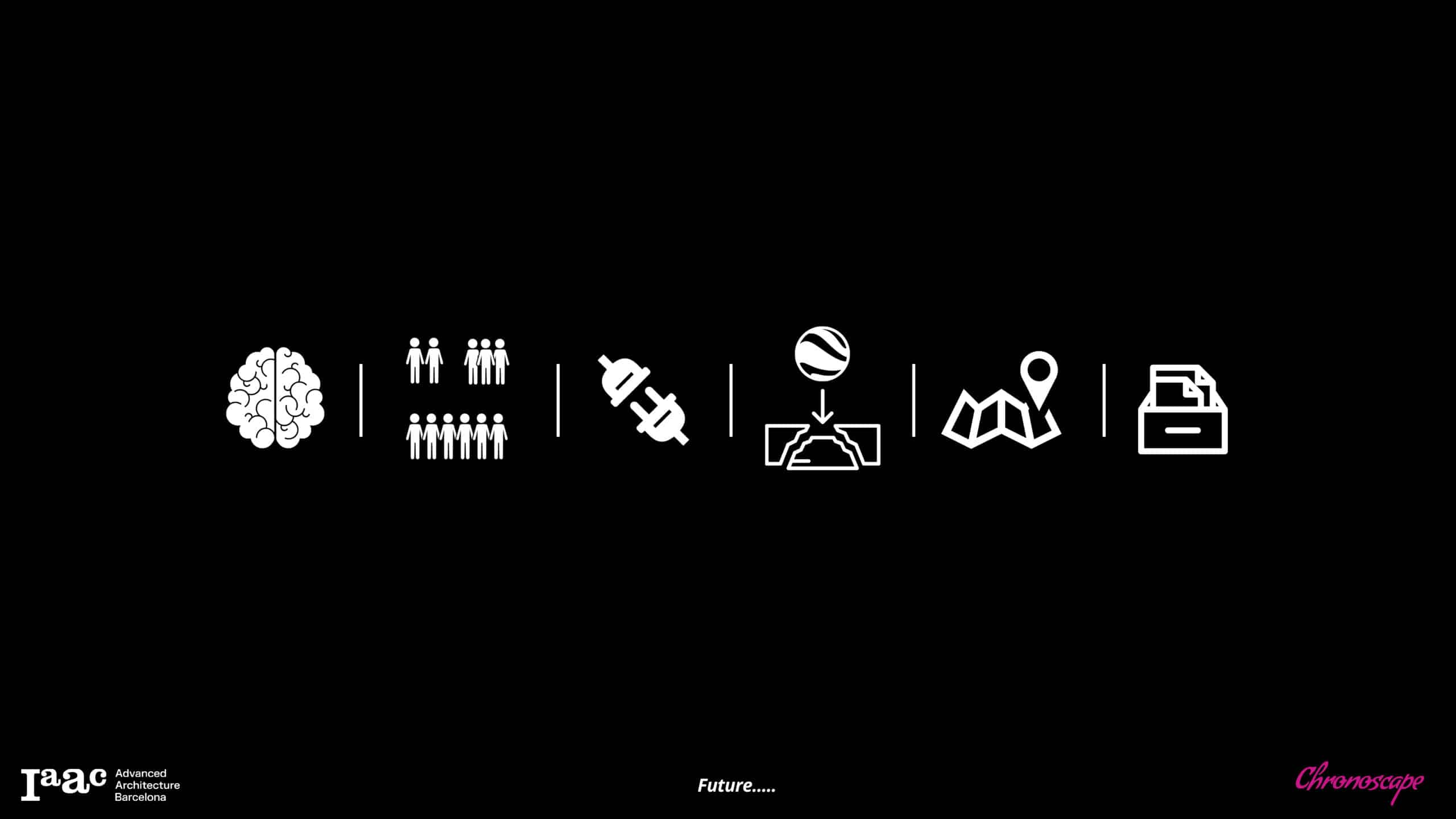
A dedicated memory base will let the model learn from past generations, reuse successful solutions, and accumulate an evolving archive of urban memories. As a plugin in 3D building software, it can take geometry and texture inputs directly from design workflows and return context-aware reconstructions in real time. Texture-aware prompting will better capture façades and local material cultures, strengthening memory-driven reconstructions. At the city scale, filling gaps in street-view coverage and reconstructing missing fragments enables heritage preservation, predictive urban visualisations, and analyses of urban change. Operating on larger datasets supports city-wide simulations while demanding careful attention to ethics, bias, and whose memories are encoded