
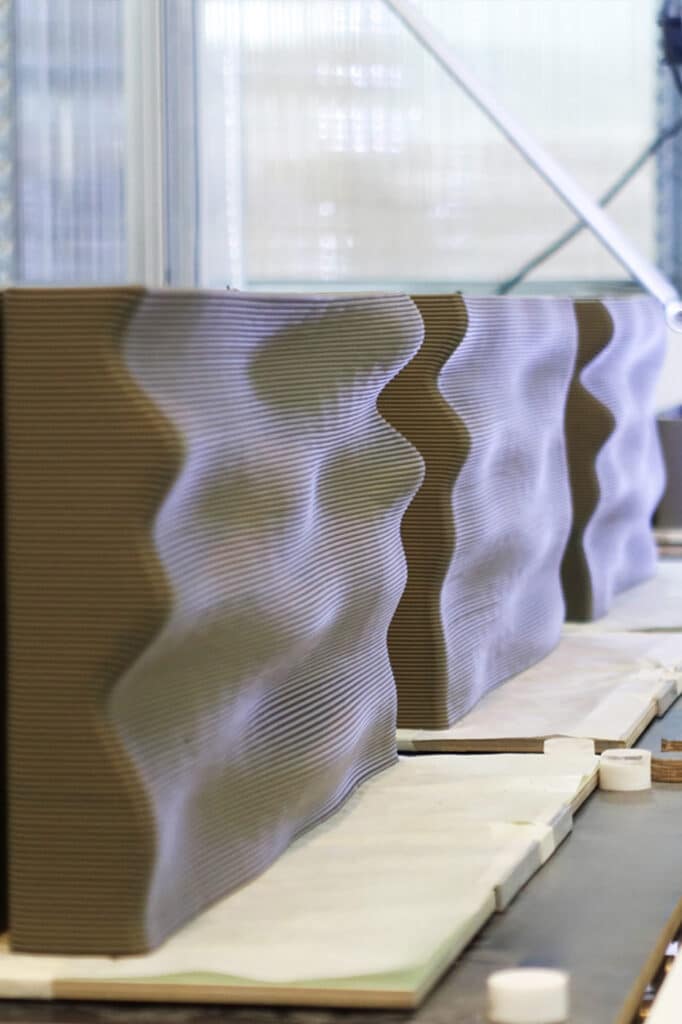
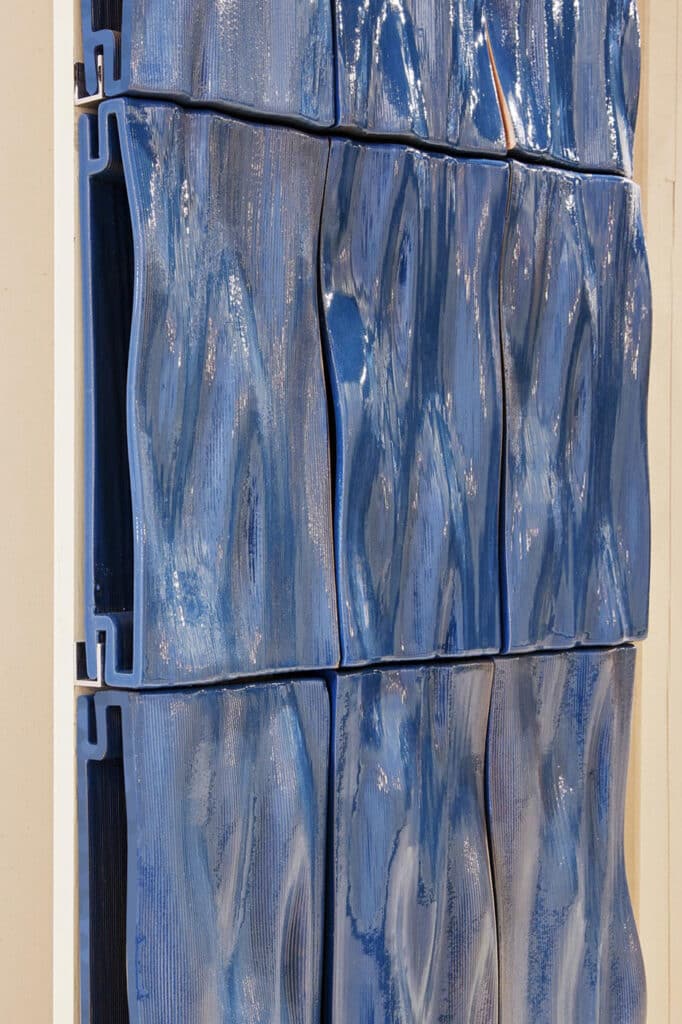
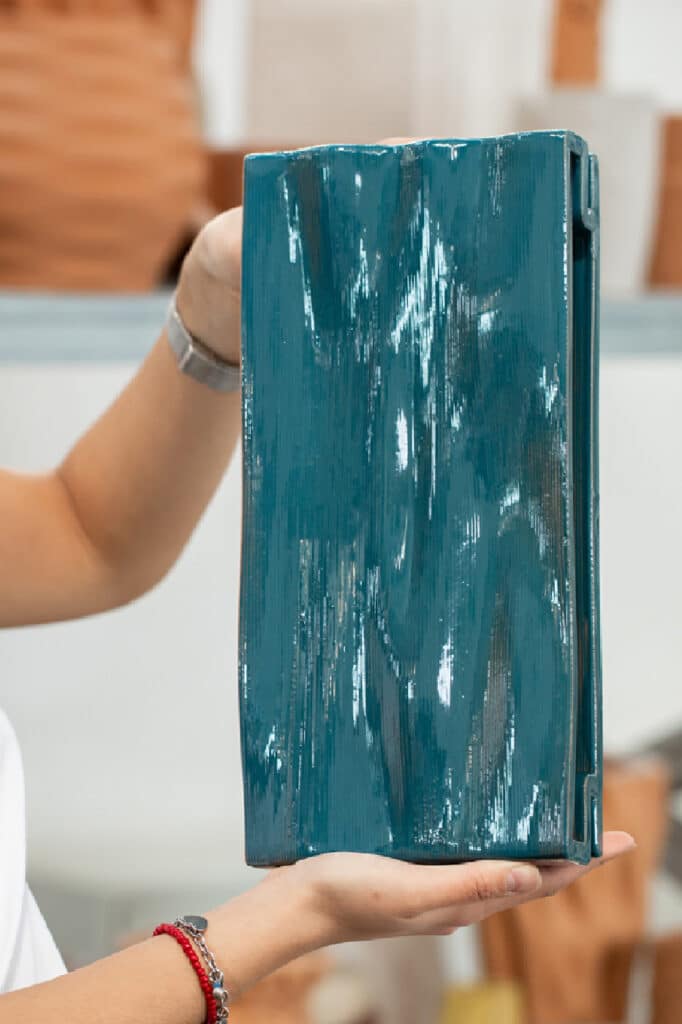
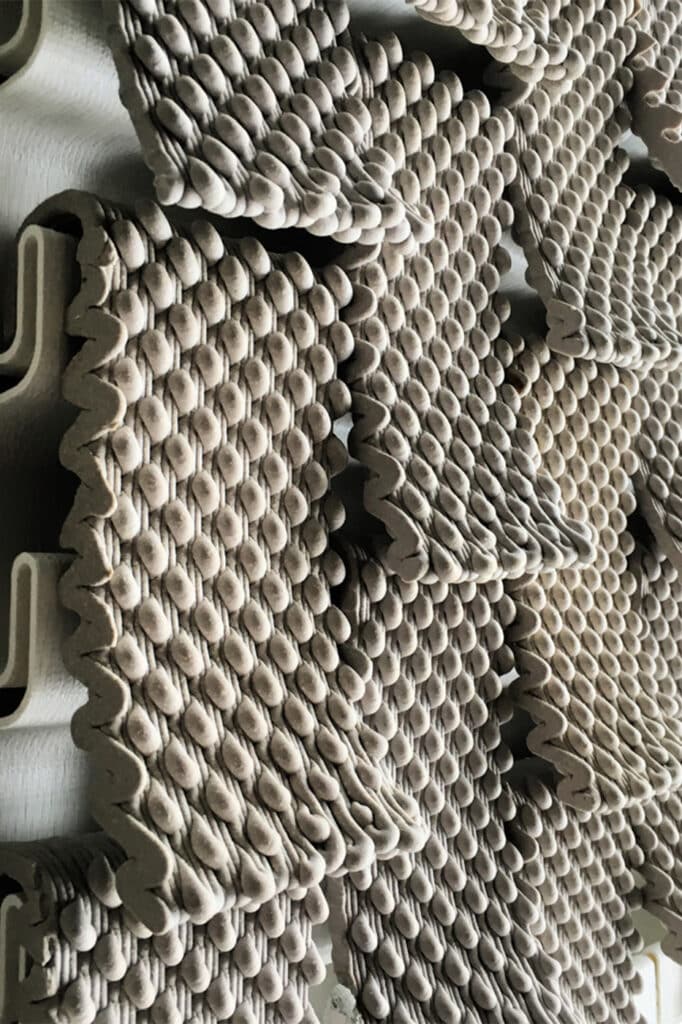
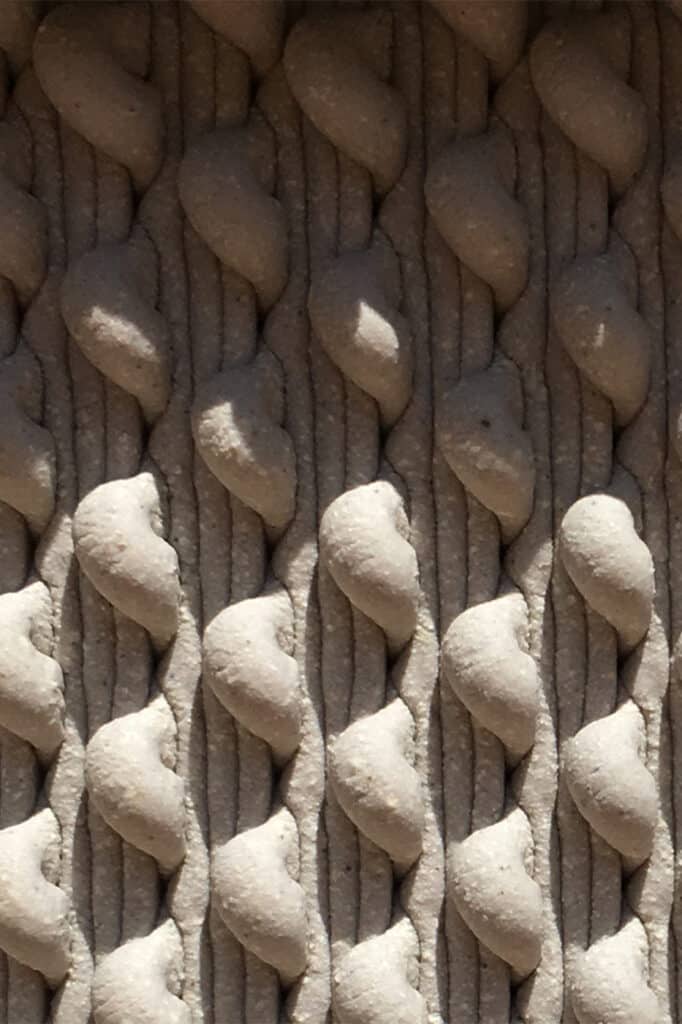
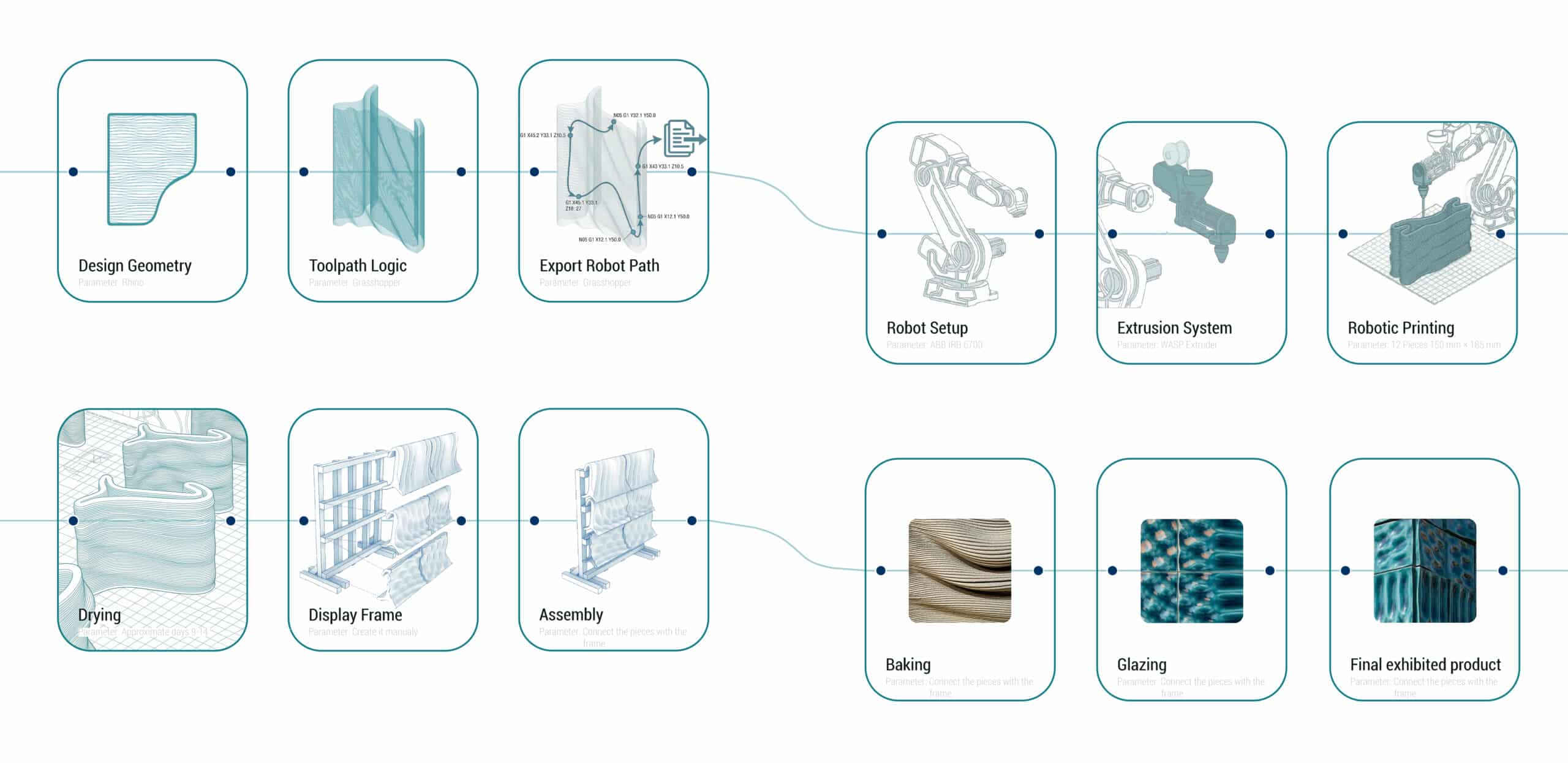
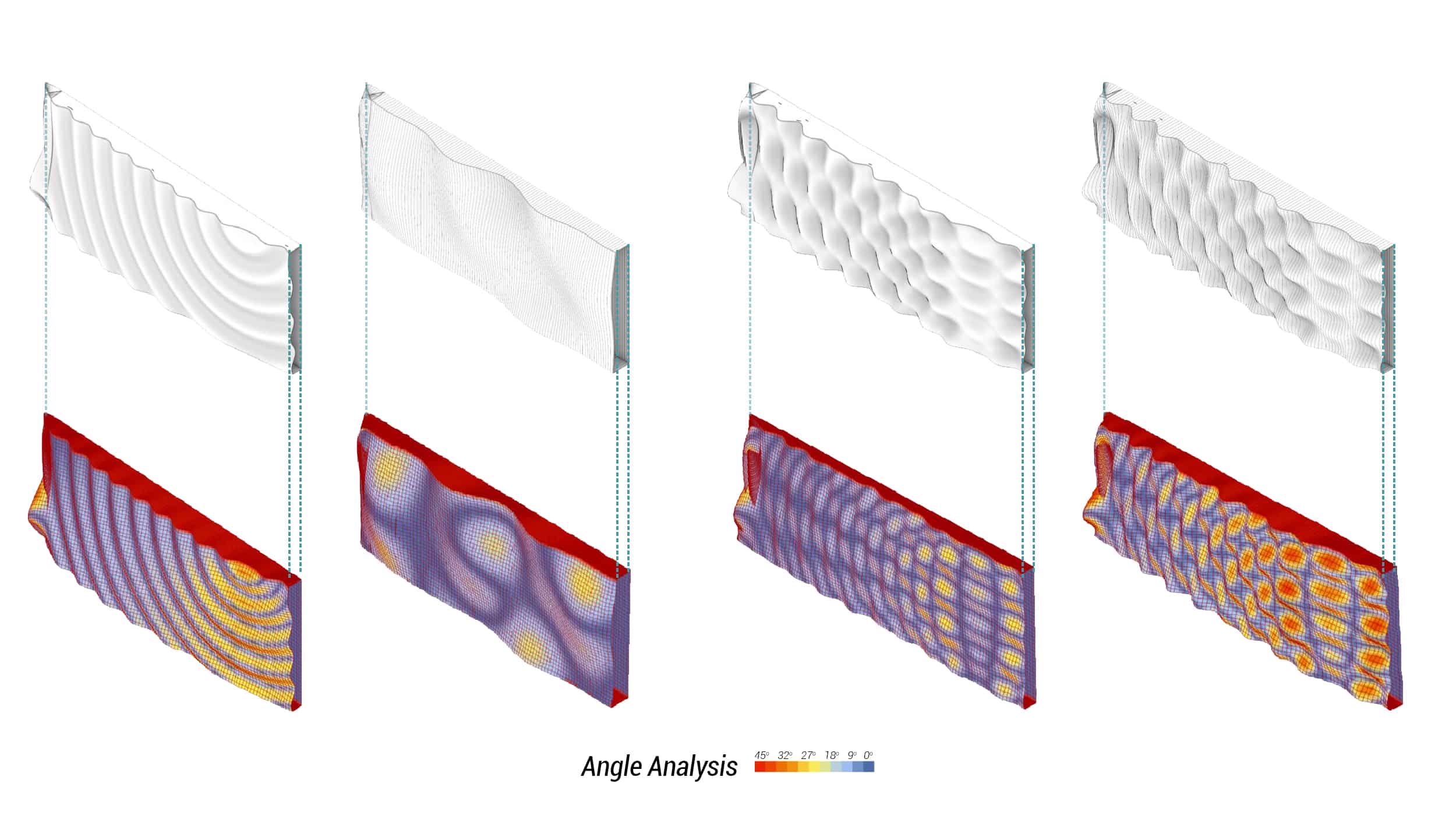
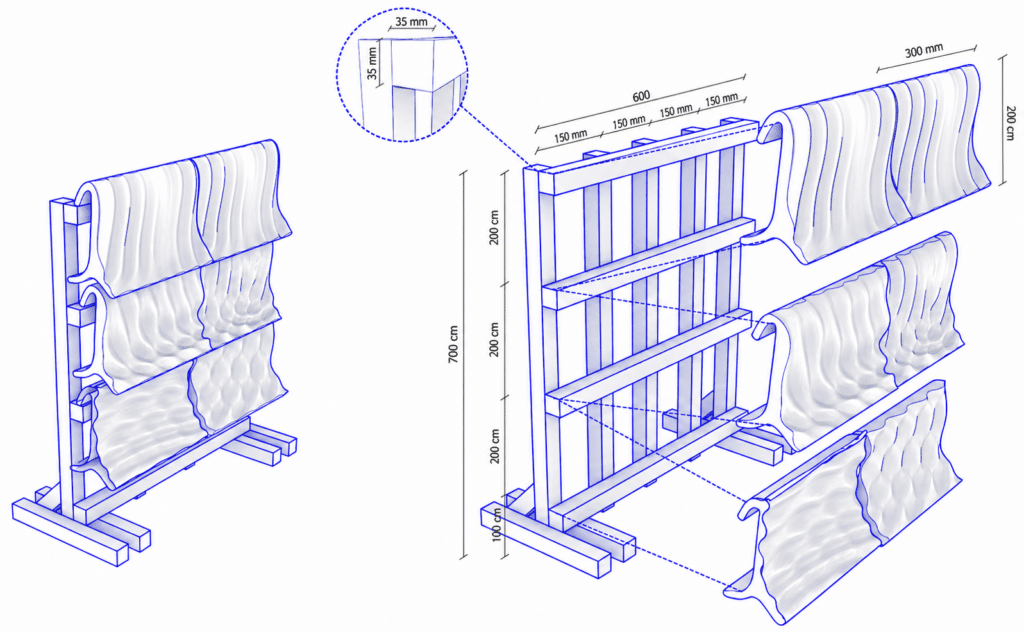
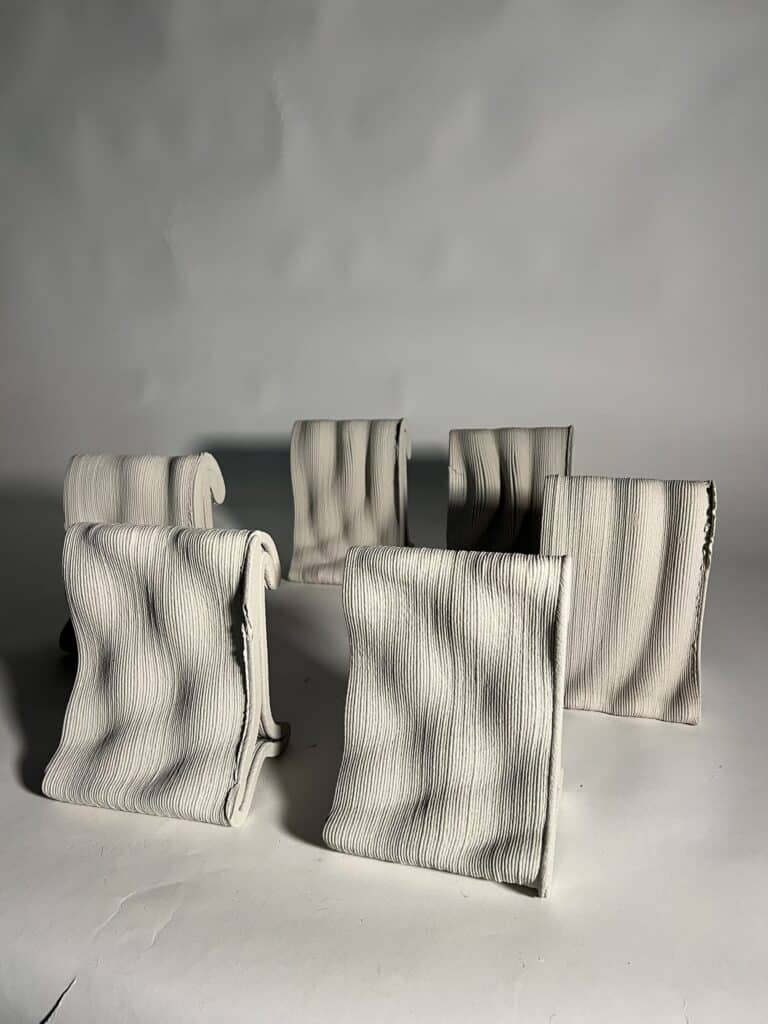
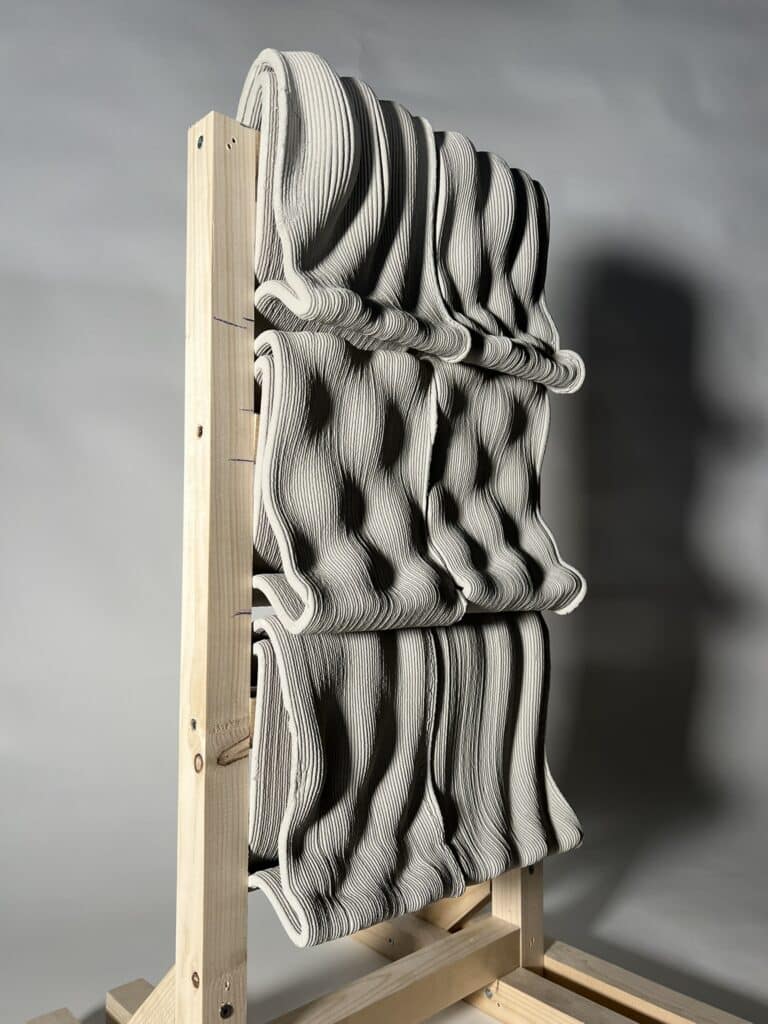
B. The Waves explores robotic additive manufacturing using ceramic clay to create a ripple-driven parametric facade. Developed in the IAAC Master in Advanced Architecture, the project utilizes an ABB IRB 6700 robot and WASP extruder to 3D print wall cladding tiles. The computational logic employs Grasshopper and attractor points to simulate water droplets, generating continuous toolpaths with overhangs under 45 degrees for structural stability. The components assemble onto a timber and steel substructure, demonstrating how robotic fabrication informs architectural design.
State of the Art
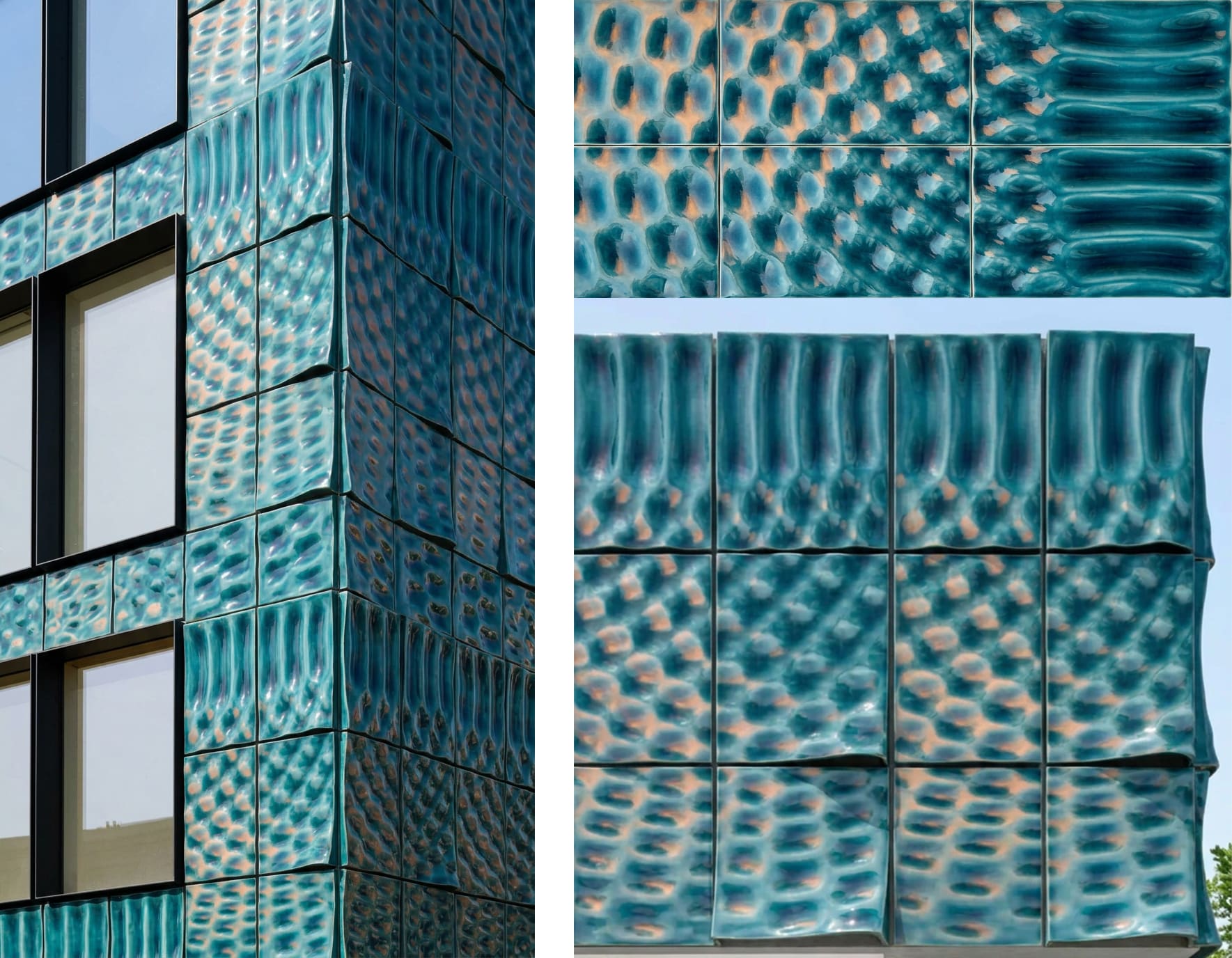
The design concept of our system is inspired by water performance and rainfall. Through a parametric 3D printing process, we aim to create a surface that captures the fluidity and movement of water. The tiles are intended to be finished with glossy glazes in vibrant colors, allowing the façade to visually evoke the reflective and dynamic qualities of rain.
Fabrication Methodology
Digital Module Catalogue
Final Module Design
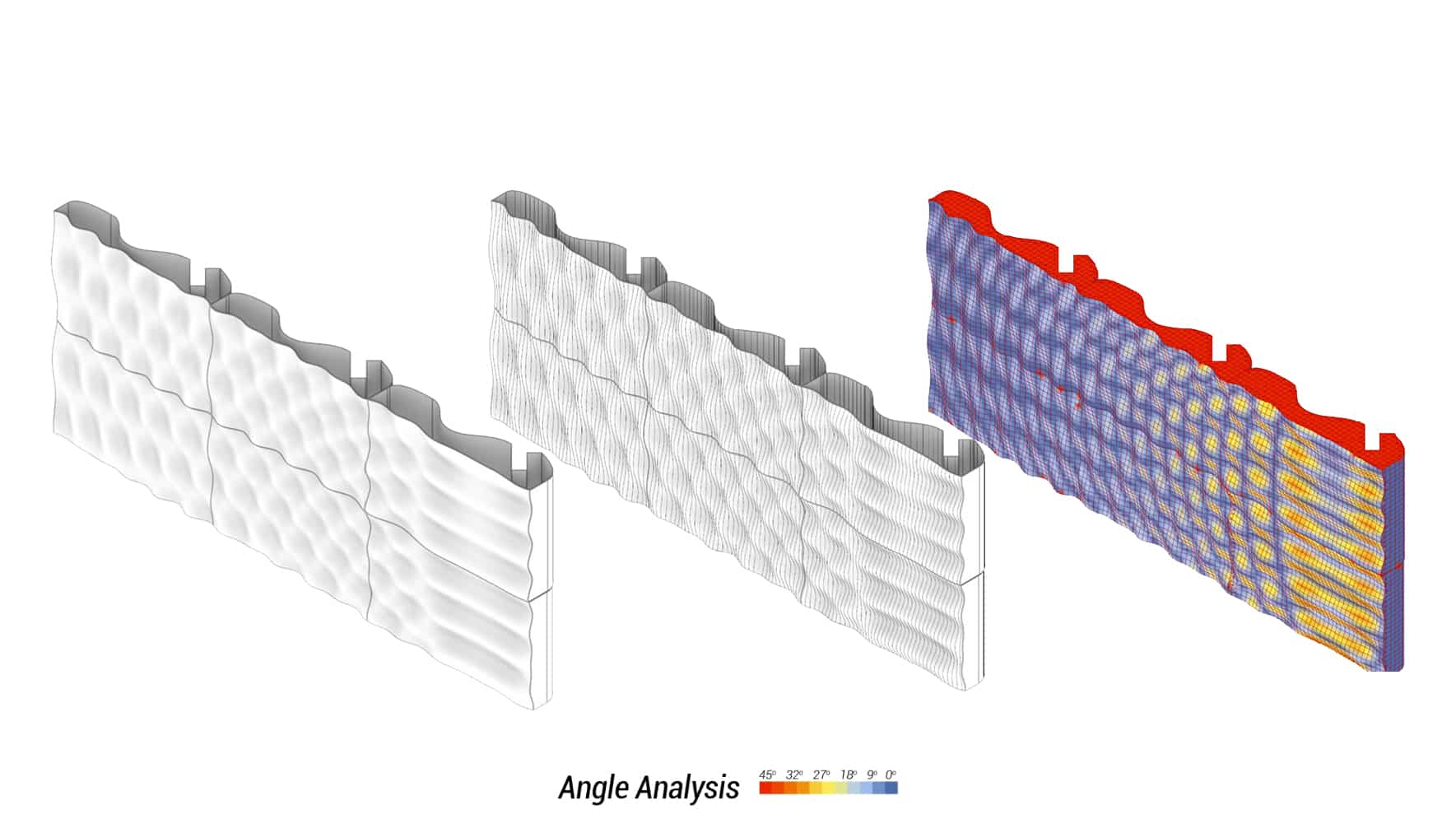
Design Strategy and Performance
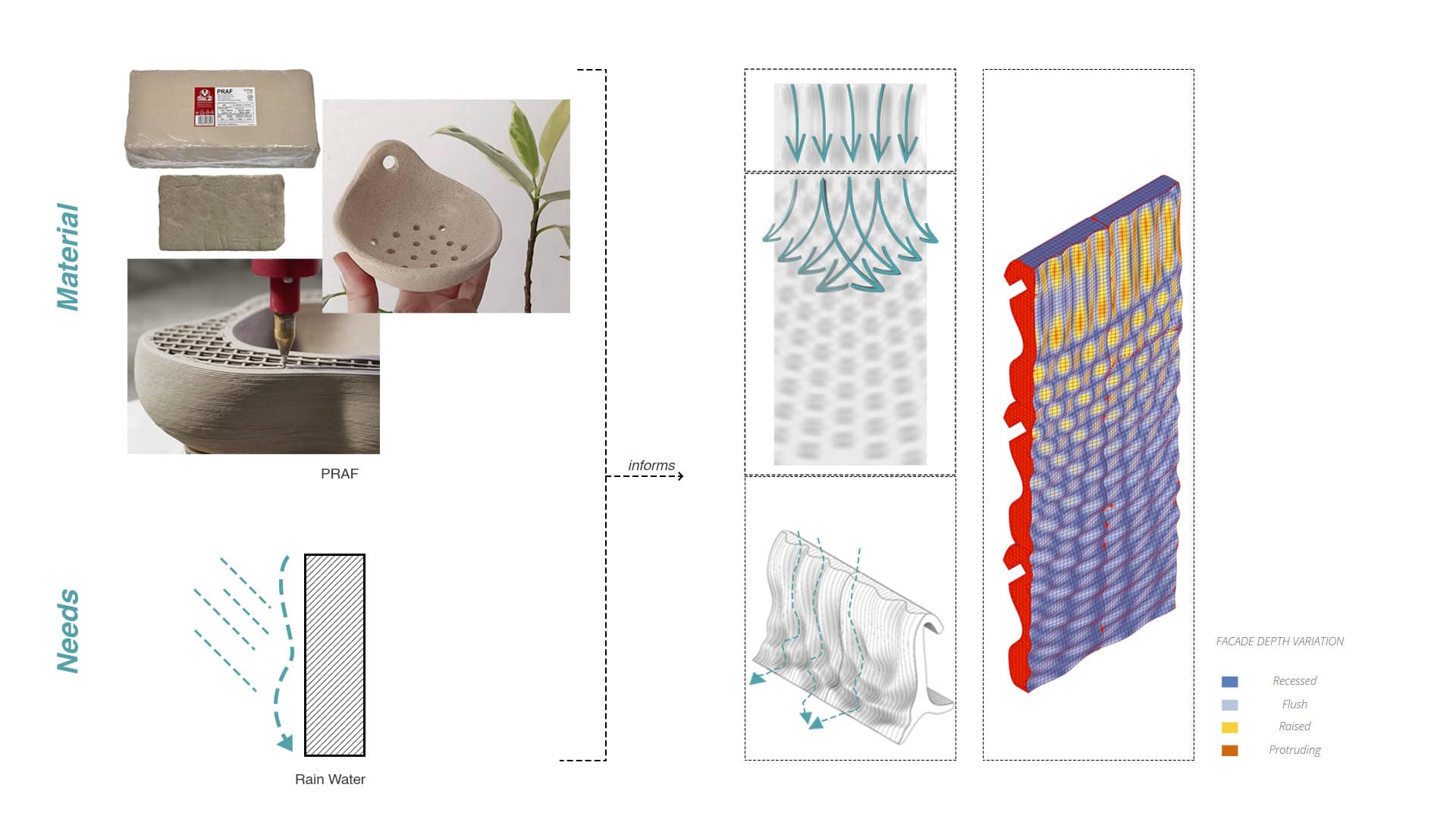
Design Analysis and Computational Logic
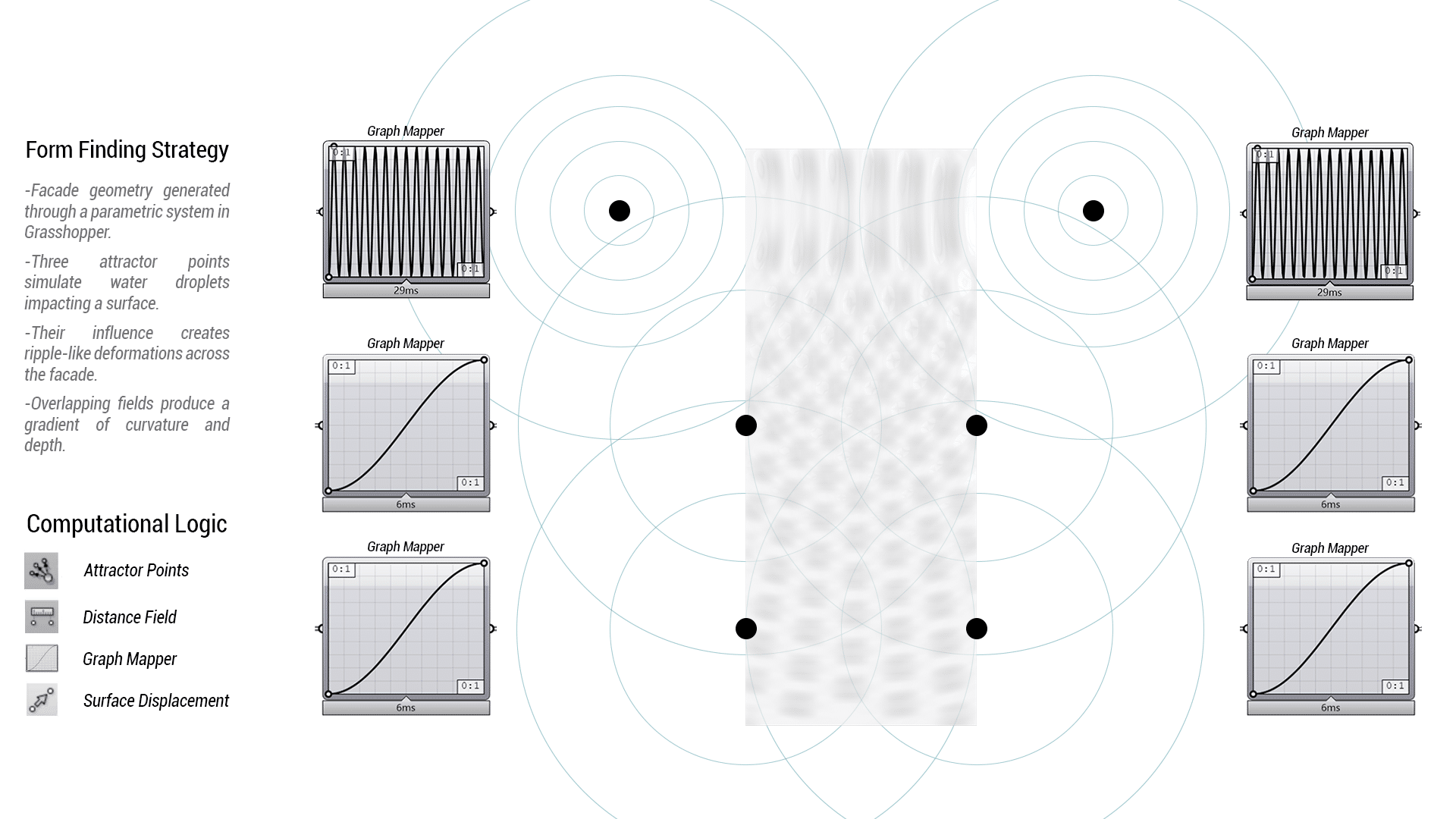
Form Finding Strategy
The facade geometry was developed through a parametric form-finding process using Grasshopper. Within this system, three attractor points were introduced to simulate the impact of water droplets on a surface. Each attractor acts as a source of influence, deforming the surrounding geometry and generating ripple-like patterns that spread across the facade. As the zones of influence intersect, they create different intensities of deformation, producing a continuous gradient of curvature and depth. The interaction between the three attractor points results in a dynamic surface condition in which the geometry appears to respond fluidly, similar to waves expanding outward from points of impact in water.
Computational Logic
The facade is generated through a parametric workflow structured around several computational operations. The process begins with the definition of attractor points placed on or near the facade surface, which serve as drivers for geometric transformation.
A distance field is then calculated across the surface, allowing each point on the facade to measure its distance from the attractor points. This produces a gradient of values that determines the intensity of influence: areas closer to the attractors experience stronger effects, while distant areas remain less affected.
These values are subsequently processed through graph mapping, which remaps the numerical data to control how the deformation behaves. By adjusting the graph curve, the designer can refine the rate at which the influence diminishes, emphasize ripple formations, or smooth the transitions between affected areas.
Finally, the remapped values drive the surface displacement. The facade geometry is displaced along its normal direction according to the calculated values, creating a series of ripple-like deformations. Where the influences of multiple attractors overlap, the displacements combine to produce gradients of curvature and depth, resulting in a fluid and responsive architectural surface.
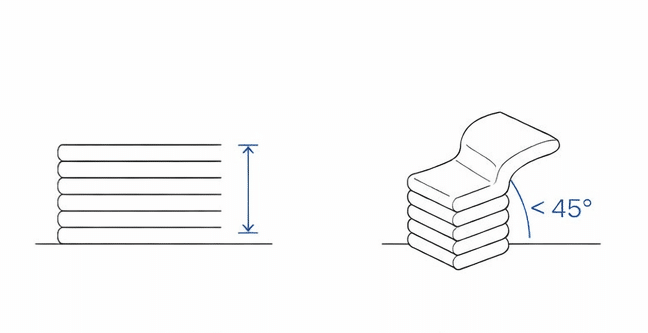
Printability Parameters – Fabrication Constraints
paragraph
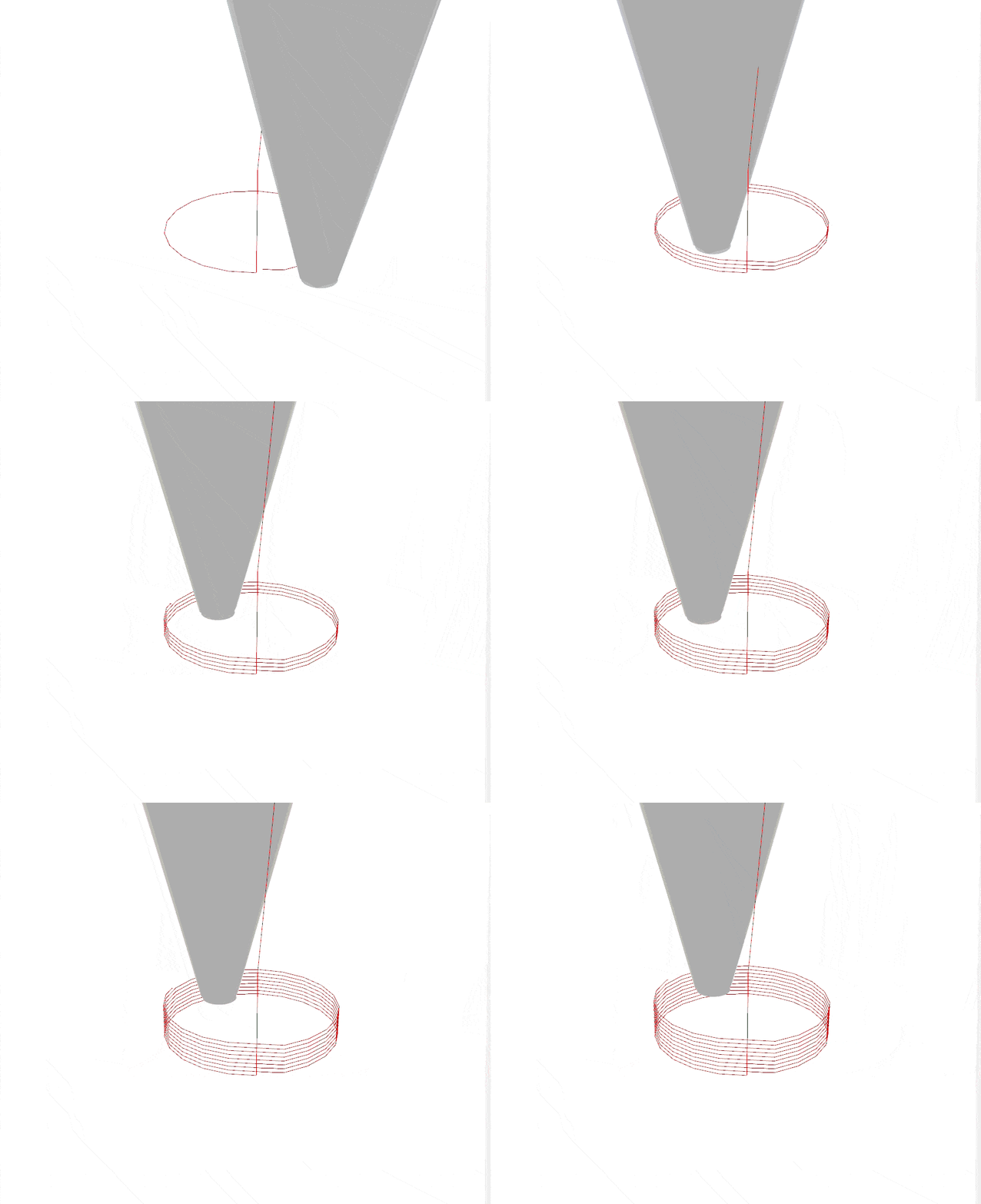
Printability Parameters – Computational Rules
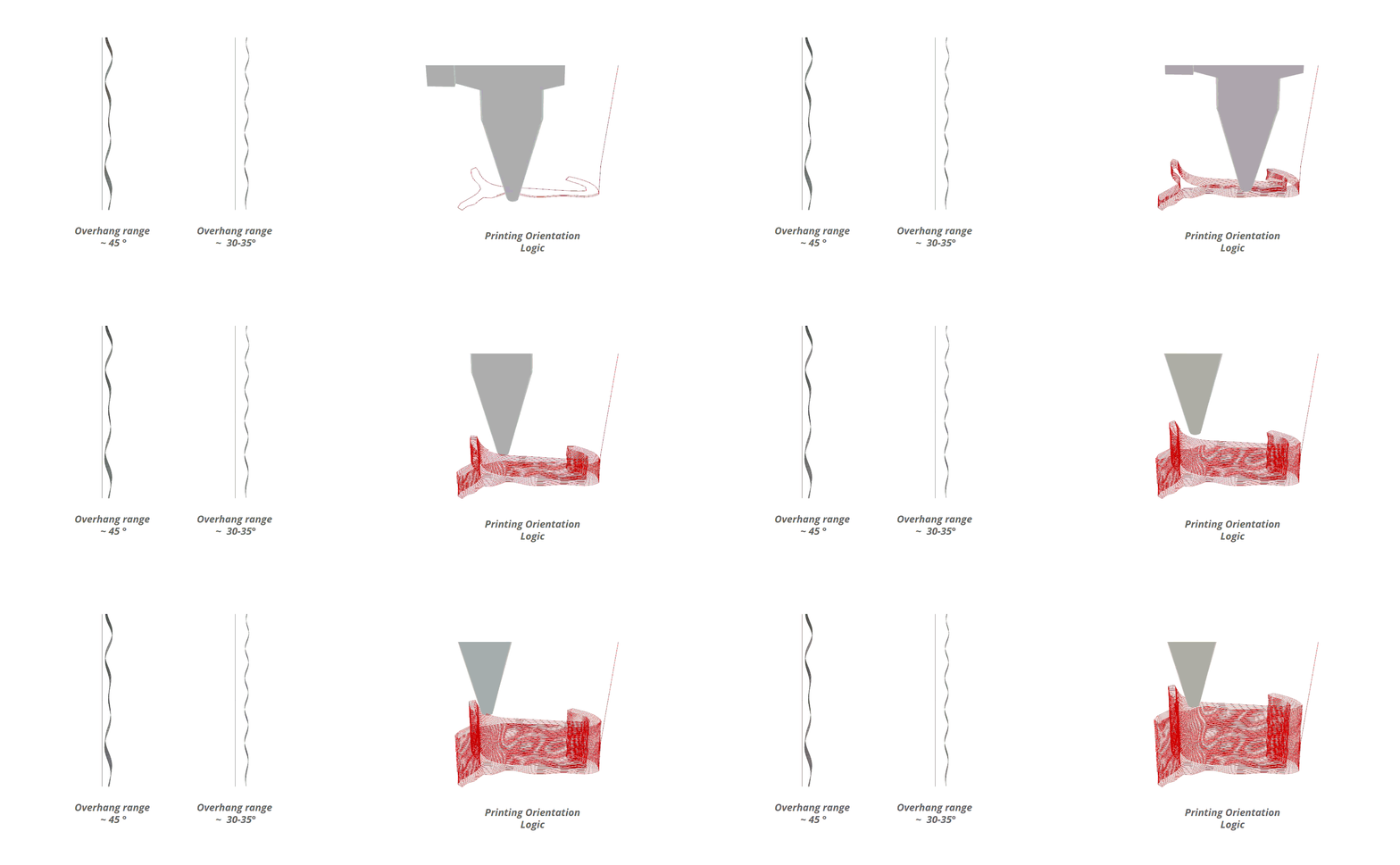
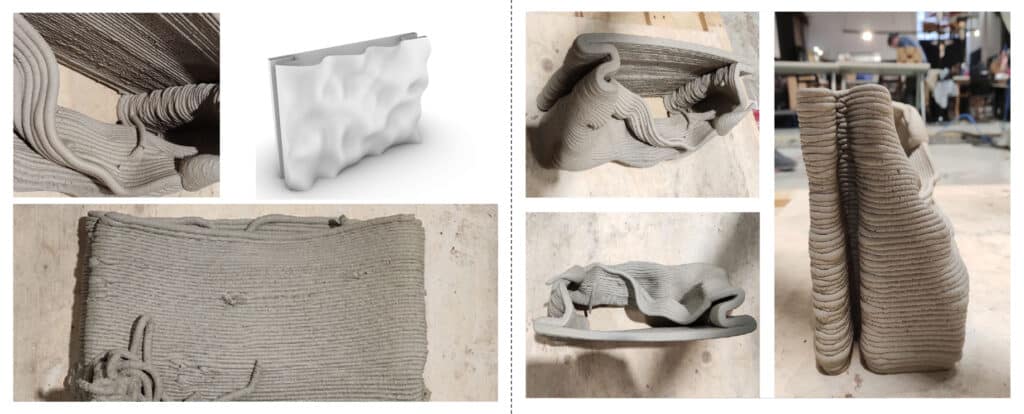
Test 1 – Fabrication Process
Printing Process and Prototype
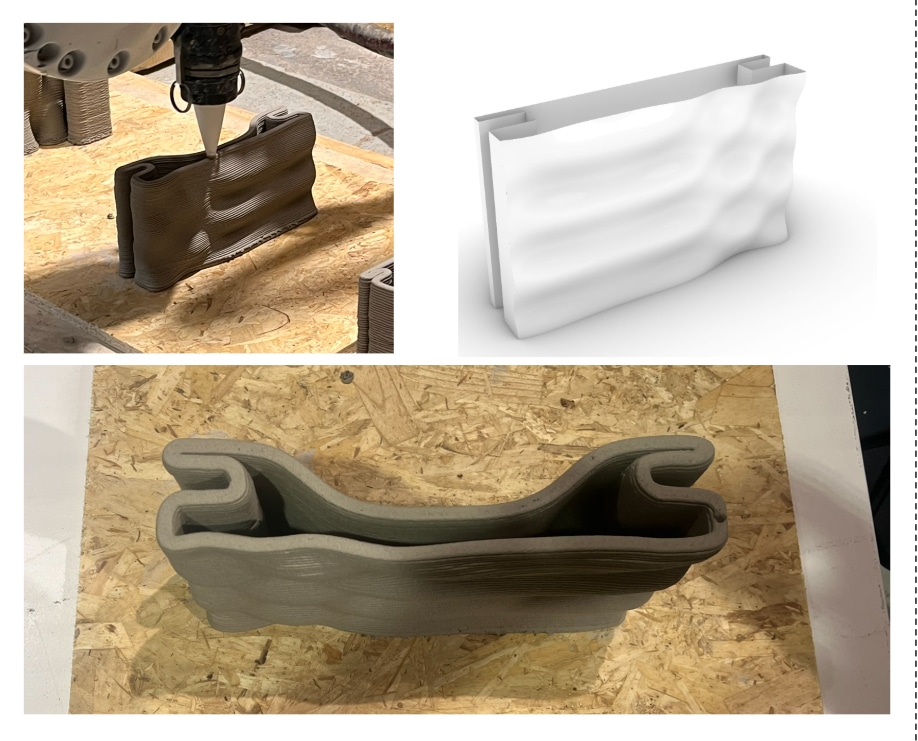
Assembly System
Architectural Visionary Images
Process and Fabrication Film
