
Introduction
This study focuses on the application of Karamba3D for structural analysis and performance evaluation. Through digital simulations, different geometries and loading conditions were assessed to understand force distribution, displacement, and structural behavior. The objective is to investigate how structural analysis can support informed design decisions during the development process.
Architecture Proposal
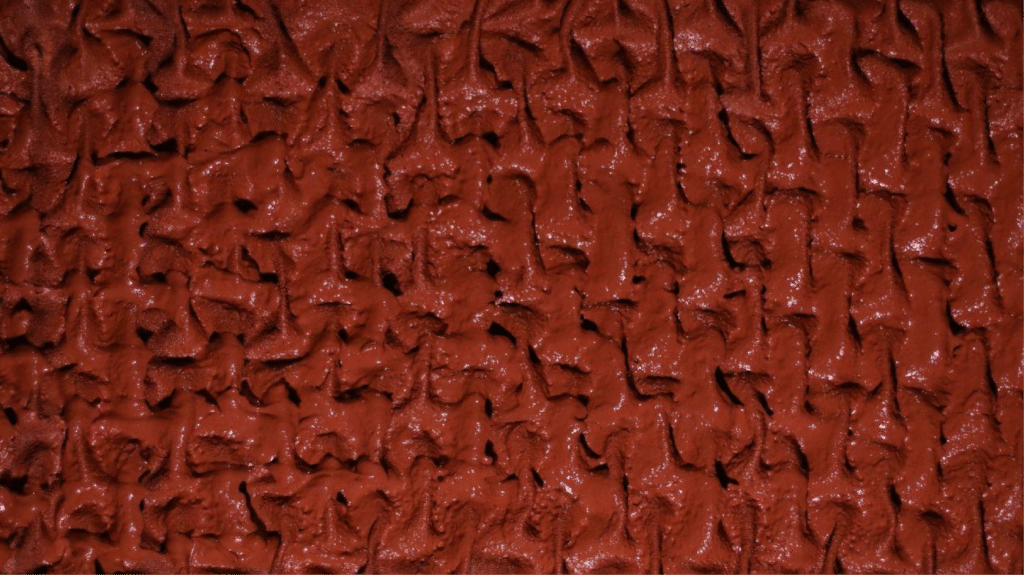
The structural investigation presented in this study is based on an architectural proposal developed in a parallel design studio. The proposal explores lightweight clay-textile systems and generated a series of geometries through computational form-finding.
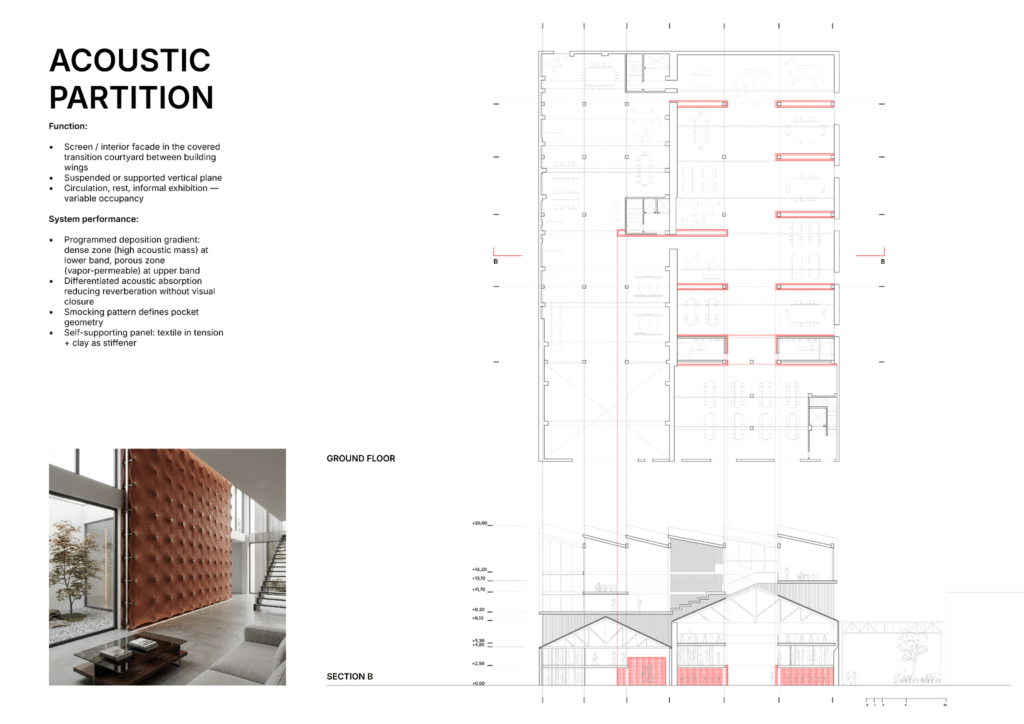
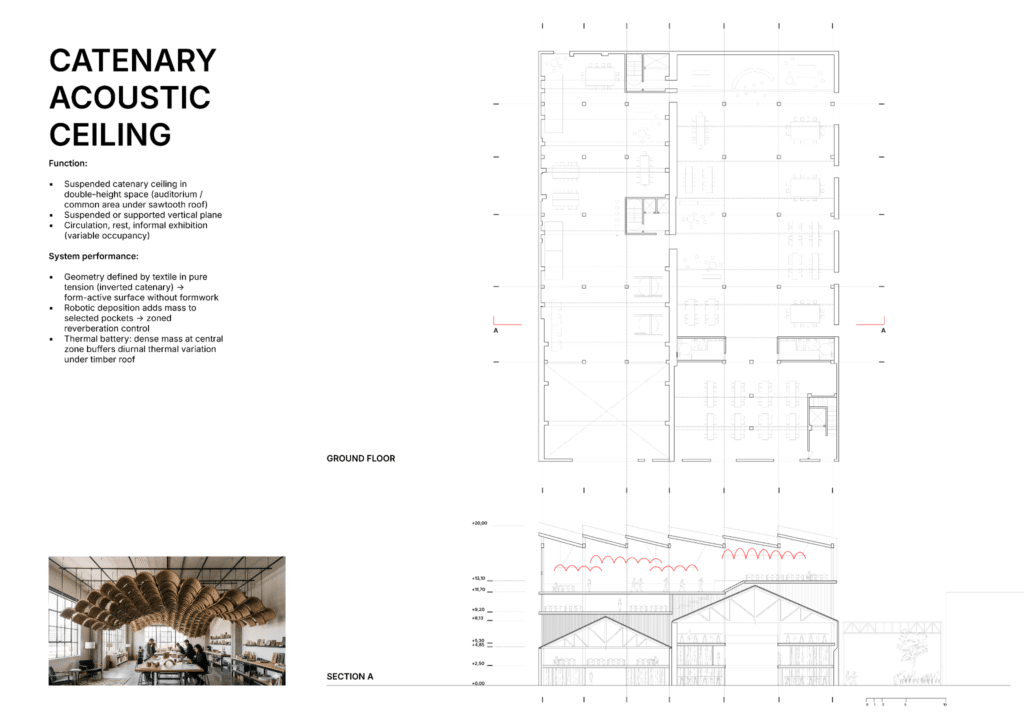
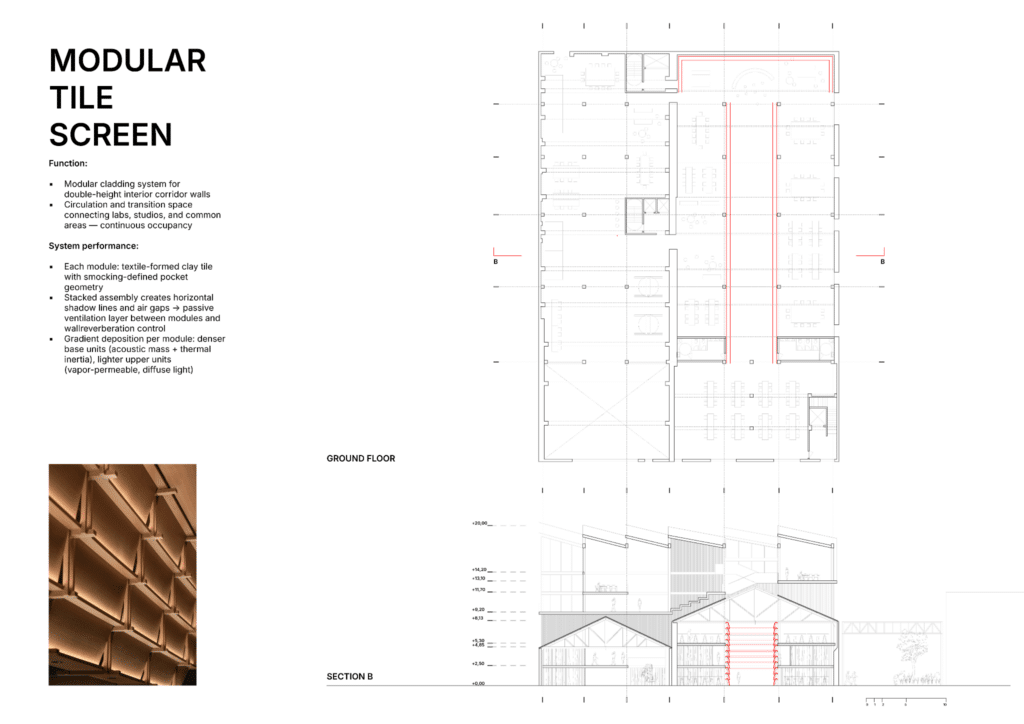
Within Software III, these geometries serve as the basis for structural evaluation. Rather than focusing on the design proposal itself, the following analysis examines how different structural configurations perform and how simulation results inform the final design selection.
Form-Finding as Structural Input
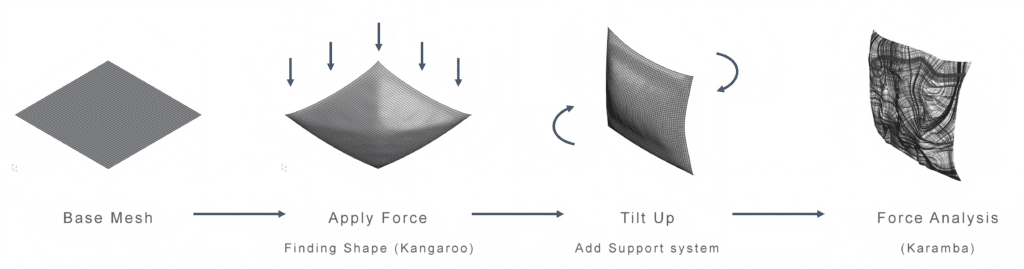
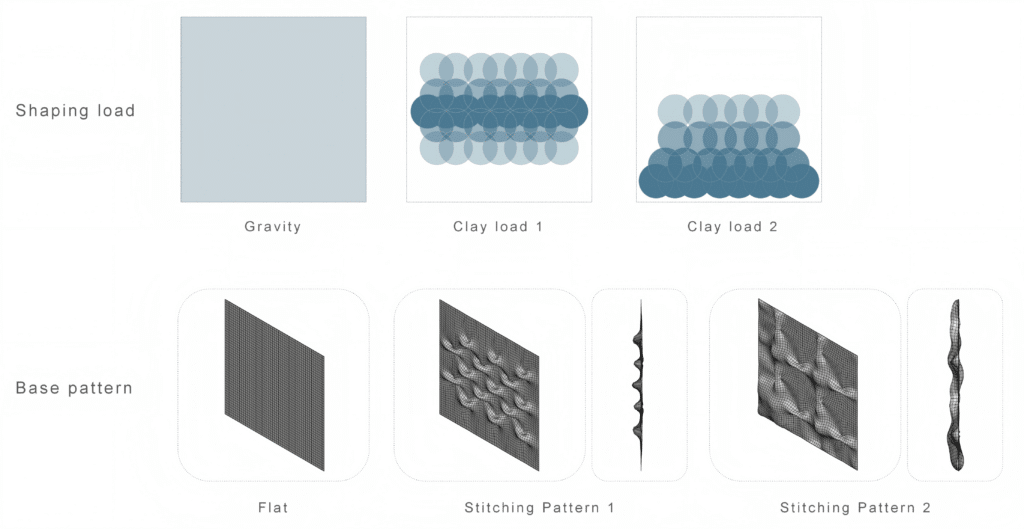
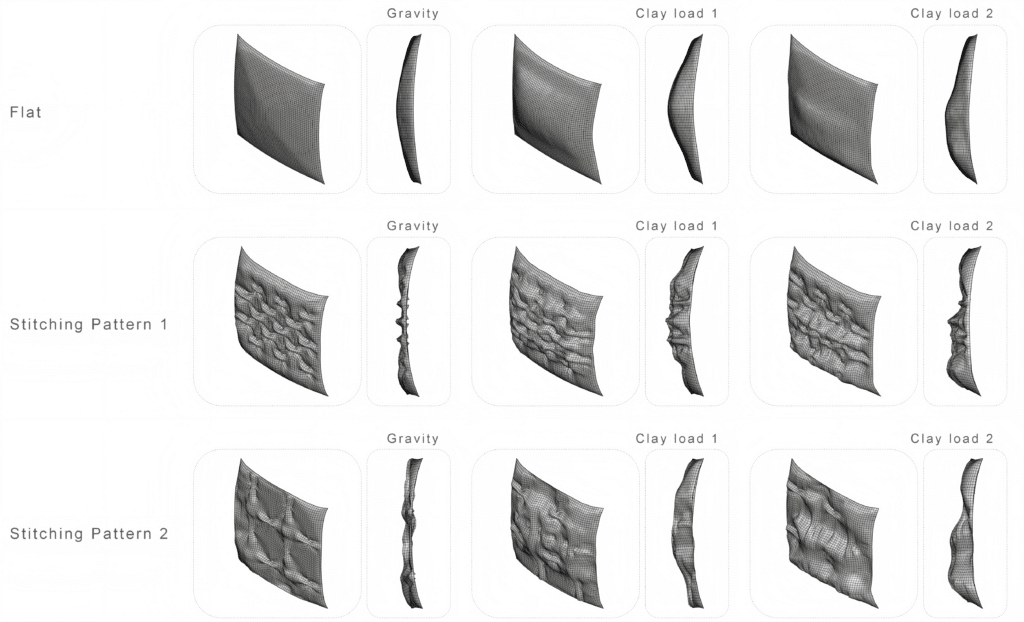
Before structural evaluation, a series of geometries were generated through form-finding simulations in Kangaroo. Gravity, material loading, and boundary conditions were applied to investigate how the textile membrane naturally deforms under different constraints.
These generated forms became the basis for subsequent structural analysis.
Material Parameters
Air dried clay properties:
- E (Young’s)30 kN/cm²≈ 300 MPaG
- (Shear)12 kN/cm²ν ≈ 0.25γ
- (Specific weight)17 kN/m³ρ ≈ 1700 kg/m³
- αT (Thermal)7e-6 1/°C—ft
- (Tensile)0.03 kN/cm²≈ 0.3 MPafc
- (Compressive)0.3 kN/cm²≈ 3 MPa
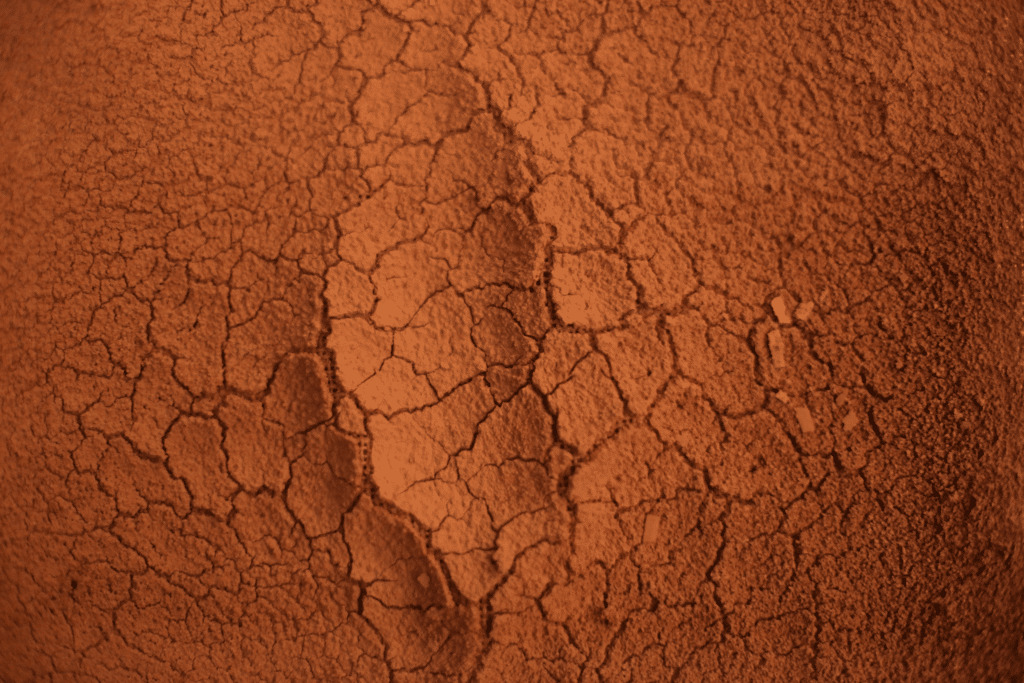
To evaluate structural performance, material properties of air-dried clay were assigned within Karamba. Young’s modulus, density, tensile strength, and compressive strength were used to approximate the behavior of the clay-textile composite system.
Although simplified, these parameters provide a useful framework for comparing structural performance between different design options.
Force Distribution Analysis
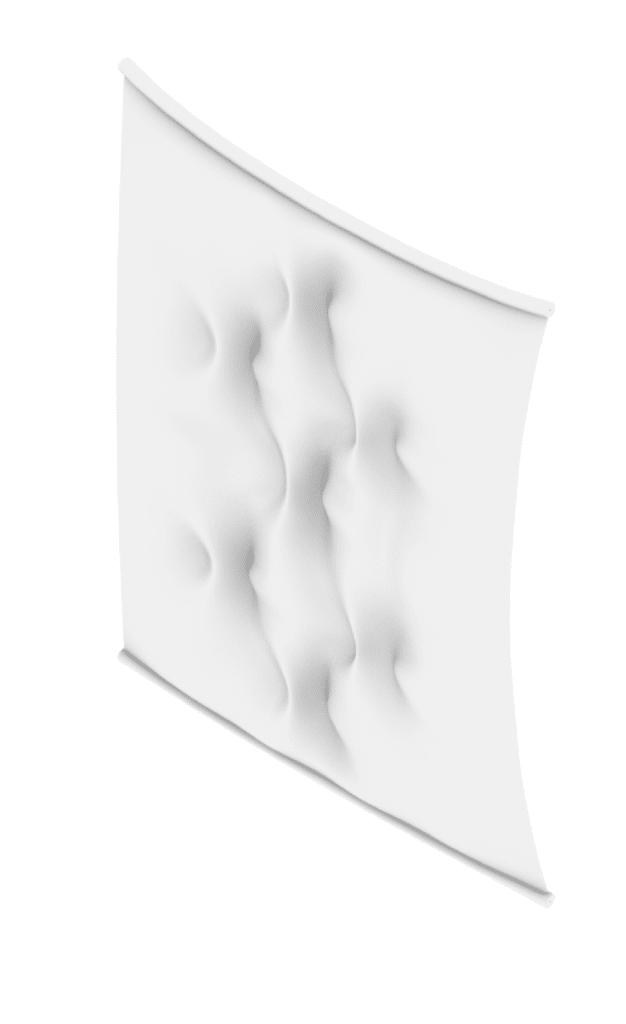
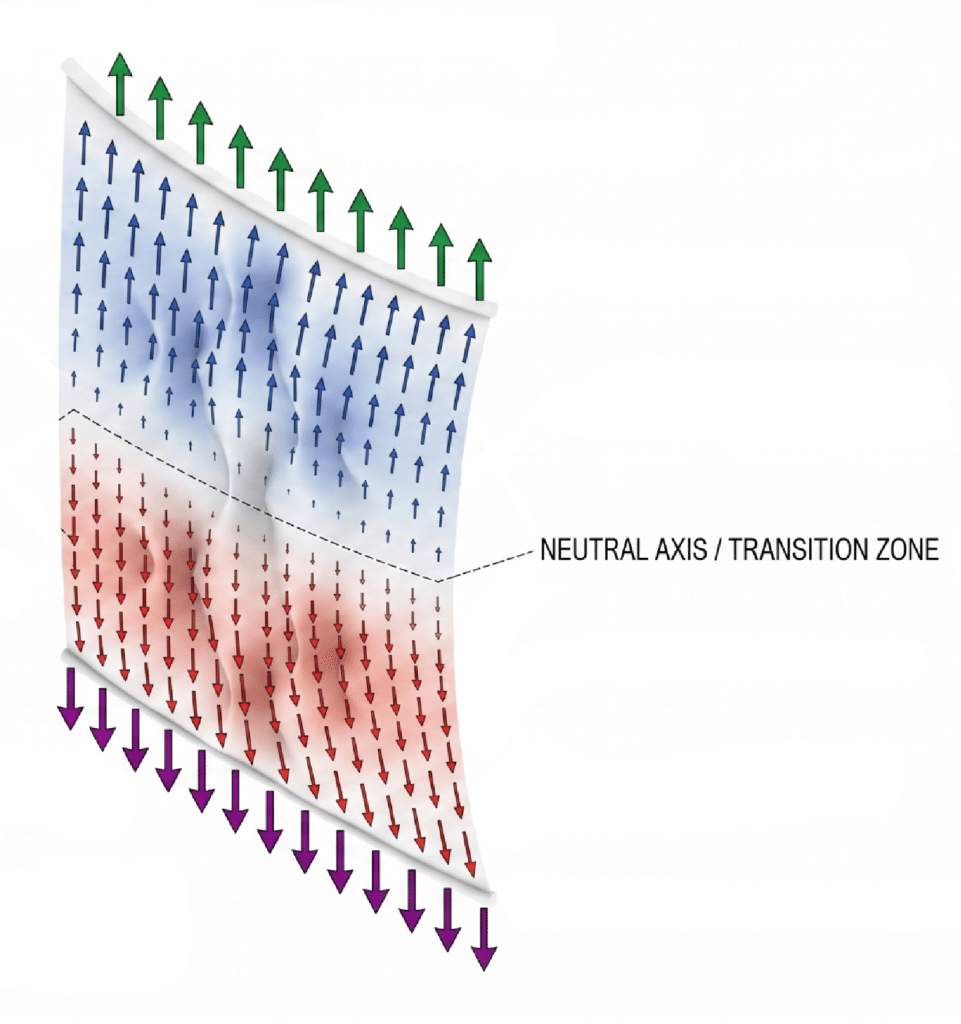
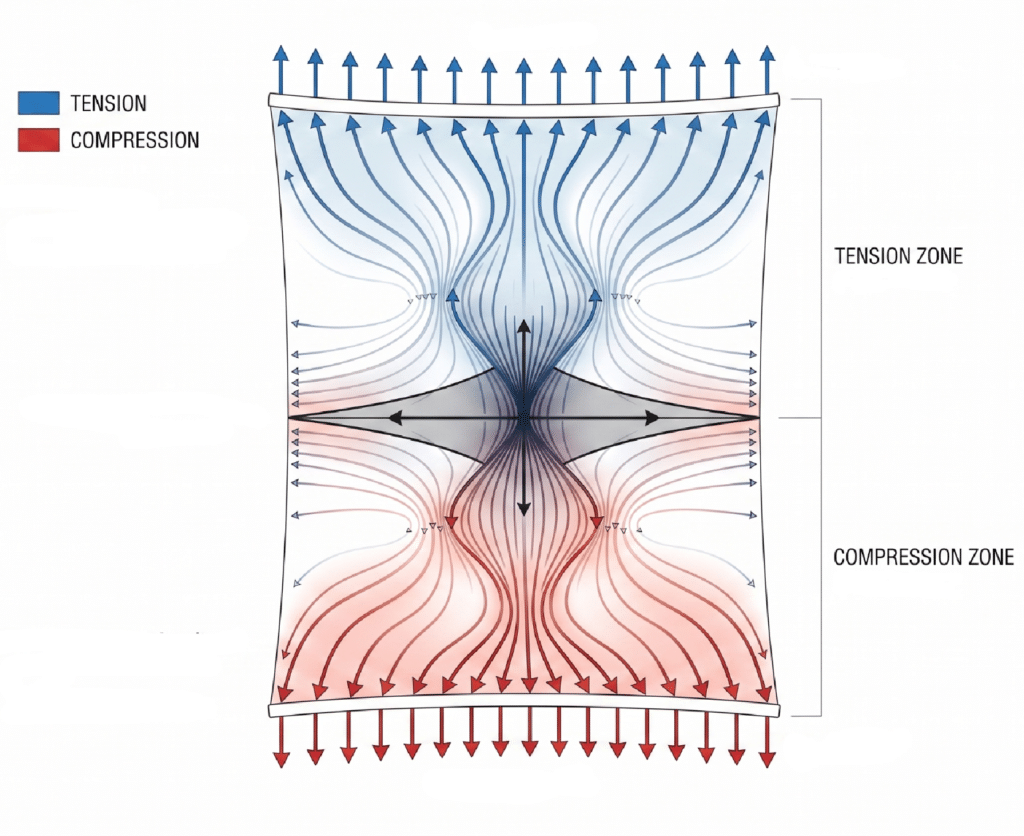
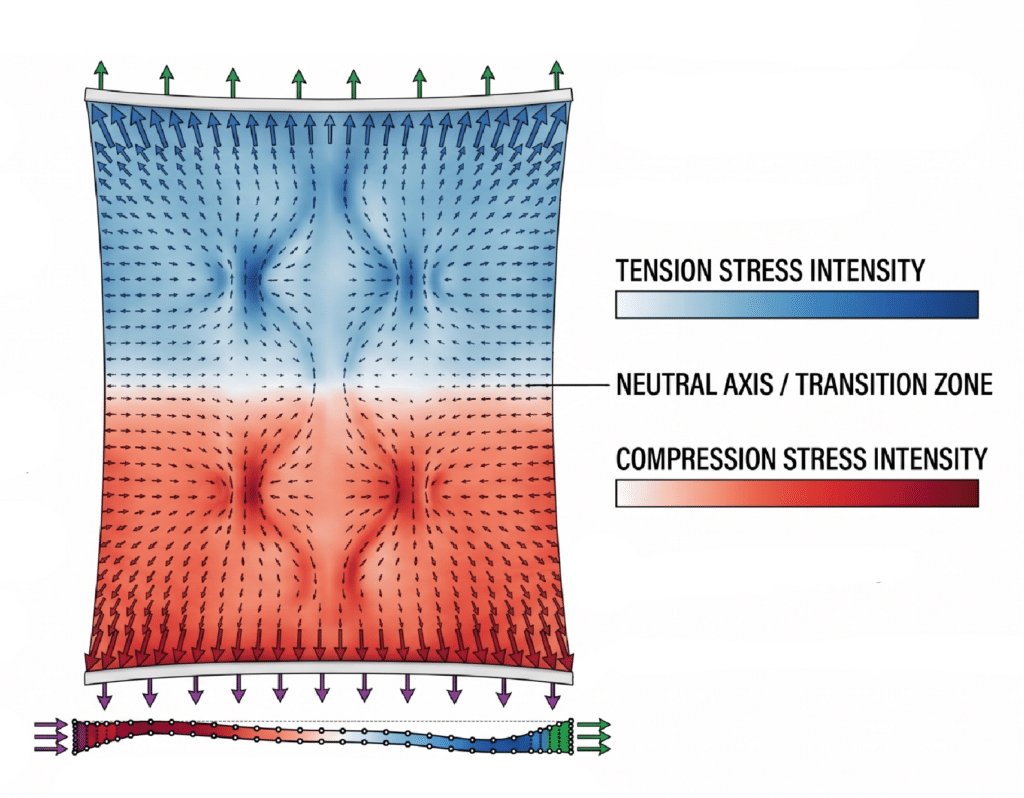
The first stage of evaluation focused on force distribution throughout the structure. Compression and tension patterns were visualized to identify stress concentration zones and understand how loads travel through the geometry.
The analysis revealed that geometry plays a significant role in controlling structural efficiency. Small variations in stitching patterns and support conditions resulted in noticeably different force paths.
Displacement Evaluation
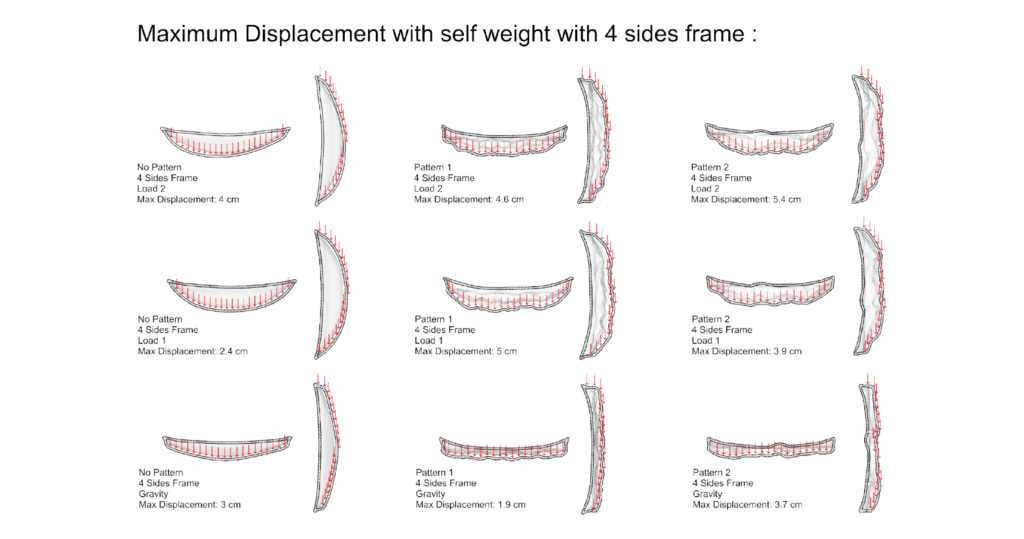
In addition to force distribution, displacement was evaluated under clay loading conditions. Excessive deformation would compromise structural stability and fabrication feasibility.
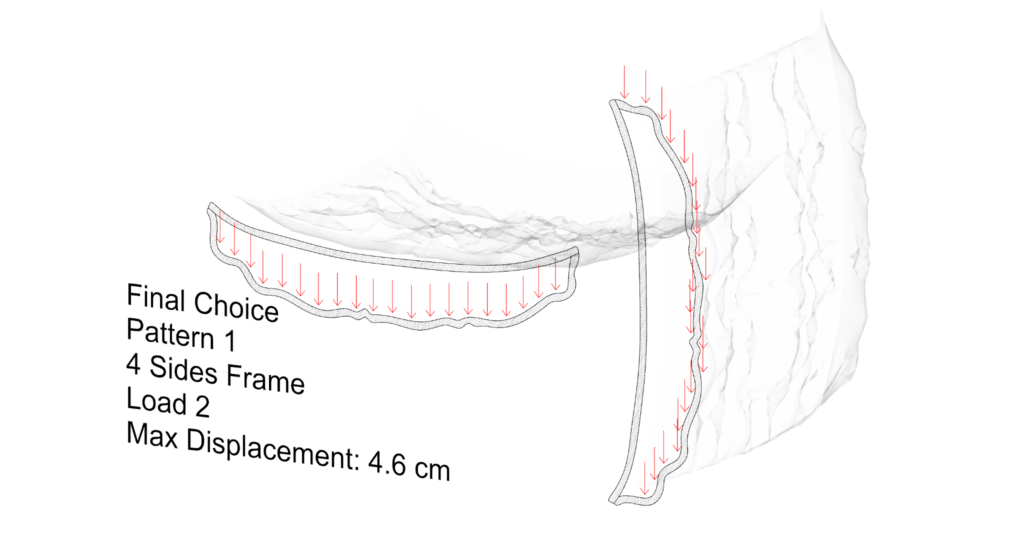
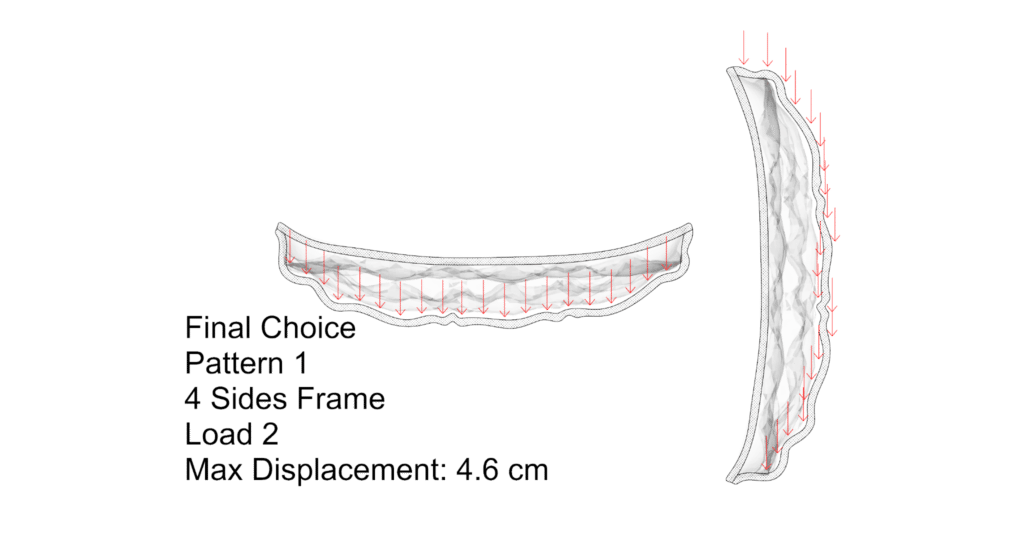
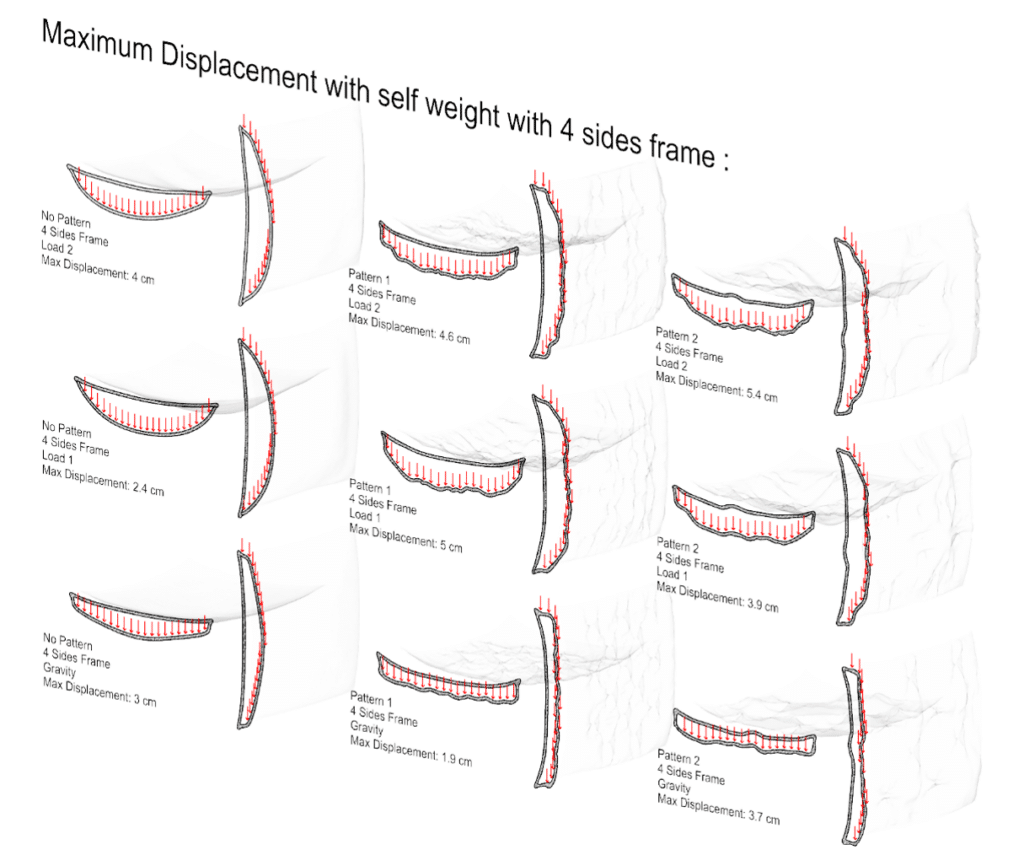
Comparing multiple configurations allowed us to identify geometries that maintain acceptable displacement while efficiently distributing loads.
Structural Comparison
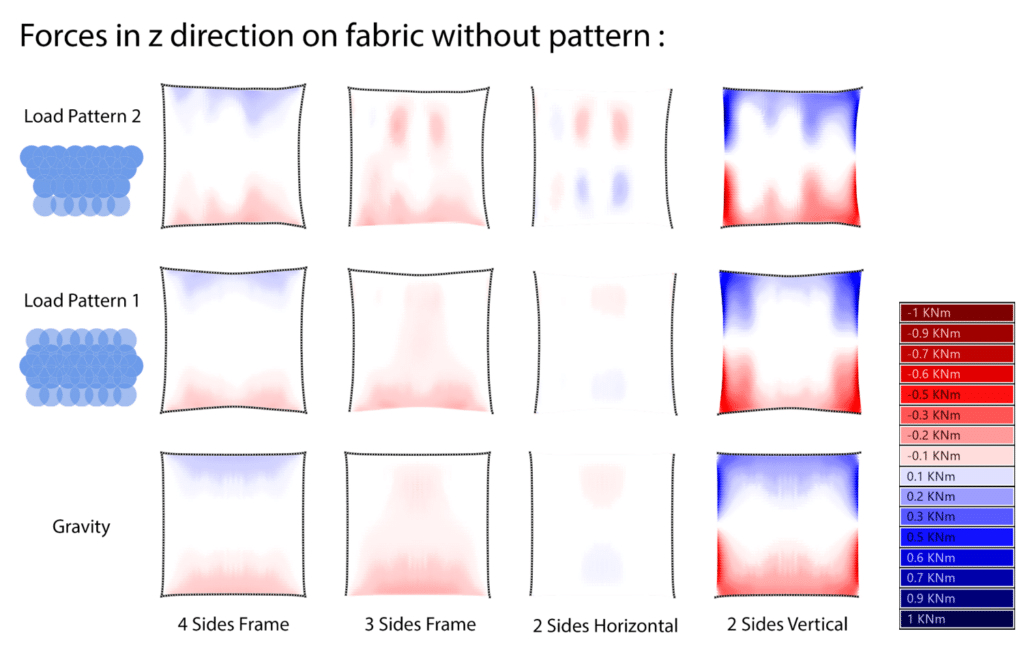
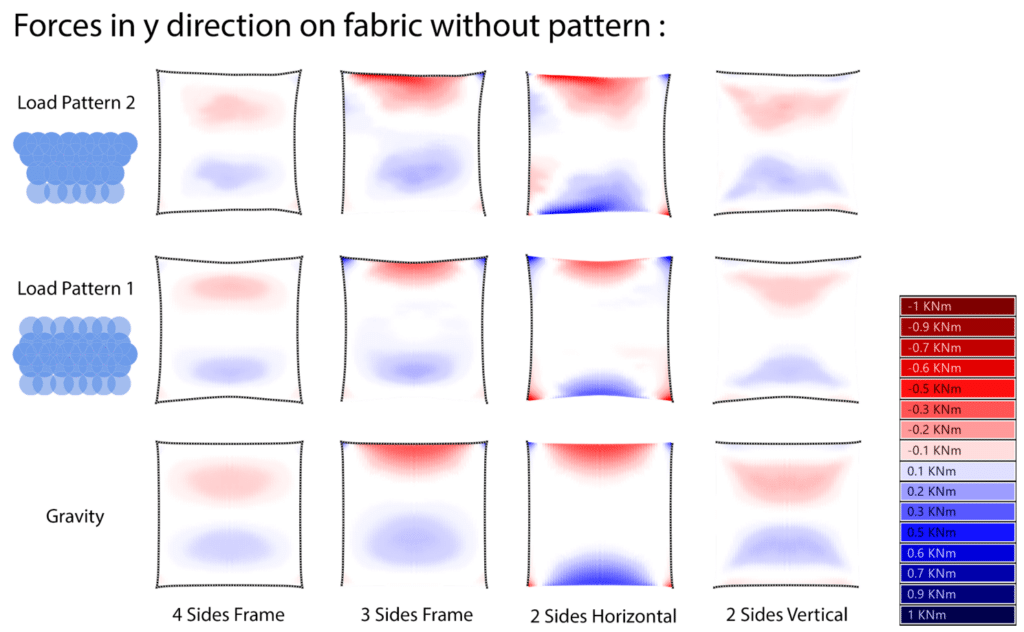
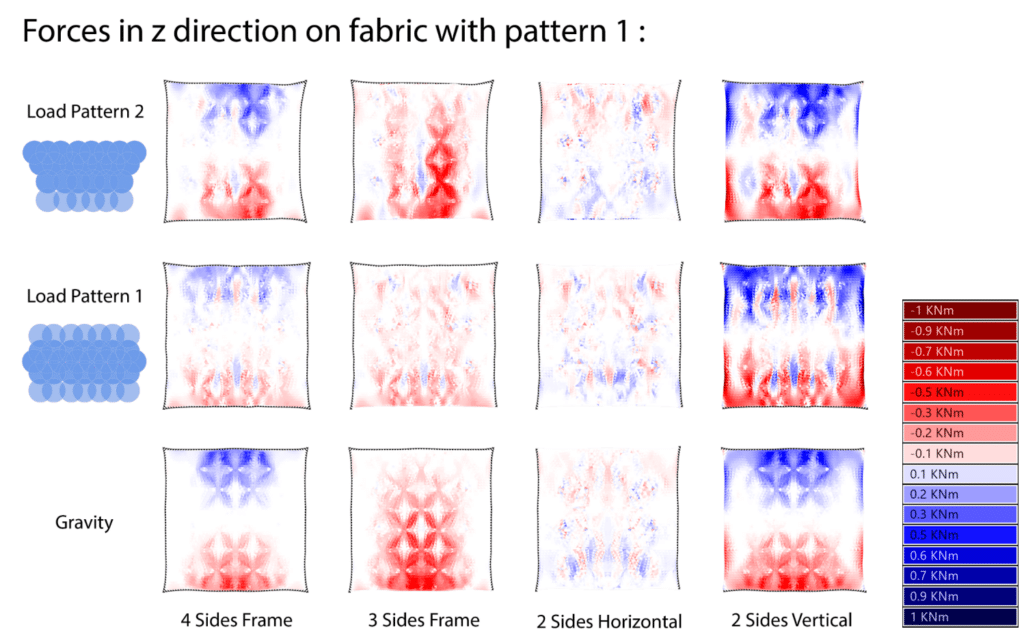
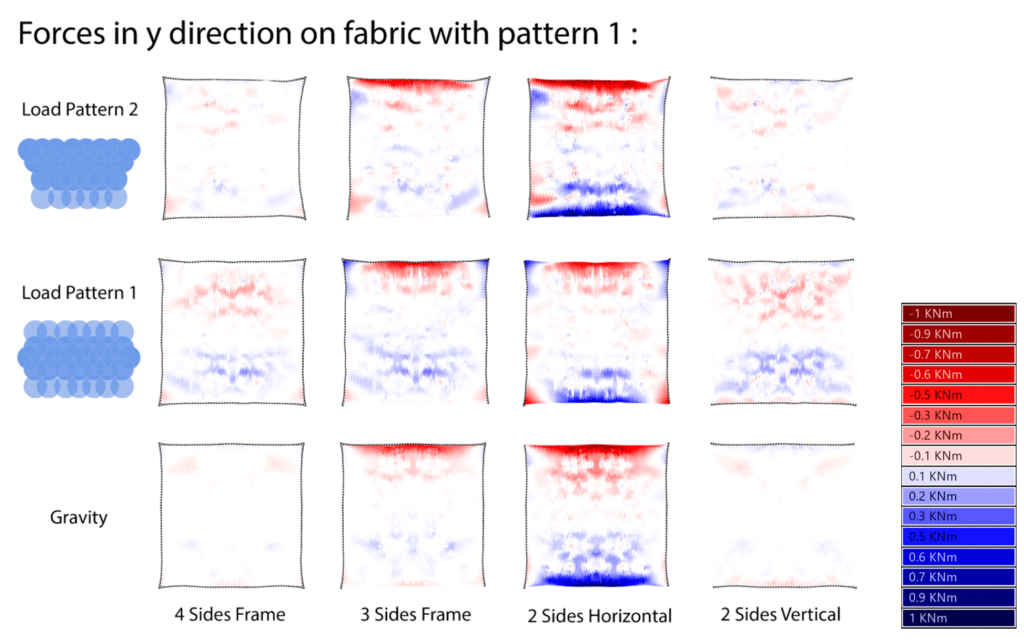
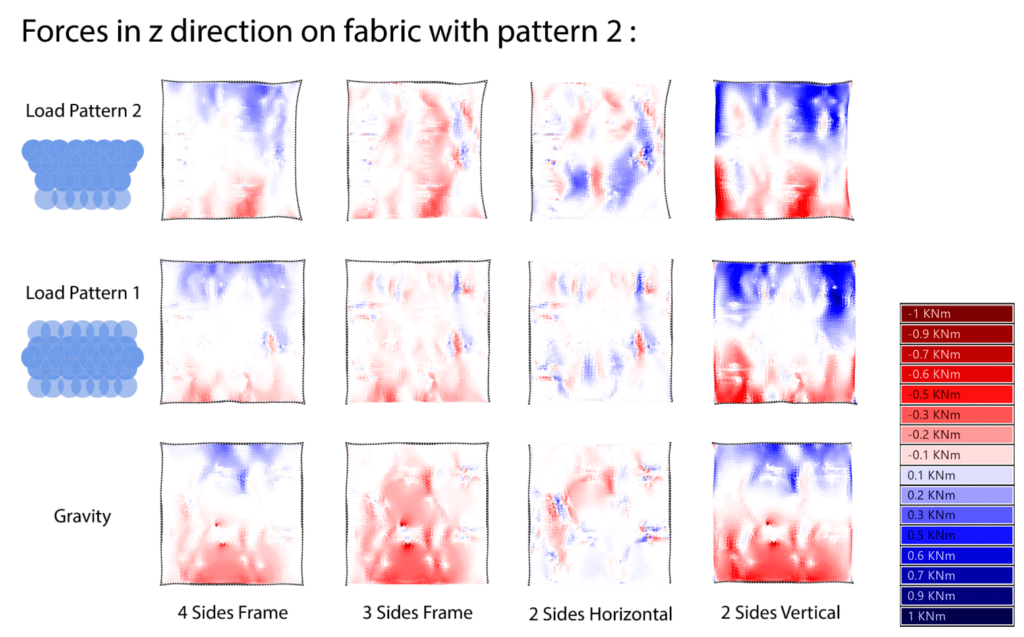
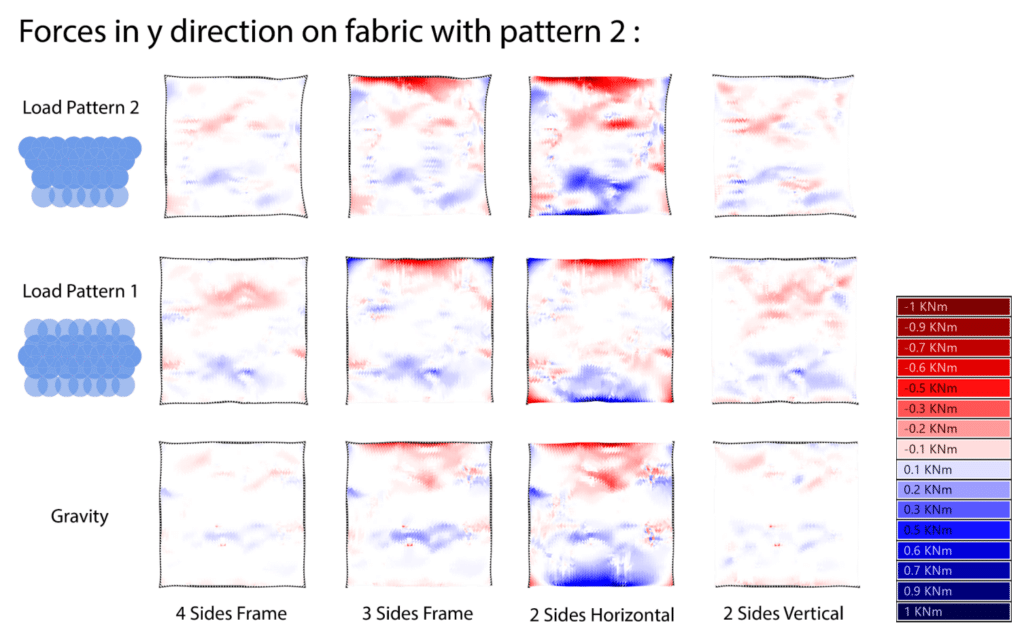
Several combinations of stitching patterns, loading conditions, and support systems were tested. The comparison process highlighted the relationship between geometry and performance, demonstrating how structural analysis can guide design optimization.
Final Structural Selection
Based on the Karamba simulations, the configuration combining Stitching Pattern 1, Load Pattern 1, and a full-frame support system achieved the most balanced structural behavior.
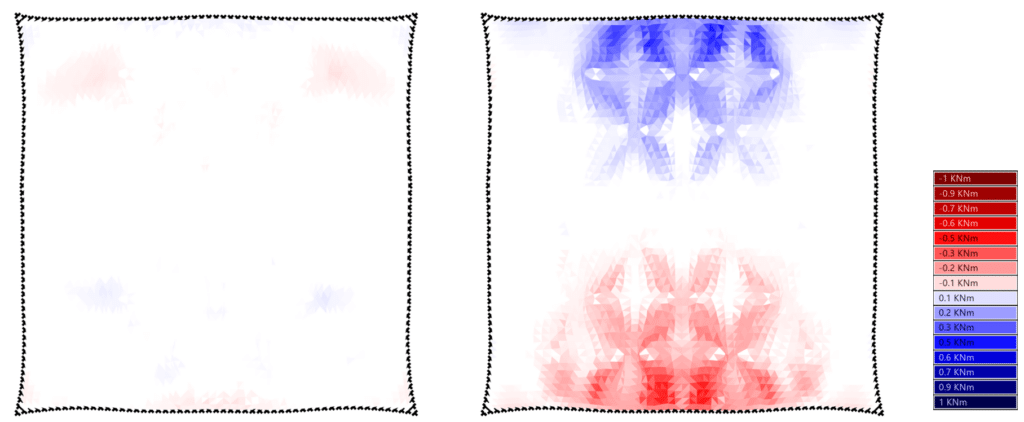
Stitching Pattern 1, Load Pattern 1, Full Frame (4 sides)
This option demonstrated a favorable force distribution while maintaining acceptable displacement levels under loading, making it the most efficient solution among the tested alternatives.
Reflection
This study demonstrates how structural analysis can be integrated into the design process rather than being used solely as a verification tool. By evaluating force distribution and displacement throughout the development of the project, Karamba became a design instrument that informed geometry selection and optimization.
