how can design unlock the architectural potential of materials that are currently
underused or overlooked?
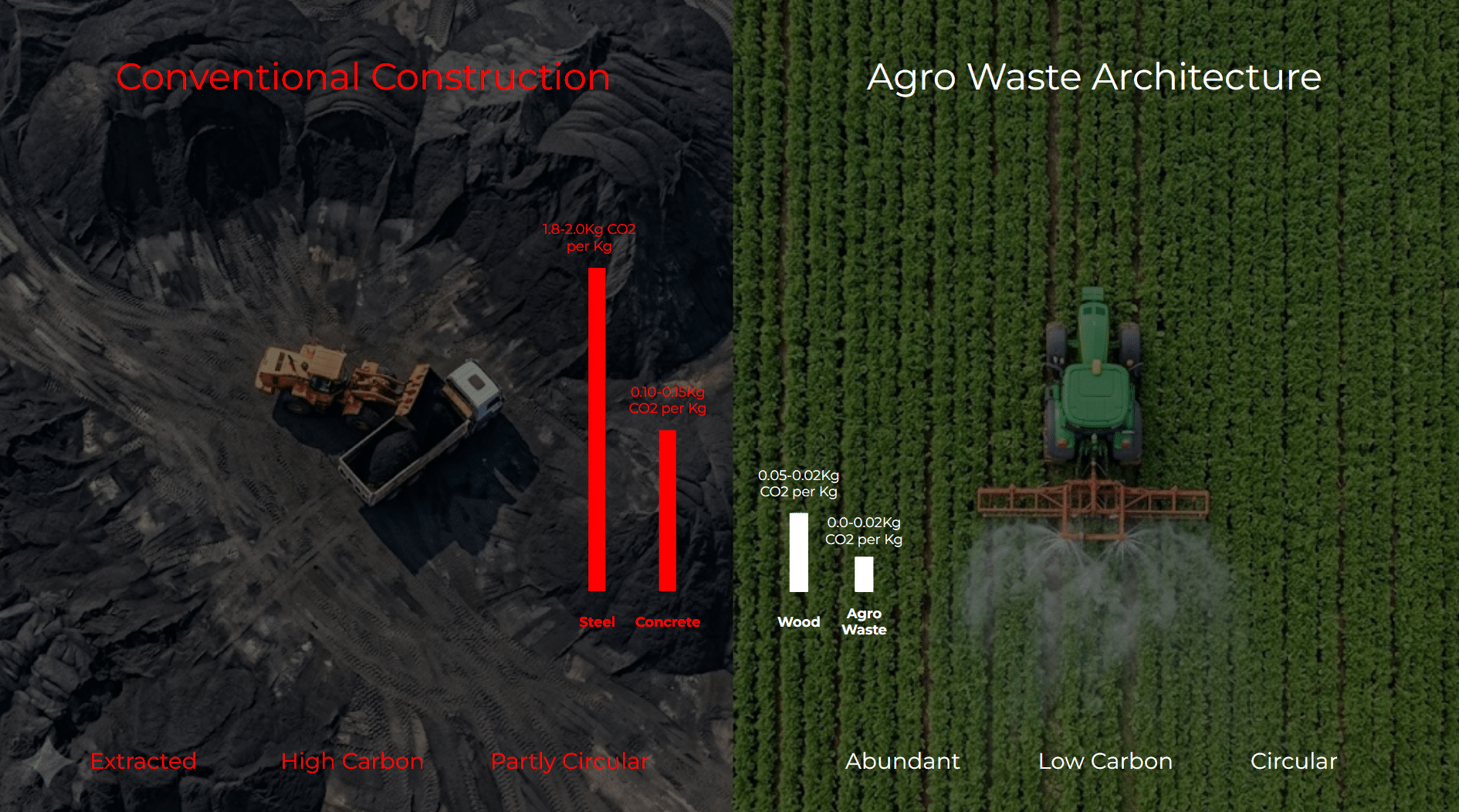
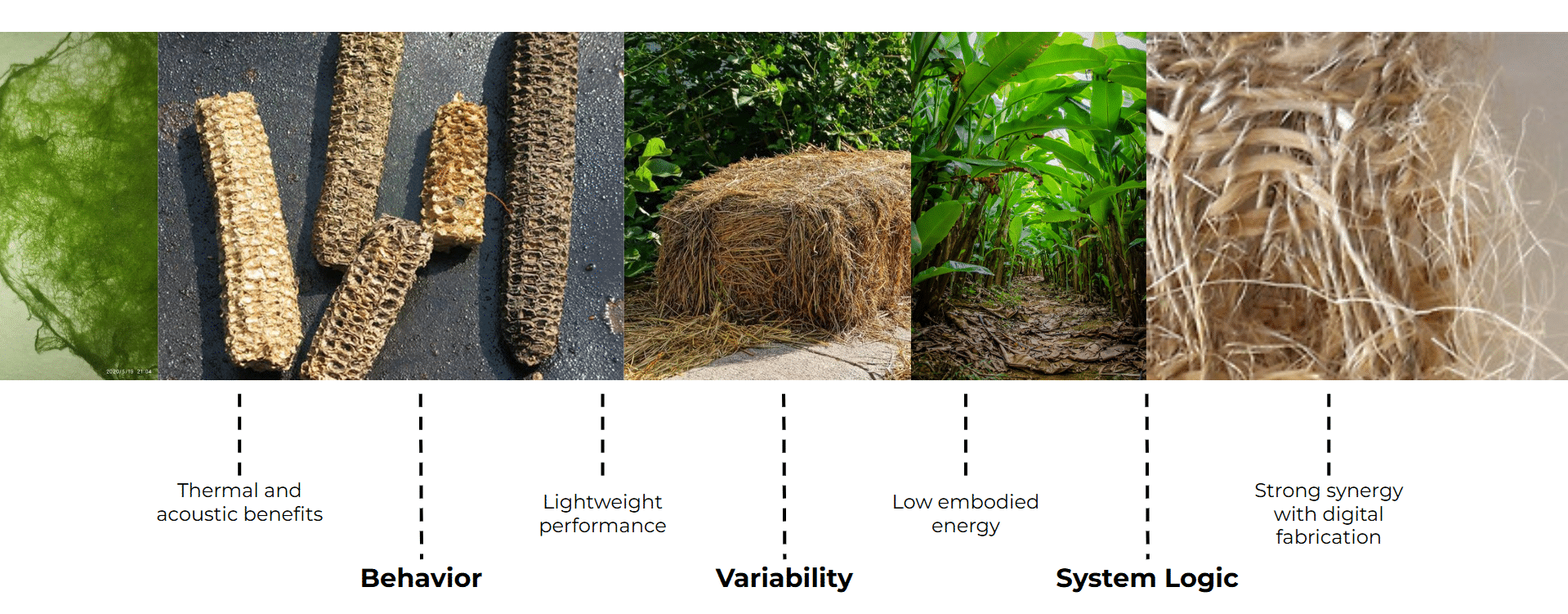
Argo Waste materials offer more than environmental benefits.
Material – Banana Biomass
Total Annual Biomass – 675 Million Tonnes
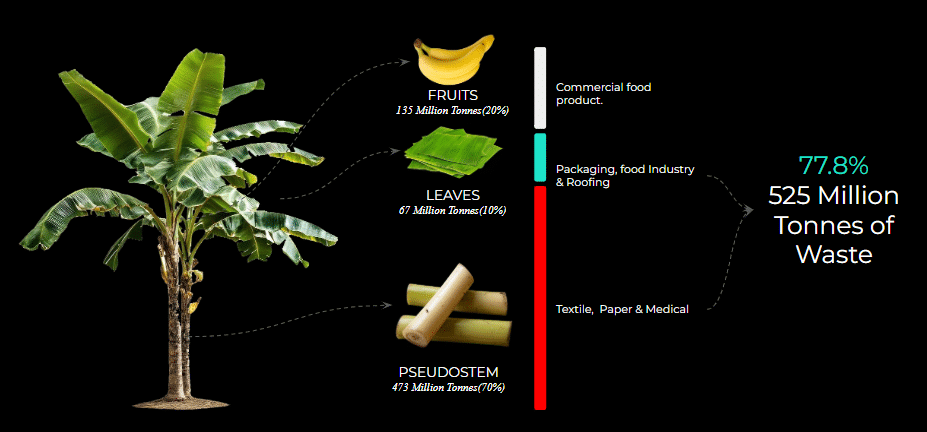
Carbon Emission Through waste
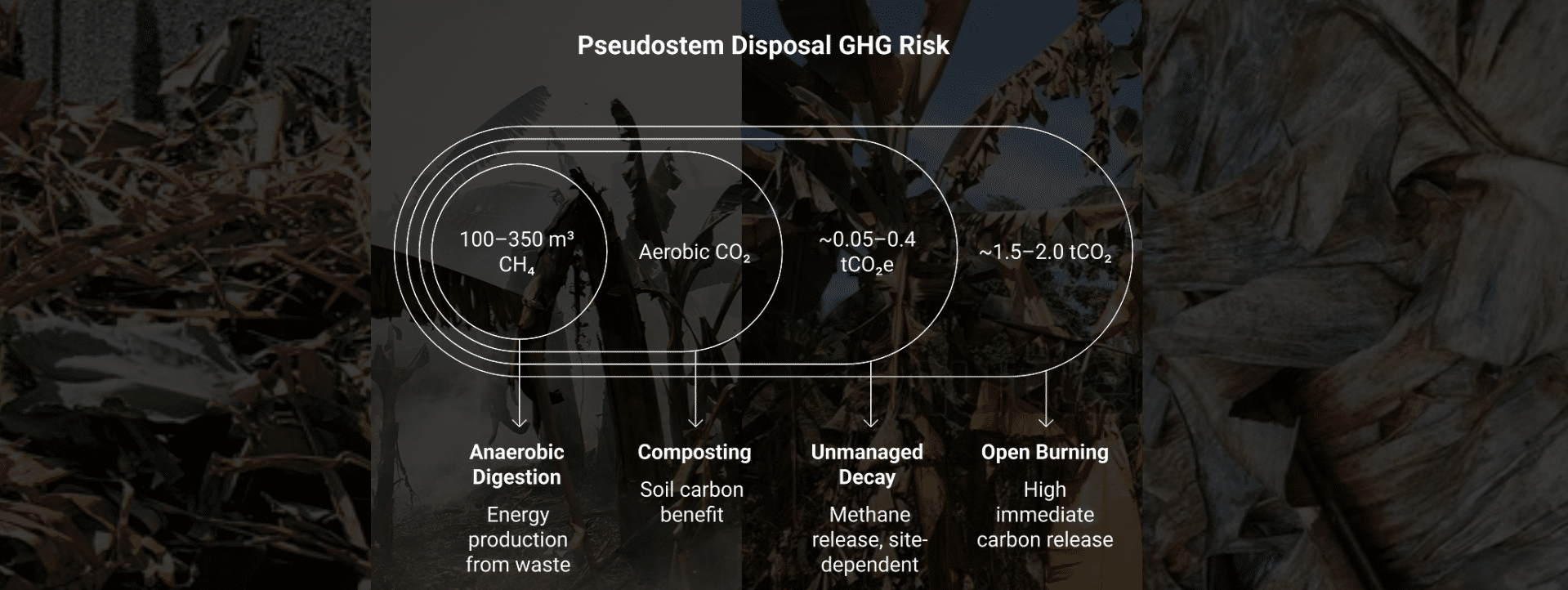
“Every 1% of the 525MT of banana biomass we move from “waste” to “construction” prevents roughly4–9 million tones of CO2 equivalent from entering the atmosphere.”
Source – The Agro-Waste Problem: Banana Cultivation, Pseudo stem Volumes, and the Climate Cost of Current Disposal Practices
SOURCEING OF MATERIALS
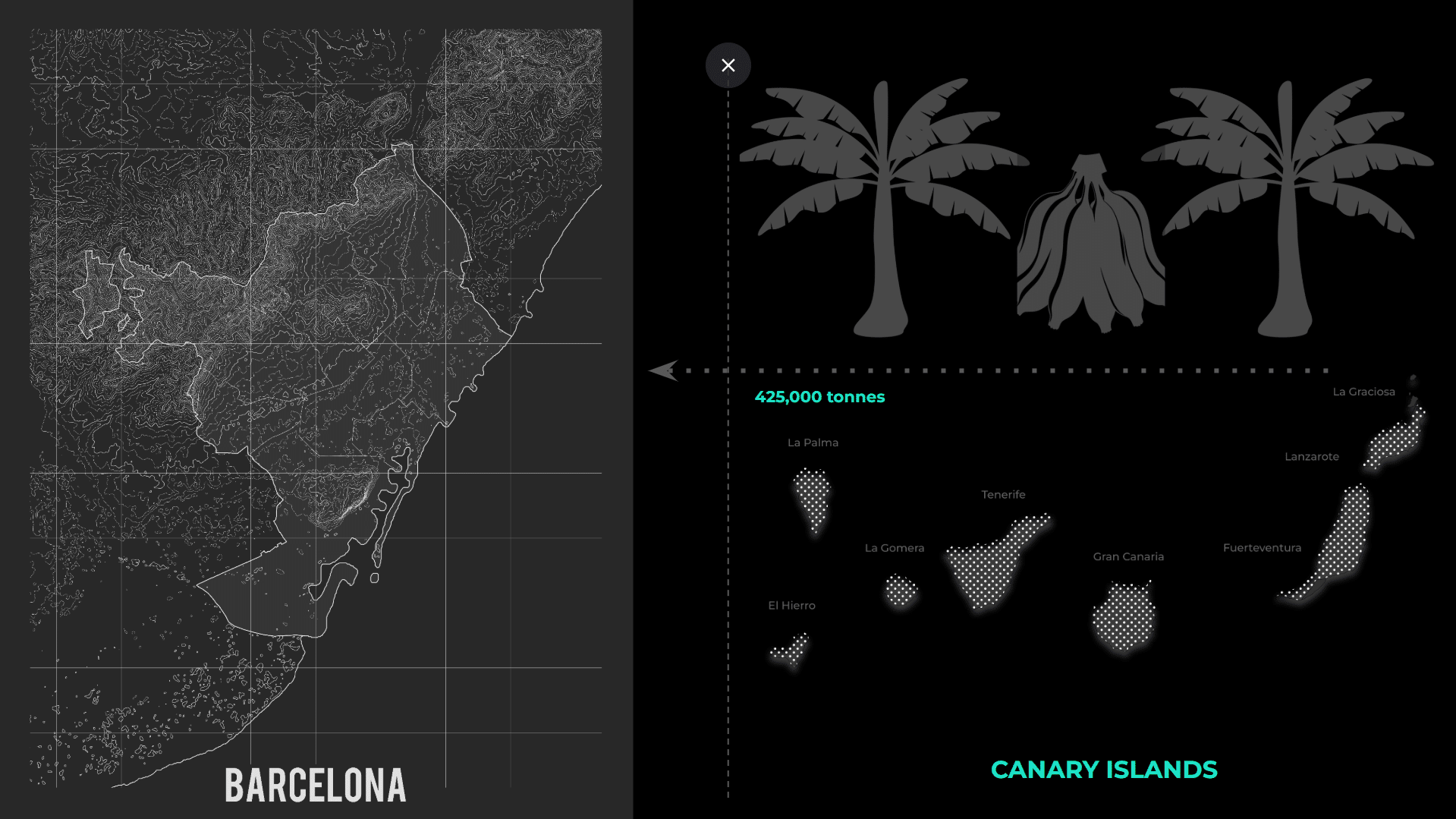
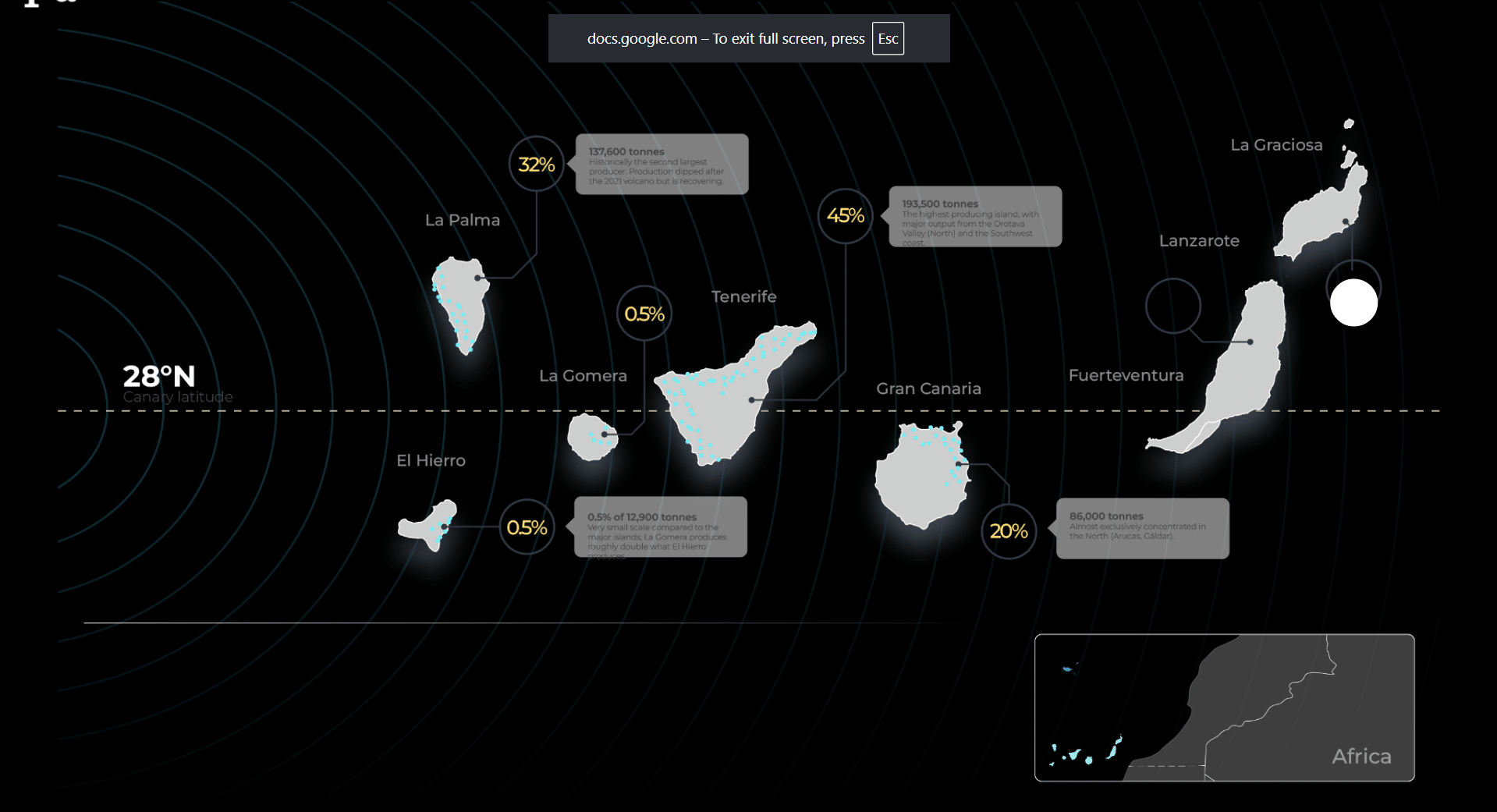
RESEARCH GAP
The gap is not a lack of material knowledge, but a lack of architectural translation
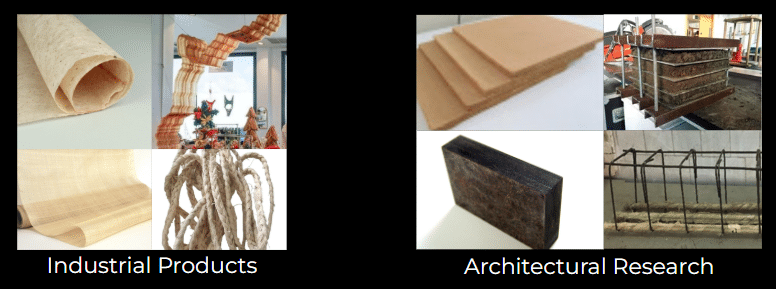
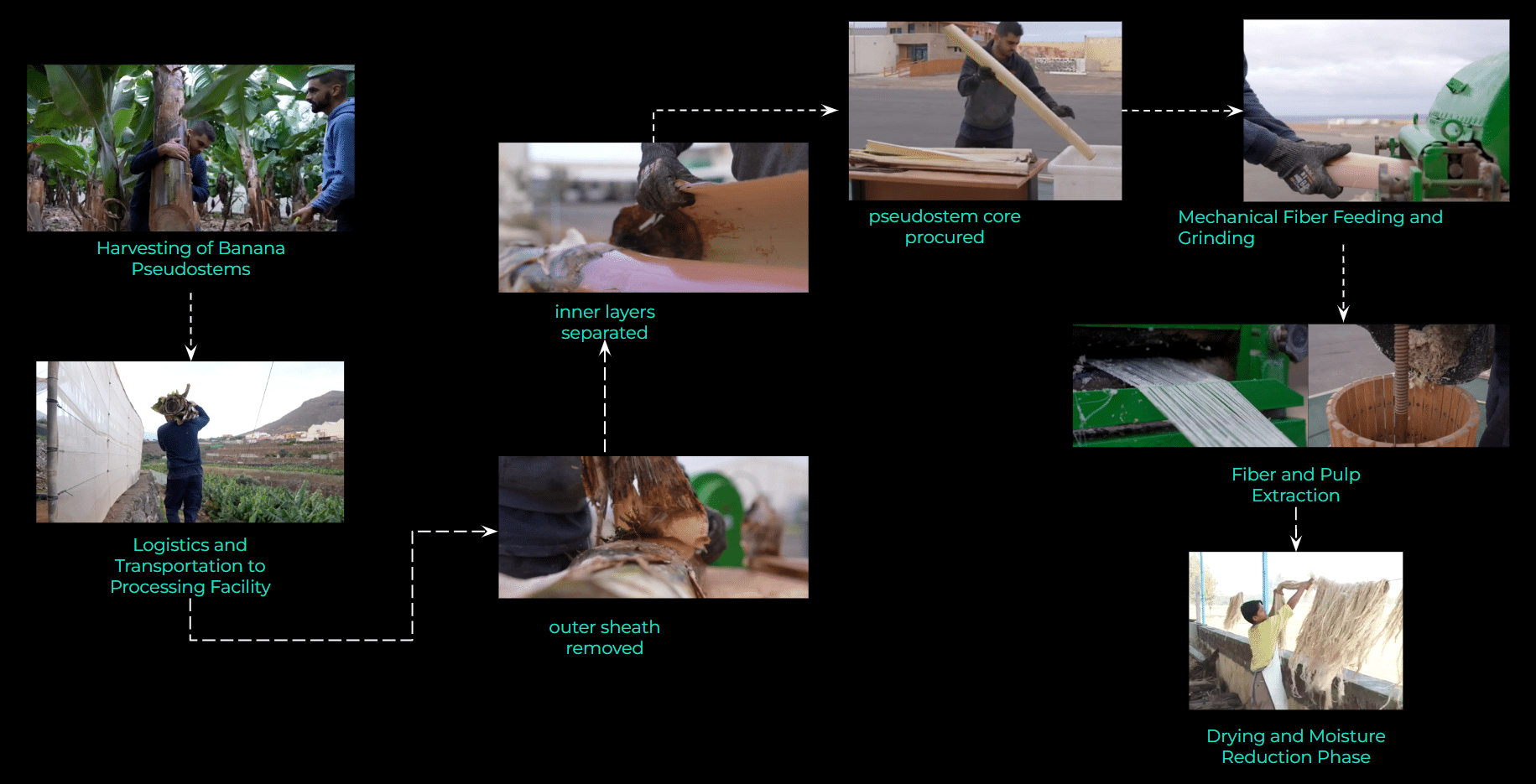
Fiber and Pulp Extraction
BIOMASS TO BUILT FORM
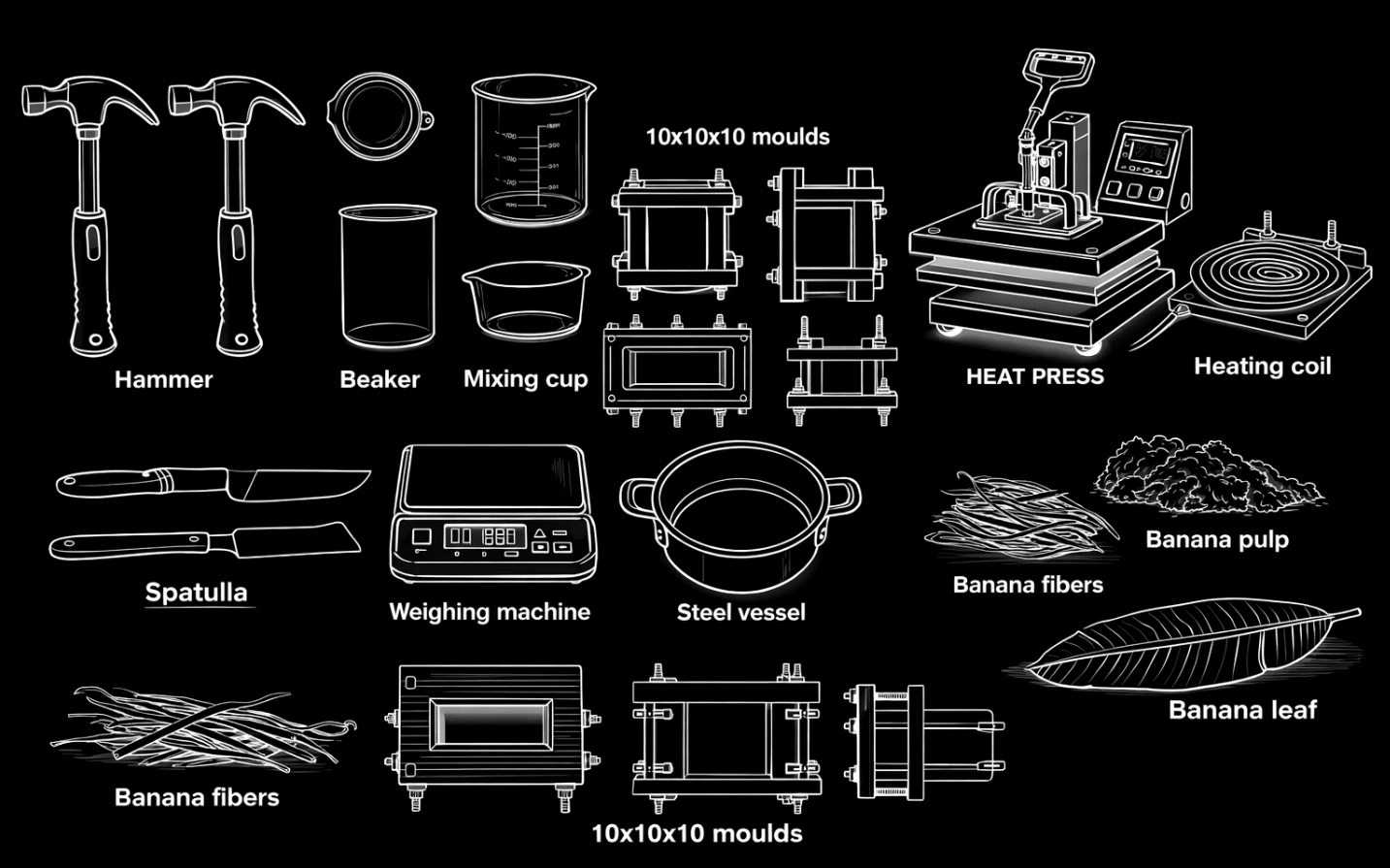
EQUIPMENTS USED
A curated set of low-tech and digital fabrication tools from manual mixing to heat pressing
enables the transformation of banana agro-waste into high-performance material systems.
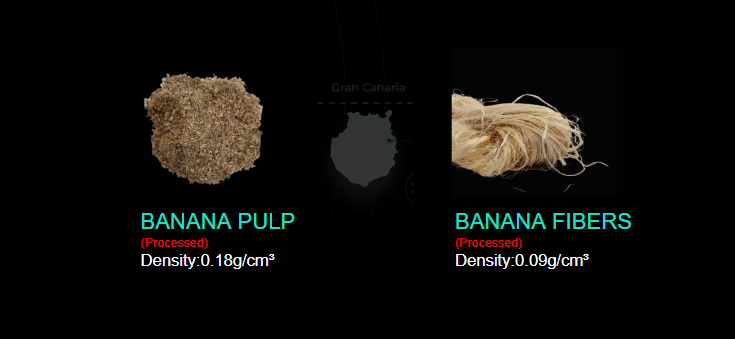
Biomass Materials used
Banana pulp and fibers, sourced from agricultural waste, form the primary biomass inputs each offering distinct densities and structural roles within the composite system.
While pulp contributes to matrix binding and compactness, fibers enhance tensile strength, enabling a balanced, lightweight, and performative material.
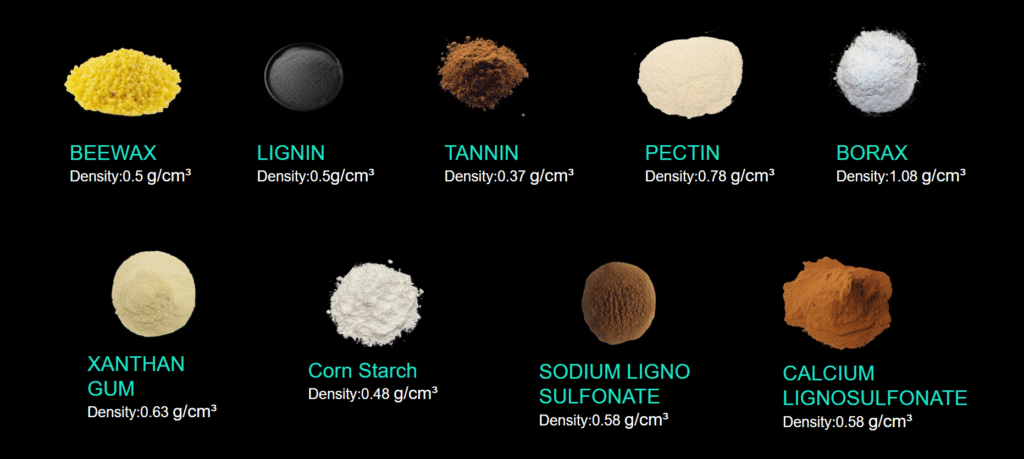
Bio-Binders used
A range of bio-based binders from natural polymers like pectin and starch to lignin derivatives were tested to
optimize cohesion, durability, and processability of the composite.
PHASE 1 – UNDERSTANDING THE MATERIAL
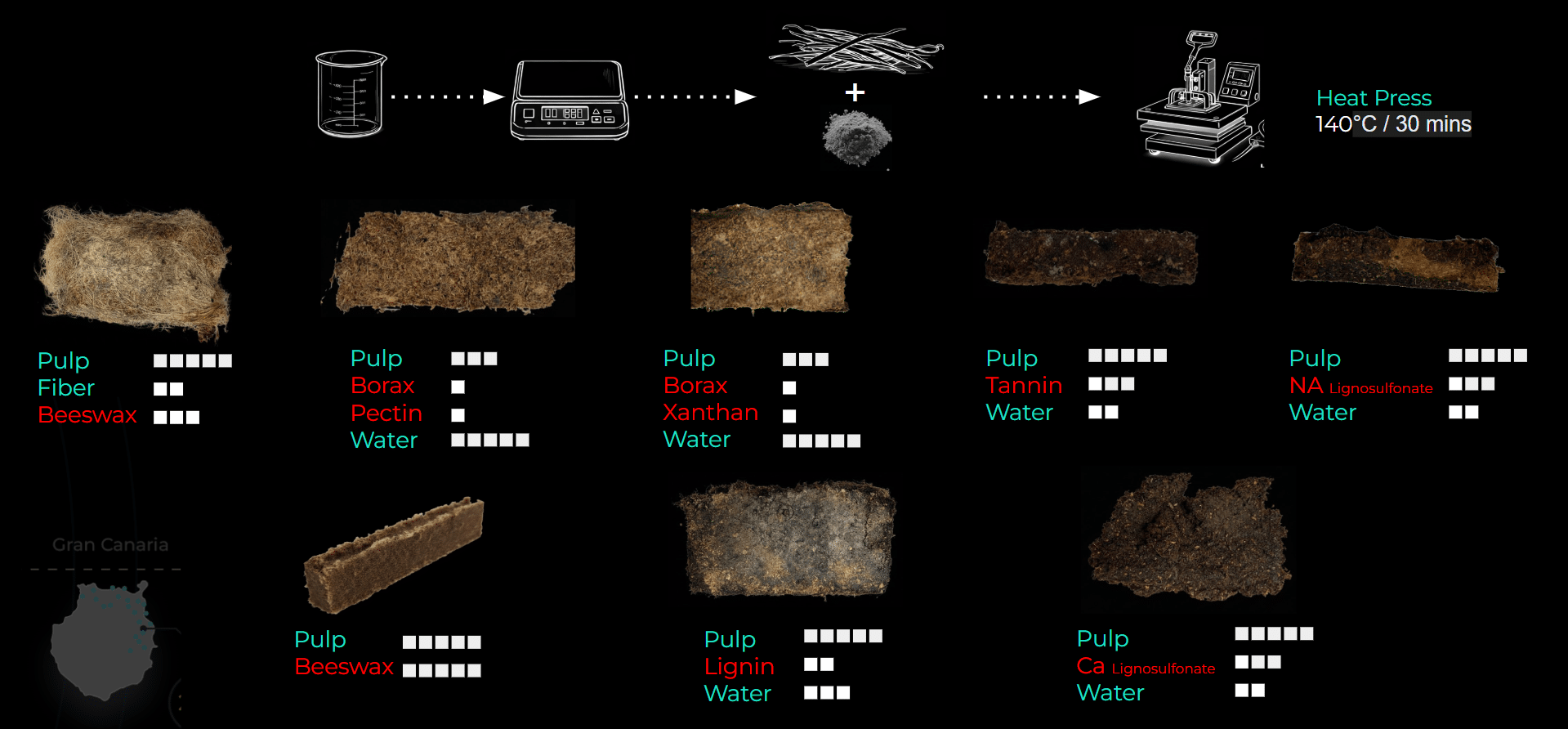
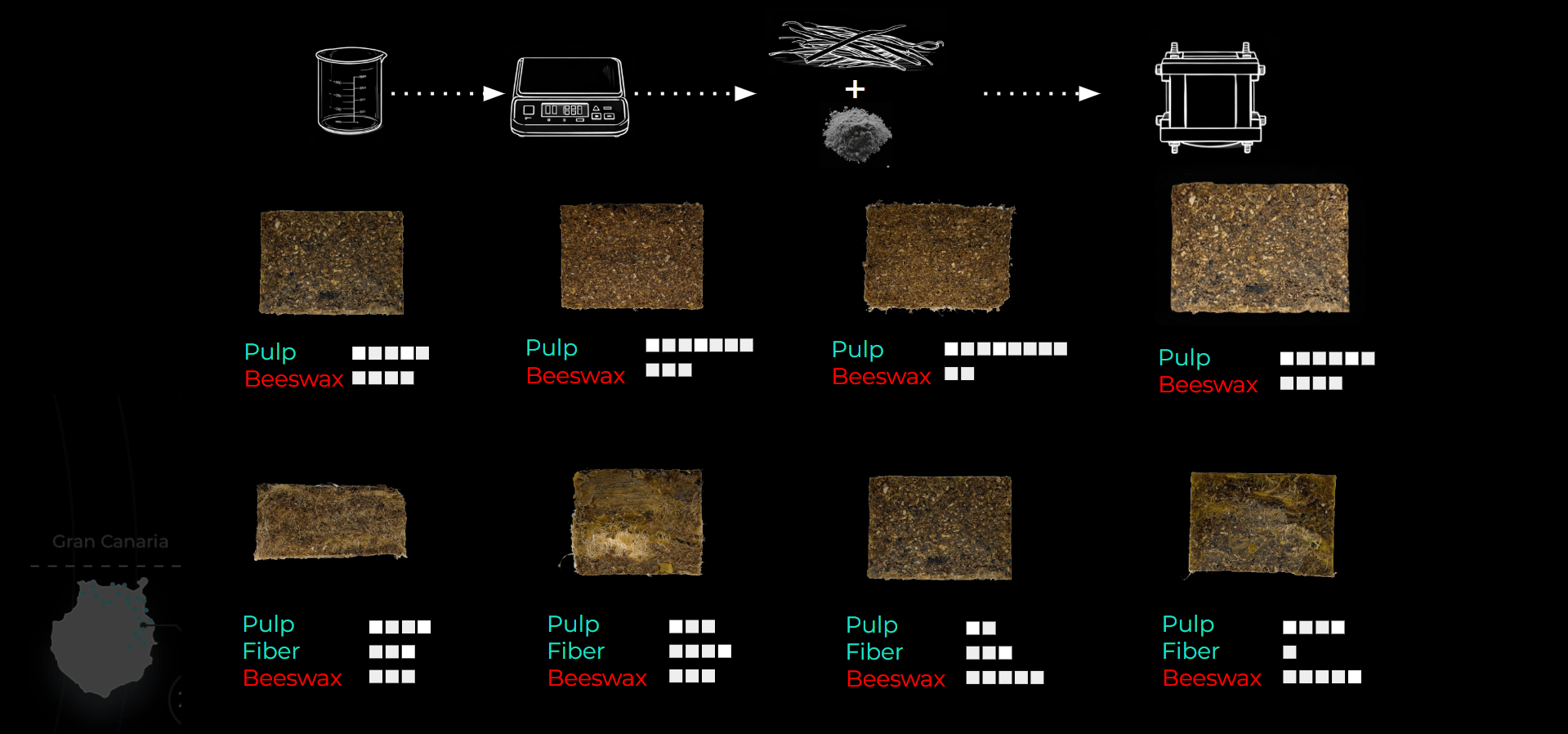
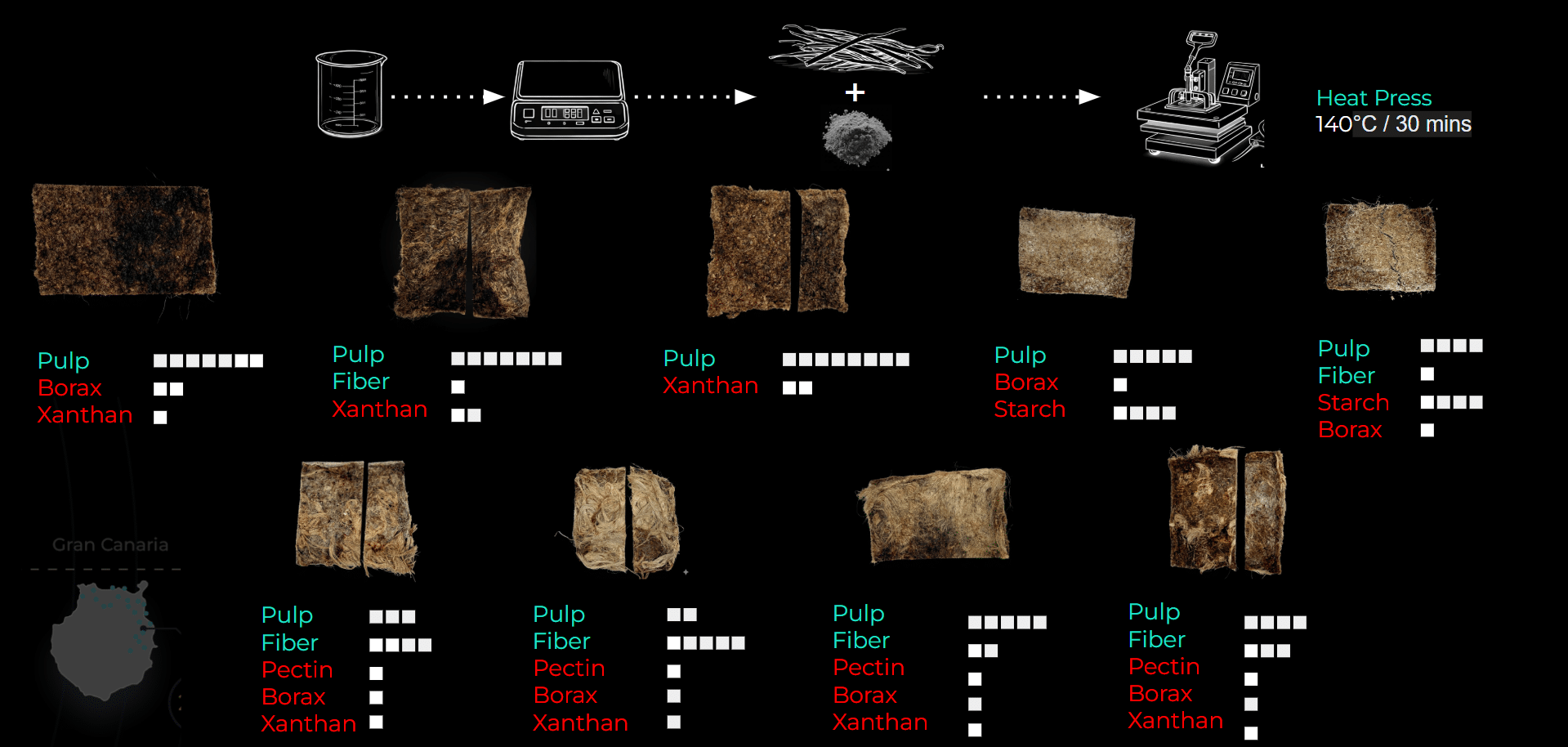
Phase 1 explores material behavior through systematic testing of multiple bio-binder combinations under controlled heat-press conditions and cold pressed molds.
By comparing structural integrity, cohesion, and surface performance, the process identifies optimal recipes guiding the transition from raw biomass to a reliable composite system.
PHASE 2 – Understanding the Parameters of the Heat Press
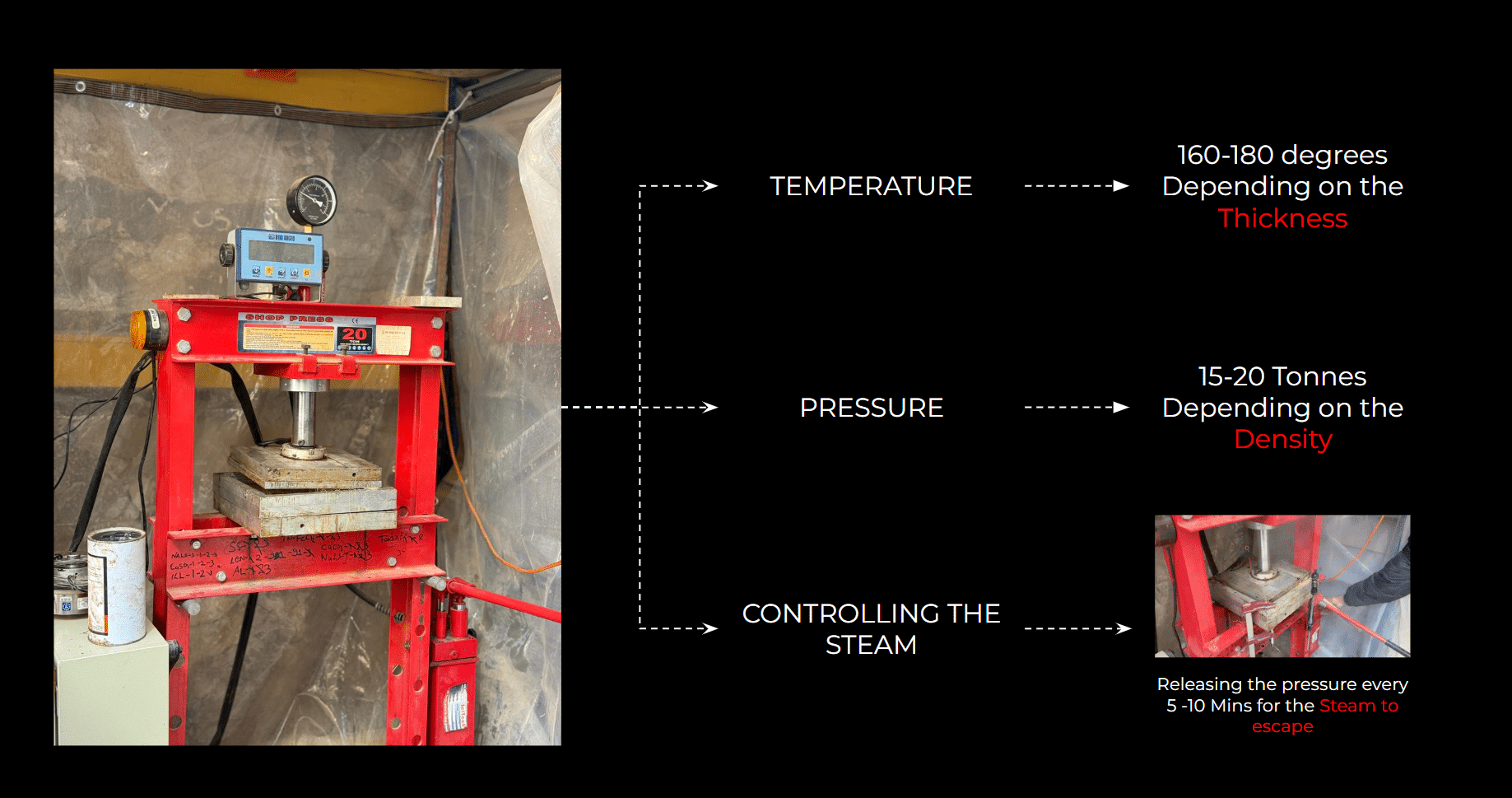
Phase 2 calibrates the heat-press parameters temperature, pressure, and steam release to control material density, bonding, and structural performance.
By tuning these variables in relation to thickness and composition, the process establishes a repeatable fabrication logic for consistent, high-quality panels.
PHASE 3 – FINAL MATERIAL PROTOTYPING
Phase 3 consolidates the optimized material recipe into full scale prototypes, refining fiber pulp ratios and binder integration under controlled heat press conditions.
This stage translates experimental insights into consistent, buildable panels, demonstrating the material’s structural potential and scalability for architectural applications.
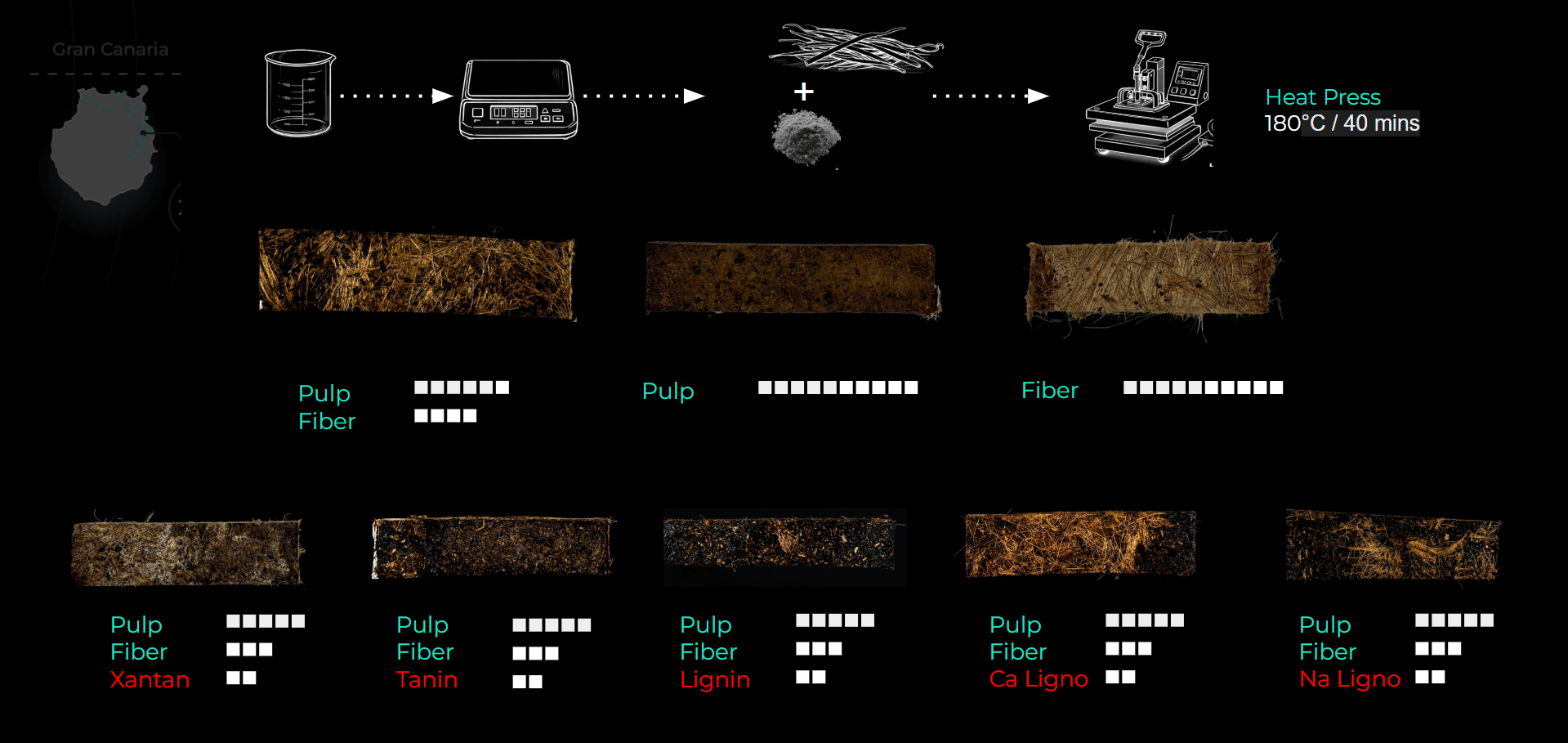
Material Testing
Multiple tests were conducted to systematically compare the performance of different material compositions across mechanical, physical, and environmental parameters, enabling a clear evaluation of their strengths and limitations and guiding the selection of the most balanced and high-performing material system.
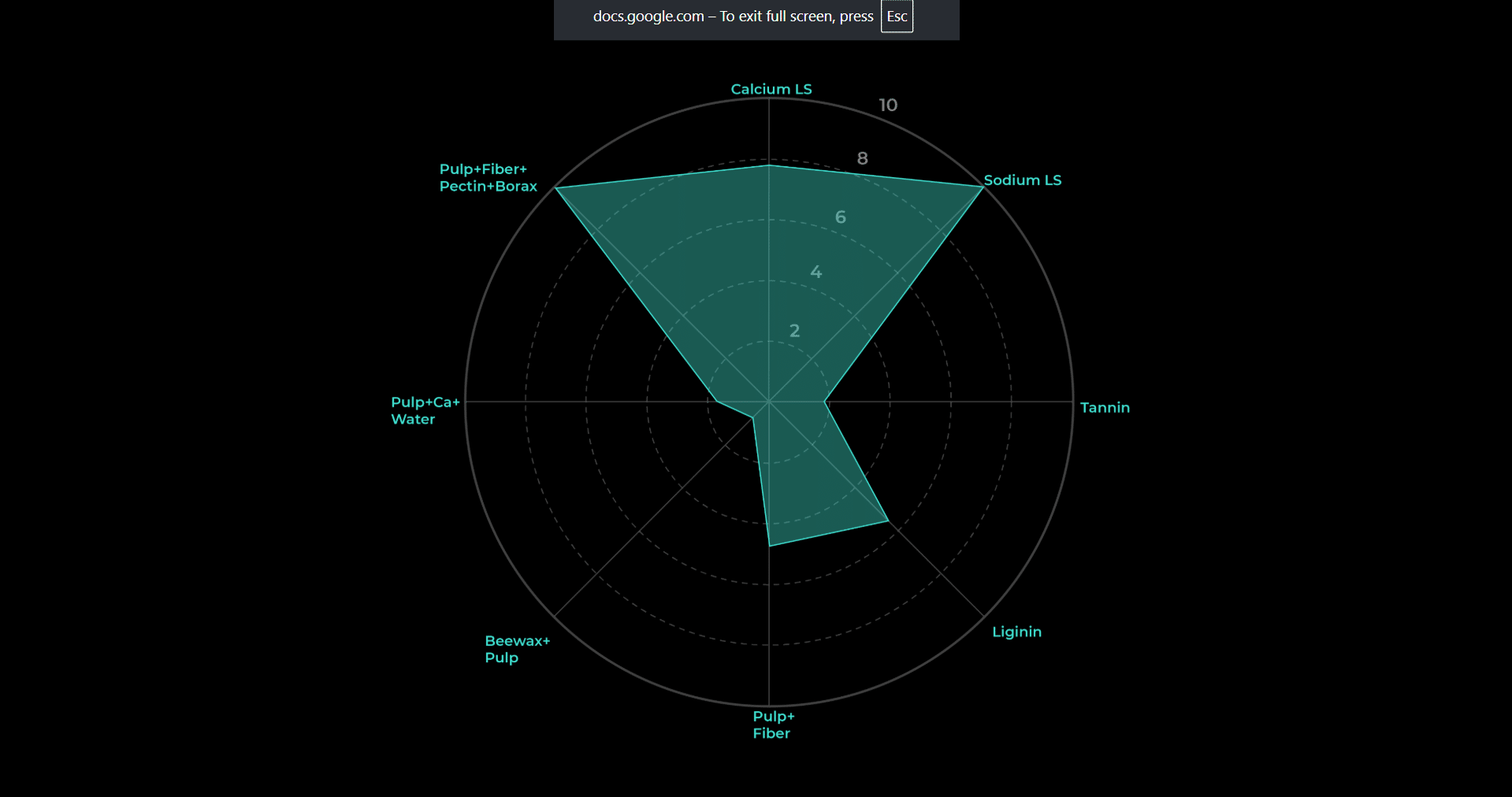
3Pt Flexural Test
The 3-point flexural test evaluates the bending performance of different material compositions, revealing clear variations in structural behavior across binder systems.
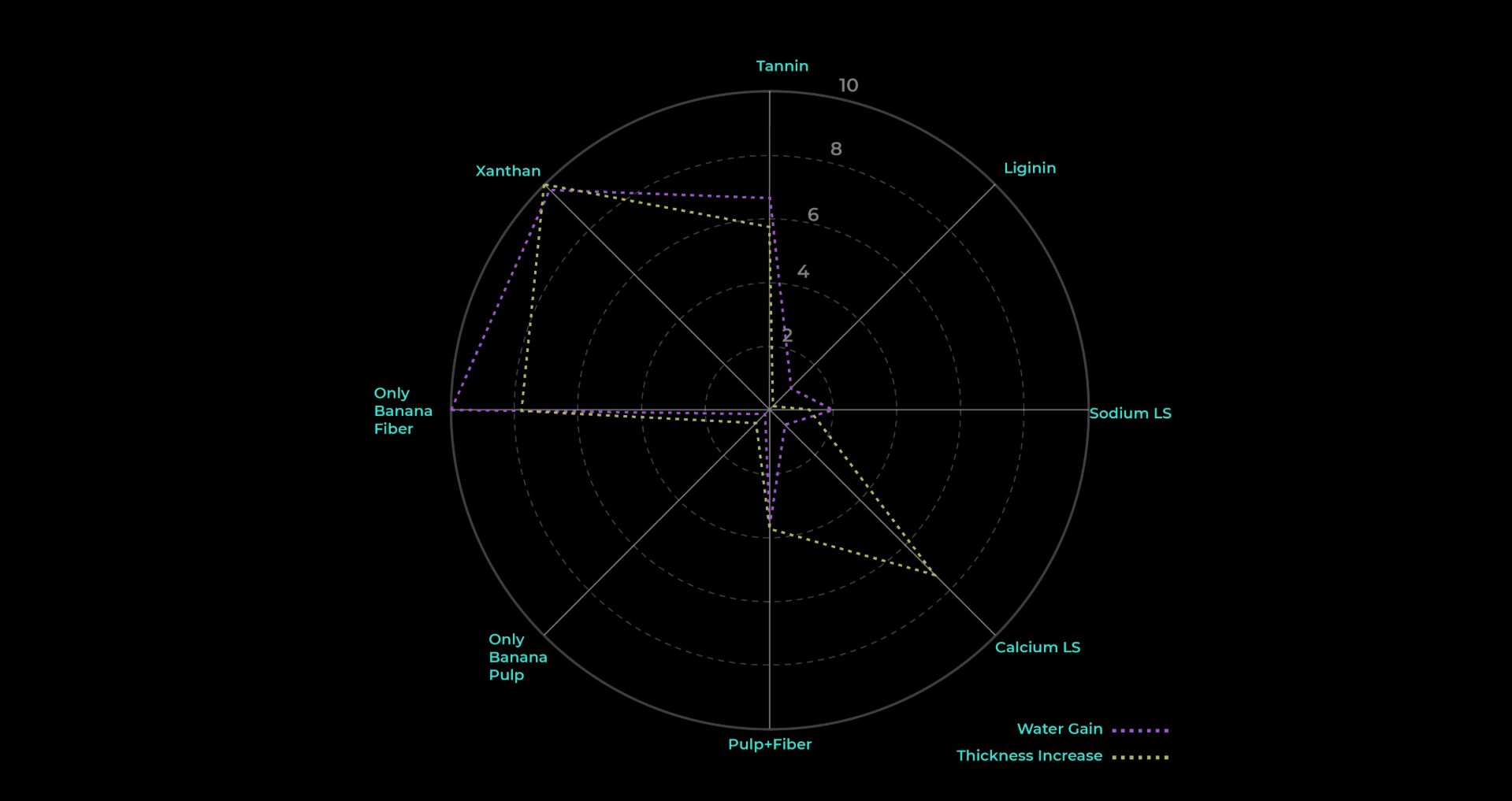
DROP TEST
The drop test assesses impact resistance and dimensional stability, comparing water absorption and thickness variation across material compositions.
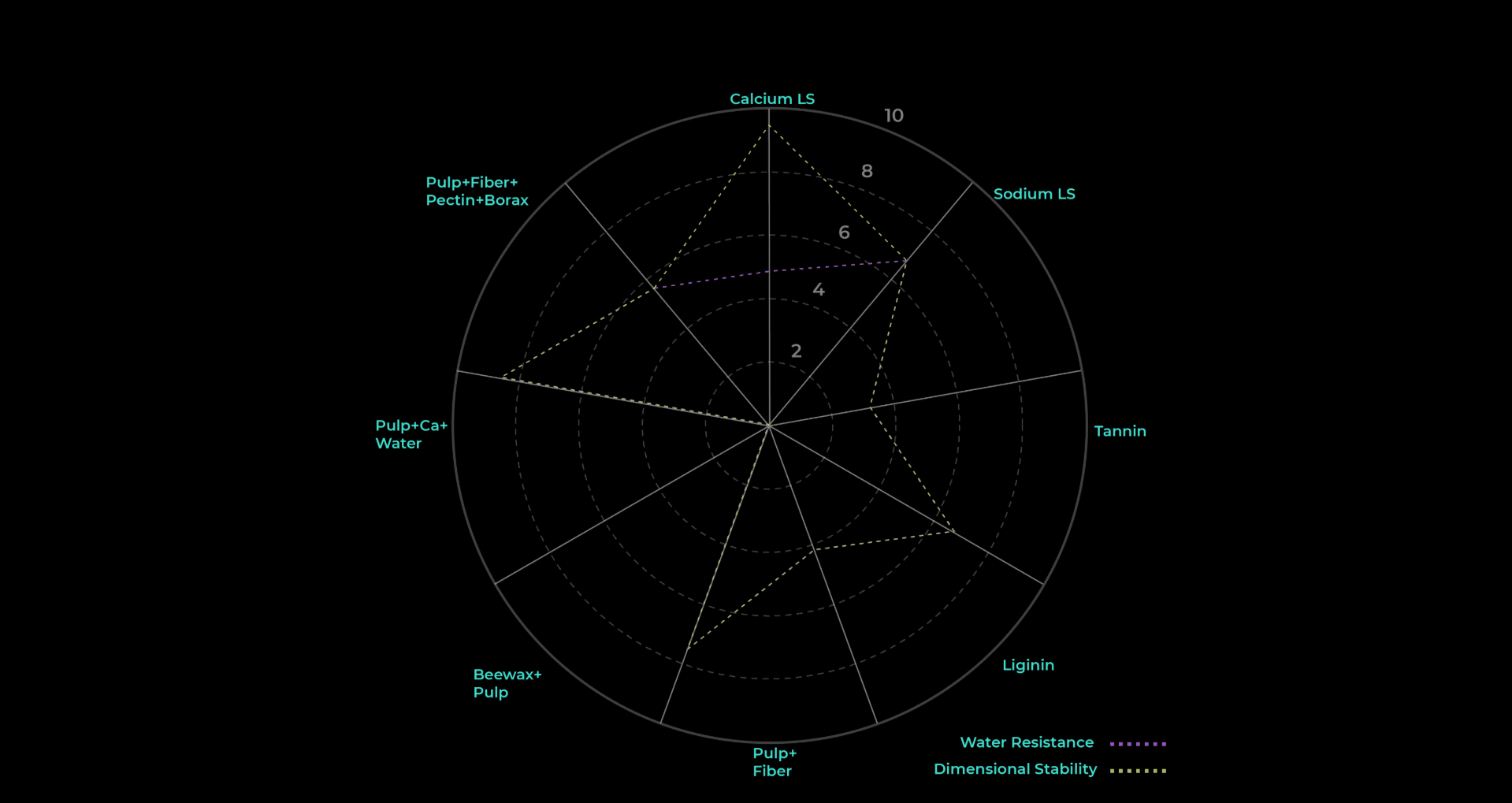
MOISTURE RESSISTANCE TEST
The moisture resistance test involved immersing each prototype in water for 24 hours to quantify water absorption and swelling behavior.
This method provides a clear measure of dimensional stability and durability, revealing how different binder systems respond to prolonged moisture exposure.
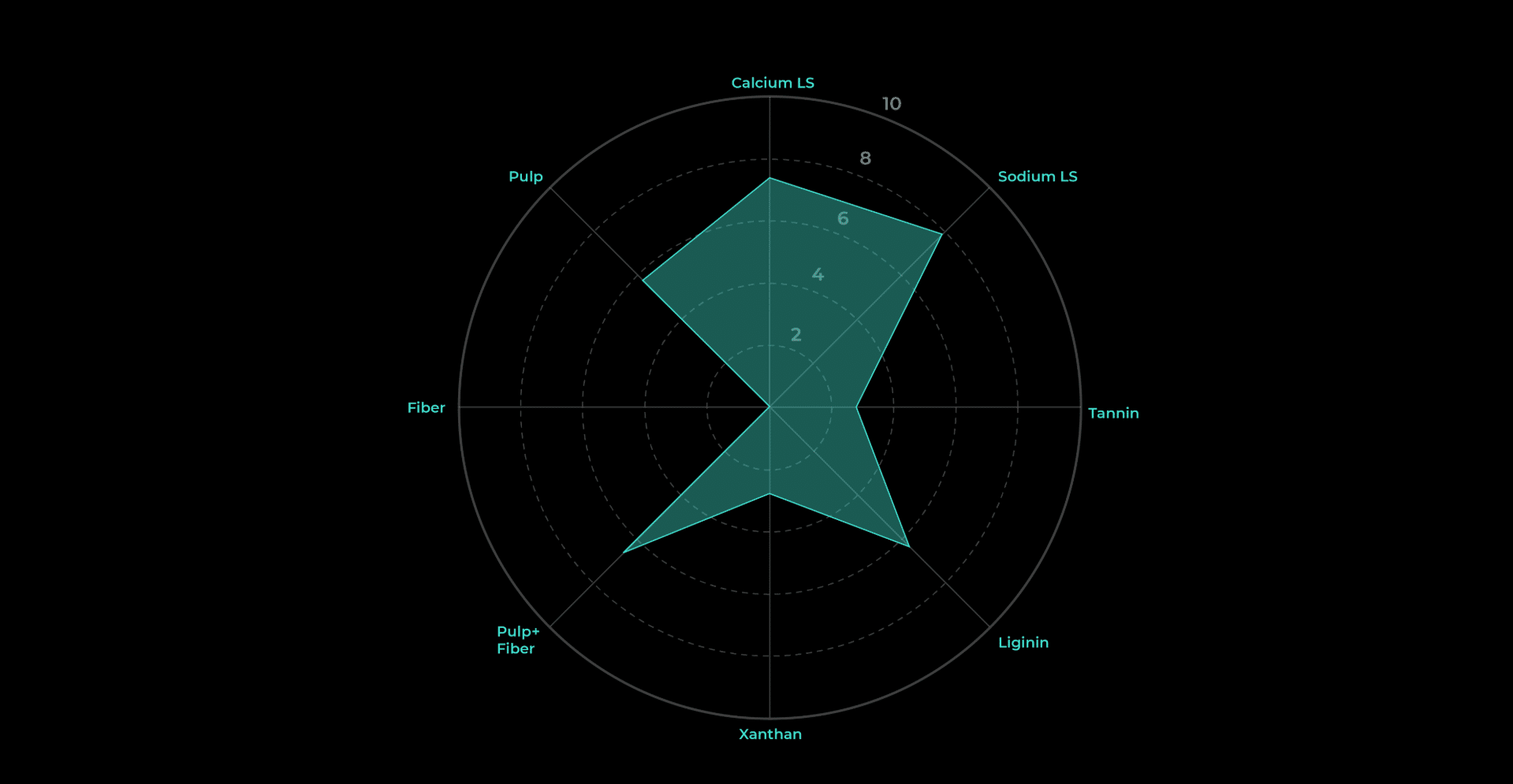
OVERALL MATERIAL PERFORMANCE
The overall performance analysis synthesizes mechanical strength, moisture resistance, and impact behavior to compare all material compositions holistically.
Sodium and calcium lignosulfonate-based composites consistently outperform others, emerging as the most balanced and reliable solutions for scalable architectural applications.
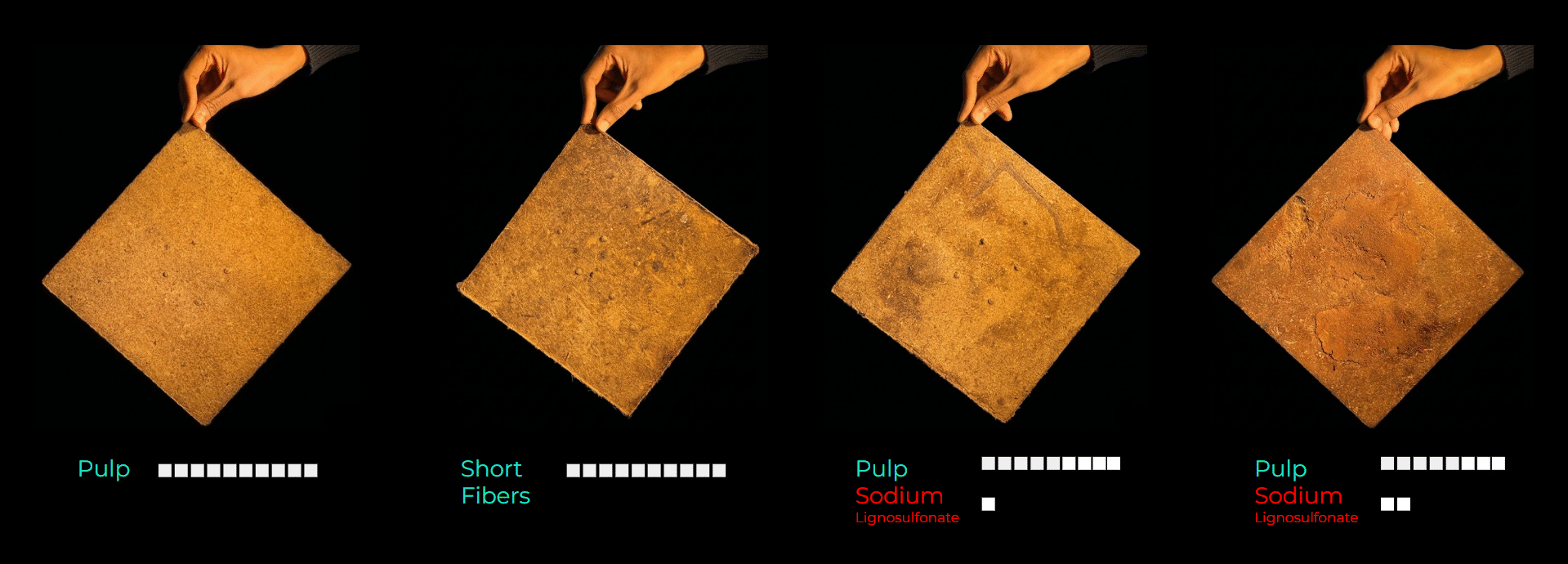
FINAL PROTOTYPES
The final prototypes demonstrate the material’s versatility through variations in fiber distribution and binder integration, resulting in distinct textures and structural behaviors.
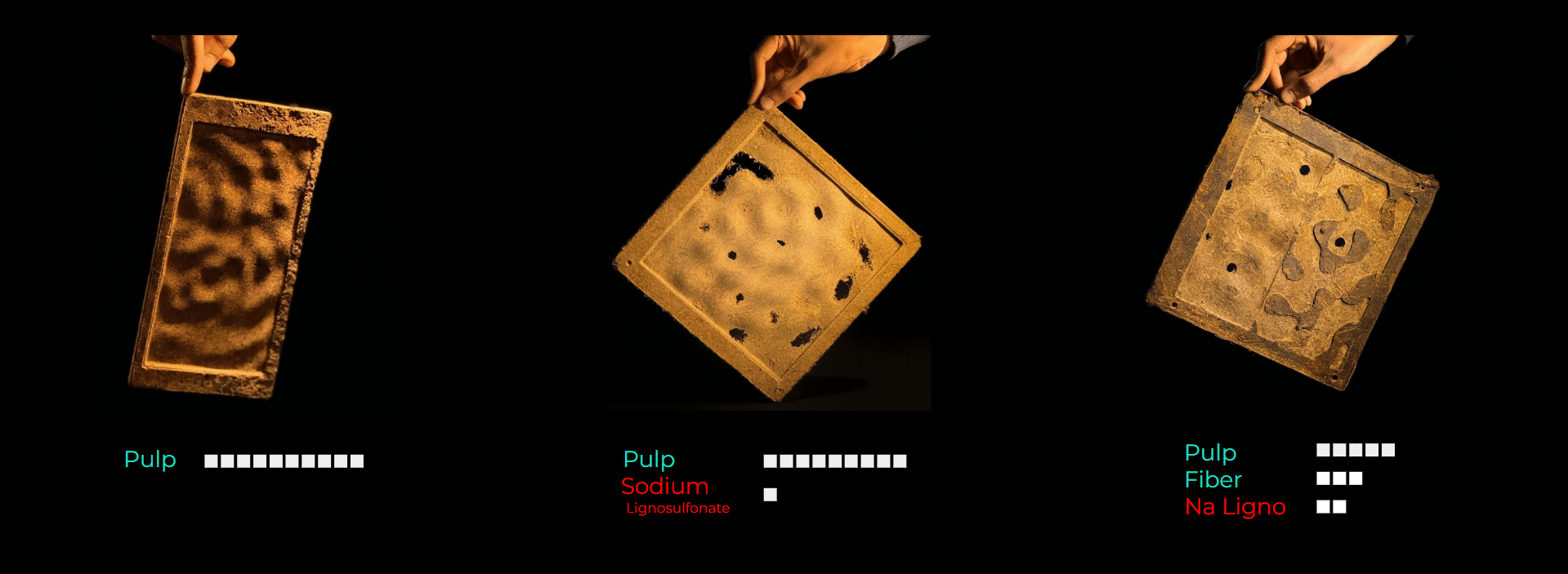
CNC Milled Prototypes
CNC milling demonstrates the material’s machinability, revealing how different compositions respond to subtractive fabrication and detailing.
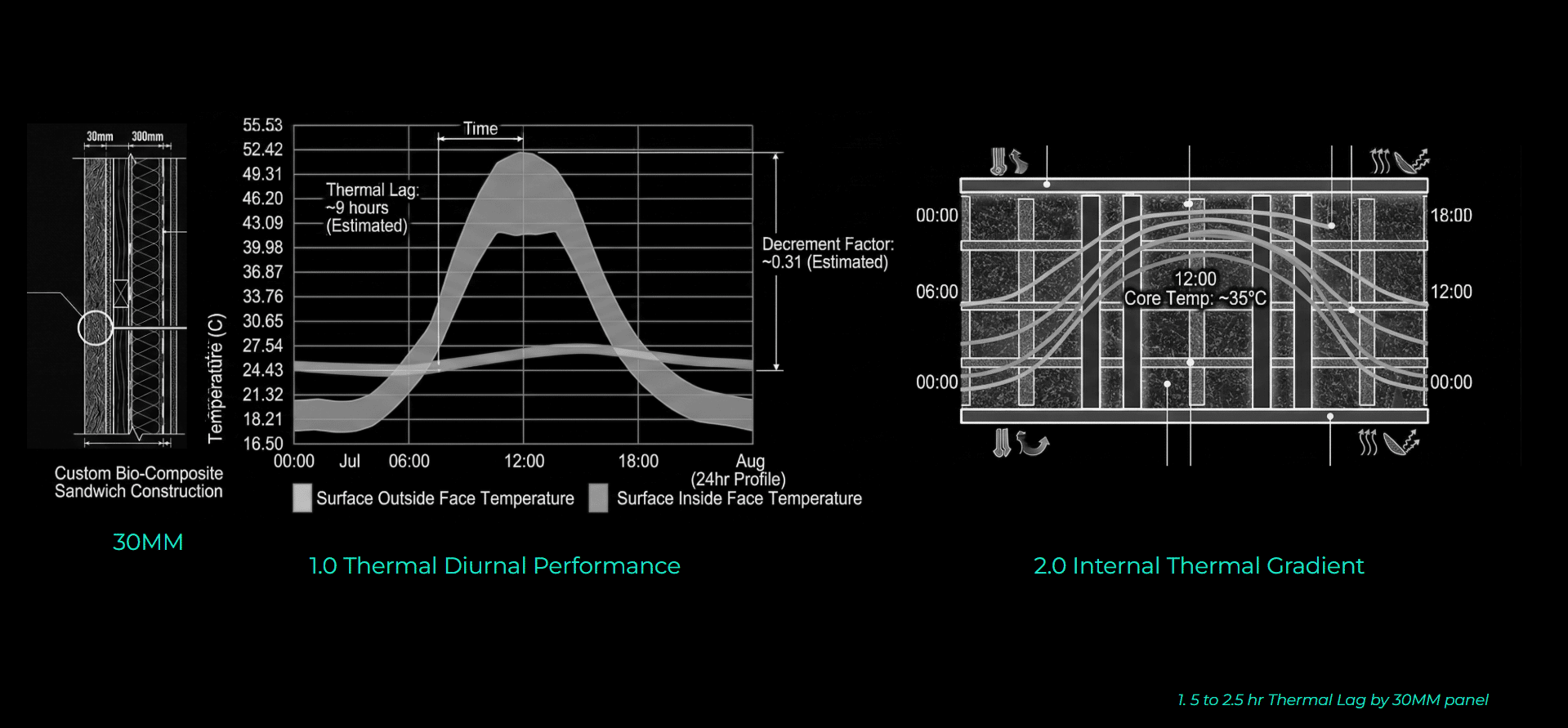
THERMAL PERFORMANCE
END OF LIFE
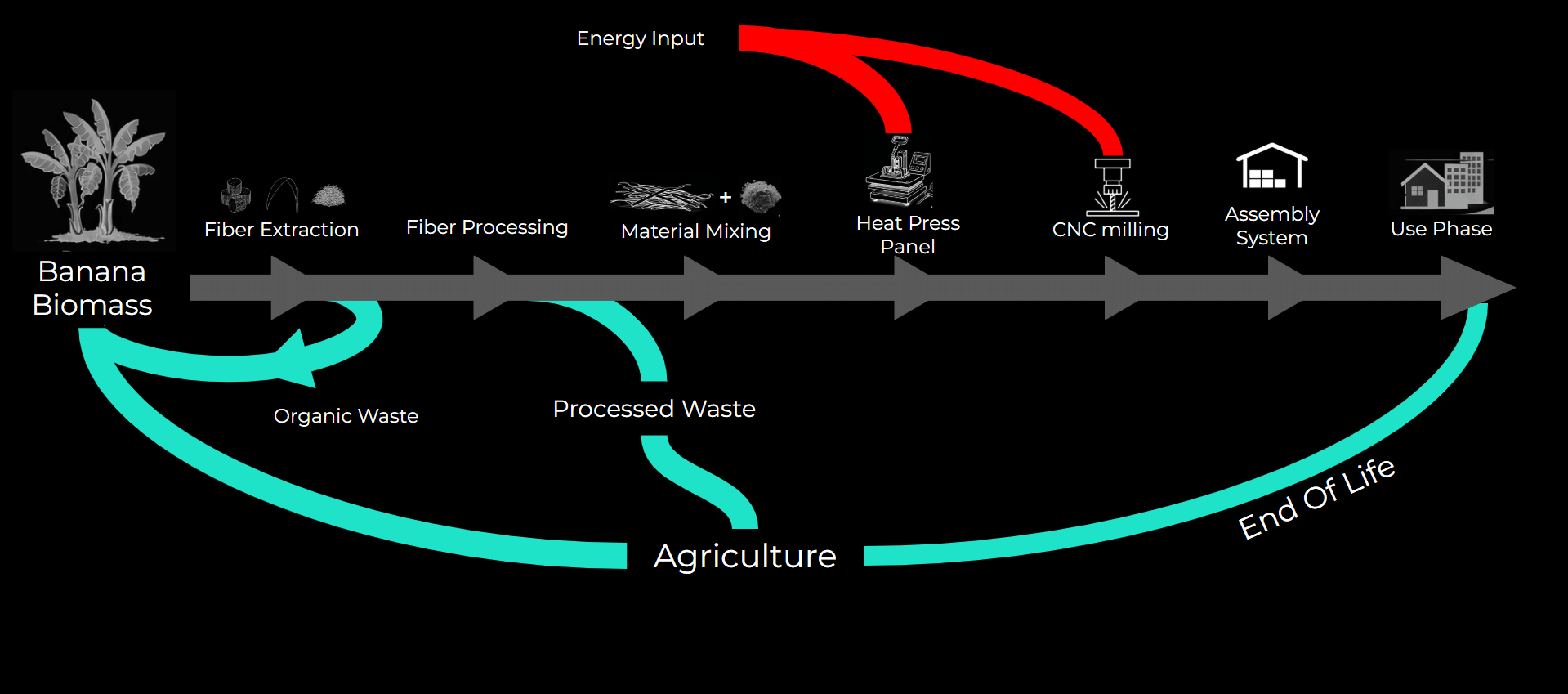
The material system follows a circular lifecycle, where banana biomass is transformed into panels and reintegrated back into agricultural cycles at the end of life.
By minimizing waste and enabling biodegradation or reuse, the process supports a regenerative, low-impact approach to material production and architectural application.