The increasing awareness of delayed innovation in construction techniques has driven interest in sustainable materials and advanced fabrication technologies. Despite the advantages of 3D printing with earthen materials, the absence of standardised building codes and regulations has constrained its commercialisation. Recent advancements in 3D printing with concrete, however, have led to the development of formal building codes, making it possible to construct and inhabit 3D-printed homes. While these developments provide valuable insights for earthen 3D printing, the unique properties of earthen materials require substantial adaptation in both material formulation and process settings.
Earthen construction is often regarded as a “non-engineered” method rooted in traditional techniques and cultural heritage that merit preservation (Schroeder, 2012). Although the International Standards Organisation (ISO) has produced only a few global standards for earthen construction, more than 70 regional and national standards, norms, and guidelines have been developed worldwide over the past seven decades (Reddy et al., 2022). The lack of uniform and unified guidelines means that architects and engineers must justify compliance on a case-by-case basis, often referencing foreign codes or conducting additional engineering analyses to demonstrate structural safety.
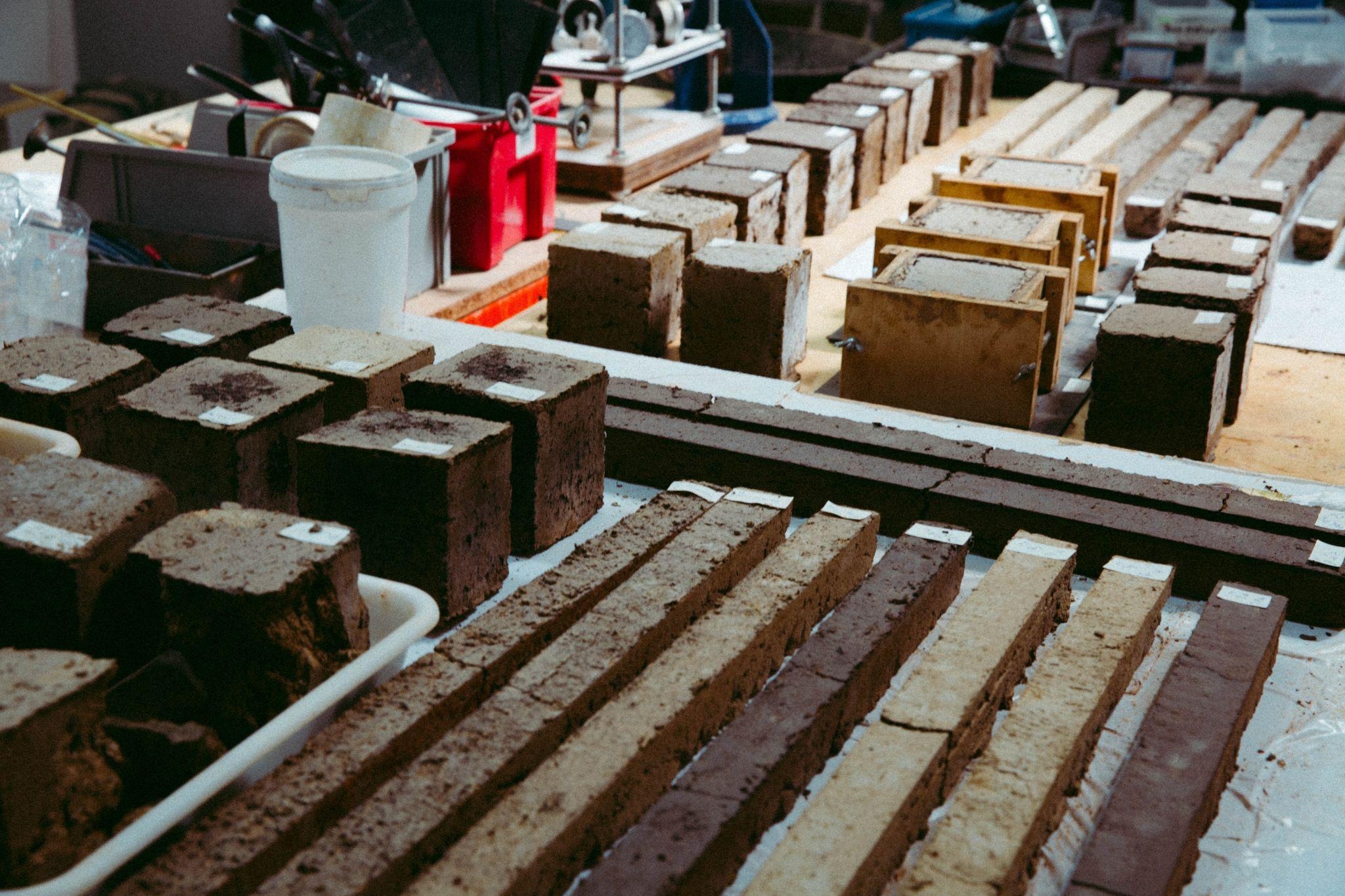
The Matter Research class aims to address this gap by proposing and targeting meeting minimum performance benchmarks for strength and durability. Drawing on recently published 3D printing additive construction codes, regional earthen material regulations, and academic findings, the course focuses on green strength, shrinkage, compressive strength, and water resistance of earthen material for 3D printing.
Learning Objectives
At course completion, the student will:
- Exploring the current challenges and opportunities in adopting sustainable materials and advanced fabrication technologies in construction.
- Identifying existing international, regional, and national standards related to earthen construction and their limitations.
- Assessing how insights from 3D-printed concrete can inform the development of guidelines for earthen materials.
- Analyse the mechanical and durability performance benchmarks (e.g., strength, shrinkage, water resistance) relevant to 3D-printed earthen materials.
- Propose material formulations and process adaptations needed to optimise earthen 3D printing.
- Design testing protocols to evaluate properties such as green strength, compressive strength, shrinkage, and water resistance.