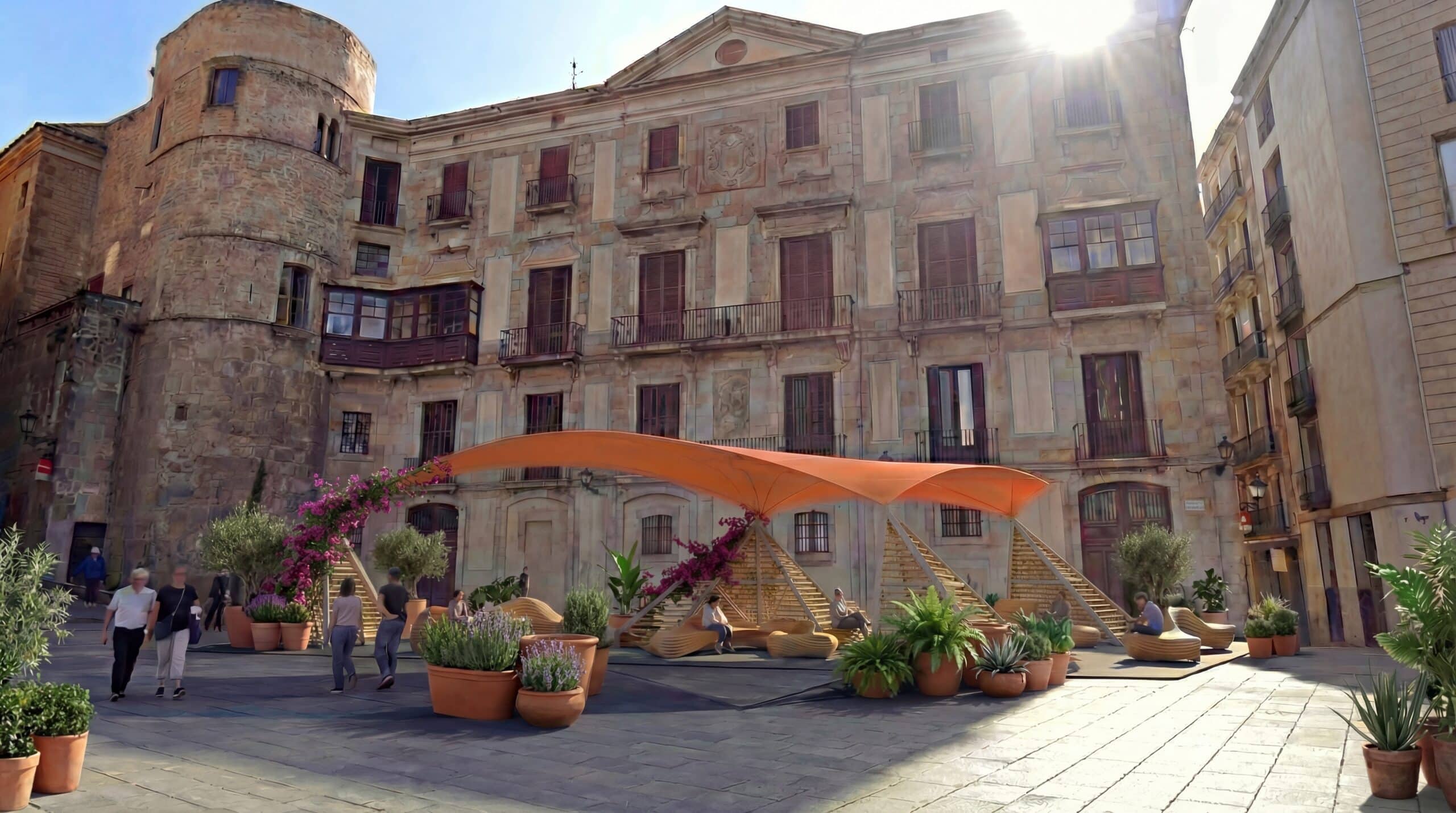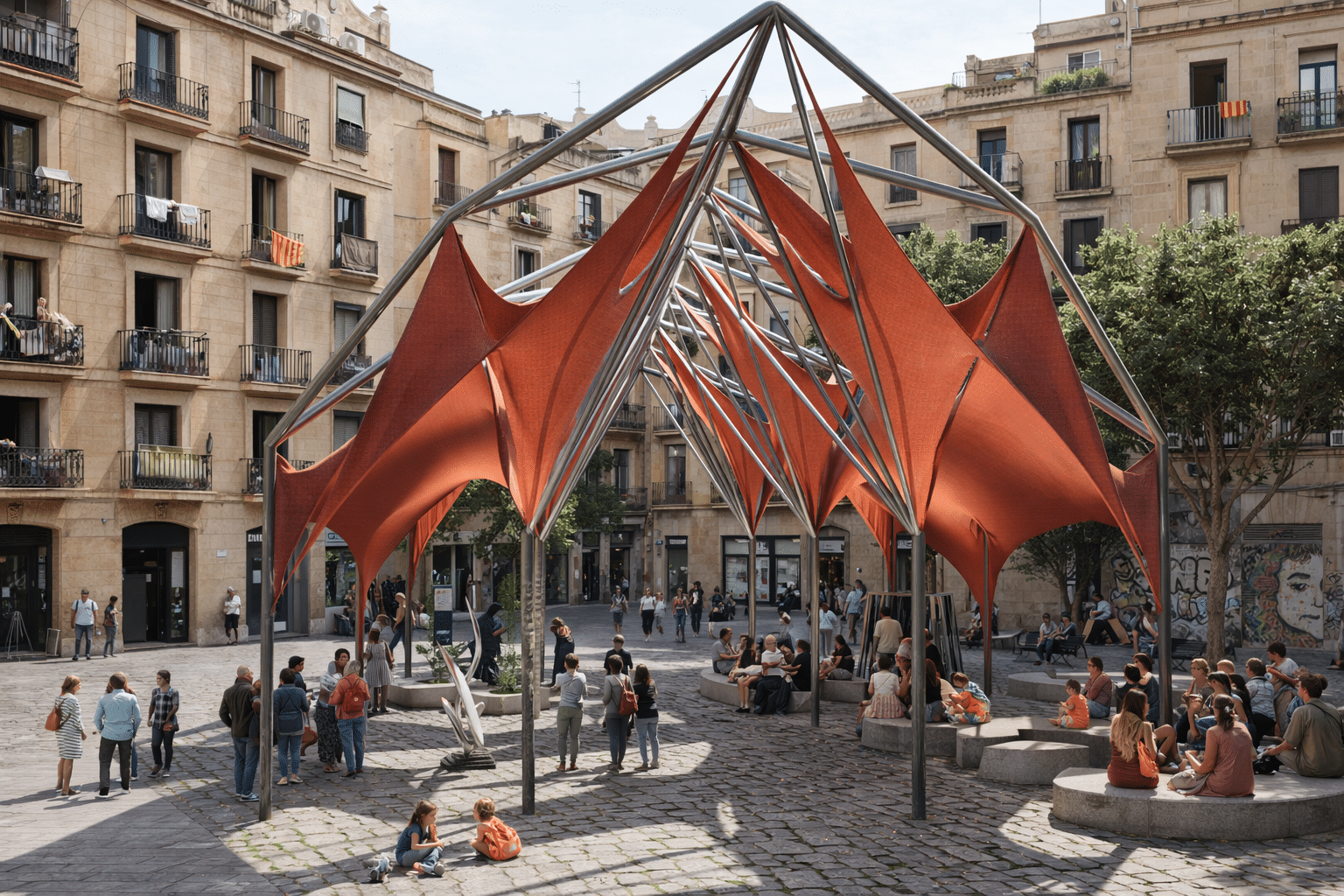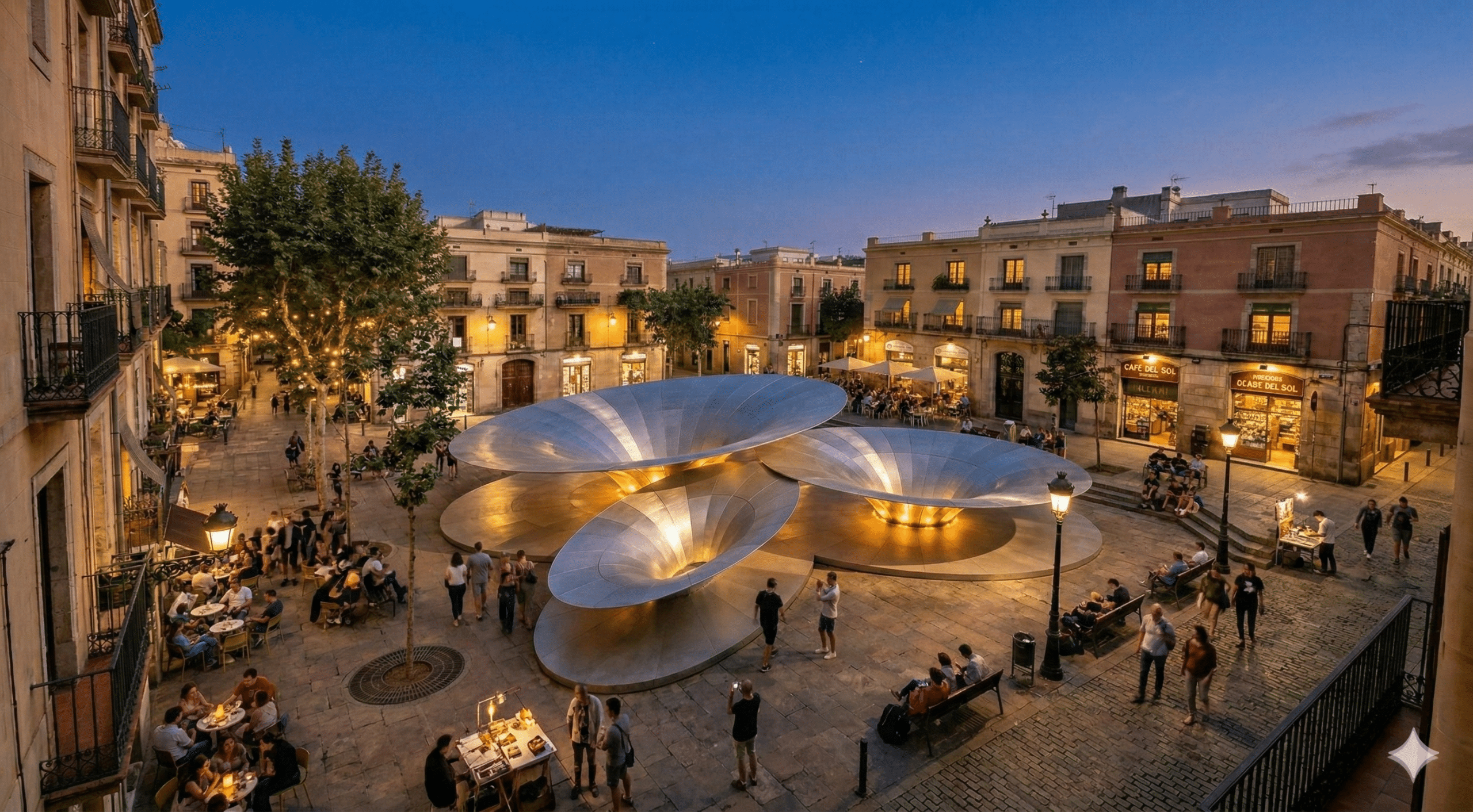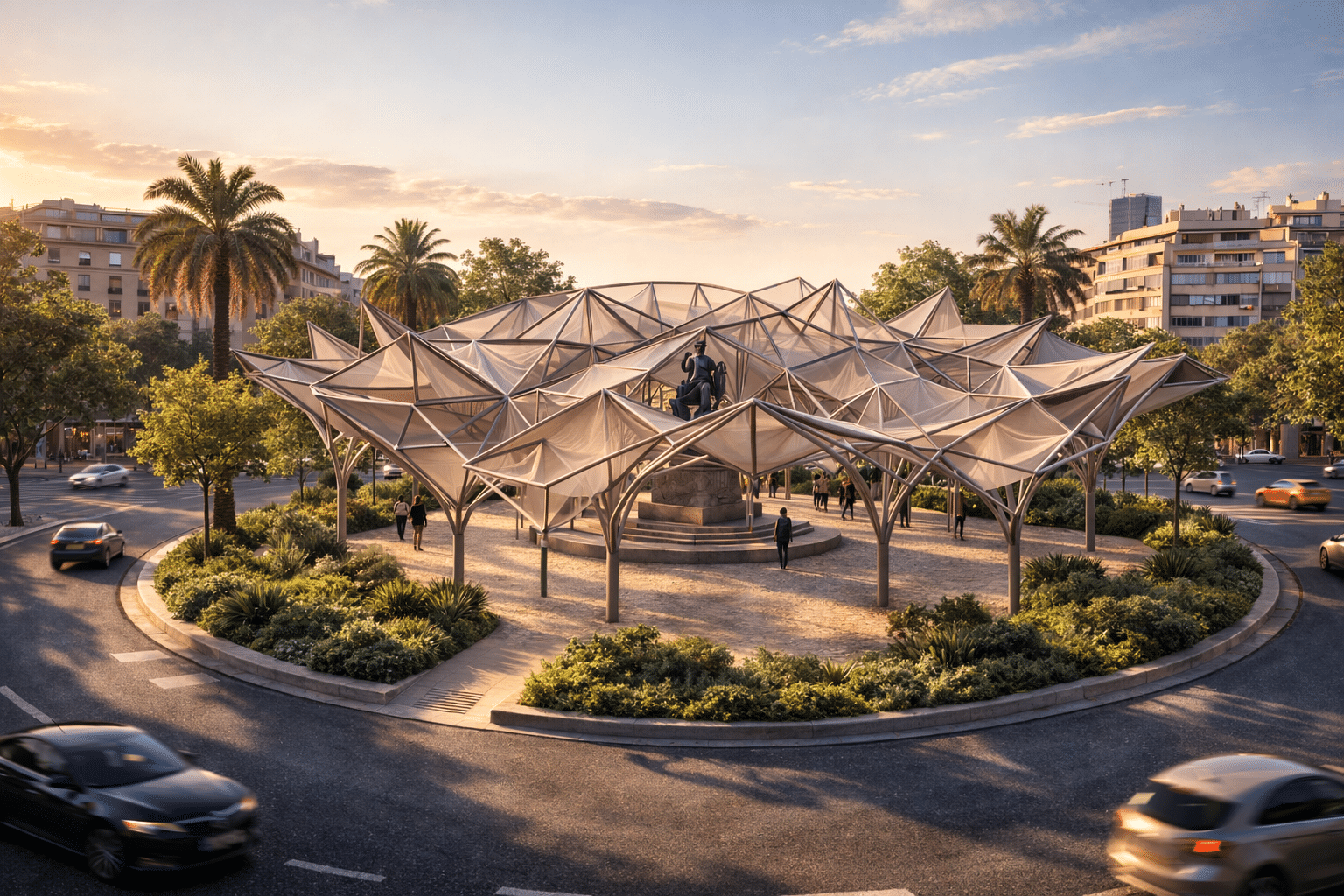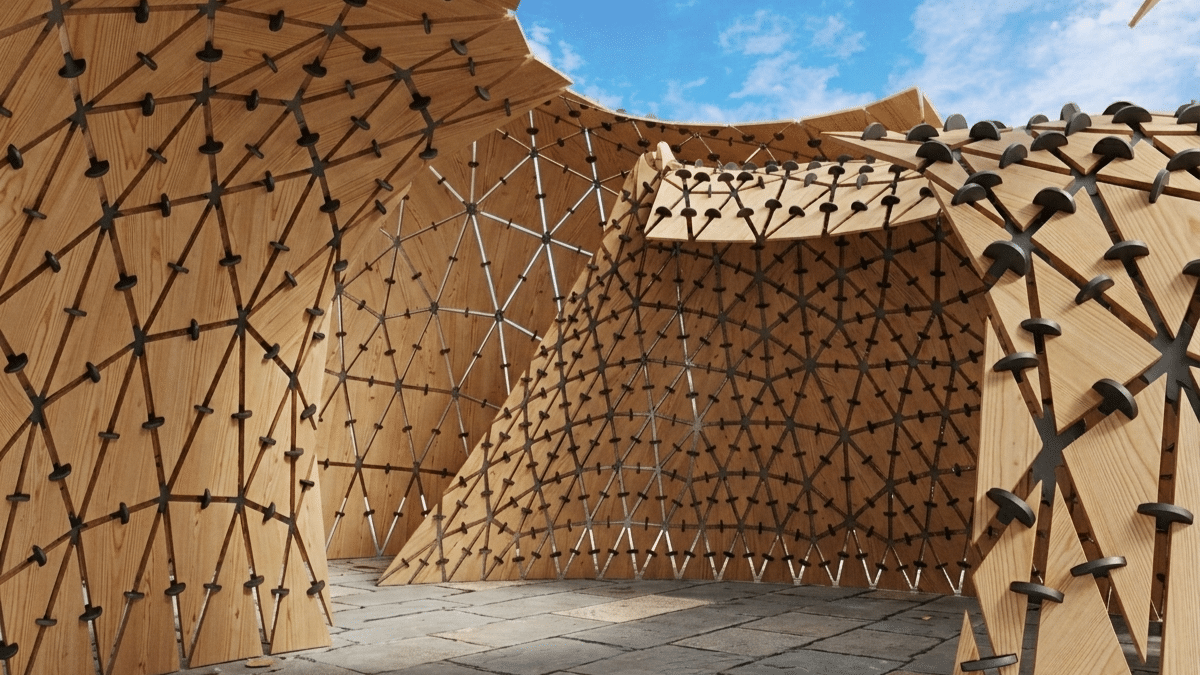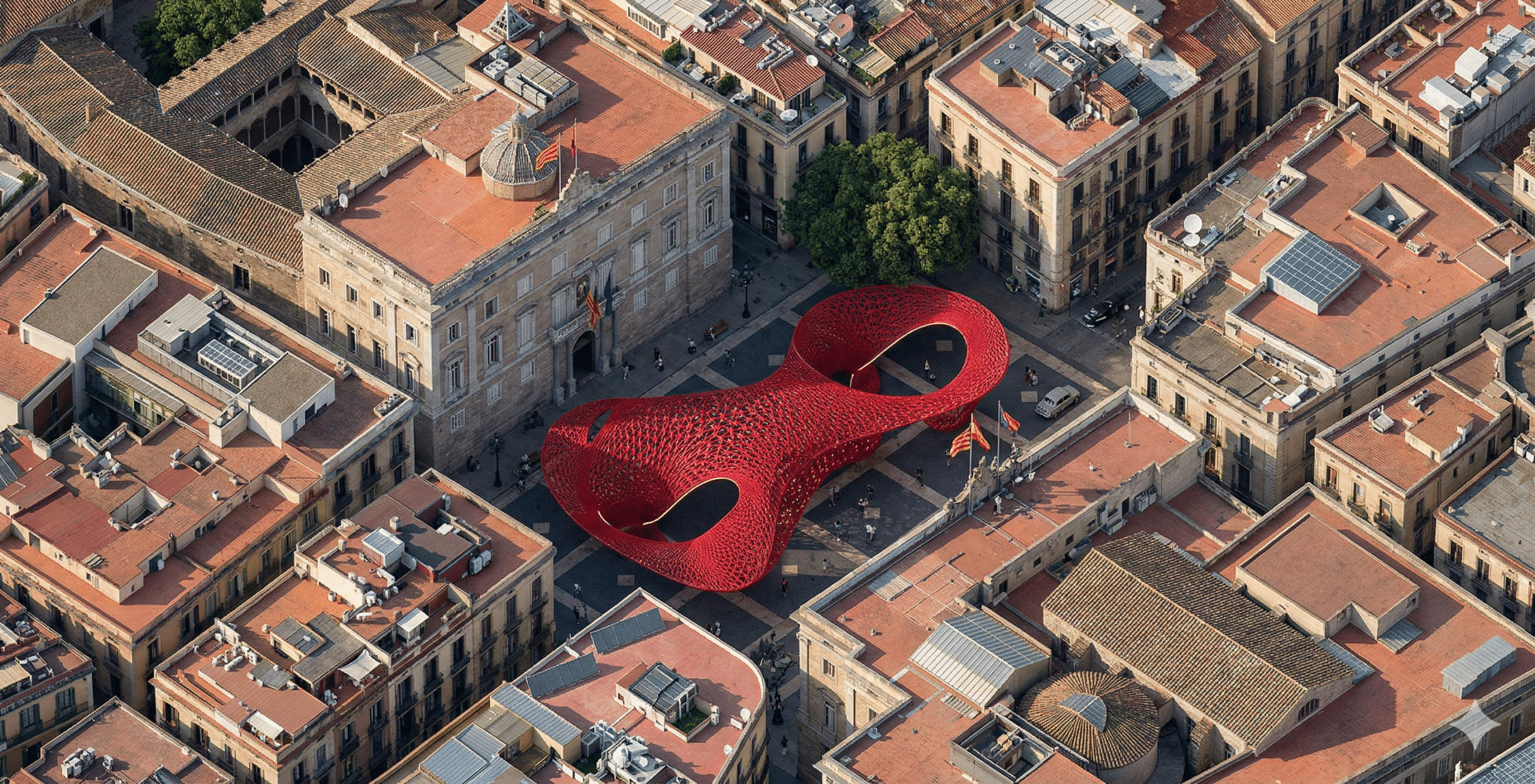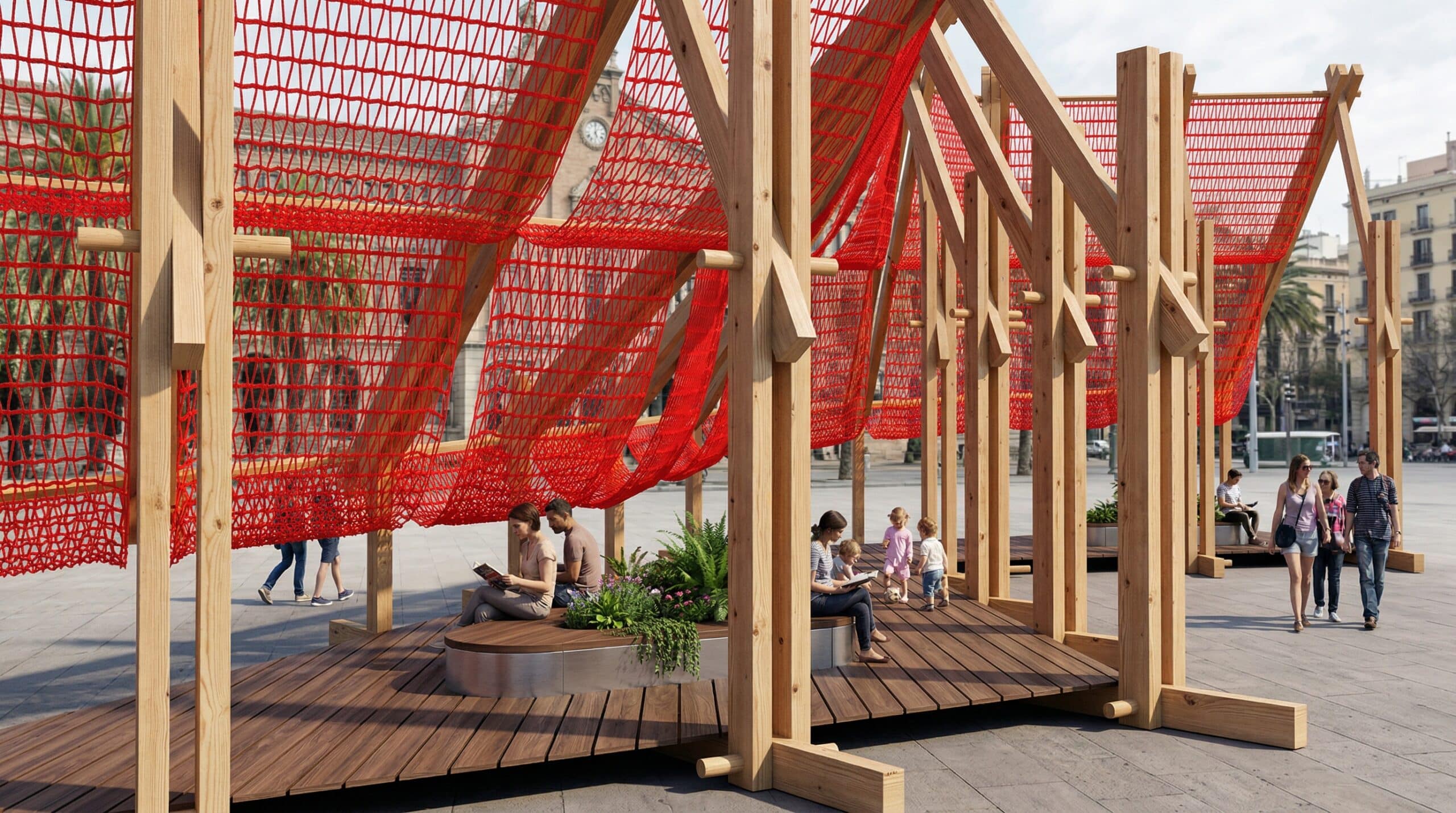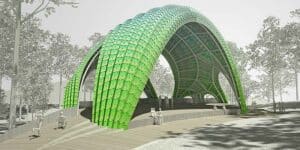
Credits: Chysalis amphitheatre by Marc Fornes
Continuing the journey from the previous term, the focus would be to transfer the knowledge acquired from the previous term into tangible physical realities. Our endeavour transcends conventional design paradigms, as we navigate the intricate fusion of fabrication and design. Participants will acquire the skills to develop scripts serving as conduits from conceptual ideation to the realisation of intricate designs, thereby unravelling innovative means of fabrication. This course focuses on the profound translation of digital concepts into tangible objects, meticulously navigating the complex relationship between design theory and fabrication practices.
Throughout this course, we will meticulously explore the intricacies of production methodologies. We will examine the synthesis of digital tectonics with tangible reality, observing the seamless transition from the ethereal digital domain to the tangible world. Participants will be introduced to automated drawing techniques and sophisticated baking methods, leveraging tools such as metadata management, and production streamlining.
The curriculum places particular emphasis on the production of comprehensive documentation. Participants will develop the ability to generate meticulous and automated documentation, ensuring a thorough capture of every facet of the design process, thereby upholding standards of clarity and precision.
Learning Objectives
At completion of the course, the student will:
- Understand fundamental concepts of computational design;
- Learn how to create strategies to build algorithms;
- Have knowledge of basic concepts of generative design;
- Be capable of generating parameterized processes;
- Apply data driven design logics;
- Learn how to create dynamic modelling;
- Obtain a deeper knowledge of algorithmic design concepts and parametrization of geometry
- Obtain a deeper knowledge of data management in grasshopper
- Learn in deep about the parameterization of complex geometries
- Learn about the most recent workflows for complex modelling
- Understand the notions and practical use of optimization algorithms