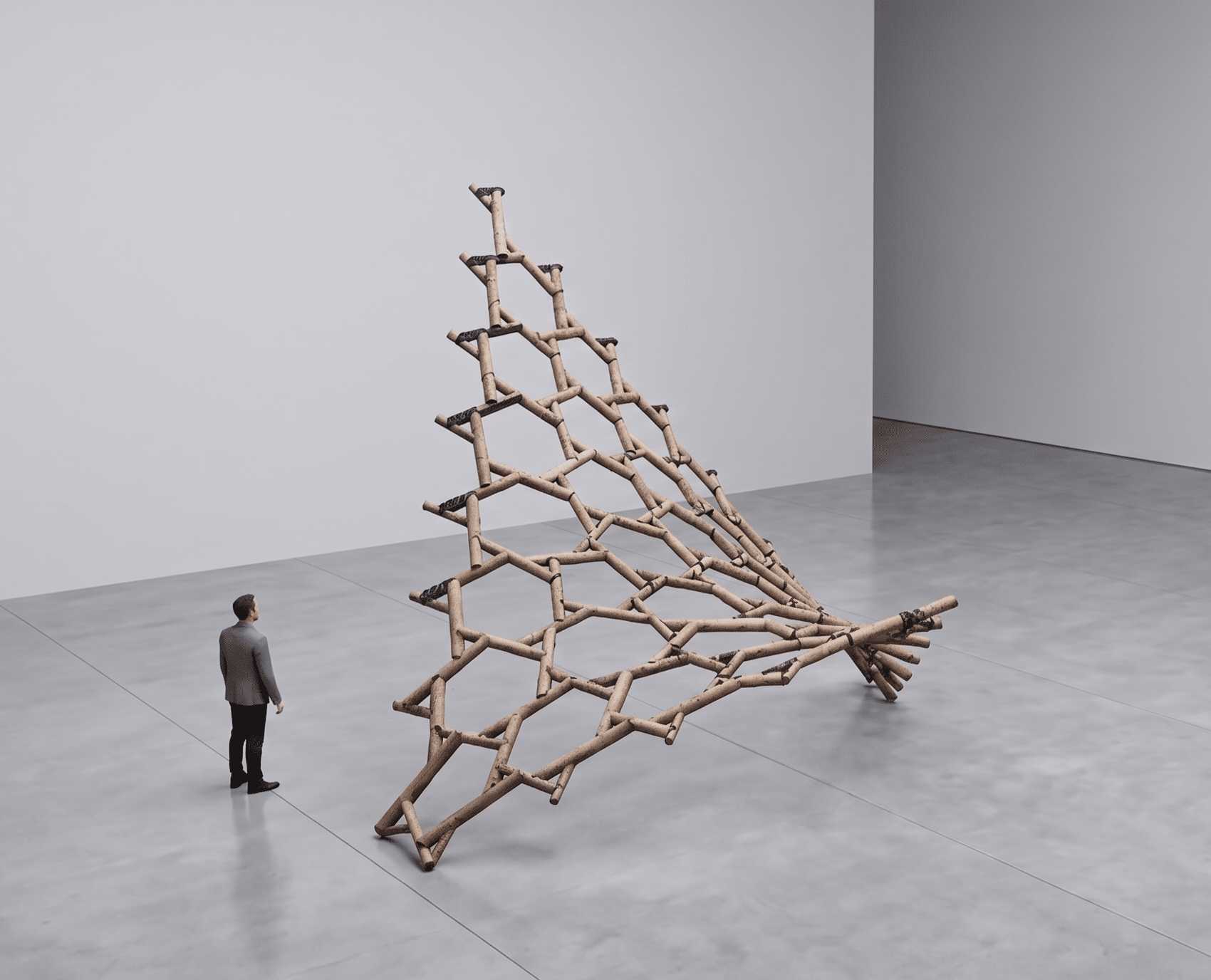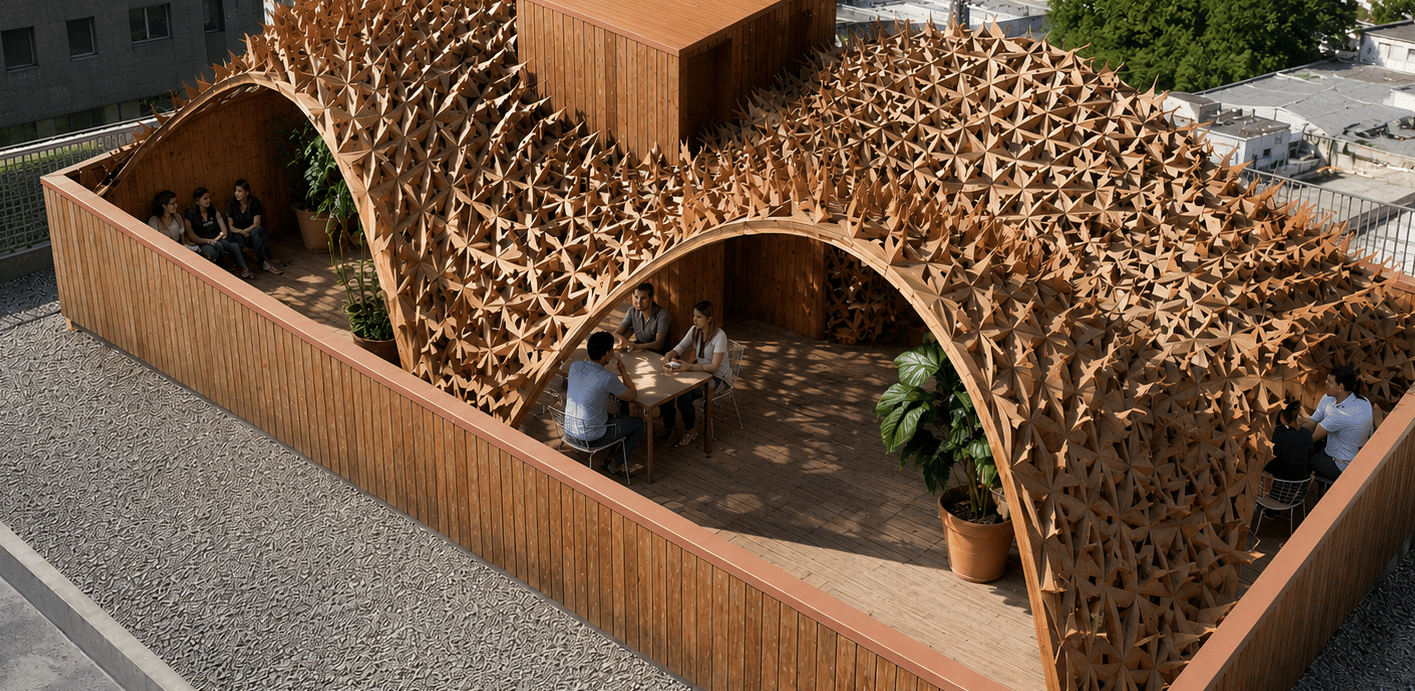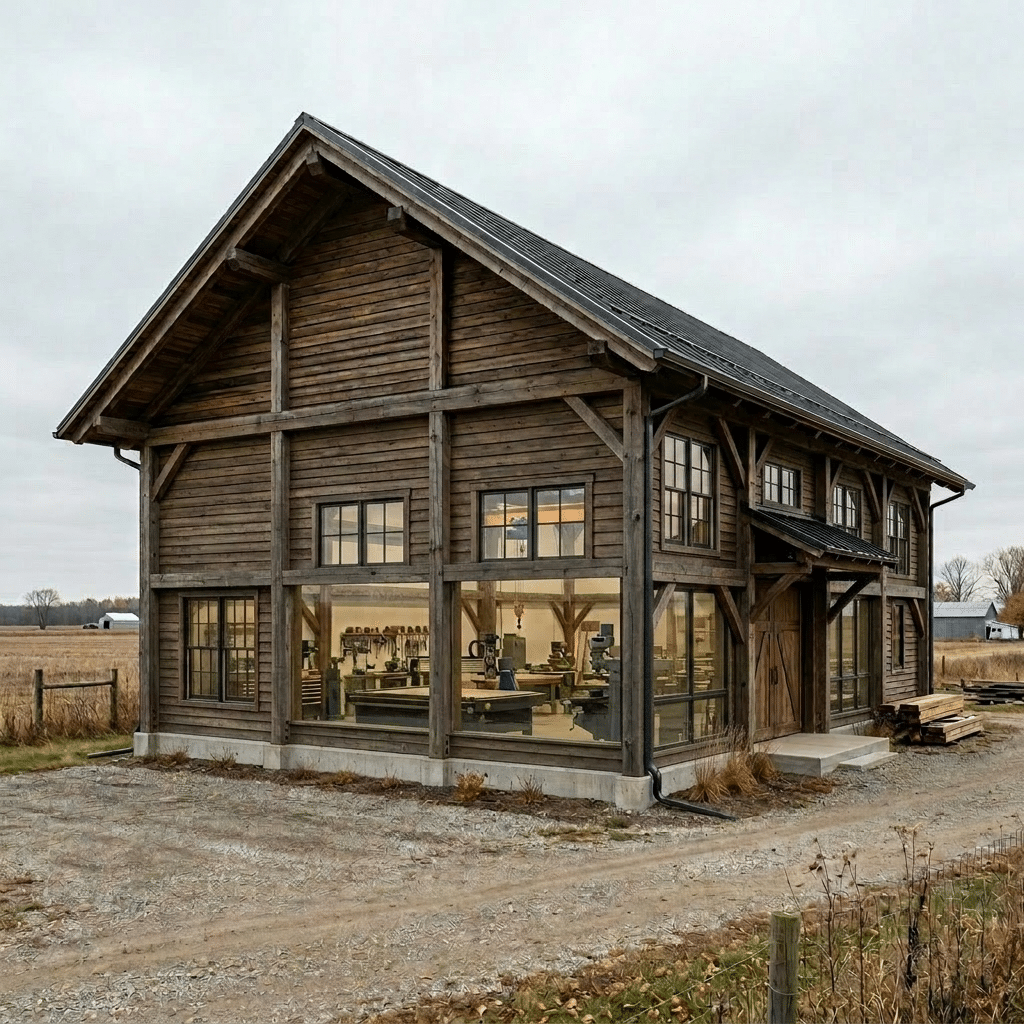
Credits: Structural Form Finding – Genetic Optimization by Francis Redman from Computational Design Seminar 2016/17
Building on the previous terms, this course will focus on translating acquired knowledge into structured and informed design decision-making processes. Moving beyond purely generative approaches, this course explores how computational methods can support the evaluation, comparison, and selection of design alternatives. Participants will explore processes that bridge conceptual ideation and analytical reasoning for a more rigorous and transparent approach to design.
Throughout the course, we will explore how performance evaluation informs design decisions. One aspect of this is environmental simulation, through the plugin Ladybug, which will allow students to assess key microclimatic factors to generate measurable inputs that guide iterative design development.
Building on this, this course introduces optimization methodologies as tools for navigating complex design problems. Students will engage with single-objective optimization to refine specific performance criteria, and multi-objective optimization to generate diverse sets of solutions that highlight trade-offs between competing objectives.
To support the interpretation of these solutions spaces, this course incorporates data analysis techniques.Students will apply clustering methods such as k-means to identify patterns and group similar design alternatives, alongside regression modelling to understand relationships between design variables and performance outcomes. These approaches enable a more informed evaluation of large datasets and support evidence-based design reasoning.
Finally, the course introduces multi-attribute decision-making techniques that allow students to evaluate and rank design alternatives based on multiple criteria and varied performance priorities. Students will learn how to develop, interpret, and adapt clear and transparent methodologies for design decision-making within complex and multi-dimensional architectural contexts.
Learning Objectives
At course completion the student will:
- Develop performance-informed design workflows by constructing parametric models that integrate environmental simulation data and optimization strategies
- Implement optimization techniques for design exploration to generate, evaluate, and navigate complex design solution spaces
- Critically assess Pareto fronts, solutions distributions, and performance trade-offs to support informed design decision-making
- Employ methods such as clustering and regression to identify patterns, relationships, and trends within large sets of design alternatives
- Evaluate and rank design alternatives based on multiple criteria and performance priorities using structured decision-making methodologies
- Develop clear and reproducible methodologies for explaining design choices within complex, multi-dimensional architectural contexts