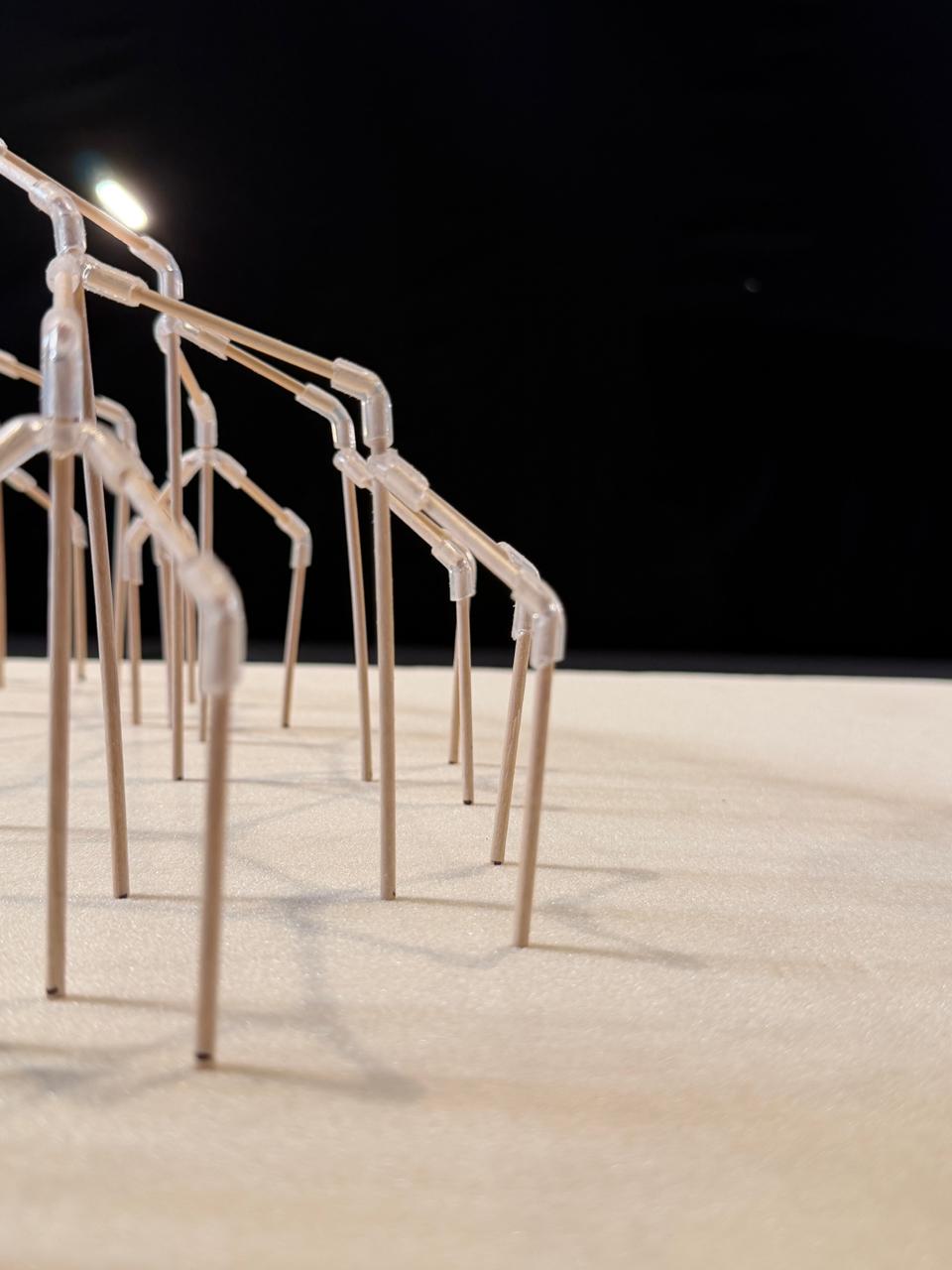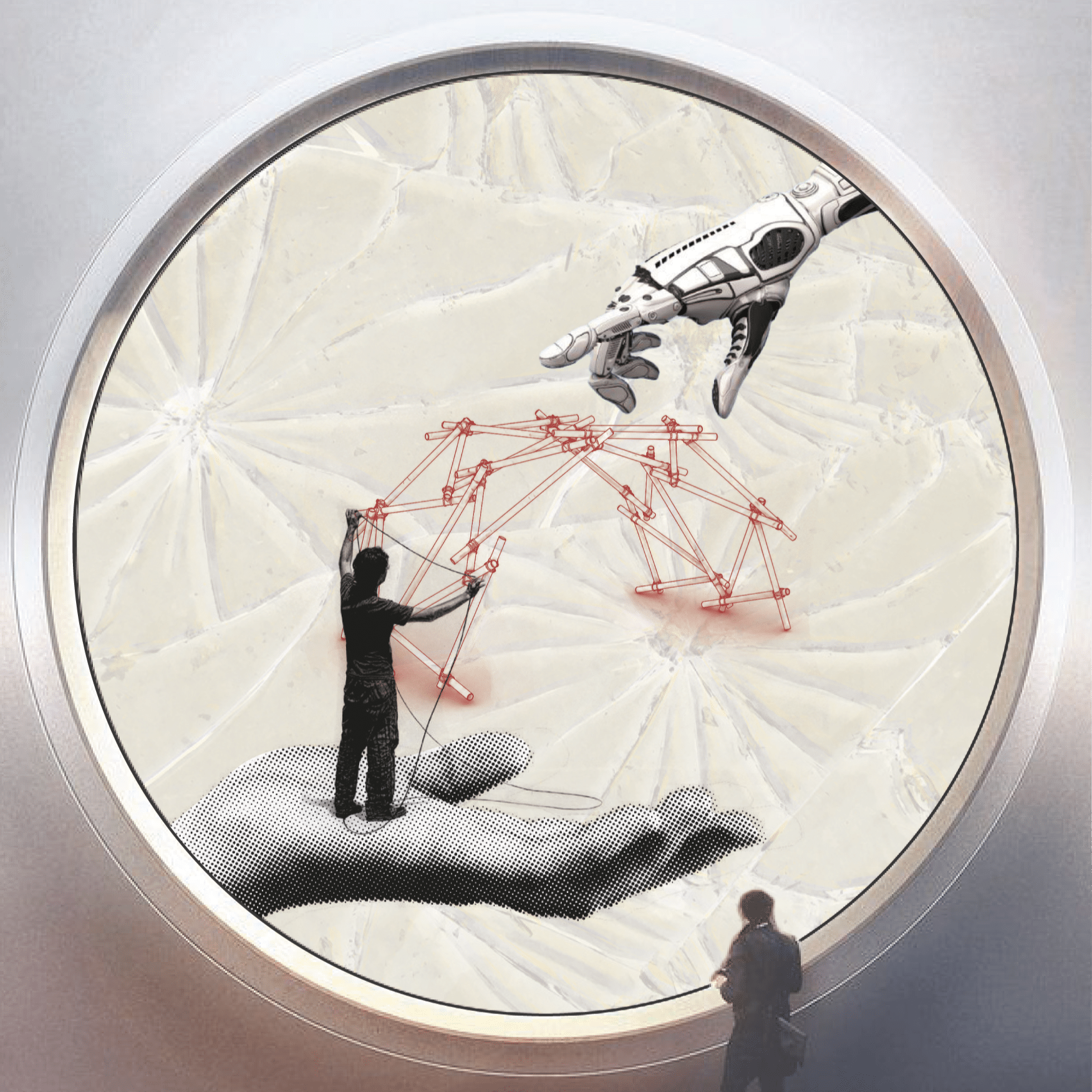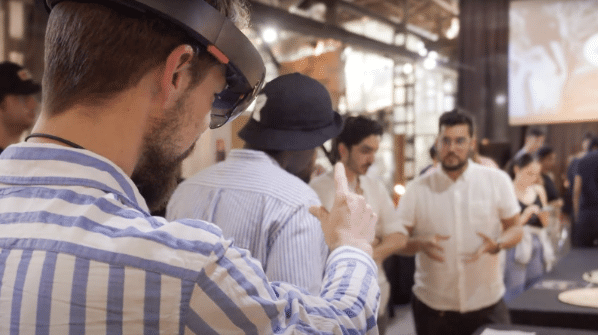
Credits: Fab.AR Semianr Final Presentations, MAA01 2021/22
Computational design has enabled the exploration of previously unattainable geometries, the simulation of complex natural systems, and the optimization of multiple constraints, extending possibilities with AI, while facilitating direct links to digital fabrication processes. This shift has expanded the role of architects and designers, requiring them to navigate and synthesize knowledge across disciplines, often balancing technical, material, and experiential considerations, expanding responsibility of the architect to manage specialty knowledge from adjacent disciplines. On the other hand, this paradigm shift has introduced new challenges. Design intent can become opaque within complex layered digital processes – hiding unforeseen constraints based on the capabilities of universal tools. The translation from digital models to physical outcomes also often involves trade-offs in craftsmanship, adaptability, and responsiveness – making it more difficult to integrate and leverage vernacular and traditional techniques and skills. While automation has advanced significantly, it does not always accommodate the nuances of situated, material, and embodied practices inherent to fabrication.
In this context, Mixed Reality (MR) technologies are emerging as a critical interface between digital and physical domains. In particular, Augmented Reality (AR) enables the real-time overlay of digital information onto physical environments, supporting a more direct, spatial, and intuitive interaction with design data. Recent developments in hardware, software ecosystems, and real-time computation, alongside the growing integration of AI-driven tools, – have made AR increasingly viable as an operational medium rather than a representational one. The evolution of the technical capabilities of devices as well as tools developed to work with it, made it increasingly more accessible and practical to be applied to all aspects of our lives. This opens up the possibility of creating custom purpose built prototype tools and interfaces to suit the professional needs and empower constructively creative expression.
This seminar invites students to explore AR not simply as a visualization tool, but as an active component within design and fabrication workflows. AR can support processes ranging from ideation and prototyping to guided assembly, on-site decision-making, and feedback-driven iteration. It also allows to leverage gamification strategies to enhance user experience and engagement. By embedding information directly within the space of action, AR enables new forms of human–machine collaboration, where manual skills and digital intelligence operate in tandem. Key emphasis is placed on making functional applications focused on the design of workflows that augment, rather than replace, human agency – enabling assisted manual fabrication, adaptive construction processes, and enhanced communication across teams. Ultimately, the seminar aims to foster a mindset in which designers actively construct their own digital tools and environments. By bridging the gap between computation and material practice, students are encouraged to rethink how design knowledge is produced, shared, and enacted, opening up new possibilities for collaborative, responsive, and materially grounded architectural processes.
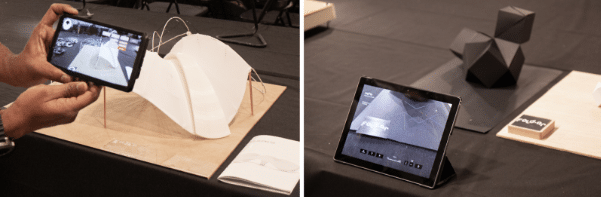
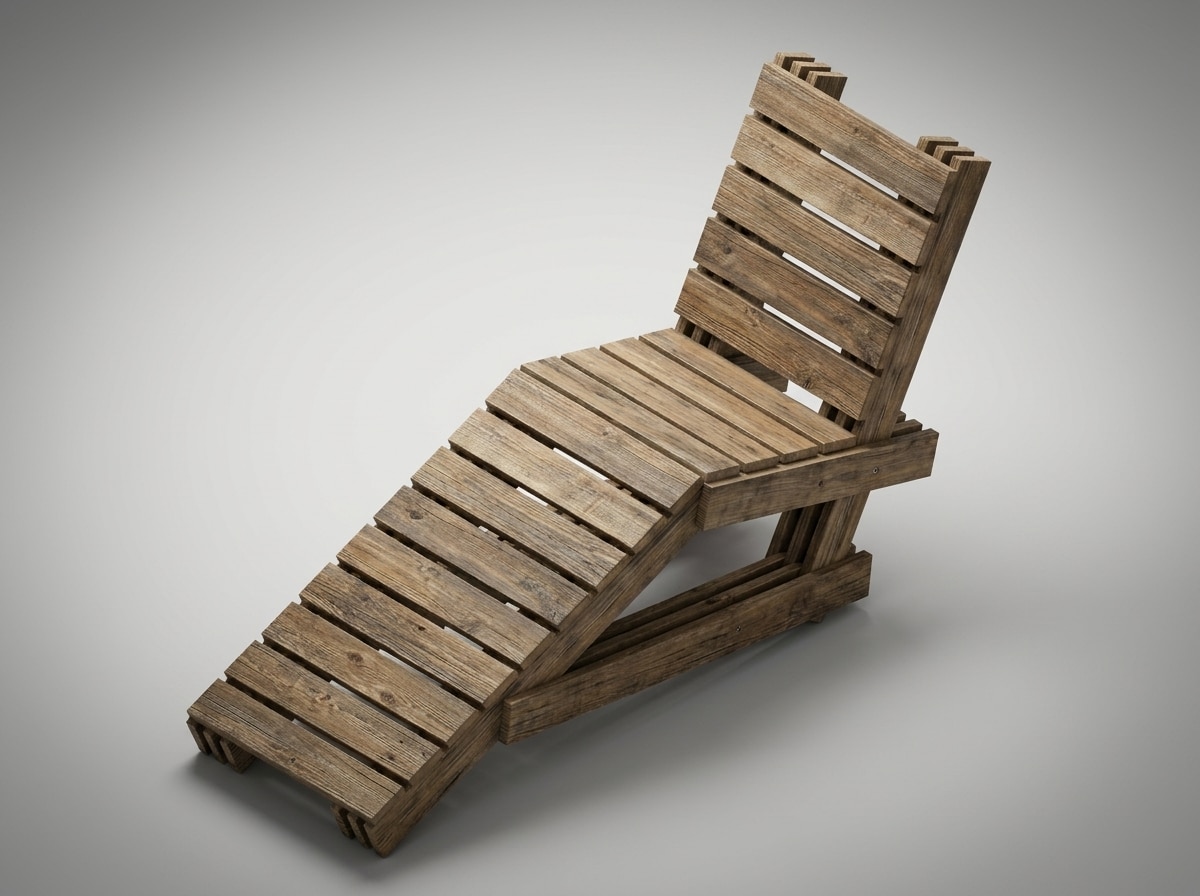
Credits: Fab.AR Seminar Final Presentations, MAA01 2023/24
Learning Objectives
At course completion the student will:
- Demonstrate a comprehensive understanding of how Augmented Reality technologies enhance and transform various stages of the design and fabrication process;
- Navigate the Unity development environment to create, develop, and manage collaborative projects focused on the production of custom digital tools;
- Design and implement robust, proof-of-concept AR/MR applications that address specific technical and spatial challenges;
- Construct intuitive and interactive user interfaces and experiences specifically tailored to the usability requirements of immersive, project-based workflows.
- Identify and critically analyze traditional fabrication methodologies to determine where the integration of AR/MR can effectively bridge the gap between digital models and physical reality.
- Develop and showcase a functional workflow for AR/MR-assisted fabrication by successfully applying these methods to a physical prototype.
- Communicate complex technical concepts and design decisions to both technical and non-technical audiences, clearly explaining the purpose and development process of their applications.
- Critically assess the effectiveness of developed AR solutions, reflecting on the potential impact on industry workflows and identifying strategic areas for further refinement.