Collaborative Workflows & Data Strategy
Source: Seminar Collaborative Workflows and Data Strategy, Libny Pacheco, Christoph Berkmiller and Vladimir Ondejcik, 2025-2026.
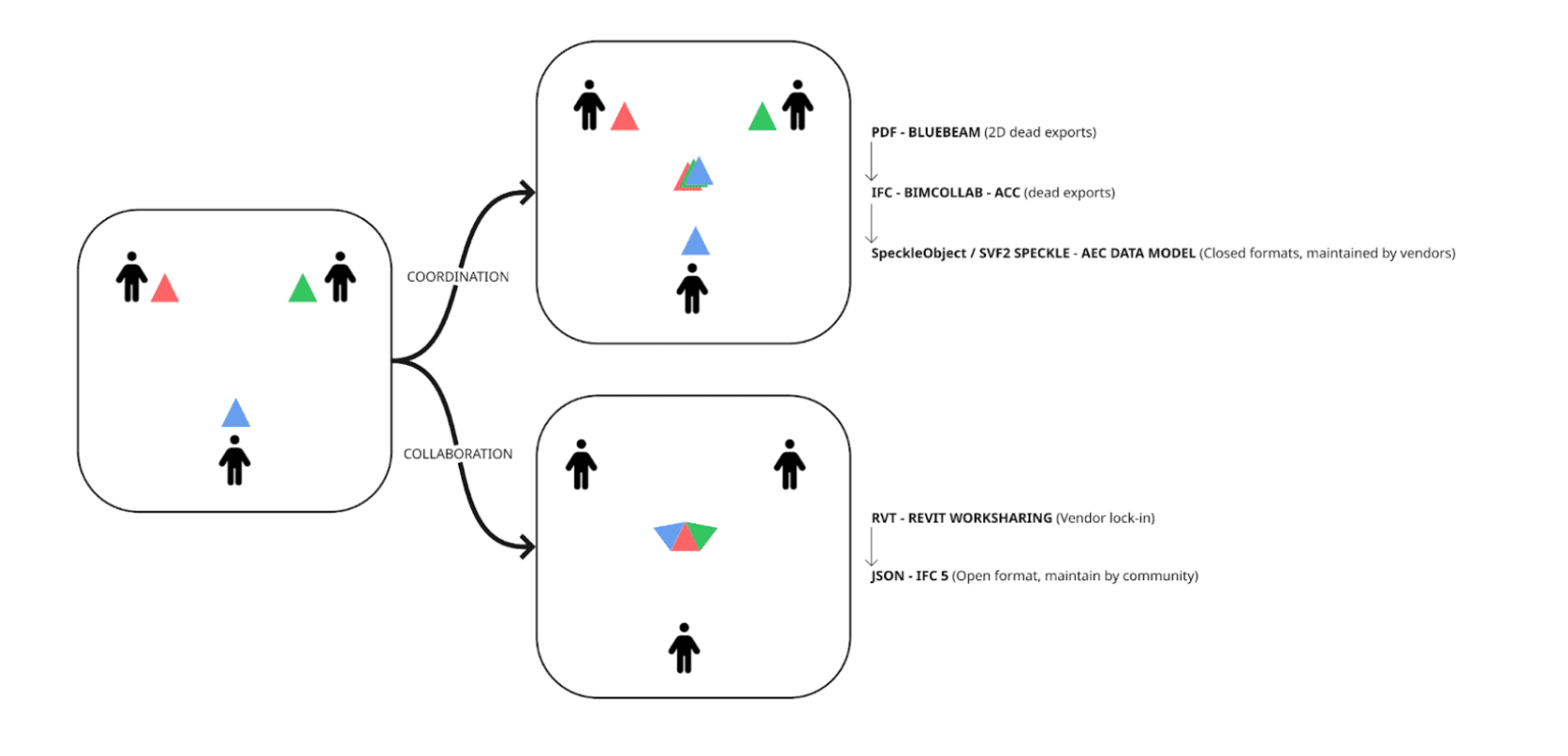
The rapid growth of digital technology in the AEC industry has significantly transformed how stakeholders interact. Yet despite the promise of Building Information Modelling, BIM files have essentially become coordination tools rather than true collaboration platforms. Teams export 2D PDFs for markup in Bluebeam and 3D IFCs for clash detection—treating the model as a source for deliverables rather than a shared environment for design development.
Compounding this issue is the vast amount of data generated within BIM files that remains untapped. This data is typically seen as a by-product of the modelling process rather than a strategic asset that could improve company processes, inform decision-making, and enable new services and business offerings. We find ourselves at a crossroads: how do we move from coordination to genuine collaboration, and how do we shift our perspective on data from by-product to asset?
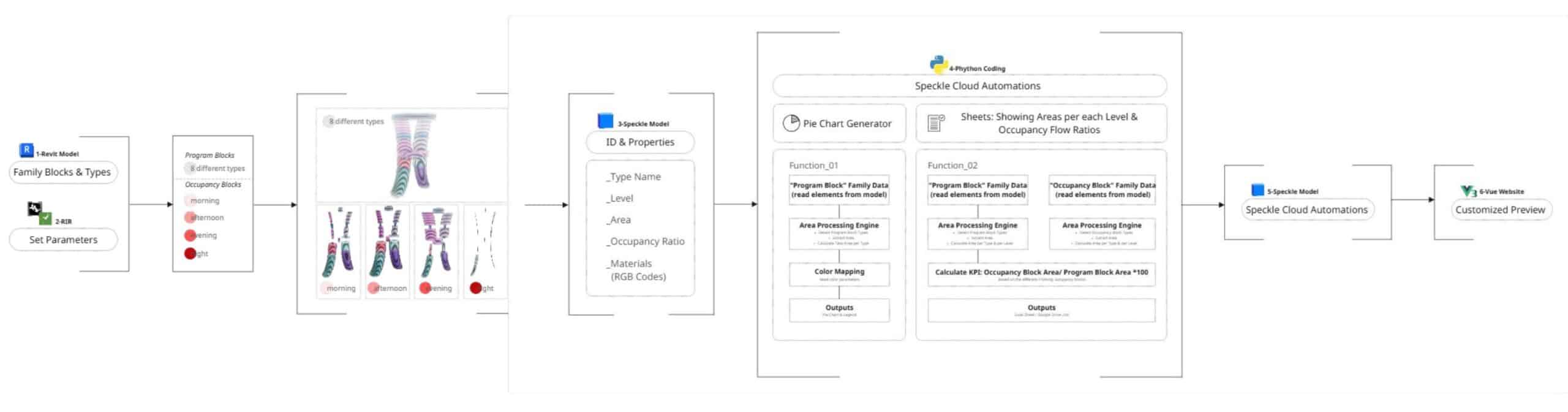
This seminar is designed to address both challenges. We will examine the current state of coordination workflows—from conventional exports to advanced data pipelines and cloud-based automation—before exploring what true collaboration and strategic data management could look like. The course will equip students with the skills to design more effective cross-disciplinary workflows and to develop data strategies that capture value from information already being produced.
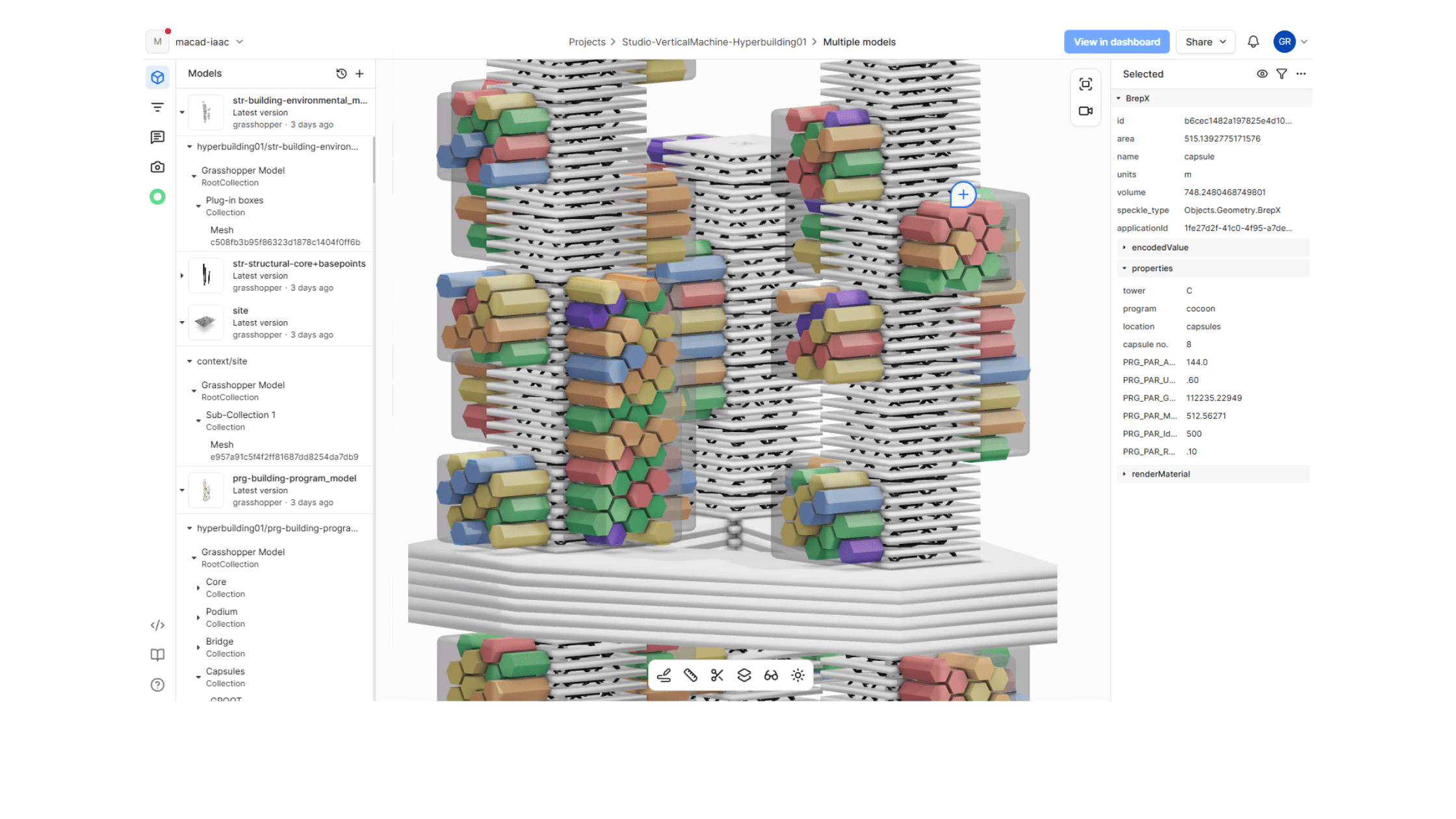
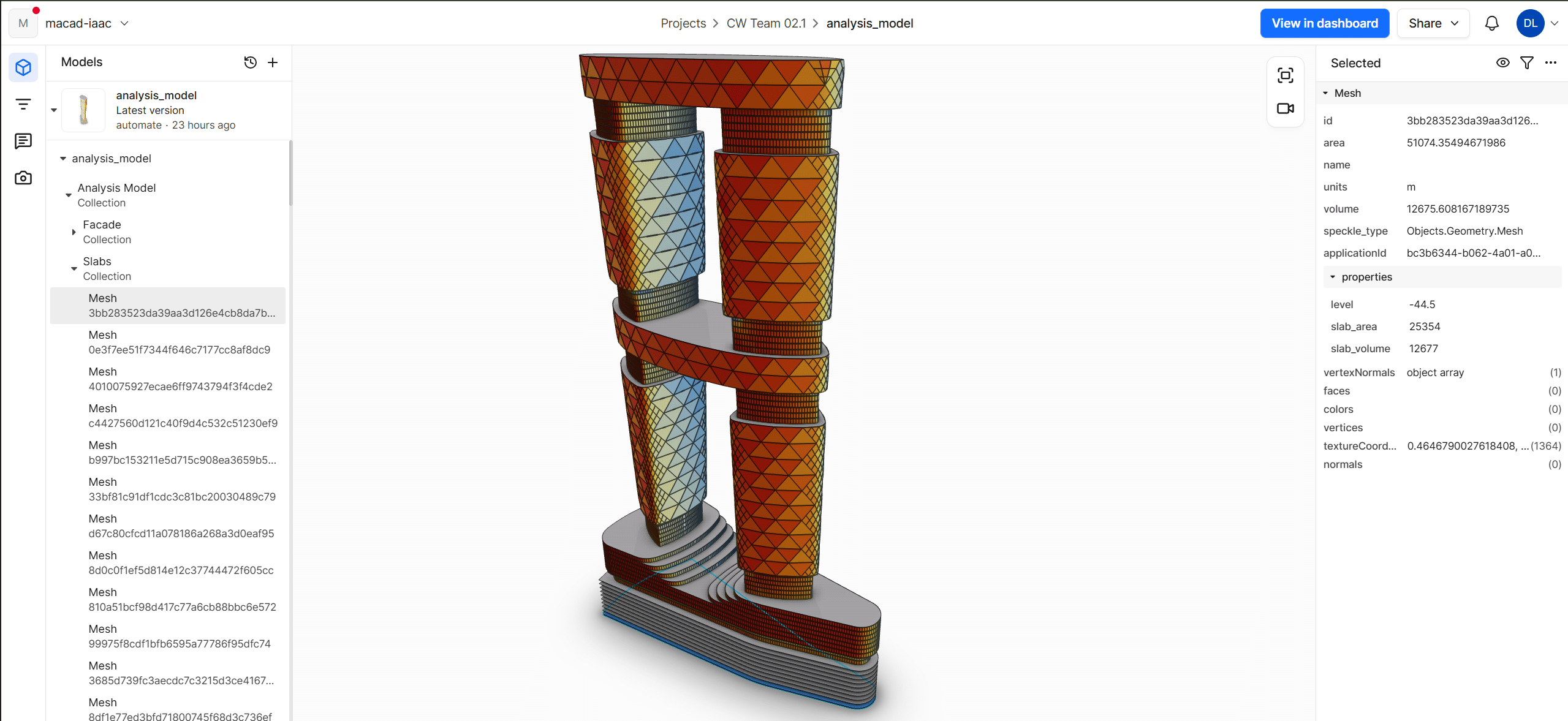
The seminar will explore tools such as Speckle Systems, the Common Data Environment (CDE), the International Foundation Class (IFC), GraphQL, and related Python-based APIs. It will cover best practices for BIM coordination and collaboration, data architectures (including concepts like Single Source of Truth and Multiple Versions of Truth), automating tasks through webhooks and design automation, and bridging the gap between customisation and standardisation—with an emphasis on applying these concepts to real-world projects.
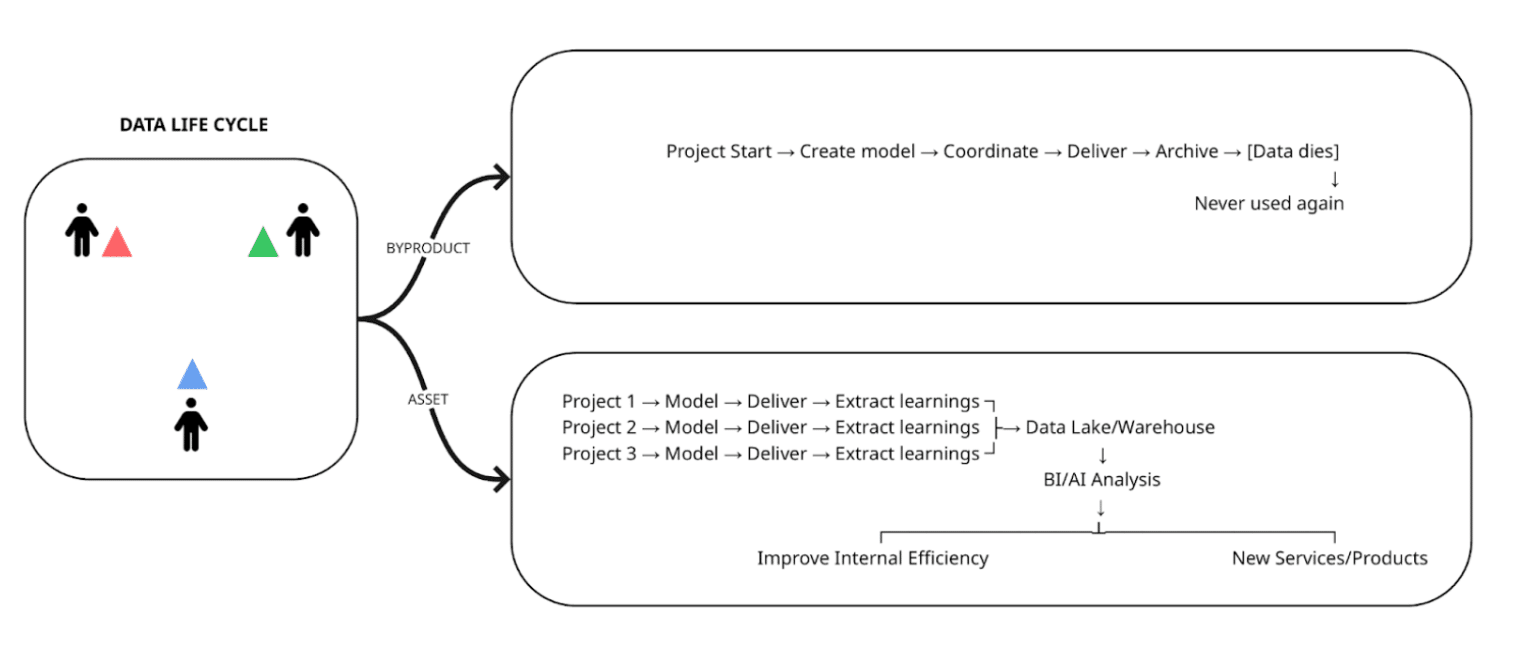
Source: Seminar Collaborative Workflows and Data Strategy, Libny Pacheco, Christoph Berkmiller and Vladimir Ondejcik, 2025-2026.
Learning Objectives
The course aims to offer the following learning objectives:
- Identify and address the challenges of cross-disciplinary work, data sharing and strategy between different actors.
- Recognise how to bridge customisation and standardisation in digital collaboration.
- Learn how to design workflows and interoperability schemes.
- Implement best practices for BIM coordination and troubleshooting.
- Develop an understanding of the opportunities for task automation and data processing in the AEC.