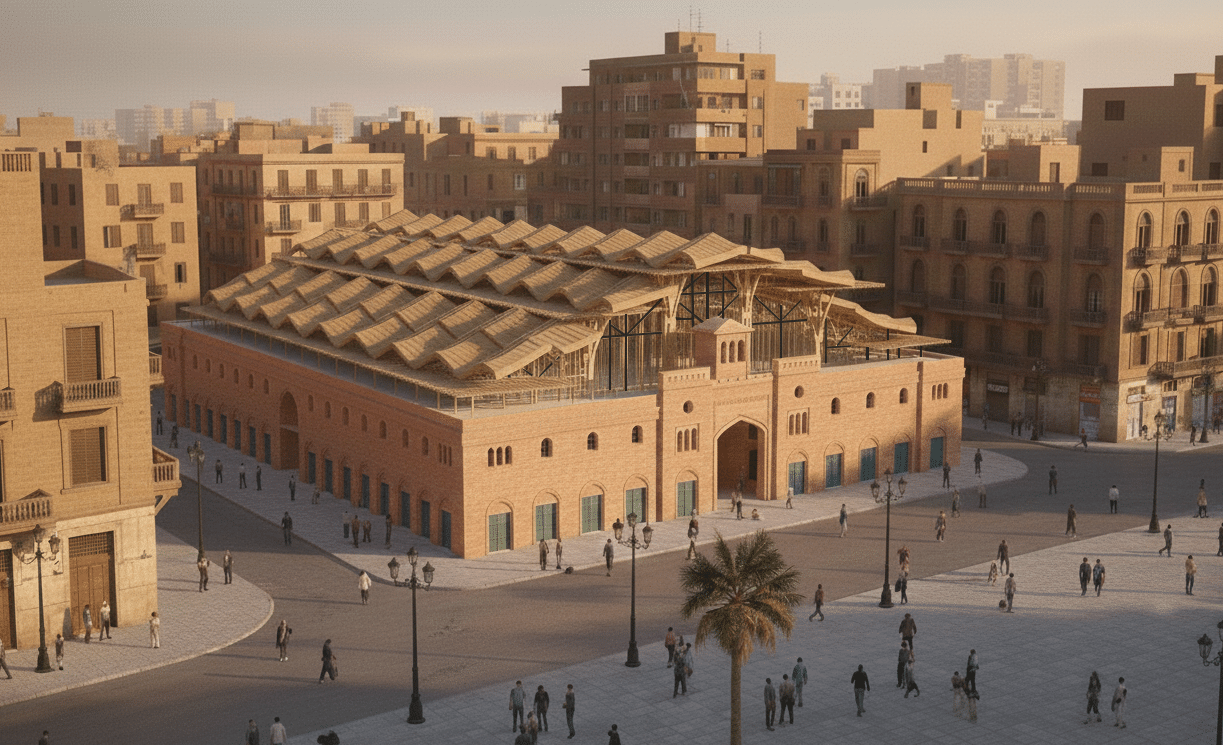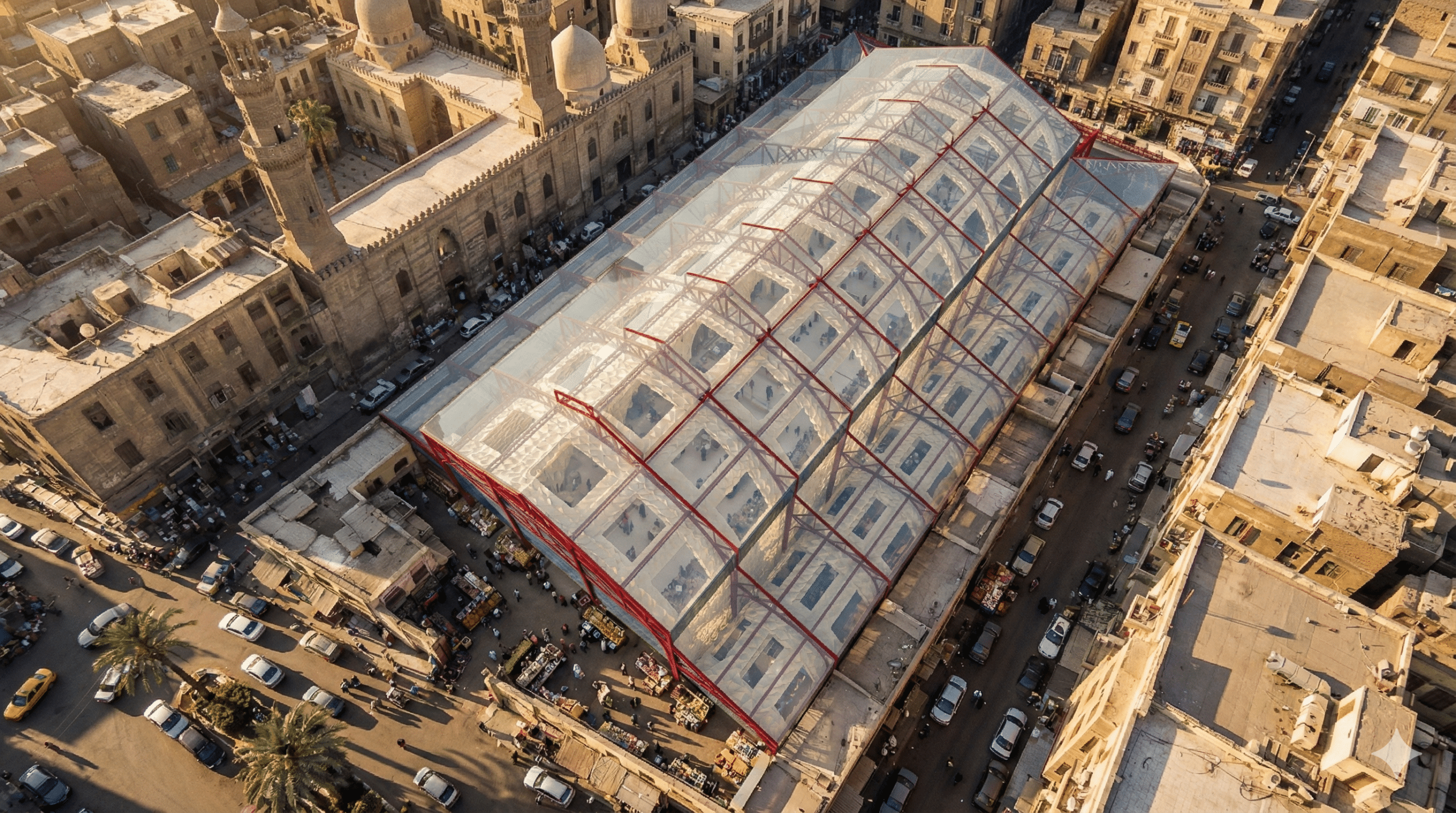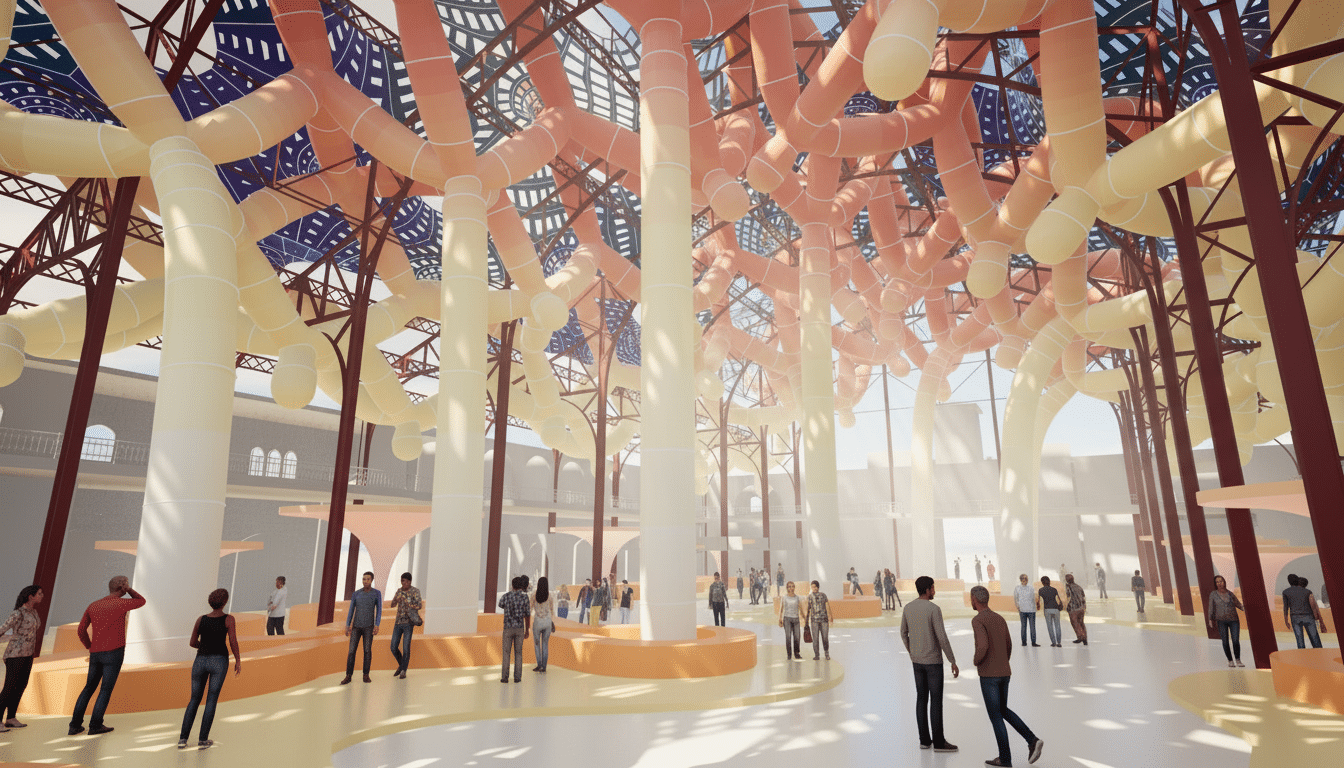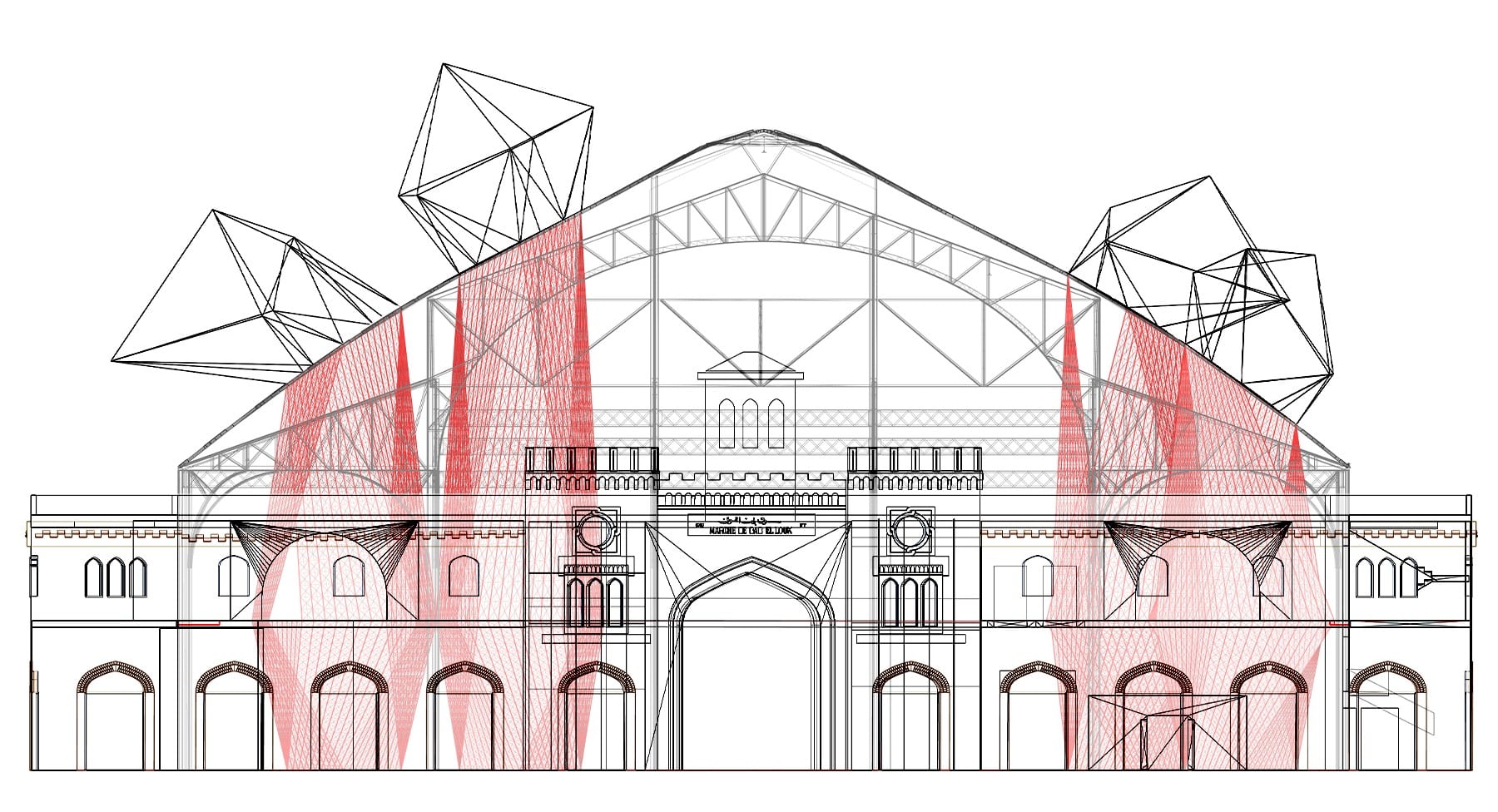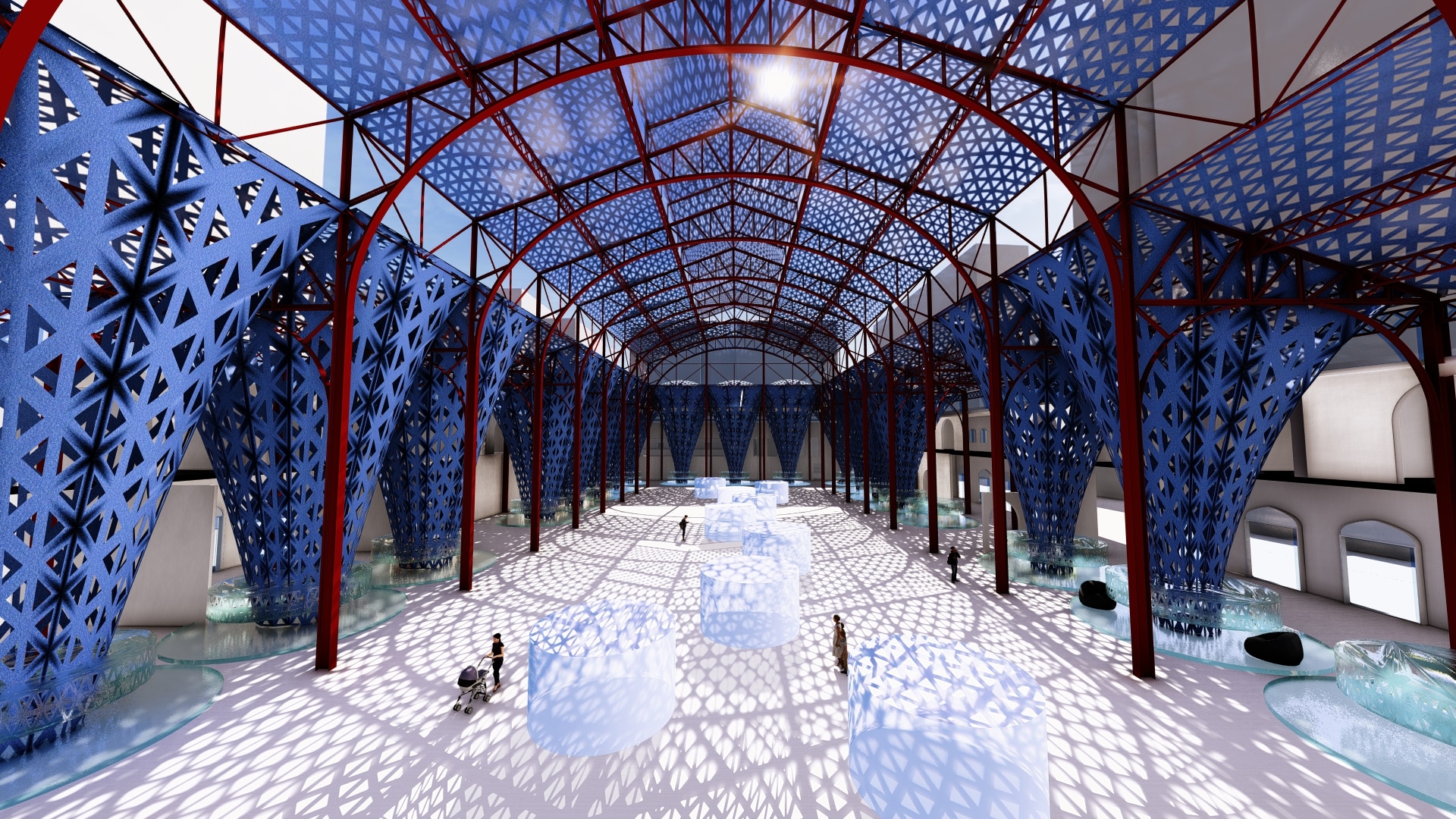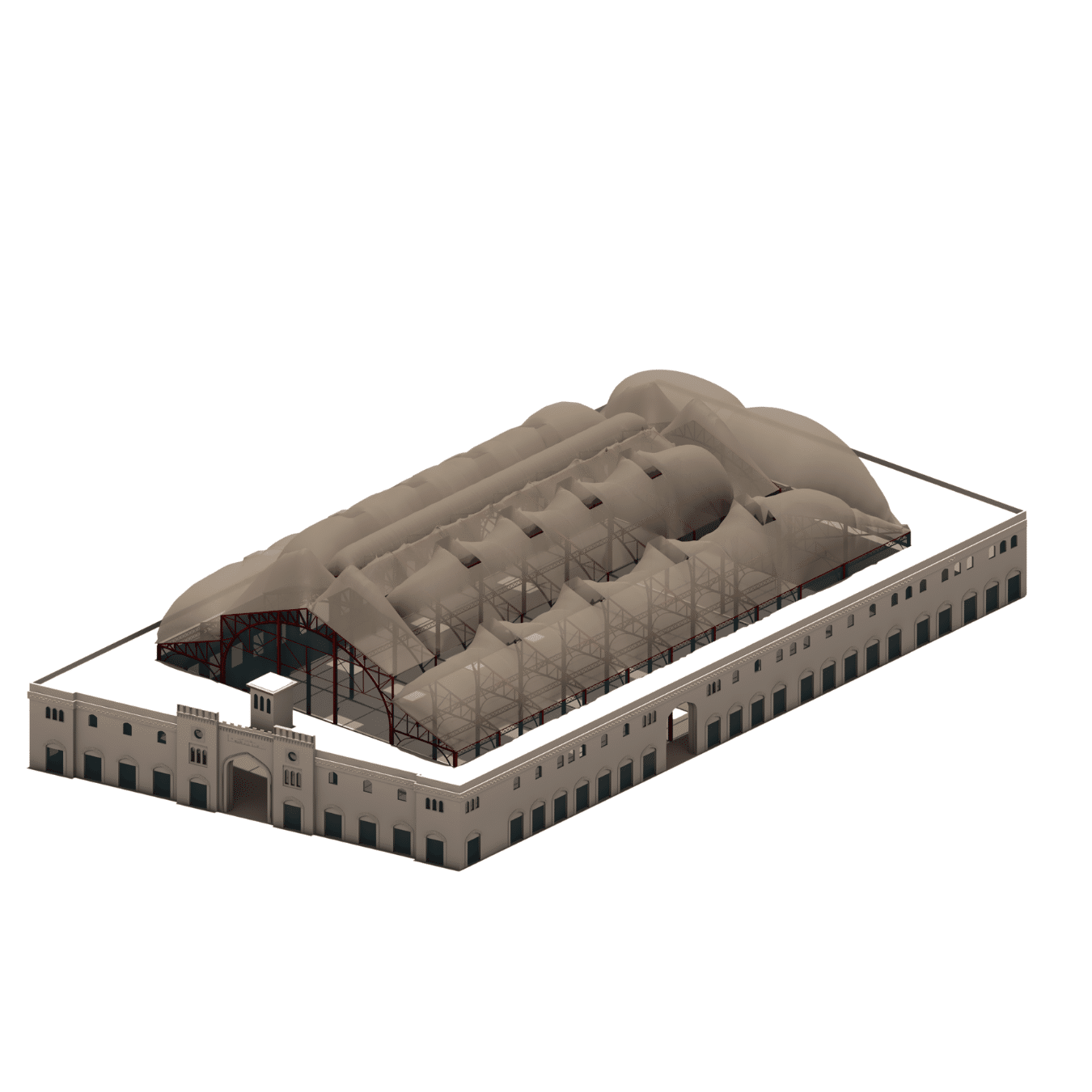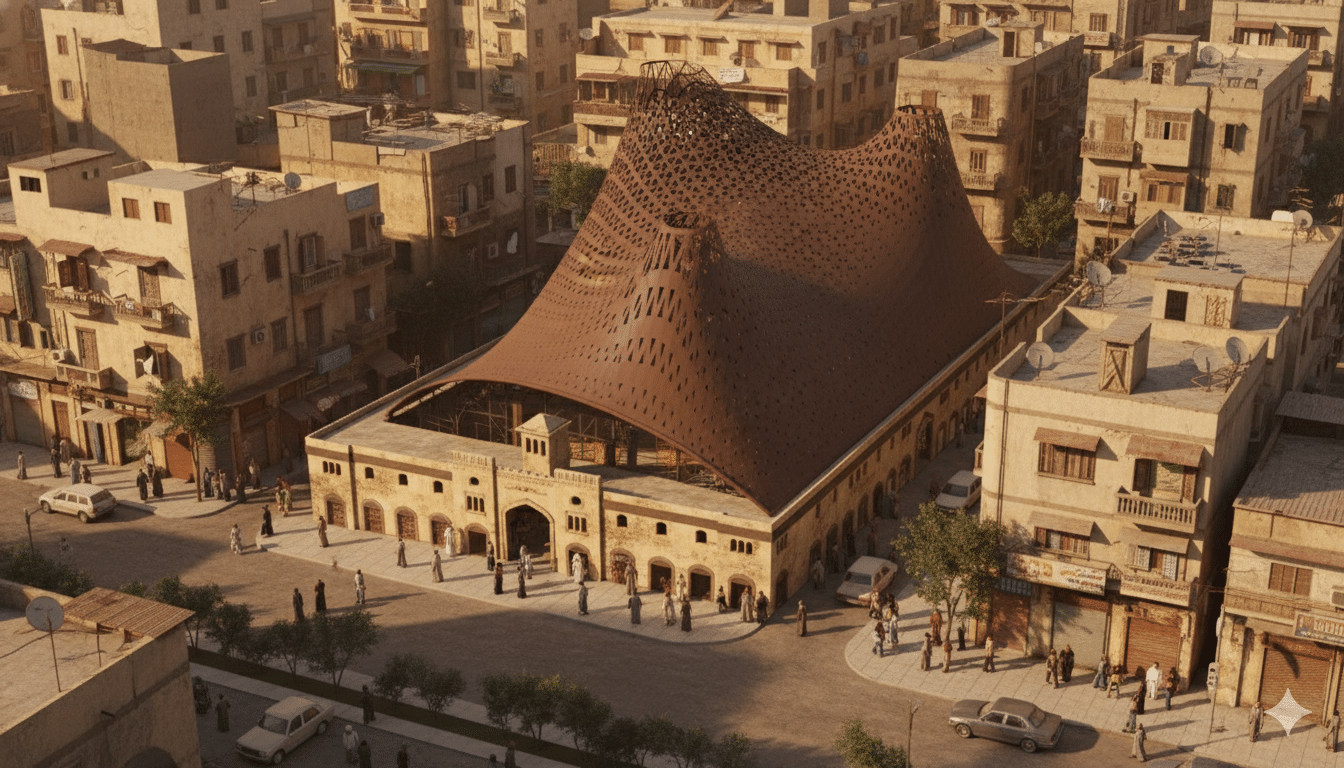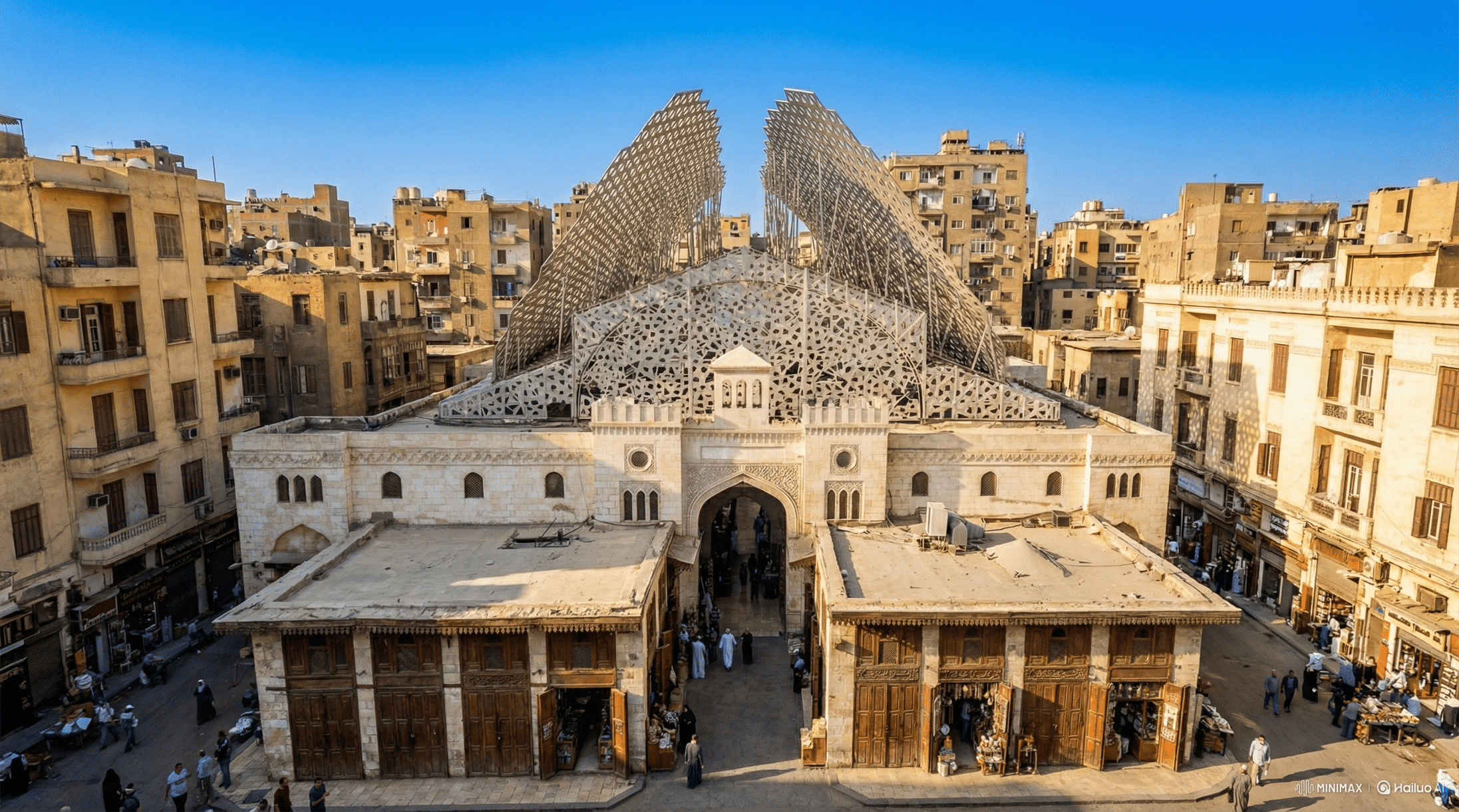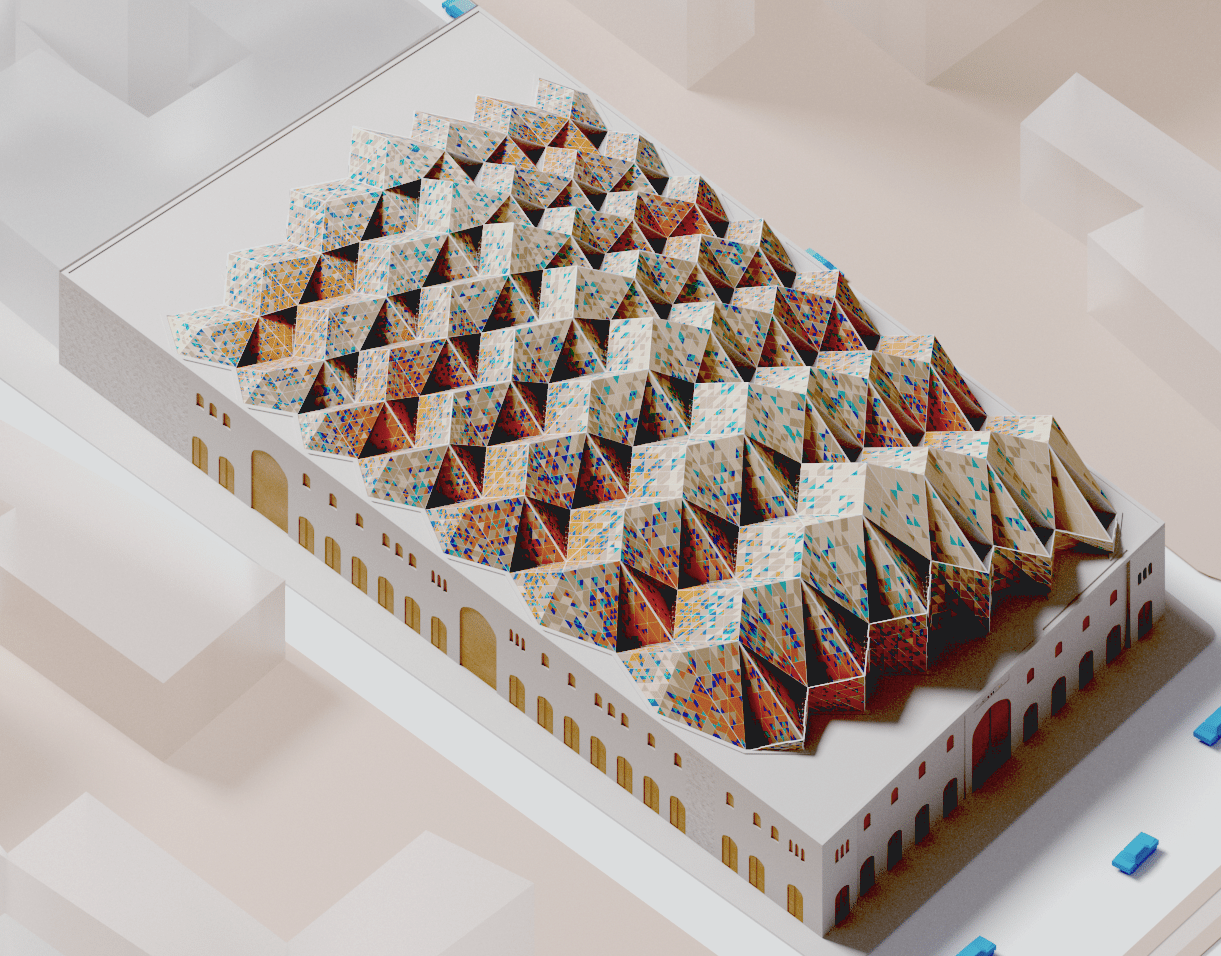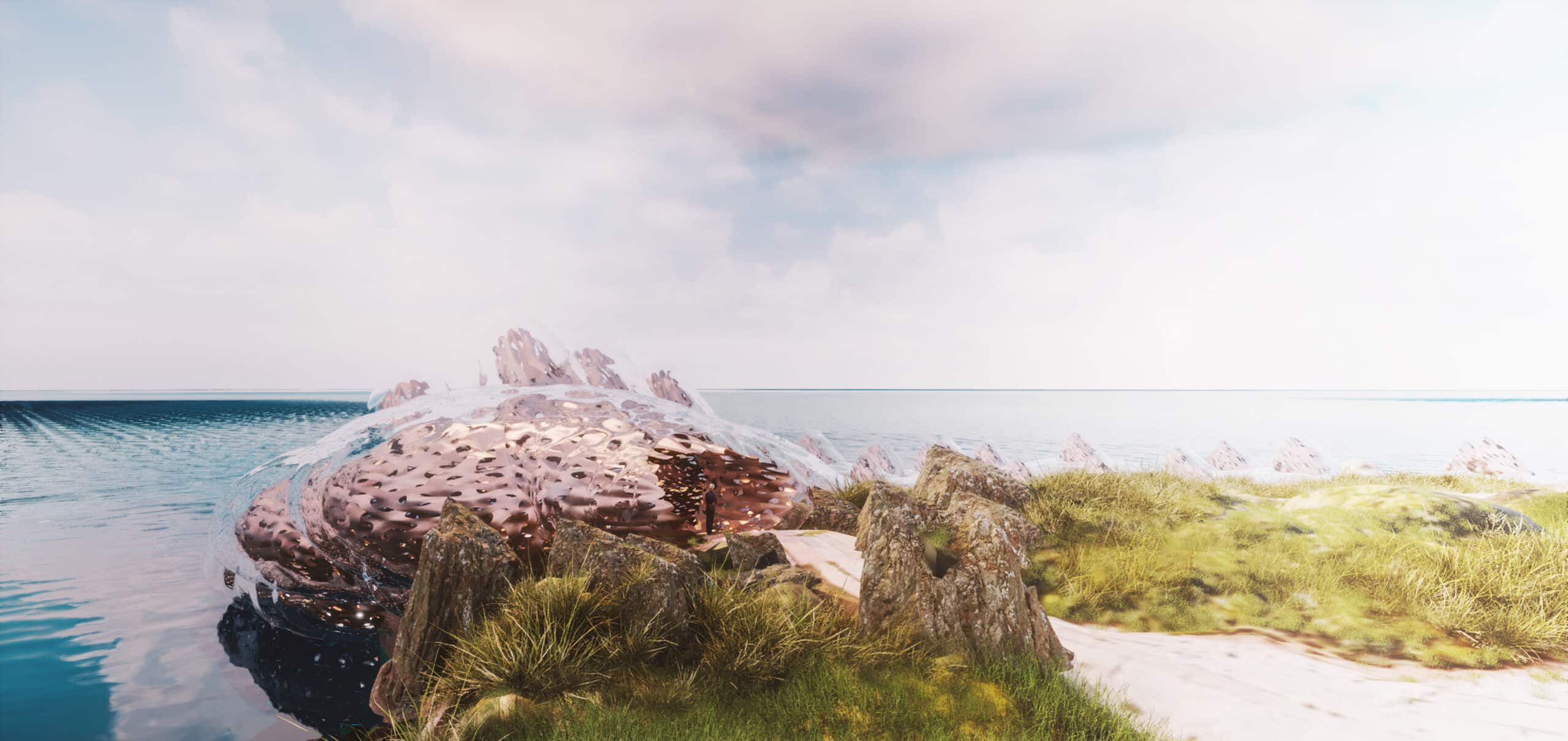
The Complex Forming seminar is structured to enhance students’ technical skills in creating, analysing, and manipulating complex geometries through parametric design. Students will explore mathematical surfaces, tensile structures, voxel aggregation, recursion, particle-based systems, and tessellation techniques as they apply to architectural form-finding and design.


Syllabus


MaCAD 2024-2025 Complex Forming seminar, by students


DIGITAL TOOLS FOR COMPLEX FORMING

Complex Forming is structured to enhance students’ technical skills in creating, analysing, and manipulating complex geometries through parametric design. Students will explore mathematical surfaces, tensile structures, voxel aggregation, recursion, particle-based systems, and tessellation techniques as they apply to architectural form-finding and design. Through Grasshopper3D and Python, students will engage with algorithmic thinking and computational methods to produce sophisticated, data-driven forms that can be applied throughout their time in MaCAD.

The course begins by introducing students to the fundamentals of mathematical surface generation. By utilising parametric equations and exploring surface behaviour, students will gain insight into the application of precise mathematical functions to control form. Following this, the focus shifts to tensile surfaces, where students will learn how to generate minimal surfaces and membrane structures that are commonly used in lightweight, flexible architectural designs.

As the course progresses, students will delve into more specialised topics, such as voxel-based design and cellular aggregation. They will also explore recursive design processes, where repeating algorithms produce intricate geometries, mimicking fractals and other complex forms found in nature. Through these exercises, students will become adept at creating and refining iterative, rule-based models using Grasshopper’s parametric capabilities. The course will conclude with techniques such as swarming algorithms, noise functions, and tessellation. This section enables students to develop highly intricate architectural systems and patterns, applying swarm intelligence and customizable tiling workflows. 

The culmination of the course is a final project, where students will synthesise their knowledge to produce a unique architectural form or system, showcasing the advanced skills they have developed in complex forming.

Learning Objectives

By the end of this course, students will:

  • Master mathematical and algorithmic approaches to form generation.
  • Gain proficiency in using advanced Grasshopper3D components and plugins.
  • Become confident using Python to extend the functionality of Grasshopper.
  • Develop understanding of complex geometries and their real-world benefits.
  • Understand data structures, essential for managing complex geometries and datasets
  • Document the computational design process and its iterations.
  • Build expertise in specialised techniques such as physics simulations, aggregation systems, and optimization solvers, and explore their application in design.
  • Cultivate a curiosity for discovering additional specialised techniques, pushing the boundaries of design innovation through experimentation.

KEYWORDS #Rhinoceros3D, #Grasshopper3D, #Python, #CPython,  #Mathematics, #Form,  #Physics, #Algorithm, #Data, #Tensile, #Voxels, #Aggregation, #Recursion, #Fractal, #Swarming, #Noise, #Tessellation, #FormFinding, #Modular, #Data, #Optimization



Faculty


Faculty Assistants


Projects from this course

Bab al-Luq Market: A Shell That Finds Light and Guides People

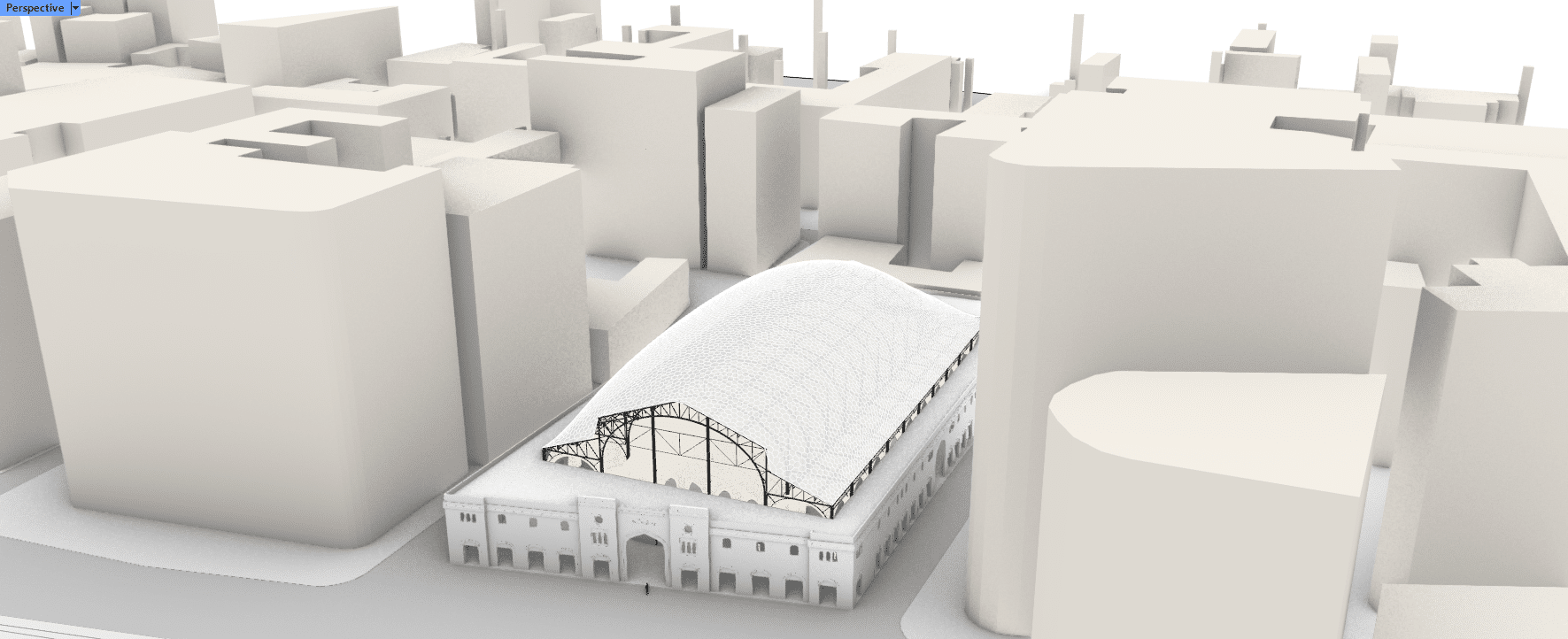
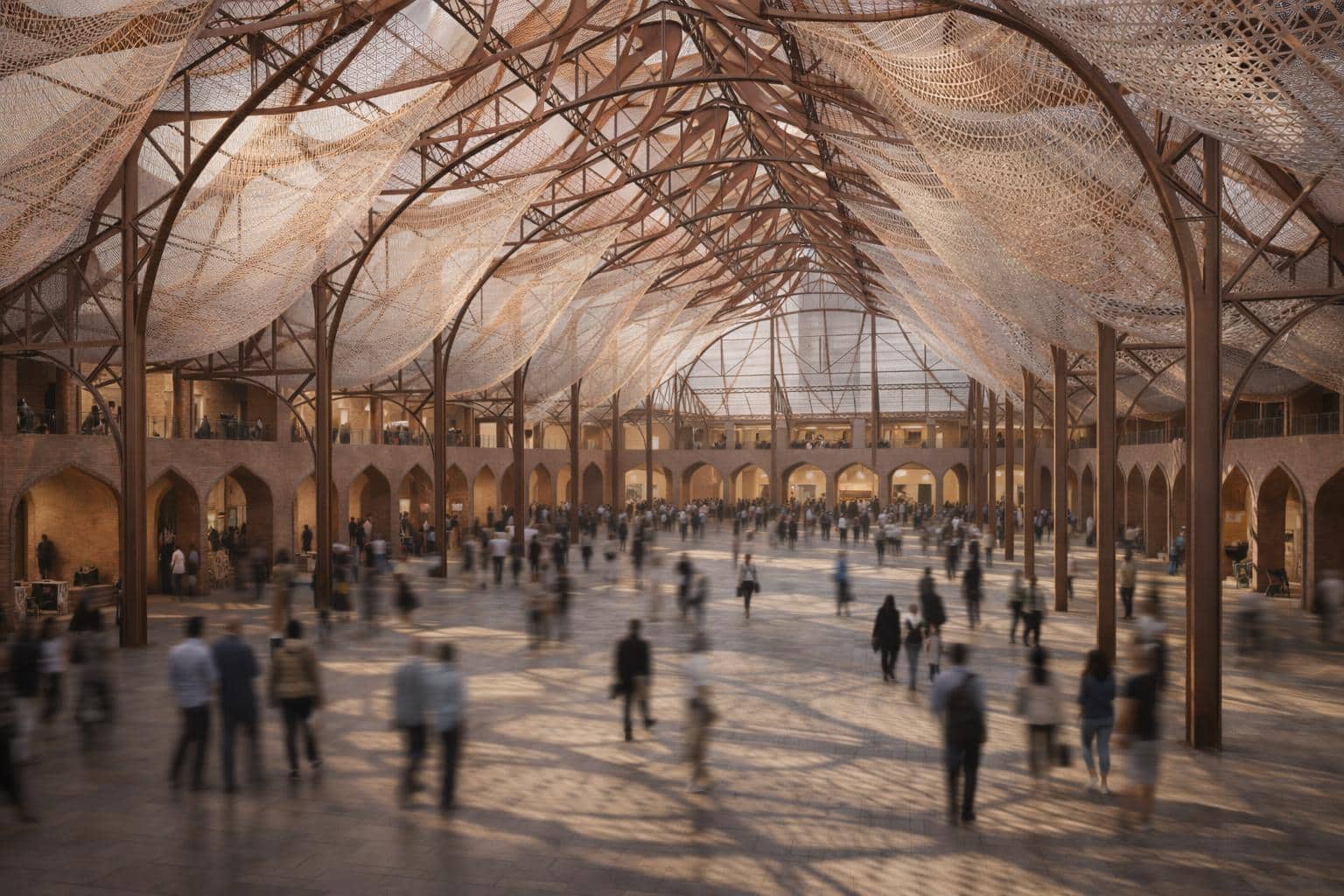
Bab al-Luq Market in Cairo was designed to be bright, legible, and hygienic—then decades of add-ons and wear turned it into a dim, confusing interior. This proposal makes one clear move: a parametric double-skin roof that diffuses daylight and defines a readable circulation spine. Location: Cairo, Egypt Climate: Hot, dry, sunny Typology: Historic market hall … Read more

The Dance of the Arches

This project aims to revive and appreciate the beauty of the historical Bab al-Luq Market and to give it it’s former glory. This project explores the historic Bab al-Luq Market, aiming to celebrate its architectural beauty and restore its presence within the city. The proposal focuses on revealing the original steel structure, reconnecting it to … Read more

Faraj ba’d Shiddah: Revival of Bab Al-Louq Market

Faraj ba’d Shiddah Market is a reimagination of Bab al-Luq market in Cairo, Egypt, that explores a compression-to-relief multilevel shopping and community space with parametrically lofted hexagonal tessellations that plays with light and shadow. Inspiration The initial idea transforms Bab al-Luq through a journey of compression and release—visitors navigate through shadowed tunnel entrances lined with … Read more

Bab Al-Luq: Under the Turquoise Vault

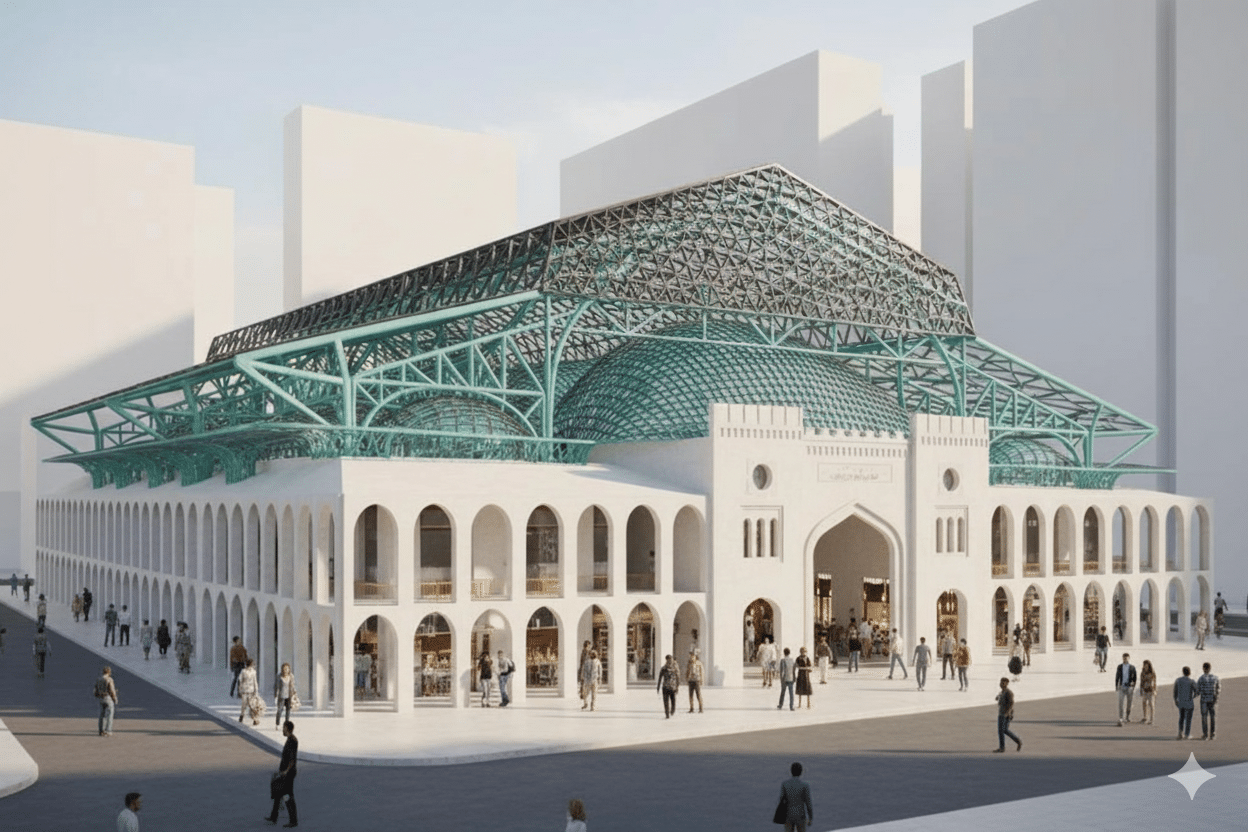
Turquoise Revealed: A restrained exterior gives way to a bold turquoise core, emerging with the same unmistakable confidence as a hidden signature: subtle at first glance, unforgettable once seen. INTRODUCTION I recently finished my final Complex Forming project, and I’m excited to share the design journey! This project focuses on revitalizing an existing traditional market, … Read more

Light, Path & Structure: Weaving Sine Waves over Bab al-Luq

//DESIGN CONCEPT & EARLY EXPLORATIONS //COMPUTATIONAL DESIGN SYSTEM First Sine Roof Iteration First Column Iteration //FORM FINDING PROCESS AND LESSONS LERANED Second Canopy Columns Iteration Final Sine Roof Iteration The sine roof form was developed through an iterative form-finding process using both sine and inverted sine curves. By culling index points from each curve and … Read more

Never Ending Cairo Market

The project focuses on the transformation of the historic Bab al-Luq Market in Cairo, Egypt. Built in 1912 and inspired by Paris’ Les Halles, the market was distinguished by its accessibility, natural light, hygiene, and spatial organization. Despite continuous use, decades of deterioration have reduced its architectural and spatial potential. The project aims to reactivate … Read more

Diffused Skin Market

Roof Top view image

Bab al-Luq Market – Cairo, Egypt The ‘Diffused Skin Market’ project aims to cool down the market space without closing it off. The goal was to create a ‘diffusion filter” skin, that drops the temperature but keeps that vibrant natural light that vendors need to sell their products. The challenge when analyzing the place, wasn’t … Read more

INTERPOROUS OVERGROWTH

Conceptual Framework The Project explores a contemporary dialogue between past and present by enveloping a historic steel truss within a soft, inflated architectural skin. Inspired by the playful curves and buoyancy of balloon art, the installation introduces a layer of translucent, geometric “bubble wrap” forms that gently overgrow the rigid industrial structure beneath. Rather than … Read more

Reviving Bab Al-Louq: Stitching Street and Roof

The project Reviving Bab Al-Louq explores the relationship between historical urban fabric and contemporary architectural intervention through the notion of contrast. Rather than replicating or mimicking the existing historical language, the proposal aims to create a clear spatial and material distinction that enhances the perception of the existing structure while introducing a new architectural layer. … Read more

Reviving Bab Al-Luq

Reviving Bab Al-Luq is a project of IAAC, Institute for Advanced Architecture of Catalonia developed in the MACAD 2025/26 by Zeynep Sezen Dursun and Faculty: Hesham Shawqy and Angeliki Maragakis. Inspiration & Design Decisions This project aims to explore light and computational architectural design concerning the illumination, ventilation, and attraction in the design of the … Read more

Adaptive Shading Through Structural Memory

// Introduction Bab El Louk is a historic market in central Cairo, built during the early Khedival expansion. Its steel structure and brick envelope made it an important commercial hub serving the surrounding dense neighborhoods. Today, the area around it feels monotone, heavy, and visually uniform, with little variation in form or public space. Because … Read more

Ancient Future

“ The reason why the Universe is eternal is that it does not live for itself; it gives life to others as it transforms” –  Lao Tzu Design Concept The roof design draws from the spatial logic of the Giza pyramids. By mapping their positions, I set anchor points that generate three conic roof forms … Read more

A Computational Interpretation of Cairene Tradition

Bab al-Luq Reimagined: Computation, Climate, and Cultural Memory This project approaches the Bab al-Luq Market not as a blank surface for formal experimentation, but as a site layered with climatic intelligence and symbolic meaning. Its proposal is rooted in two elements deeply embedded in Cairene architectural and cultural memory: the malqaf and the lotus flower. … Read more

THE VEIL OF BAB AL-LUQ: A NEW SHADED HEART FOR DOWNTOWN CAIRO

I am excited to share The Veil of Bab Al-Luq, an architectural intervention designed by Sushmitha Ravi that reimagines the historic Bab Al-Luq Market in Downtown Cairo. The project seeks to restore the vibrancy of this iconic urban space by actively addressing its most urgent environmental challenge—the intense heat of Cairo’s hot, dry climate—through integrated … Read more

EGITTO SKIN

Team member(s):MAHMOUD MOHAMED Modified by  MAHMOUD MOHAMED  on December 12, 2025 SITE AND EXISTING BUILDING Egypt, often reverently hailed as the “Mother of All Lands,” stands as one of the oldest and most influential civilizations in the vast chronicle of human history. Its legacy is not merely a collection of ruins or artifacts; it is a … Read more