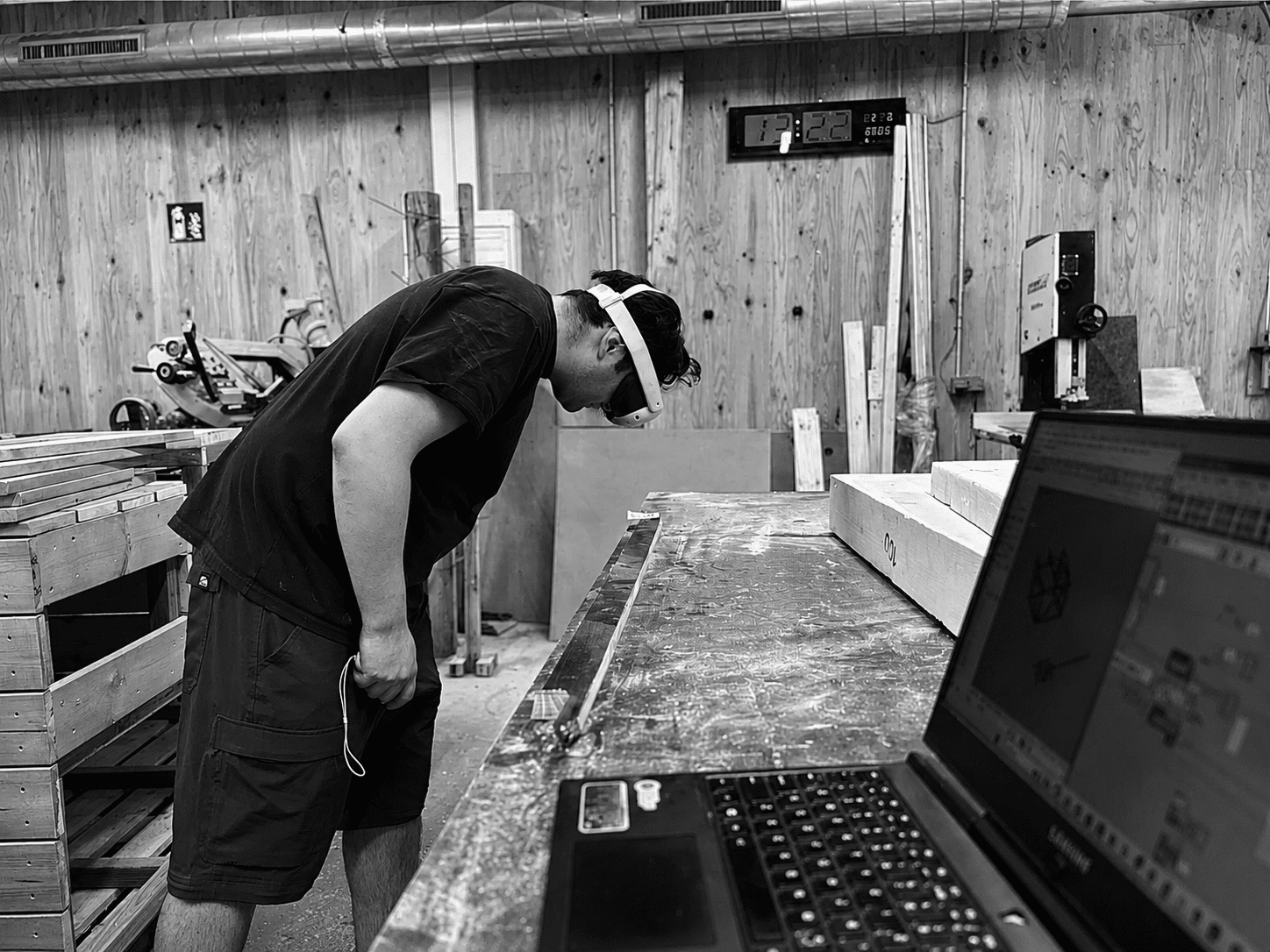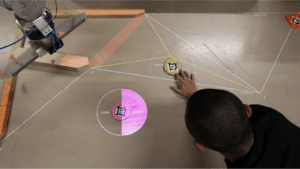
This course explores the design of human-in-the-loop interactive systems for fabrication, where human input, computational logic, and real-time feedback are integrated into a unified workflow.
The course focuses on the relationship between user input, system processing, and responsive output. Students will explore different forms of interaction—including mouse, gesture, vision-based systems, and physical interfaces—and learn how these inputs can be interpreted and translated into meaningful system behaviors.
Rather than directly generating form, users interact with systems that modulate rules, behaviors, and fabrication processes. These interactions are structured through computational frameworks such as mapping strategies, finite state machines (FSM), and behavioral logic.
Special attention is given to user experience, human-centered design, and interaction design, encouraging students to create systems that are intuitive, engaging, and spatial. The course emphasizes physical and embodied interaction, avoiding conventional screen-based paradigms and ensuring that systems do not behave like touch interfaces.
Students will develop a complete interactive system within a controlled setup, integrating input methods, system logic, and feedback mechanisms. The course culminates in the design of a rule-based system using projection mapping, where interaction guides the process through real-time visual feedback.
Learning Objectives
By the end of the course, students will be able to:
- Understand and apply the relationship between user input, system logic, and responsive output
- Design human-in-the-loop workflows for fabrication processes
- Translate different types of human interaction into computational behaviors
- Develop rule-based systems using mapping strategies and finite state machines (FSM)
- Structure interaction using state-based and behavioral logic
- Design and implement real-time feedback systems using projection and visualization
- Apply principles of user experience (UX) and human-centered design in physical interaction contexts
- Prototype interactive systems that guide processes through rules and feedback