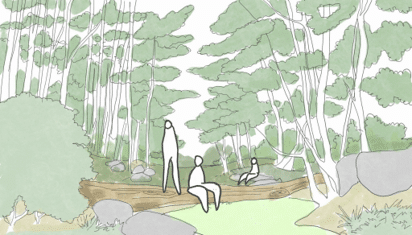
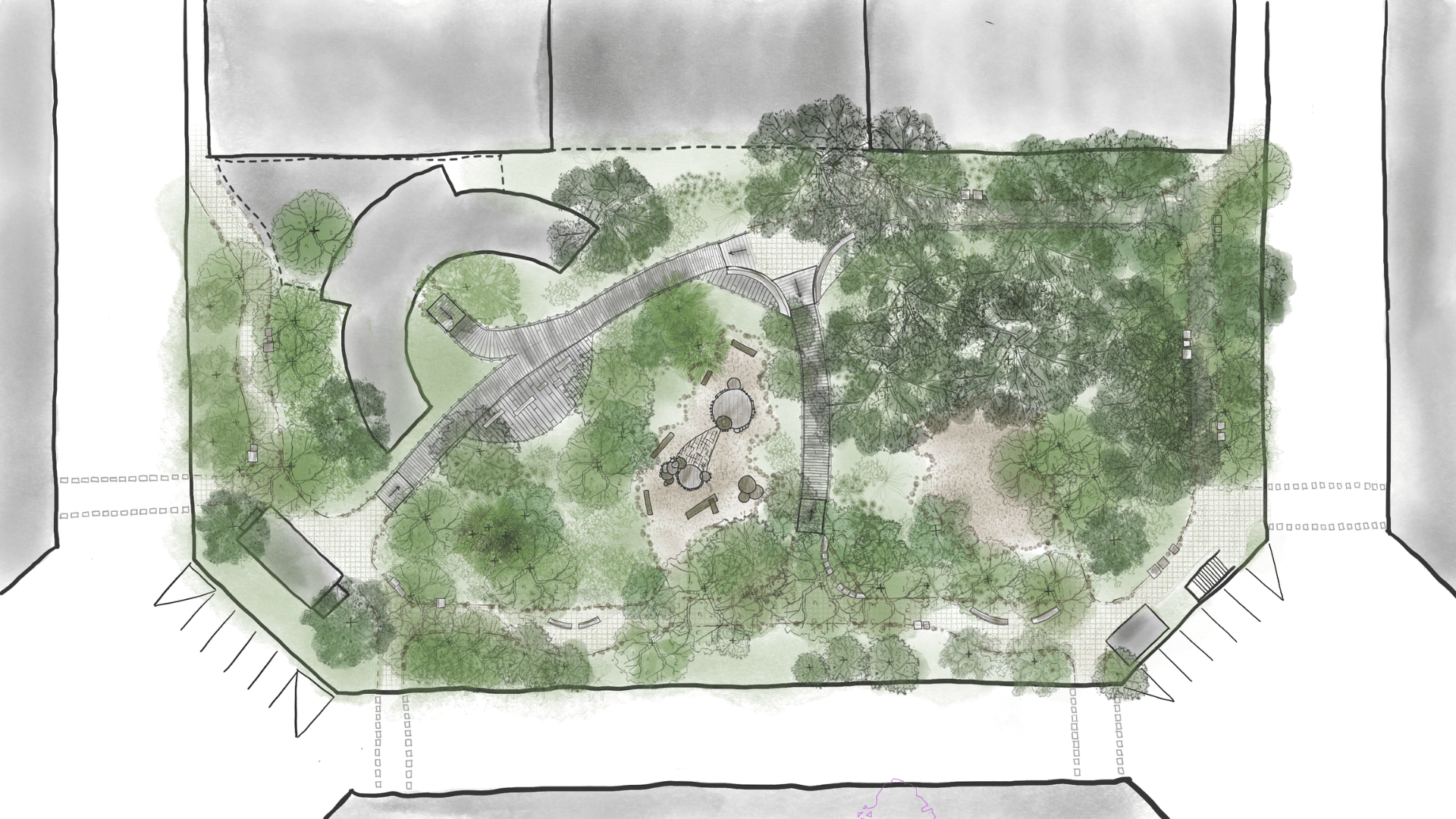
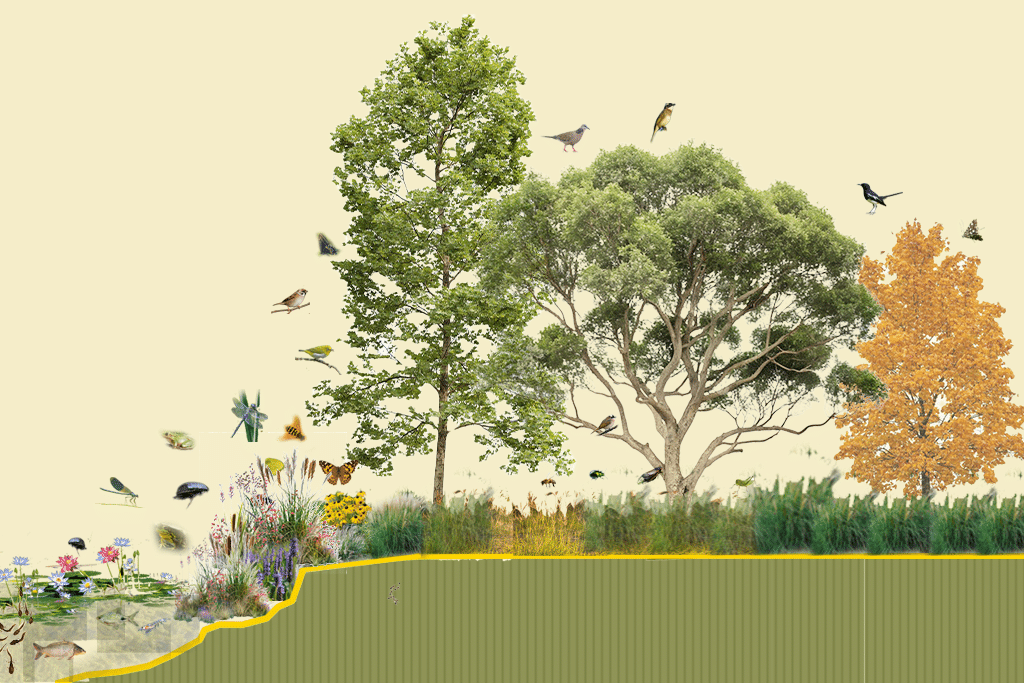
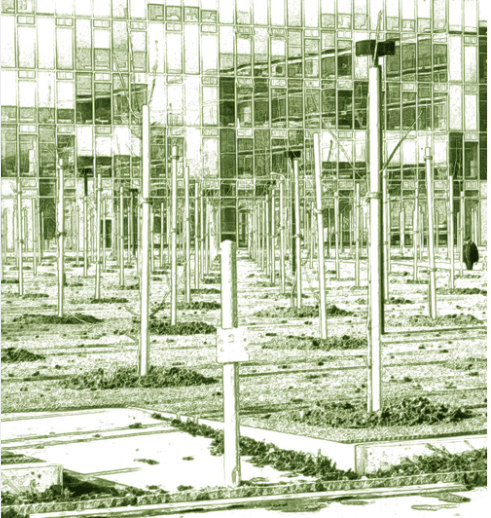
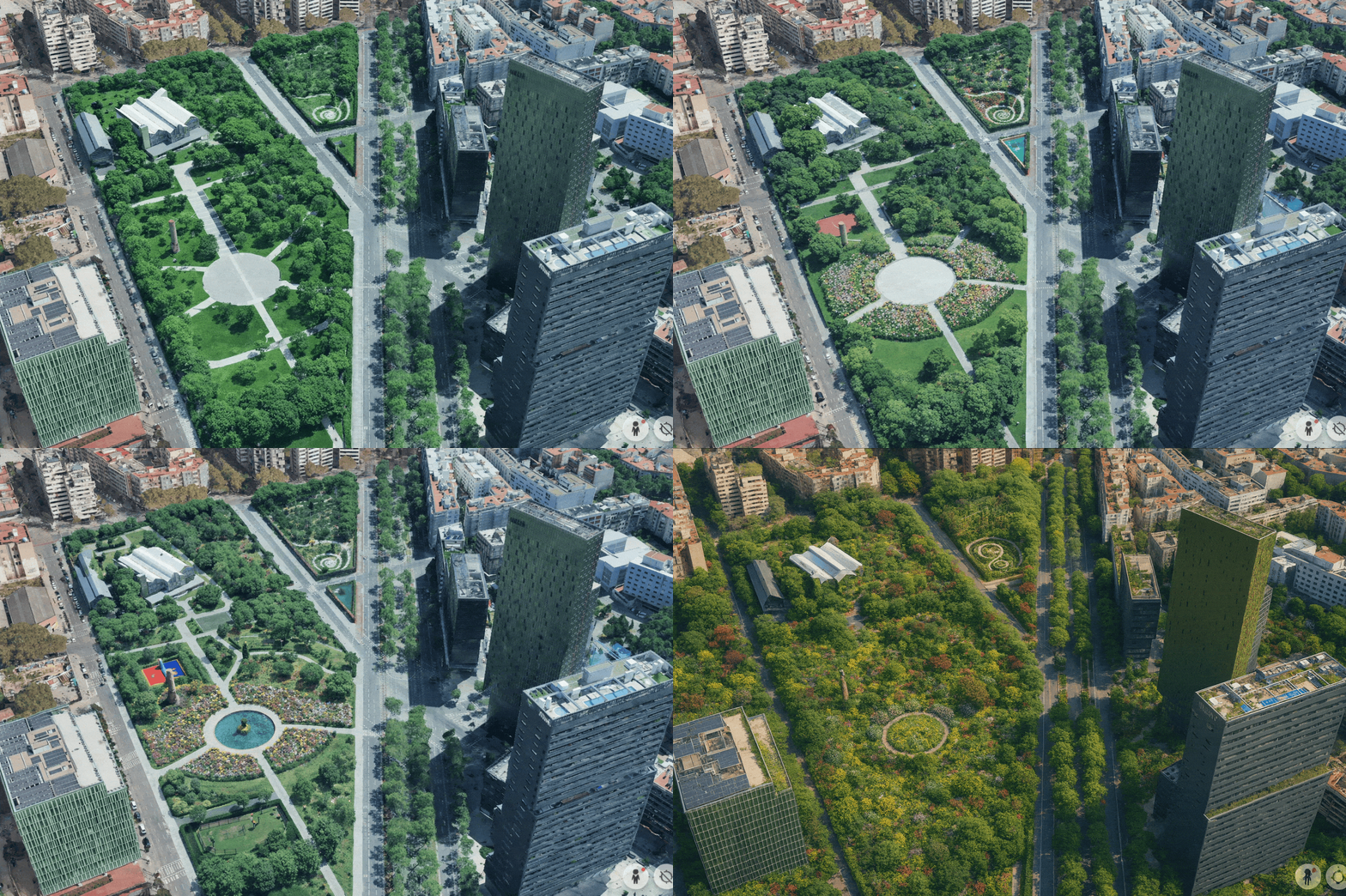
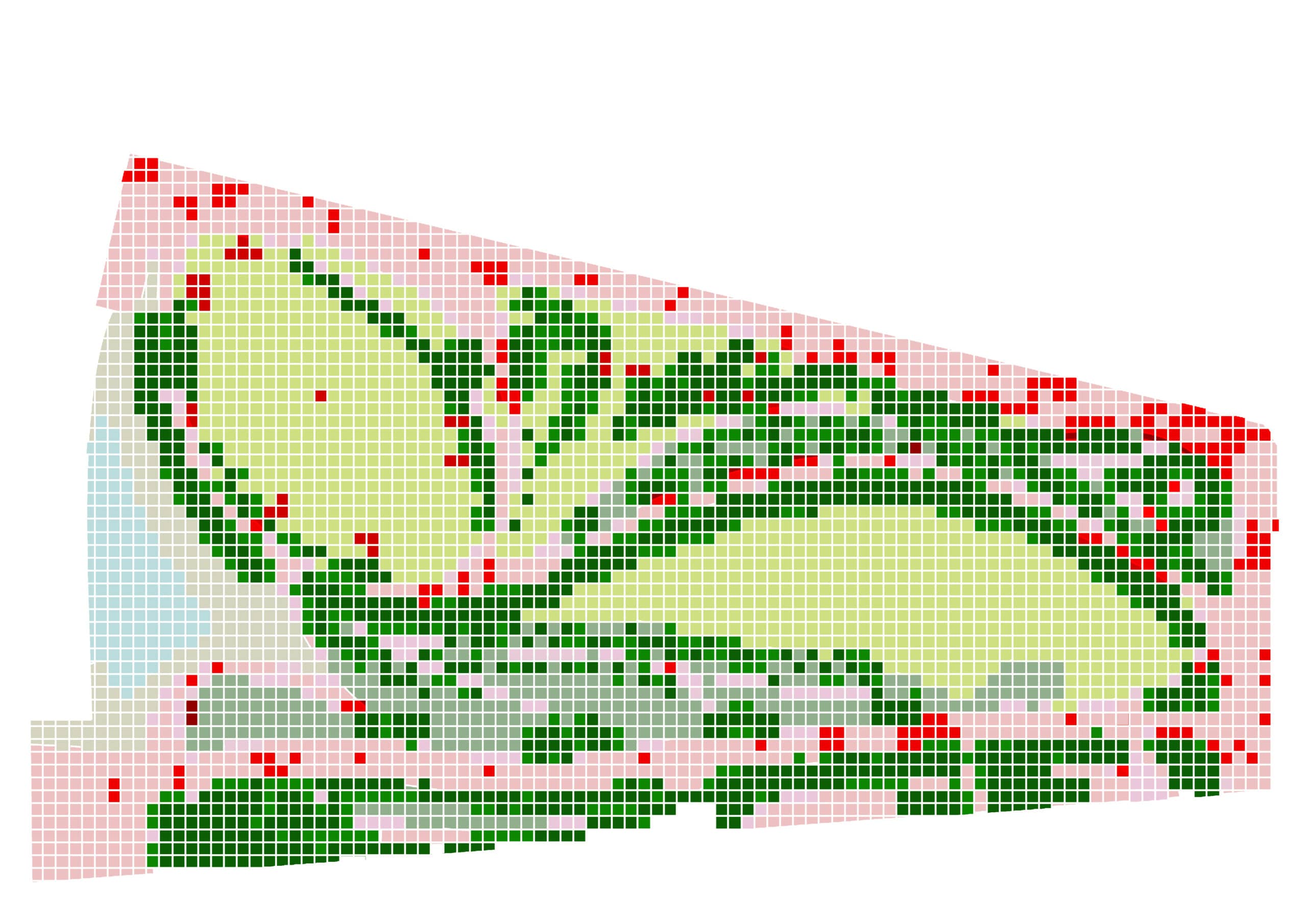
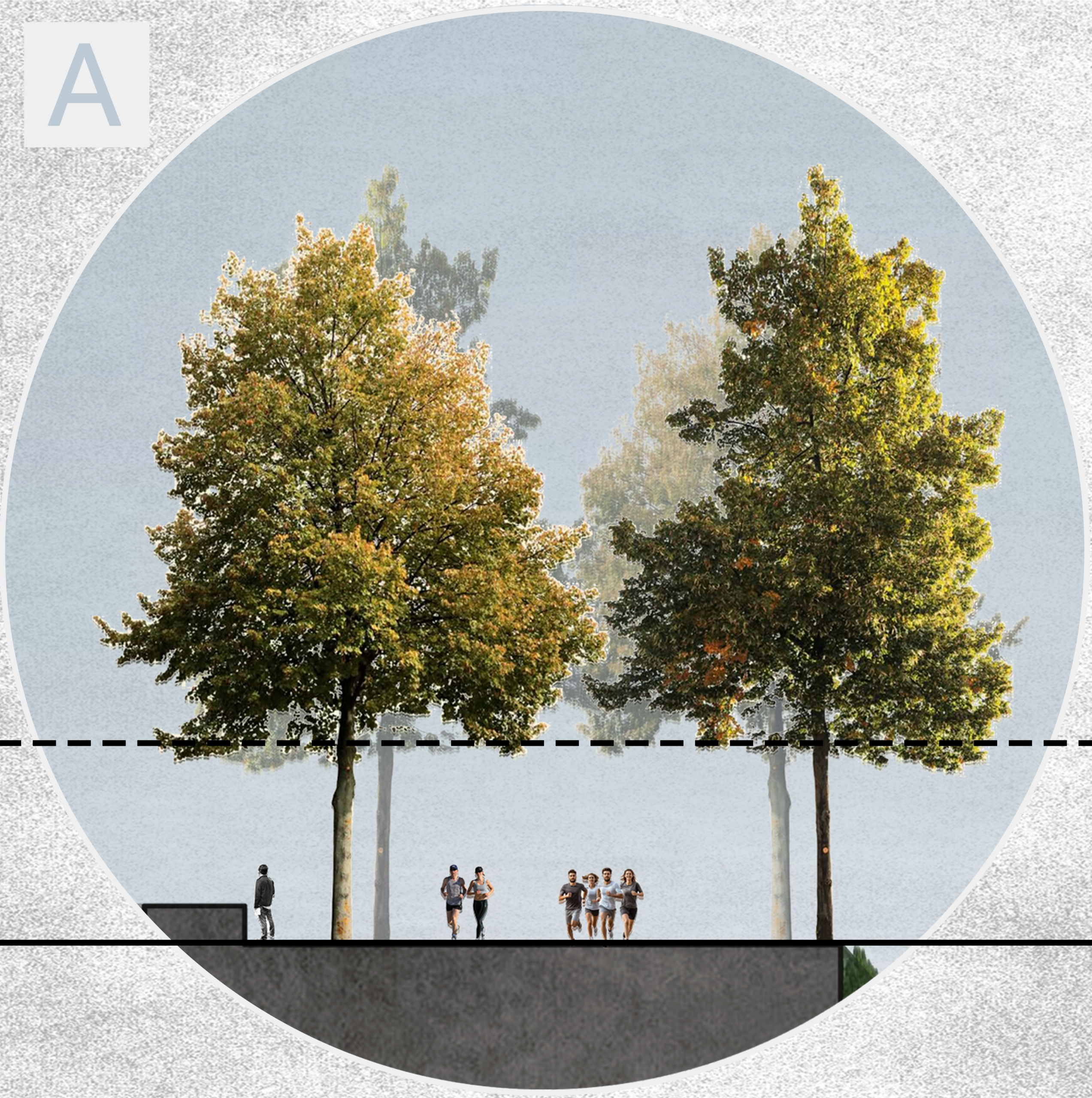
Credits: (left) Junya Ishigami documents a forest and (middle) how his office might occupy such a space, Another Scale of Architecture 2010; (right) Forest profile documented by Francis Hallé, Forest Urbanisms, 2024
How can architecture lead to greater biodiversity?
Even extremely light and minimal intervention architectures have a net negative impact on ecology when considering the disruption to fragile relationships which they cause within natural habitats, and this net negative is exacerbated with human occupation and activity. Types of ecological loss that result from human disturbance of natural environments include alteration of natural species composition and distribution, reduction of biological genetic diversity due to fragmentation of natural landscapes and general loss of non-human life due to inhospitable conditions.
In order to bring balance to the environmental impact of development, the future of design must view architecture not as a focal point, but as an element, interrelated to other elements in an ecosystem. In this paradigm, all actors have equal value: a tree, a column, a bird, a light; and rationality centers on forming new relationships and focusing on relational systems. As Junya Ishigami notes in Another Scale of Architecture:
“Spaces are born out of the relationship between architecture and non-architecture elements. A building is no more than one of the many conditions that make up myriad environments. The extent to which architecture and other things can be rendered equivalent is the key to expanding the possibilities of architecture.”
In this seminar course, students will explore how to place non-human life in the focal point of design for urban spaces, characterized by interventions that renaturalize spaces of human activity and puncture them with wild elements, expanding the scope of architectural design to emphasize ecological stewardship over human comfort. This central objective encompasses a range of investigative approaches, including:
- Exploring how human occupation can be designed and redistributed in harmony with nature
- Interrogating strategies of care such as designed ecologies and rewilding
- Study and design of relational systems centered around non-human life
- Practical capacities of ecological restoration for spaces of human occupation and activity
Learning Objectives
At course completion the student will:
- Explore and visualize strategies of ecological stewardship from the perspective of architectural design
- Identify, document and map processes of natural succession within designed environments
- Develop principles of design for the non-human client
- Design a real-situation project at proof of concept level centered around non-human life while accommodating human occupation