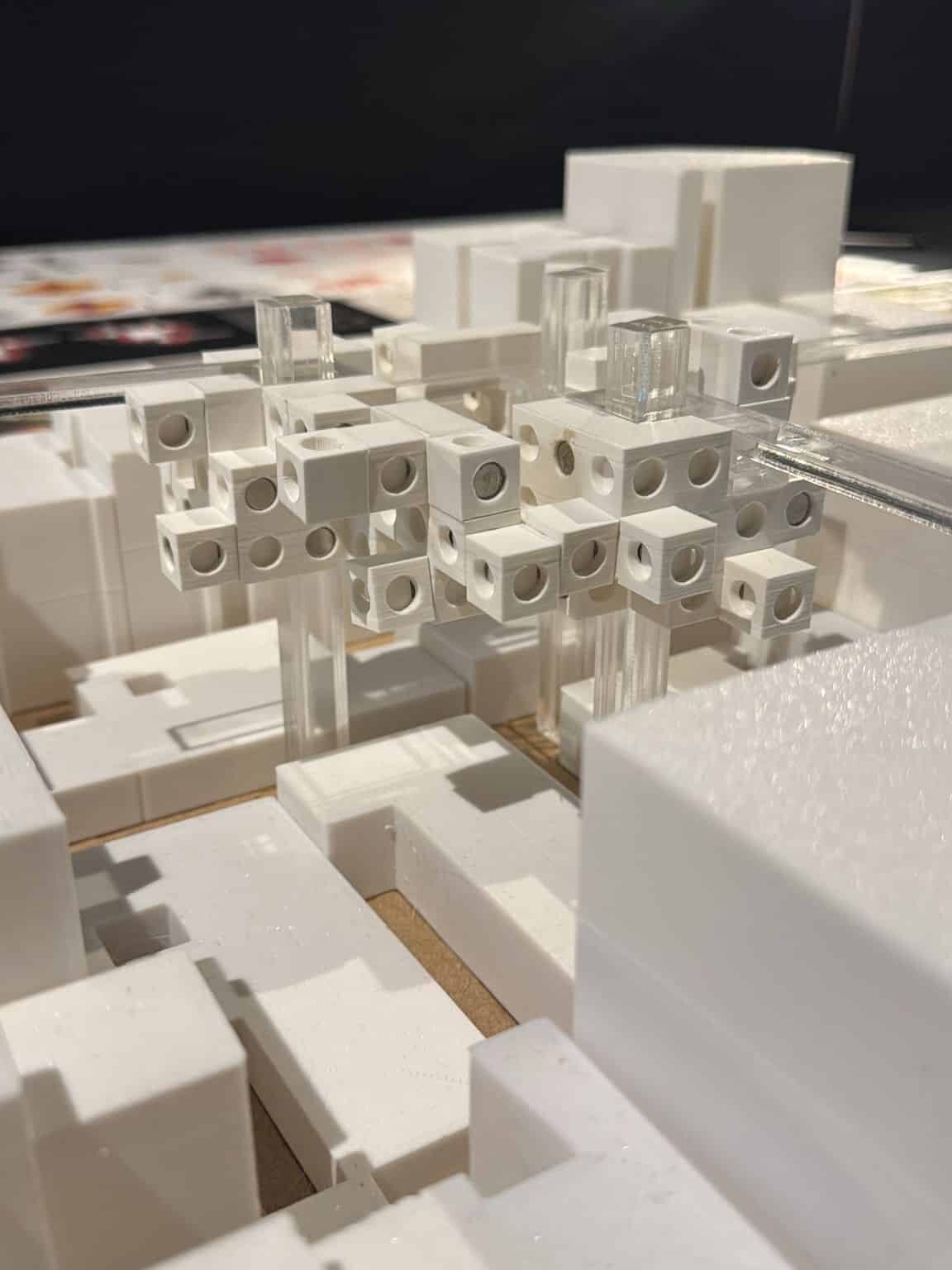
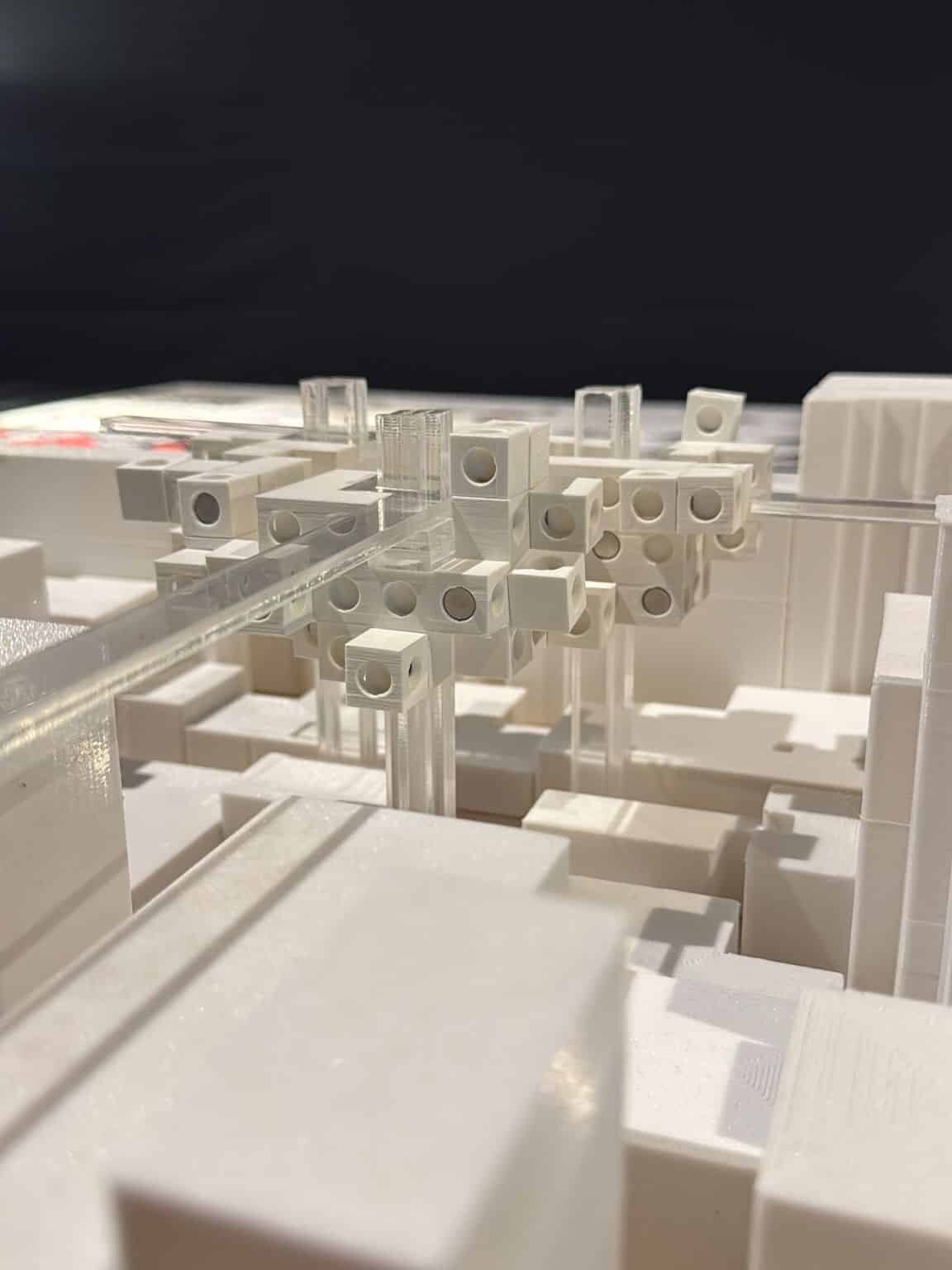
“A transitional housing system that buffers the tsunami of migration”
Project Description
The project proposes a transitional housing system for people arriving in Barcelona for work or study, including students, young professionals, and temporary workers. It responds to the growing demand for short-term and interim living solutions in a city under increasing demographic and housing pressure.
Positioned between permanence and temporality, the project frames transitional housing as an adaptive urban strategy integrated into Barcelona’s existing fabric.
Research and Context
Barcelona has experienced two major migration waves in its history: the first during the Industrial Revolution and the second during the period known as the Spanish Miracle. Both phases were analyzed at multiple scales, from citywide development patterns to the transformation of individual urban blocks.
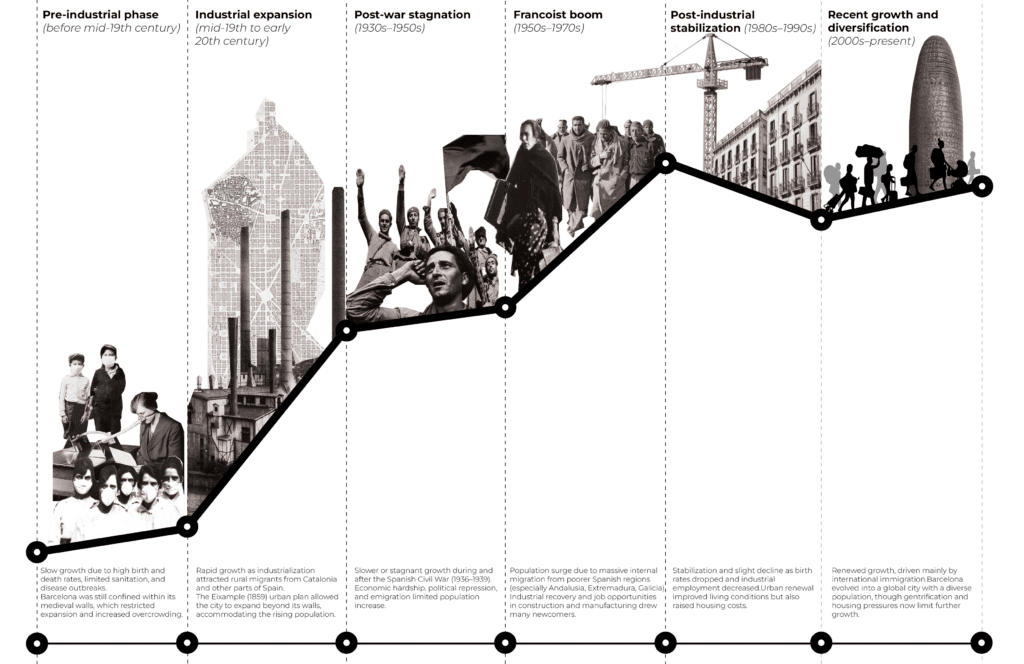
The first migration wave had a strong impact on the city’s structure. Industrial facilities were established around Barcelona, while residential development began to fill the interior spaces of Cerdà blocks.
During the Spanish Miracle, industrial expansion intensified. Additional factories were constructed, and housing developed directly around them, reinforcing the block-based urban structure that defines Barcelona today.
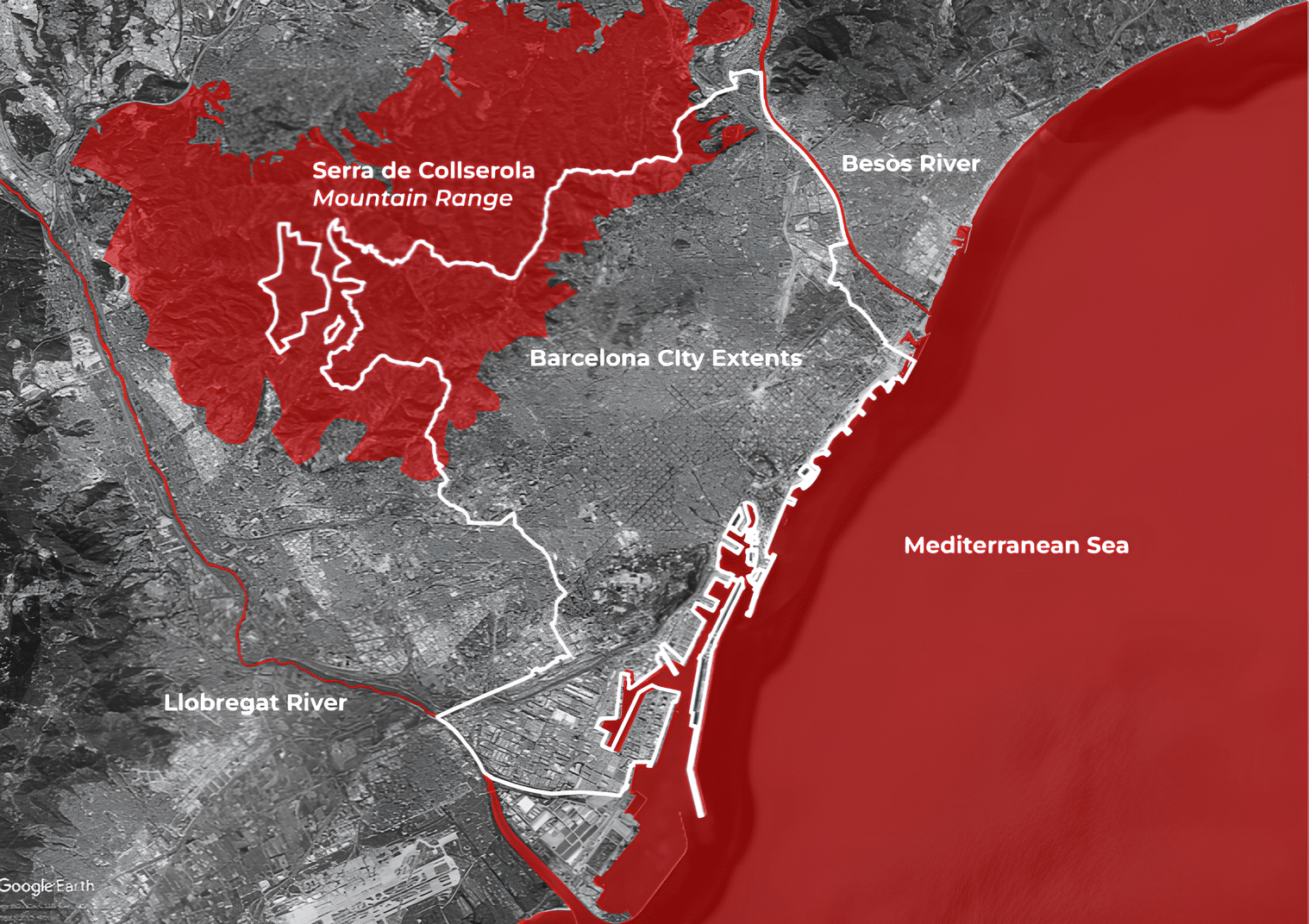
Today, Barcelona is geographically constrained between the mountains, the sea, and two rivers. With no remaining capacity for outward expansion, the city’s future development is increasingly directed inward, focusing on the transformation and activation of its existing urban fabric.

Site Definition
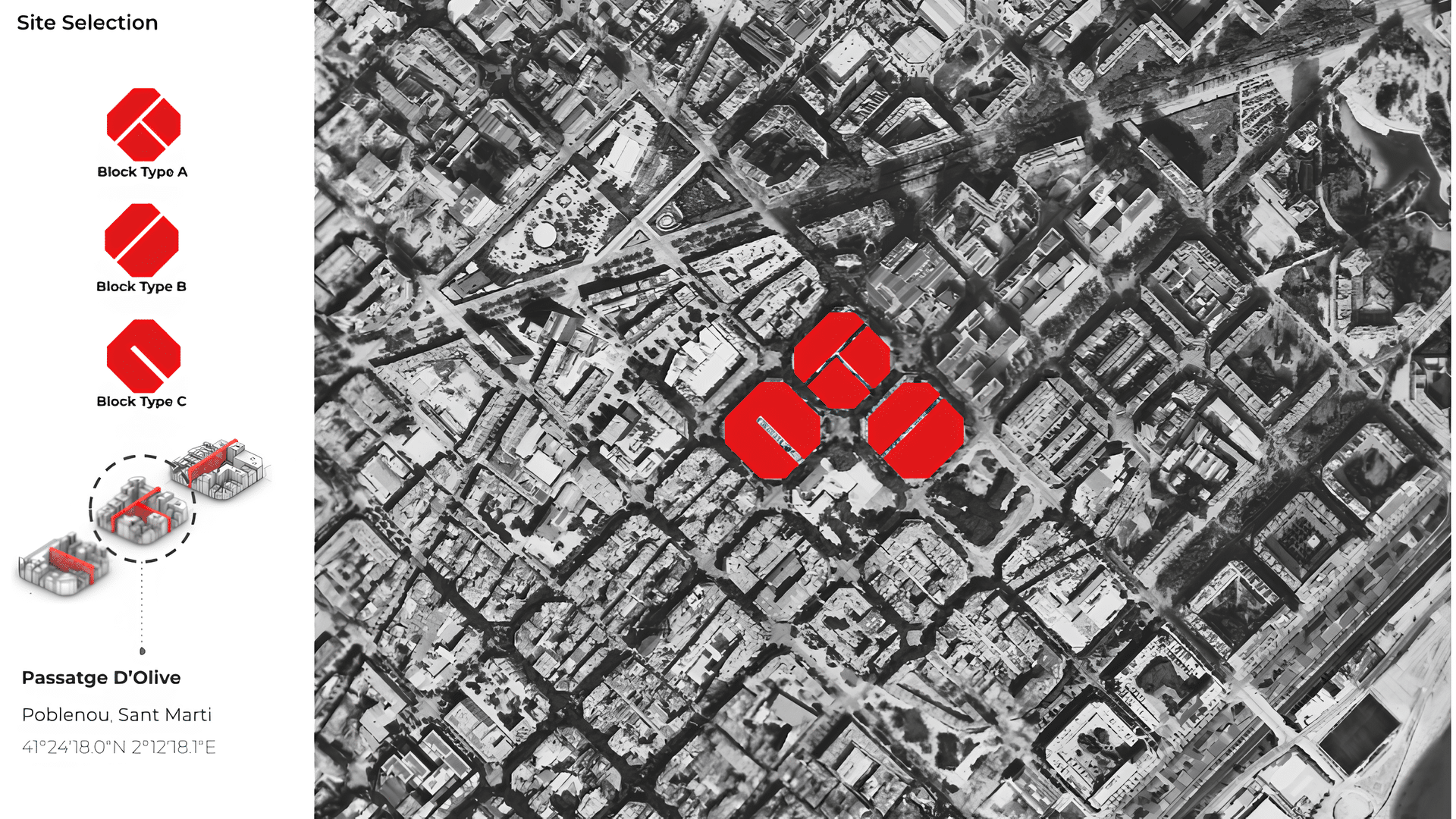
System
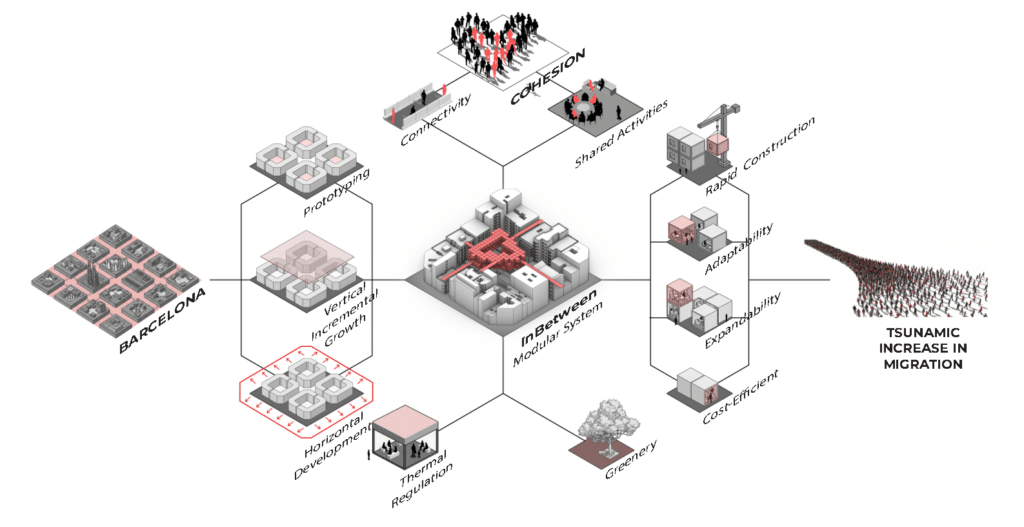
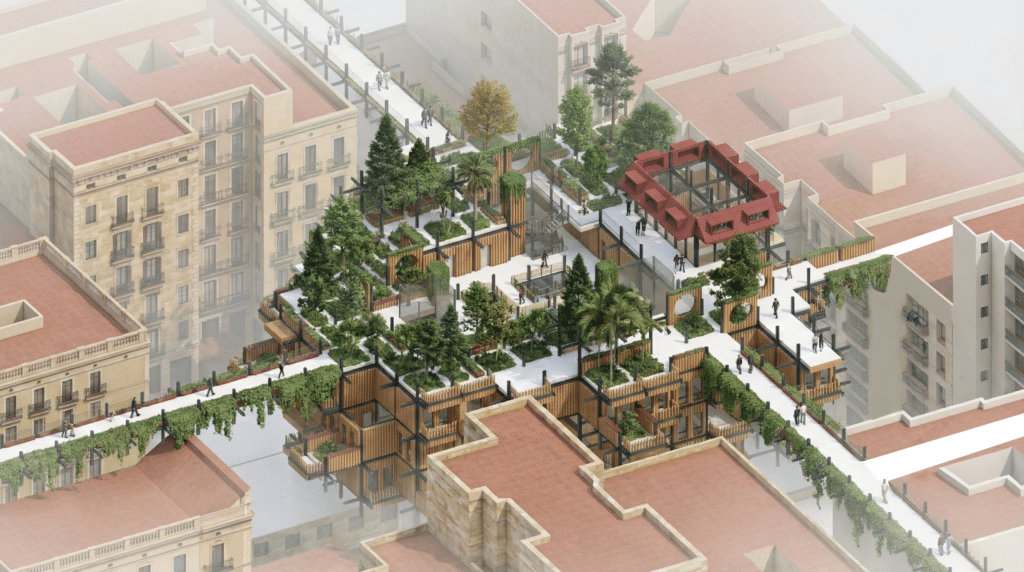
Population growth driven by migration is occurring at a significantly faster pace than growth caused by birth rates. This rapid change creates an urgent need for housing solutions that can be implemented quickly and remain adaptable over time. The system introduces a modular, temporary living layer inserted in between existing urban blocks, activating underused spaces without permanent construction. By operating as a flexible and reversible intervention that parasites the existing urban infrastructure, it provides affordable housing while giving newcomers time to adapt to the city and transition toward long-term living.
Design Development
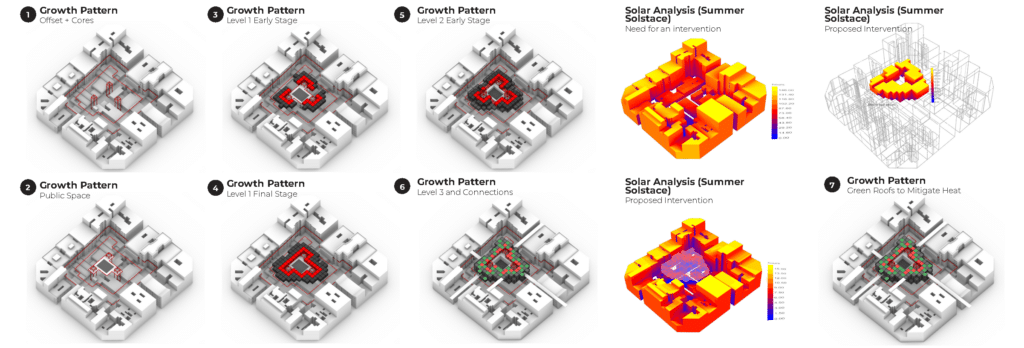
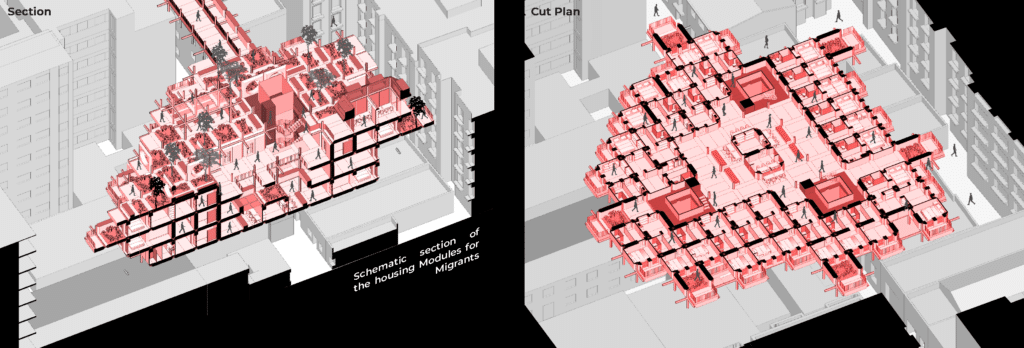
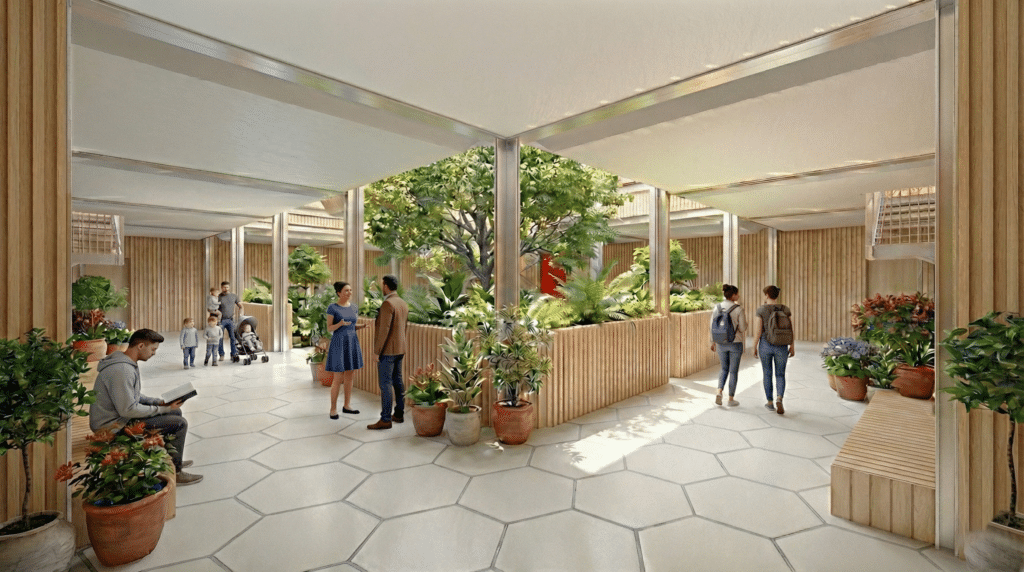
To create a prototype, the system is translated into a designated site through several stages. First, three shafts are positioned in specific locations where there is minimal interference with existing buildings and where they can maximize connectivity to urban infrastructures. Second, a defined occupiable space is established, adhering to the minimum horizontal and vertical offsets required from the surrounding buildings and those on the ground. Third, the shafts are interconnected to form a central communal area that promotes social interactions among immigrants, as well as between immigrants and the city. This communal space, which links the prototype to the urban infrastructure and enhances access through the communal area, serves as a foundation from which the modular housing develops systematically according to established guidelines.
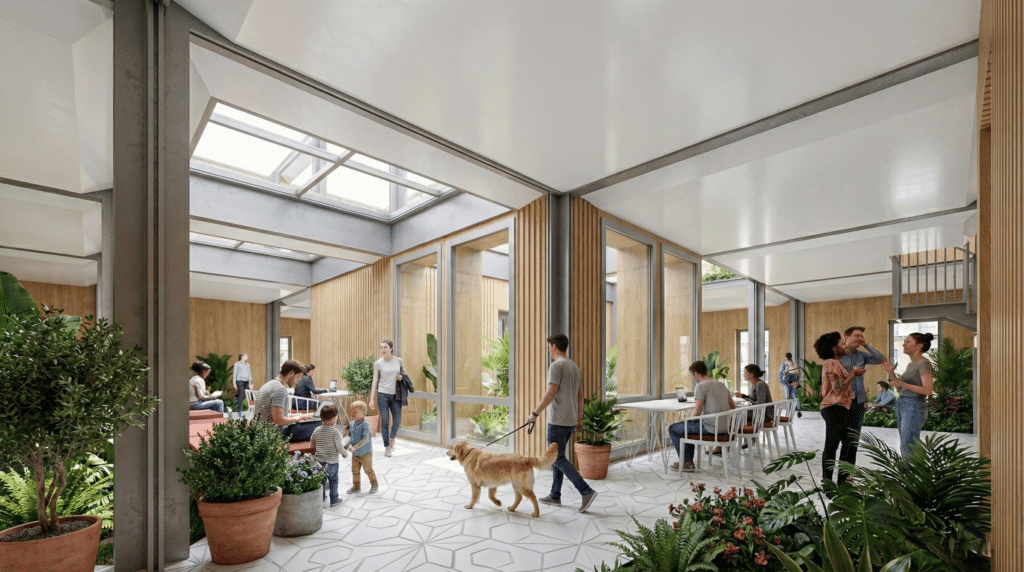
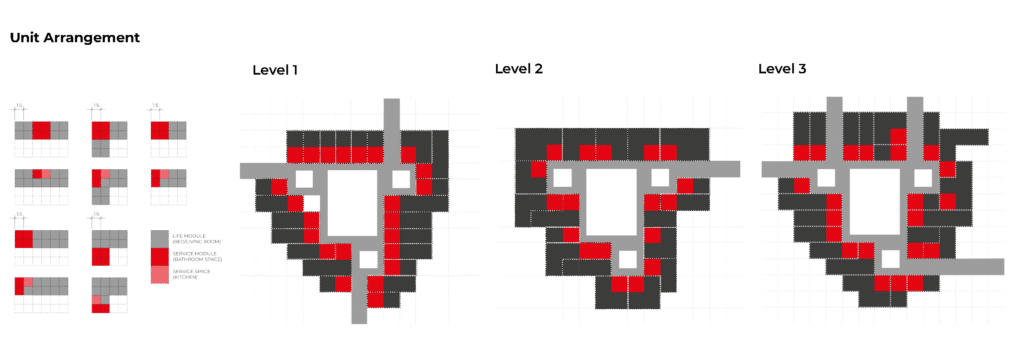
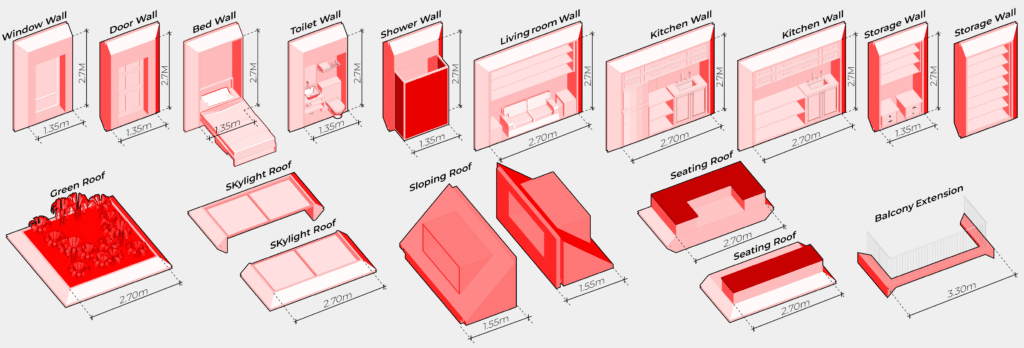
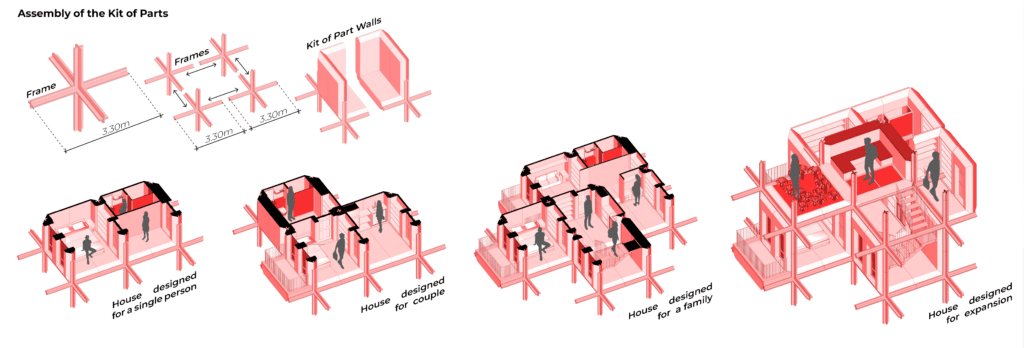
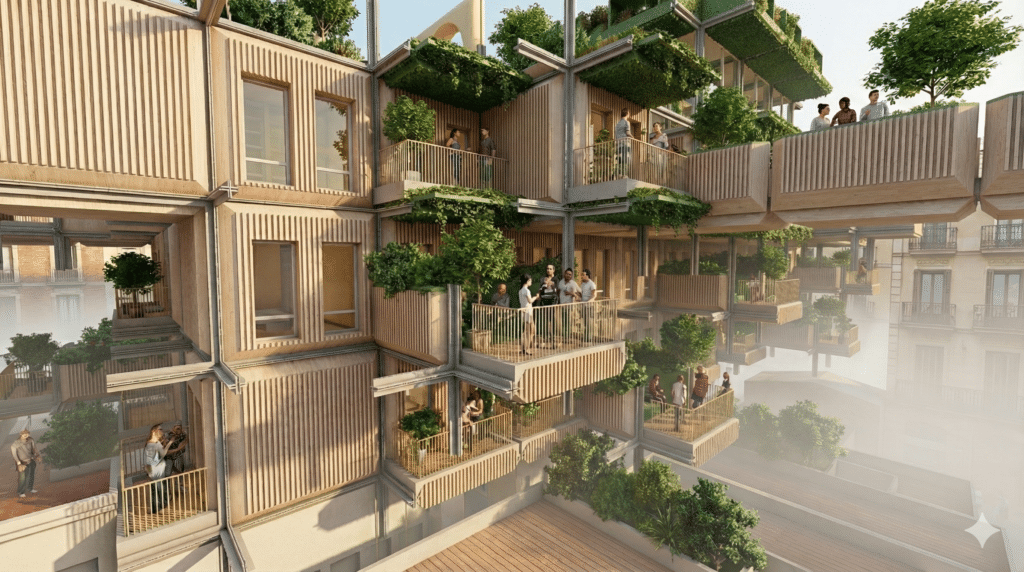
The housing system is based on a minimum modular unit area of 9 sq m, where each dwelling consists of one living unit and one service unit as the minimum condition. All living units are accessed through service units, with primary access fixed via vertical shafts connecting to ground-level alleyways. Multi-story residences are permitted, with all services and circulation organized around the shafts and a communal space positioned at the center. Living units are oriented outward to ensure windows and access to sunlight, while maintaining a fixed 9 m offset from surrounding buildings. When the maximum occupiable space is met another story is added to continue the development process
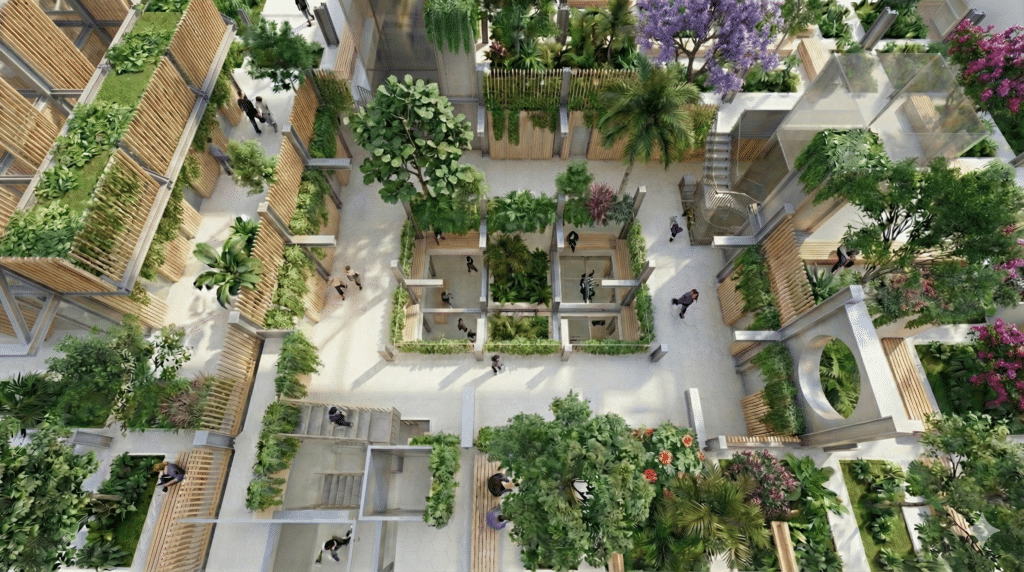
The analysis of sunlight regarding the impact of the prototype on its environment reveals that, although the intervention obstructs direct sunlight during warmer months and benefits the context, it has little effect during colder months since the adjacent buildings already hinder angled sunlight. However, the sunlight assessment of the intervention itself indicates a necessity for creating shaded areas on the rooftop to avoid overheating of the system, particularly in warm seasons. To tackle this issue, the ultimate form of the prototype consistently dedicates the rooftop to greenery and communal public activities. This communal rooftop boosts social cohesion by engaging residents to the social context facilitated by bridges that link the intervention to the rooftops of neighboring buildings.
Design in Detail
Physical Model Visuals