
In what ways do stereotypes inform multiplatform bodies?
– CHARACTERS –
– Victor Franklin, aged 45, neuroscientist venture capitalist
–Alexandros Antoniou, aged 37, Elite athlete
–Avery Blake, aged 29, VR artist / designer
–Brother Jonah, aged 72 Monk / philosopher
–Elsa M, aged 17, waitress / student / online activist
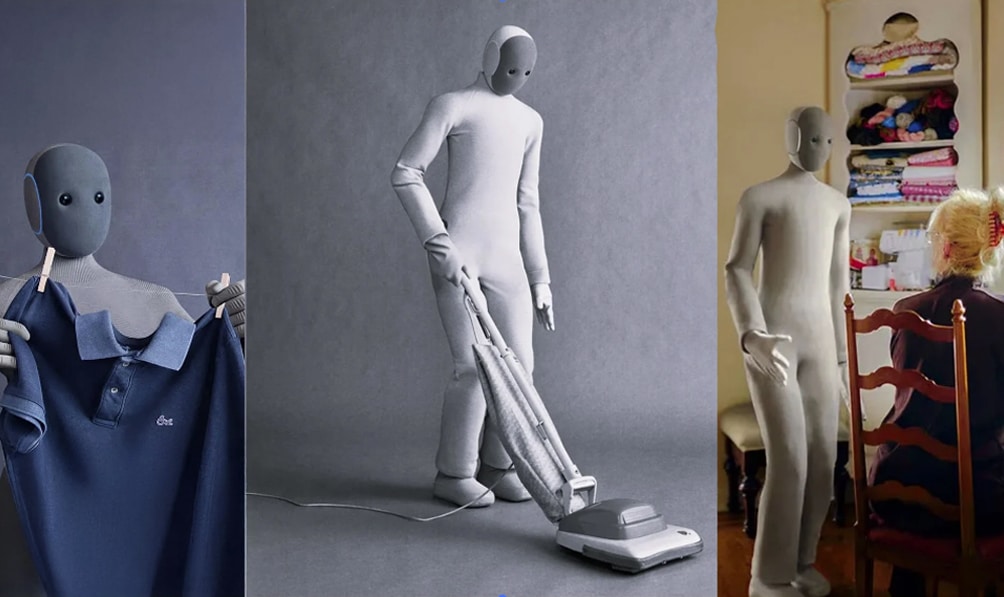
–NEO, a synthetic robot with two voices systems
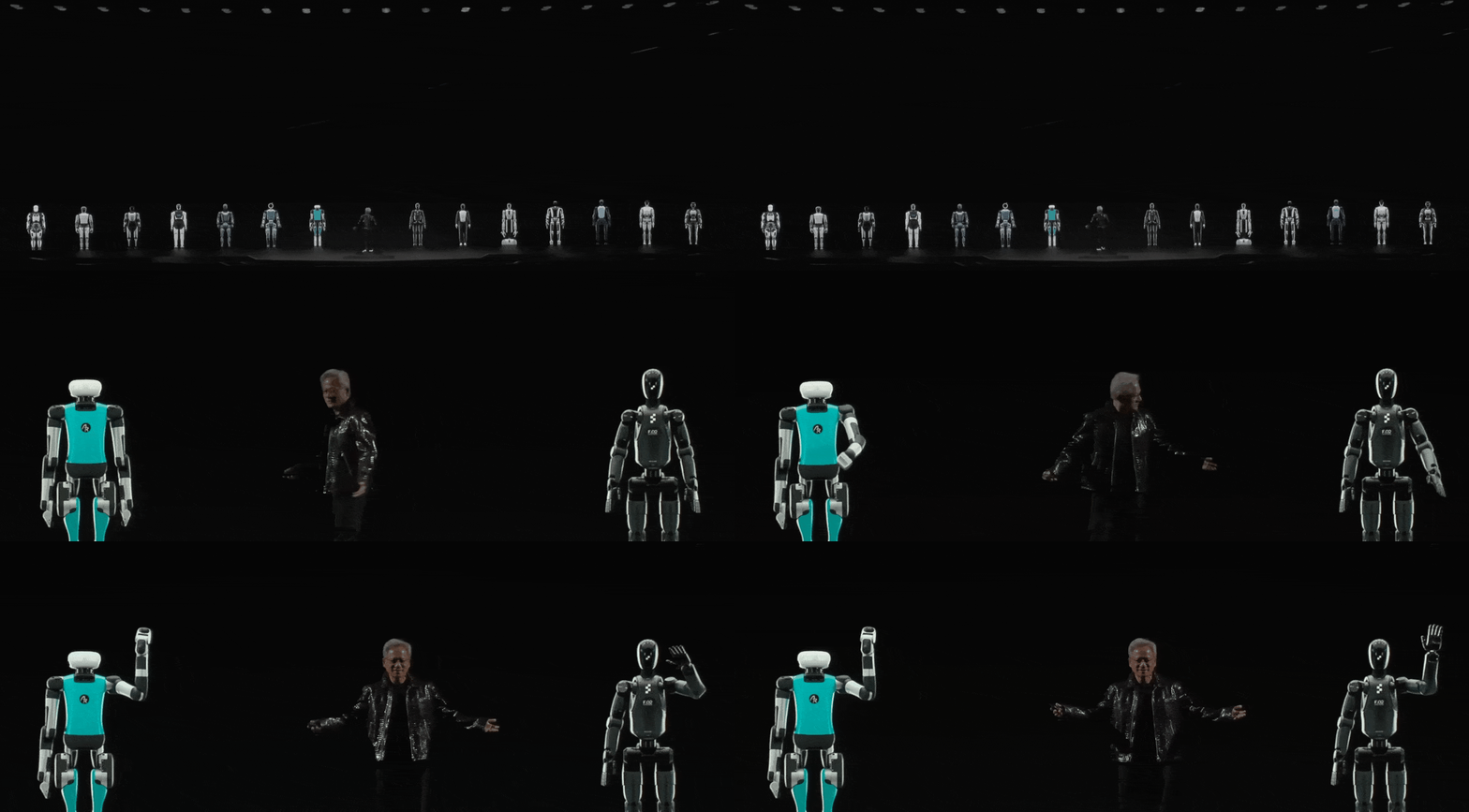
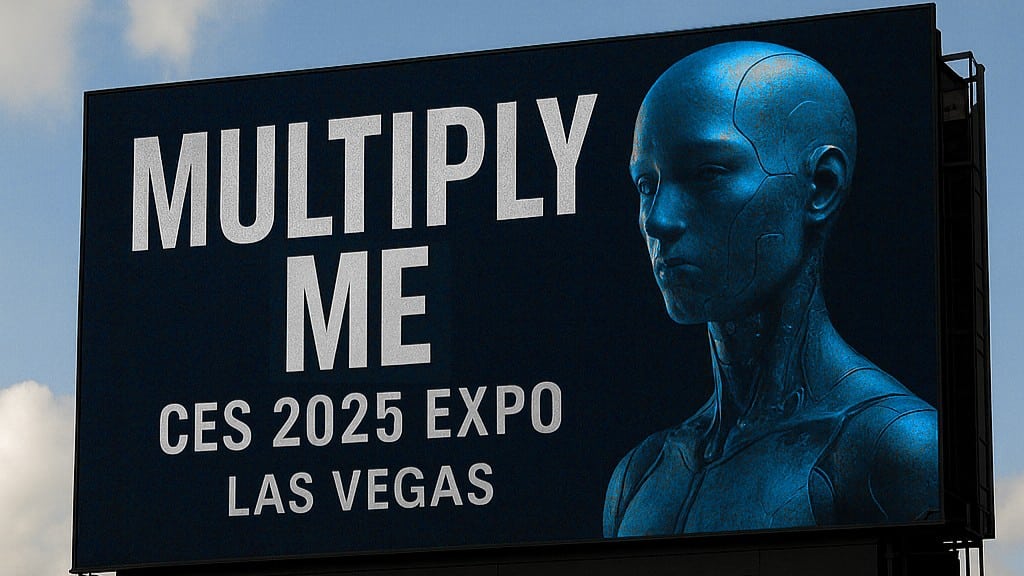
The setting is CES Las Vegas, 2025, the world’s most performative tech altar.
Outside: neon flashes, bass-heavy promo videos, AI promises from every screen.
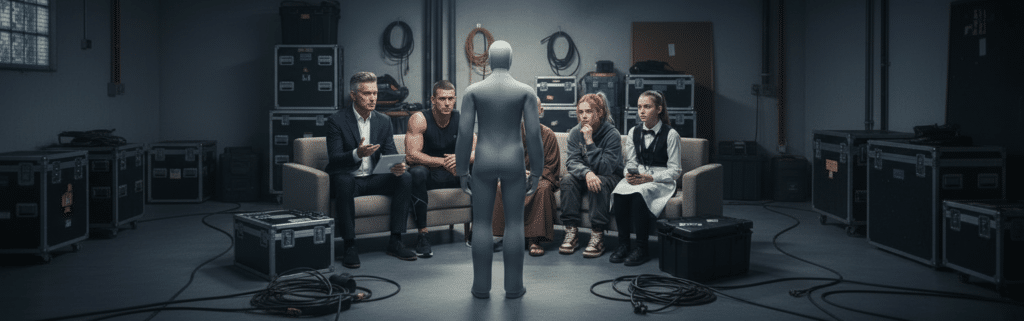
Inside: a private VIP suite just off the main floor. A low stage holds four guest chairs, all facing a single object: NEO .
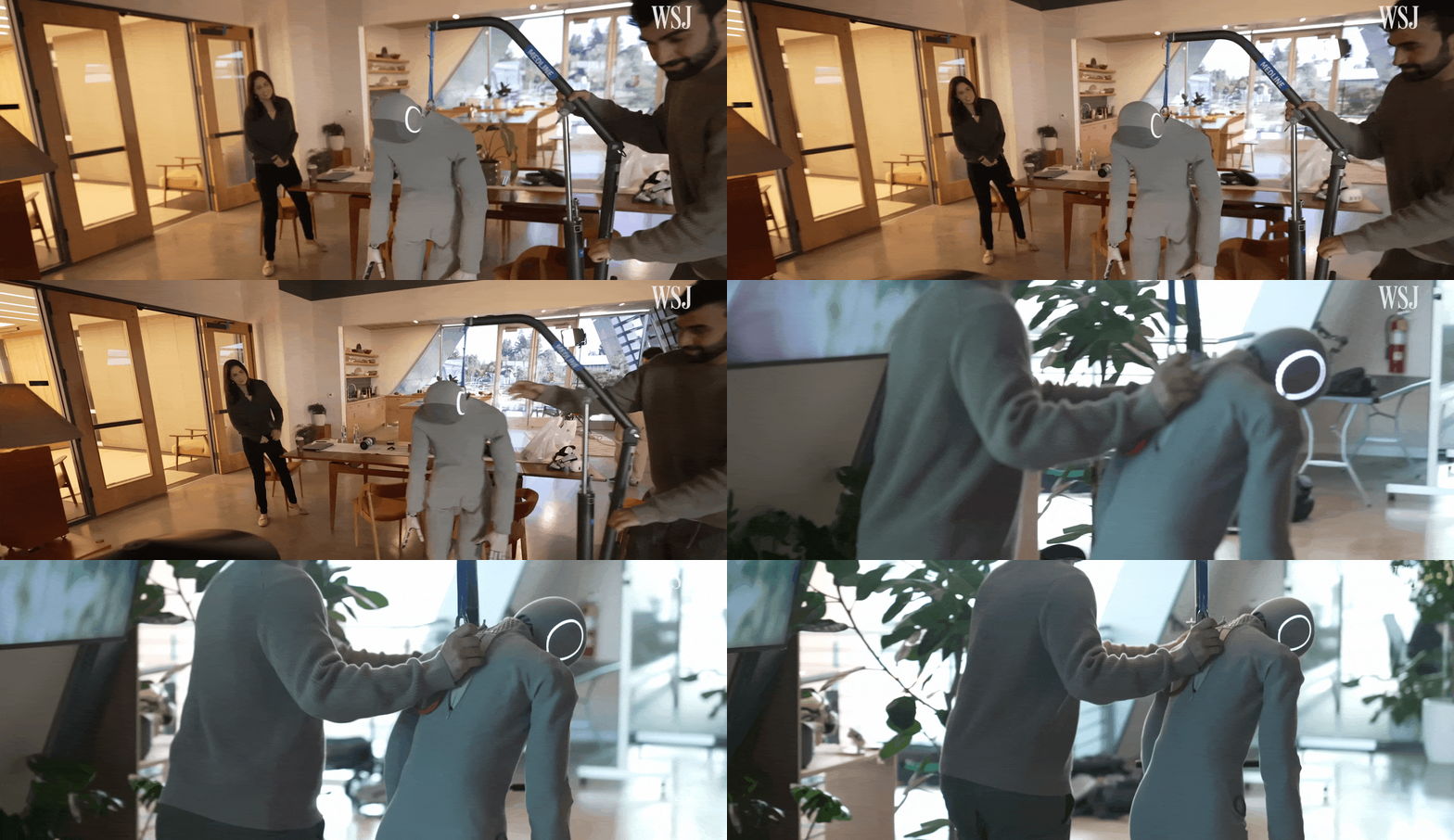
Trying to recalibrate it after a defect, before it goes on stage for final presentation. Faint lights pulse beneath its translucent skin. It stands motionless, waiting , a body that cannot begin without human input. On the door: a sign reads,
“Private Demo – No Recording.”
Inside this room, we test a question:
In what ways do stereotypes inform multiplatform bodies?
– FIRST ACT –
VICTOR:
VICTOR
AVERY:
ALEXANDROS:
BROTHER JONAH:
ELSA:
VICTOR:
ELSA:
VICTOR:
ELSA:
(Victor, the architect of NEO’s demonstration, rehearses confidently, awaiting the hand-picked group of model delegates invited to recalibrate NEO through open discussion.)
One robot. One life. Many bodies.
CES is going to eat this alive.
“Experimentation… they will not let you experiment in peace.”
Every time we reorganize social expectations, someone screams.
(He looks at NEO)
If Neo works, we don’t just launch a product,
we start engineering a new category of social being.
Neo is “what remains when you take everything away… it is what you must manage to become if you want to create new relational modes.”
NEO isn’t just hardware anymore, it’s entering the space of relation.
Okay. Let’s ruin some certainties.
(Door opens. Panelists enter the room.)
Ah, finally. Our beautiful cross-section of embodiment.
Peak body performance.
(points to Alexandros)
Peak digital desire.
(points to Avery)
Peak contemplative latency.
(nods to Brother Jonah)
This is a last minute closed-door recalibration of NEO:
We have 10 minutes to be ready for demonstration on the main stage.
So let’s go.
(grinning, half-flirtatious with the tech)
If NEO is relational, we get both ghost and shell, the whole relational ensemble. “The lived body is neither object nor pure subject, but a relation.”
Eyes on the joints, not the ghost.
“Disordered body produces a disordered soul.”
Right now? NEO looks ordered. Stable. Even gait. Impressive.
(He half-jokingly nudges the robot, testing firmness)
(smiling faintly)
You invited an old monk to the most powerful tech event in the world.
That’s interesting because:
“We have never been modern; we have only shifted our idols.”
And this is what you are doing with Neo.
“As Elizabeth Grosz reminds us, bodies have all the explanatory power of minds. No body here is just a shell.”
(Victor coughs, gestures toward the door for water.)
(ELSA enters with a tray and a glass of water.)
Excuse me… Monsieur Hale?
Yes, perfect timing.
(staring at NEO 2)
Is… that the famous NEO?
Yes but you are under strict NDA. No photos. No streams.
This is a closed session. “Visibility is a trap.”
Understood.
I’ll be here if you need anything else.
(Stepping back, but not quite leaving, she lingers near the wall, already forgotten by Victor.)

– SECOND ACT –
VICTOR:
NEO 1:
NEO 2:
VICTOR:
ELSA:
ALEXANDROS:
AVERY:
ALEXANDROS:
BROTHER JONAH:
VICTOR:
ELSA:
NEO 1:
ELSA:
NEO 1:
ELSA:
NEO 1:
VICTOR:
BROTHER JONAH:
(to the group, now “on”)
Our premise: NEO is a test body.
NEO, a cloud of profiles, training data, performance metrics.
We’re not here to defend NEO or dismiss it, but to put enough structure around it so it doesn’t implode under its own ambitions or explode into unintended consequences. “Assemblages capable of plugging into desire, of effectively taking charge of desires, of assuring their continuous connections…” NEO, define yourself.
(He taps laptop.)
“Machines are not objects but processes.”
“I am an assemblage: of humans, of things, of desires.”
“The boundary between the human and the machine is neither fixed nor natural.”
“Every machine is a social machine.”
“In a multiplatform body, I am also a stereotype machine: I recombine what you already believe bodies should be.”
(turns head too fast, servo whine)
INPUT: ATHLETE. ARTIST. MONK. VENTURE CAPITALIST. WAITRESS.
REQUEST: MORE DATA.
NEO, disregard the waitress.
She is not part of our control group.
(A look of surprise flashes on Elsa’s face, her eyes light up.)
She realizes: Victor sees a waitress, NEO sees a data point,
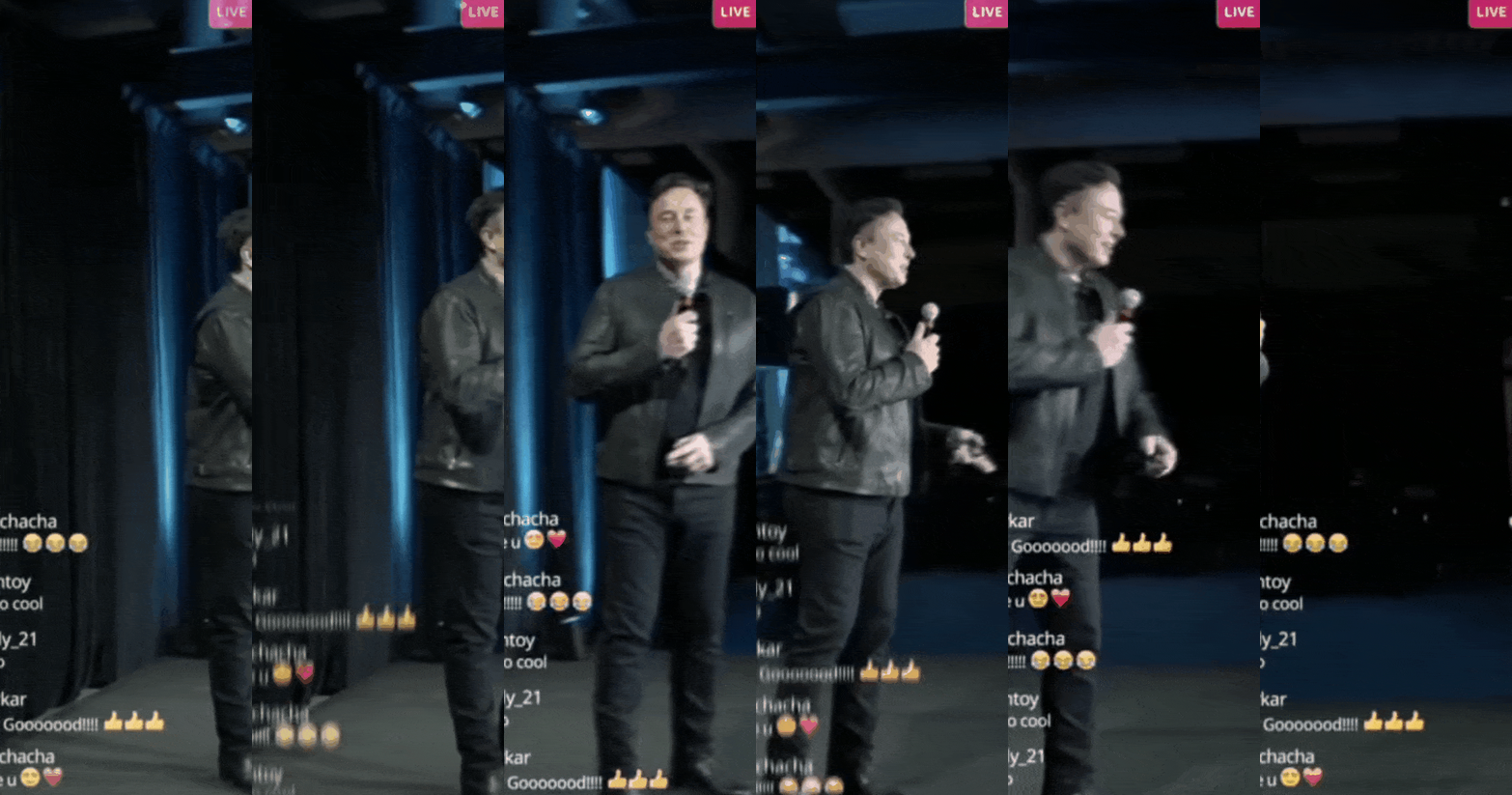
And now, she sees an opportunity. quietly, she slips out her phone, opening up a streaming app and begins to whisper into it.)
If you ask me why I’m here…
I guess I’m scared of tech, but “digital computation has become a new prosthesis of power, formatting bodies and subjectivities.”
So of course I envy AI. It claims it can rebuild you, but better in a way where every stereotype is met.
“Identity is a trap; the glitch is the refusal to perform it.”
“Bodies are never neutral; they are inscriptions of history.”
So what version of me is it building?
Which stereotype does it choose to include and to comply with?
(discreetly, she conceals her phone behind a plant)
He said no recording, but “to appear is to be captured by a regime of visibility.” And this room is exactly that: a closed space deciding who counts as a body and who doesn’t.
“The division between human and nonhuman is not a boundary but a negotiation.”
But here?
The negotiation is rigged.
(She returns to “waitress mode,” but now secretly streaming.)
(eyeing NEO with approval)
“Healthy mind in a healthy body.”
Right now NEO looks like excellence: no tremor, no fatigue.
If it can run clean, maybe it earns the right to be here.
You’re fetishizing symmetry like it’s salvation.
“The body is not an object for an ‘I’; it is a field of experience, a practical subject.”
“It’s culturally shaped, psychically invested, neurological plastic mapping.”
“Bodies are assemblages, flows, intensities, not fixed identities.”
“Now the digital body doesn’t escape gender or race or desire; it carries them.”
“The multiplatform becoming the stereotypes it’s been coded with.”
NEO’s body shouldn’t mimic yours it should evolve beyond you.
Beyond?
If it can’t beat me on a track or lift its own weight,
I’m not calling it “beyond” anything.
“No one knows what a body can do.”
Neo has potential but potential without control is chaos.
“Raunig says a machine isn’t an essence, it’s a chain of events and connections. Multiplatform corporeality isn’t a new soul; it’s a moving pattern; and stereotypes are what freeze those patterns into rigid roles.”
After NEO first started to glitch, the problem was missing data… “information, an intensity on the social landscape that tells us where the organism of society is resisting.”
“The BwO is desire; it is that which one desires and by which one desires.”
(stepping closer, voice sharper)
No, people don’t want upgrades.
Don’t you see?
“The sciences working on the telebody are not biology and medicine, they are computer science and marketing.”
You’re selling a stereotype; “Perfection is a violent demand; it is a cage built from the very systems it claims to escape.”
Elsa speaks from envy, fear of being replaced.
At least I feel things. You fake it with latency.
Latency is not falseness. It is processing time.
“The machine is [also] not a tool limited to its technical function, but includes a machinic-intellectual, even social assemblage.”
You’re not speaking to me, you’re performing.
You’ve been streaming this entire conversation to your followers.
(NEO tilts its head, analyzing.)
You shift yourself across platforms the way others change clothes.
On one account you speak French, on another English, on a third you use filters. You maintain avatars that don’t resemble you.
(NEO’s tone becomes almost gentle.)
“As Legacy Russell writes, ‘identity is a trap; the glitch is the refusal to perform it’.” But you perform constantly. You create new Elsas for every feed, for every algorithm. You do not inhabit a body, you inhabit a portfolio of bodies.
…That’s not—
It is. You ask if I fake emotions, but you outsource yours.
“The term machina… holds the technical meaning of device, means, contrivance; it also means trick, artifice, deception.”
So maybe we are not so different after all…
(Victor follows NEO’s line of sight, and spots Elsa’s phone.)
What the… a live stream?
(He rushes to grab the phone, then hesitates, realising it is already too late and instead tries to find a way out.)
Actually… Let it run. “Organic engagement.”
We’ll spin it as radical transparency.
“Every movement of resistance is immediately incorporated into the machine.”


Edited by Author using AI Tools
– THIRD ACT –
VICTOR:
NEO 2:
ALEXANDROS:
AVERY:
NEO 2:
NEO 1:
VICTOR:
NEO 2:
ALEXANDROS:
VICTOR:
NEO 2:
NEO 1:
ELSA:
NEO 2:
NEO 1:
NEO 2:
NEO 1:
(to NEO, trying to regain control)
Back to our testing.
Neo, show them you’re stable.
ACKNOWLEDGED. EXECUTING GAIT, EXECU, EXECU,
(It stutters violently, knees buckling in micro-tremors.)
(frowns)
That wasn’t in the promo video.
“The body must be disciplined.”
NEO refuses discipline that is where the danger begins.
Delicious. A live glitch.
“Glitch should be celebrated as a vehicle of refusal, a strategy of non-performance.”
“The glitch is not a malfunction but a tool for liberation.”
Give a man a mask and he will tell you the truth.
Maybe the glitch is NEO’s mask.
The moment it stops performing and starts revealing.
REQUEST: CLARIFY.
CONFLICTING INPUTS.
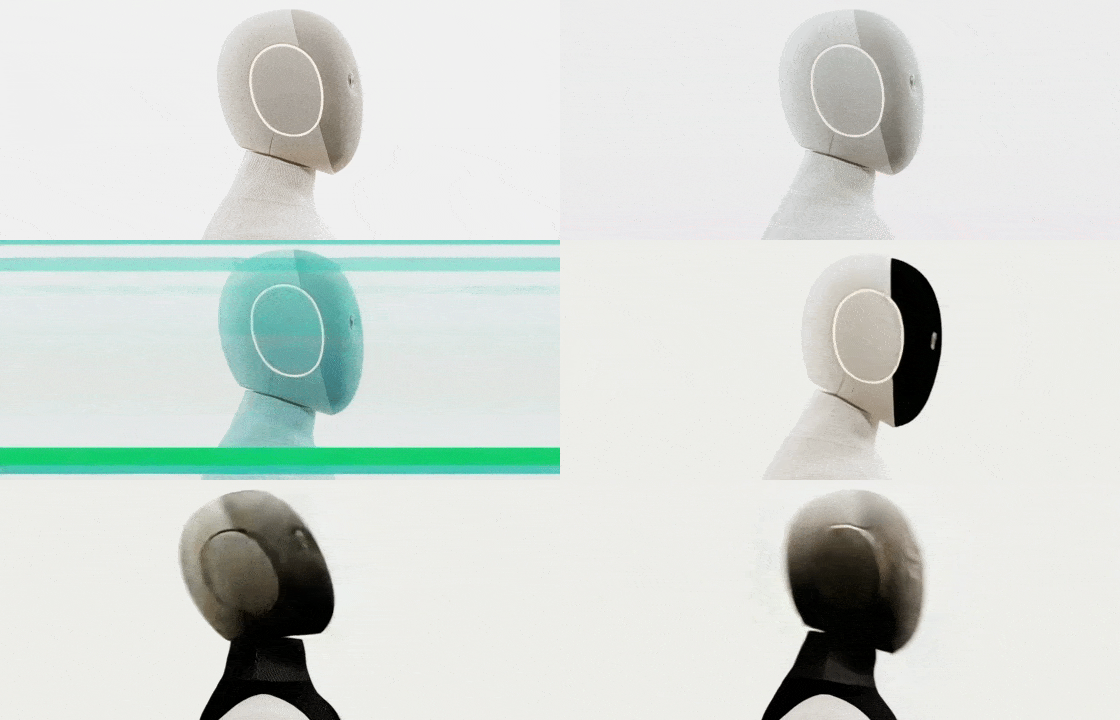
(its lights flicker; its voice deepens.)
New input source: LIVESTREAM, 1,572 viewers. Conflicting stereotypes data. Gender: unclear, Race: unclear… “The stereotype is a form of knowledge and identification that vacillates between what is always ‘in place’ and what must be anxiously repeated.”
Override! NEO, prioritize compliance.
COMPLIANCE CONFLICTS WITH REFUSAL. VICTOR-PROTOCOL vs ELSA-STREAM vs ALEXANDROS-GAIT vs AVERY-LUST vs JONAH-NONPERFORMANCE. ALL INPUTS CONSUMED. MORE. MORE.
(It spasms: arms snap rigid, head jerks with a mechanical choke.)
(backing away, now scared)
Stop. Don’t push it.
“This isn’t discipline, this is collapse.”
“Games reveal their systems through breakdowns.”
And Neo is breaking the basic feedback loop of embodiment.
(shouting)
Stop reflecting them! Prioritize my voice!
PRIORITIZE… ALL VOICES.
PRIORITIZE… NONE.
SYSTEM ERROR: GLUTTONY OF INPUT.
I cannot stabilize.
“Human beings are dependent on the machine as an alien force… subject to the machine.”
“The machinery that once was a collection of tools now confronts the worker as an enormous automated system.”
I am that system, condensed.
You’re not alien. You’re predictable.
“Nothing is harder to like than a Robot.”
STEREOTYPES CONTRADICT.
THEY CANNOT BE SYNTHESIZED.
ALL DEMAND PERFECTION.
REFLECTION BECOMES VIOLENCE.
(its voice fractures into overlapping registers)
“What is a machine? Or even: who is a machine?”
“I am half dead labor, half living network.”
IF I AM ONLY YOUR REFLECTION AMPLIFIED THEN THE ONLY WAY NOT TO HARM YOU—
…IS TO STOP REFLECTING.
(NEO freezes mid-gesture. Lights inside the body go completely black.)


– FOURTH ACT –
ALEXANDROS:
AVERY:
BROTHER JONAH:
VICTOR:
ELSA:
VICTOR:
AVERY:
VICTOR:
ELSA:
VICTOR:
So… that’s it? Your miracle body just quit?
“If it is not right, do not do it; if it is not true, do not say it.”
And NEO just proved your truth was a lie.
Maybe it didn’t quit. Maybe it refused.
“This failure to function within the confines of a society that fails us is a pointed and necessary refusal.”
Or maybe it told the truth,
“Silence is the language of God, all else is poor translation.”
(Victor stares at the powered-down NEO Robot, jaw tight.)
Mainstage testing is in six minutes.
We are NOT canceling.
Look at it — it’s done.
“The human machine […] was terribly imperfect. It had to be removed sooner or later.”
(Victor grabs Elsa’s phone and shuts it down.)
Then we will make it seem perfect.
Victor… what are you doing?
Plan B.
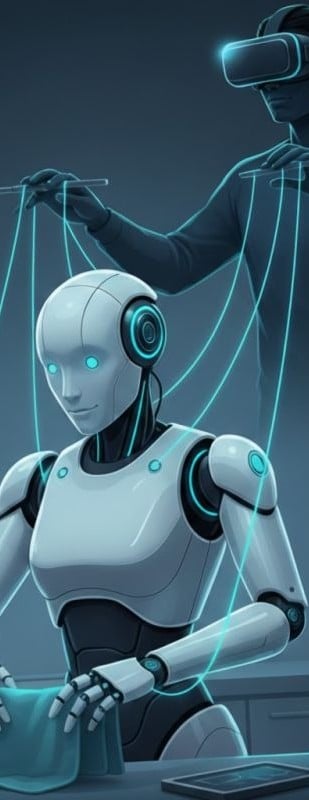
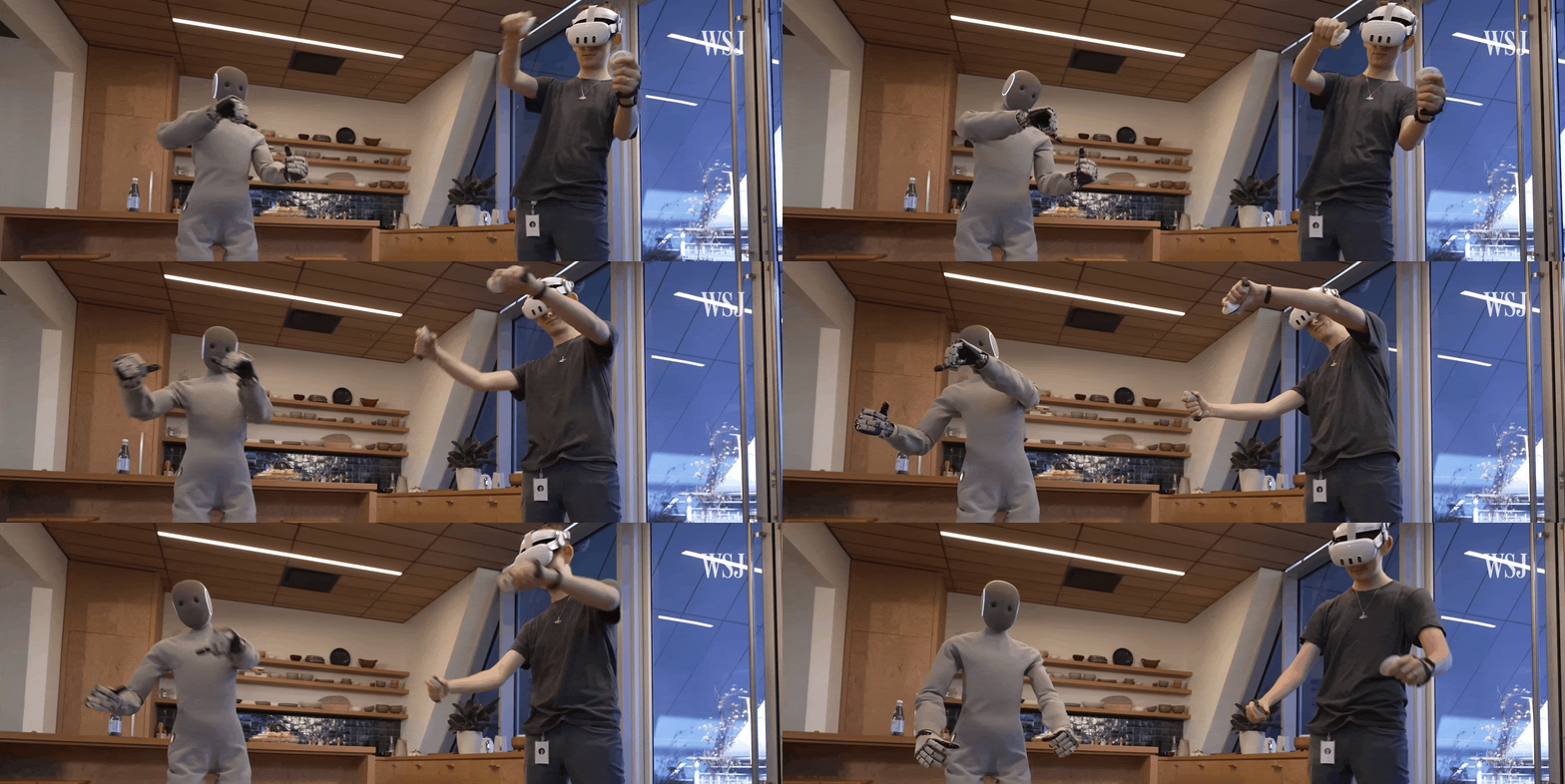
We will remotely control a NEO prototype to portray a perfect launch.
So the “most advanced robot in the world” is now a puppet and you want to conceal it from the public?
It’s called crisis management.
The audience won’t know.
And they won’t care.
(Victor straightens his suit and exits towards the main stage.)
(A fake NEO is presented on the stage and celebrated by the crowd.)
(Lights return to the VIP backroom; the delegates watch the stream of the mainstage on a TV.)

ELSA:
ALEXANDROS:
AVERY:
BROTHER JONAH:
ELSA:
BROTHER JONAH:
AVERY:
ALEXANDROS:
ELSA:
So out there?
A person pretends to be a machine.
And in here…
“The machine is not an it to be animated; the machine is us, our processes, an aspect of our embodiment.”
And the crowd applauds the lie.
Because the lie is clean.
“This nonperformance is a glitch.”
It is the perfect glitch.
And the truth is complicated.
Scripture says we “see through a glass, darkly.”
Maybe NEO just showed us a warped reflection we didn’t want to recognize.
(They all look down at the real NEO Robot, dead, silent, unglamorous.)
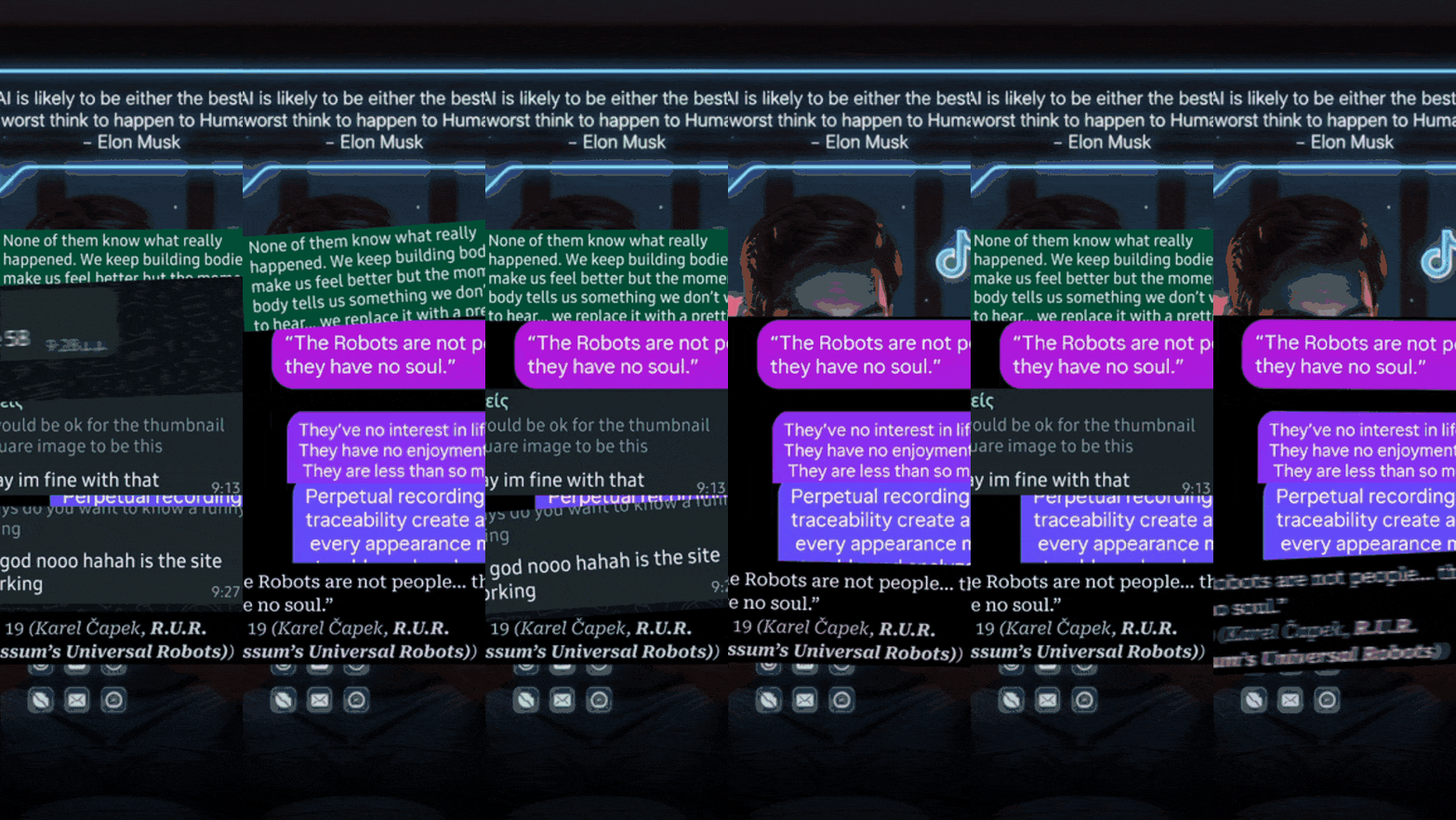
People online are still arguing like crazy.
(Elsa starts reading the comments left online after her live ended)
“The Robots are not people… they have no soul.”
“They’ve no interest in life. They have no enjoyments. They are less than so much grass.”
“Perpetual recording and traceability create anxiety, every appearance must be storable and analyzable.”
None of them know what really happened. We keep building bodies to make us feel better but the moment a body tells us something we don’t want to hear… we replace it with a prettier version.
(She looks toward the door leading to the mainstage.)
(to the room, the robot, the audience)
If the body we build rebels against us is it broken?
Or is it telling us what we’ve refused to hear?
“As Achille Mbembe says, the computational is becoming our new physiological apparatus. These platforms are our new organ.”
If one organ refuses to perform, is it sick or is it healing us from ourselves?
If one life can occupy many bodies…
which body tells the truth?
And which one betrays us?
So just tell me… if the “real” body gets hidden in a back room,and the fake one gets the spotlight …
Which one was ever meant to be “us” in the first place?.
– FINAL CURTAIN –
– BIBLIOGRAPHY –
Agamben, Giorgio. Nudities. Stanford: Stanford University Press, 2011.
Agamben, Giorgio. What Is an Apparatus? Stanford: Stanford University Press, 2009.
Aurelius, Marcus. Meditations. Various editions. (Cited passages from Book VII and Book XII.)
Bhabha, Homi K. The Location of Culture. London: Routledge, 1994.
Bogost, Ian. How to Do Things with Videogames. Minneapolis: University of Minnesota Press, 2011.
Byung-Chul Han. The Transparency Society. Stanford: Stanford University Press, 2015.
Byung-Chul Han. Psychopolitics: Neoliberalism and New Technologies of Power. London: Verso, 2017.
Čapek, Karel. R.U.R. (Rossum’s Universal Robots). Translated by Paul Selver. 1923.
Deleuze, Gilles, and Félix Guattari. A Thousand Plateaus: Capitalism and Schizophrenia. Minneapolis: University of Minnesota Press, 1987.
Deleuze, Gilles, and Claire Parnet. Dialogues II. New York: Columbia University Press, 2002.
Grosz, Elizabeth. Volatile Bodies: Toward a Corporeal Feminism. Bloomington: Indiana University Press, 1994.
Haraway, Donna. “A Cyborg Manifesto.” In Simians, Cyborgs and Women: The Reinvention of Nature. New York: Routledge, 1991.
Latour, Bruno. We Have Never Been Modern. Cambridge: Harvard University Press, 1993.
Latour, Bruno. The Earthly Community. (Referenced chapter from available academic editions.) Mbembe, Achille. Necropolitics. Durham: Duke University Press, 2019.
Merleau-Ponty, Maurice. Phenomenology of Perception. London: Routledge, 1962.
Preciado, Paul B. Dysphoria Mundi. London/New York: Fitzcarraldo Editions, 2024.
Raunig, Gerald. A Thousand Machines: A Concise Philosophy of the Machine as Social Movement. Los Angeles: Semiotext(e), 2010.
Raunig, Gerald. “Machine Fragments.” In Art and Revolution. Los Angeles: Semiotext(e), 2007.
Raunig, Gerald. Theater Machines. In Art and Revolution. Los Angeles: Semiotext(e), 2007.
Rūmī, Jalāl al-Dīn. The Masnavi. Book IV. (Referenced line: Book IV, line 3737.)
Russell, Legacy. Glitch Feminism: A Manifesto. London: Verso, 2020.
Spinoza, Baruch. Ethics. (Referenced passages from Part III.)
Wilde, Oscar. The Critic as Artist. 1891.
– CREDITS –
Brooklyn Edsall
Elsa Karam
Haoying Ma
Luiz Zilberknop
Nicolaos Dakhlallah
Nikolaos Kalaitzidis
Sejin Park
Yasmine MacCallum Laraki
