The project People’s Theatre addresses the growing obsolescence of cultural heritage buildings under overlapping social, economic, and climatic pressures. Using Teatre Arnau in El Raval as a case study, the project investigates how adaptive reuse can reposition a historically commodified theatre as a socio-economic commons
” This research investigates how adaptive reuse of Teatre Arnau can interrupt the reinforcing systems of gentrification and cultural re-appropriation in El Raval, by reframing heritage as a socio-economic commons rather than a cultural commodity. “

WHY THEATRE ARNAU?
Intersection: The only surviving wooden theatre in Barcelona, sitting at a critical urban fracture point.
Urgency: Immediate structural collapse risk combined with long-term climate threats.
Symbolism: A battleground between neighborhood memory and global gentrification forces.

BARRACA THEATRE
“Barraca” means hut or temporary pavilion– these were simple, timber-framed theatres built quickly and cheaply to serve the working-class population.

Historical Timeline of Teatre Arnau

Location
El Raval, within the Ciutat Vella district, is defined by a dense medieval urban fabric characterized by narrow street canyons, irregular plots, limited open space, and deep building sections. This morphology produces intense spatial proximity between private and public life, enabling high social interaction but also amplifying environmental stress.

Landuse

Population Density
Ciutat Vella remains one of Barcelona’s most densely populated districts, with El Raval exhibiting high residential density combined with heavy daytime population inflow due to tourism, services, and cultural institutions. This results in overlapping temporal uses of space: residents, visitors, workers, and informal users compete for limited spatial and environmental resources.

Cultural Mix
El Raval is one of Barcelona’s most socially heterogeneous neighborhoods. Long-term residents coexist with recent migrants, students, temporary workers, tourists, and transient populations. This diversity has historically been a source of cultural richness, but under current economic and policy conditions, it also produces vulnerability.

Income Index
El Raval vs Ciutat Vella vs Barcelona
The income index uses Barcelona = 100 as the reference point.
Values below 100 indicate lower average income compared to the citywide mean.
- El Raval consistently remains 30–35% below the Barcelona average.
- The Ciutat Vella district overall is slightly higher, but still below the city average.
The gap widens over time, indicating increasing socio-economic inequality.

Community Demographics
El Raval hosts a complex mosaic of communities, including:
Long-term working-class residents
Immigrant communities from South Asia, North Africa, Latin America, and Eastern Europe
Elderly residents aging in place
Young precarious workers and students
Transient tourist populations

GENTRIFICATION AND CULTURAL RE-APPROPRIATION FEEDBACK LOOPS
Teatre Arnau sits at the intersection of multiple reinforcing systems that collectively produce its current state of obsolescence:
Climate Pressure
Rising temperatures, increased heatwave frequency, and episodic flooding events intensify stress on an already fragile structure. Poor thermal performance and limited passive cooling strategies amplify risk, particularly for public occupation in future scenarios.
Gentrification
Cultural assets in El Raval are increasingly leveraged to attract investment and tourism, accelerating rent increases and resident displacement. Heritage buildings become symbolic anchors for redevelopment rather than tools for social continuity.
Cultural Erasure
As local communities are displaced or marginalized, the cultural practices that once animated the theatre weaken. This loss then justifies further top-down cultural curation, reinforcing exclusion.
Economic Pressure
Maintenance costs, regulatory constraints, and speculative land value create financial conditions where long-term community-oriented use is deprioritized in favor of high-yield redevelopment models.

THREATS IDENTIFICATION
Cultural: Spaces for non-spectacular production (rehearsal, archive) and multi-use performance.
Climatic: Thermally resilient gathering spaces acting as refuges during extremes.
Economic: Minimizing barriers through free/shared infrastructure.

Community Needs
The programmatic strategy for Teatre Arnau is structured around the recognition that the neighborhood is composed of overlapping cultural groups, age ranges, economic conditions, and temporal patterns of use. The theatre therefore operates not as a specialized venue, but as a shared socio-cultural infrastructure capable of accommodating difference, change, and seasonal variation. The framework organizes needs across three intersecting dimensions: cultural, climatic, and economic.

PROGRAMME
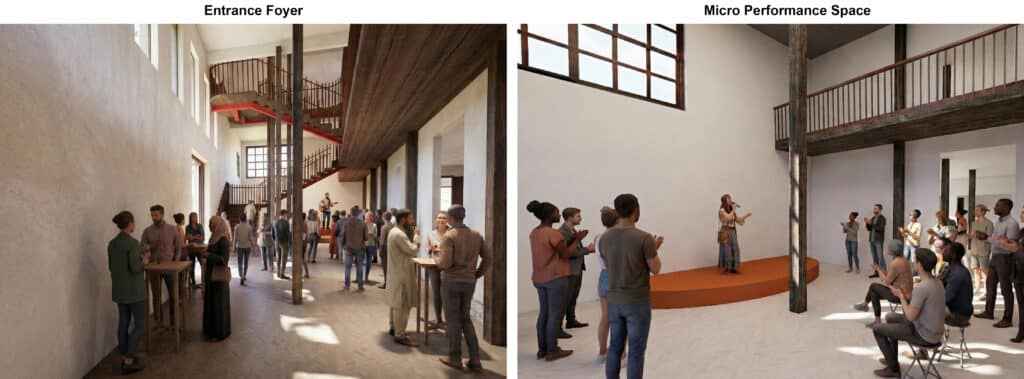
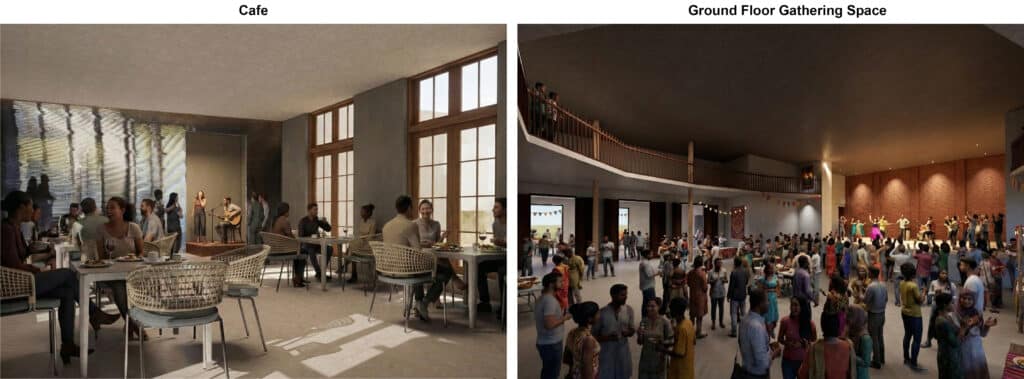
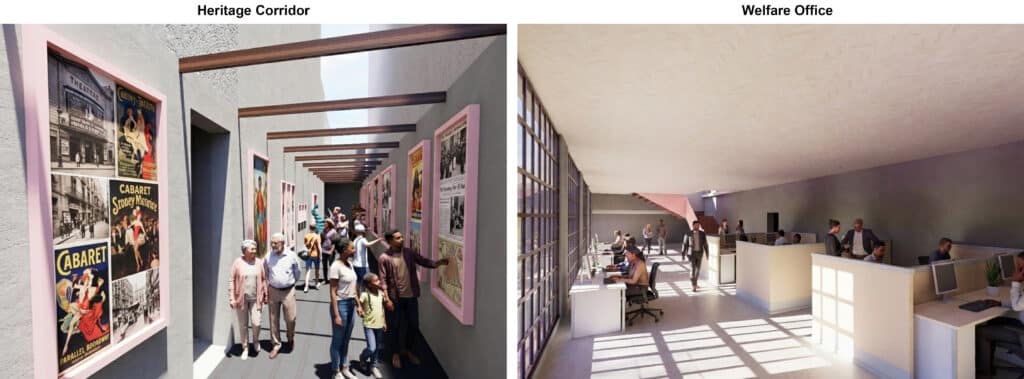
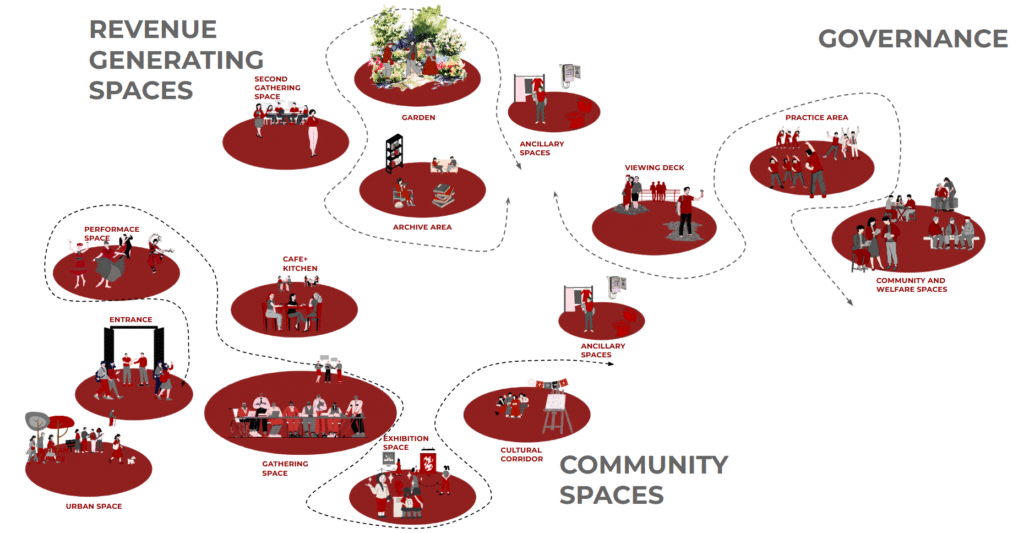
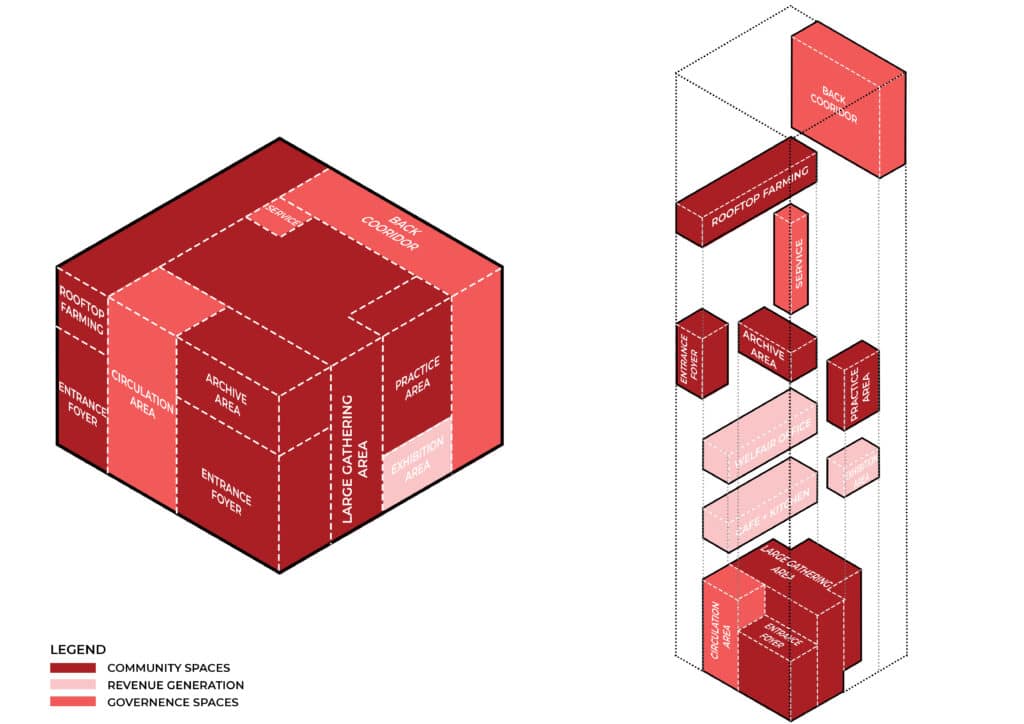

Fixed Spaces: Archives, practice rooms, and kitchen anchor the identity.
Flexible Spaces: Multi-height gathering zones, reconfigurable seating, and circulation corridors adapt to season and event.
Zoning
Masterplan
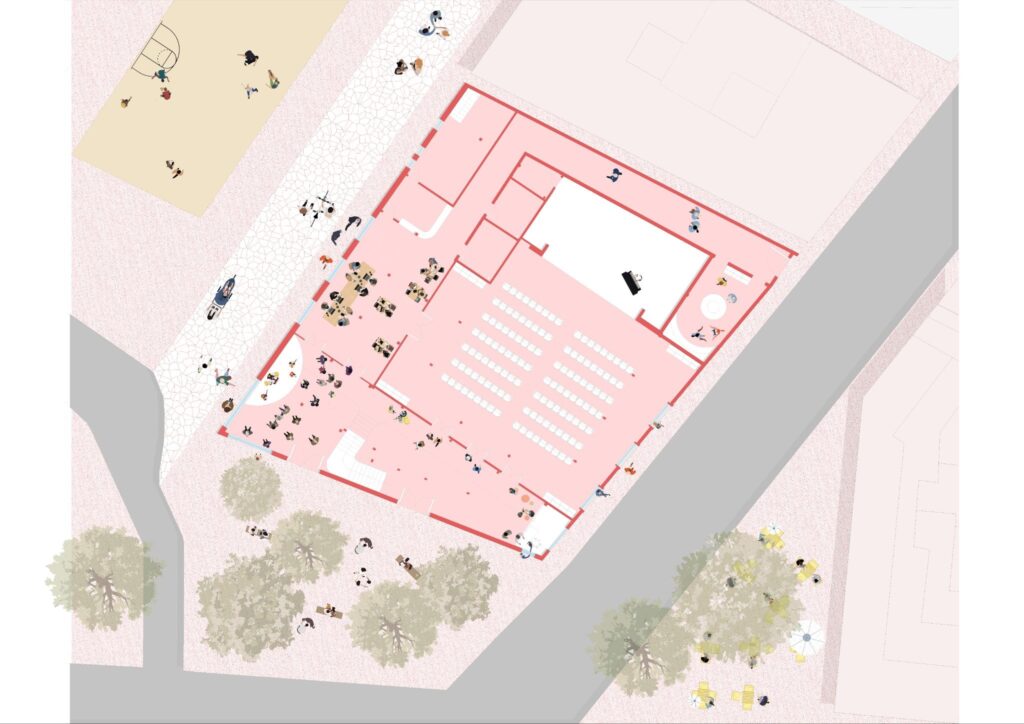
Spatial Relationships
Climate Threat Timeline
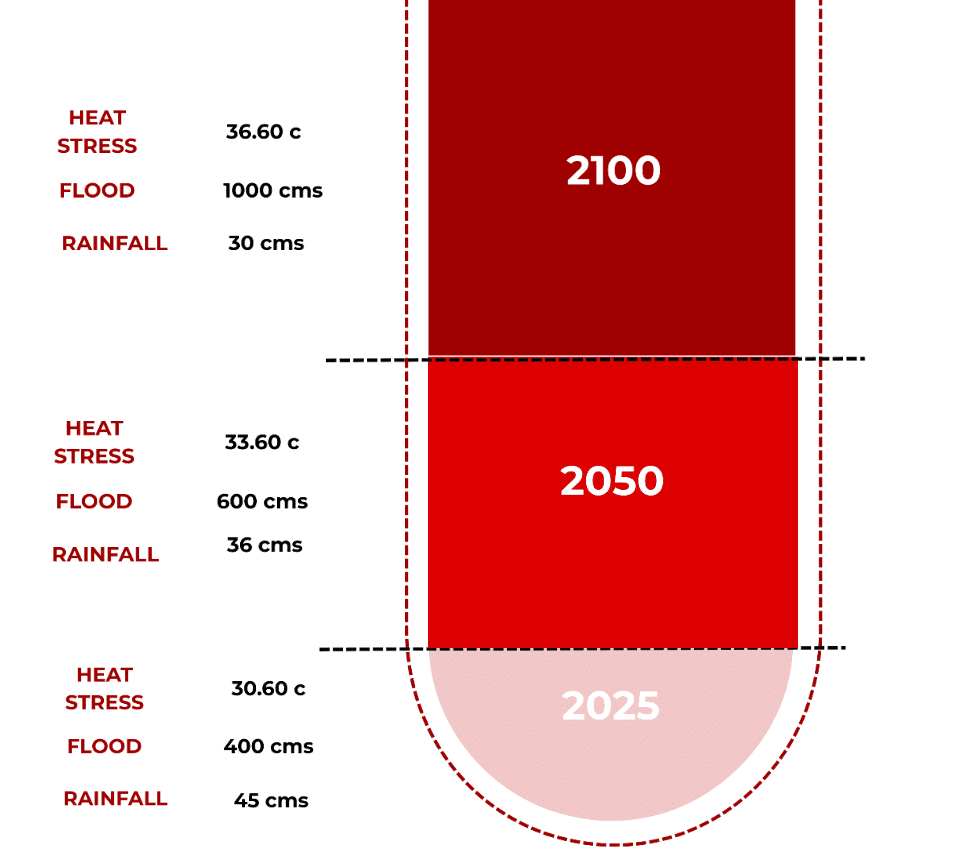
HEAT STRESS
Rising cooling demands.
Traditional passive systems fail.
Energy poverty spikes in the neighborhood.
FLASH FLOODS
Infrastructure saturation.
Need for porous surfaces and water retention strategies on site.
SYSTEMIC CRISIS
Structural overheating degrades materials.
Health crises for vulnerable populations.
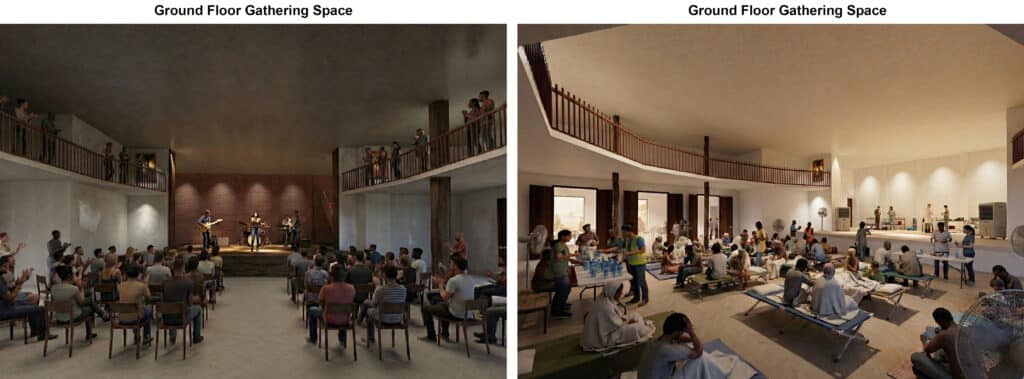
The building must act as a haven.
CLIMATE ANALYSIS
Climate Intervention
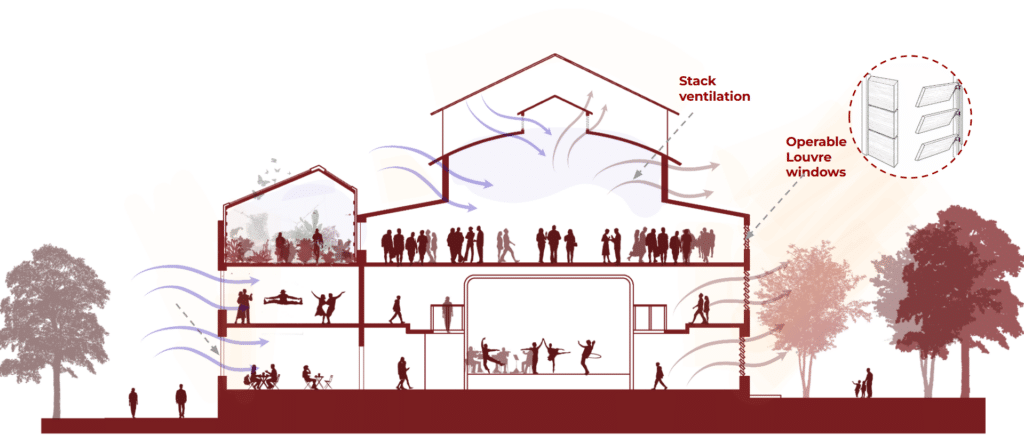
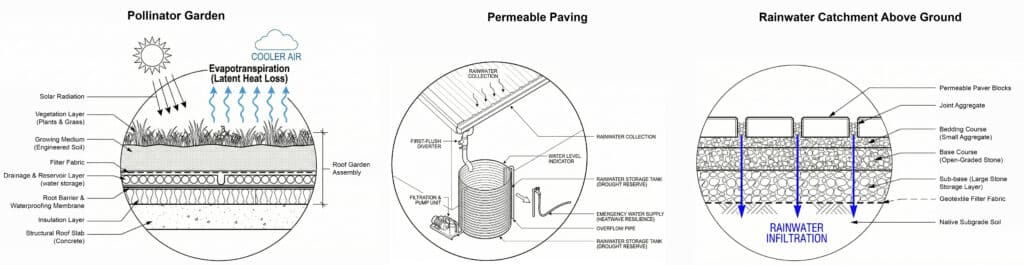
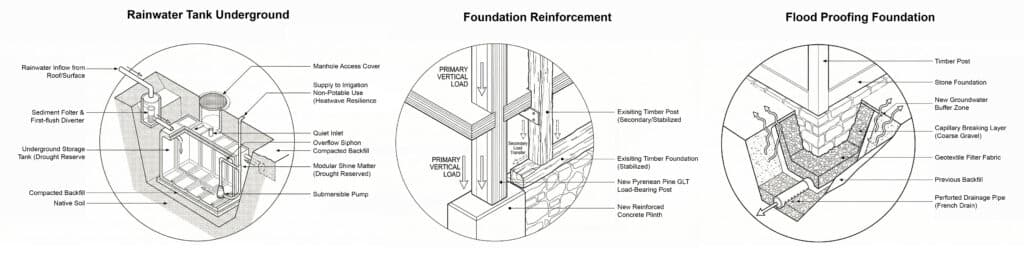
Climate Adaptation
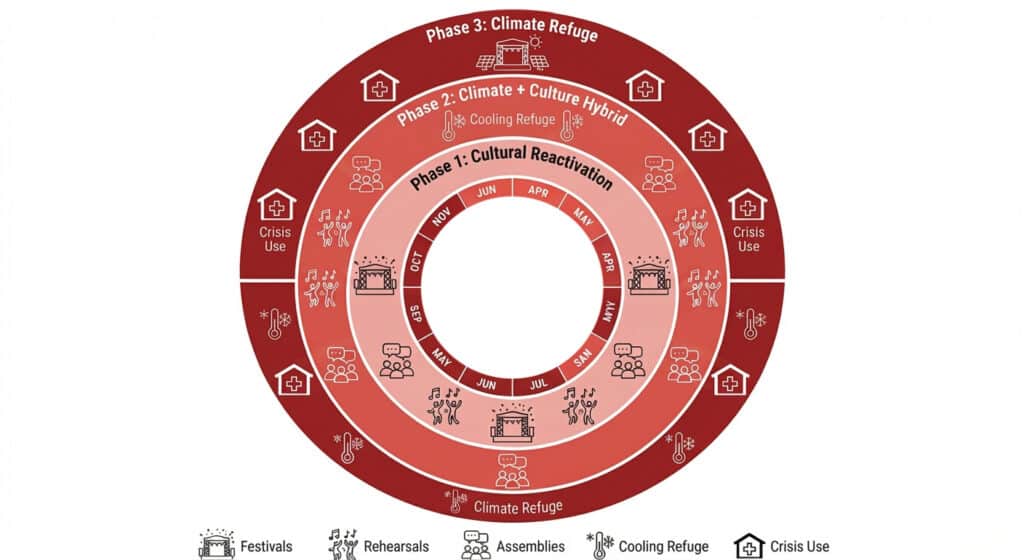
Phase 1 (2025-2035)
Cultural Reactivation. Flexible, reversible interventions. Ground floor gathering areas with modular partitions. Passive strategies (night ventilation) begin.
Phase 2 (2035-2050)
Climate + Culture Hybrid. Atriums activated as cooling commons. Structural adaptation with Glulam ensures resilience.
Phase 3 (2050-2100)
Climate Refuge. Architecture as infrastructure. Slabs and atrium act as thermal buffers. Cultural programming persists but prioritizes survival during extremes. Spaces prepared for temporary shelter.
Carbon Quantification of Existing Structure
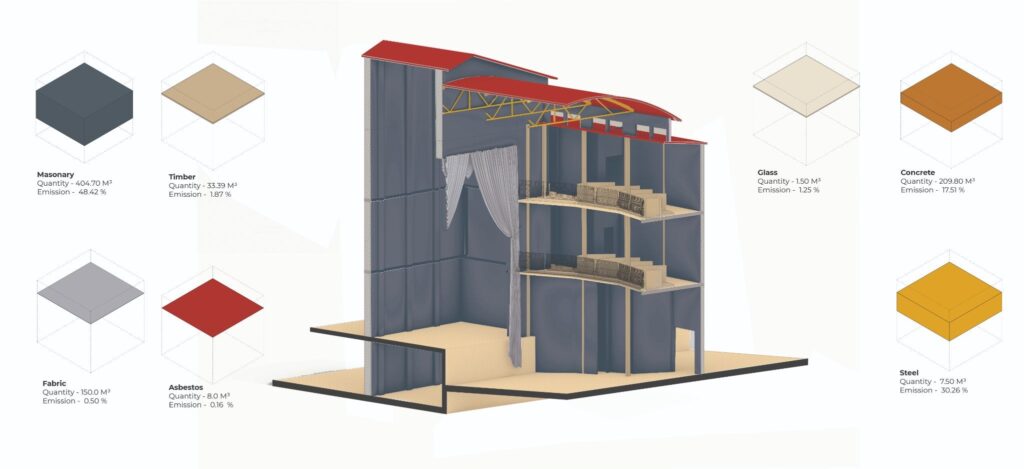
Carbon Calculations
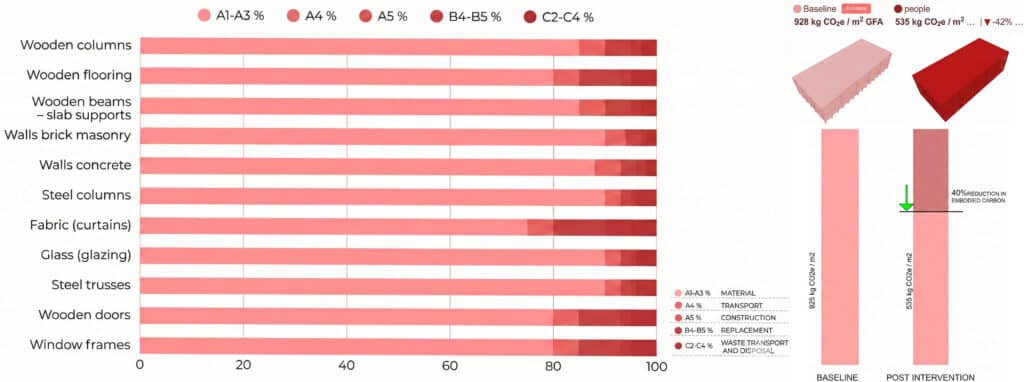
Material Reuse
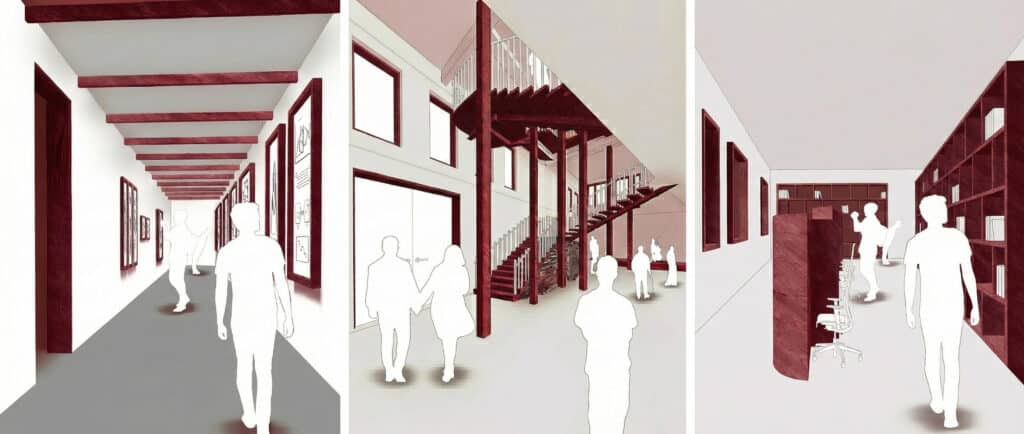
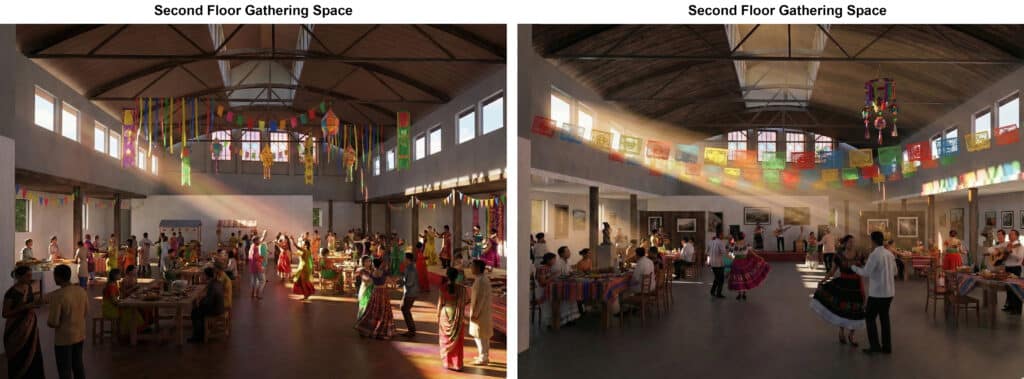
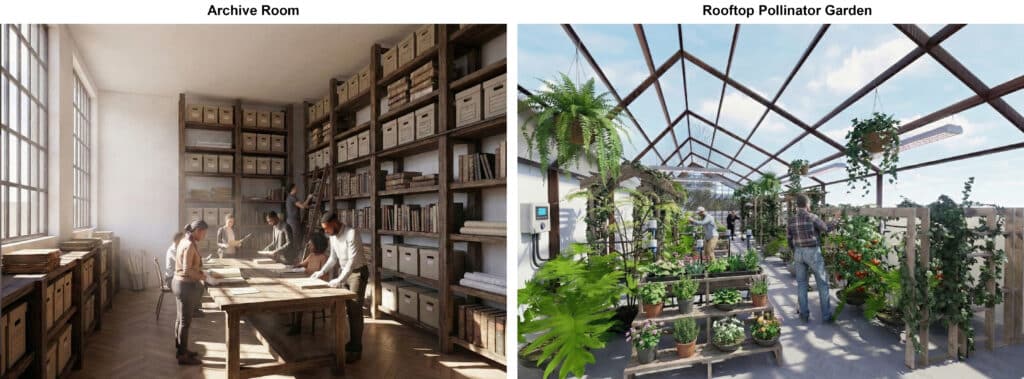
Renders