Thermo-Char
“Carbon-breathing panels: a regenerative material system for climate-adaptive architecture.”

Within the current global context of rapid change, integrated with the potentials of digital technologies, IAAC’s Master in Advanced Architecture (MAA) is committed to the generation of new ideas and applications for Urban Design, Self Sufficiency, Digital Manufacturing Techniques and Advanced Interaction.
In this context IAAC works with a multidisciplinary approach, facing the challenges posed by our environment and the future development of cities, architecture and buildings, through a virtuous combination of technology, biology, computational design, digital and robotic fabrication, pushing innovation beyond the boundaries of a more traditional architectural approach.
“Carbon-breathing panels: a regenerative material system for climate-adaptive architecture.”
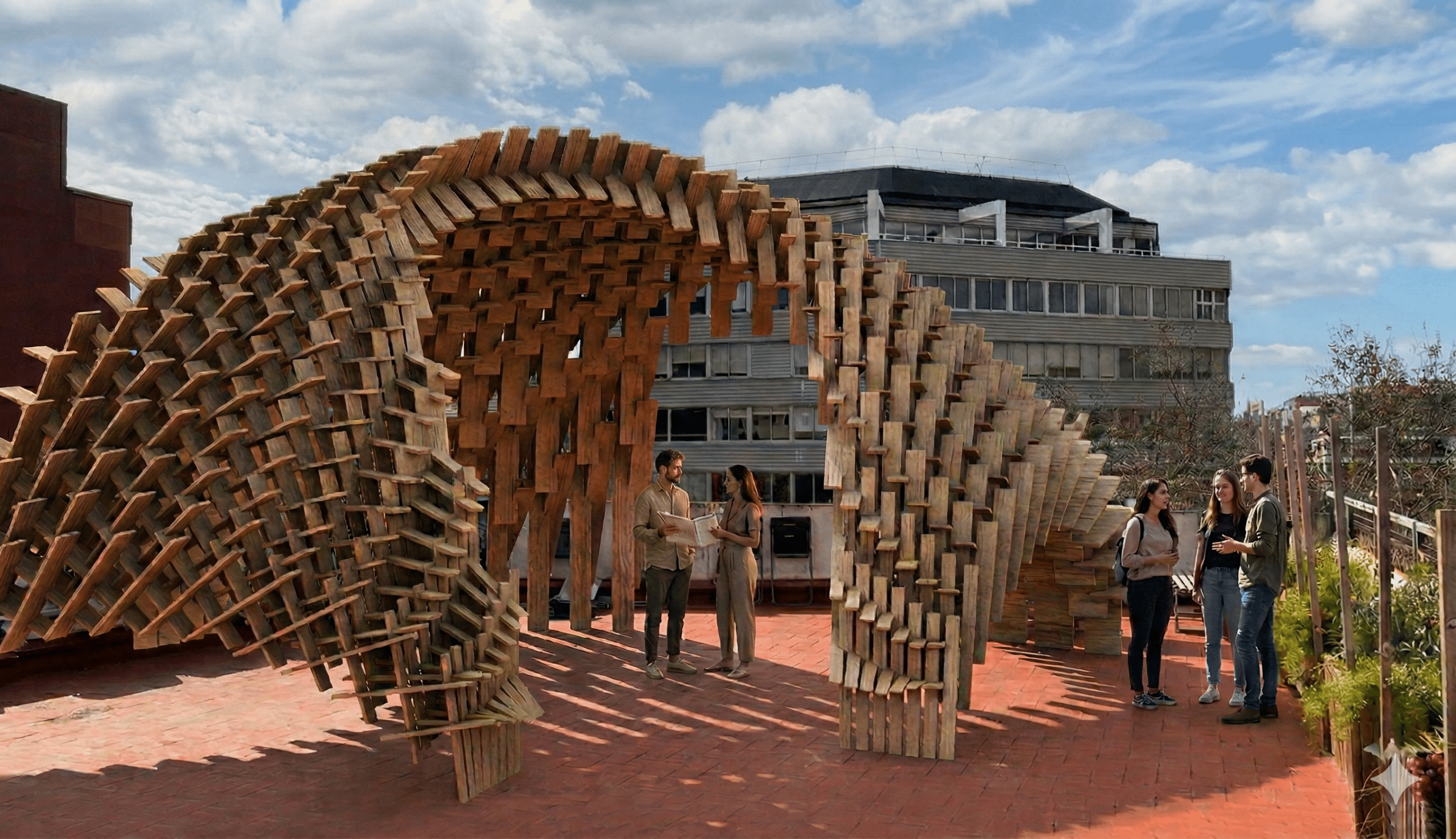
This project introduces a high-performance terrace pavilion that merges environmental data with advanced robotic fabrication. The design process began with a comprehensive solar and circulation analysis, identifying thermal hotspots and vantage points to determine the optimal balance between shaded gathering areas and open viewing corners. The resulting structure features a complex, interlocking timber geometry that … Read more
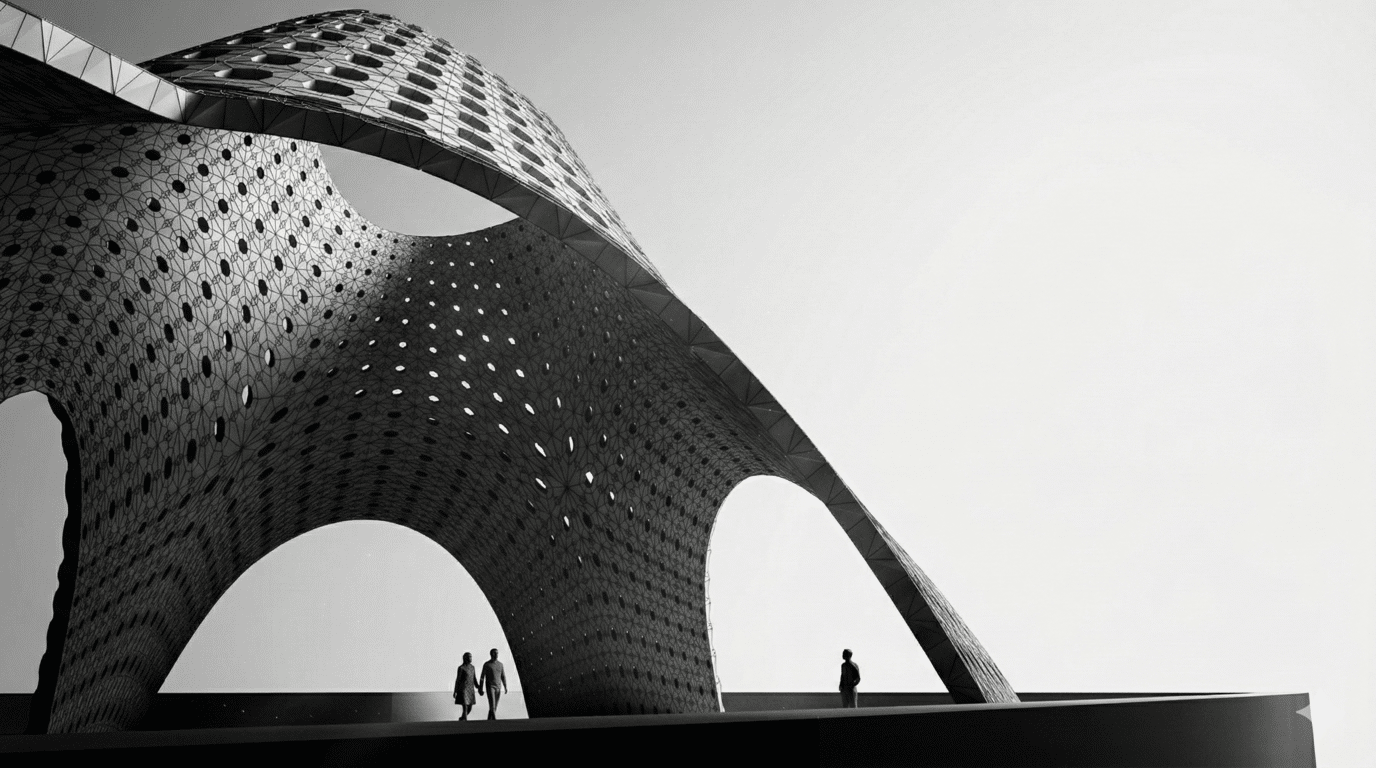
This research explores the intersection of physics-based form-finding and multi-objective evolutionary optimization to design a high-performance architectural pavilion. Utilizing Kangaroo2 for structural mesh relaxation and Wallacei for the genetic optimization of seating. The result is a topologically optimized structure where complex geometry is not merely aesthetic, but a direct manifestation of environmental data and structural … Read more
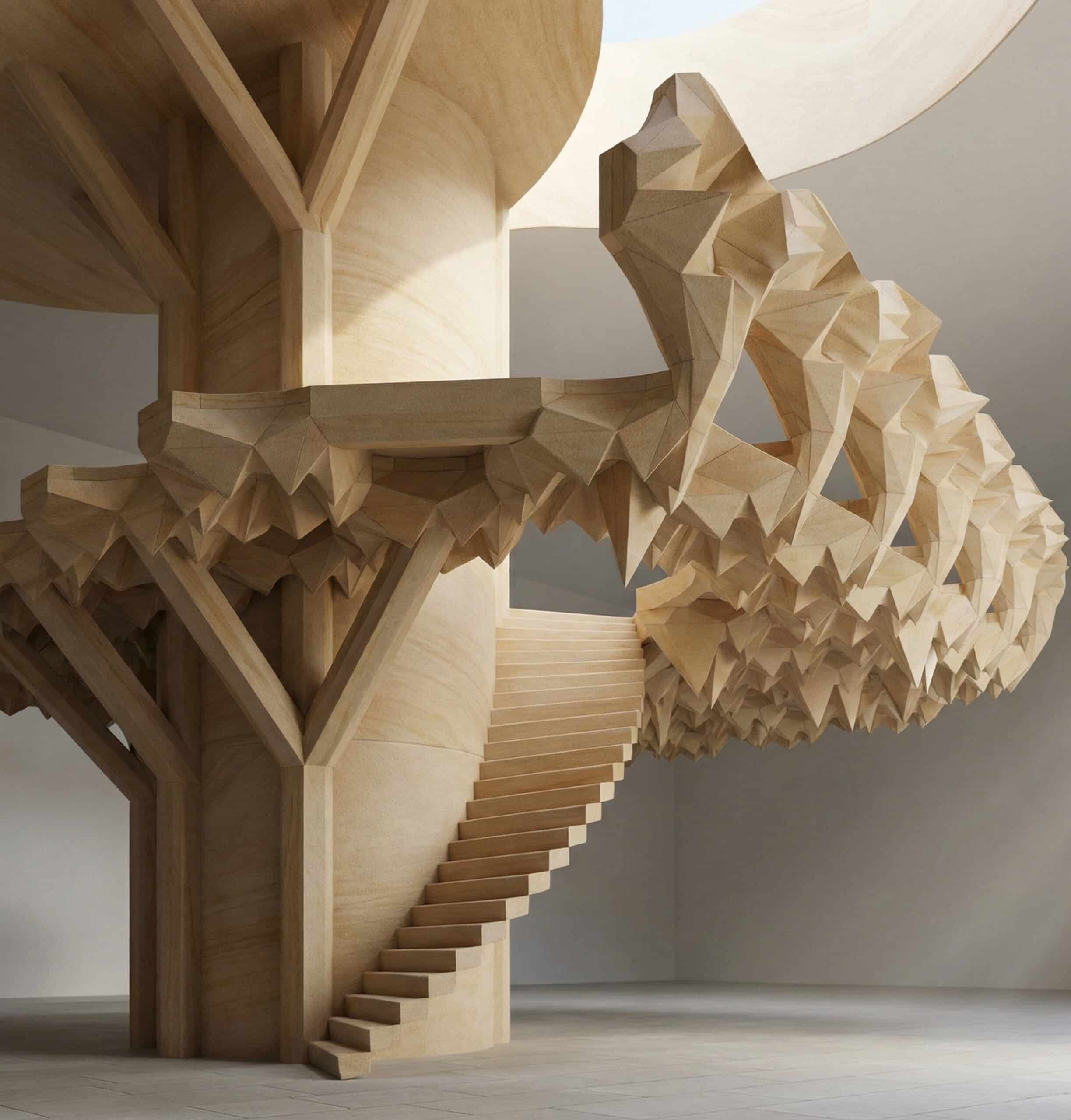
Our project explores the After Gaudí vision through the lens of an Interpretation Center—not by simply copying forms, but by deeply understanding his geometry and structural logic. Project Framing: A 2026 Centenary Monument in the Born District. The Interpretation Center: Defining the Cultural Program An Interpretation Center is not just an exhibition space; it is … Read more
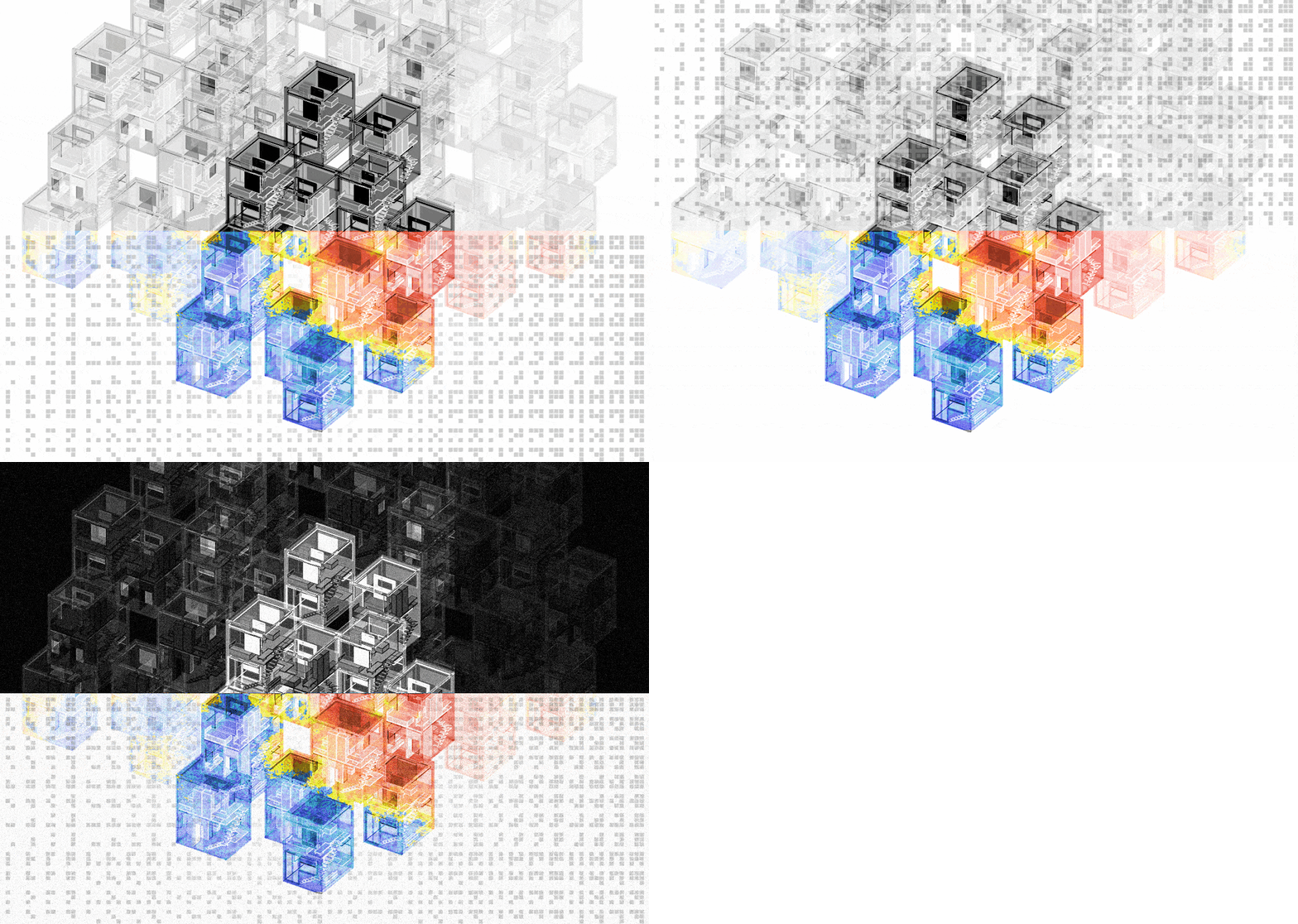
This project explores the climatic optimization of modular student housing units located in Barcelona, each with dimensions of 5m x 4m x 7.5m. The focus is on developing comfortable, energy-efficient living spaces by strategically analyzing and refining the positioning of openings, enabling effective cross ventilation, and incorporating humidity-absorbing esparto material as part of the building … Read more
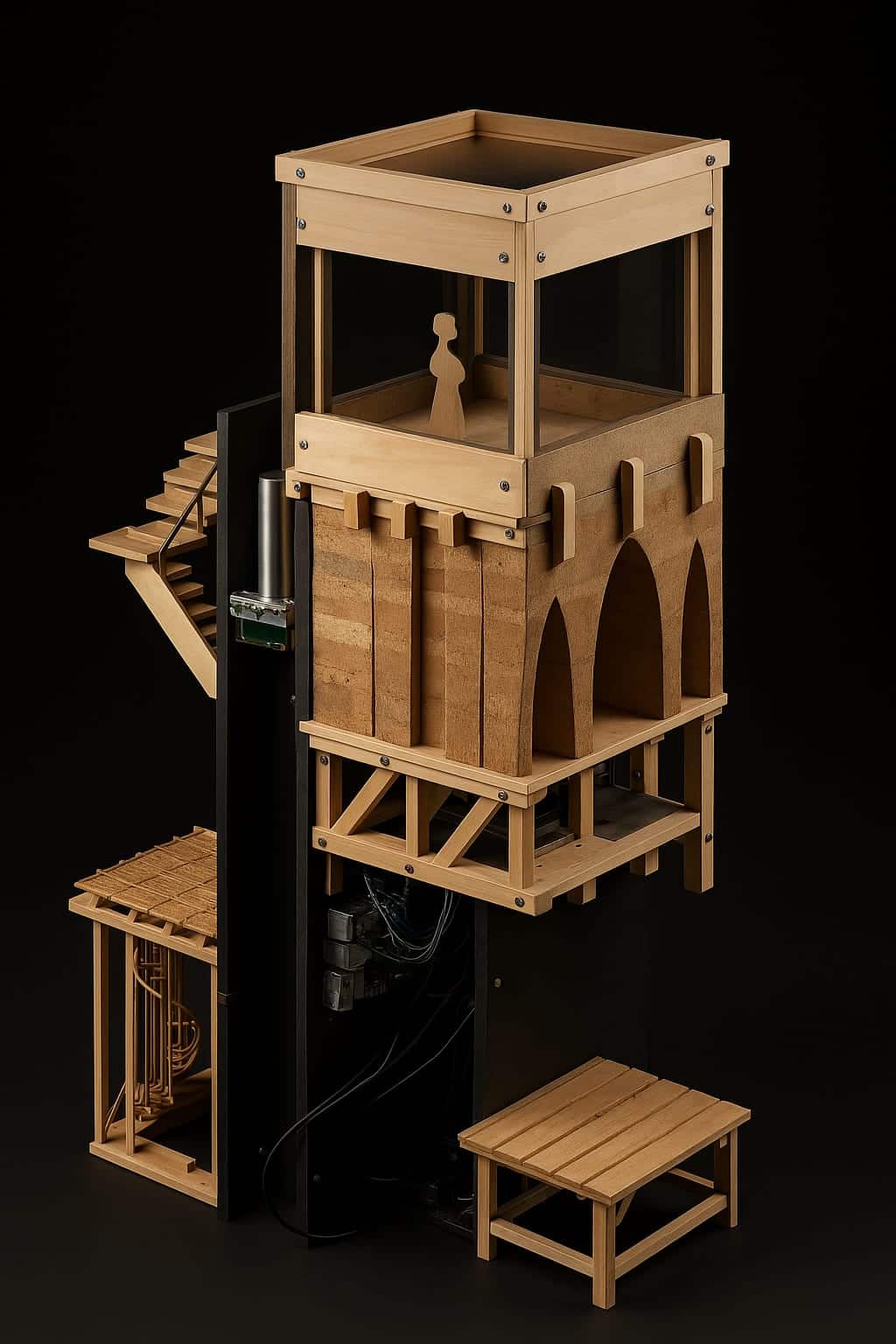
A space for human driven by human On a planetary scale, these dynamics of solar heating, infrared cooling, and moisture transport create global patterns in climate. This study explores how temperature and humidity generated through human exertion at different activity levels can be passively regulated to create adaptive microclimates tailored to occupant circadian rhythms and … Read more
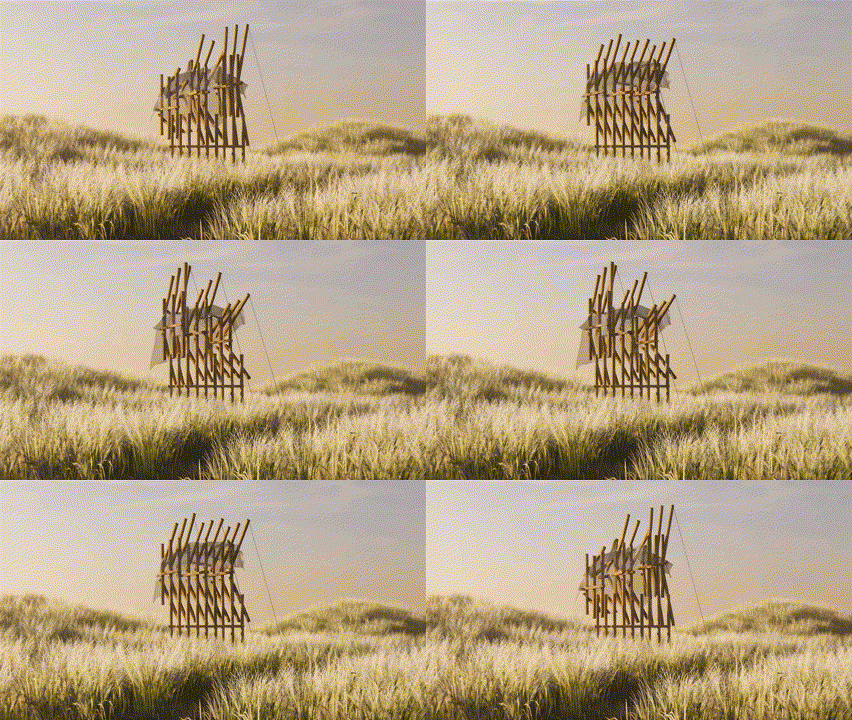
can robots and humans work hand in (hand) to create beautiful architecture? KOMA is a contemplative space, designed to be set in the landscape and allow for peaceful viewing, the form of KOMA is parametric and is able to sway with the wind through the use of tensile cables. The vertical timber elements were placed … Read more
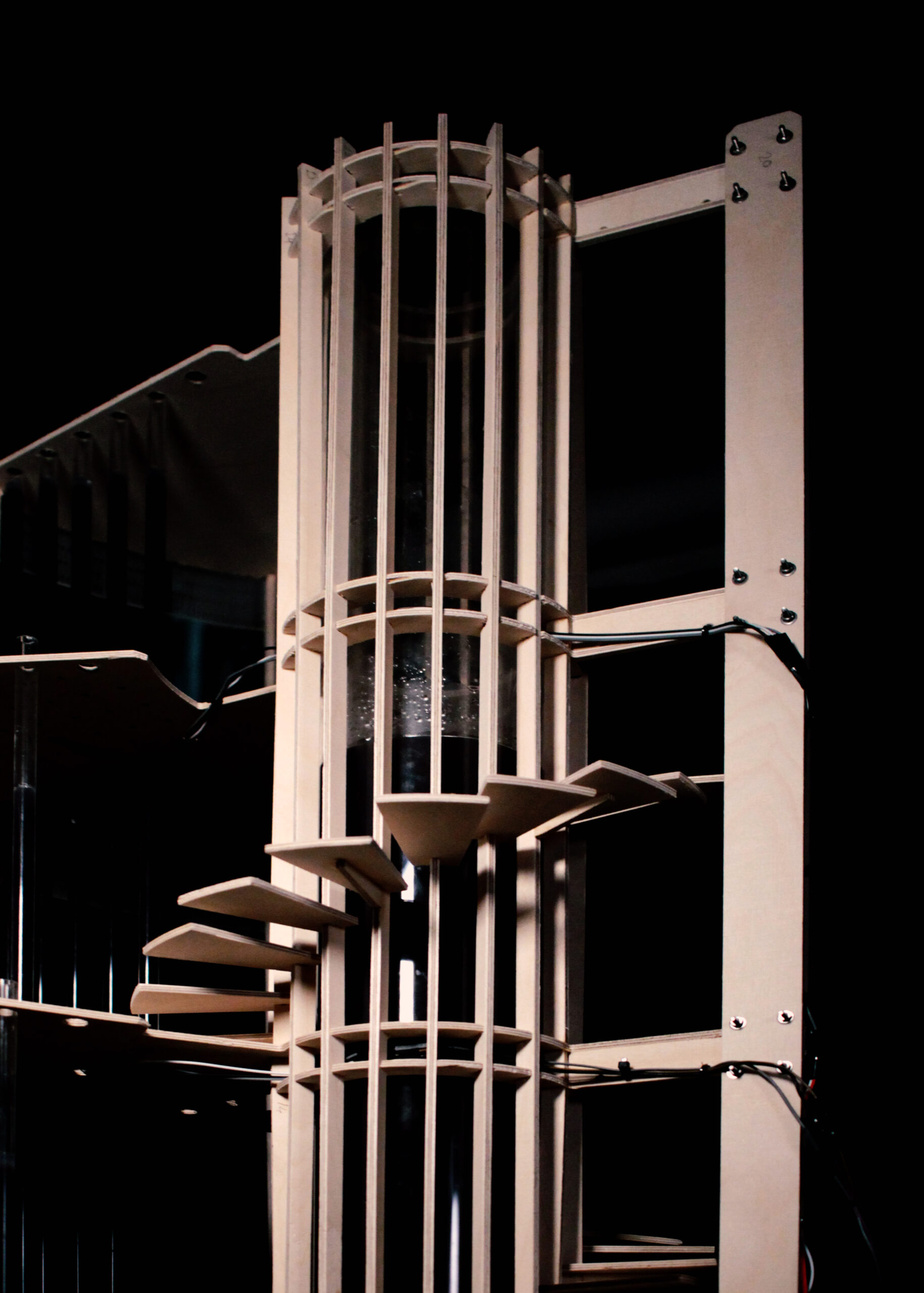
Energy Phenomena In the machine room model, Convection serves as the primary mechanism for transferring heat from the hot plate to the tubes containing thermochromic fluids. This convective process affects the temperature of the thermochromic liquid within the tubes, which in turn changes the chroma i.e, color intensity of the room, thereby influencing the circadian … Read more

GROUP 2 ASSEMBLAGE 1 – Components design Component A Component B Component C 2 – Custom assemblage method Component A Component B Component C 3 – Custom evaluation criteria 4 – Building the dataset Component A Component B Component C Assemblage comparison Component A Component B Component C 5 – Assemblage selection 6 – Architectural … Read more
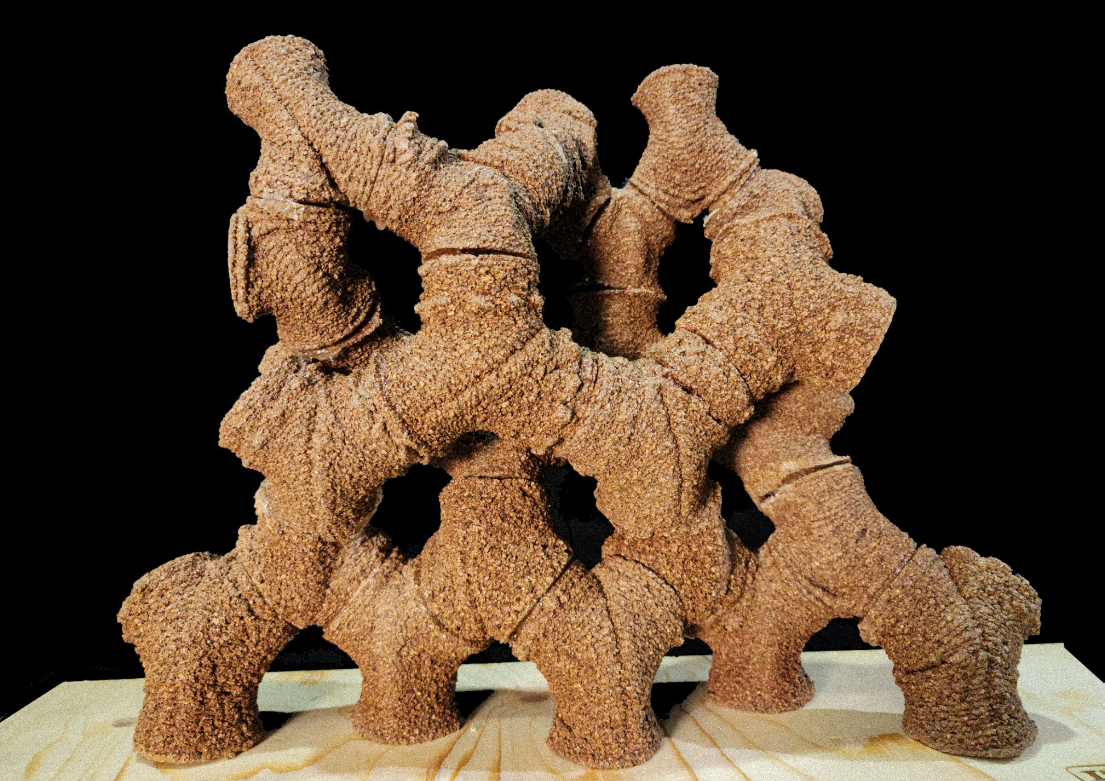
Non planar 3D printing cork based biomaterial CORK.CATENATION employs the novel methodology of non-planar 3d printing using Cork as the bio-material. The final outcome is a connection of interconnected lattice structures- broken down into modules that can be assembled to form a building skin that can morph according to the surface topology and solar radiation results.
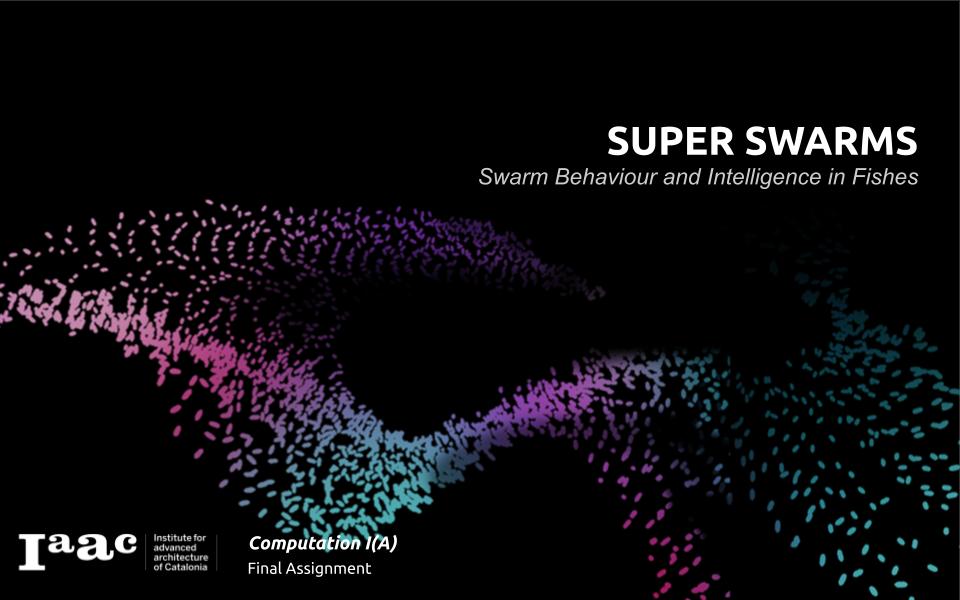
This project explores the application of swarm intelligence in simulating fish behavior evading predators. Utilizing computational algorithms inspired by natural swarms, the simulation aims to mimic the collective movement patterns of fish, optimizing their escape routes. By implementing principles such as repulsion, alignment, and cohesion, the model simulates the coordinated response of a fish swarm … Read more
Introduction to Neumatic Colloids Nematic colloids are materials with perpendicular surface anchoring embedded in planar nematic liquid crystal (NLC) cells. Topological defects, such as point defects and disclination lines, are a necessary consequence of broken symmetry in the system. In nematic liquid crystals (NLCs), defects manifest as isolated points and disclination lines, which can form … Read more

The project aims to simlulate & understand the behaviour behind the Northern Lights – Aurora Borealis. It is an attempt to explore magnetic fields within a domain of charges, strength & decay. The project develops further into simulating the phenomena via means of particle behavior in the Earth’s Atmosphere, dissipating a gradient of colors as … Read more