The MAA is a visionary master program with an innovative and open structure, mixing diverse disciplines, shaping professionals capable of producing theoretical & practical solutions towards responsive cities, architecture & technology.


Filters
Course

BANANA MATTERS

Abstract Banana Matters transforms discarded banana pseudostem biomass into carbon-sequestering architectural panels through material research, bio-based binders, and digital fabrication. The project addresses the untapped potential of nearly 525 million tonnes of annual banana waste by developing lightweight, low-carbon composites with acoustic and structural applications. Through iterative material experimentation, heat-press manufacturing, and mechanical and physical … Read more
vo:id

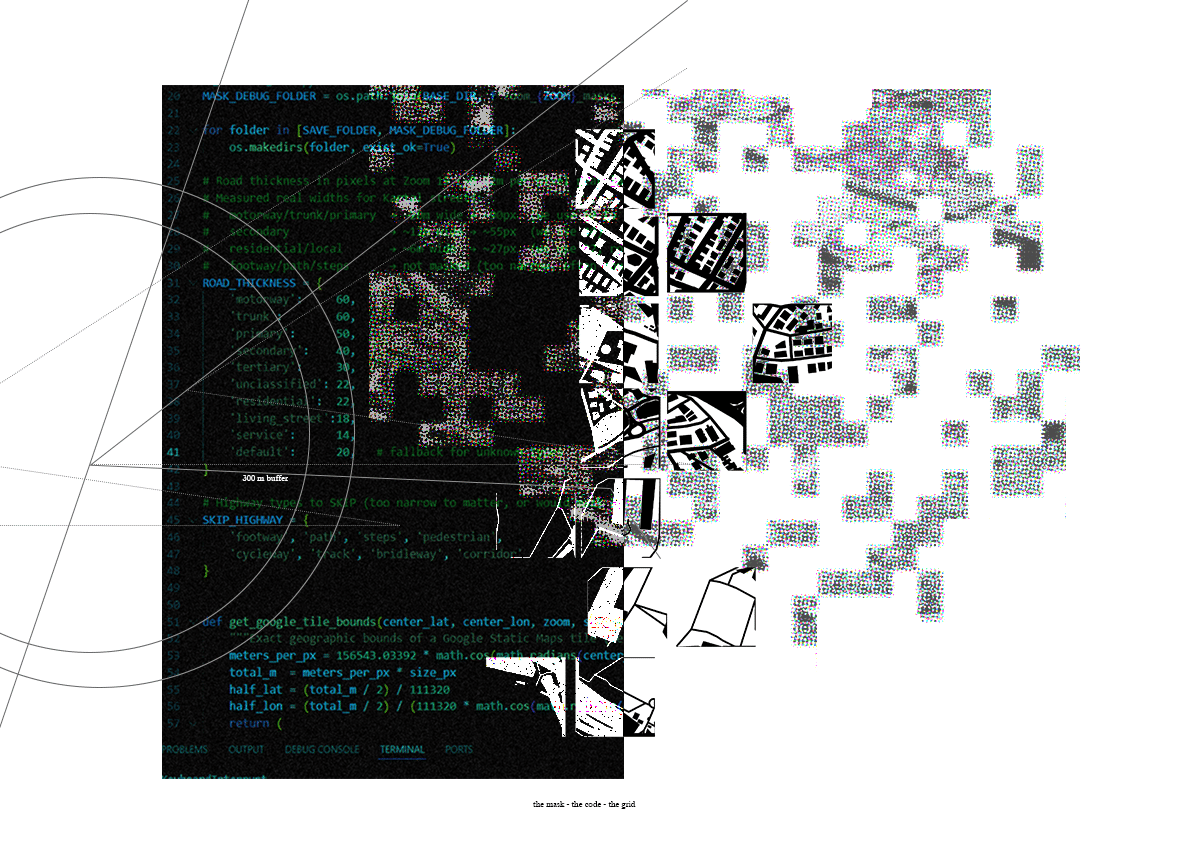
atlas of vacant spaces Urban vacant land in dense, post-industrial cities remains spatially invisible: absent from open datasets despite its potential to address chronic green space deficits. This thesis “vo:id” is a pipeline detecting, classifying, and prioritizing urban voids using only globally covered open data. Combining OSM-based negative masking, vision-language model classification, and human-in-the-loop validation, … Read more

BIO FLOW

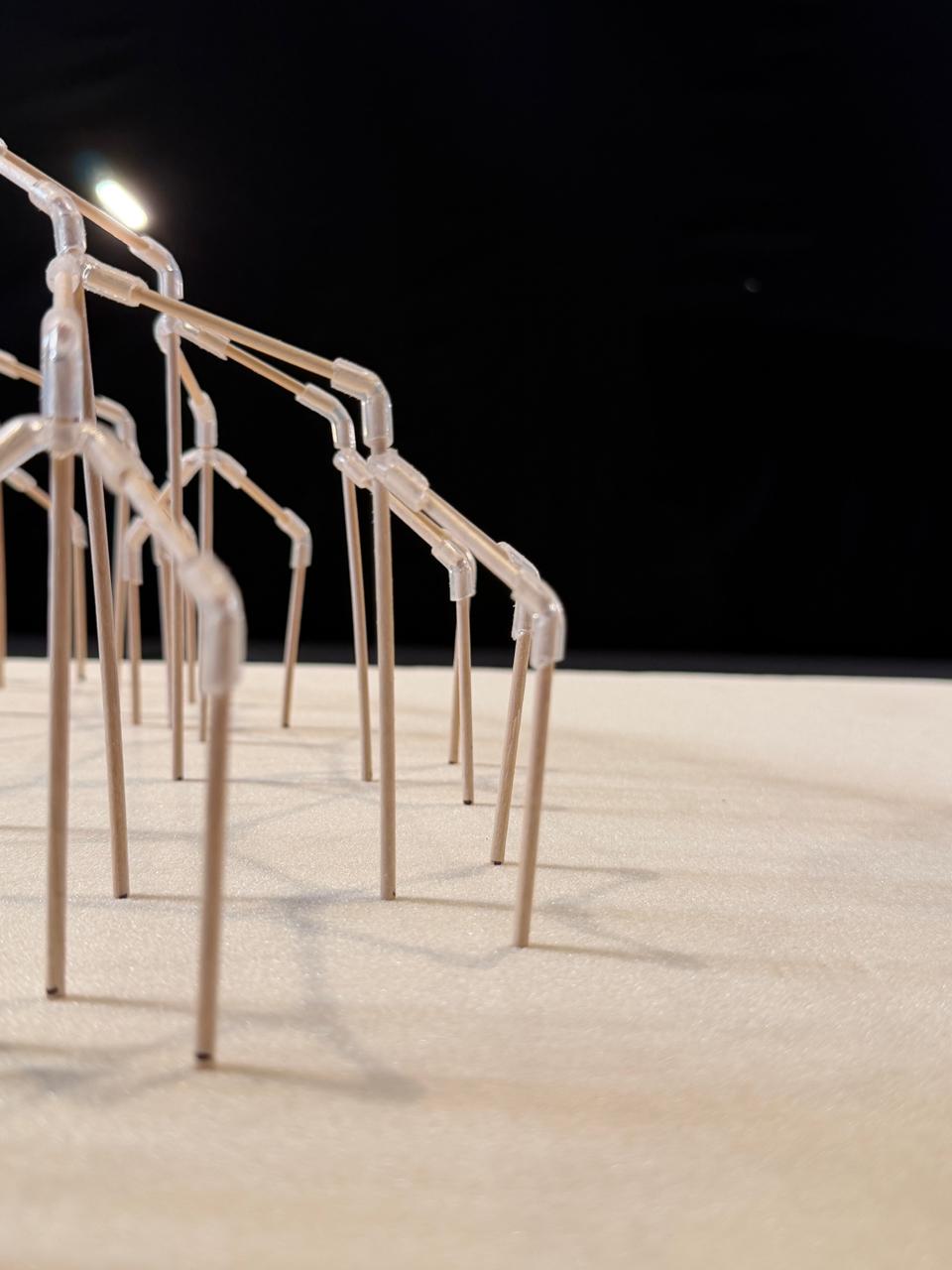
“ An AR-Driven Biomimetic Pavilion Generated Through Environmental Field Behavior “ Architectural pavilion design and fabrication often require complex digital workflows, technical expertise, and multiple visualization tools, making the process difficult for rapid concept development and real-world understanding. Designers also face challenges in translating organic, nature-inspired forms into fabrication-friendly structures.  BIOMIMICRY PAVILIONS Organic Geometry Biomimicry … Read more

Project Michigan

Using climate clustering, vernacular precedent research, and evolutionary optimisation to create climate-responsive design typologies when no established local precedent exists Overview Lovingly named after the very first test location, Project Michigan is a tool that provides climate-responsive design guidelines when no local vernacular precedent exists. Through scraping climate data and global vernacular information, it helps … Read more

Morphological Adaptation

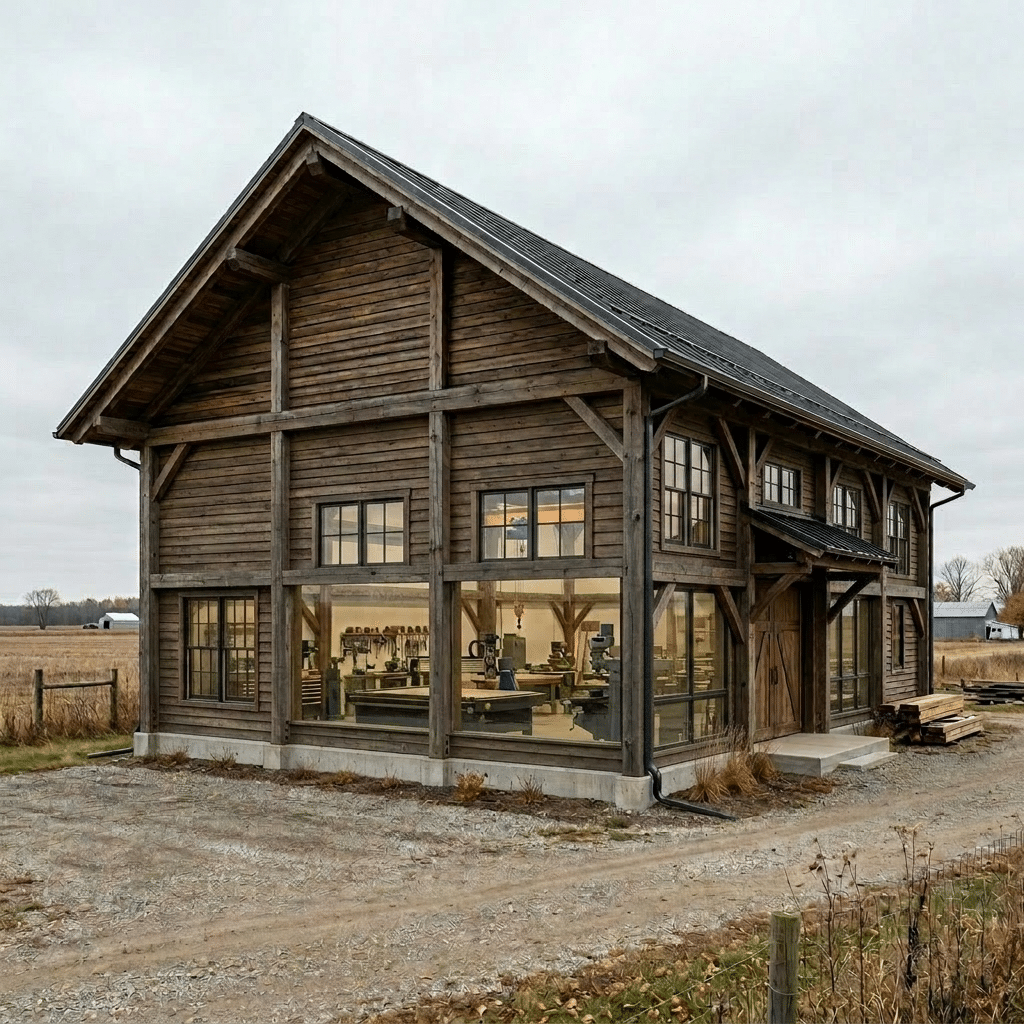
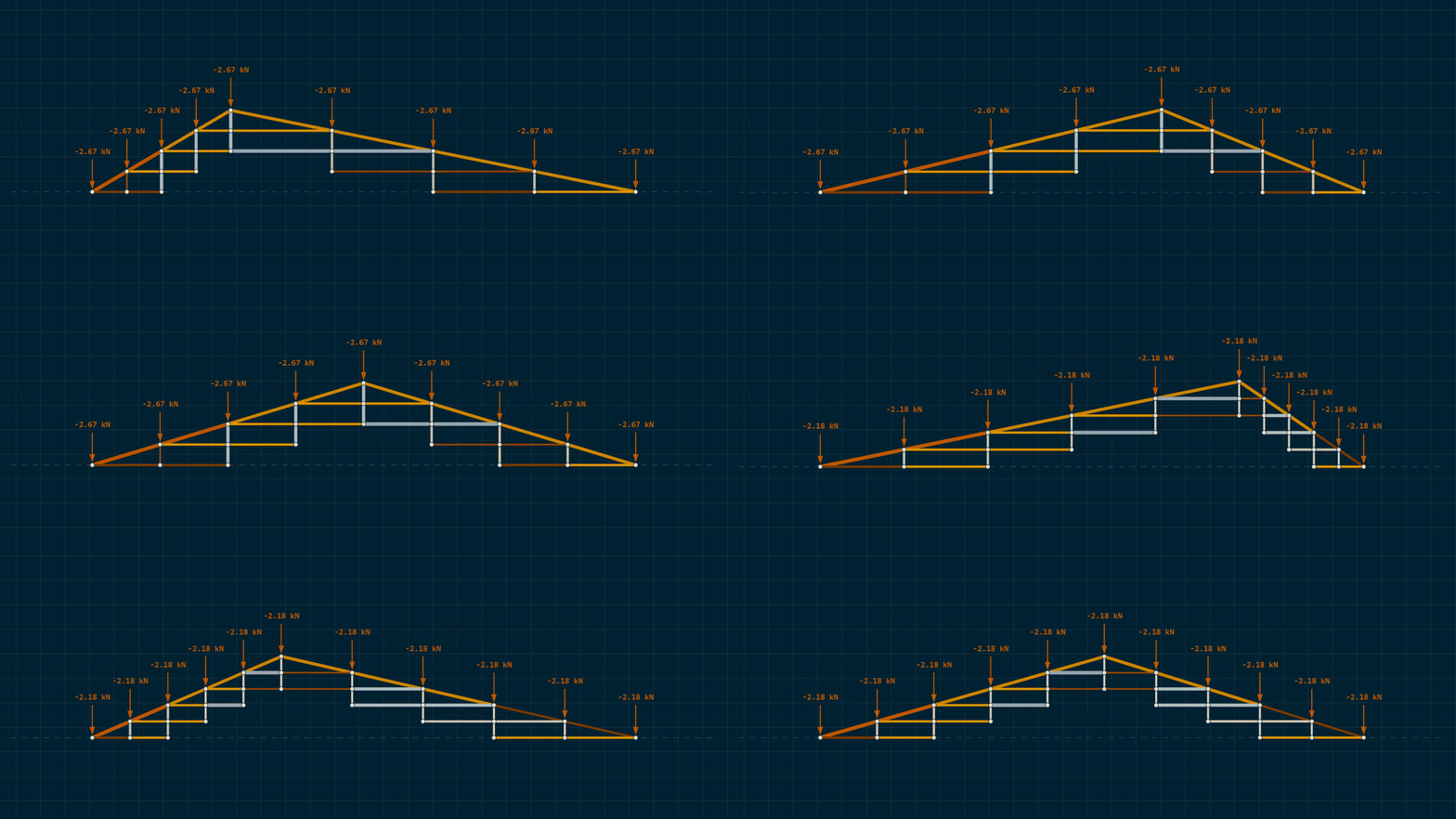
“How can a real-time parametric system effectively optimize architectural truss geometry when constrained by a limited, randomized inventory of salvaged timber? “ Geometry vs. Inventory Standard architectural forms assume infinite material. When constrained by random, reclaimed timber offcuts, the geometry itself must adapt to survive. “Shifting the structural burden from material continuity to joint frequency.”  Standard … Read more

After Gaudi – Facade ll

Site and Key Viewpoint Site and Key Viewpoint Core Project Keywords References FORM FINDING Final Form – Sketch Form Logic Variations and Catalog – Side Profile Form Finding Catalog Base Variation Catalog Convex concave Variation Catalogue Final Form – Levels OPENING & PLANTERS Opening’s Logic – Diamond Shape Opening’s Logics Catalog of Opening Opening Logic … Read more

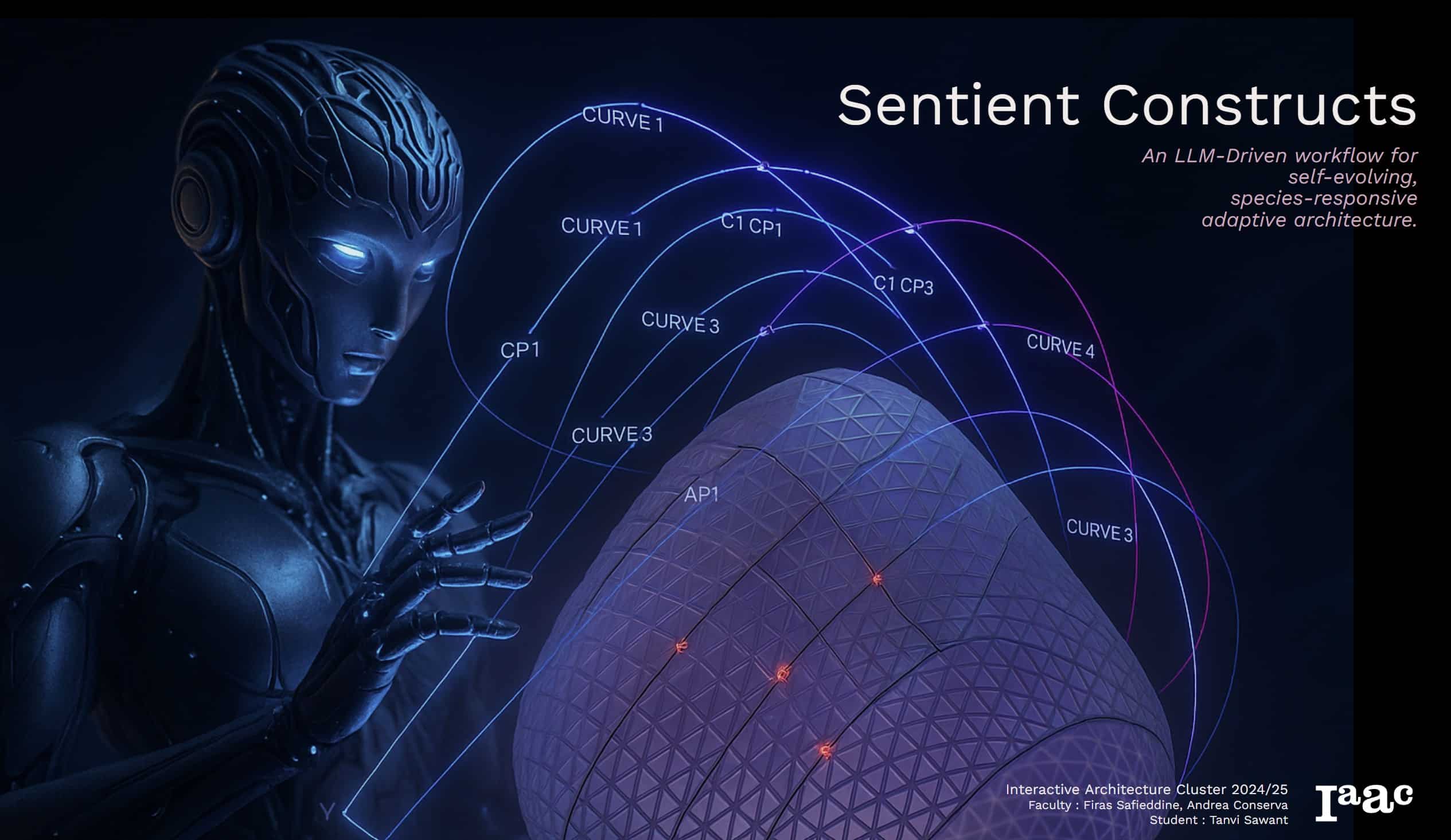
Sentient Constructs:

An LLM-Driven and GAN-Inspired Workflow for Self-Evolving, Species-Responsive Adaptive Architecture Abstract Contemporary architecture remains predominantly anthropocentric, prioritizing human needs while neglecting the urgent ecological imperative to design for multispecies coexistence. In response to biodiversity loss and environmental degradation, this research advances a new framework for cybernetic architecture – an adaptive, intelligent, and ecologically attuned design … Read more

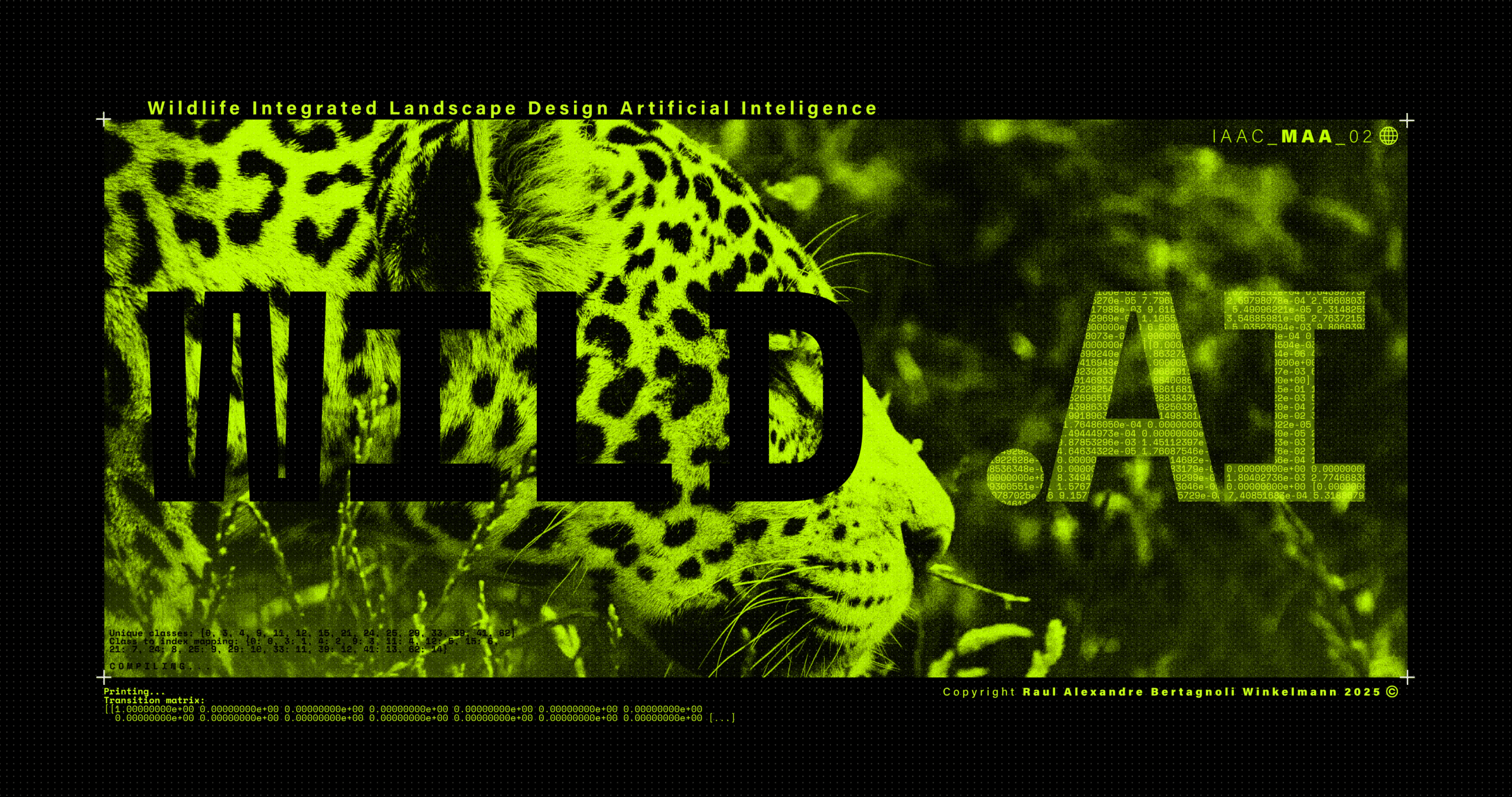
Wildlife Integrating Landscape Design Artificial Intelligence – WILD.AI — Term_III

CONTEXT DYNAMICS METHODOLOGY ANALYSIS By subtracting different scenarios from one another: The differences start to become clear as to what areas are consisently lost vs what areas are inconsistently lost. The latter being the one where planners and ecologists should focus their efforts the most if aiming to potentialize action. The figure becomes even clearer … Read more

InFormed

Manual floorplan generation for high-rise residential buildings is labor-intensive and often overlooks key environmental parameters, limiting the ability to quickly assess performance-based design alternatives. Demo :

EcoNodes

EcoNodes is an AI-driven urban planning platform designed to identify and prioritize the city’s most heat-stressed and impervious junctions for strategic green interventions. By combining satellite imagery, street view segmentation, and environmental datasets, EcoNodes highlights the urban nodes that lack vegetation, suffer from poor air flow, or trap excessive heat. The tool empowers planners to … Read more

CONTEXEPT

Contexept is a Context-to-Conceptualization framework integrating Generative AI and Additive Manufacturing to produce facades for specified architectural contexts in upscaled construction scenarios Architecture at the Edge of InnovationTechnological Breakthroughs that Reconfigured Design PossibilitiesTime// Architectural Style//Technology //Architecture has never been static   it continuously absorbs and reflects the technologies of its time. From Industrial Revolution, prefabrication and … Read more

Flow – SIGHT: De- coding urban mobility

Introduction Urban traffic congestion is more than just an inconvenience—it’s a global challenge tied to pollution, stress, and wasted time. While cities are turning to AI-driven systems to ease the gridlock, the question remains: Do these technologies actually perform better than traditional methods?Flow – SIGHT is a comparative research project that investigates traffic systems across … Read more

BARA

Carbon Envelopes Toward Carbon-Sequestering Architectural Systems through Biochar-Concrete and Hybrid Fabrication The construction industry is one of the biggest contributors to climate change.We’re facing a paradox: The materials we use and how the construction industry works today are destroying our chance of having a future. Besides the emissions, there are other problems that we need to … Read more

Portfolio Enhancer

Our portfolios are dynamic records that show not only our completed projects but also the changing methods styles and visual languages we use as designers and architects. However as visualization trends change—from stylized schematics to photorealistic renderings—our older images may begin to seem out of place. With the Portfolio Enhancer a proof-of-concept interface that uses … Read more

AQUA.NEST

AQUA.NEST: An AI-Powered Decision Support Toolbox for Adaptive Urban Design Using Nature-Based Solutions in Flood-Exposed Coastal Cities Coastal urban flooding is emerging as one of the most urgent climate challenges of our time. Without strong adaptation, annual flood damages could reach €930 billion globally by 2050, even with improved infrastructure (OECD, 2020). Rising sea levels and … Read more