It seems we can’t find what you’re looking for. Perhaps searching can help.
Within the current global context of rapid change, integrated with the potentials of digital technologies, IAAC’s Master in Advanced Architecture (MAA) is committed to the generation of new ideas and applications for Urban Design, Self Sufficiency, Digital Manufacturing Techniques and Advanced Interaction.
In this context IAAC works with a multidisciplinary approach, facing the challenges posed by our environment and the future development of cities, architecture and buildings, through a virtuous combination of technology, biology, computational design, digital and robotic fabrication, pushing innovation beyond the boundaries of a more traditional architectural approach.
Course: MAA02 25/26 Digital Urban Landscapes
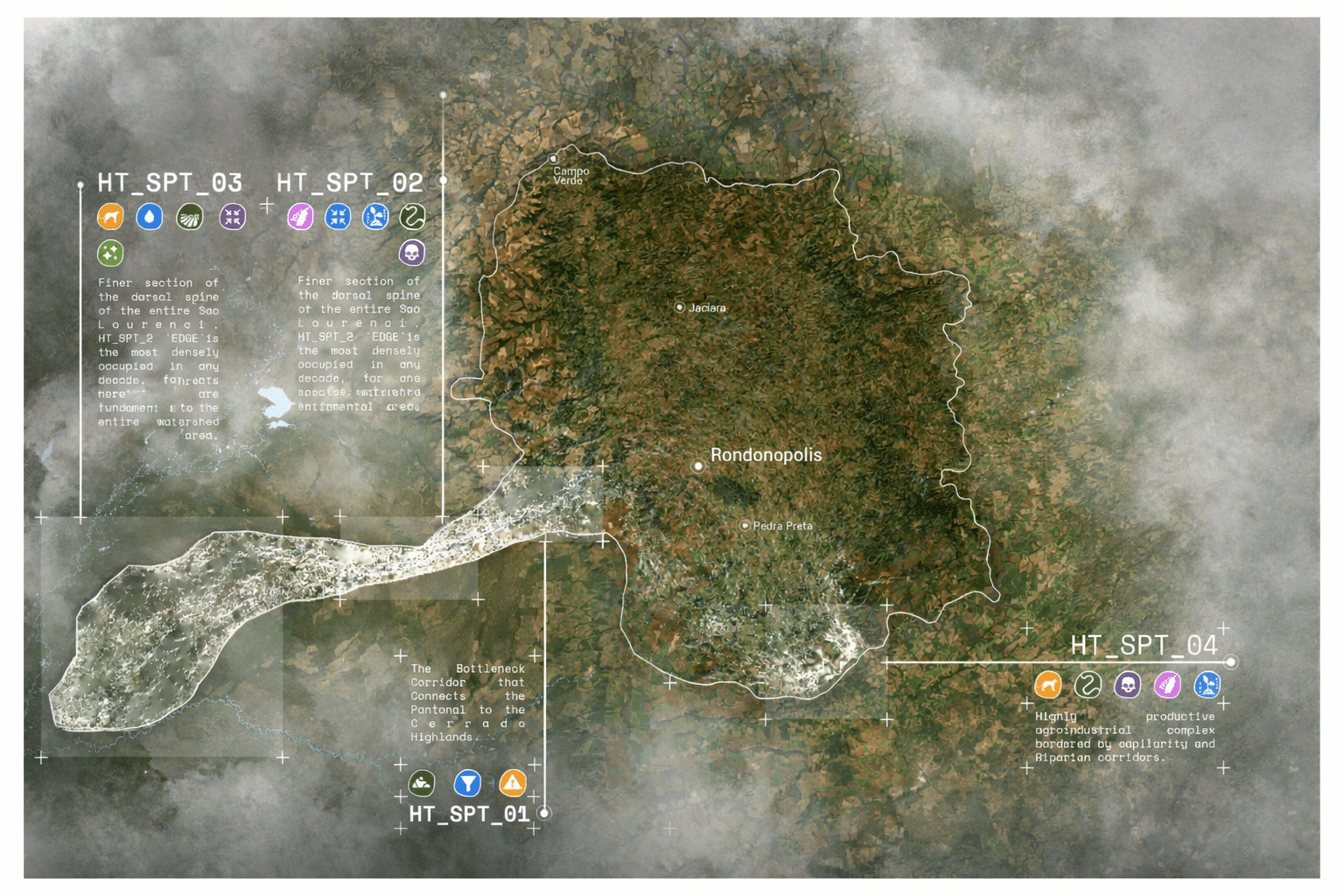
Credits: Wild AI by Raul Alexandre Bertagnoli Winkelmann, MAA02 2024-25
Intro Description & Structure
Urban landscapes are particularly vulnerable as well as relevant spaces where we can observe, assess, mitigate and adapt to major challenges that our cities are facing, such as climate change effects, biodiversity loss, urban sprawl and rapid socio-economic shifts. The digital transition is providing promising technologies to support planners, professionals, academics and decision makers in understanding the context, simulating scenarios, proposing and testing solutions.
Artificial intelligence and machine learning are powerful tools to achieve the aim of assessing, designing and monitoring open spaces that are ecologically sound, socially attractive and functionally efficient. The urbanism of the past decades often underestimated the role open spaces can play in the regulation and adaptation of urban landscapes, thus putting them at stake of merely speculative investments or neglect. Nowadays several researches and international policies and frameworks (like the EU Green Deal and the Nature-positive Cities initiative by the World Economic Forum) are reorienting urban planning towards more environmentally sensitive and people-centred patterns.
With the help of data-driven and AI-aided approaches we will identify effective workflows to better understand urban landscape amid the uncertainties of climate emergency, vulnerable and marginalised communities, changing cultural and economic conditions. Moreover we will develop tools and methodologies to outline predictive scenarios, design guidelines and adaptive strategies.
Modular construction, circular economy, urban ecology and digital fabrication are among the leading topics that will inspire the thesis path of the students leveraging from the expertise of the professionals involved.
view Syllabus & FacultyNothing Found