The MAA is a visionary master program with an innovative and open structure, mixing diverse disciplines, shaping professionals capable of producing theoretical & practical solutions towards responsive cities, architecture & technology.


Filters
Course

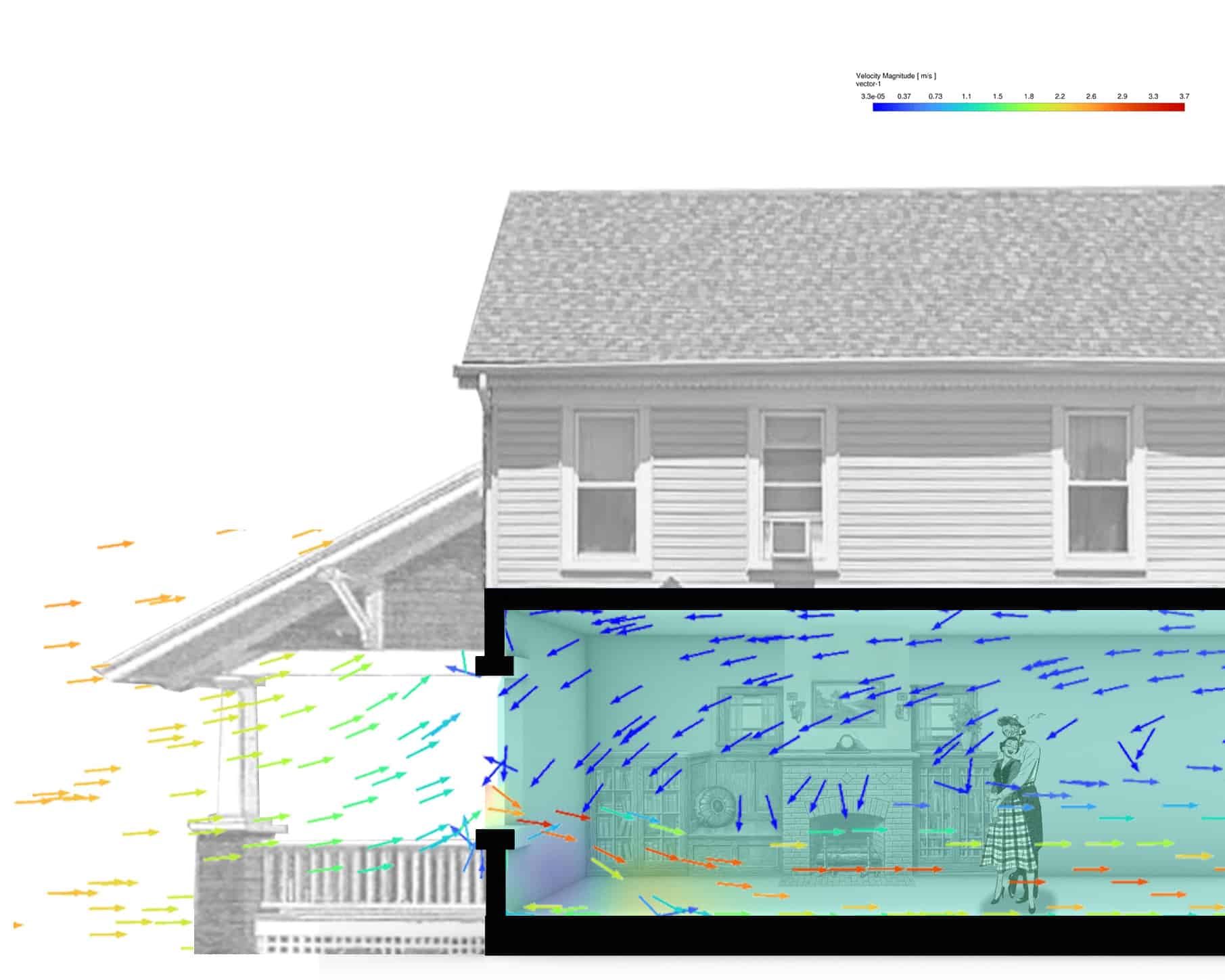
Go With The Flow

Computational Fluid Dynamics for Natural Ventilated Systems primarily located within the United States The Problem within Context: Sears Catalogue from 1930s to 1950s United States. The American Dream is a phrase that has taken meaning in the ownership of a home with a white picket fence. The phrase was popularized in the 1930s after WWI … Read more

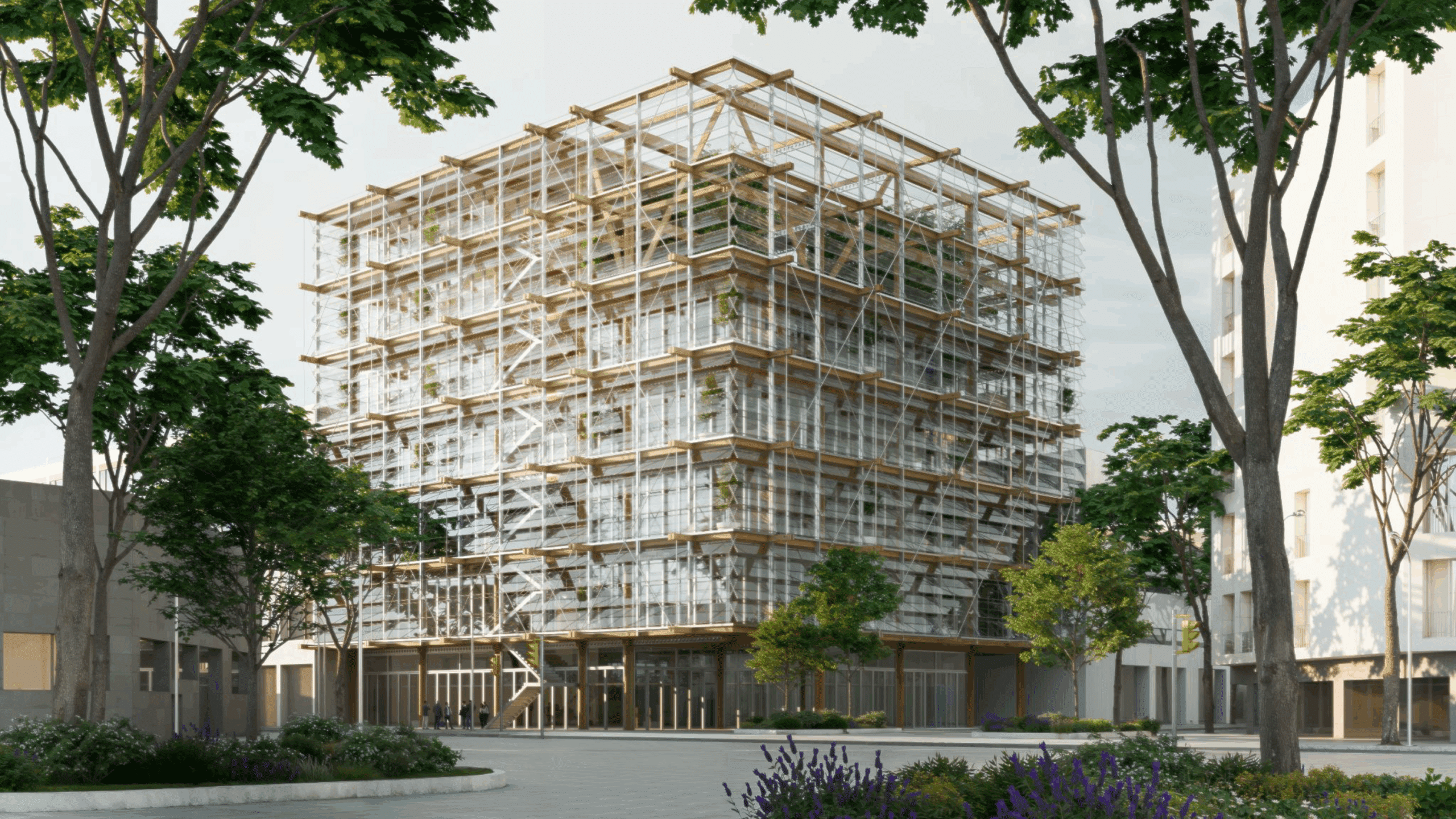
TÀN 58

TÀN 58 is a seven-story student housing project located in Poblenou, an industrial district of Barcelona. The building’s form and orientation were shaped through computational studies that optimized daylight access and solar radiation across the site. This analysis led to the introduction of two central atriums, which act as vertical heat sources and organizational cores—spaces … Read more

Flow – SIGHT: De- coding urban mobility

Introduction Urban traffic congestion is more than just an inconvenience—it’s a global challenge tied to pollution, stress, and wasted time. While cities are turning to AI-driven systems to ease the gridlock, the question remains: Do these technologies actually perform better than traditional methods?Flow – SIGHT is a comparative research project that investigates traffic systems across … Read more

HYGROHOUSE

Self Sufficient Buildings The project investigates esparto grass as a natural humidity moderator within urban student housing. By analyzing its hygroscopic response and recording relative humidity variations, a passive air filtration system is developed. Anchored in a double landscape strategy, the design links material cultivation, extraction, and environmental performance across urban and ecological contexts. Carrer de … Read more

Re- Rio Infrastructural Justice

Re-Rio is a vision to bring dignity, connection, and opportunity to the Gradim fishing community in Rio de Janeiro. Faced with poor infrastructure and social neglect, this project reimagines housing and public space through sustainable, affordable, and flexible design. It creates cool, breathable homes, shared learning spaces, and eco-tourism paths that celebrate local culture. By … Read more

AQUA.NEST

AQUA.NEST: An AI-Powered Decision Support Toolbox for Adaptive Urban Design Using Nature-Based Solutions in Flood-Exposed Coastal Cities Coastal urban flooding is emerging as one of the most urgent climate challenges of our time. Without strong adaptation, annual flood damages could reach €930 billion globally by 2050, even with improved infrastructure (OECD, 2020). Rising sea levels and … Read more

Synthome

This object functions as a sculptural lamp, where the complex lattice of organic openings serves both an aesthetic and functional role. The irregular perforations allow light to escape in unpredictable and dynamic patterns, casting intricate shadows and gradients onto surrounding surfaces. As light passes through the varying densities and scales of the geometry, it diffuses … Read more

EcoTessara

MANIFESTO In the tightly packed neighborhood of To Kwa Wan, space is limited and buildings are pressed close together, making it tough to design high-rises that feel light, breezy, and livable.This project uses generative design tools like Grasshopper and Wallacei to explore better ways of shaping a new tower near Kwun Shan Court.The goal is … Read more

Contexept

Contexept is a design-to-fabrication workflow that uses AI to generate context-aware façade designs and turn them into 3D-printable architectural modules. By combining semantic keyword clustering, image generation, and robotic clay printing, the system transforms abstract ideas into buildable, site-sensitive forms. It bridges digital creativity with physical construction, making AI a meaningful collaborator in architecture. Architecture … Read more

EMI: Engine for Morphological Integration Vol II

A Methodological Approach to Urban Morphology and Hybrid Energy Systems in the Global South Project Statement: “Even as we advance in Energy Innovation, our cities continueto grapple with deep inequalities. In this research, I proposerethinking Urban Morphology—not merely as the physicalform of our settlements, but as a strategic lever for equitableenergy solutions. The conceptual Energy-Morphology … Read more