The MaCAD is a unique online programme training a new generation of architects, engineers and designers ready to develop skills into the latest softwares, computational tools, BIM technologies and AI towards innovation for the Architecture, Engineering and Construction (AEC) industry.

Filters
Course

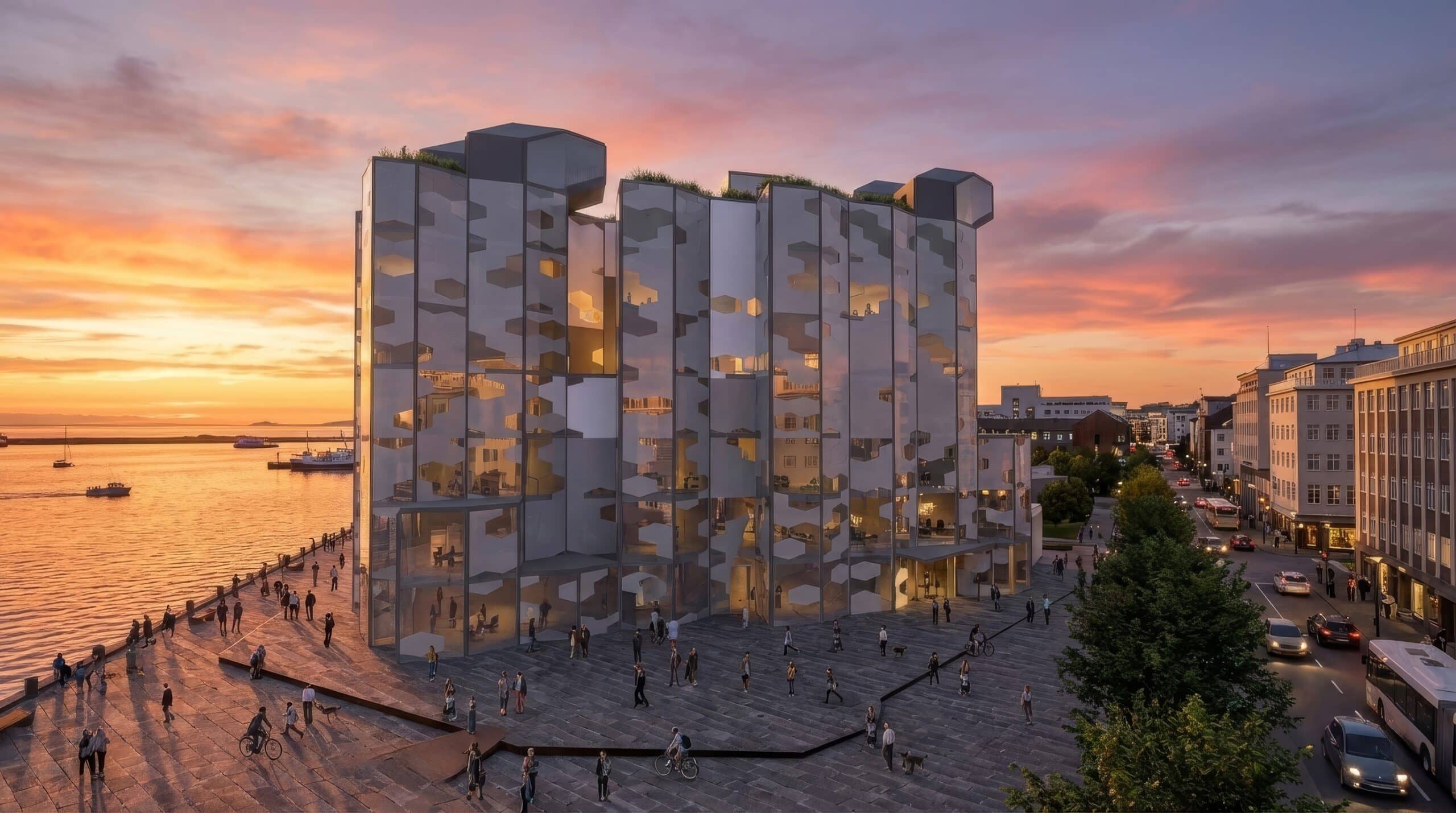
Tectonic Hub: Climate-Adaptive Recipe for Cultural Hubs in Reykjavik

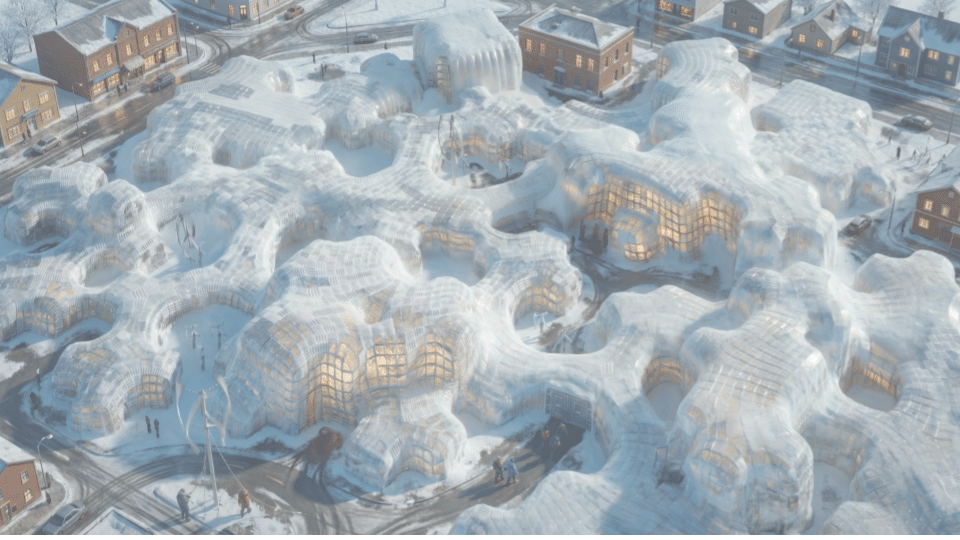
Ingredients Climate Reykjavík’s climate shapes the entire project. The site is exposed to strong, multi-directional winds reaching 27 m/s, with a prevailing direction around 135°. Daylight conditions are equally extreme, shifting from long summer days to very short winter ones. The system therefore needs to adapt, protect, and still create comfortable public spaces. Form Our formal … Read more

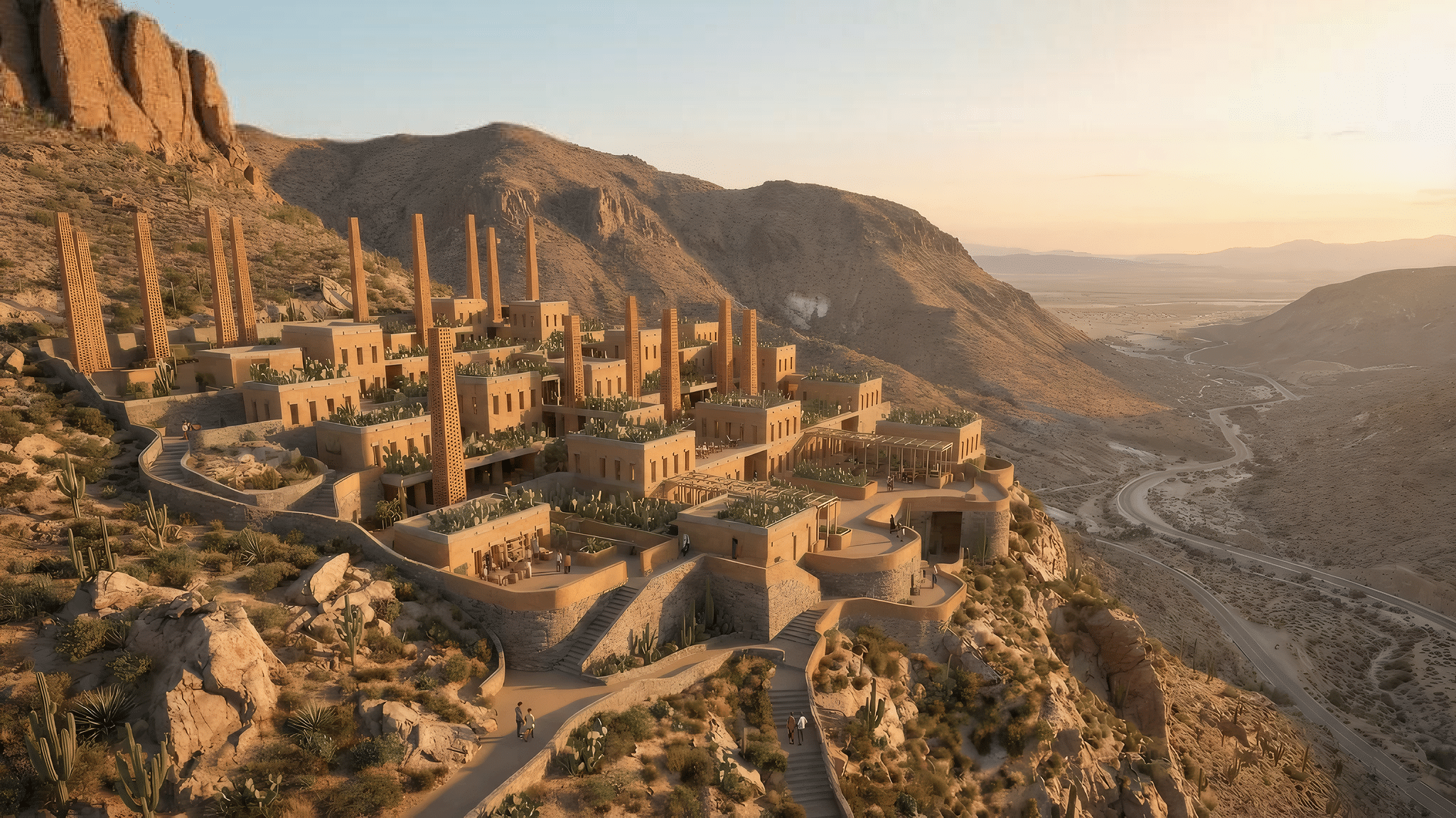
Geomorphing Terrascape: Dignifying Informal Praxis at Chihuahua, México

“Terrascape does not impose an external order; it encodes the survival logic of the Mexican informal ‘barrio’ to transform it into a dignified, resilient, and dynamic housing system.“ The Geometry of Necessity In the rugged topography of Chihuahua, Mexico, the “Barrio” is not just a residential zone; it is a morphological catalyst. It embodies a … Read more

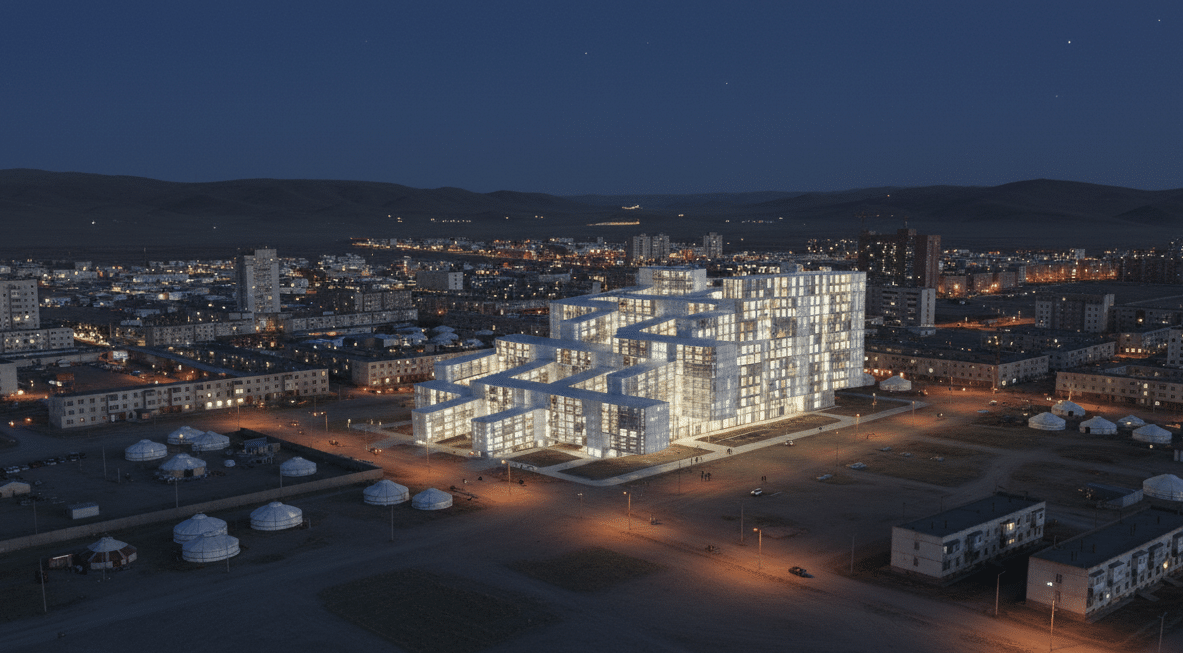
A Breath in the Frost

A Porous Fortress for Dignity Housing at -35°C in Ulaanbaatar, Mongolia A Breath in the Frost presents a computational housing system designed for Ulaanbaatar, where winter conditions can reach −35°C and air quality becomes critical during the cold season. Instead of proposing a single fixed building, the project develops an adaptive framework: a discrete aggregation … Read more

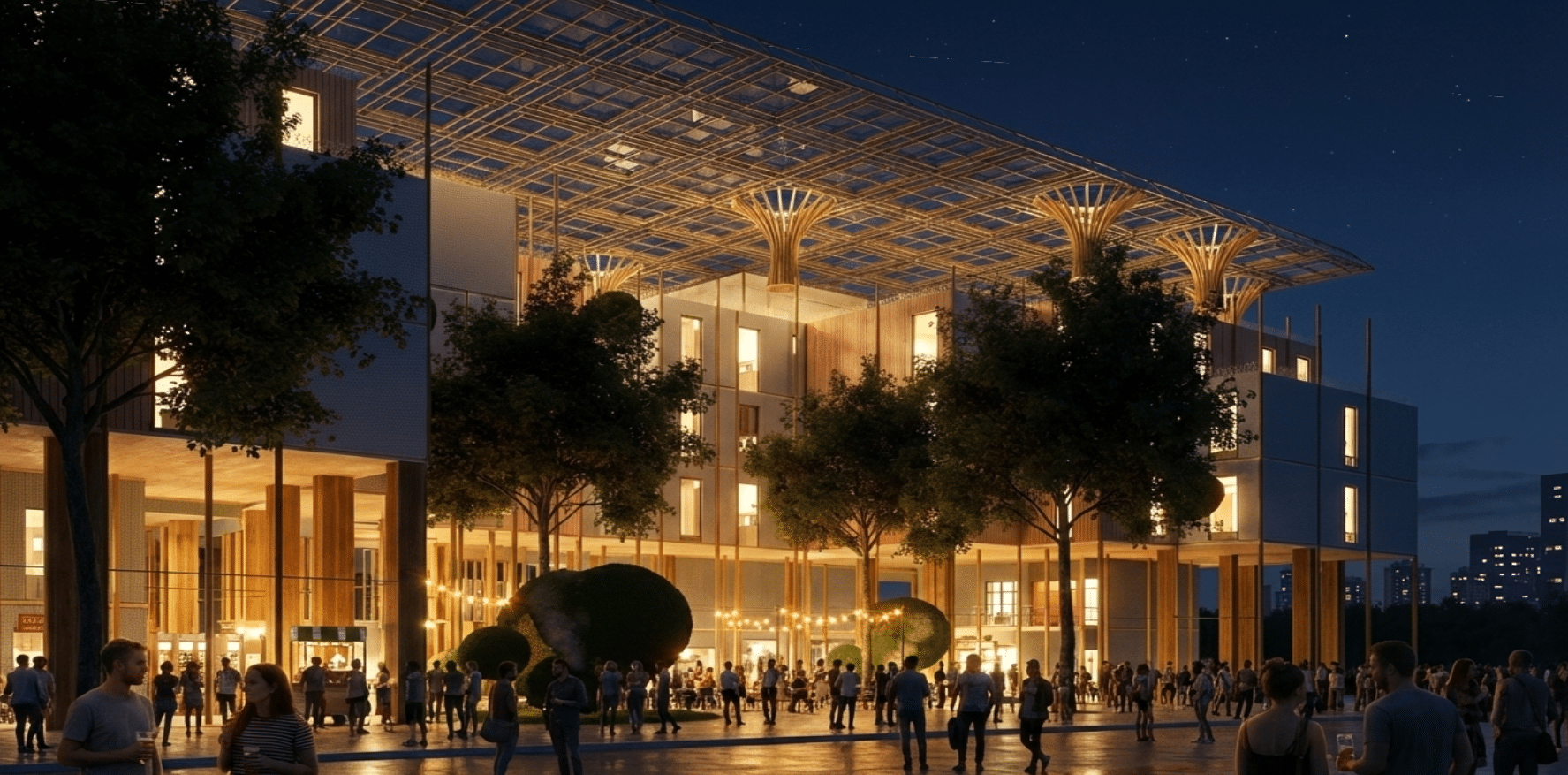
Monsoon Nest: Living Between Flood and Sky

Monsoon Nest is a modular housing proposal for Bangkok that responds to monsoon rainfall, flooding, and high-density urban conditions. The project explores adaptable modules, elevated structures, and passive climate strategies to create resilient, community-oriented living environments in a tropical context. The design of Monsoon Nest is informed by four primary parameters: contextual environmental data, parametric … Read more

THE HARBIN CODE

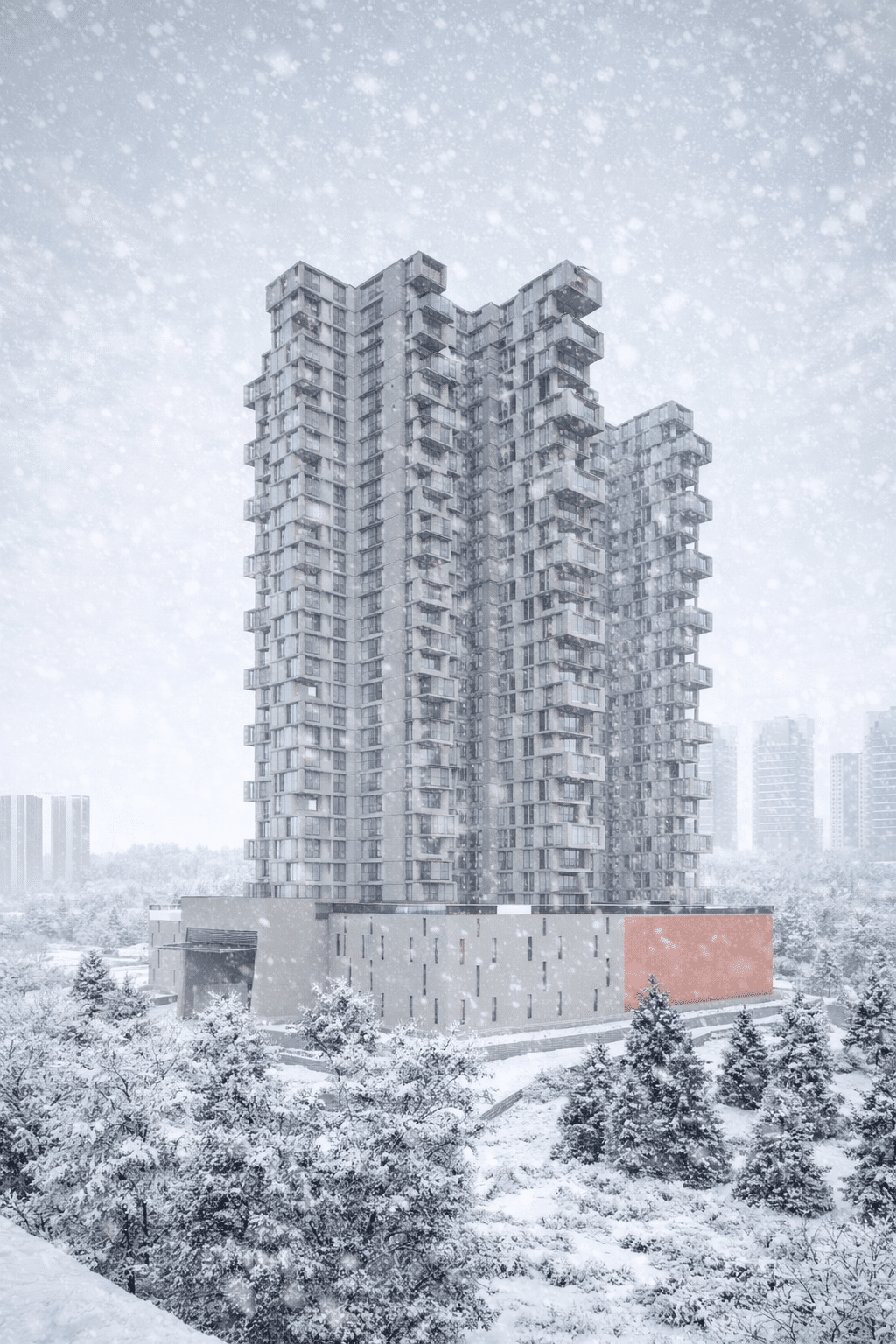
“The Harbin Code“, designed by Muhammed Senin and Sushmitha Ravi, explores housing as a system-driven response to extreme cold climates. The project treats environmental performance, social interaction, and spatial flexibility as equally important design parameters, and is structured as a ‘building recipe’ that allows repeatable yet adaptable outcomes across the site. BUILDING RECIEP DESIGN STRATEGY … Read more

Aerialis

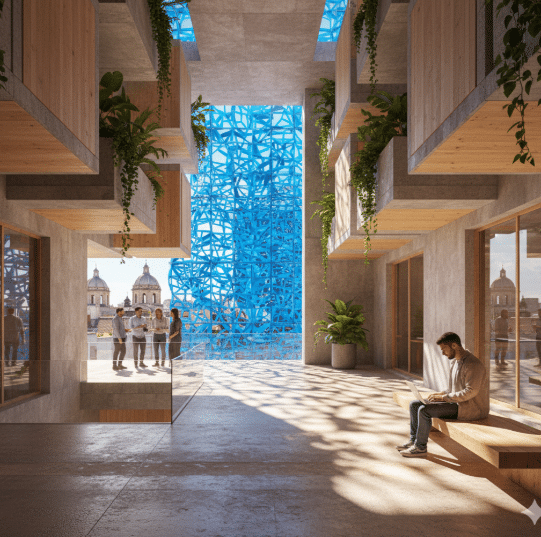
Aeralis is a climate-responsive Tech Hub composed of modular, porous blocks and patios, designed to enhance ventilation comfort. It is a project based on the winds of Cordoba, Argentina. The project aims to integrate the climatic challenges into architectural design. In doing so, designing a coherent structure with the climate and the site. For this, … Read more

The Huddle: Wind-adaptive Research Hub in Punta Arenas, Chile

We explored a wind-adaptive research & education hub with expedition basecamp using WASP in Punta Arenas, Chile, one of the southernmost cities in the world; defined by a cold, humid, and relentlessly windy subpolar climate. Plots Its position provides immediate access to navigation routes, making it an ideal departure point for expeditions toward nearby islands … Read more

Morphing Sands

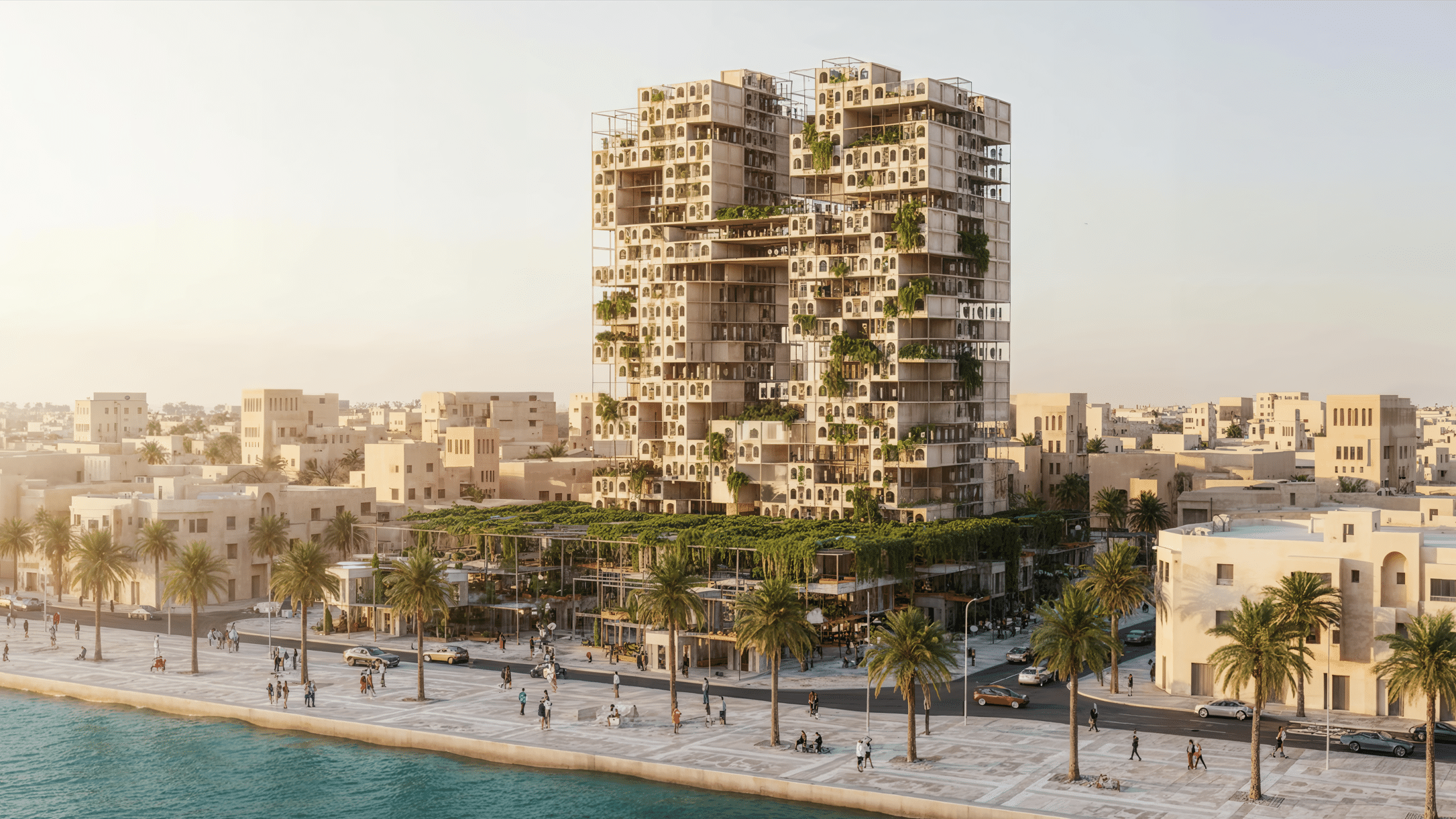
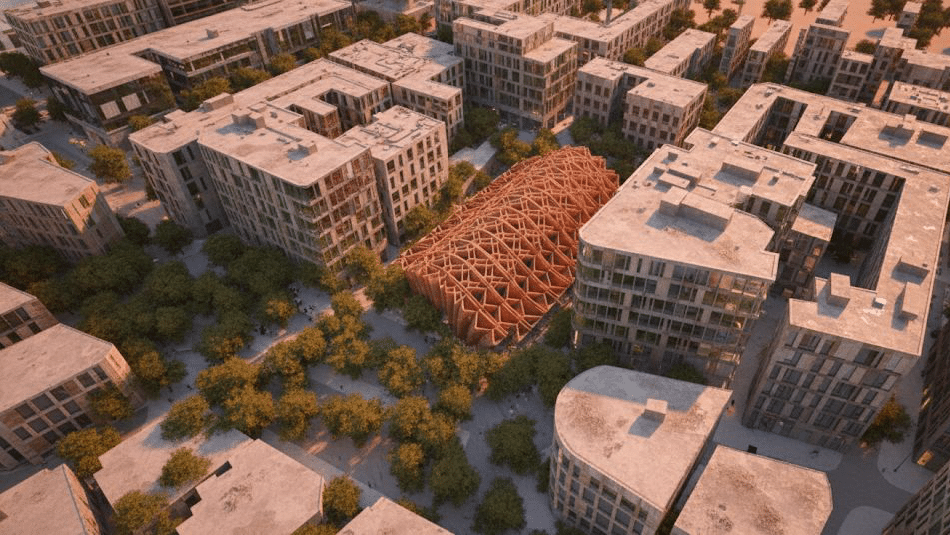
Morphing Sands is a climate-responsive mixed-use architectural system developed for Jeddah, Saudi Arabia, addressing urban densification in a hot–humid coastal environment. Inspired by the historic fabric of Al-Balad, the project reinterprets Hijazi principles—such as courtyards, shaded streets, and layered façades—through a modular and computational design approach. The project organizes commercial functions horizontally at the lower … Read more

Faraj ba’d Shiddah: Revival of Bab Al-Louq Market

Faraj ba’d Shiddah Market is a reimagination of Bab al-Luq market in Cairo, Egypt, that explores a compression-to-relief multilevel shopping and community space with parametrically lofted hexagonal tessellations that plays with light and shadow. Inspiration The initial idea transforms Bab al-Luq through a journey of compression and release—visitors navigate through shadowed tunnel entrances lined with … Read more

Catenary Field

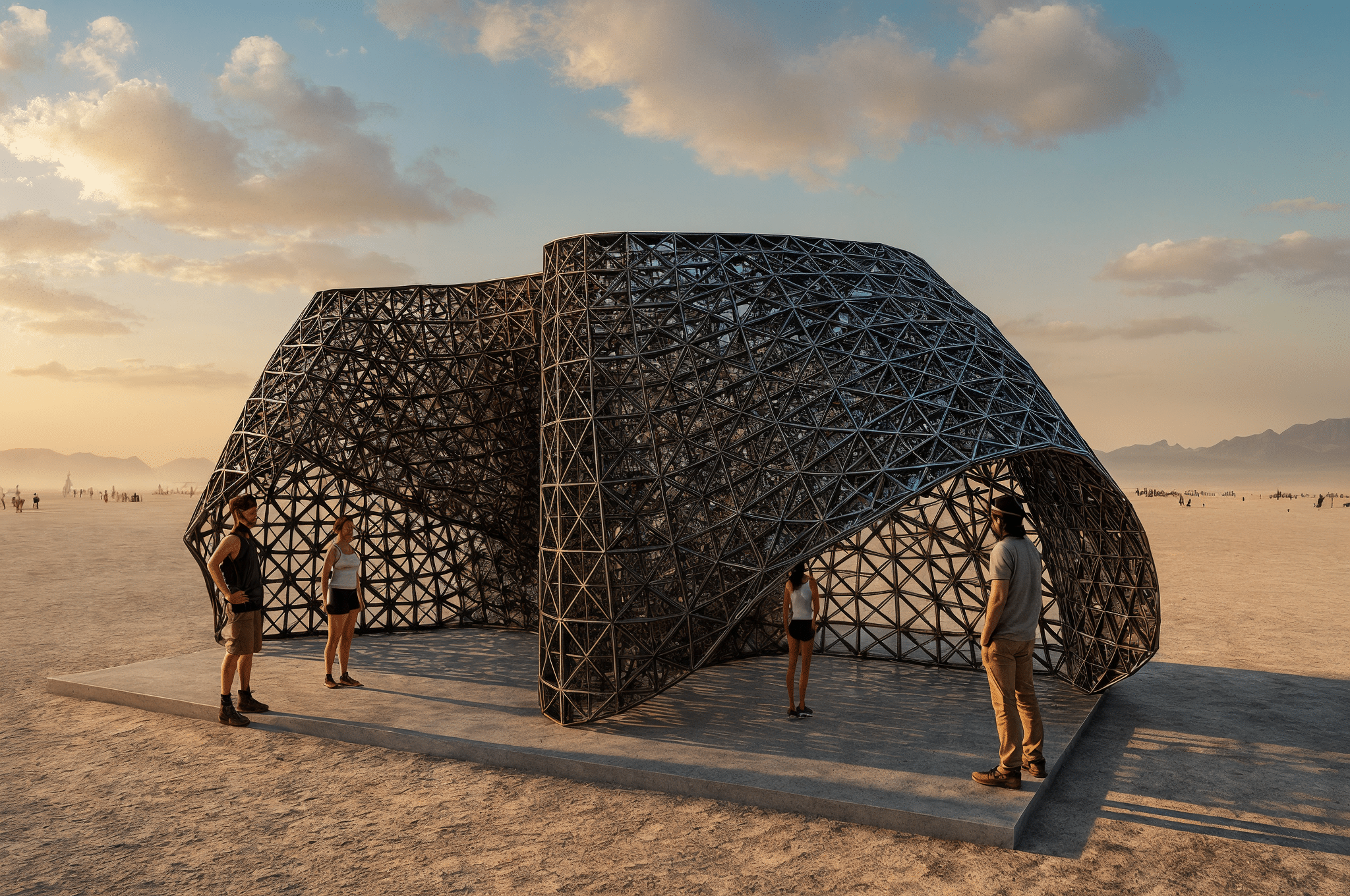
Glass fibre 3D printed temporary pavilion A structural and topological investigation into voxelised lattice systems, combining catenary form-finding with performance-driven optimisation to explore emergent spatial order and material efficiency. The Idea This project explores how a rigid, modular voxel system can define and enclose a pavilion, while an internally generated catenary geometry shapes circulation and … Read more

Temporary Pavilion

Pavillion Lattice Structure Render

From Dense Lattice to Optimized 3D-Printed Structure 1. Project Overview This project explores the design and structural optimization of a temporary pavilion using computational design tools and lattice-based construction logic. The pavilion is conceived as a porous, walkable structure designed for large-scale 3D printing using glass-fiber reinforced recycled PET. The main objective is to investigate … Read more

THE SPIKY CUBE

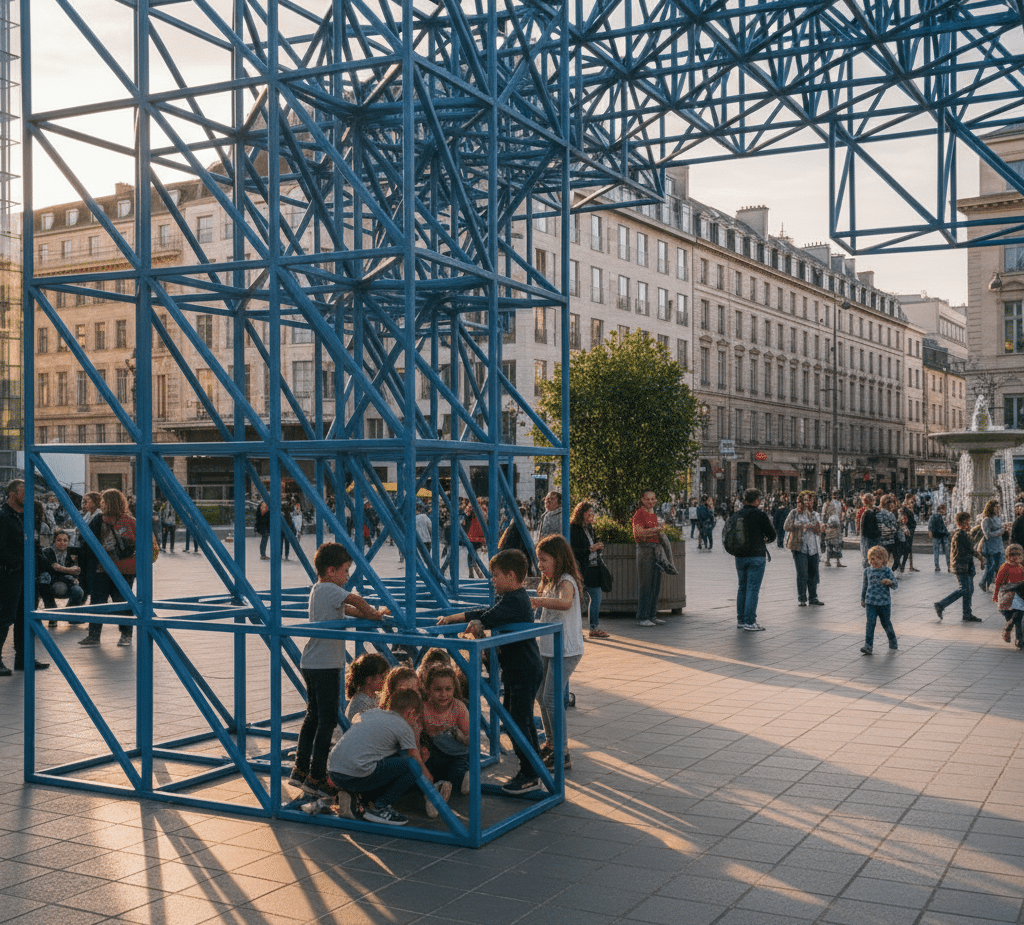
Enscape/Nano Banana AI Generated INTRODUCTION: LATTICE STRUCTURE Lattice structure is a highly ordered, repeating arrangement composed of one or more fundamental unit cells in two or three dimensions. The unit cell represents the smallest group of particles that defines the repeating pattern of the material. It fully embodies the symmetry and structural logic of the … Read more

Algorithmic Optimization and Fabrication of a Lattice Coral Pavilion

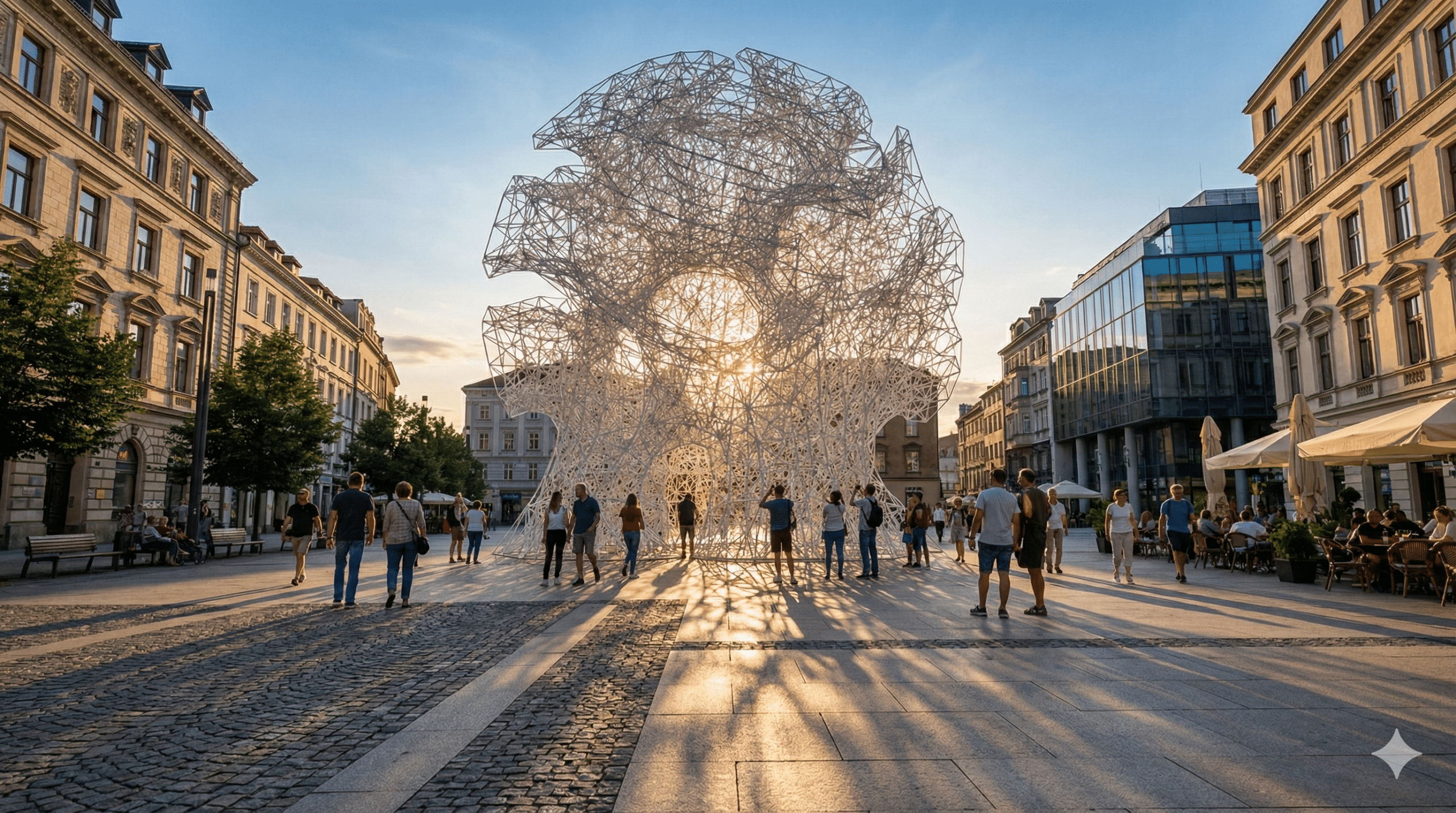
This technical report details the computational workflow developed for our final structural optimization assignment. The project methodology follows a rigorous sequence: initial form-finding, stress-line analysis, lattice topology selection, and cross-section optimization, culminating in a robotic fabrication strategy. General Workflow Overview The design process is structured around a linear algorithmic pipeline. It begins with form-finding utilizing … Read more