The Master Programme in Robotics and Advanced Construction is an innovative educational format that offers interdisciplinary skills and understanding through a series of class seminars that are put into practice through hands-on workshops. IAAC gives students the opportunity to create individual studio agendas and develop Pilot Thesis Projects based on the knowledge acquired during the seminars and workshops split into 3 Modules. In this way, IAAC puts together an experimental learning environment for the training of professionals with both theoretical and practical responses to the increasing complexity of the construction sector.
Anatomy of a Machine: Stroke
Introduction This project investigates the dialogue between human gesture and robotic motion through painting. Over three weeks, students study brush behavior, paint flow, and stroke dynamics, beginning manually and progressively translating gestures into robotic trajectories. The final outcome is an A2 robot-made painting, accompanied by a vectorial drawing and a 60-second video, reflecting the anatomy … Read more
Data to Motion: “Materializing the Contrast: Goya” – MRAC Workshop 1.2.
The Black Paintings are a group of 14 works created by Francisco de Goya between 1819 and 1823, during the final years of his life. Painted directly onto the walls of his house, the Quinta del Sordo, these works represent one of the most intimate, radical, and unsettling moments in Western art. They are now … Read more
Workshop 1.2. Data to Motion
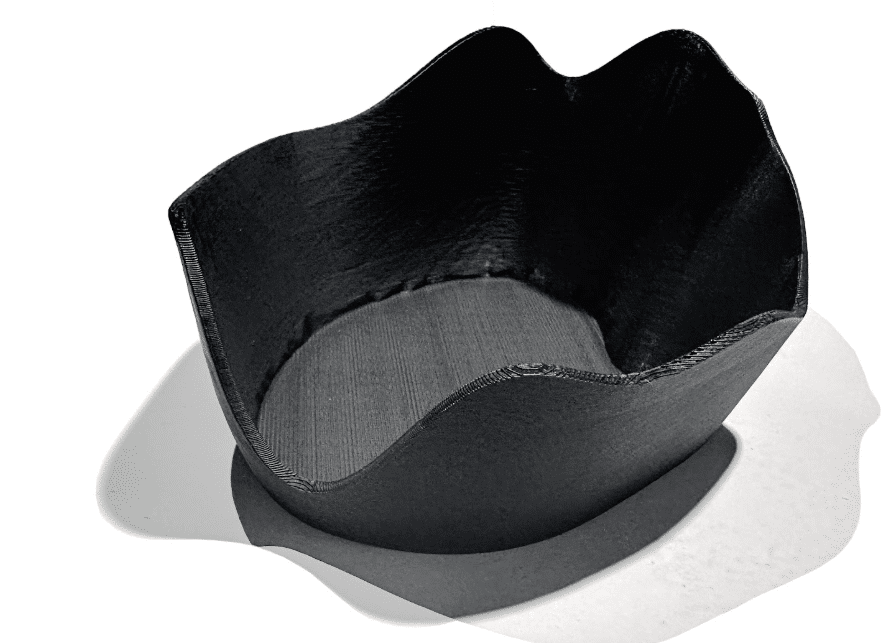
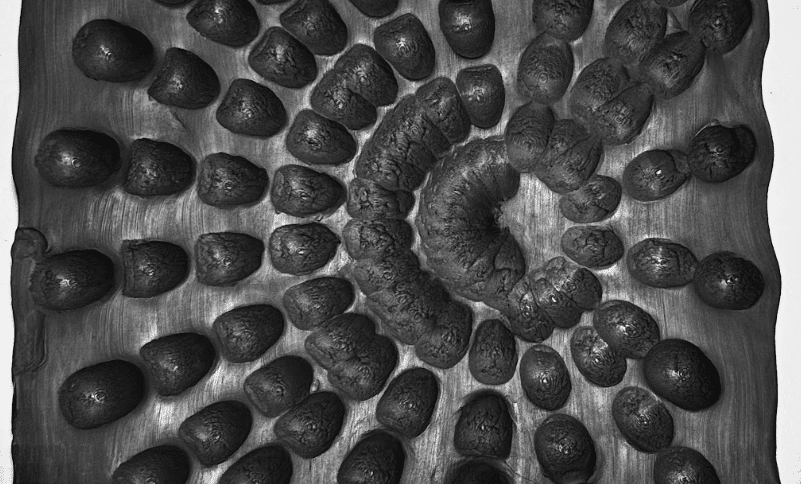
In this article, we explain our Workshop 1.2 project, in which we analyzed data to transform it into movements to control an ABB IRB 6700-150/3.20 industrial robot equipped with a plastic pellet extruder for additive manufacturing. The main idea of our project was to analyze climate data from the city of Barcelona during the years … Read more
Guillem Camprodon “From Machines to Meaning: Technology, Fabrication, and the Future of Making”
The lecture examined the evolution of digital fabrication, open-source hardware, and distributed manufacturing, emphasizing the relationship between technology, culture, and society. Fab Labs were presented as environments that democratize access to production tools, bridging the gap between industrial processes and individual creativity. The discussion traced the historical transformation from centralized industrial systems to decentralized innovation. … Read more
Soul and System | A Conversation with Aldo Sollazzo
Guest Lecture at IAAC (14 October 2025) – Exploring how La Máquina merges design, robotics, and the human element. During one of our sessions at IAAC, we had the opportunity to meet Aldo Sollazzo, co-founder of La Máquina, Noumena, and Pure.Tech, as well as a former IAAC faculty member in the field of robotic fabrication.Invited through the coordination of … Read more
Anatomy of a Machine: SPILL
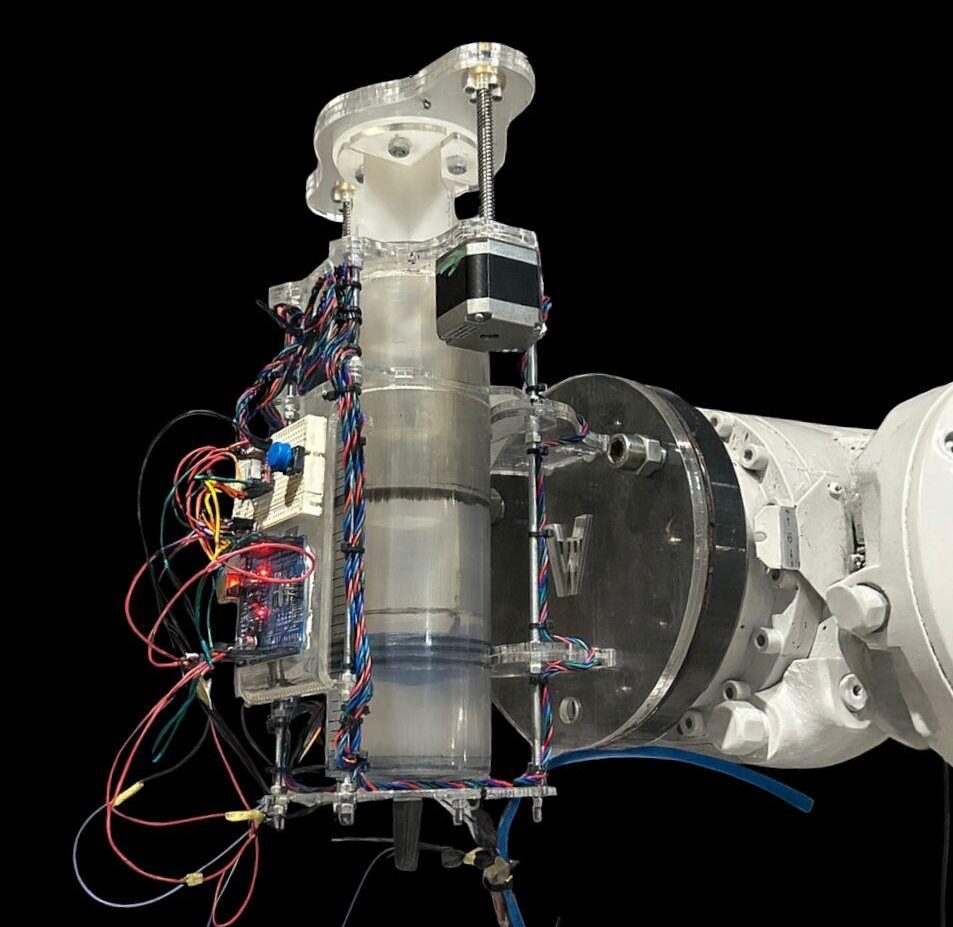
For our second studio task the aim was to further experiment painting with robots; this time extending what paintings could be achieved when a standard brush was replaced by a custom made ‘spilling’ end effector controlled by an Arduino Uno. This was set through the brief as: To explore and consider, how a tool might … Read more
Motion Control of Robotic Arms Through Grasshopper and Sketching Devices
Introduction This project orients around robotic drawing system that uses a brush to create adaptive visual results. It focuses on turning basic painting actions; such as dipping, stroking, and rotating—into clear, programmable steps. By combining digital design tools with robotic movement, the work explores how changes in brush angle, paint material, and surface conditions shape … Read more
Feasibility and cost estimations in digital fabrication
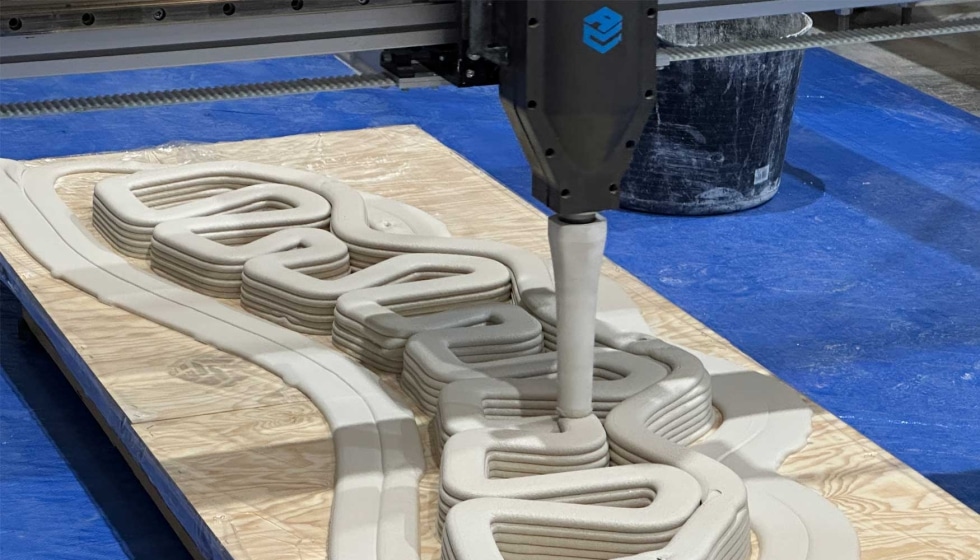
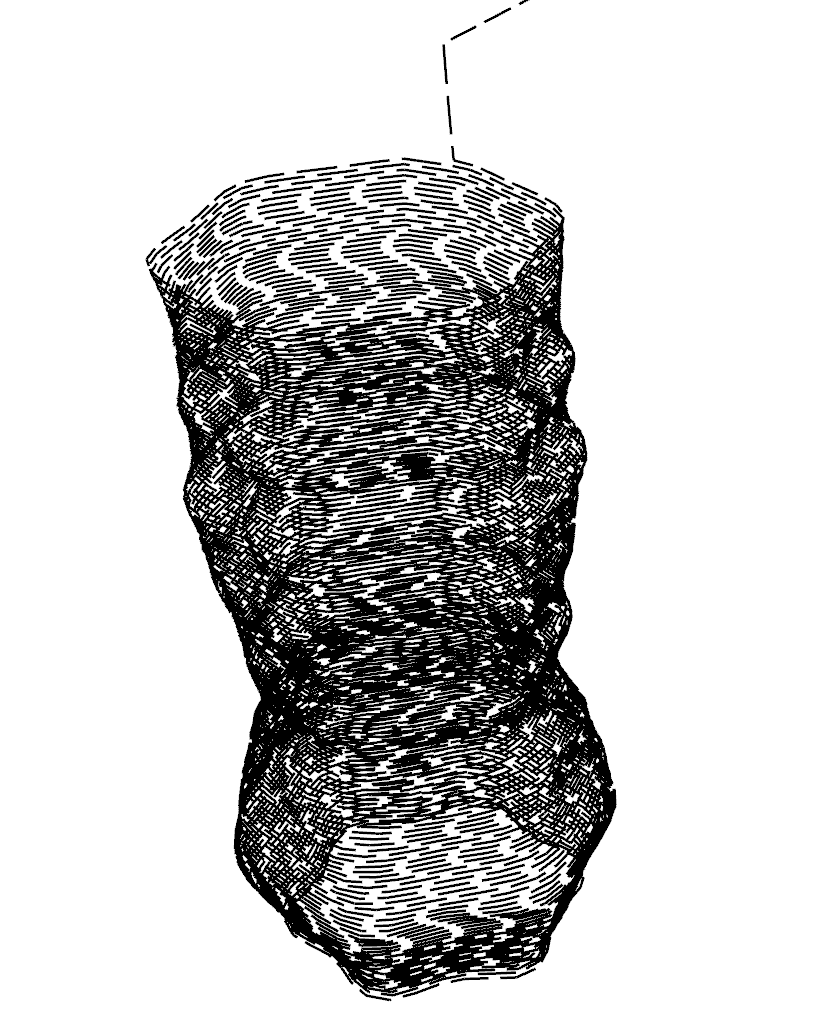
Building on our previous analysis of a large clay-printed geometric form, this study evaluates the feasibility of its digital-fabrication workflow. Through modular breakdown, material and time estimation, non-planar slicing analysis, and production-logistics modeling, we assess whether the system can be manufactured efficiently and economically. The process concludes with the development of a complete production plan … Read more
Design for Manufacturing of 3D Printed Architectural Systems
The project involves a large geometric form designed for clay 3D printing, consisting of 6 identical sections. This article will present the results of our analyses that explore the technical challenges and opportunities of this geometric design during the clay fabrication process. The workflow begins by rationalizing the pavilion structure into 6 symmetrical parts, isolating … Read more
Starmi: Folding facade
From Concept to Working Prototype Content research Before developing STARMI, research explored integrating electronic hardware into architectural design. The study examined responsive building systems, sensor technology, and kinetic principles, identifying origami-based folding facades as ideal for combining geometric adaptability with environmental responsiveness. This investigation into sensors, microcontrollers, and mechanical actuation established the foundation for an … Read more
Ambient Public Mood Beacons-MRAC01
‘Urban Sensing Begins: The City Meets Its Beacons’ PLACEMENT — The Sensing GroundThe first beacons are placed along the park’s circulation spine silent observers that begin listening to the city’s rhythm. Sound, motion, and presence data start forming an invisible map of human interaction.At this stage, the system is not reactive, it’s learning.It introduces itself … Read more
Anatomy of a Machine: Stroke
Introduction The Anatomy of a Machine: Stroke project explores the dialogue between human and robotic motion through painting. Conducted during the first MRAC studio, the exercise investigates how the physical behavior of paint, brush, and hand movement can be translated into robotic articulation. Over three weeks, we studied the anatomy of a brushstroke — first … Read more
The Massage Chair
The massage chair is an experiment in digital fabrication and hybrid workflows, using computational design, CNC milling, 6-axis robotic milling, and human assembly and finishing, to understand how different subtractive manufacturing processes can be combined to balance speed, precision, and material expression in digital fabrication. Materials Tools Used Early Designs Early explorations of designs in … Read more
The Chesterfield chair – MRAC & MAEB Workshop1.1
So basically, these are the iterations we made with the first day at the workshop. These are the many iterations of the different topologies and chairs we made using SubDs. In the end, we decided to go with a simple shape, yet with a complex textile texture. For these diagrams, we conducted a draft angle … Read more