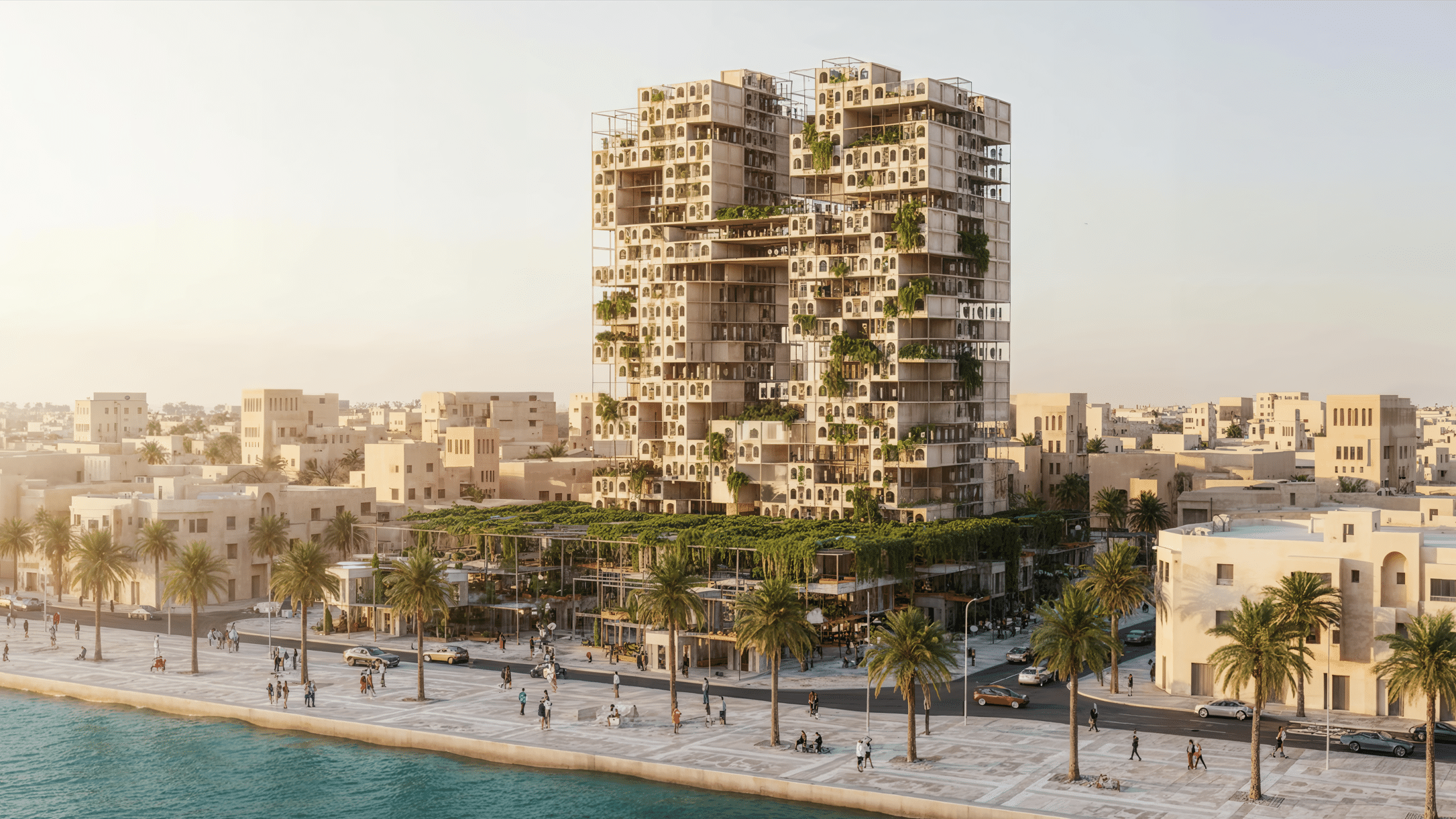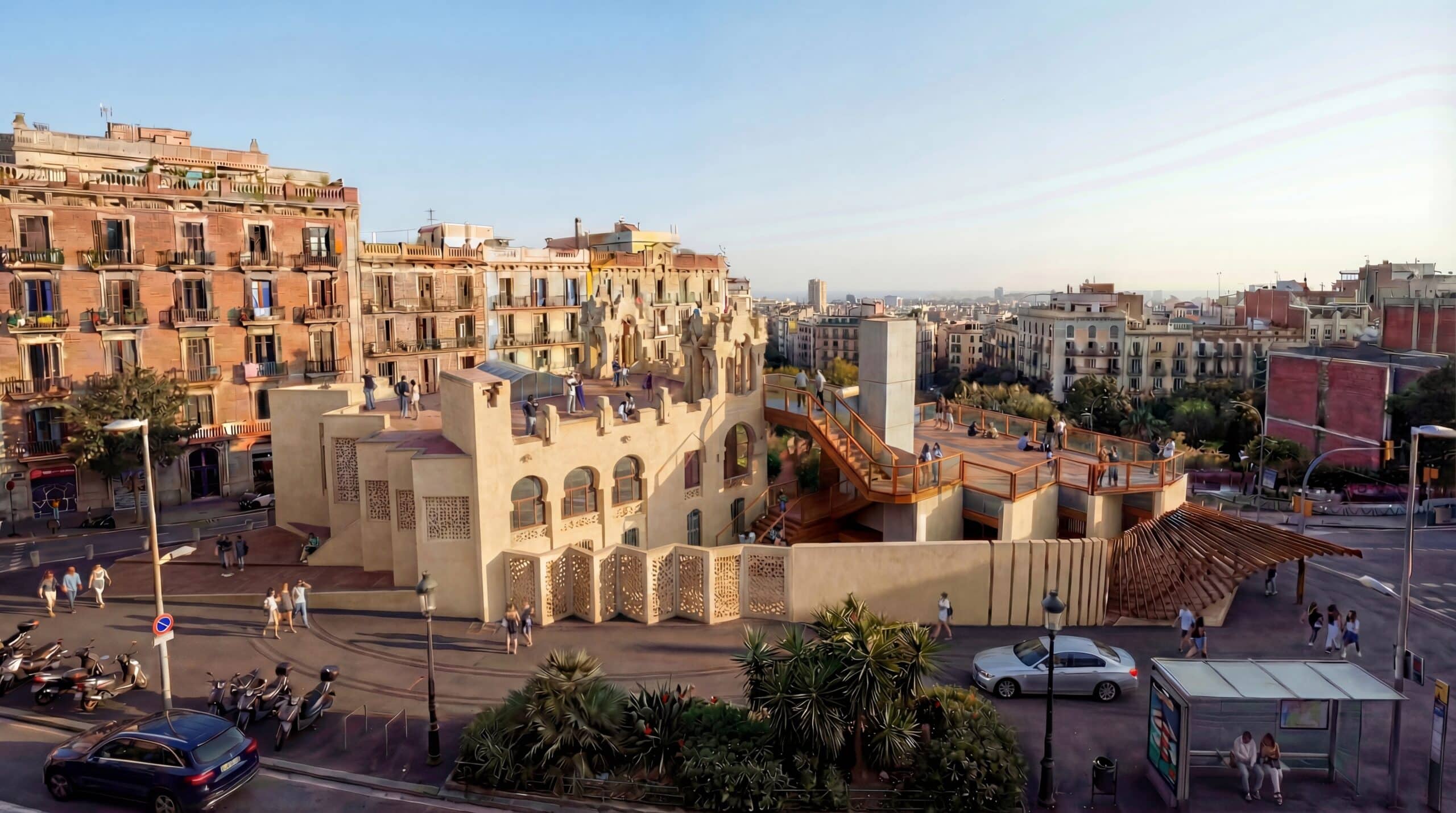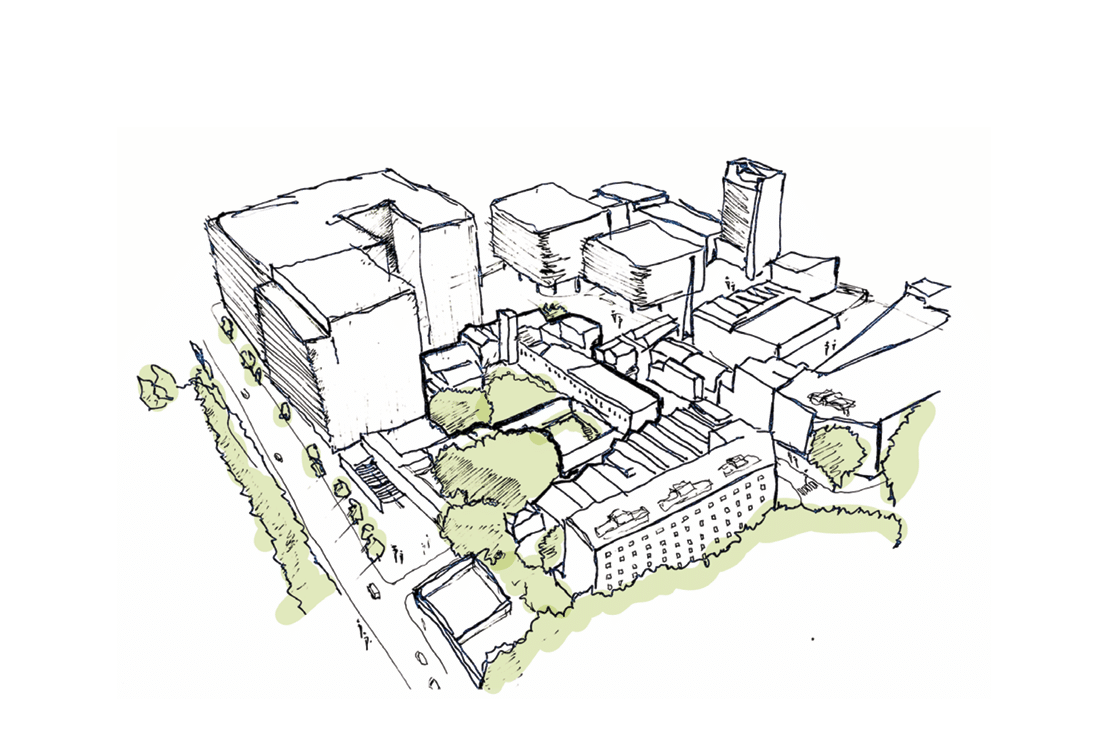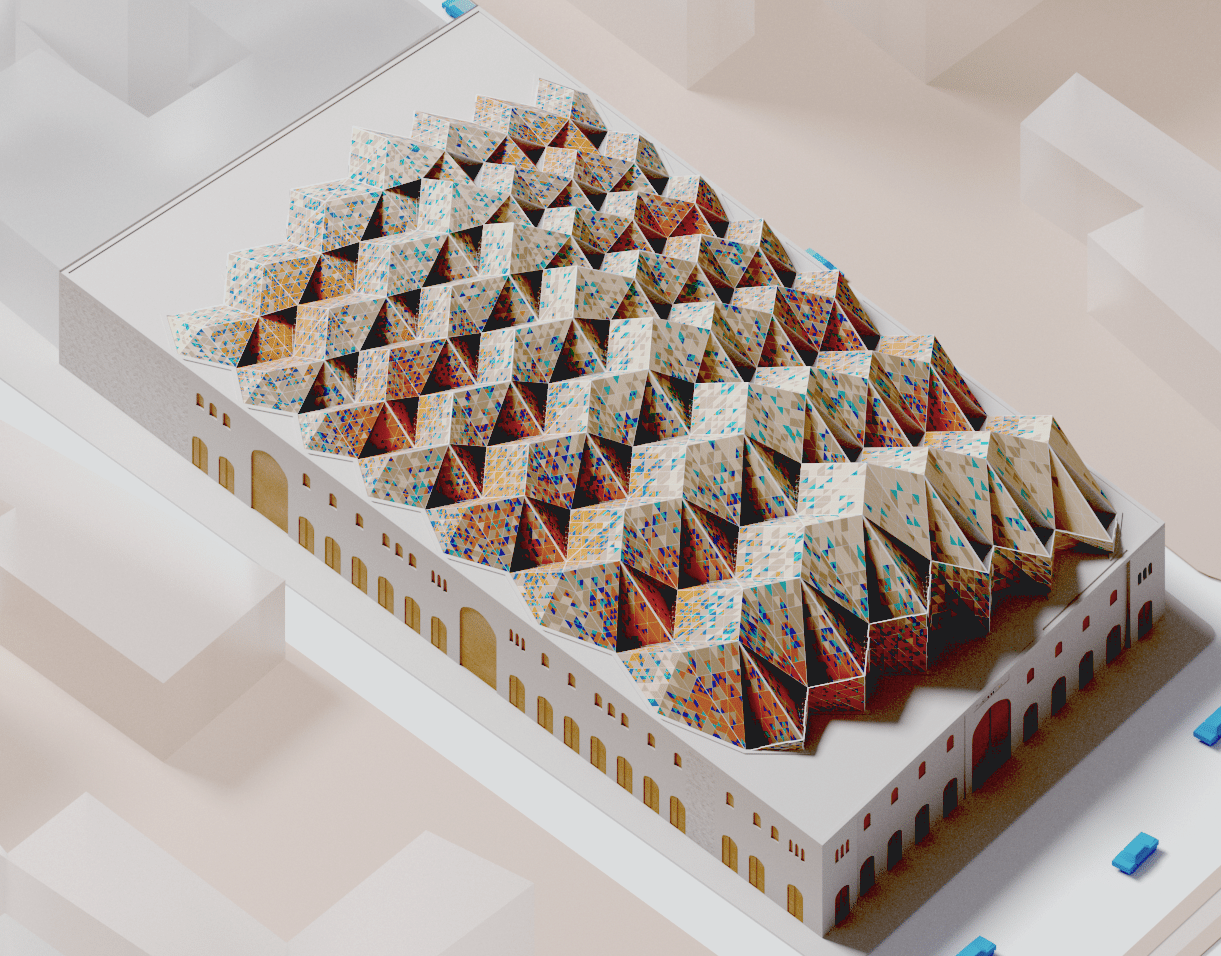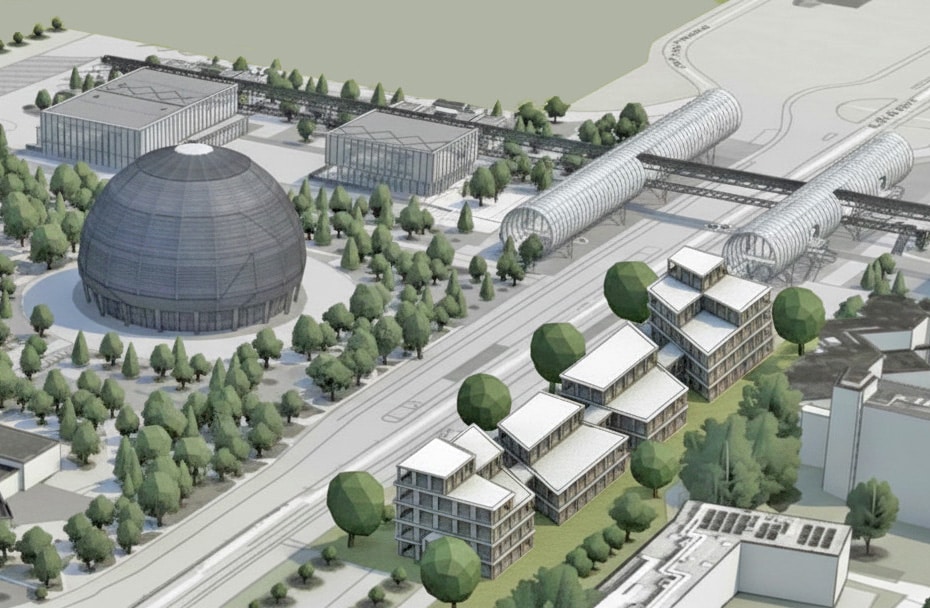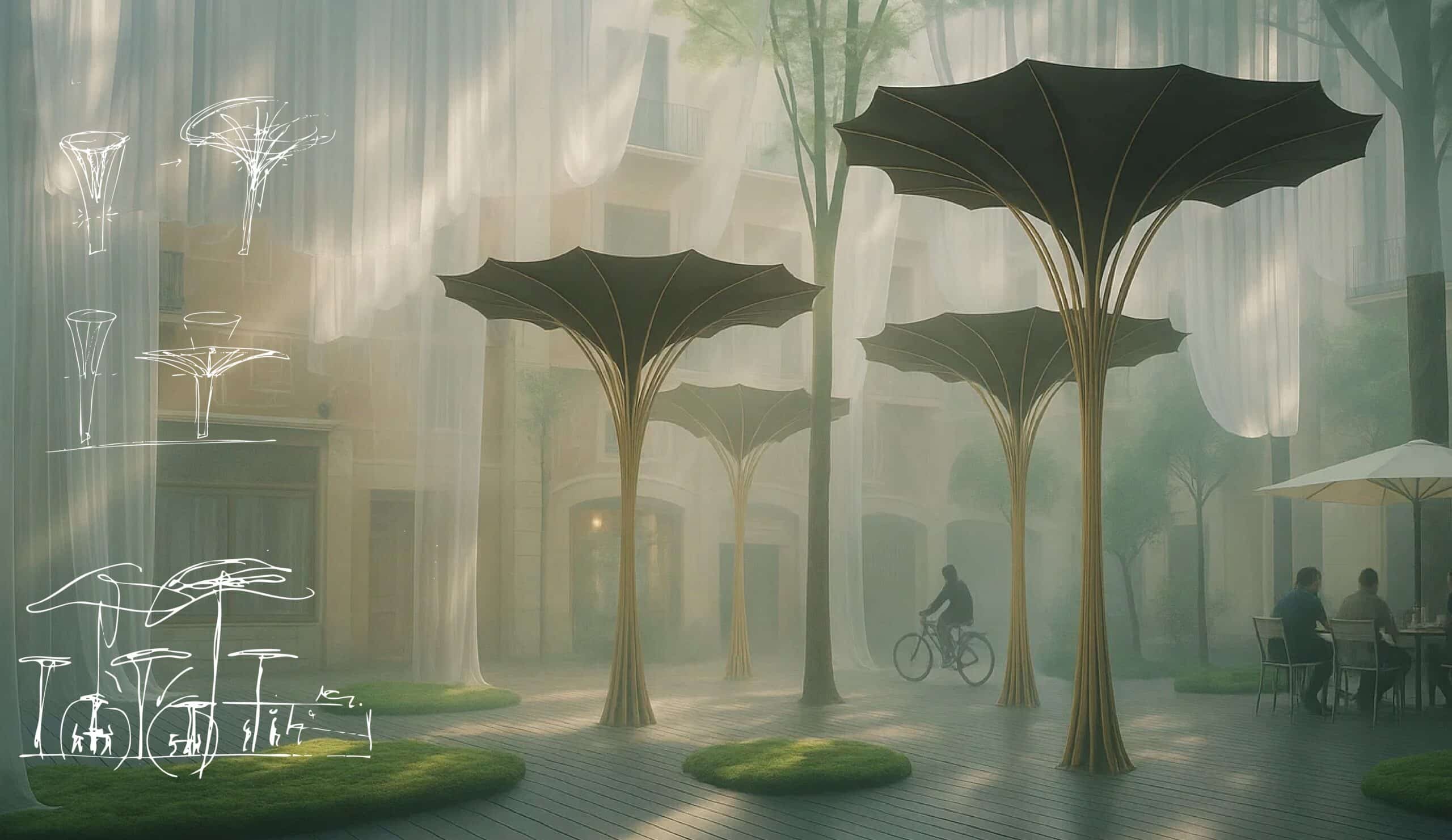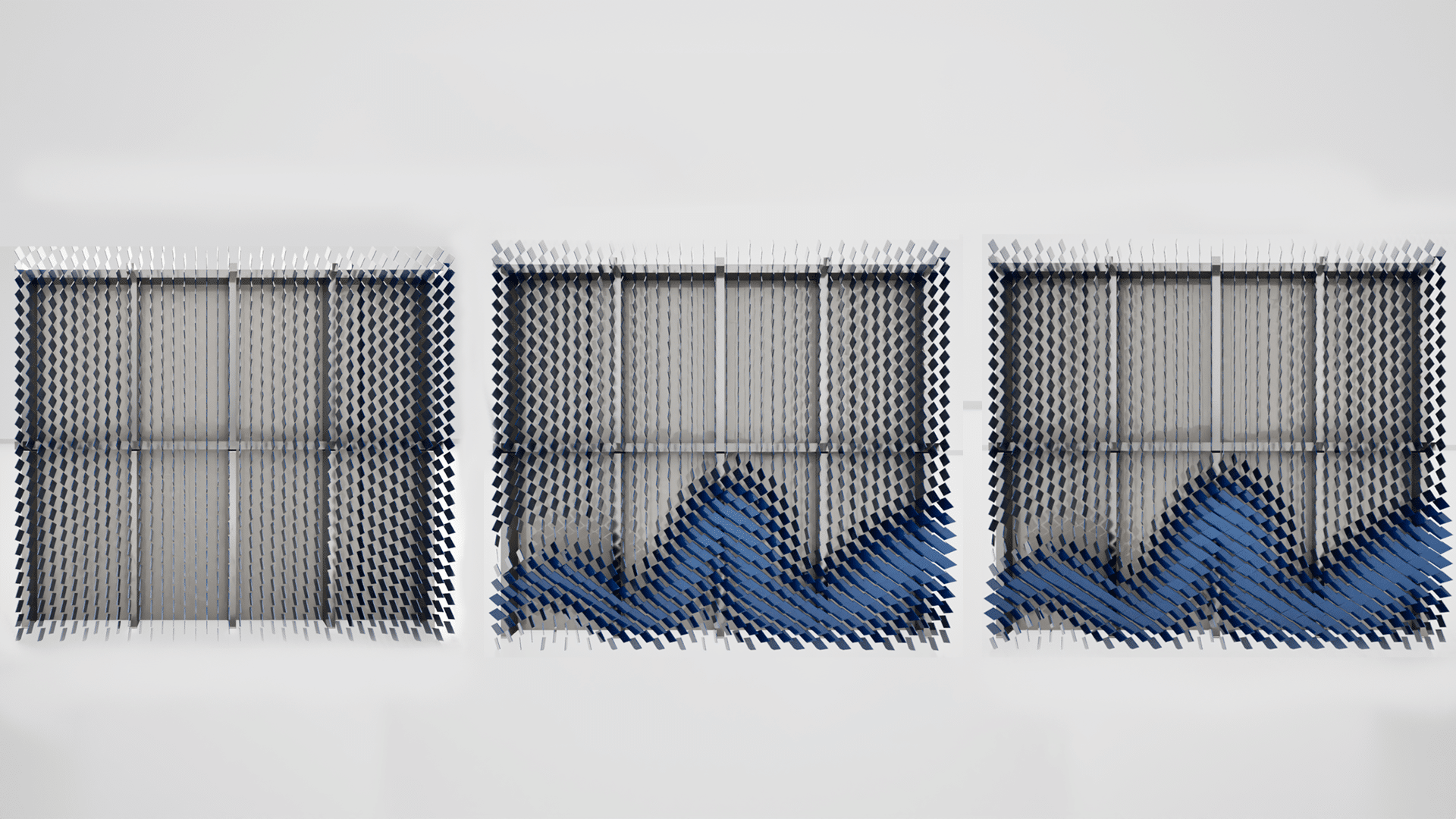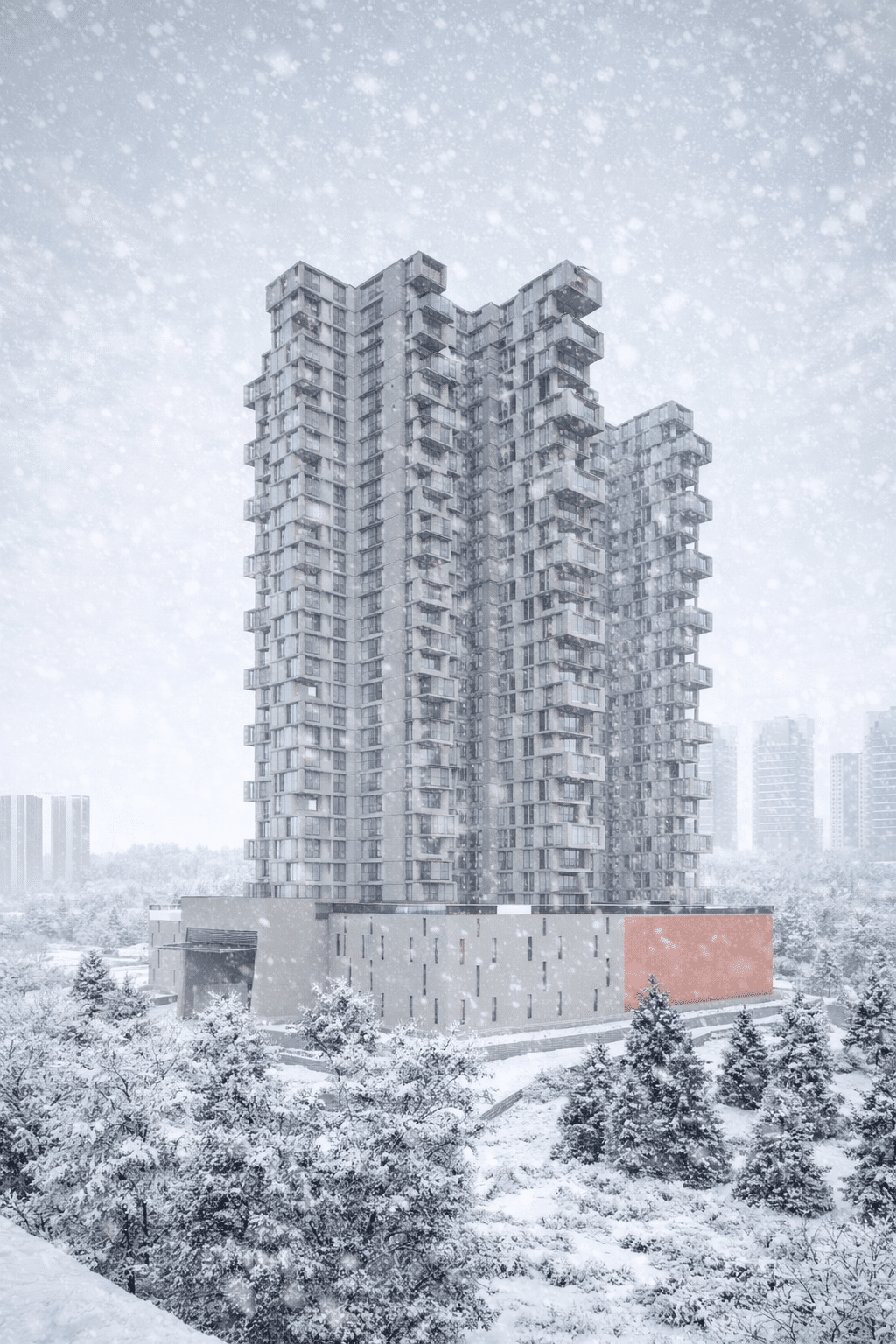
Rainwater Harvester The project proposes a regenerative infrastructure for runoff water collection, treatment, and reuse within the built environment. Conceived as a responsive system embedded in architecture, it seeks to transform excess rainwater often perceived as waste into an active resource within a closed ecological loop. During episodes of heavy rainfall, the system captures surface … Read more
Mind vs Machine: MENTOR
A Multi-Agent, Socratic, Cognitive-Preserving Tutoring System for Architectural Education The Silent Crisis Picture this: A design student faces a challenging architectural problem. They need to create a sustainable community center that harmonizes with its urban context while meeting complex programmatic requirements. In 2023, they would likely turn to ChatGPT, type their question, and receive a … Read more
Urban Climate on Graphs: From Form to Comfort
ABSTRACT This thesis investigates the relationship between urban development patterns and outdoor thermal comfort, with a focus on Mean Radiant Temperature (MRT), a key factor in calculating the Universal Thermal Climate Index (UTCI). While graph-based approaches have long been used in spatial analysis (e.g., space syntax, circulation networks), this research extends the application of graph … Read more
AssetPulse – Graph-Driven Asset Mastery
Simulate. Forecast. Outpace failure. Abstract AssetPulse is an advanced asset management simulation tool and synthetic data generator designed to optimize resource allocation, improve decision-making, and facilitate research through realistic scenario modeling. Building on a graph-based approach, AssetPulse models asset lifecycles, calculates remaining useful life (RUL), and applies business rules for budget planning, risk management, and … Read more
Territorio en Cura:
El drama socioambiental de la explotación de sal gema en Maceió y la reimaginación de este territorio Resumen Este trabajo analiza el colapso geotécnico y socioambiental causado por la minería de sal-gema en Maceió, Brasil. A partir de datos técnicos, mapas producidos por la autora y relatos comunitarios, propone una lectura crítica del territorio y … Read more
ACTIVOS URBANOS EVOLUTIVOS
Sobre latencias y oportunidades del abordaje de la vacancia en la Ciudad de Mendoza RESUMEN La problemática de los pasivos urbanos, definidos como terrenos subutilizados o infraestructuras obsoletas dentro del tejido urbano, constituye un fenómeno global con implicaciones territoriales y socioeconómicas a escala local. La expansión urbana no planificada, caracterizada por patrones de crecimiento de … Read more
Máquinas metabólicas
más allá del arroz 00 INTRODUCCIÓN: conflicto y oportunidad Este proyecto se sitúa en el noreste de Uruguay, en una porción del departamento de Rocha conocida como India Muerta, dentro de la cuenca de la Laguna Merín. En este territorio coexisten en tensión dos formas de habitar: por un lado, el monocultivo arrocero, un modelo … Read more
Infraestructuras simpoiéticas (iv)
Hacia la reconquista de los No Lugares urbanos: El caso del aeropuerto EOH de Medellín 00 Introducción Las infraestructuras globales Las infraestructuras son uno de los temas centrales dentro de la planeación urbana mundial, 6 de los 17 “Objetivos de Desarrollo Sostenible” establecidos por la ONU están relacionados con ellas. Allí, las definen como “la … Read more
Interactive Block-Based Structural Generation and Analysis Tool
In contemporary architectural practice, the gap between conceptual design and structural analysis often leads to delays, miscommunication, and inefficient iteration cycles. This project proposes an integrated workflow that bridges this divide by creating an interactive interface where architects can receive real-time structural feedback while scanning their preliminary physical model. By combining Unity-based visualization, QR code-enabled … Read more
SKYLOFT
MODULAR PODS VERTICAL EXTENSIONS To address urgent urban housing needs, this thesis explores modular rooftop pods using Digital Twins, CNC fabrication, kerfing, and timber joinery—enabling precise, low-waste, minimum tool required for assembling and sustainable expansion of aging urban buildings through scalable and prefabricated Modular systems Why Vertical extension required ? What’s the purpose of the … Read more
EcoNodes
EcoNodes is an AI-driven urban planning platform designed to identify and prioritize the city’s most heat-stressed and impervious junctions for strategic green interventions. By combining satellite imagery, street view segmentation, and environmental datasets, EcoNodes highlights the urban nodes that lack vegetation, suffer from poor air flow, or trap excessive heat. The tool empowers planners to … Read more
Go With The Flow
Computational Fluid Dynamics for Natural Ventilated Systems primarily located within the United States The Problem within Context: Sears Catalogue from 1930s to 1950s United States. The American Dream is a phrase that has taken meaning in the ownership of a home with a white picket fence. The phrase was popularized in the 1930s after WWI … Read more
DRDA- Dynamic Robotic Design Activities
ABSTRACT Autonomous parametric furniture assembly using modular blocks and ROS-driven industrial robots promises to revolutionize on-demand manufacturing. In this work, we introduce DRDA (Dynamic Robotic Design Activities), a unified framework that seamlessly links customer-driven design to autonomous multi-robot execution. A user-defined geometry and style, which our custom block-selection and toolpath-generation engine converts into collision-free pick-and-place … Read more
TÀN 58
TÀN 58 is a seven-story student housing project located in Poblenou, an industrial district of Barcelona. The building’s form and orientation were shaped through computational studies that optimized daylight access and solar radiation across the site. This analysis led to the introduction of two central atriums, which act as vertical heat sources and organizational cores—spaces … Read more
Timber Syntax: A Computational Pipeline for Assembling Non-Homogeneous Timber
In the pursuit of a sustainable built environment, Timber Syntax demonstrates how reclaimed, non-homogeneous timber can be transformed into high-quality facade systems through a computational and robotic pipeline. Developed at the Institute for Advanced Architecture of Catalonia (IAAC), this project bridges waste reuse, advanced fabrication, and circular design to propose a new paradigm for timber … Read more