Captain CAT – Courtyard advisory tool

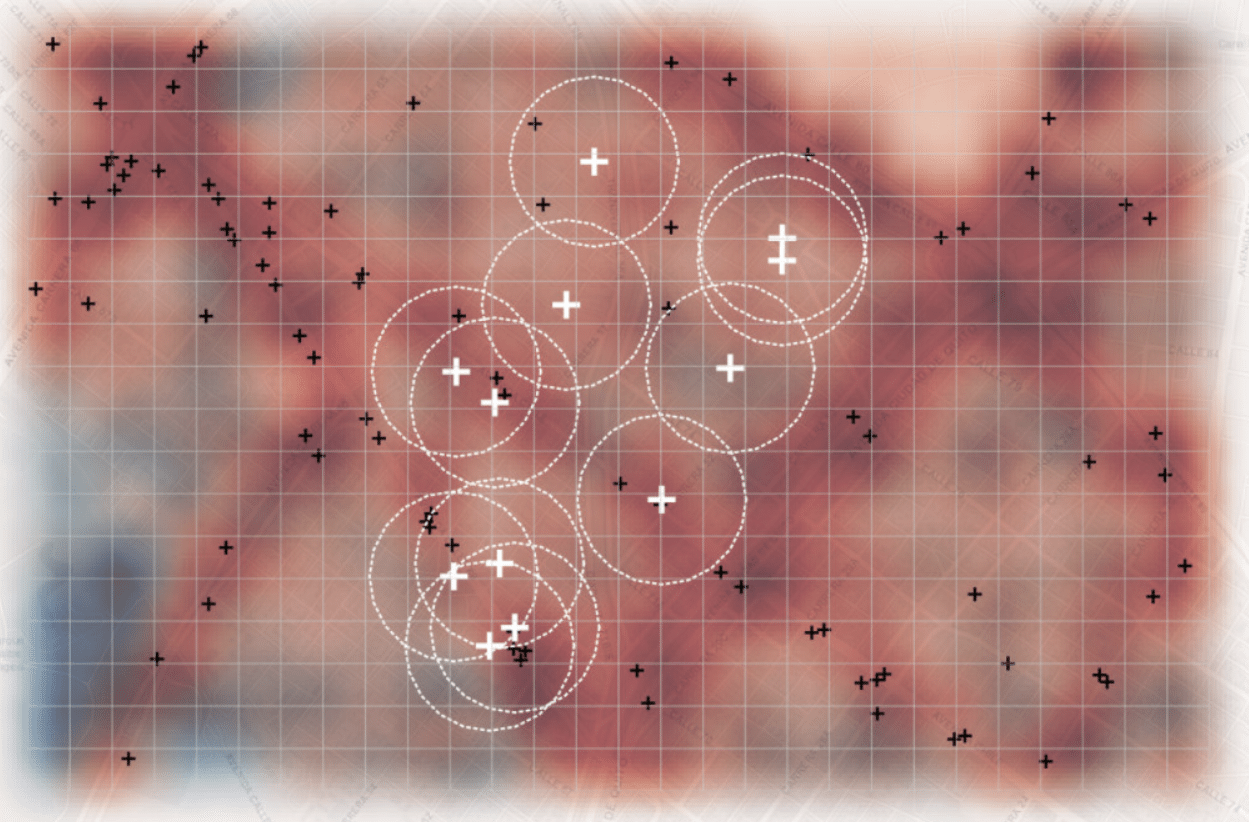
Consider yourself a local architect or urban planner dealing with the all-too-common Barcelona problem: Its too hot here! and the courtyard outside feels like a desolate oven. Imagine now that your co-pilot is a pixel-art cat that is friendly, understands the climatic conditions and works with you to create a courtyard that is actually comfortable, … Read more

Quito | in Transition

Quito is located in the north-central part of the Andean region of Ecuador, in south america. Given its high elevation, it is one of the highest capitals in the world. With a population of 1.9M people, it is the second-largest city of Ecuador. It is located in the province of Pichincha in the canton of … Read more

Reflecting on AI Risks in Urban Projects

As part of the Responsible AI Hackathon, we explored how to critically assess the ethical and societal implications of artificial intelligence (AI) in urban projects. The workshop introduced tools and frameworks to help participants map, evaluate, and reflect on the risks associated with deploying AI systems in urban environments, emphasizing the importance of responsible and … Read more

Portfolio Enhancer

Our portfolios are dynamic records that show not only our completed projects but also the changing methods styles and visual languages we use as designers and architects. However as visualization trends change—from stylized schematics to photorealistic renderings—our older images may begin to seem out of place. With the Portfolio Enhancer a proof-of-concept interface that uses … Read more

Jakarta

Jakarta’s rapid urbanization has outpaced the development of equitable mobility infrastructure, exacerbating safety disparities, particularly for low-income women navigating the city at night. While formal policies fall short, informal transport networks like Angkot fill critical gaps, despite exposing riders to physical and psychological risks. This study explores how machine learning can be used to fill … Read more

Woman & Water in Rundu: a mobility justice framework

Ndama, the fastest-growing informal settlement in Rundu, Namibia, faces critical challenges in water accessibility shaped by gender, age, income, and spatial isolation. With women disproportionately responsible for water collection under unsafe and inequitable conditions, our study combines interviews and spatial data to map intersectional vulnerabilities. We developed an interactive tool that simulates real-world constraints—heat, crime, … Read more

Exploring Spatial Intelligence: Graph Machine Learning in Courtyard Design

Nestled within IAAC’s Master of Advanced Computational Design program, our recent investigation of Graph Machine Learning (Graph ML) sought to reimagine how we perceive, evaluate, and improve architectural spaces. Our team of Andrea, Leila, Lennart, and Mahnoor worked on a courtyard prototype to create a seamless process that combines parametric modeling, semantic data interchange, and … Read more

Architecture of Resistance: Hacking Life

a highrise building with a facade that tricks a.i. into detecting faces that aren't there. Green bounding boxes show the false positive predictions of the a.i.

The Algorithmic Epoch Modern advertising was born out of propaganda techniques developed in World War I by Edward Bernays. He realized that by manipulating symbols and emotions, it was possible to shape mass behaviour, a concept that now forms the backbone of our algorithm-driven economy. The Internet, once heralded as a tool for global connection, … Read more

AI Learning Assistants for Disabled People: Empowerment or Standardization?

Framing the Dilemma: Access vs. Autonomy The Promise of AI for Inclusive Learning Artificial intelligence (AI) is starting to gain traction as a tool to bridge educational gaps for people with disabilities. AI-powered learning assistants – from chatbots to adaptive tutoring systems – have emerged as a promising solution to provide personalized support at scale … Read more

GraphML for furniture placement

This project introduces a graph-based machine learning system designed to automate furniture placement in apartment layouts. The workflow was developed as part of an architectural design studio and played a key role in generating comfort-driven interior configurations. At its core, the system encodes spatial and functional rules such as placing a sofa near a window … Read more

Acoustic Profiles

In modern residential architecture, acoustic comfort is as vital as daylighting or thermal performance. In our latest studio research at the Institute for Advanced Architecture of Catalonia, Group 09 tackled the challenge of mapping and optimizing sound behavior in homes using graph-based machine-learning workflows. Over the next five minutes, you’ll discover how we combined city-scale … Read more

EVOLUTION OF IMPERFECTION

A STORY OF SYNTHETIC LIFE FORM HAVE YOU EVER DREAMT OF A BETTER VERSION OF YOURSELF? The Substance, directed by Coralie Fargeat (Universal Pictures, 2024) This project simulates a linear evolutionary process in which a synthetic organism progressively transforms to become more human-like. The evolution is guided entirely by language models, with no human intervention … Read more

Who owns the bodily data?

What if body becomes the carrier of code? Information derived from human-body; it’s movement, expressions, how it sounds as a dataset for AI interpretation and use. What are the different dimensions of these interactions & interpretations? Biological Dimension AI Dimension Informational Dimension Different Modalities Study of Amazon’s AI systems Visualisation of the Back-End Process Follow … Read more

From Static Form to Living System: The Convergence of Architecture, Biology, and Artificial Intelligence

At the nexus of competing demands architecture has always existed. Every design endeavor aims to balance materialsity with ecological awareness economy with spatial generosity permanence with adaptability and structure with aesthetics. It is uncommon for these multifaceted pressures—structural physical socioeconomic and sustainable—to allow for a one-size-fits-all solution. Rather traditional architectural design frequently necessitates major concessions … Read more