
A Computationally Designed Kinetic Facade
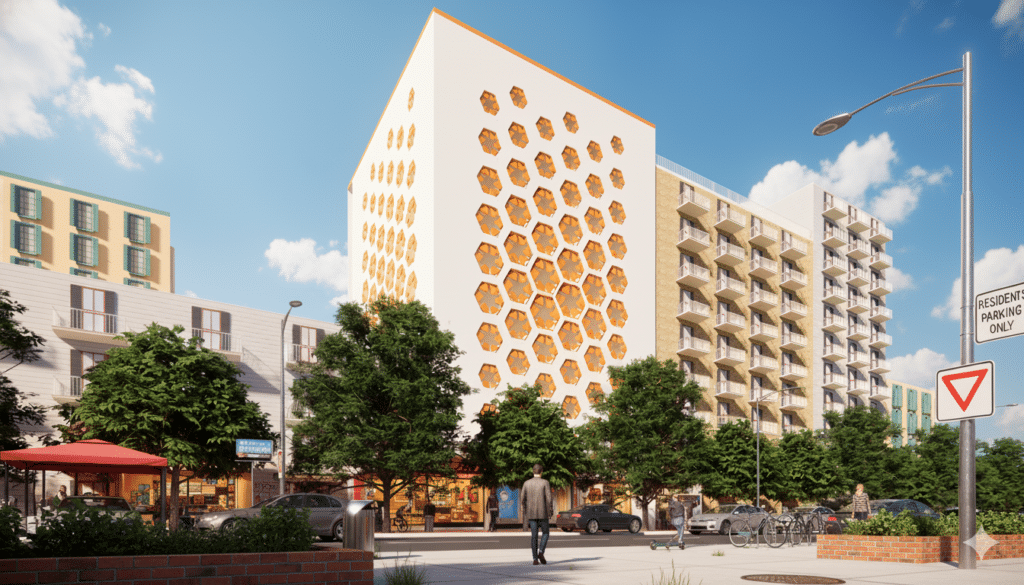
Kinetic Facade Iterations
Iteration 01 — Unfolding Variation:
This initial exploration focused on the gradual unfolding of façade panels, driven by parametric rotations and hinge-based transformations. The system emphasized linear motion and directional opening, establishing a foundational logic for movement and constructability.
Iteration 02 — Warping Variation:
The second iteration introduced surface warping, where panels deform through continuous curvature and spatial distortion. This variation investigated elasticity and non-uniform motion, allowing the façade to respond with fluid, wave-like transformations across the surface.
Iteration 03 — Blooming Variation:
The final iteration synthesizes the insights from previous studies, adopting a blooming mechanism inspired by organic growth patterns. Elements expand radially from fixed points, creating a rhythmic opening and closing behavior that defines the finalized kinetic façade.
Pseudo Code for the Kinetic Facade
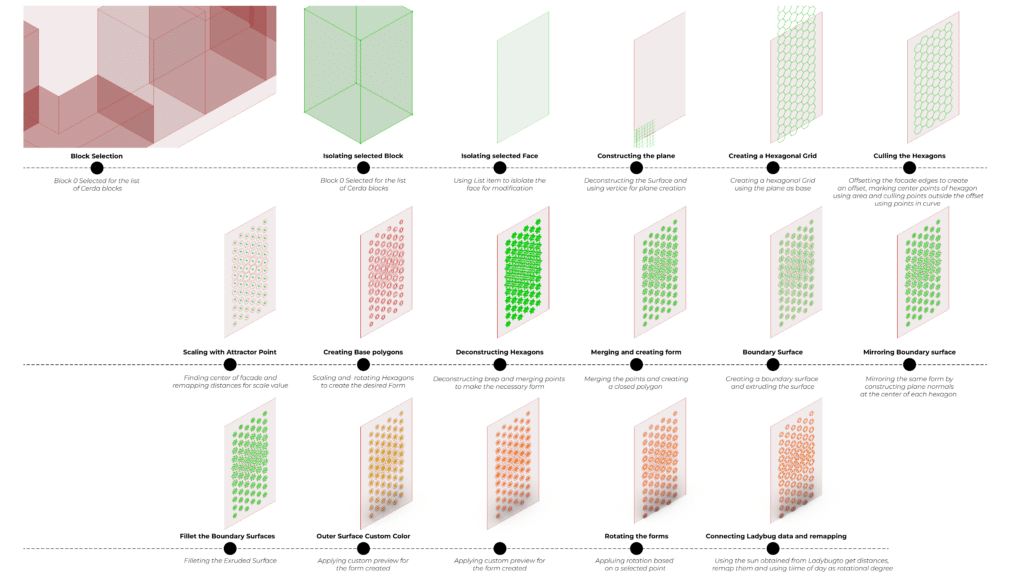
Pseudo Code for the form
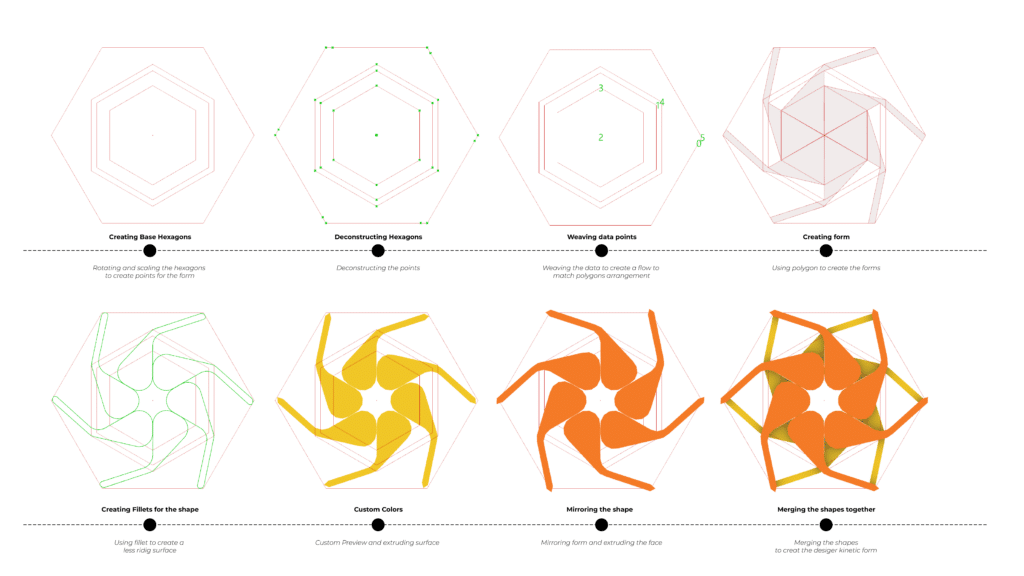
The façade is a computationally designed building envelope inspired by the mechanics of a blooming flower. Through parametric logic and responsive geometry, individual elements open and contract, echoing the gradual unfurling of petals in nature. This kinetic system allows the envelope to continuously transform, mediating light, ventilation, and visual porosity while giving the building a living, adaptive character.

The Gorgon:
The Inspiration
The façade’s motion is directly inspired by a looping kinetic sequence, where surface elements rhythmically expand and retract as a unified yet fluid system. This continuous cycle of movement informs the facade’s behavior, translating a digital animation into architectural logic—where repetition, elasticity, and timing govern the blooming and closing of the envelope.
