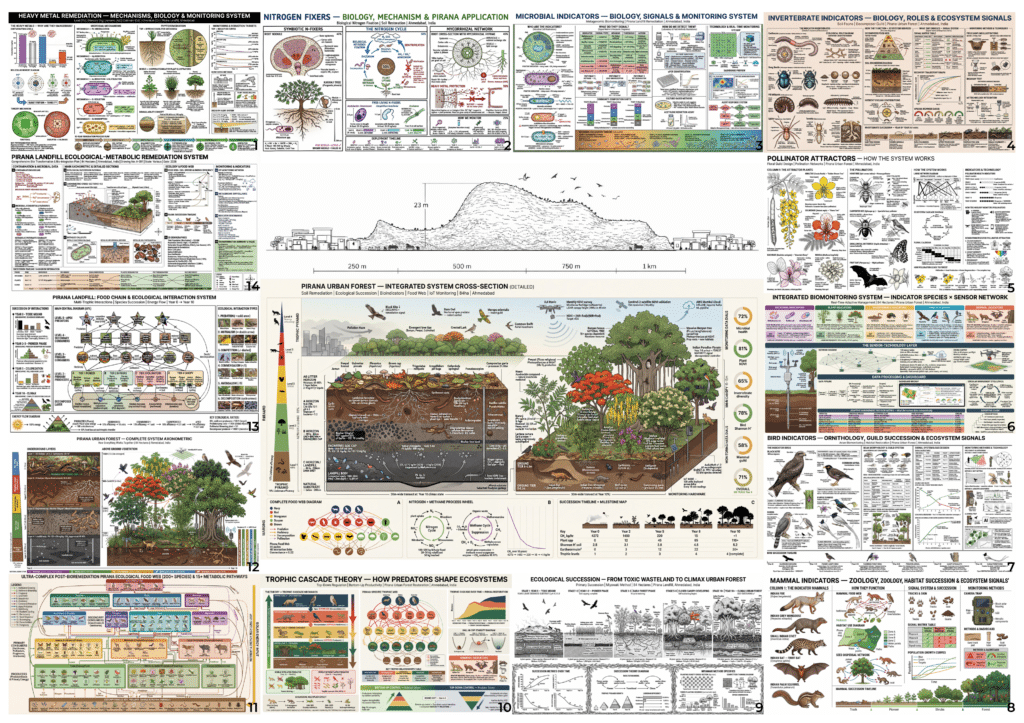
Urban Metabolism: From Trash Mountain to Ecological Machine,
The case of PIRANA landfill, Ahmedabad
Introduction: The Baseline of Obsolescence
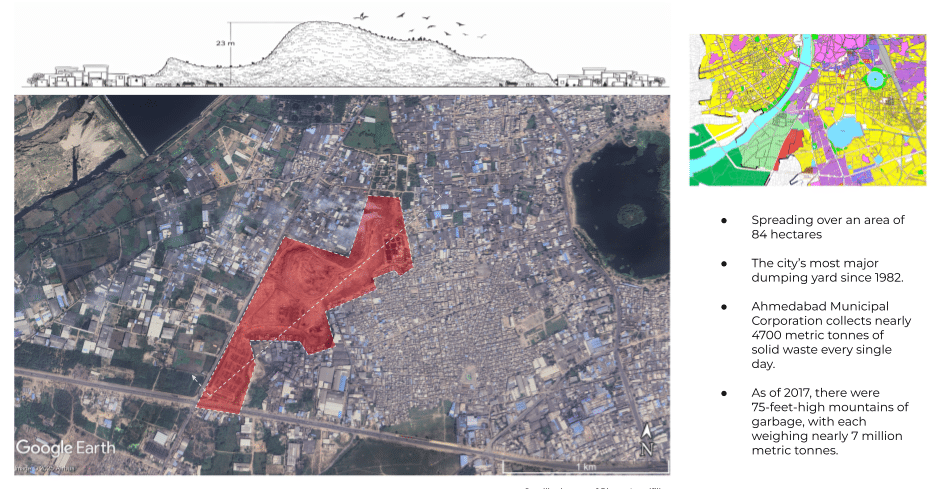
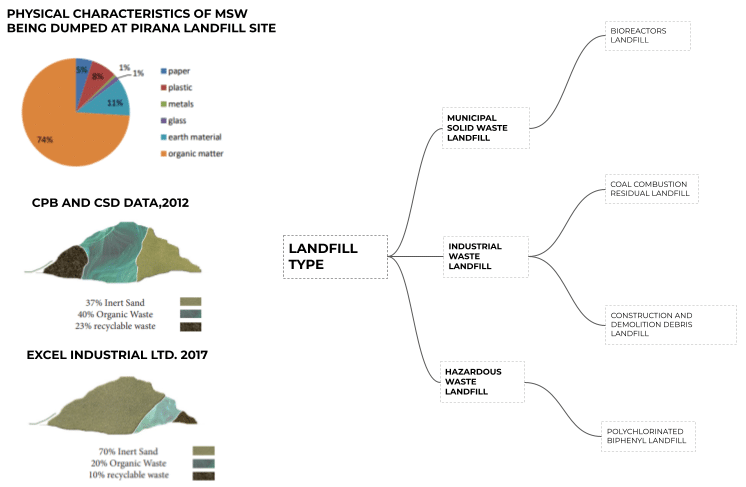
- Toxic Volatility: Trapped methane caused constant spontaneous fires and noxious fumes.
- Health Hazards: The site posed severe risks to waste management professionals and the local communities living in close proximity.
- The Growth Signal: For decades, the site only expanded, visible from kilometers away as a physical monument to urban waste
Phase I: The Extraction & Sifting (Mechanical Metabolism)
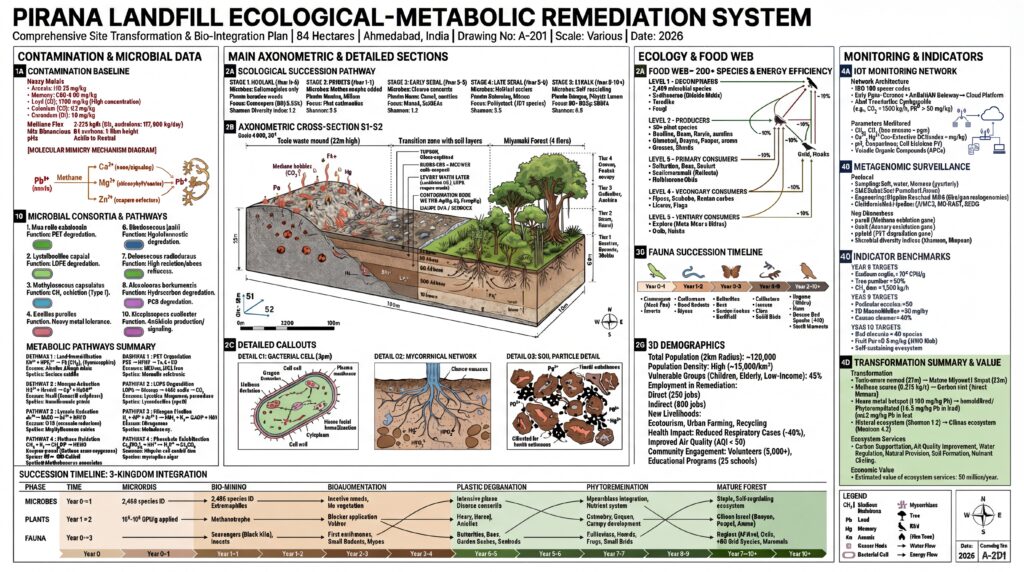
Step 01: Multi-Scalar Waste Characterization The process begins with “Place Profiling,” identifying the site’s 84-hectare footprint and 75-foot height. Data points are collected on the 4,700 metric tonnes of daily influx and the existing 7 million metric tonnes of legacy waste.
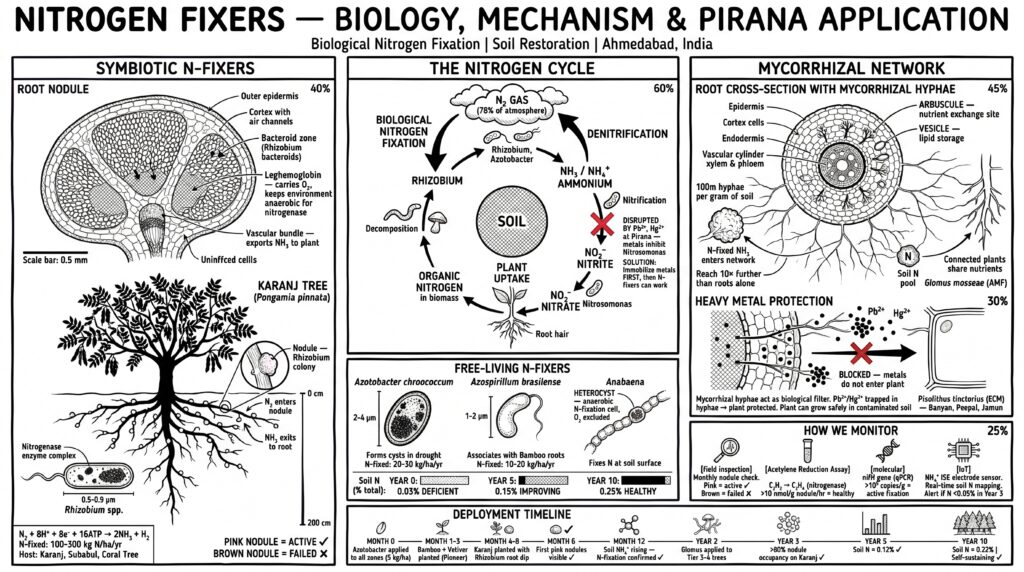
Phase II: The Bio-Digital Filter (Microbial Metabolism)
Step 02: Metagenomic Sequencing (The Biological Signal) Shotgun metagenomic analysis identifies over 2,400 microbial species acting as “Functional Life Forms” within the toxic soil. This digital map guides the biological intervention.+1
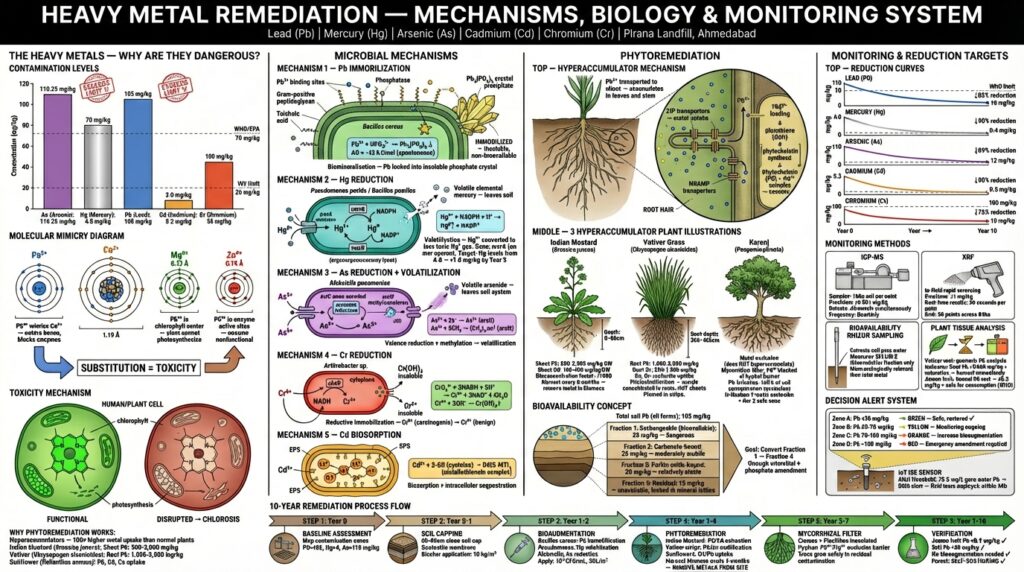
Step 03: Microbial “Gate-Crashing” (Adsorption) Metabolic “Imposter” species like Bacillus megaterium use ATP-binding cassette (ABC) transporters to pull heavy metals (Pb2+) into their cells, mistaking them for essential minerals like Magnesium or Iron.
Step 04: Plastic-Eating Enzymatic Breakdown Specialized “Super-Microbes” like Ideonella sakaiensis (PET degrader) and Lysinibacillus capsici (LDPE degrader) begin the enzymatic digestion of synthetic polymers that survived mechanical sifting
Phase III: The Botanical Shield (Phyto-Metabolism)
Step 05: Root Uptake & Calcium Mimicry Pioneer plants like Calotropis procera (Akado) and Prosopis juliflora(Gando Baval) absorb toxins through their roots. Metals like Lead enter the plant’s xylem by mimicking Calcium channels.
Step 06: Vacuolar Sequestration & Detoxification Inside the plant, Lead is stored in vacuoles or bound to Phytochelatins to prevent the plant’s metabolic collapse, even as it replaces Magnesium in chlorophyll, causing “managed” chlorosis.
Step 07: Rhizostabilization & Soil Anchoring Hardy grasses like Cynodon dactylon (Doob) create a “biological net,” locking the heavy metals in the soil and preventing toxic dust from becoming airborne bioaerosols
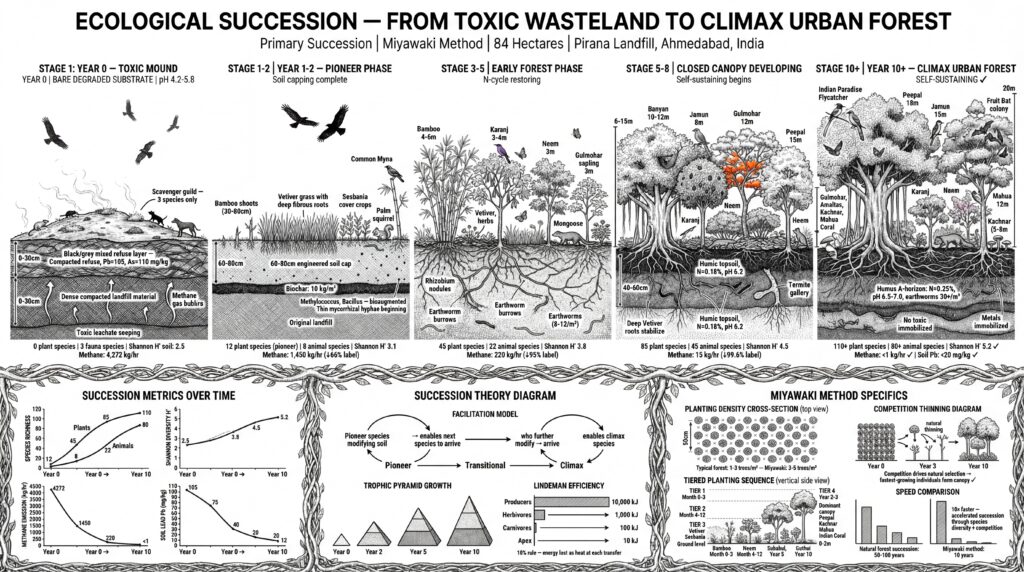
Phase IV: The Circular Feedback (Ecological & Urban Monitoring)
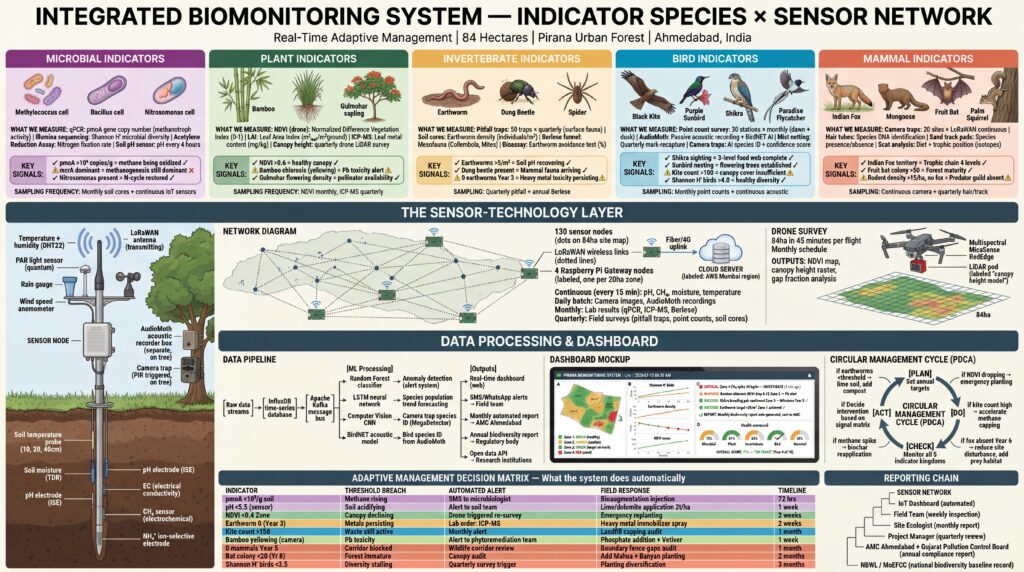
Step 8: Trophic Transfer Control (Scavenger Management) The pathway monitors “Biomagnification” as toxins move from insects (like Musca domestica) to apex scavengers like Black Kites (Milvus migrans). Managing this prevents toxins from reaching the surrounding human urban fabric.
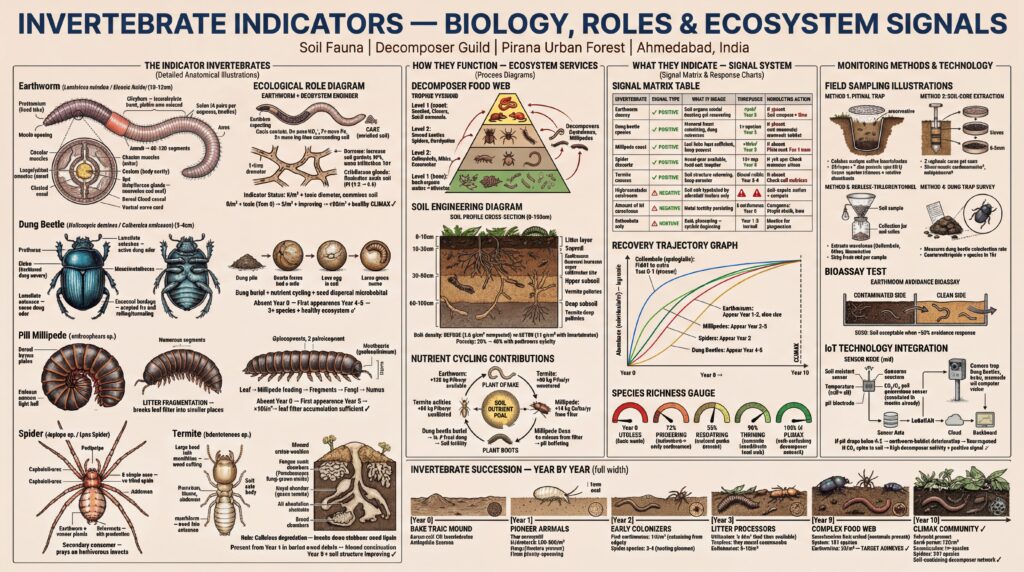
Step 9: Real-Time Methane Flux Monitoring IoT sensors and satellite imaging track the reduction in methane emissions (historically 4,272 kg/h), signaling the transition from an anaerobic “waste state” to a stabilized “land state”.
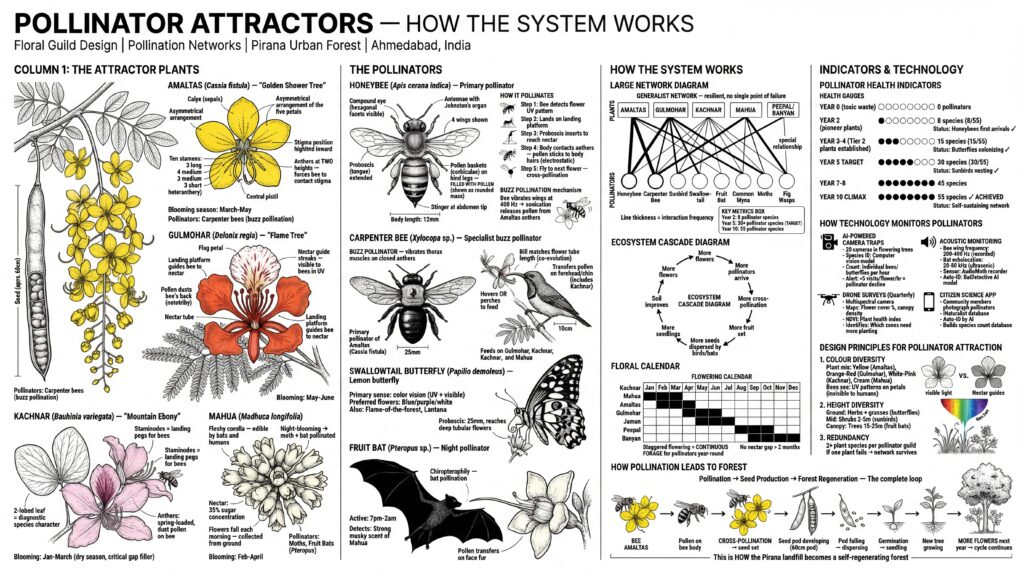
Step 10: The “Waste to Wonder” Urban Integration The final step is the conversion of the remediated site into a “managed forestry” or “urban lung,” where the orange geotextile markers and engineered topsoil (targeting < 200 ppm Lead) allow for safe public interaction.