
Architectural proposal
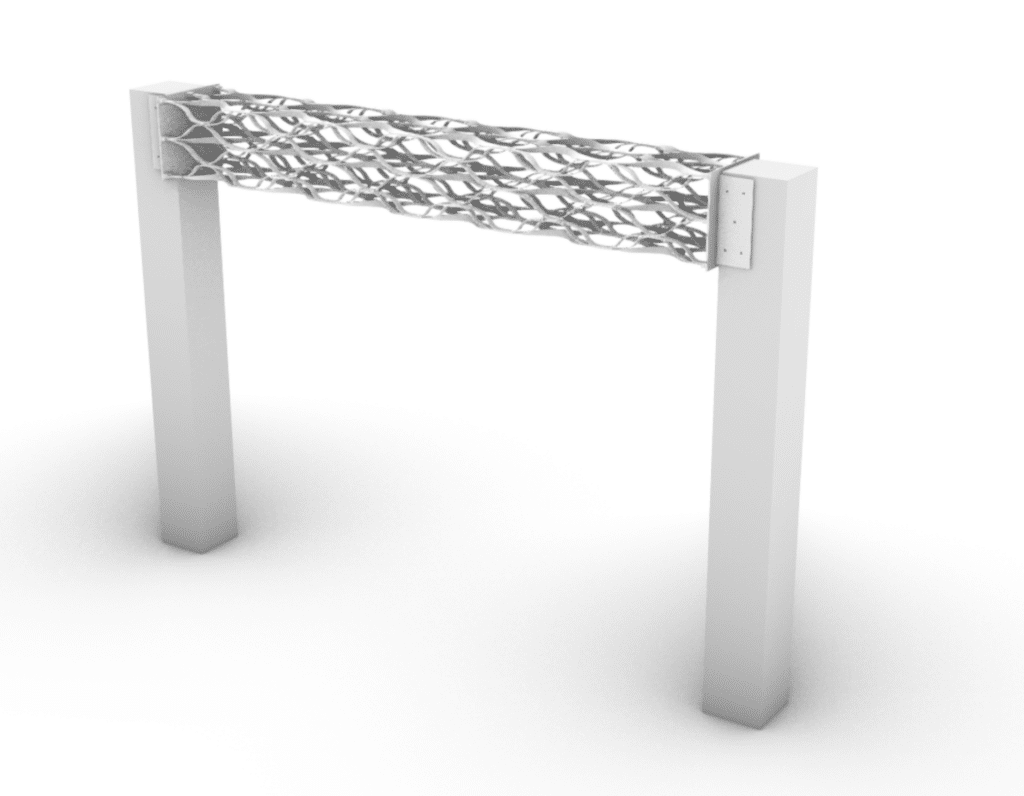
A lightweight modular timber structure made from actively bent locally sourced beech wood processed into strips. By using curvature and pre-stressing the elements, the system achieves stiffness with minimal material, and its scalable logic makes it suitable as a lightweight spanning beam system supported by column brackets.
Conceptual analyses
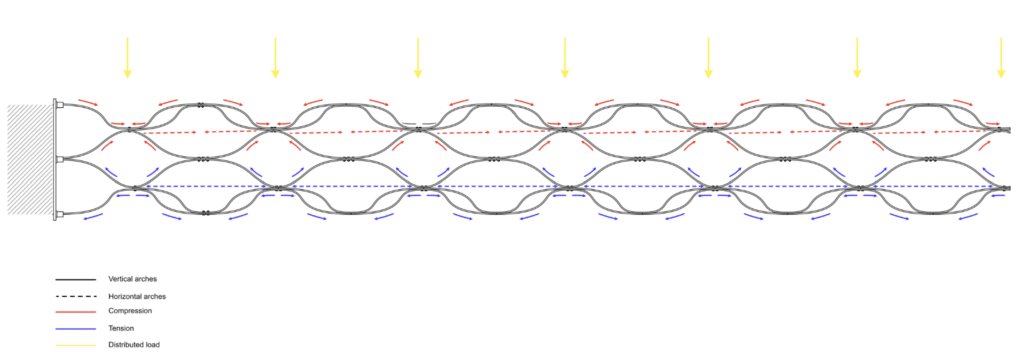
Idealization of the structural model
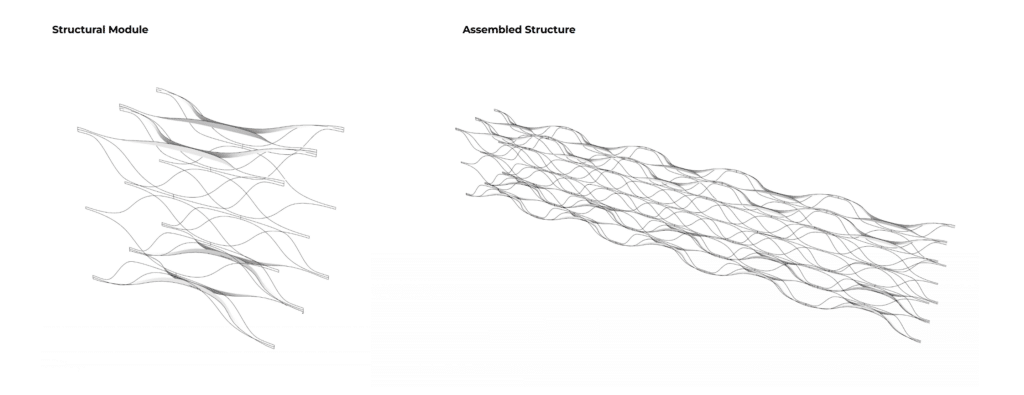
Structural analysis in Karamba
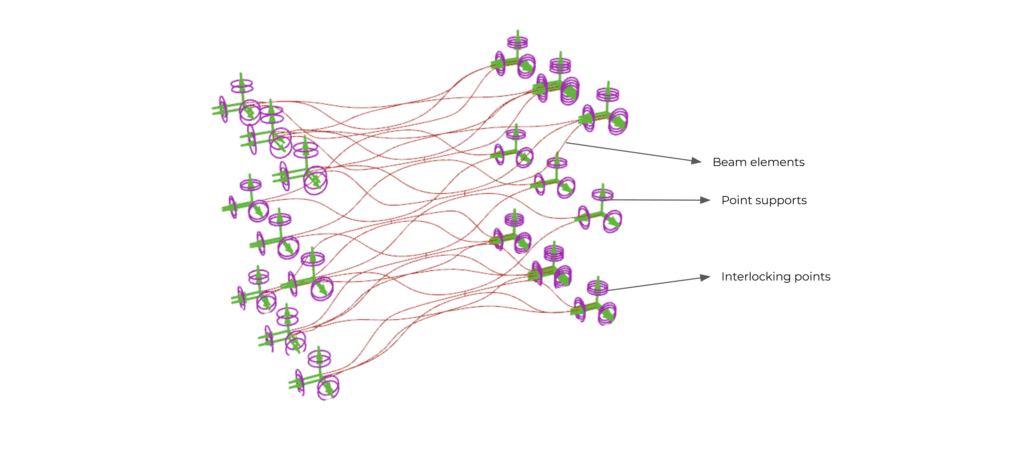
Structural analysis in Karamba
Stress/Strength Ratio — Module
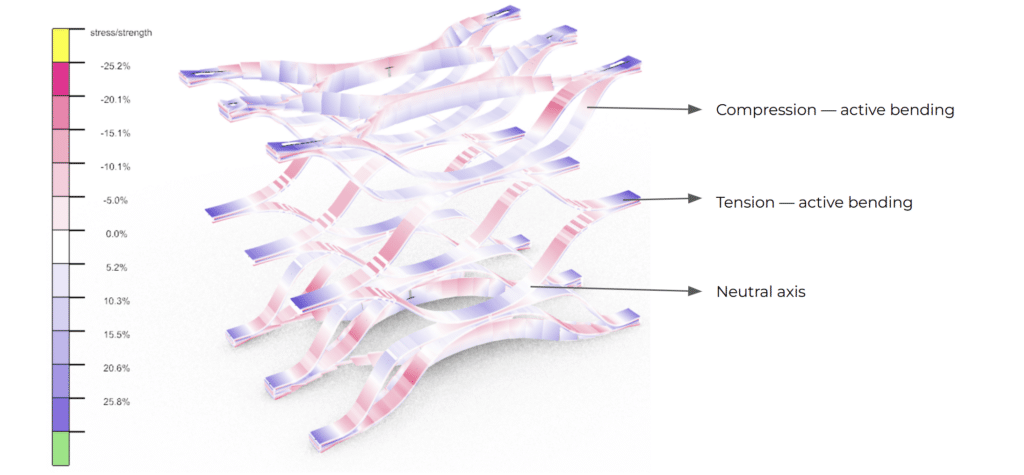
Utilization map (stress/strength ratio) under self-weight. Compression zones (pink) and tension zones (blue) distribute symmetrically across the actively bent modules. Peak values remain below ±43%, indicating sufficient structural reserve.
Deflection Analysis” Subtítulo: “Resultant displacement under self-weight (SW) — Single module
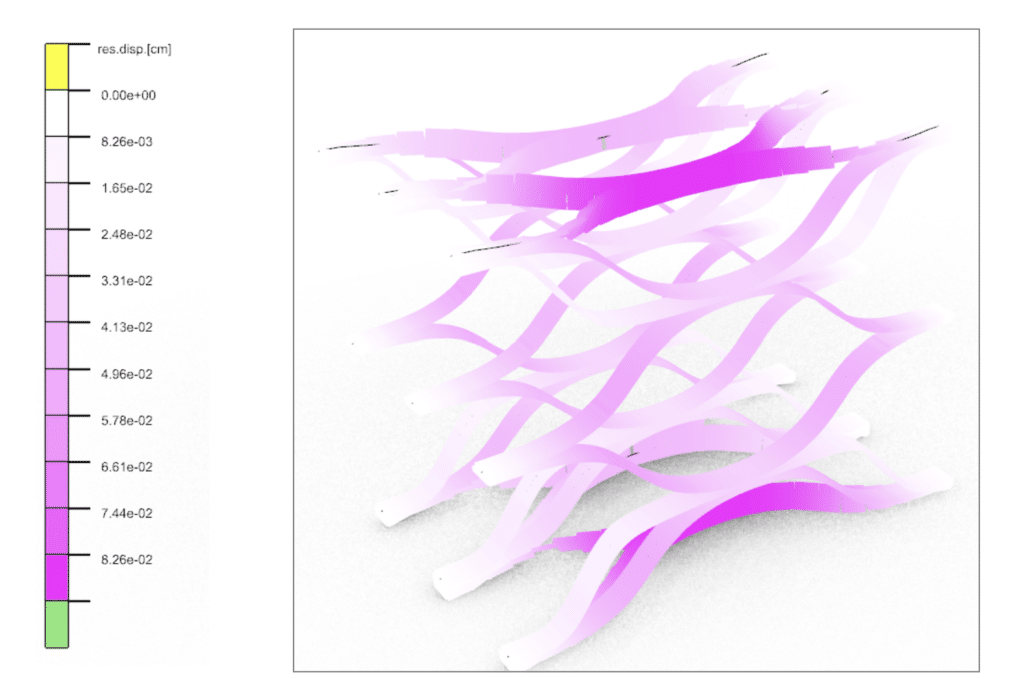
Maximum resultant displacement of 0.083 cm under self-weight. Highest deflection concentrated at the free upper edges of the module. Supports remain fixed at interlocking connection points.
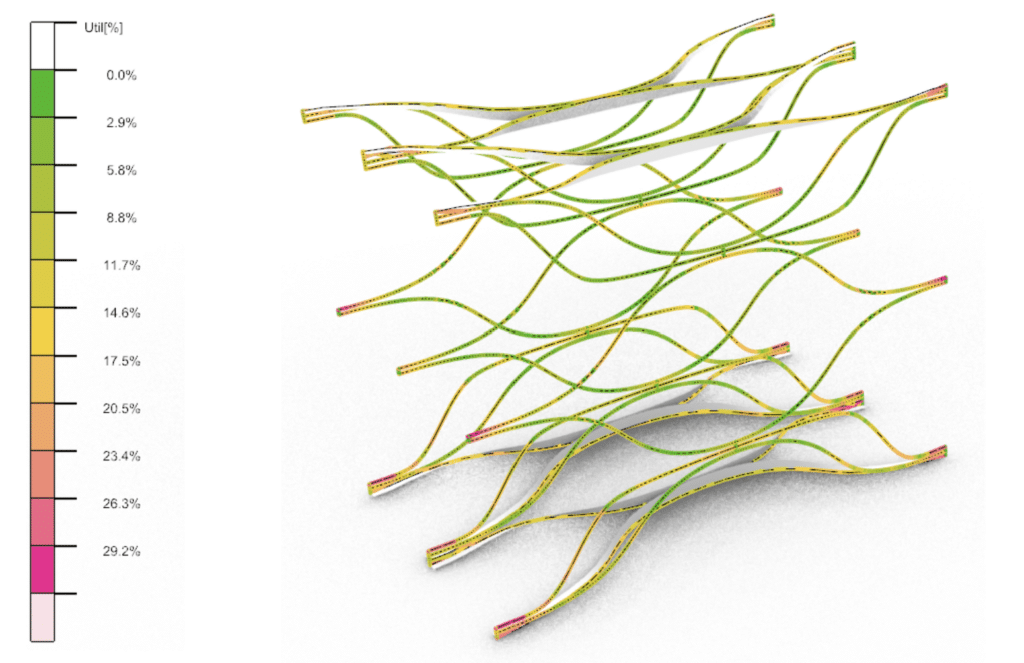
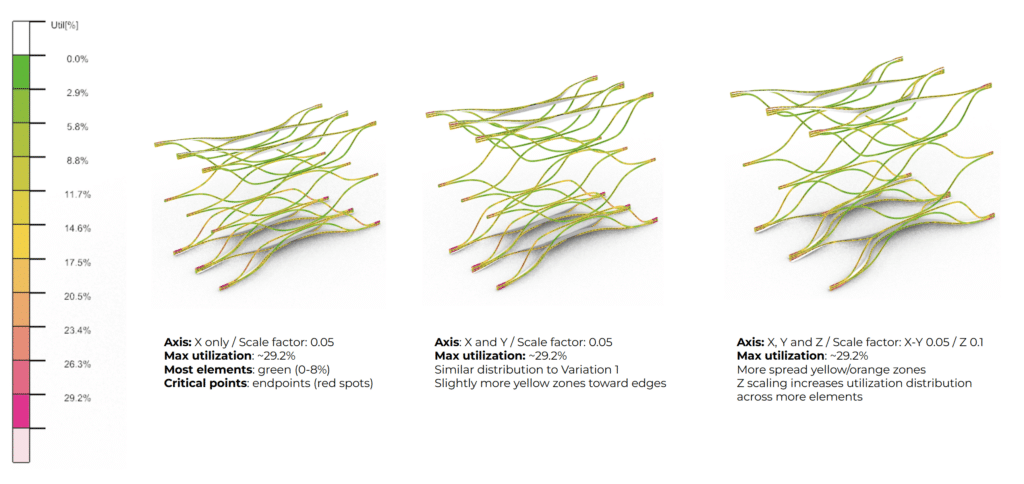
Maximum utilization of 29.2% under self-weight, concentrated at cable endpoints. The majority of elements remain below 10% utilization, indicating significant structural reserve and potential for additional loading.
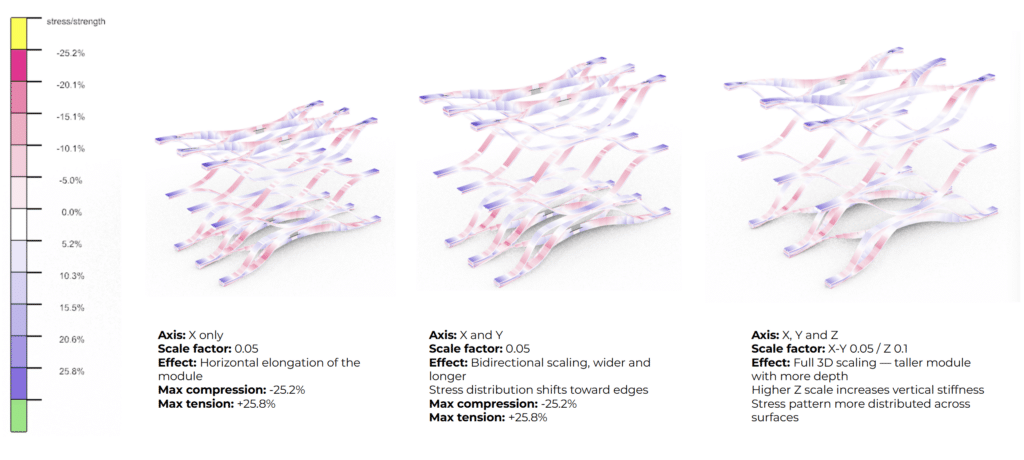
Parametric variations
Conclusions
- Reducing module height pushes the system toward compression. Increasing it brings tension.
- Tension concentrates at the connection points with the column brackets — exactly where the beam hangs from.
- Under self-weight, utilization stays below 30%. There is room to add load, reduce section, or scale up the system.
- The 20mm interlocking offset is not just a detail — it distributes stress across the whole module and keeps peak values low.
