What if innovation meant remembering instead of inventing?
PROBLEM
We live in a time where cities grow taller and denser, but also more disconnected from nature, from tradition, and from the wisdom of those who built before us. We believe that the answer to sustainable architecture doesn’t always lie in invention but in rediscovery.
Vernacular architecture which is deeply rooted in place, climate, and culture is often avoided in urban contexts. Due to the lack of visibility on these techniques, we have dismissed them as outdated, low-cost, and incompatible with modern design and regulation.
At the same time, though, there is a rapidly growing interest in vernacular architecture, earth-based construction, and low-carbon material systems. There’s an emerging recognition that the future of building may rely on revisiting techniques that are low-carbon, community-driven, and resilient.
SOLUTION
We believe that construction systems built from locally available materials are more efficient and respectful of their surroundings. So instead of relying on singular, extractive materials like concrete or steel, we advocate for materials that respond to their context. This approach reduces dependence on high-impact resources and allows buildings to adapt organically to their location.
At KINXA, we’re reimagining a vernacular construction method into one composed of digitally designed and prefabricated timber structures and soil plaster—resulting in an optimized low carbon building system.
But KINXA isn’t just a building technique—it becomes a service.
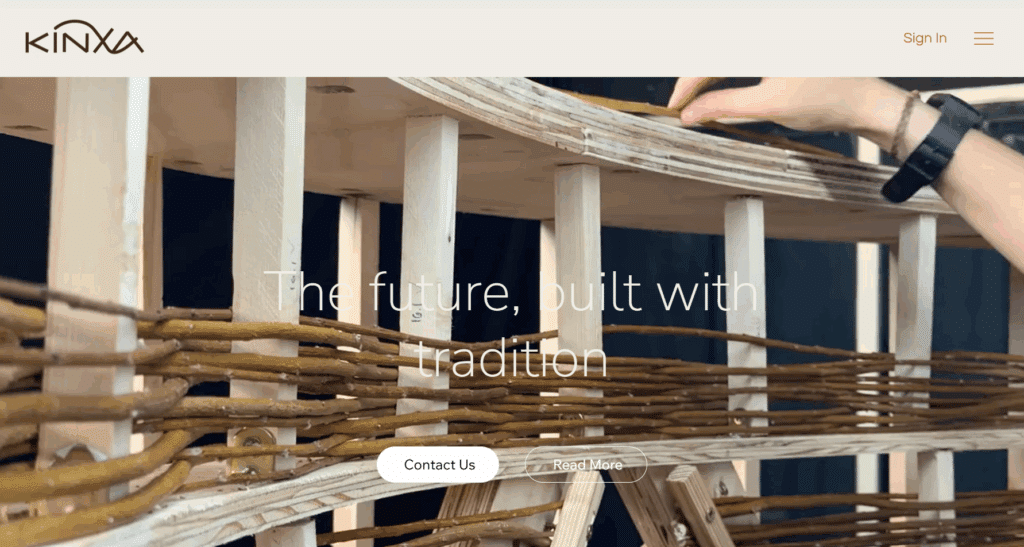
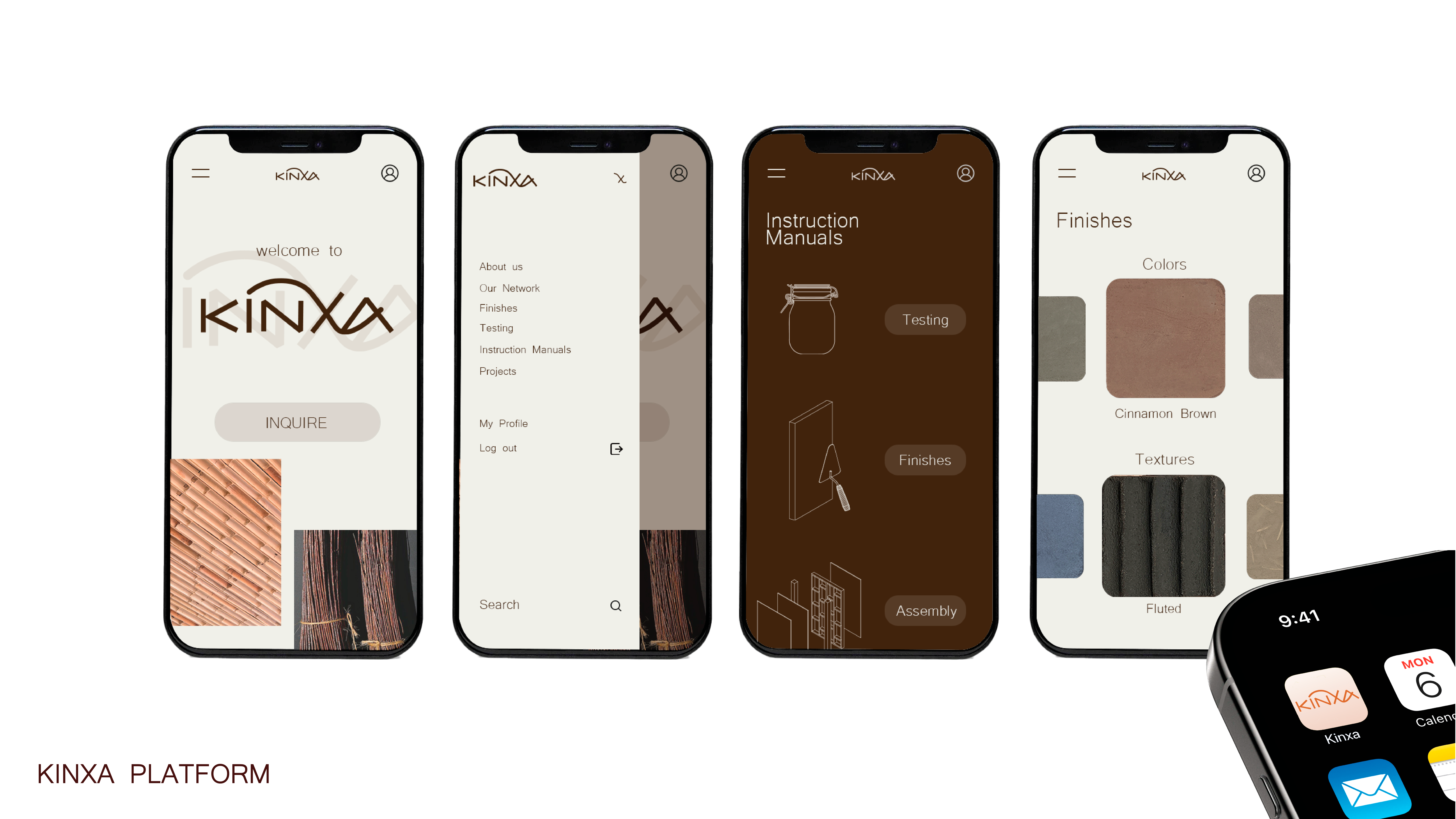
Through our website, our customers can access our methods, data, and expertise. As more projects are completed, the system will evolve. This forms the basis of our business model: providing prefabricated components, offering design-to-deployment consulting and licensing our methodology.
TEAM
Although we aim to build a network of collaborators around the world
We are the core team leading the project— a group of architects specialized in digital fabrication and material innovation.
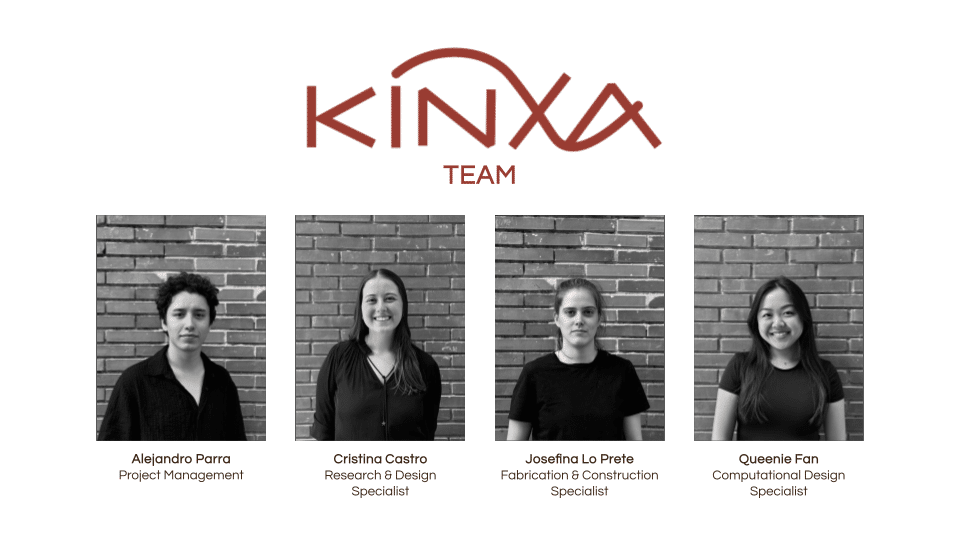
To grow KINXA into a business, we now need support from professionals in legal and financial fields, as well as partners who can help us connect with investors and navigate certification pathways
PRE-LAUNCH INVESTMENT
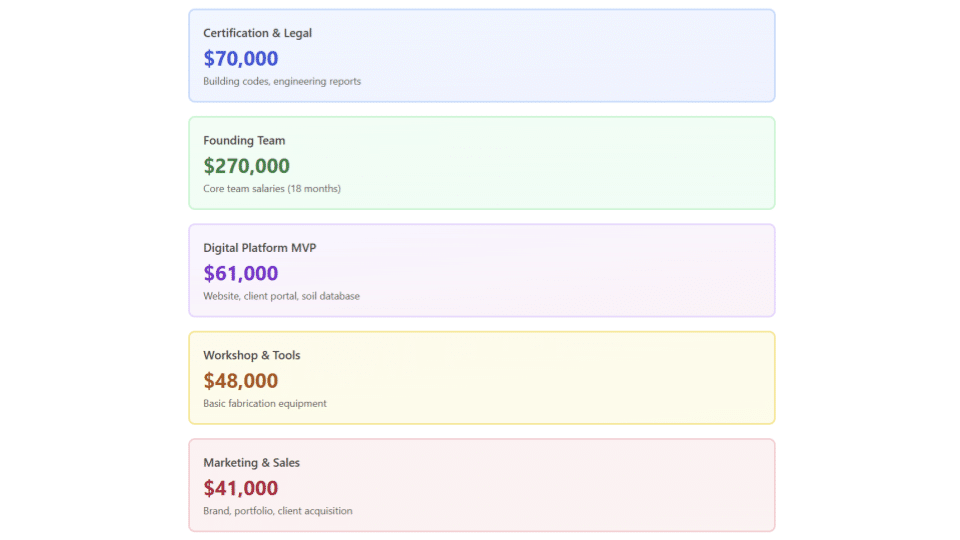
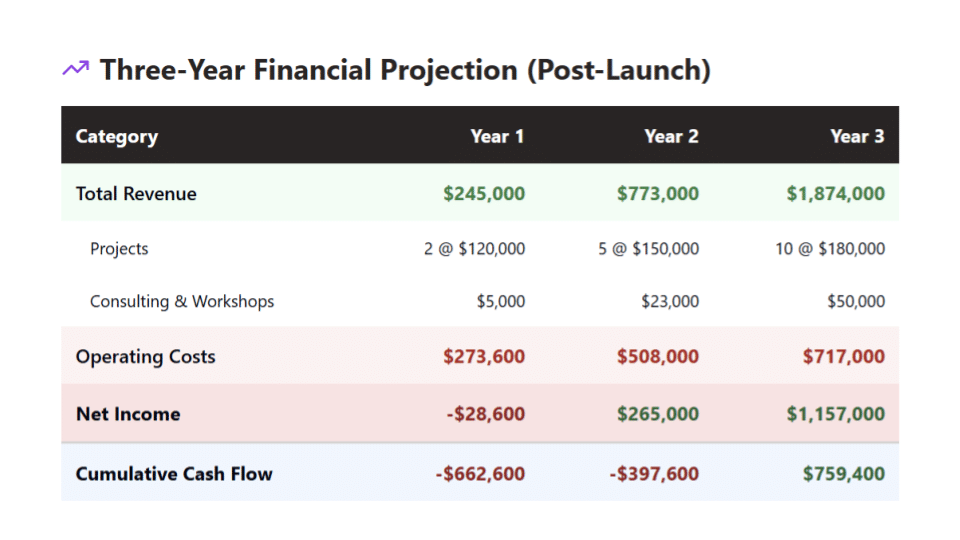
To launch KINXA into its first operational year, we project a funding requirement of approximately €180,000, covering prototyping, certification, platform development, and operations. Our projected first-year revenue is €120,000 through three pilot projects and service fees, establishing a solid base for scaling and investment return in the next 3 years.
TARGET CUSTOMERS
-NGOs, Foundations, Government & Social Housing Organizations
Active NGOs in housing / resilience in Mexico
120–150 organizations
Organizations working specifically with vernacular / earthen systems
8–12 groups
SEDATU
INFONAVIT
Cooperación Comunitaria. works with traditional earthen + seismic systems
Hábitat México. disaster reconstruction
TECHO México. rapid, low-cost housing
-Small & Medium-Sized Developers
Construction and development SMEs in Mexico
30,000–35,000 registered companies
(CMIC + INEGI economic census)
600–900 potential
eco-tourism developers (Oaxaca, Tulum, Baja Sur)
rural housing programs (Chiapas, Puebla)
regenerative community projects
Social housing demand in Mexico
650,000 units needed annually (CONAVI data)
RUBA
ÉCHALE Financiera
CoRe (Comunidad Resiliente)
-Architecture Firms
Total architecture firms in Mexico
8,000–10,000 firms
(INEGI + professional registry data)
Firms focused on sustainable / low-carbon design
typically 10–15% of the market
800–1,500 firms
Tatiana Bilbao Studio
Comunal Taller de Arquitectura — Oaxaca
Bioconstrucción y Energía Alternativa (BEA)
KINXA bridges past and future. Our mission is to combine vernacular wisdom with technology, bringing it back into conversation, not as nostalgia—but as a resilient, adaptive, and essential tool for our climate-challenged world.
Because sustainability is not just about materials—it’s about memory, meaning, and methods that have already stood the test of time. We’re changing our way of building, into one that values place, material honesty, and human connection.
Let’s make buildings that remember where they come from—and know exactly where they’re going.