
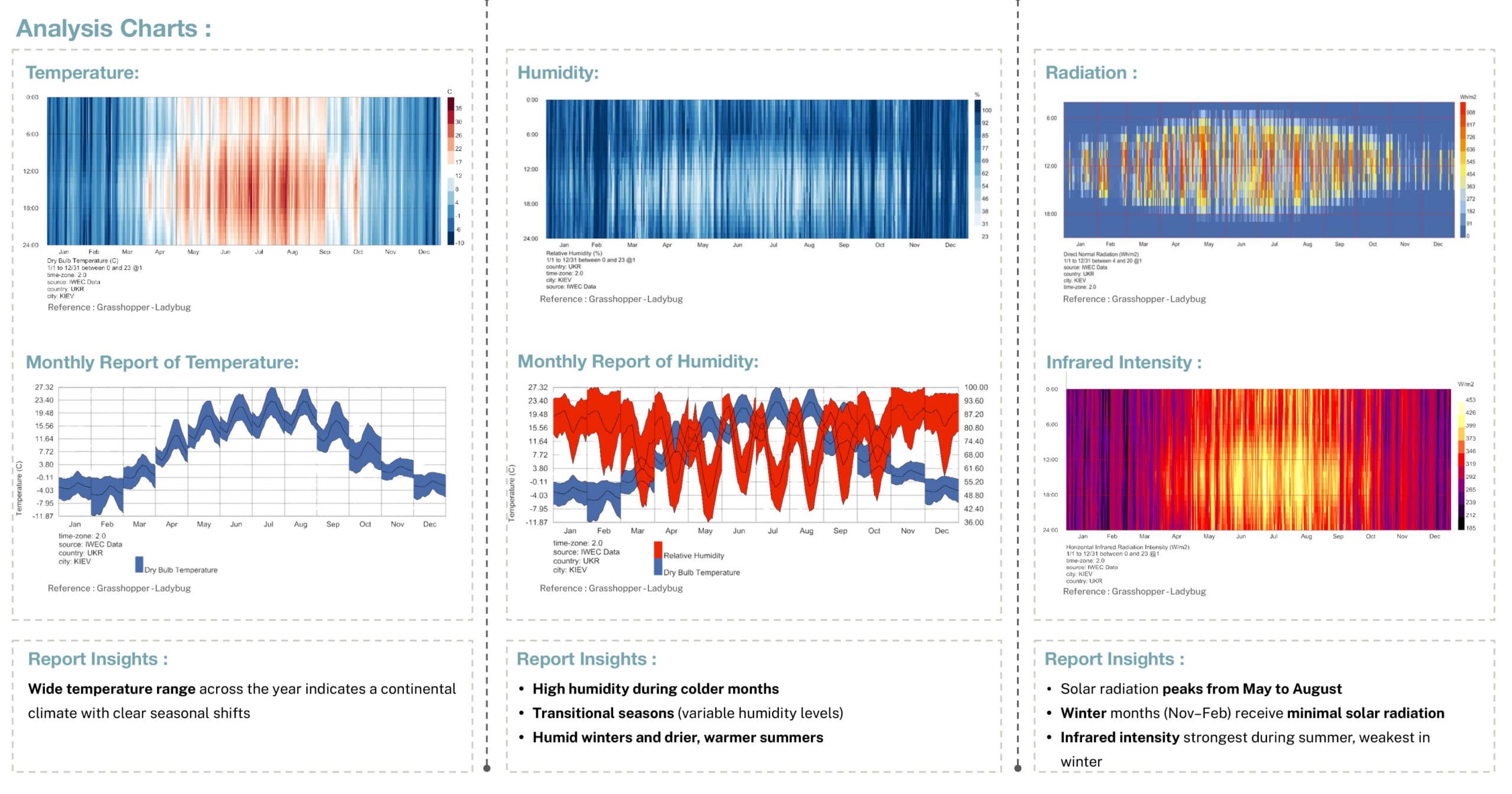
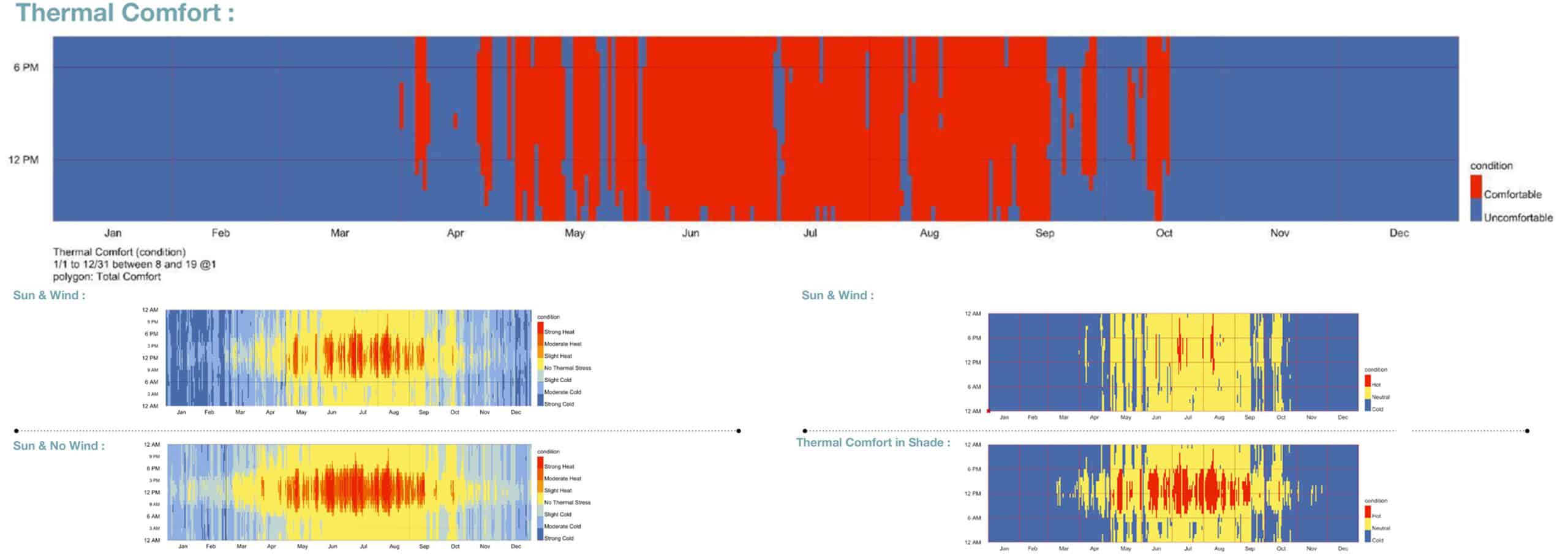
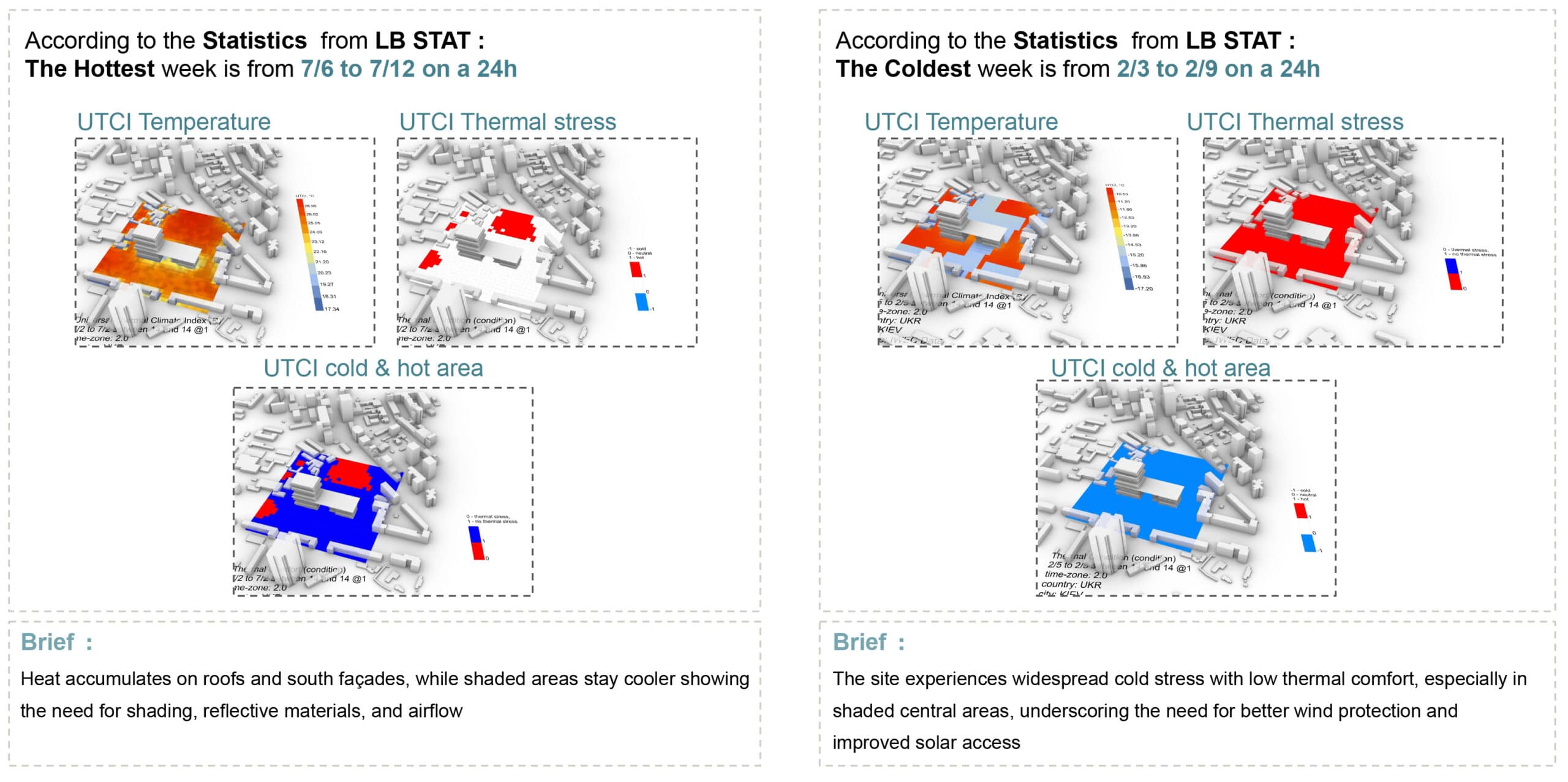
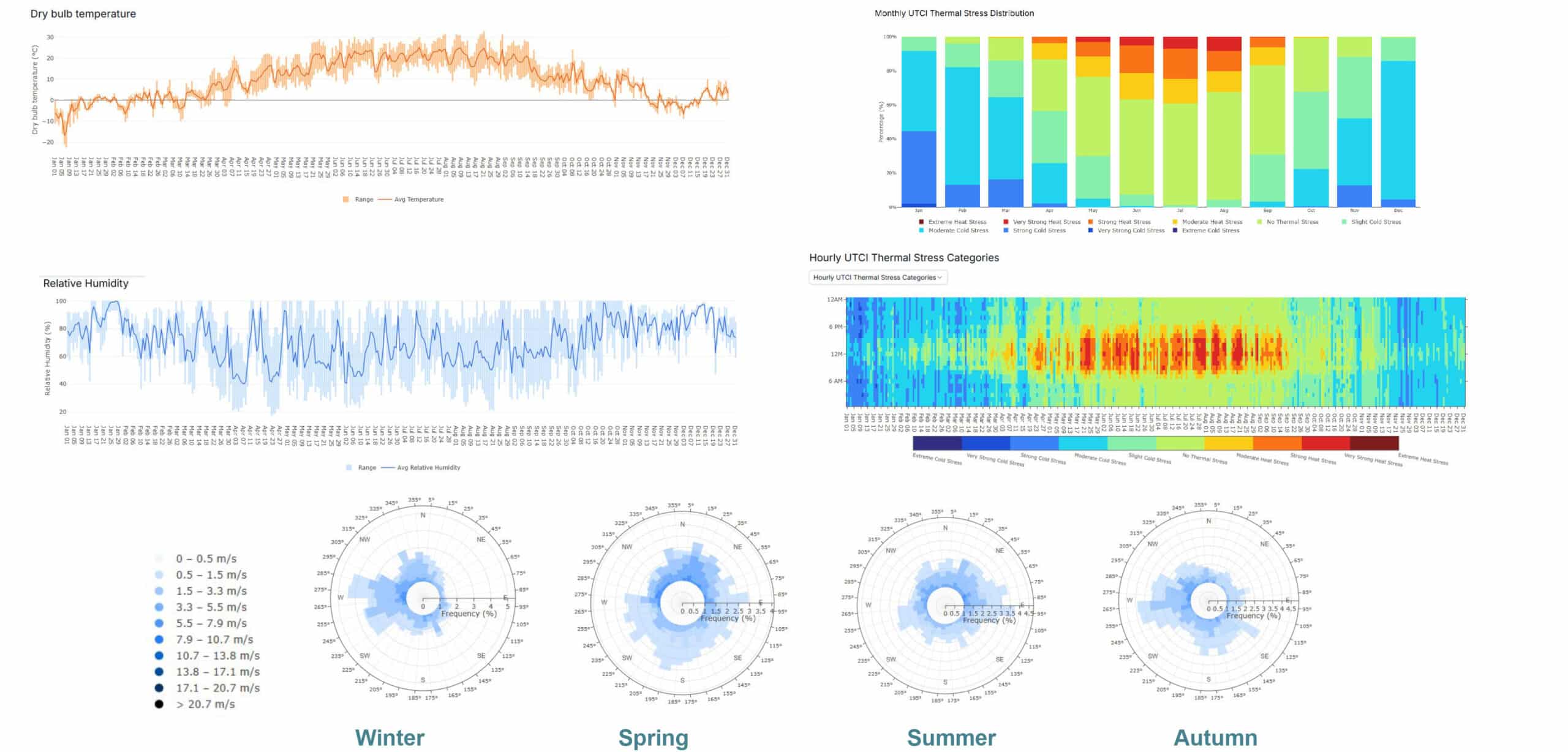
Kyiv’s climate shows limited periods of thermal comfort throughout the year. Most months are uncomfortable due to cold winters and hot summers. Comfort in the shade improves slightly in mid-seasons, while exposure to the sun enhances warmth in spring and autumn but increases heat stress in summer.
Sun & Wind Study Insights:
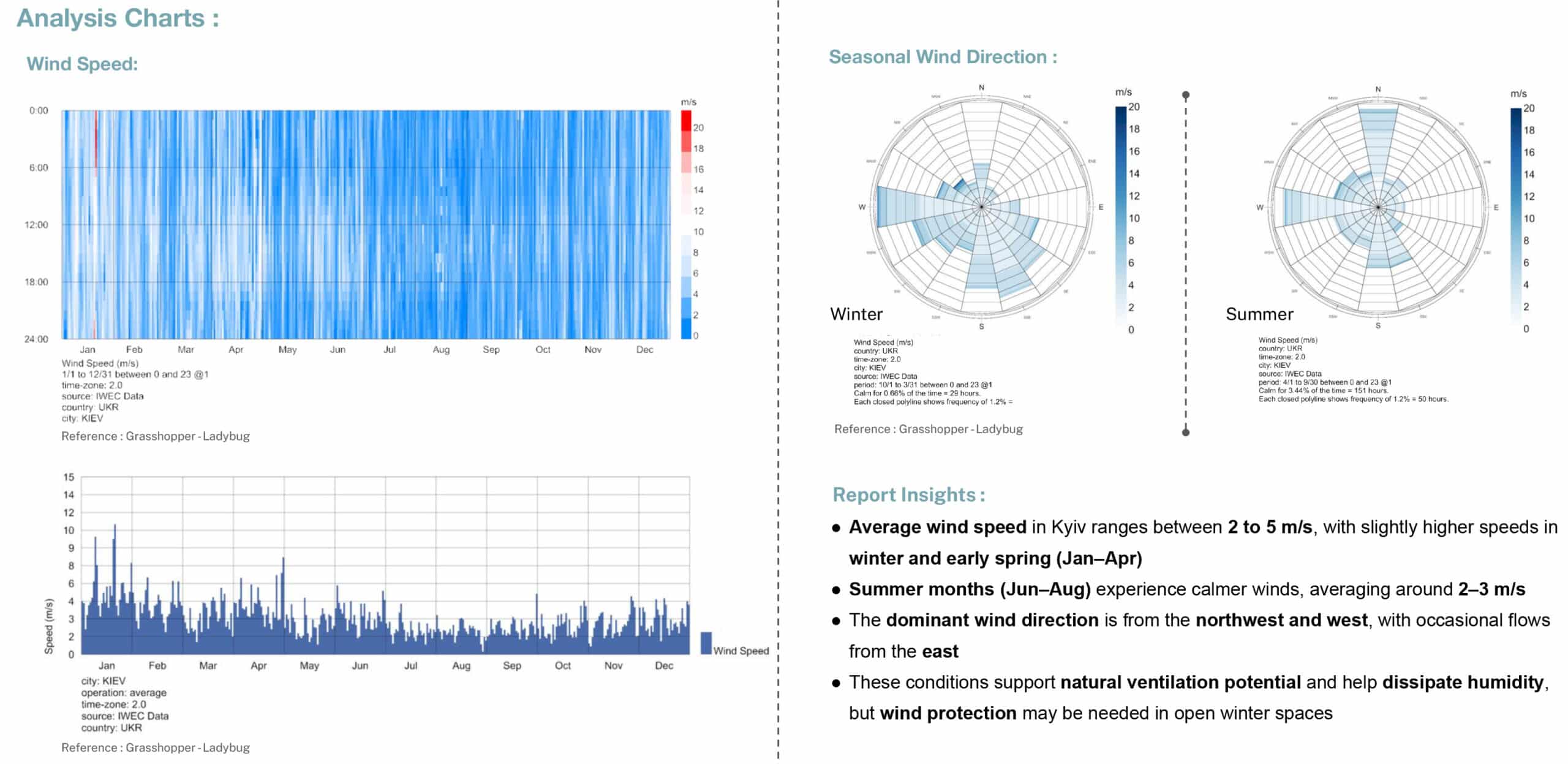
Wind significantly influences thermal comfort in Kyiv. Under sun and wind, heat intensity is slightly reduced during summer, offering better comfort through cooling effects. However, in sun and no wind conditions, heat stress increases especially between June and August indicating higher discomfort. Wind helps moderate extreme temperatures, highlighting the importance of natural ventilation and airflow in outdoor comfort design.
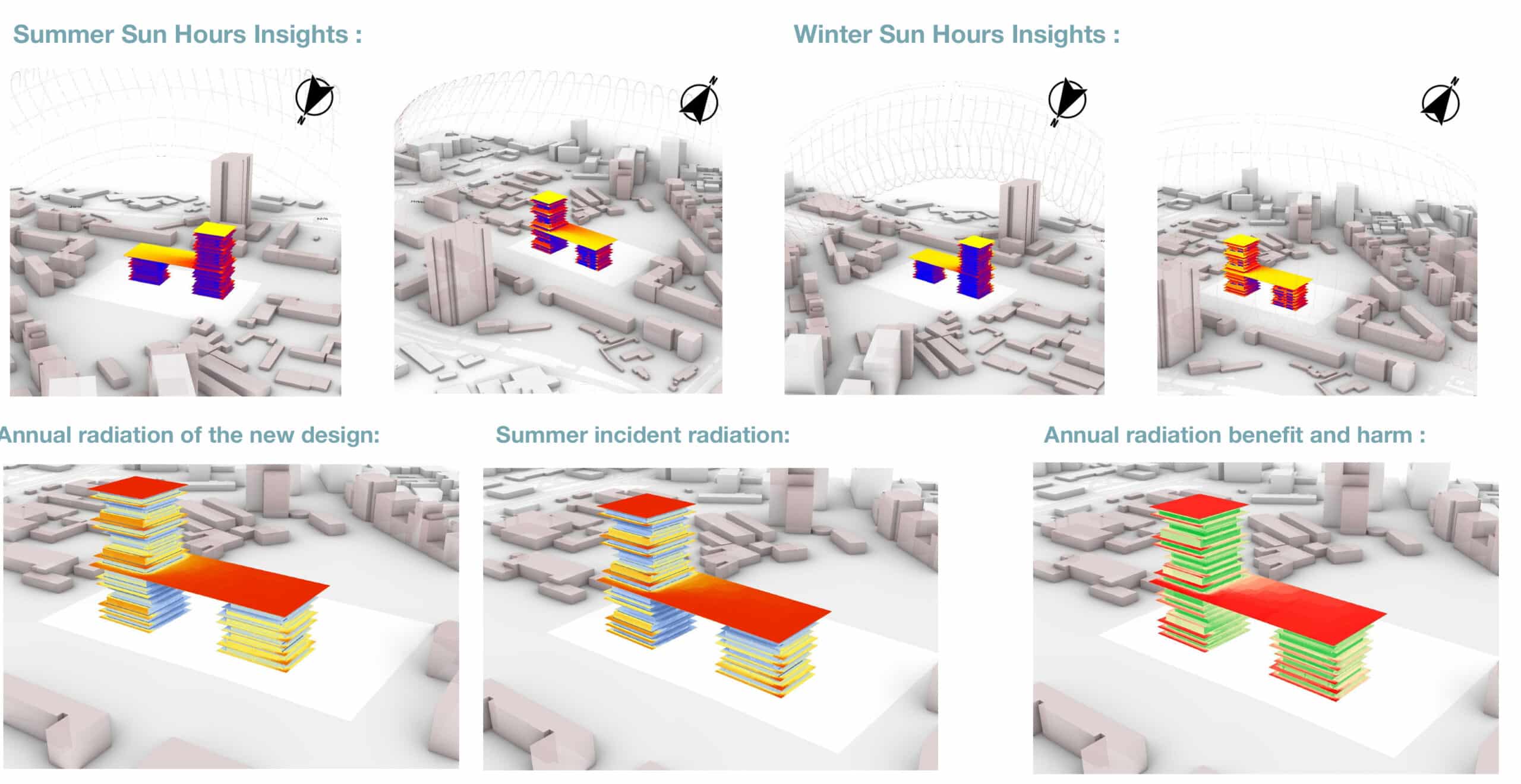
The design achieves a favorable balance between beneficial winter solar gain and harmful summer radiation. Strategic massing and façade orientation optimize passive heating potential while mitigating overheating risks, improving overall energy efficiency and occupant comfort.
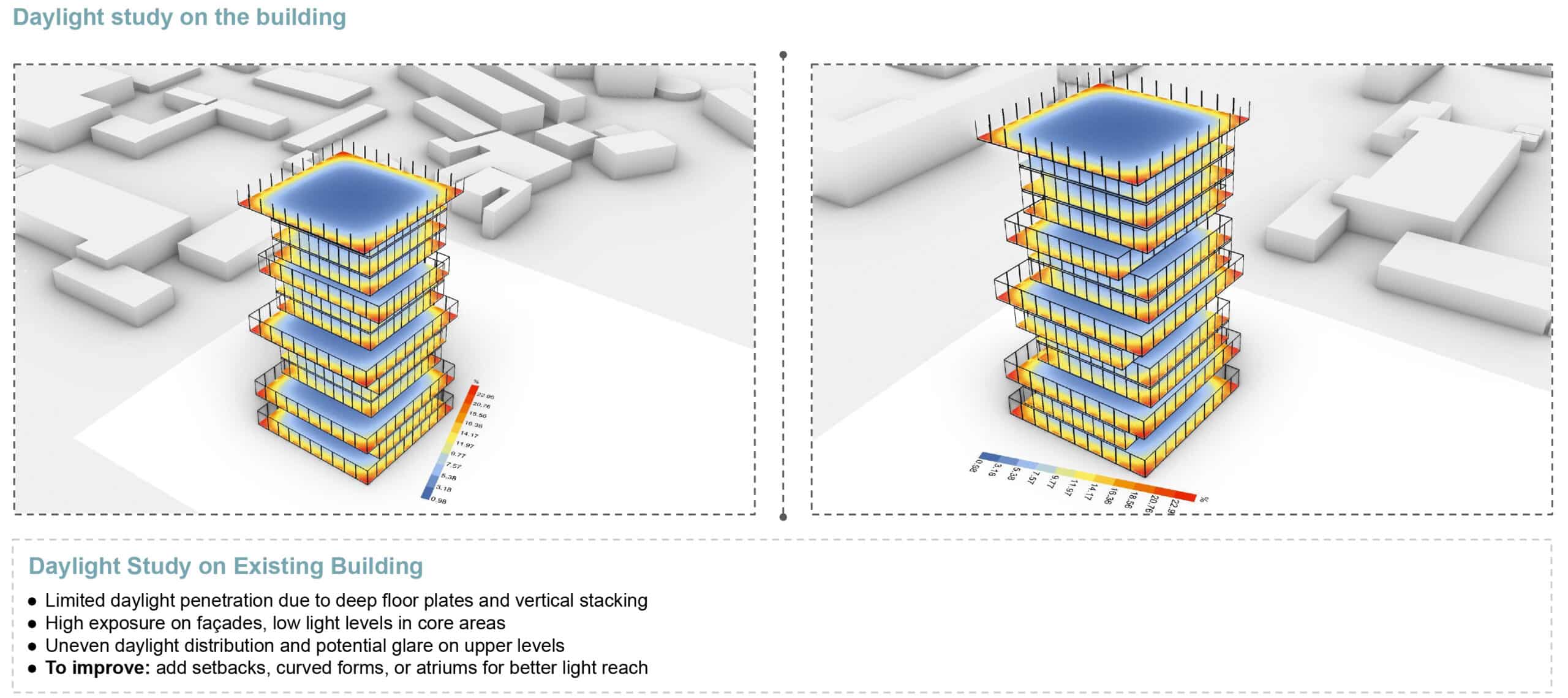
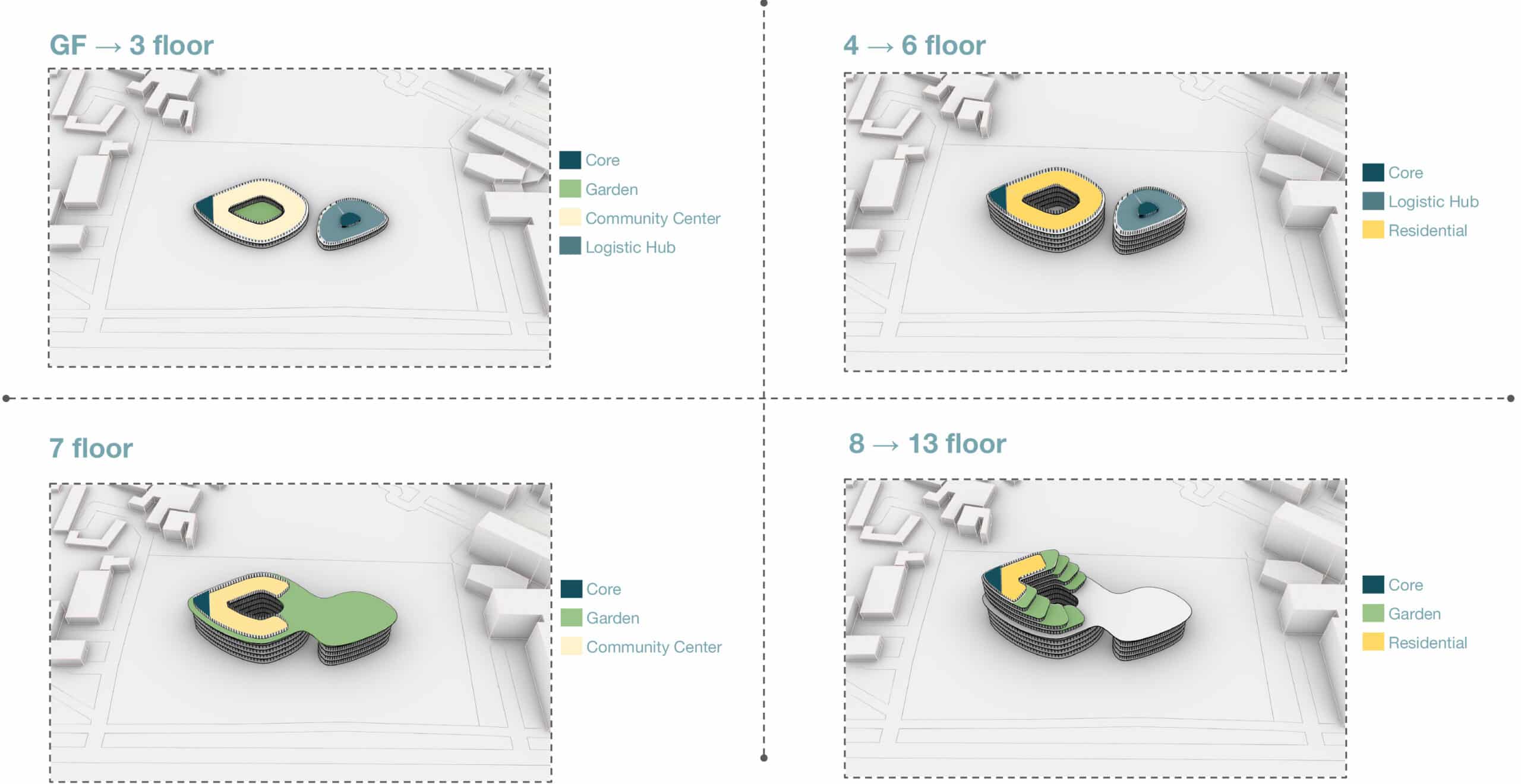
New design daylight analysis
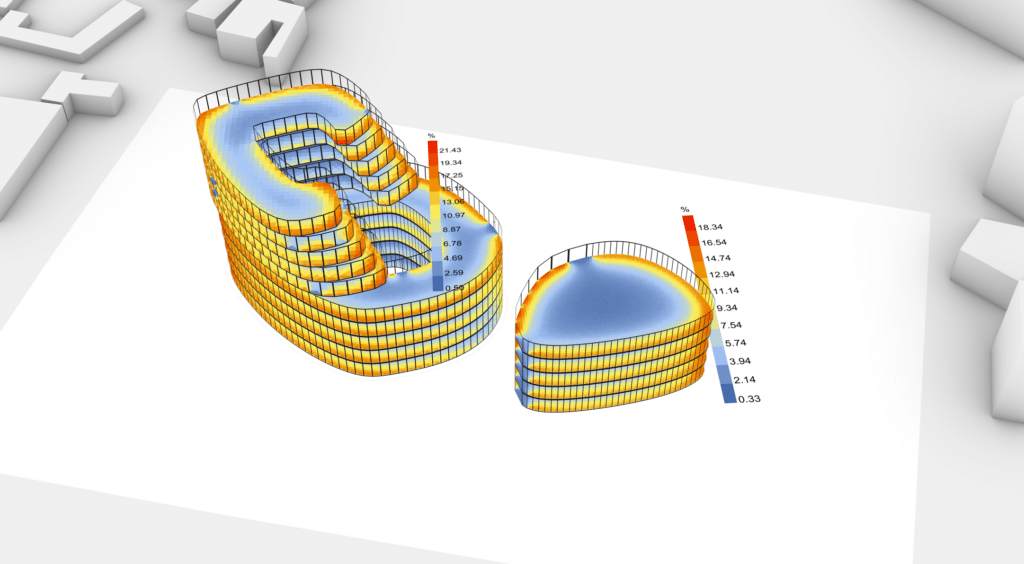
Comparison
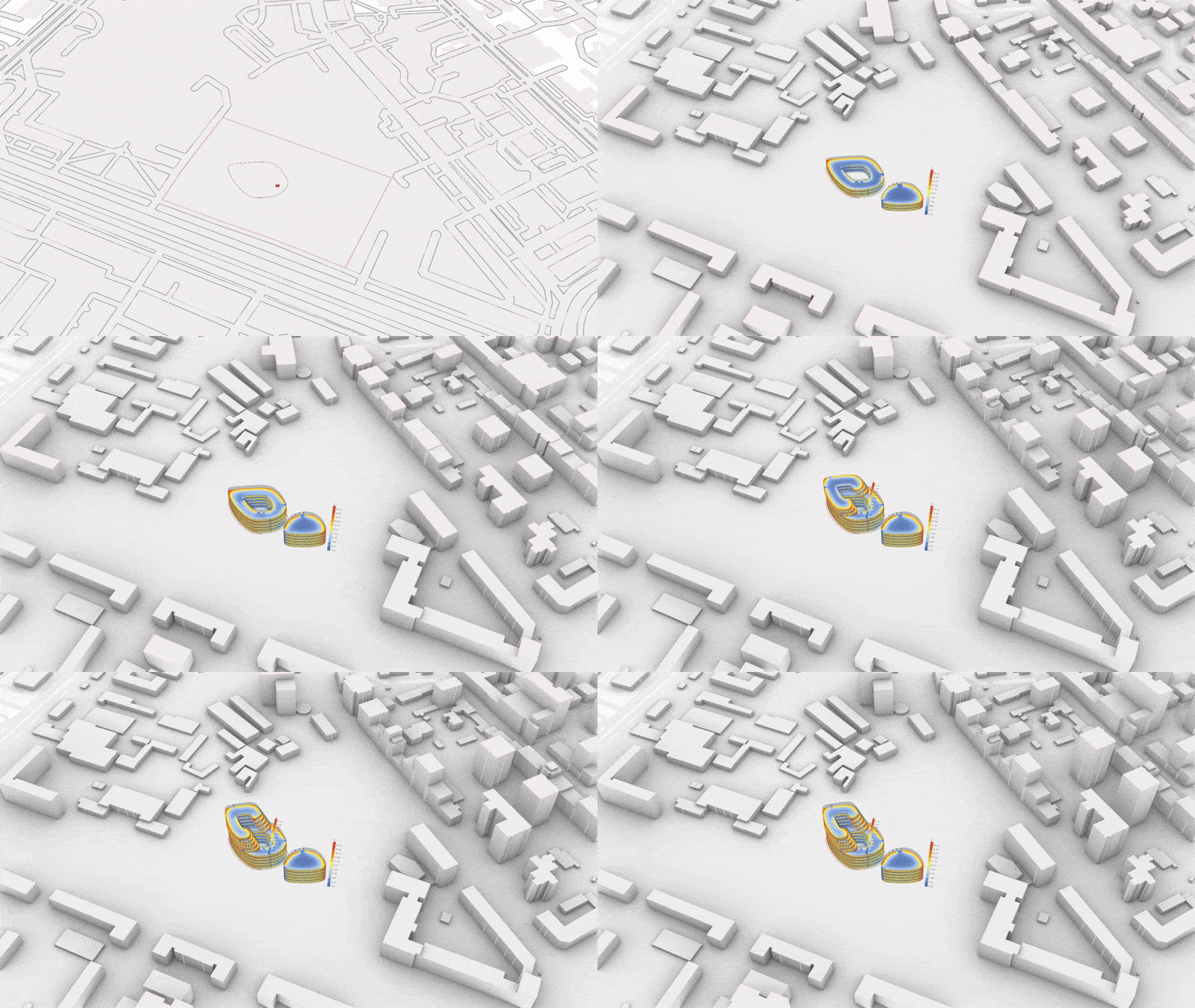
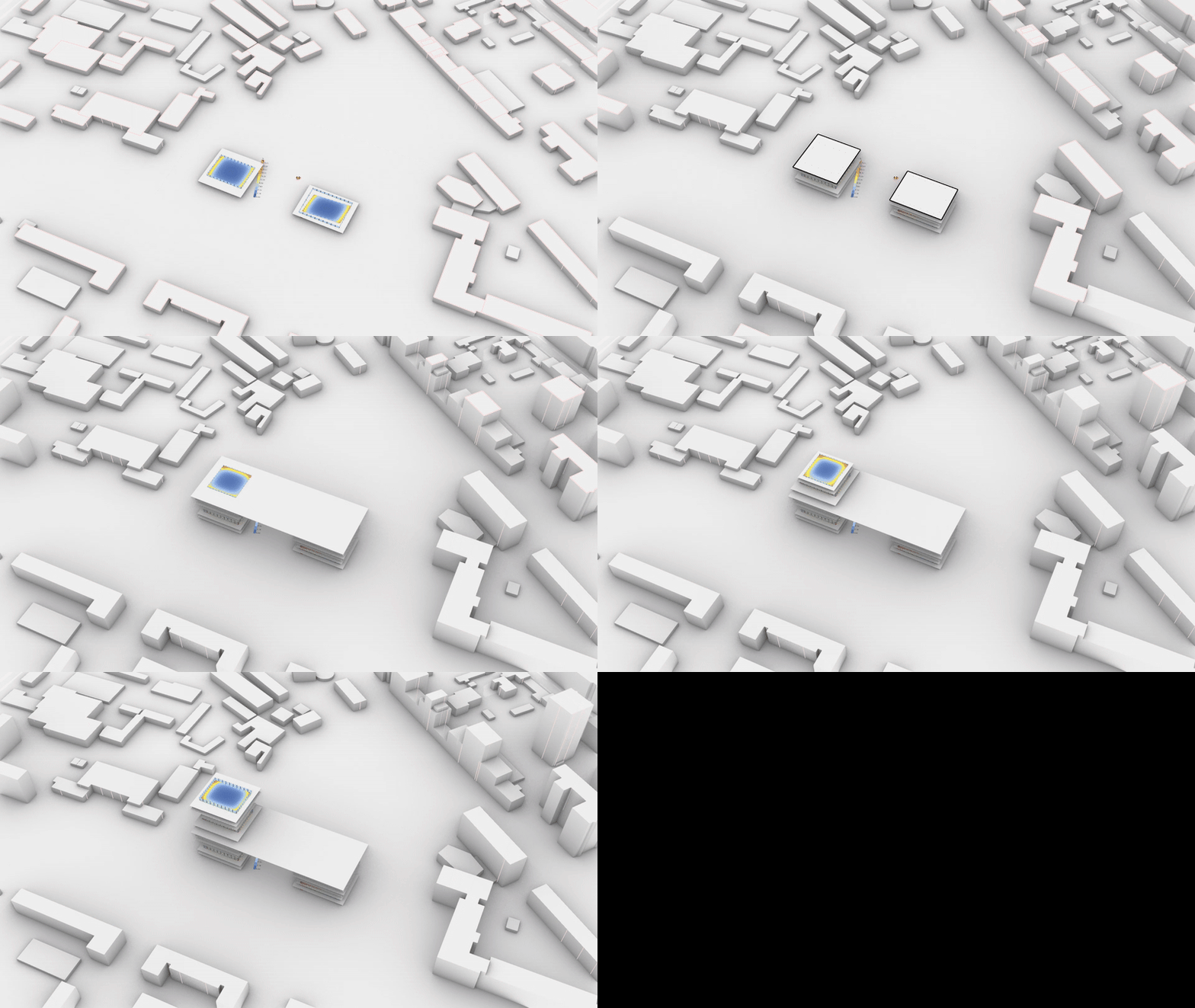
Initial Wind Analysis for Proposed Building – Work in progress
Eddy 3D in Grasshopper – Simple Wind Analysis with Cylindrical Domain
Infrared Analysis
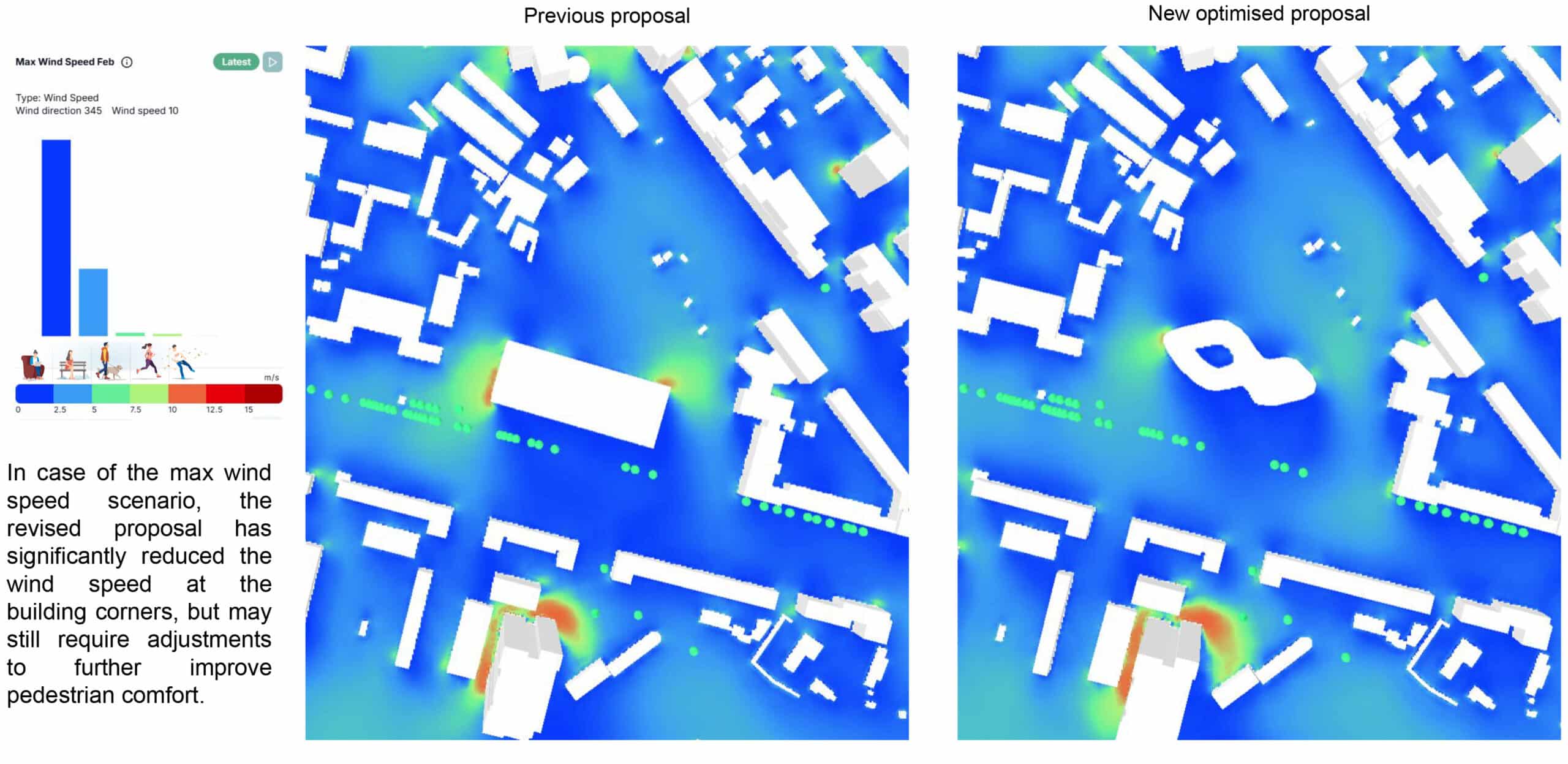
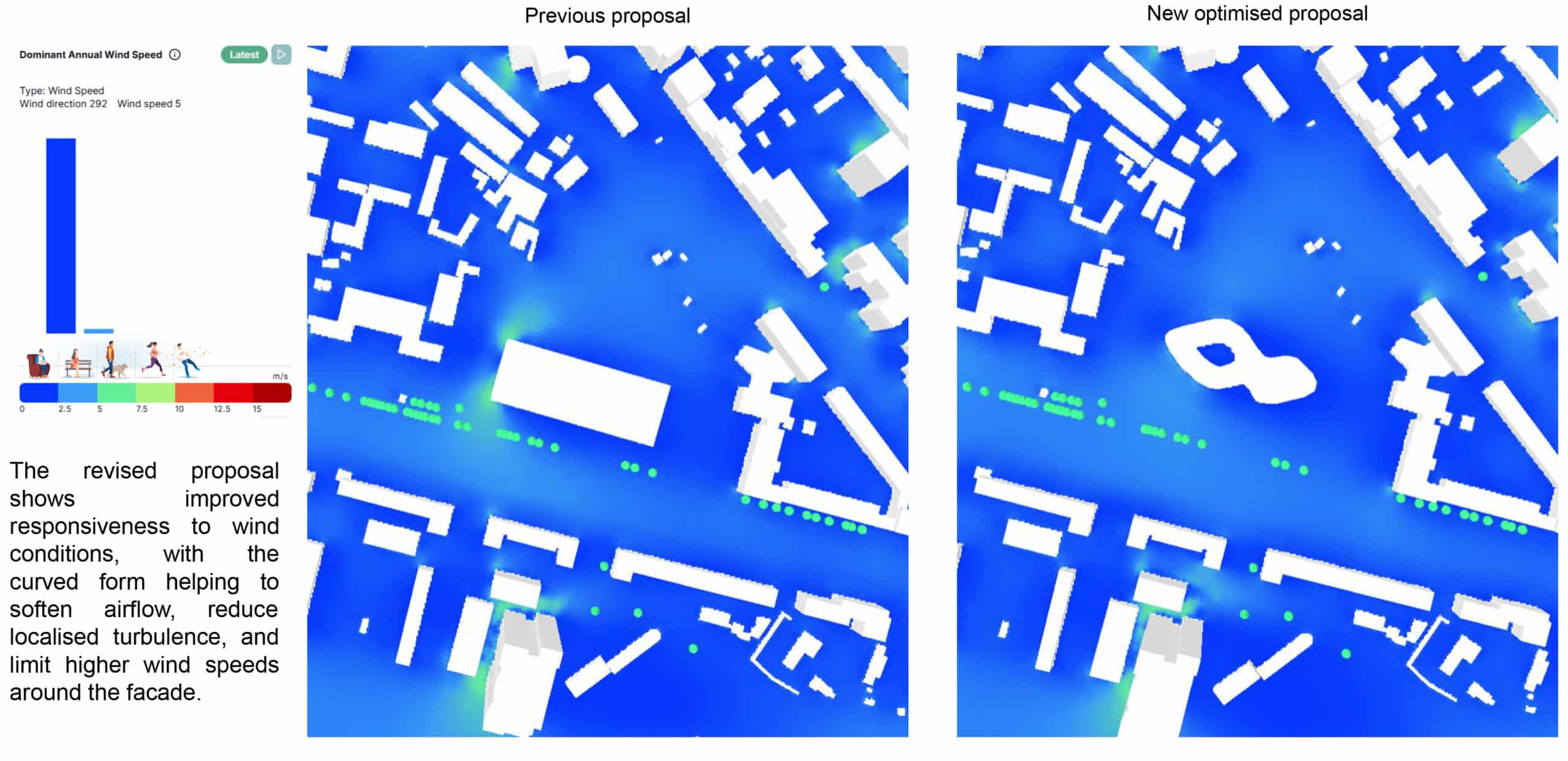
Wind Analysis
Combined Seasonal Analysis
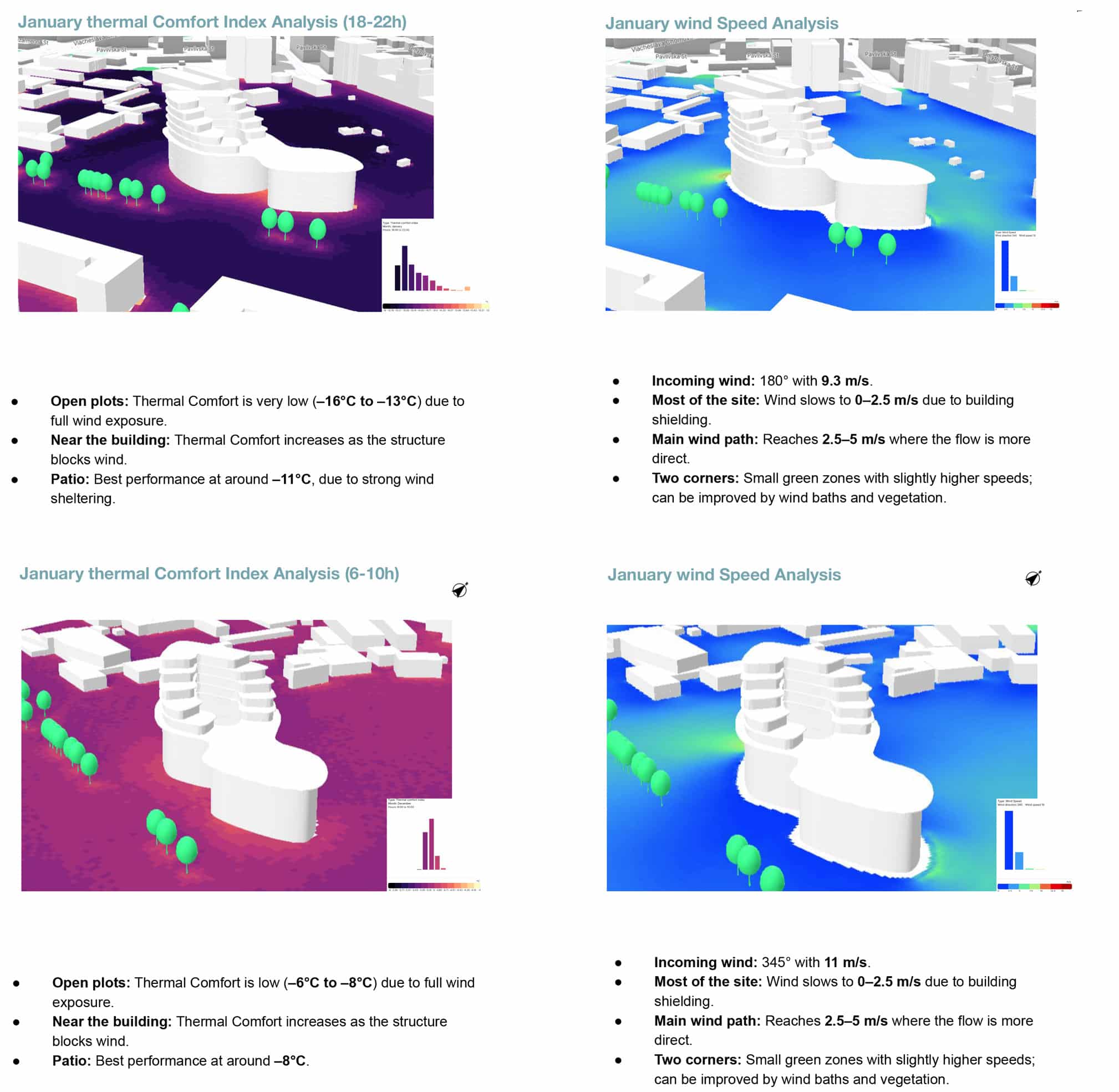
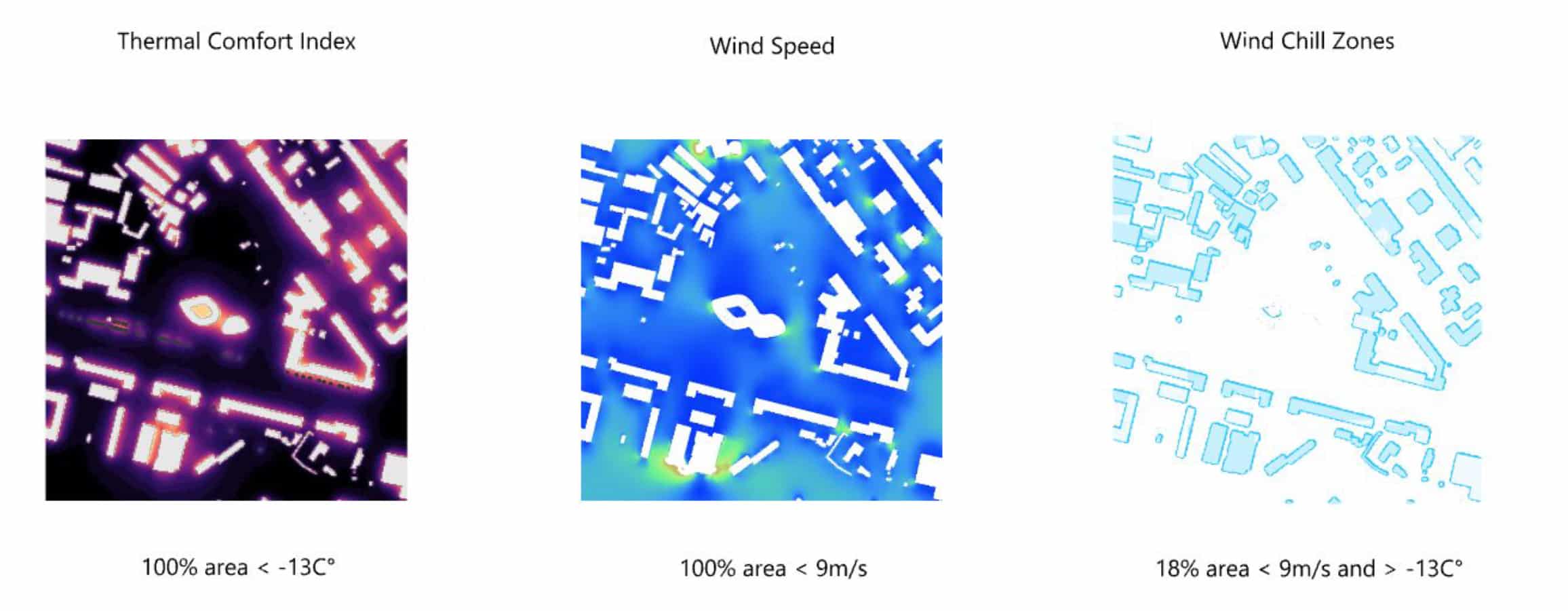
- Most areas near buildings benefit from sheltering, so Thermal Comfort is higher than open plots.
- Patios and courtyards create the warmest microclimates by reducing wind exposure.
- Some building edges and corners show small zones of high cold stress, where wind accelerates due to turbulence and channeling.
- Wind speeds in these hotspots often reach or exceed the 9 m/s threshold, interacting with low temperatures to create strong wind chill.
- The combination shows a clear pattern: sheltered areas improve comfort, but geometry-induced wind effects produce localized cold-stress pockets.
- This explains why the overall site performs well, yet specific edges remain vulnerable in winter evening conditions.
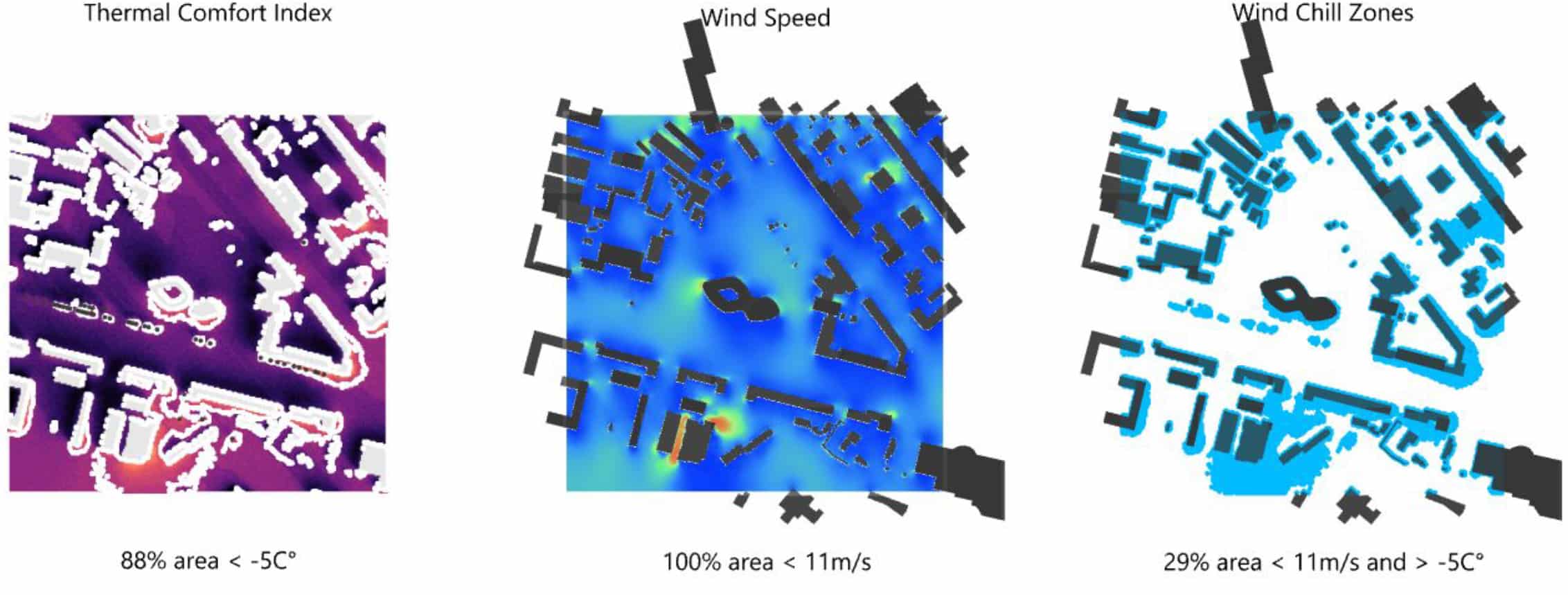
- Sheltered areas: Most of the site near buildings lower higher Thermal Comfort than open plots; patios/courtyards create the cold microclimates.
- Cold-stress corners: Some edges show localized wind-chill zones where wind accelerates, producing high cold stress.
- Thermal comfort index (UTCI): 88% of the area is below -5°C, showing most of the site is very cold at this period of the year; 29% of the area is below –5°C and under 11 m/s wind.
- Wind exposure: 100% of the area experiences <11 m/s; for wind-chill zones (<9 m/s and above –13°C) previously 18% of the area.
- Pattern summary: Buildings improve comfort overall, but geometry-induced wind effects create localized cold-stress pockets, consistent with the wind-chill and UTCI distributions.
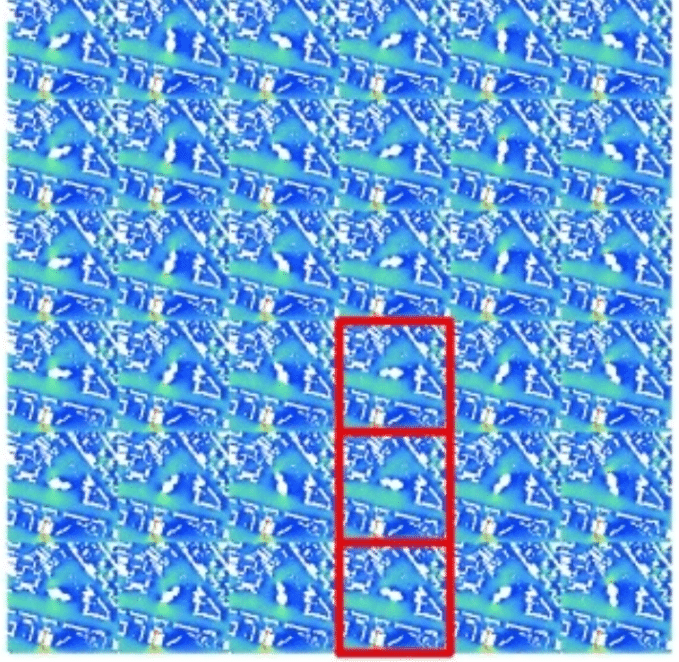
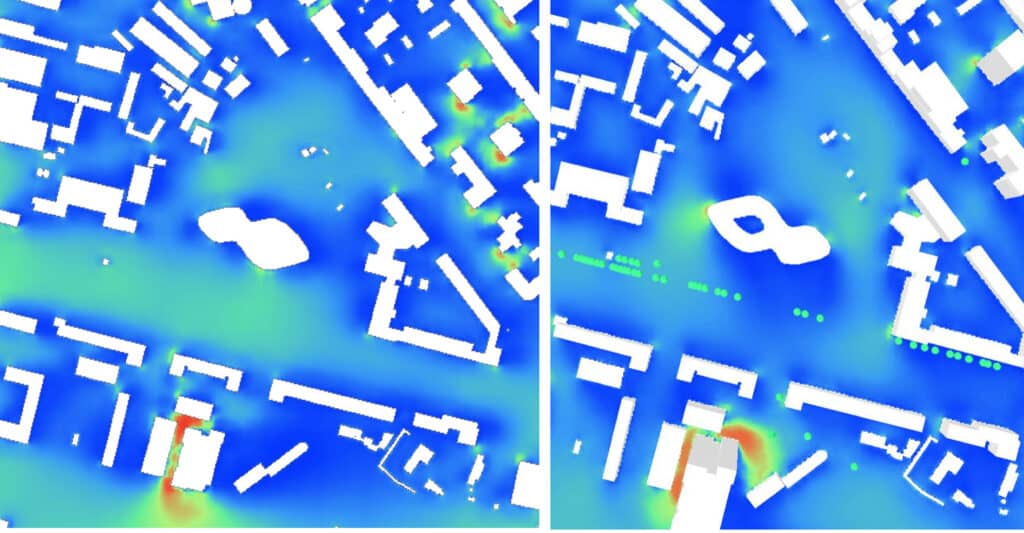
Most Optimal Comfort Wind Area KPI – 180° rotation 2nd Most Optimal Comfort Wind Area KPI – 10° rotation
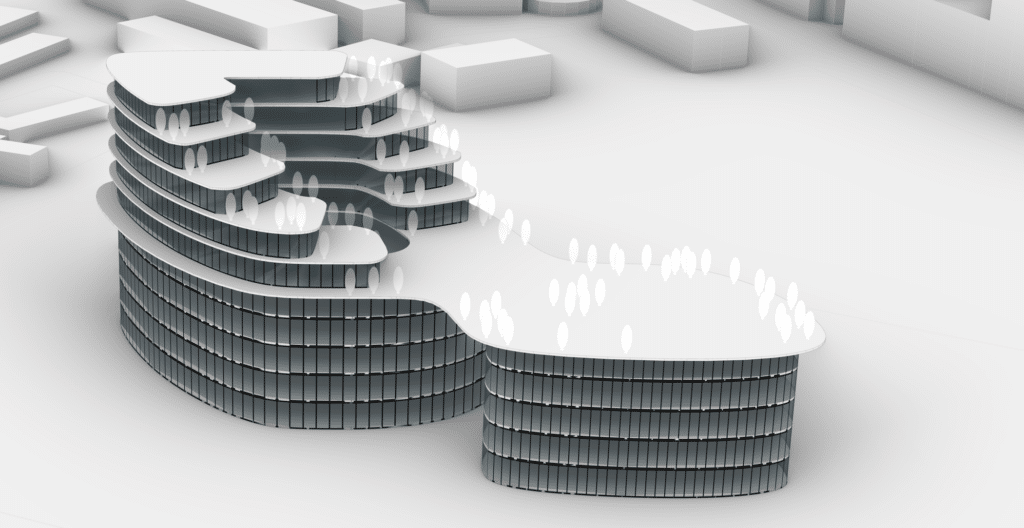
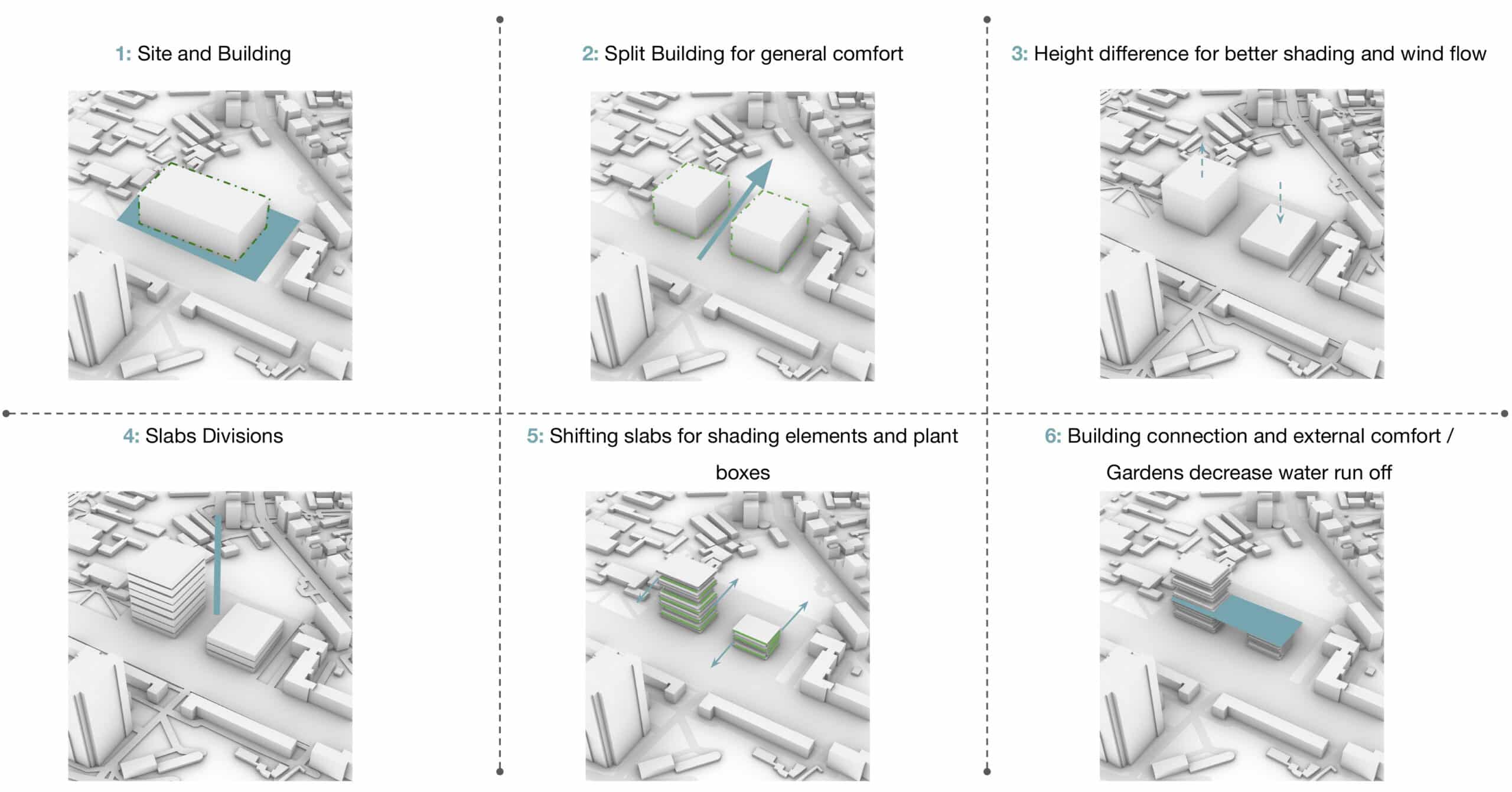
Adaptive shading systems to regulate solar exposure and enhance thermal comfort during summer.
Optimization of solar access for winter comfort in outdoor and semi-open spaces.
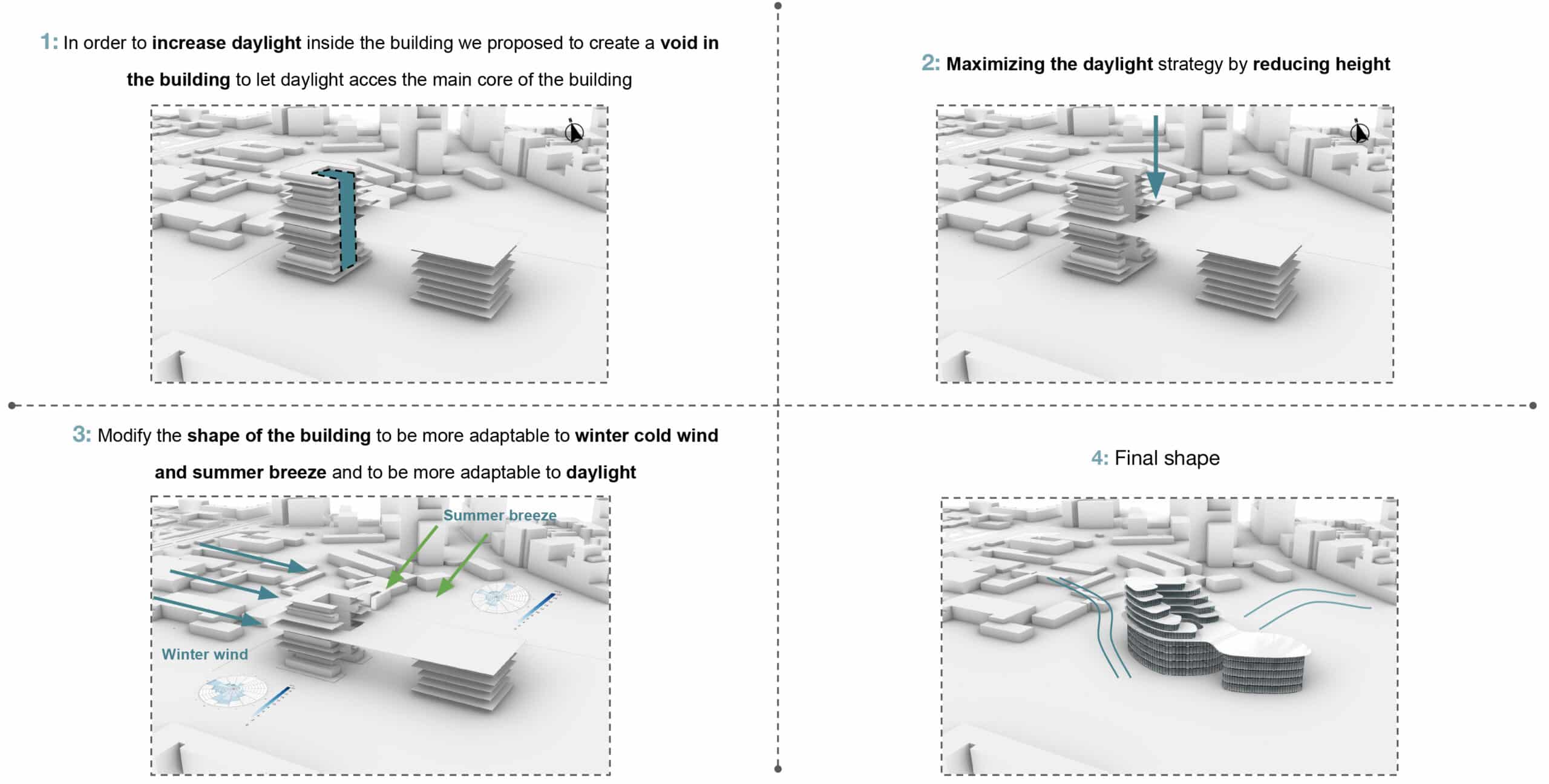
Natural ventilation and passive cooling during summer months.
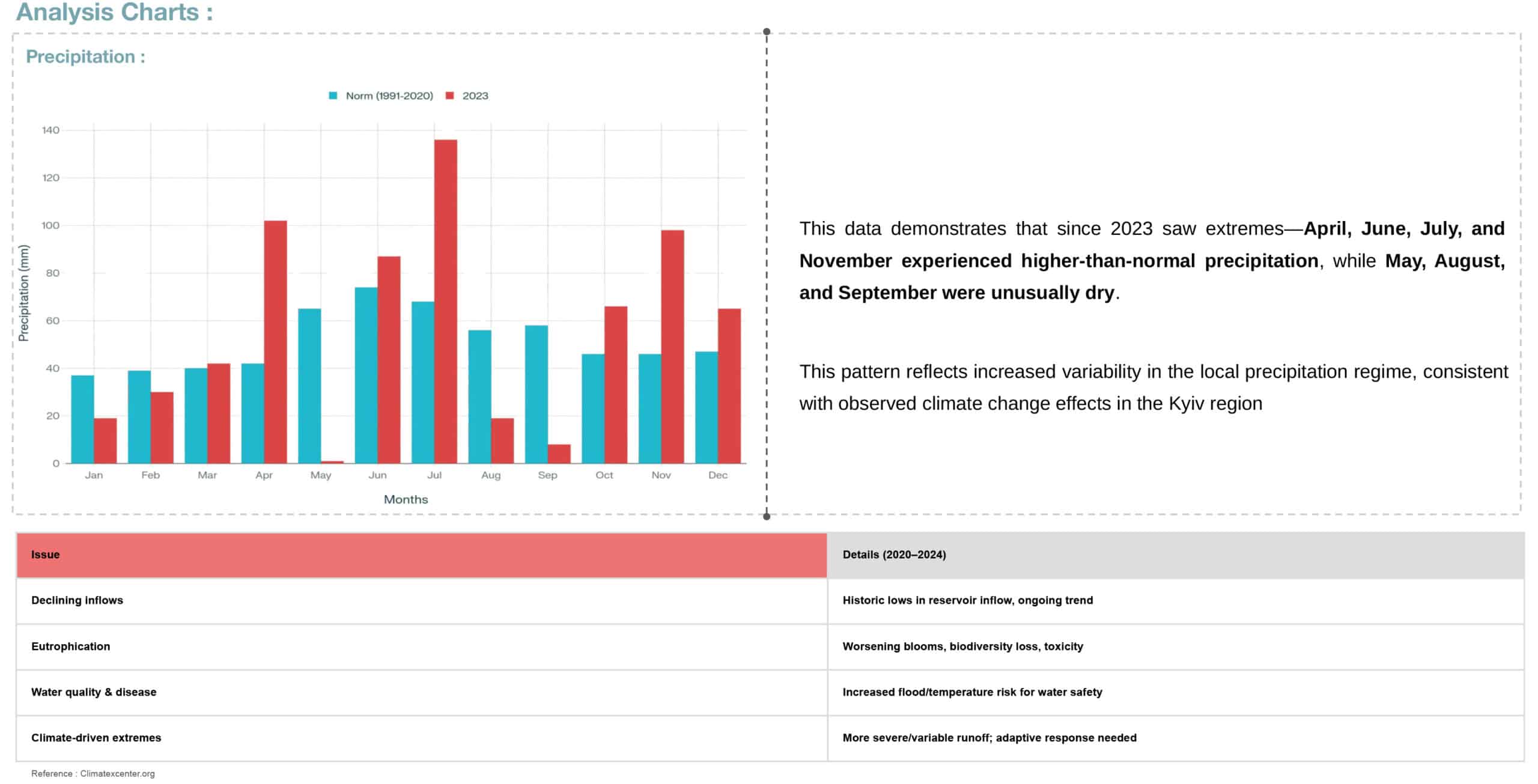
Reduce runoff of rainwater with roof gardens that collect it.
Maximize daylight coming into the building
Building geometry and courtyards create wind-sheltered microclimates, improving winter thermal comfort in outdoor and semi-open spaces.
Edge and corner treatment can minimize localized wind-chill zones, reducing cold-stress hotspots in winter evenings.
