
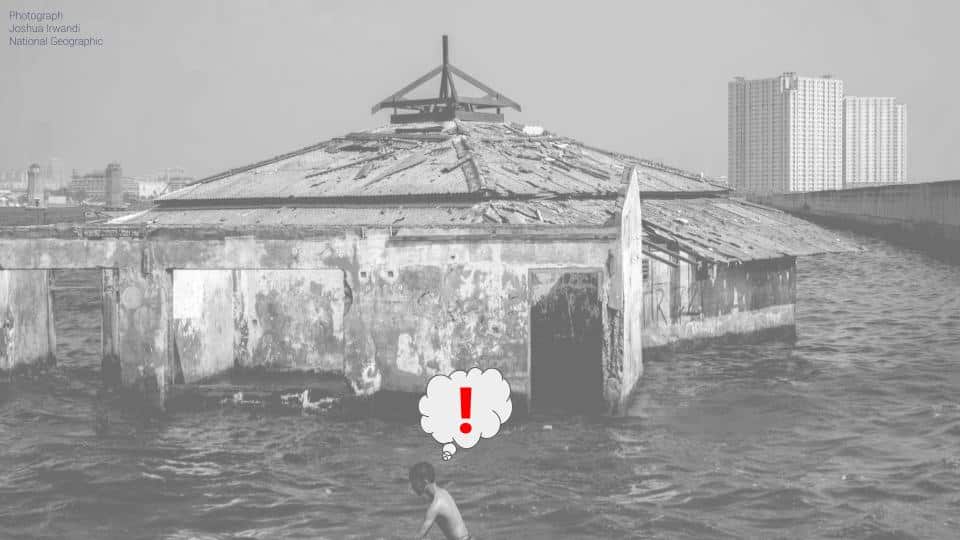
Introduction: The Wrong Question We Were Asking
For years, the question sounded simple: What is the purpose of AI in AEC?
The answers were predictable speed, automation, productivity. Faster drawings. Fewer errors. Leaner workflows.
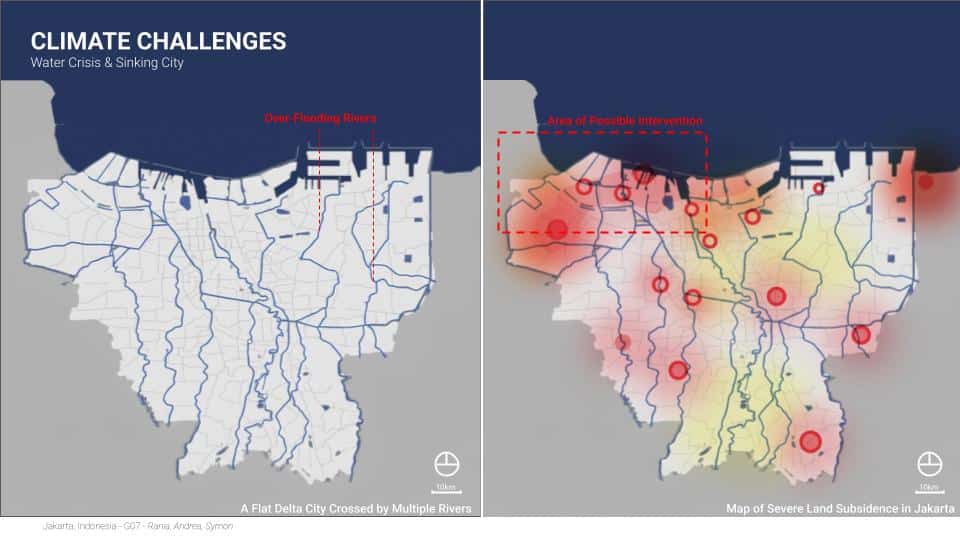
That definition collapsed the moment we confronted Jakarta. Through our studio project Floating Grounds, developed in the flood-prone Penjaringan District, and through insights from industry voices such as Andrea Paindelli, Product Manager at Veolia, we realized something fundamental:
AI is no longer about efficiency. It is about resilience. In a world of sinking cities, unstable climates, and collapsing infrastructures, AI’s true role is not to design faster, but to help systems survive.
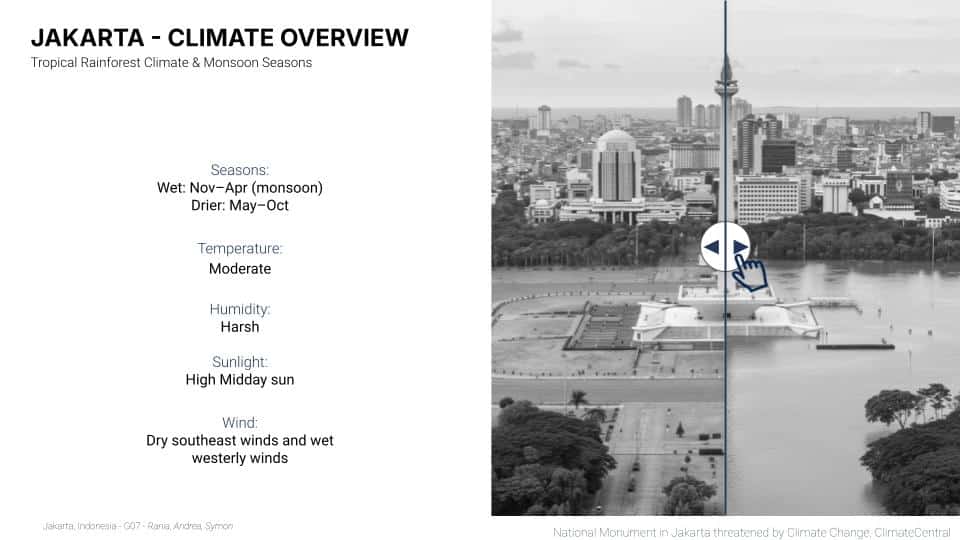
From Human Logic to Machine Intelligence
In our project, we were not allowed to use AI. Instead, we manually performed the logic that AI is meant to master.The task: design a floating, multi-use civic center capable of adapting to Jakarta’s extreme flooding and land subsidence.
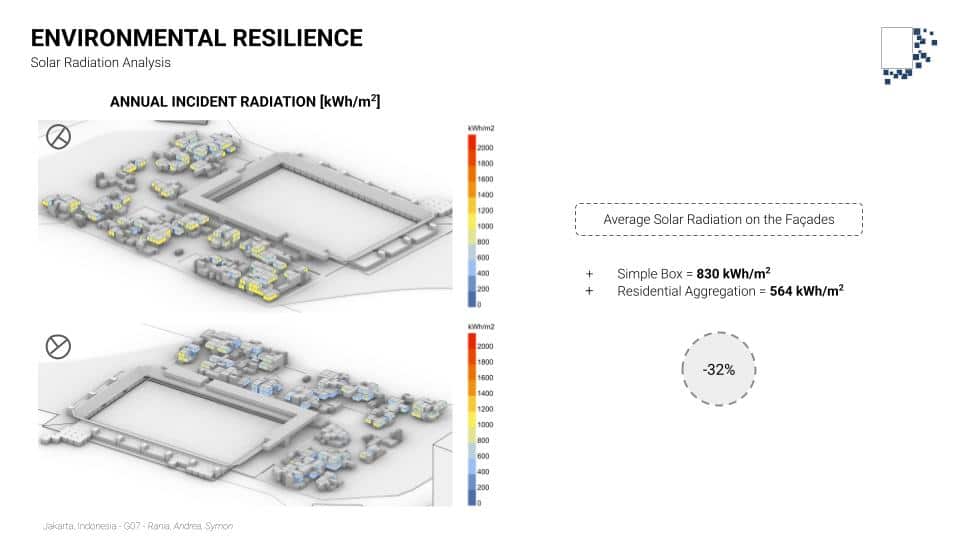
We relied on tools like Ladybug to analyze solar radiation and manually tested orientations within the constraints of an irregular L-shaped site.
Where AI Should Have Been
A generative AI model could have:
- Run thousands of orientation iterations in seconds
- Optimized solar exposure, shading, and heat gain simultaneously
- Delivered the most energy-efficient configuration without guesswork
This was our first realization: AEC already understands the logic. AI provides the scale.
Solving Jakarta’s Water Paradox with Data
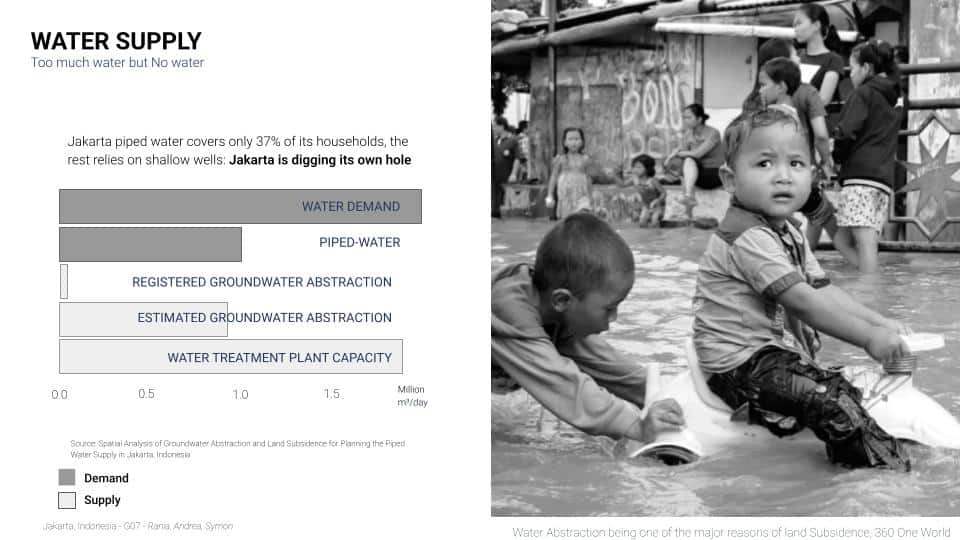
Jakarta is a sinking city surrounded by water, yet it lacks clean water. Flooding, pollution, groundwater over-extraction, and sedimentation collide into a single contradiction:Abundance without access.
Our response was a Resilience Hub designed to manage water at a local scale. But we also saw that AI could be of a great use.
The AI Vision
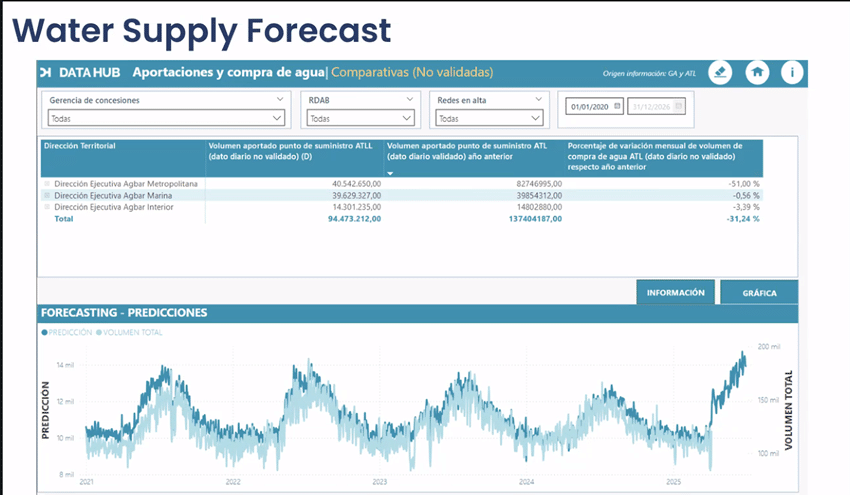
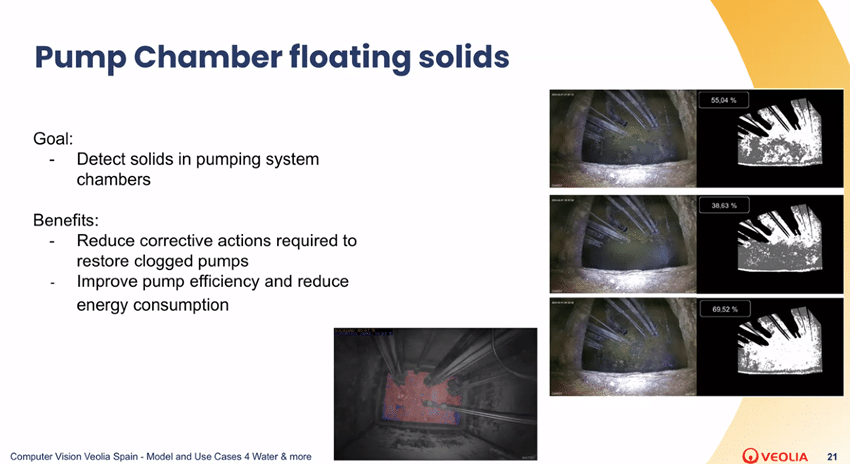
In practice, companies like Veolia already deploy AI for predictive water management. Something we saw at the Andrea Paindelli Conference,
Applied to our project, AI could have:
- Analyzed real-time rainfall, river levels, and sedimentation data
- Automated pontoon buoyancy before floods occur
- Anticipated stress instead of reacting to disaster
The Missed Opportunity
AI-driven product management could transform the building into:
- A smart water-treatment node
- A balancing system between local demand and groundwater abstraction
- A live interface between climate data and architectural response
Architecture stops being static and becomes operational.
Sustainability Is Not a Material: It’s a Calculation
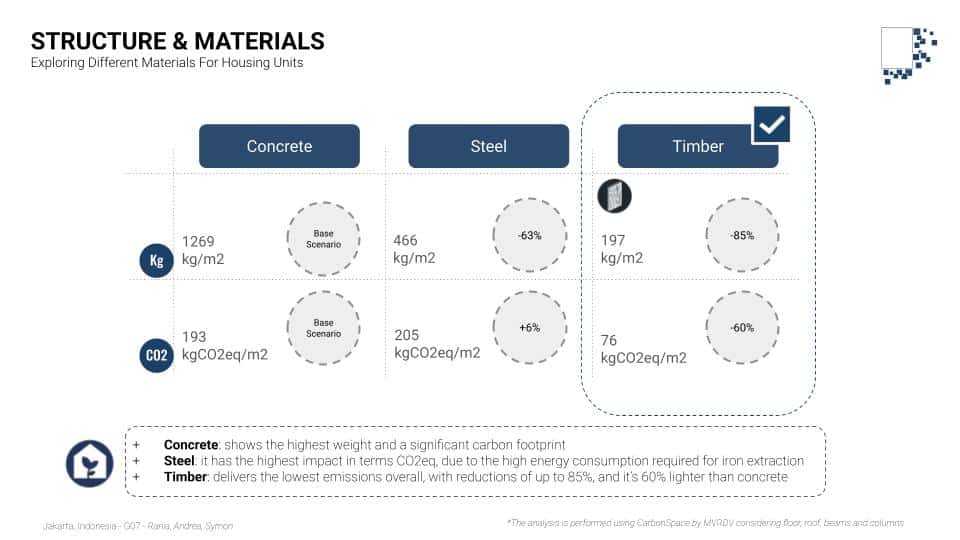
In Floating Grounds, we acted as the intelligence. We calculated that timber construction could reduce CO₂ emissions by up to 85% and optimized shading for Jakarta’s tropical sun. But this exposed a deeper flaw in how sustainability is validated.
Where AI Changes the Equation
Instead of choosing timber based on weight or embodied carbon averages, AI could function as a real-time carbon auditor:
- Scanning global supply chains
- Verifying sustainable harvesting in real time
- Adjusting material assemblies based on live environmental impact data
That is real sustainability
Human Experience: When Formulas Are Not Enough
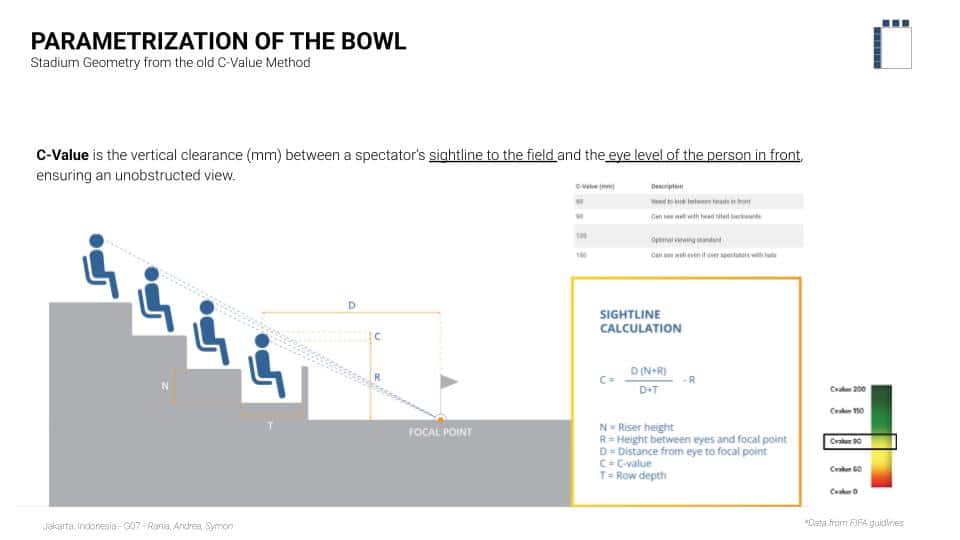
Design is not only performance: it is perception. In our project, we used the C-Value sightline formula to ensure visibility across shared public spaces.
The formula works, but it assumes ideal behavior.
AI Sees What We Miss
AI could simulate:
- The movement of 203 people per module
- Individual viewing angles, obstructions, and crowd behavior
- Dead zones invisible to static formulas
AI does not replace human-centered design, it exposes its blind spots.
Conclusion: From Design to Performance Assurance
Our project proved something unexpected. The AEC industry does not lack intelligence. It lacks scale, continuity, and foresight.
AI’s real purpose is not to generate forms, but to guarantee performance over time. From drawings to systems. From intention to verification. From design to performance assurance.
In the age of climate collapse, that shift is no longer optional.
