Project Overview
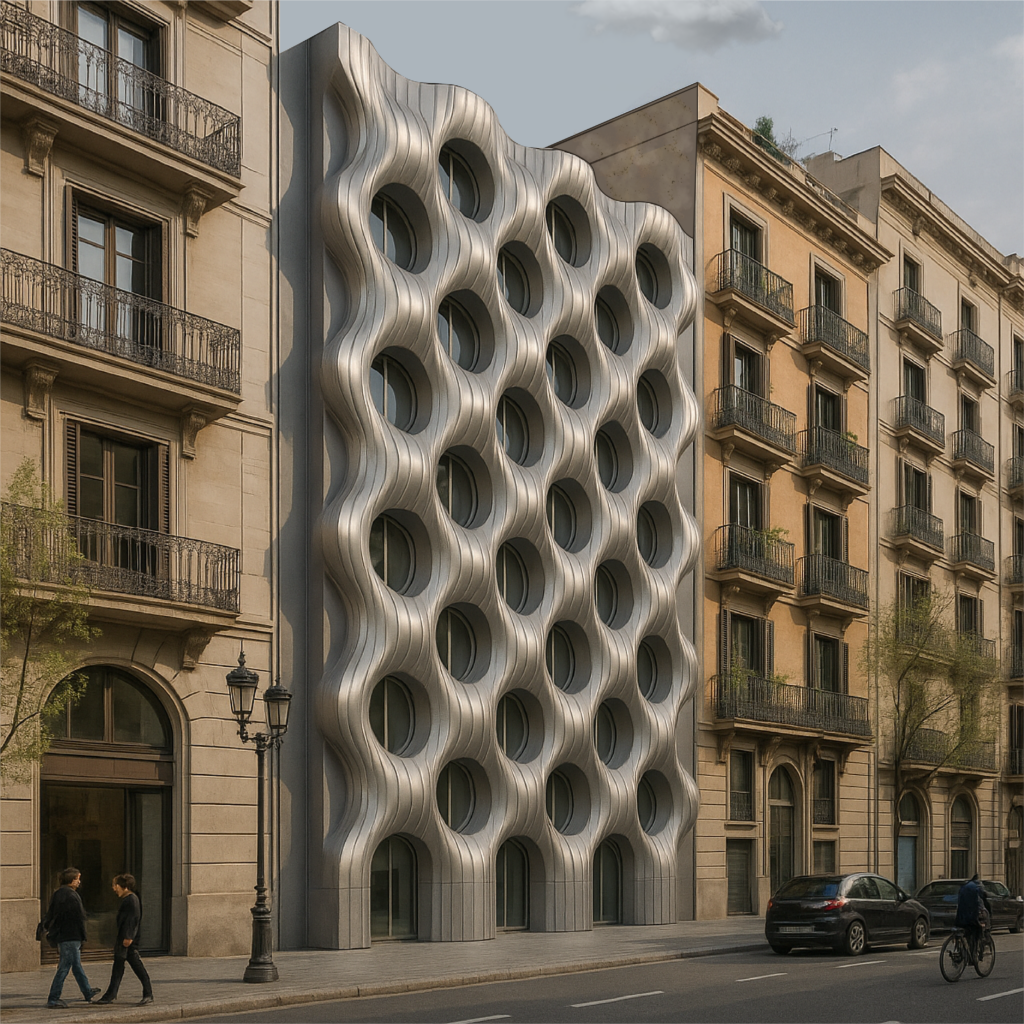
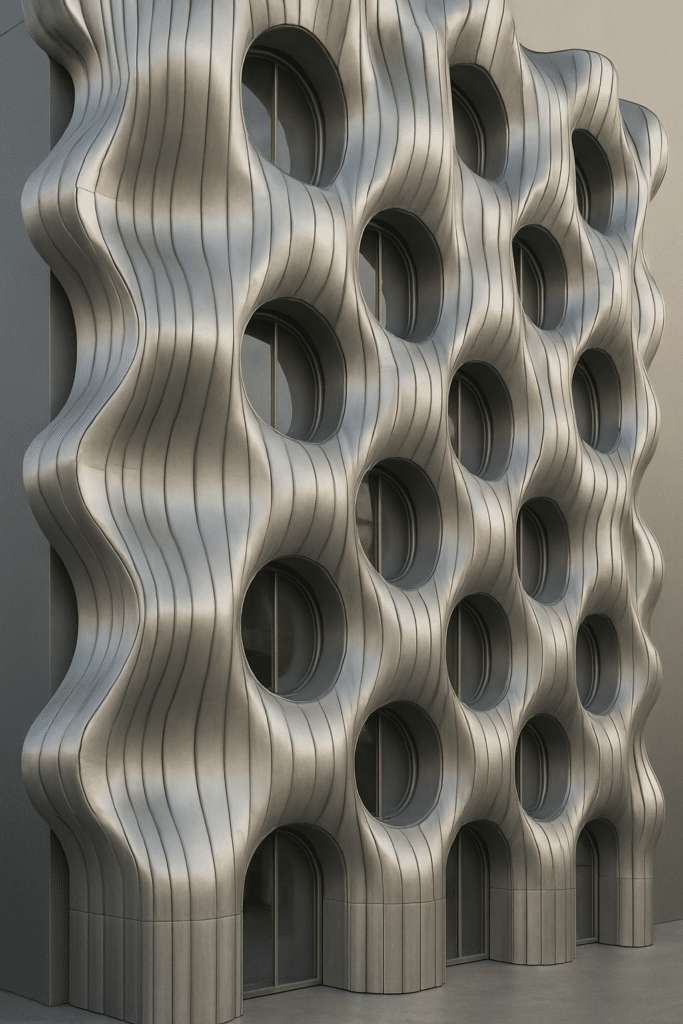
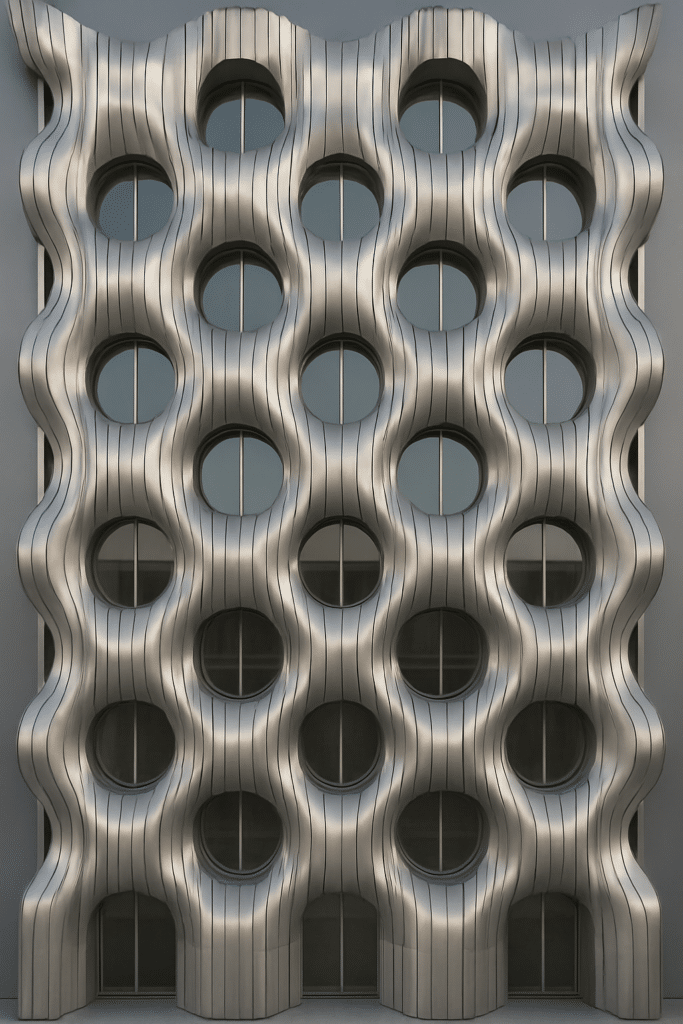
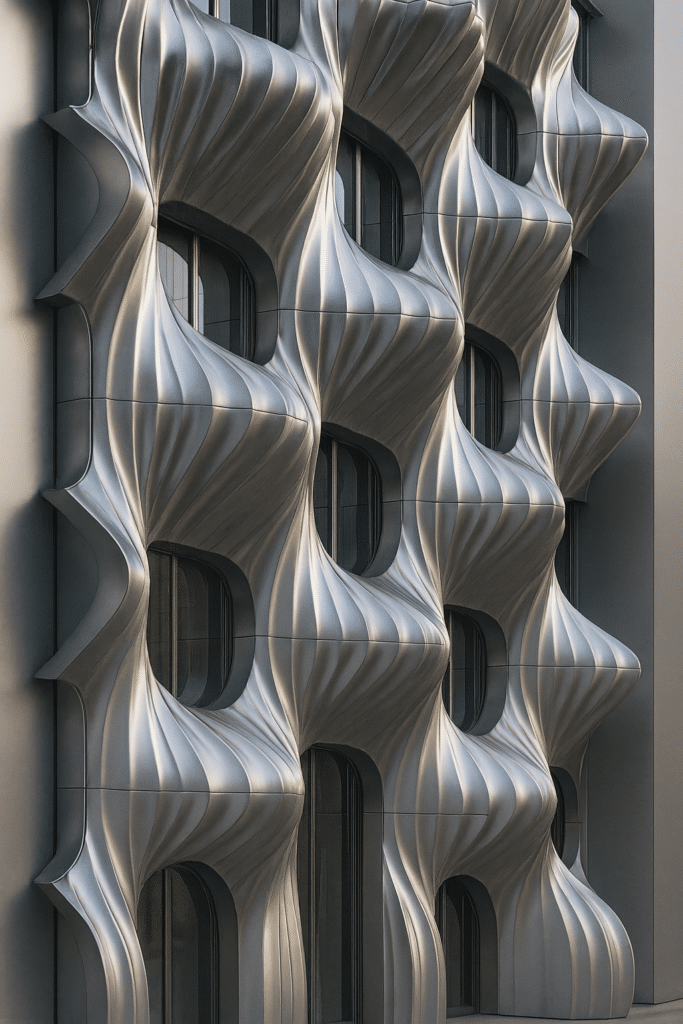
Layered Frequencies is a computational exploration of facade design based on wave driven geometry. The project investigates how a continuous surface can be transformed through simple mathematical operations into a layered, expressive architectural system.
Rather than focusing on a final object, the work centers on process: how controlled parameters, repetition, and deformation can generate complexity while maintaining a clear underlying logic.
Reference & Inspiration
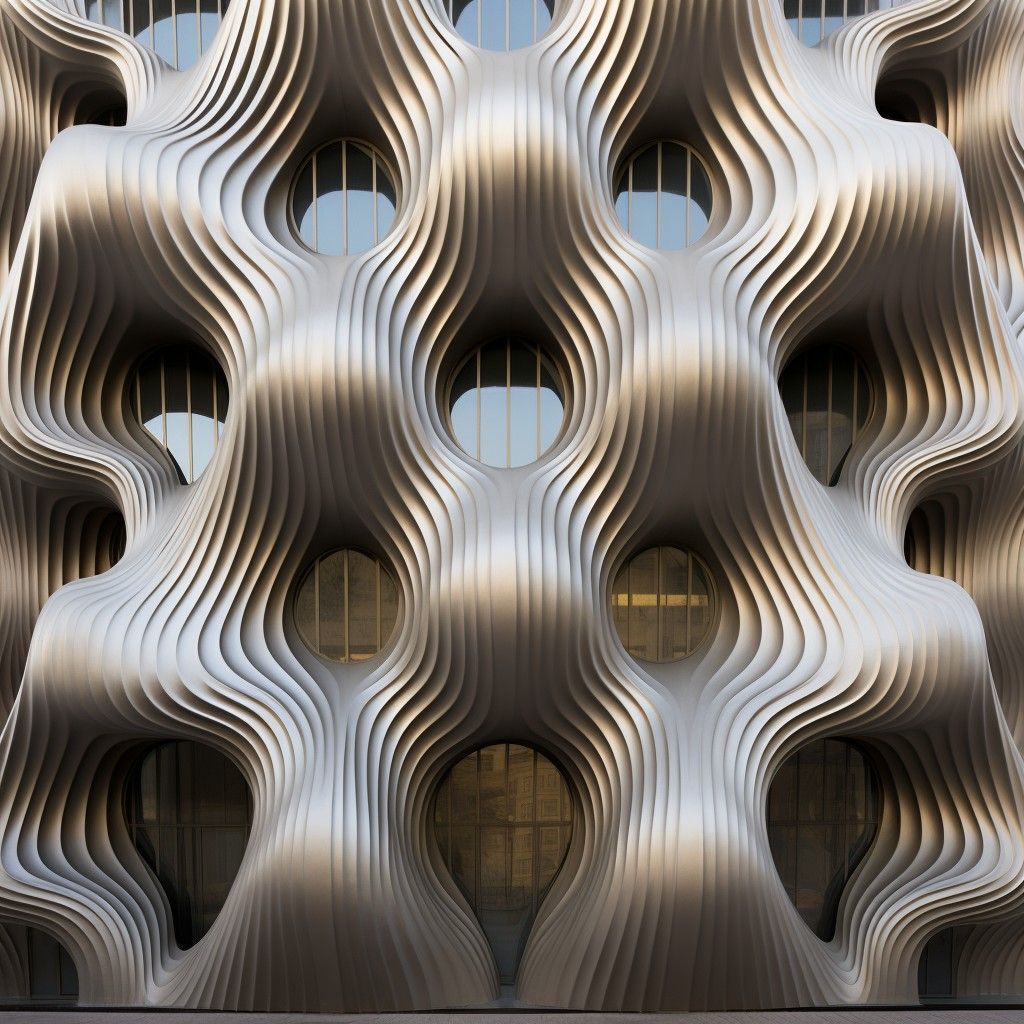
The project is inspired by a speculative facade image, most likely a digital render rather than a built project. The reference shows a continuous surface articulated through flowing, layered waves with openings carved into the geometry.
Instead of copying the image, the project extracts its core principles: continuity, repetition, layered deformation, and openings introduced after the main geometry is formed. These ideas became the basis for the computational strategy.
Computational Approach
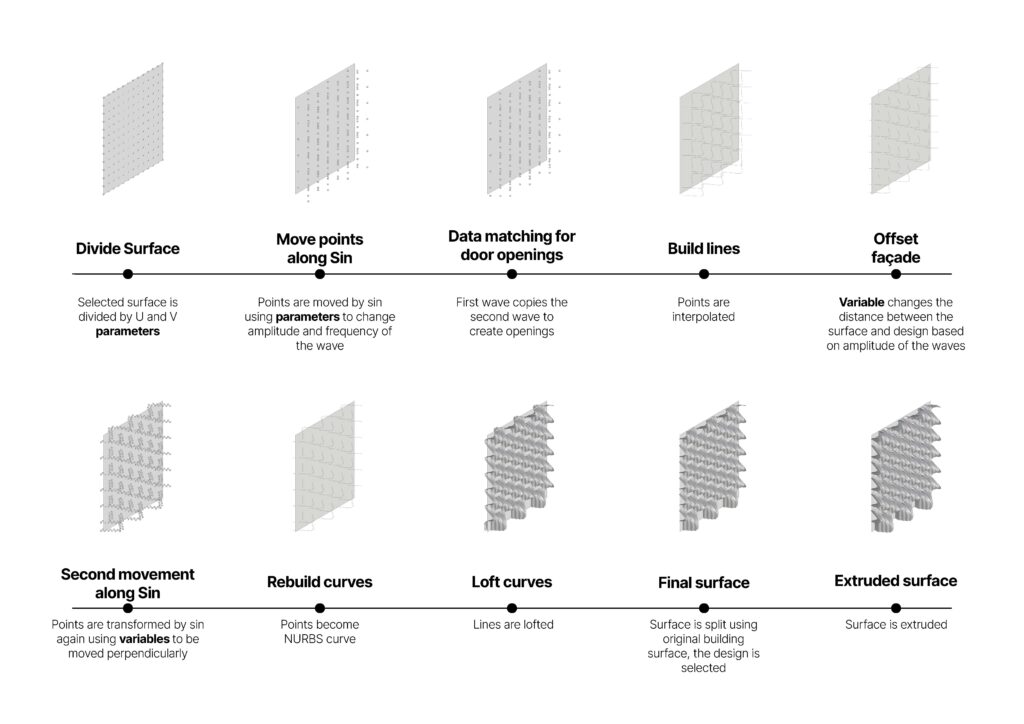
The workflow starts with an assigned building block, from which the facade surface is extracted and subdivided into a regular UV grid. This grid defines the resolution of control points across the surface.
Using sine functions, the points are displaced to generate wave patterns. By adjusting amplitude and frequency, the surface can be smoothly deformed while remaining fully parametric. The transformed points are then interpolated into curves and lofted into a continuous surface.
Openings, Depth, and Layering
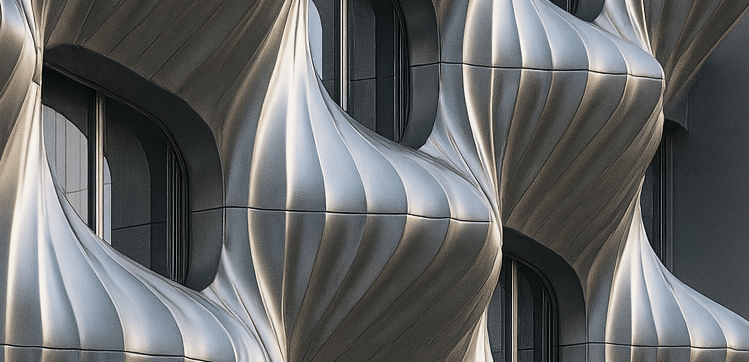
Openings for windows and entrances are introduced through data matching rather than manual subtraction. By manipulating specific data branches, larger openings emerge where required, while maintaining alignment with the wave logic.
Depth is introduced by offsetting the surface based on wave intensity, linking spatial articulation directly to the deformation values. A secondary sine transformation is then applied perpendicular to the first, producing layered waves and increasing surface complexity.
Grasshopper Logic
1. Surface Subdivision
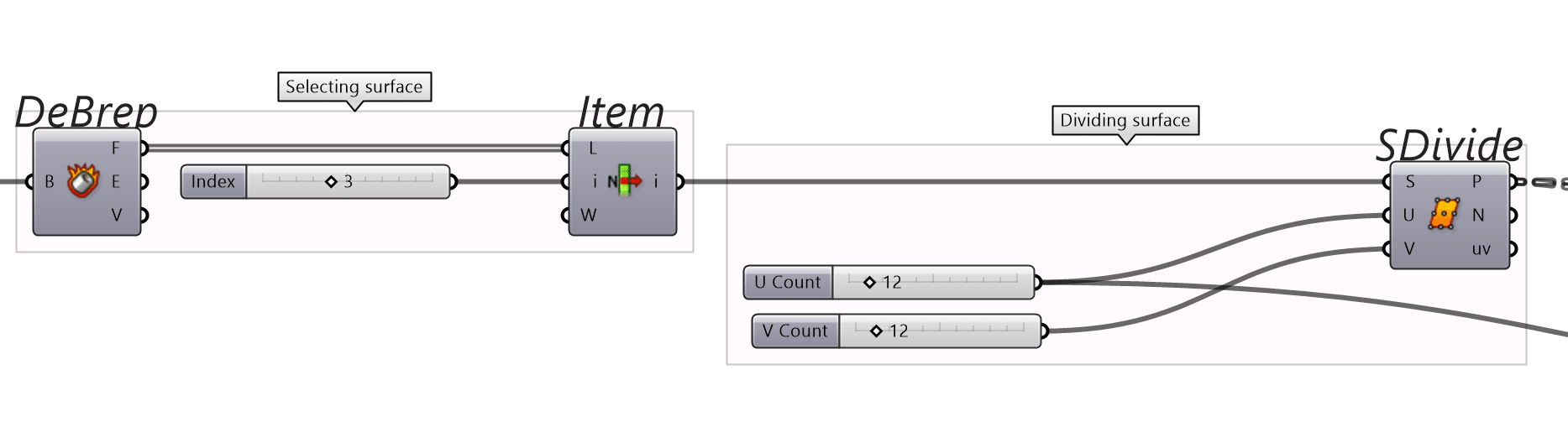
The facade surface is subdivided into a regular UV grid, defining the resolution and density of points that will drive the deformation logic.
2. Wave Mapping and displacement
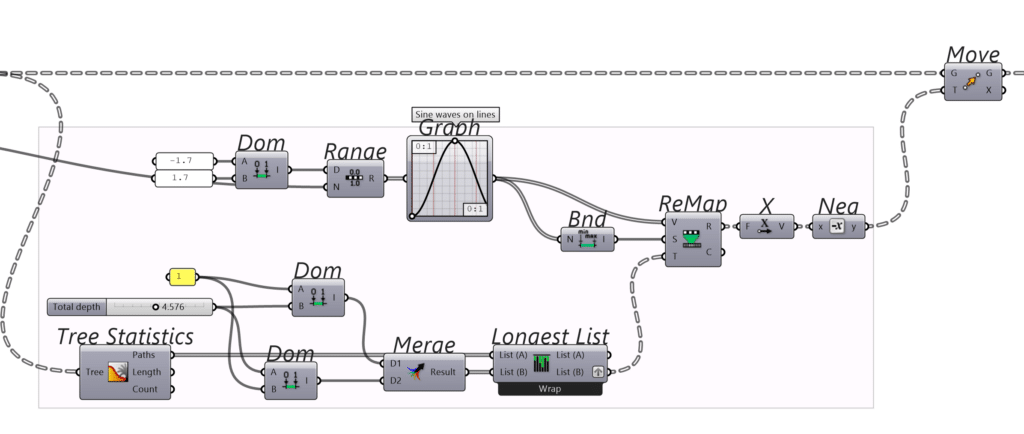
Numerical values are remapped through sine-based graph functions to generate a controlled wave pattern across the subdivided surface.
3. Data Matching for Openings
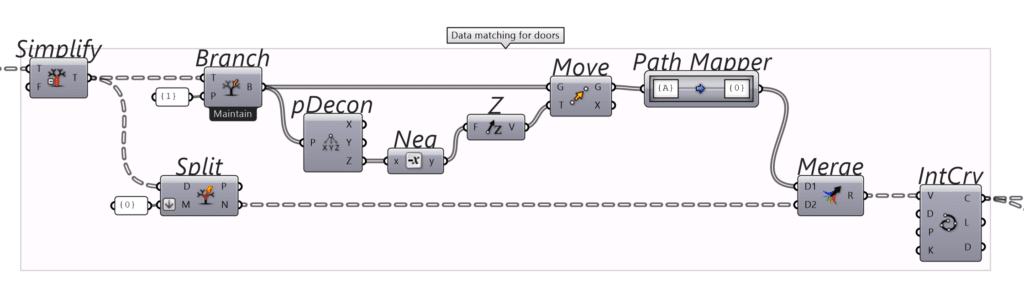
Branch index {1} is copied onto {0} to create larger openings for doorways into the building.
4. Facade Placement
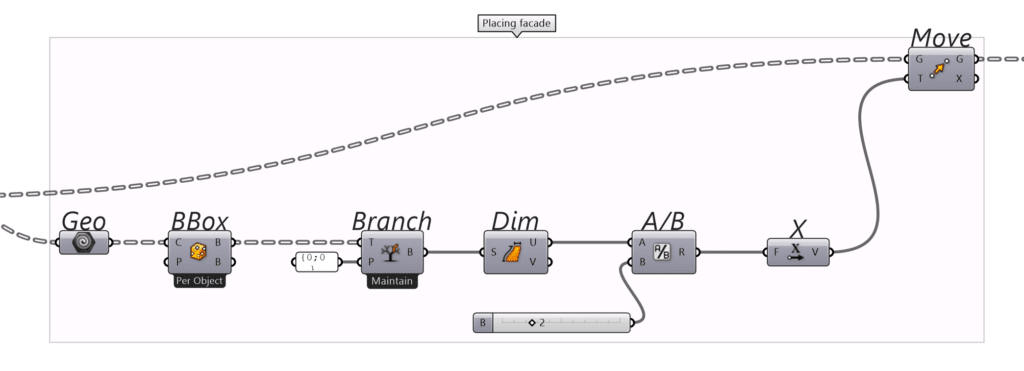
The facade surface is moved outwards based on the amplitude of the initial waves.
5. Secondary Wave Layer
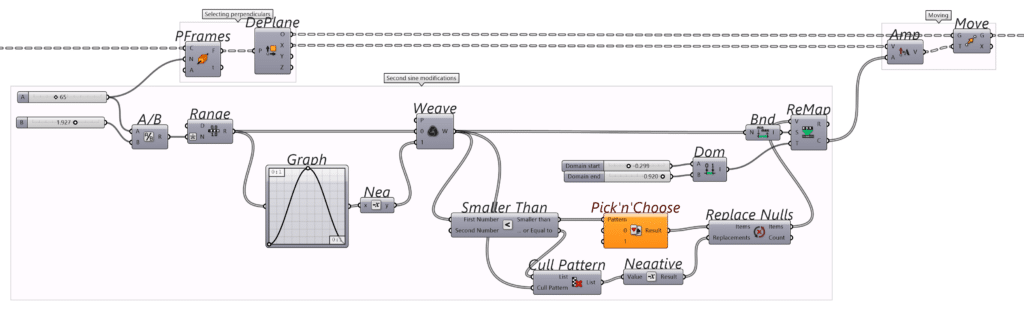
An additional sine-based deformation is applied to increase geometric complexity, resulting in layered waves across the facade surface.
6. Surface split and extrusion
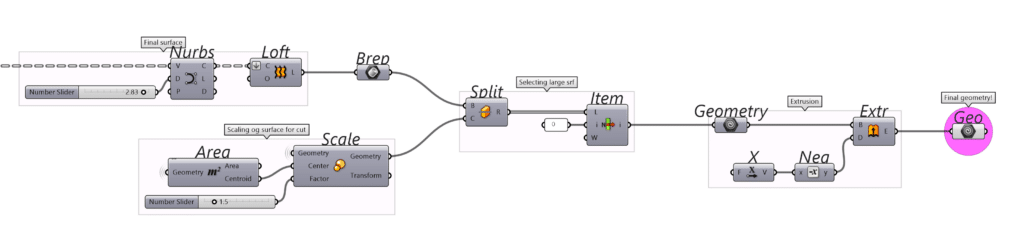
The surface is split using the original facade surface, creating the window and door openings. This surface is then selected and extruded outwards.
Final Renders