
Introduction
“Poblenou” or “Poble nou”, means “new town” in Catalan. When we first arrived to Poblenou in Fall of 2025, it was difficult to see how this space in the city was “new.” While it didn’t appear to be as old as El Born, Raval, or Gràcia, in our outsider perspective it certainly did not seem new. The neighborhood is a mix of architectural and functional styles, sometimes being the inverse of one another. Peeking into old warehouses, you often find artistic endeavors, chic vintage stores, and digital workers holed up in retrofitted coffee shops. These are also next to warehouses that are actually industrious-metal recycling, auto repair shops, and housing of manufactured goods. In the midst of these older architectures, there are many shiny, glassy, plant-covered new buildings popping up-contrasting in form, style, and often height. This contrast is noticeable, and is often one of the first questions our friends who visit us ask about-”what’s the deal with this neighborhood?”, “What’s going on here?”.
This sparked our interest in understanding how Poblenou came to be this way. What is it’s history? Where does it fit into the context of Barcelona? Why is it so “hip” and seems to be a center for the arts and creative academia? Why does it exist in its present state?
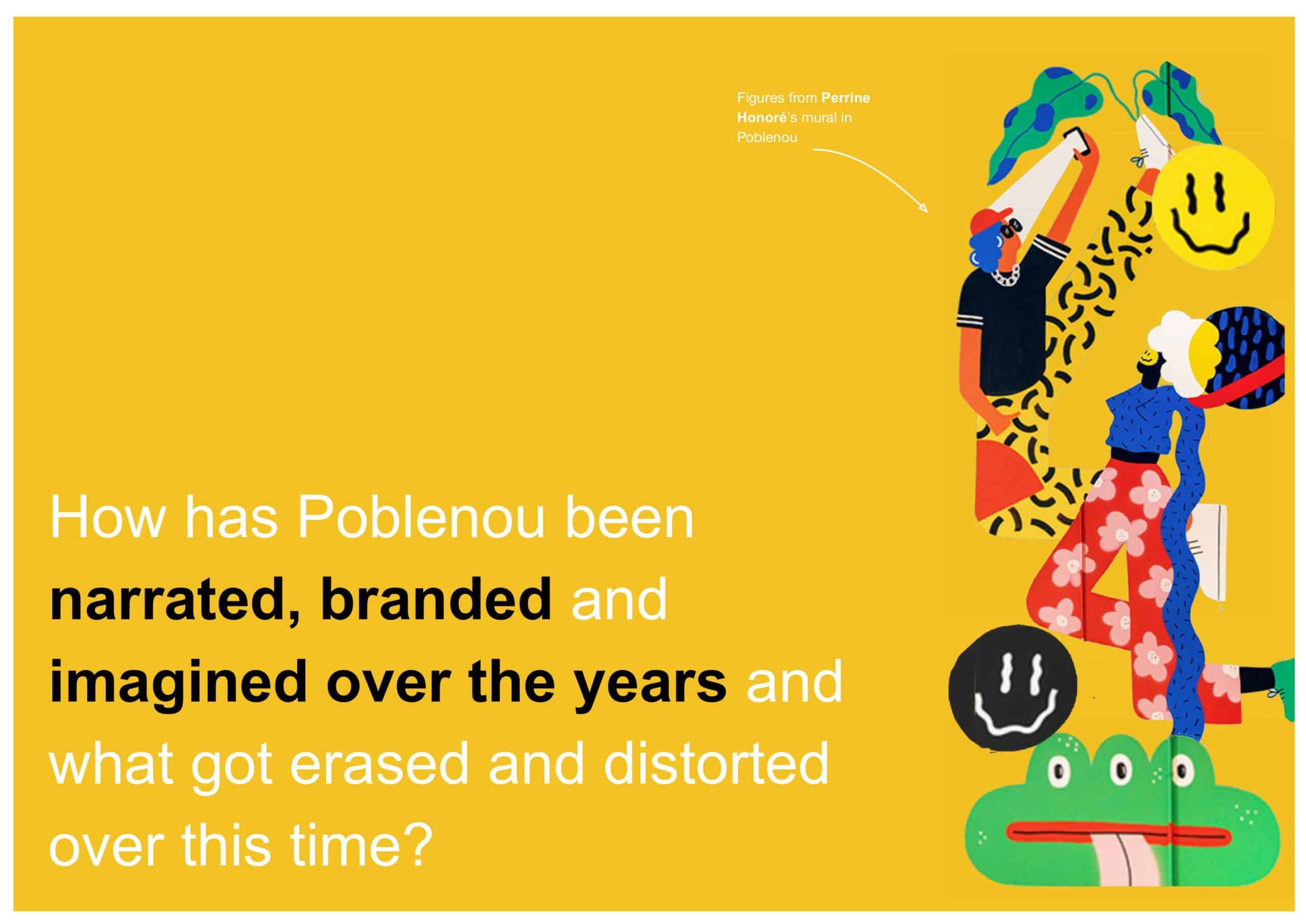
We had heard about the 22@ project in class, an ongoing effort by the city of Barcelona to make the area of greater Pobenou into a tech and innovation hub. This idea of “renaming” an area of the city is fascinating, it already had a name but now it is accompanied by, or overshadowed by another moniker. What does this do to an area? This led to our research question: How has Poblenou been narrated, branded and imagined over the years and what got erased and distorted over this time?
Research question
Resulting Terminology
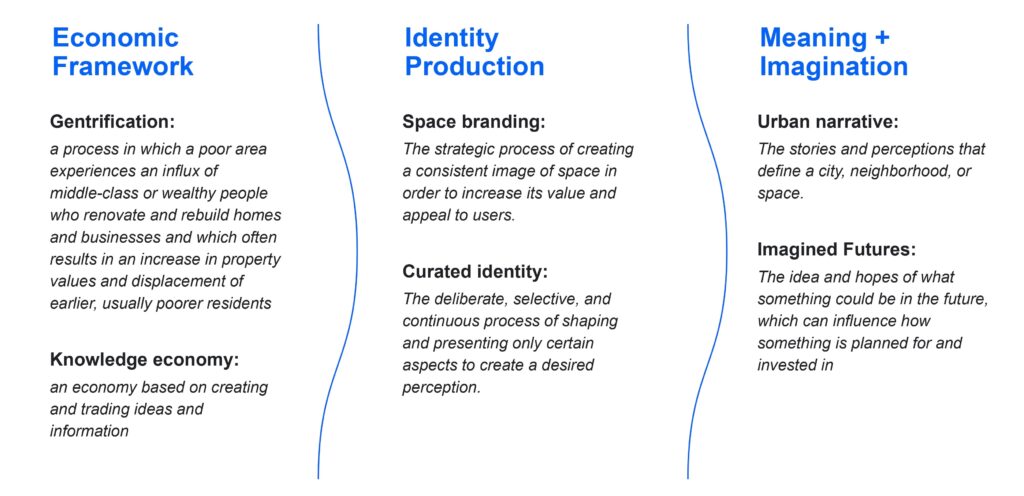
Based on a preliminary review of media discourse, government documentation, and theoretical class readings, we identified a set of key terms that structure the narrative framing of Poblenou. The definitions presented below draw on established sources while incorporating our interpretive analysis of the material.
Were we neutral observers?
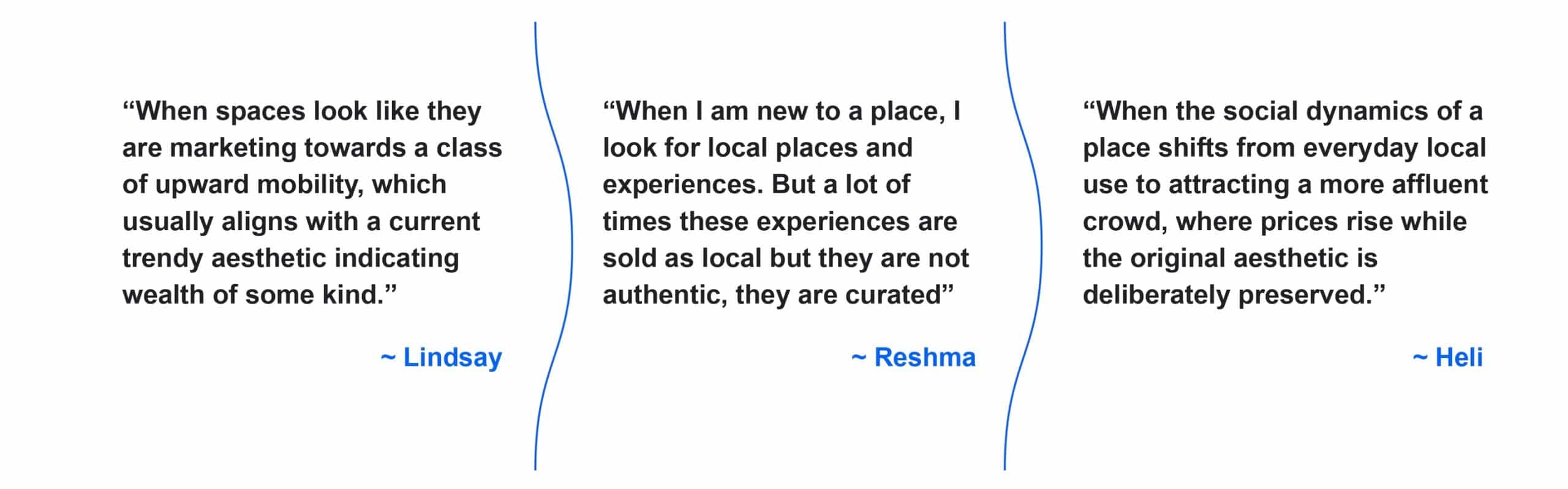
In our discussions about our position within the neighborhood of El Poblenou, we started to understand that we are not neutral observers. We are part of the neighborhood, but also part of the knowledge economy as students of IAAC and student visa holders; our observations and findings are situated in our position and personal histories. As Said notes in Orientalism, there is no neutral form of western scholarship and observation-our position shapes the narratives that we find and reproduce.
“There is no view from nowhere”- Donna Haraway,
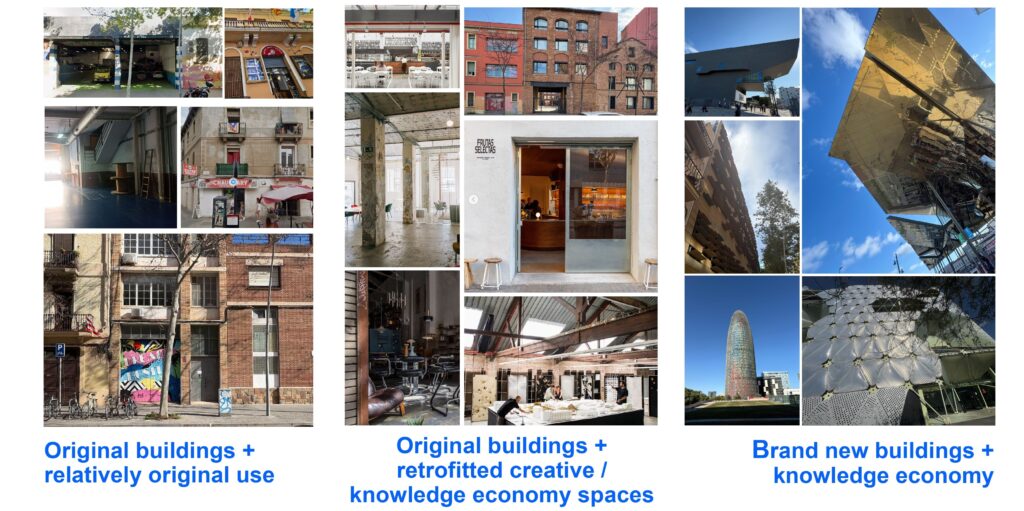
A Typology of Built Aesthetics
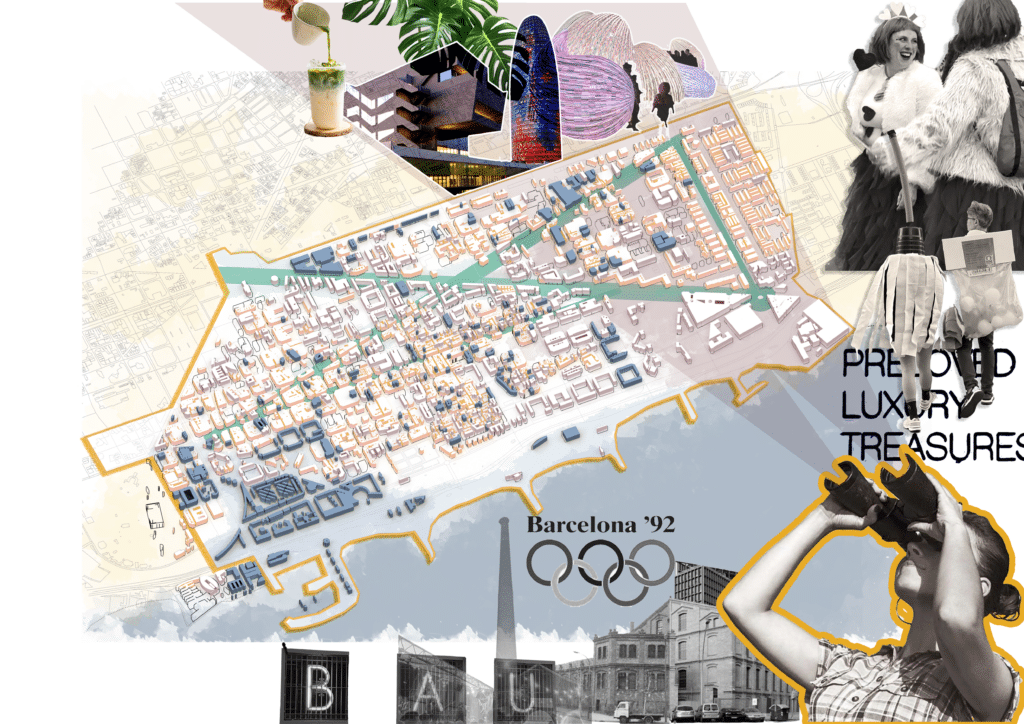
In combination with historical and governmental research, our observations of the distinct architectural styles of the area led us to identify the typologies of spaces in relation to Poblenou’s past and 22@ knowledge economy driven future-a noticeable aesthetic shift.
Event based engagements
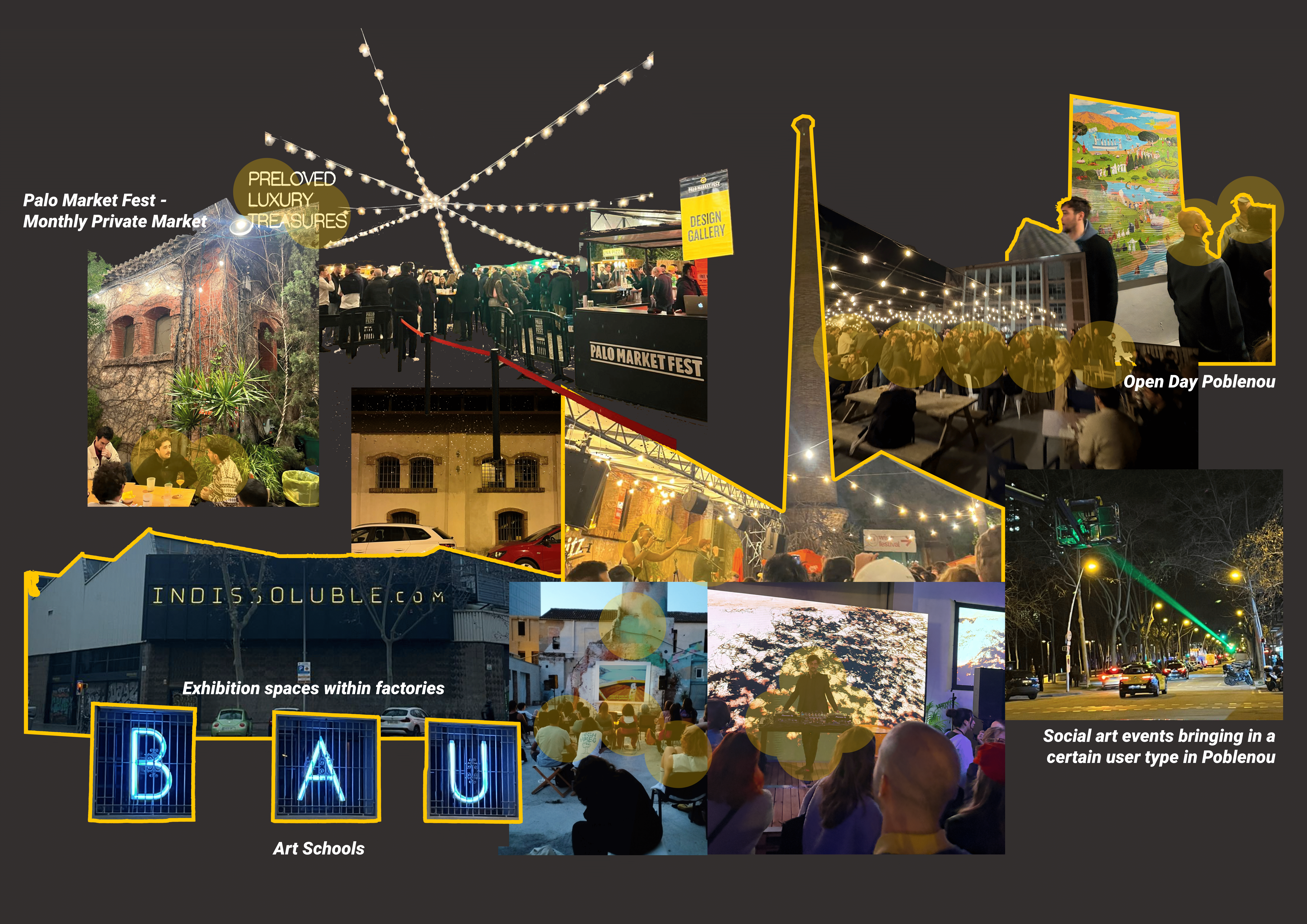
To understand Poblenou beyond policy, media, and singular observations, we decided to attend local events . We hoped to view these as condensed sites of storytelling; gatherings function as performative spaces where branding, identity, and imagined futures are staged, revealing both what is highlighted and what is absent. We noticed that events with curated aesthetics often determined who would and could attend.
To understand Poblenou beyond policy, media, and singular observations, we decided to attend local events . We hoped to view these as condensed sites of storytelling; gatherings function as performative spaces where branding, identity, and imagined futures are staged, revealing both what is highlighted and what is absent. We noticed that events with curated aesthetics often determined who would and could attend.
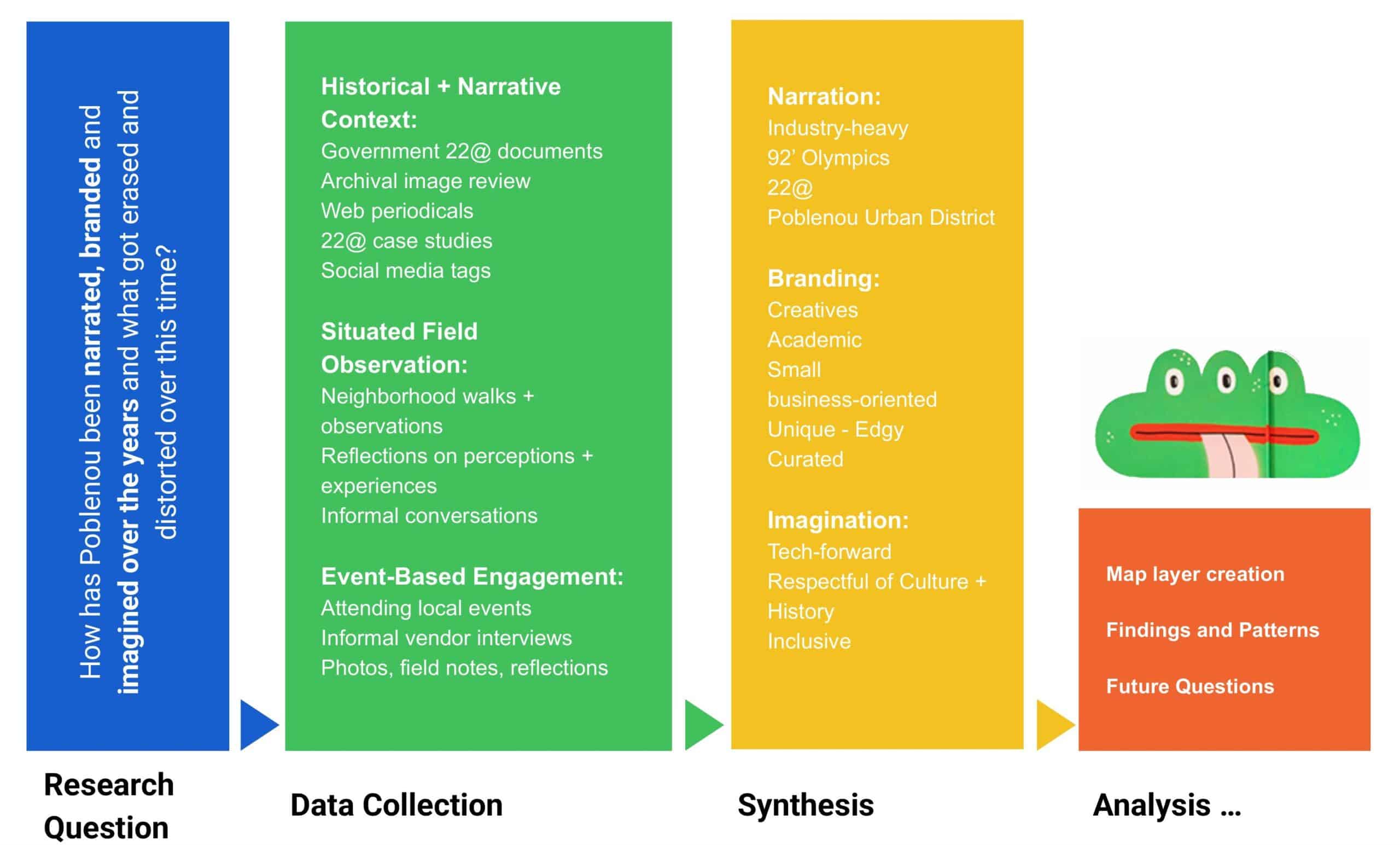
Historical + Narrative Context – A neighborhood with eras of branding
Through historical research, we observed that the area had gone through, and is continuing to go through four notable “brands.” Each of these eras comes with a new name for the area. Each new name frames the neighborhood through economic production, aligning its identity with progressing industrial, post-industrial, and knowledge-based economies.
Narrated
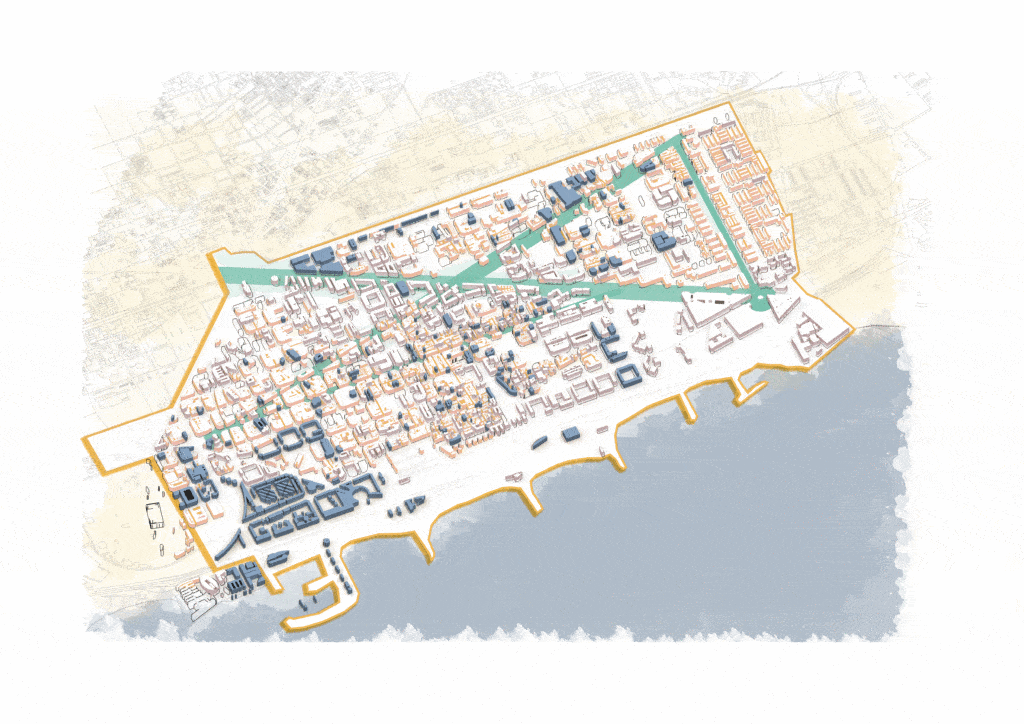
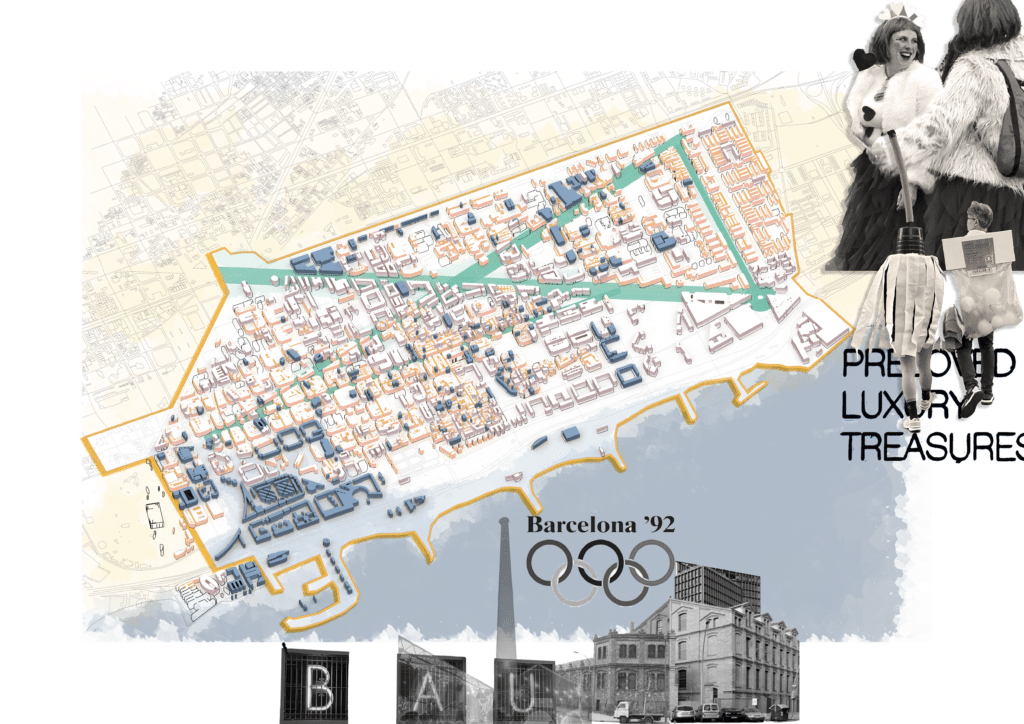
Poblenou’s dominant narrative has long centered on economic productivity. In the late nineteenth century it became known as “La Manchester Catalana,” one of Spain’s key industrial zones. After industrial decline in the twentieth century, the neighborhood entered a period of disinvestment, though the social histories of its working-class communities remain underrepresented in mainstream portrayals. The 1992 Olympic redevelopment reshaped parts of eastern Poblenou through the construction of Vila Olímpica, aligning the area with Barcelona’s emerging global brand. This transformation continued with the 22@ Plan (2000), which sought to convert former industrial land into a knowledge and innovation district. Today, initiatives such as the Poblenou Urban District further promote the area as a hub for creative and technological industries.
Branded
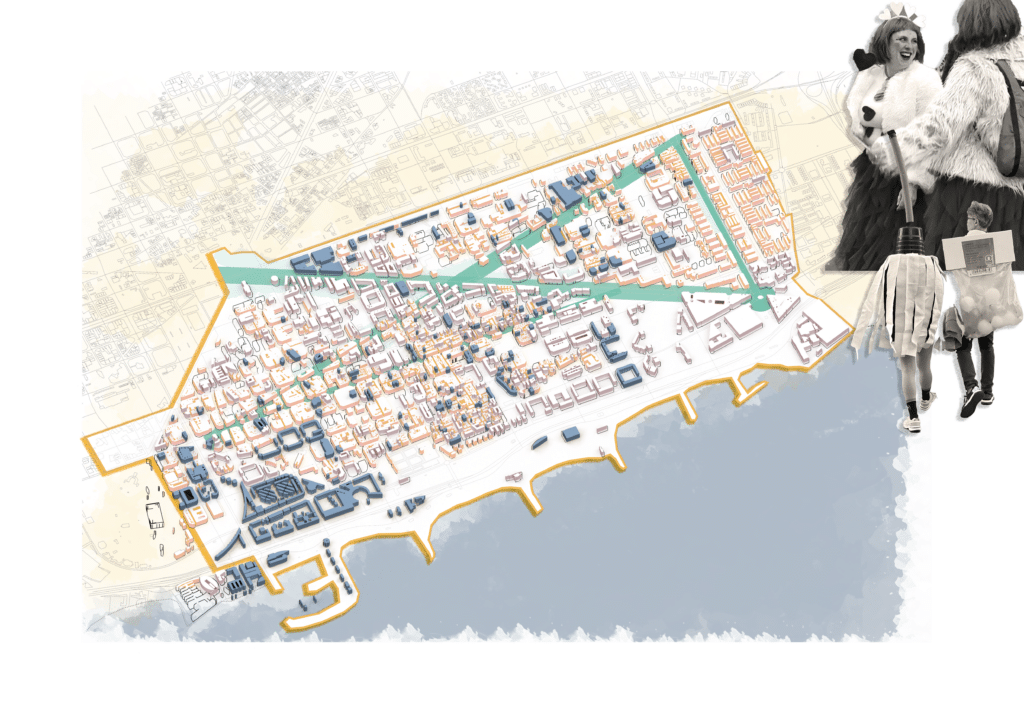
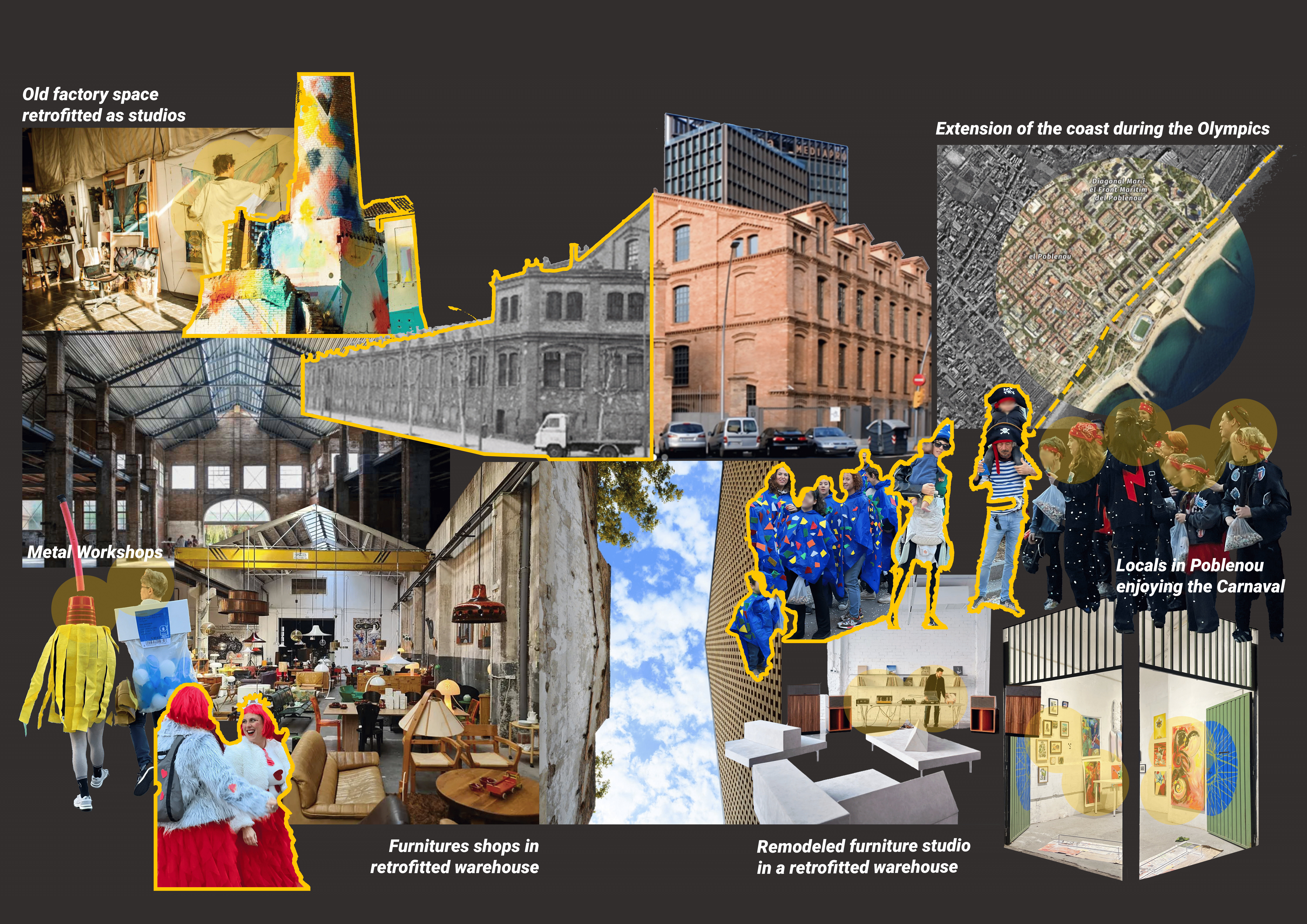
Some events aligned closely with dominant narratives of Poblenou as a creative and innovation-driven district, featuring curated aesthetics and professionalized cultural programming. Others presented more informal, community-oriented formats—such as neighborhood Carnival celebrations—that emphasized intergenerational participation and locally rooted forms of creativity. Together, these events illustrate how multiple narratives of Poblenou coexist and circulate, sometimes reinforcing and sometimes complicating the area’s broader branding.
Imagined

In examining how Poblenou imagines its future, we observed that creative and technological aspirations are often presented alongside efforts of historical preservation. Hybrid spaces—such as plant shops that double as cafés, co-working offices in former factories, or industrial buildings retrofitted with modern interiors—materialize this blending of past and future. These spaces stage a particular vision of continuity, where industrial heritage coexists with knowledge-based innovation. Through these spatial and cultural forms, Poblenou appears to imagine itself as a district that can reconcile memory with techno-futurist ambition—balancing historical identity with participation in the global knowledge economy.
Preliminary Findings
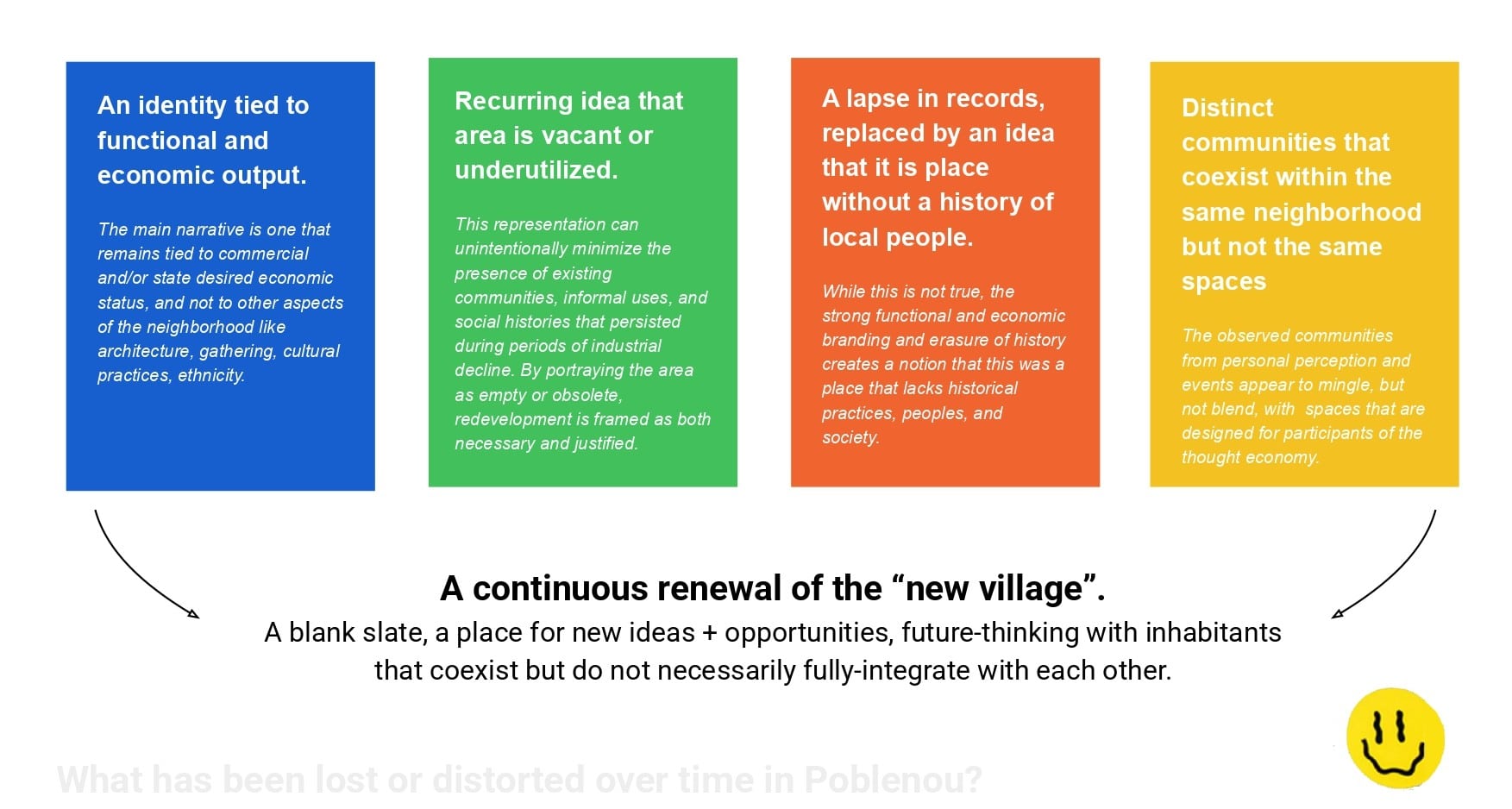
Reflections
This analysis only begins to scratch the surface and does not claim to be comprehensive. Rather, it reflects what individuals new to Poblenou — working with limited time and basic research tools—are likely to encounter. In this sense, the findings are revealing not because they are exhaustive, but because they mirror the narratives most readily available and therefore most easily reproduced. What emerges is less a complete history than a curated identity—one shaped by accessibility, repetition, and circulation.
Interestingly, this partial visibility may also function as a form of protection. Without a singular, easily marketable tourist identity, Poblenou resists becoming another heavily commodified enclave within Barcelona. Instead, it is commodified for capital, tied to economic productivity, innovation, and urban transformation rather than to consumable culture for tourists. However, this recurring narrative of productivity and progress—from its industrial modernity as the “Catalan Manchester” to the knowledge-based 22@ district—has overshadowed and reframed the lived realities of those who inhabit it, particularly its working-class histories.
