CarbonFrame is a web-based parametric tool for calculating the embodied carbon of structural frames.
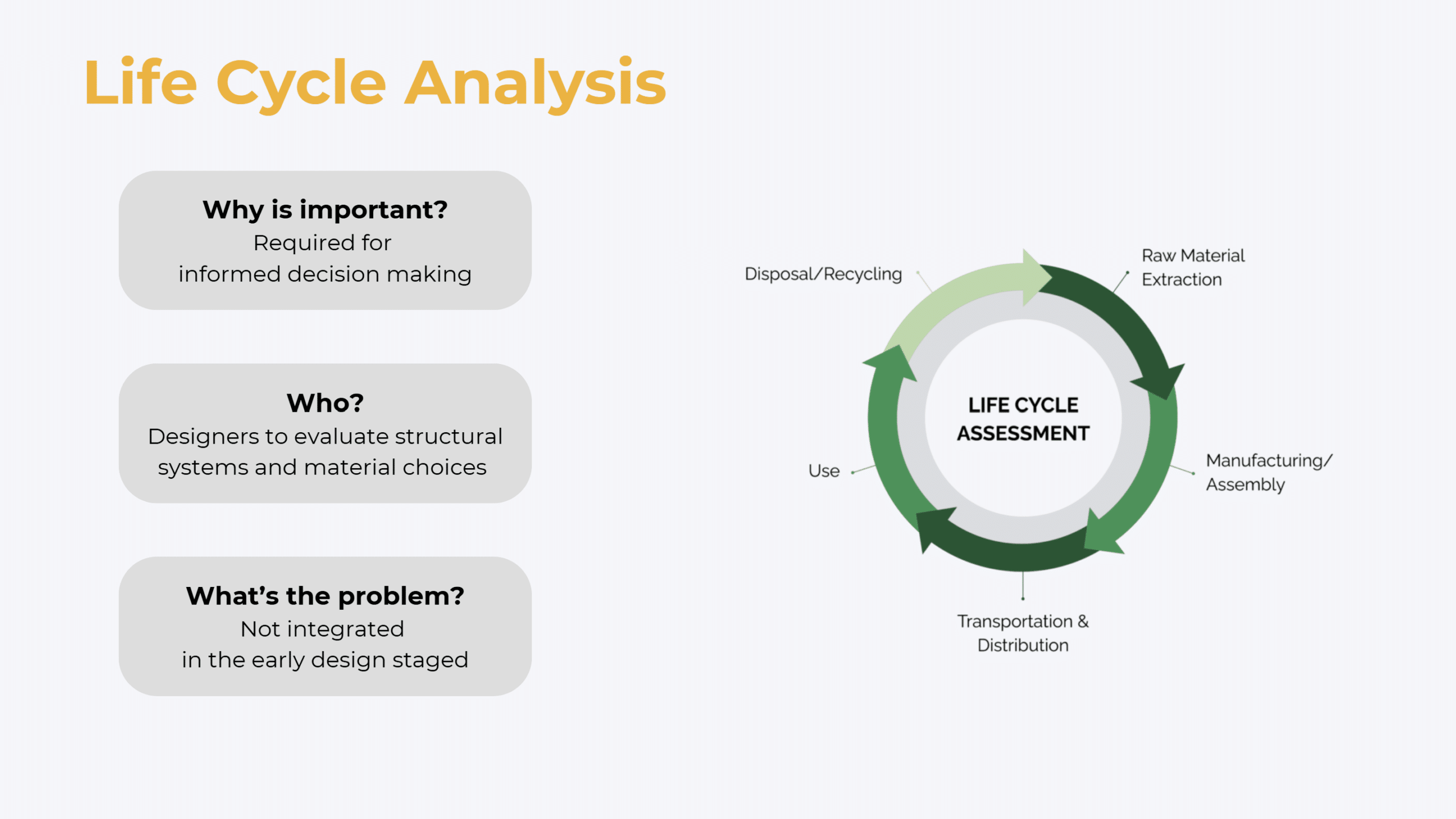
Life Cycle Analysis is becoming a requirement in the building industry. However, integrating it into everyday design workflows—especially in the early stages—remains a challenge. This is critical, because structural systems and material choices are often the largest contributors to a building’s embodied carbon.
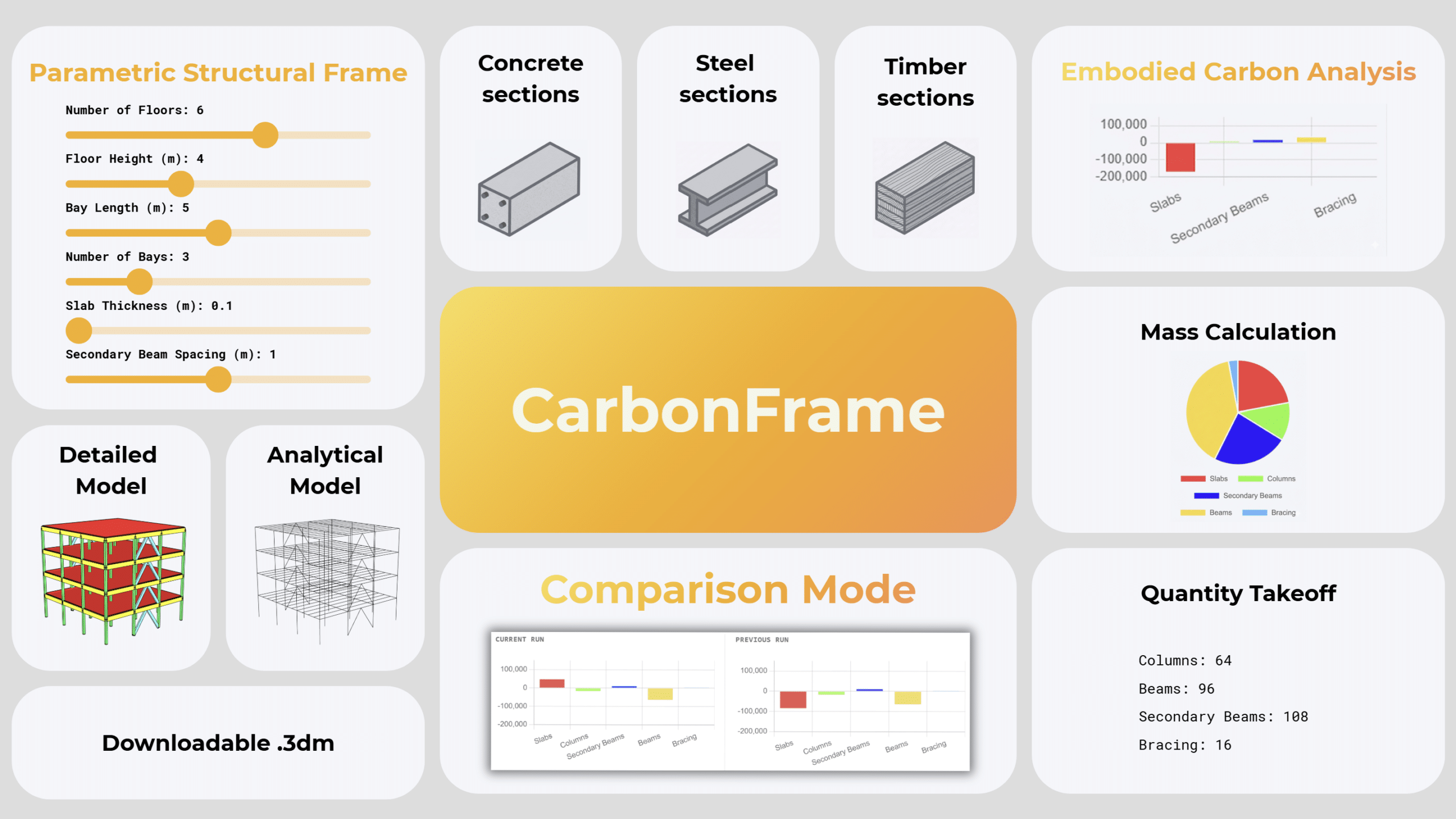
CarbonFrame addresses this gap by allowing users to quickly define the key parameters of a structural framework. These include the number of floors, floor height, bay length and number of bays in both directions, slab thickness, and secondary beam spacing.
Users can then assign section dimensions to each structural element, choosing from a range of concrete, steel, and timber options.
Once the analysis is run, the app provides a clear breakdown of embodied carbon emissions, material mass and quantity takeoff—both for building elements and for the structure as a whole.
CarbonFrame also includes a comparison mode. After running multiple analyses, you can easily compare the last two design options side by side, making it easier to evaluate different strategies.
In addition, the model can be exported as a .3dm file. This file contains both a detailed geometric model—with embedded properties for each element—and an analytical model that can be used for further FEM analysis in external software.
Overall, CarbonFrame enables designers to explore and compare structural solutions quickly, helping them make more informed decisions about environmental impact from the earliest design stages.
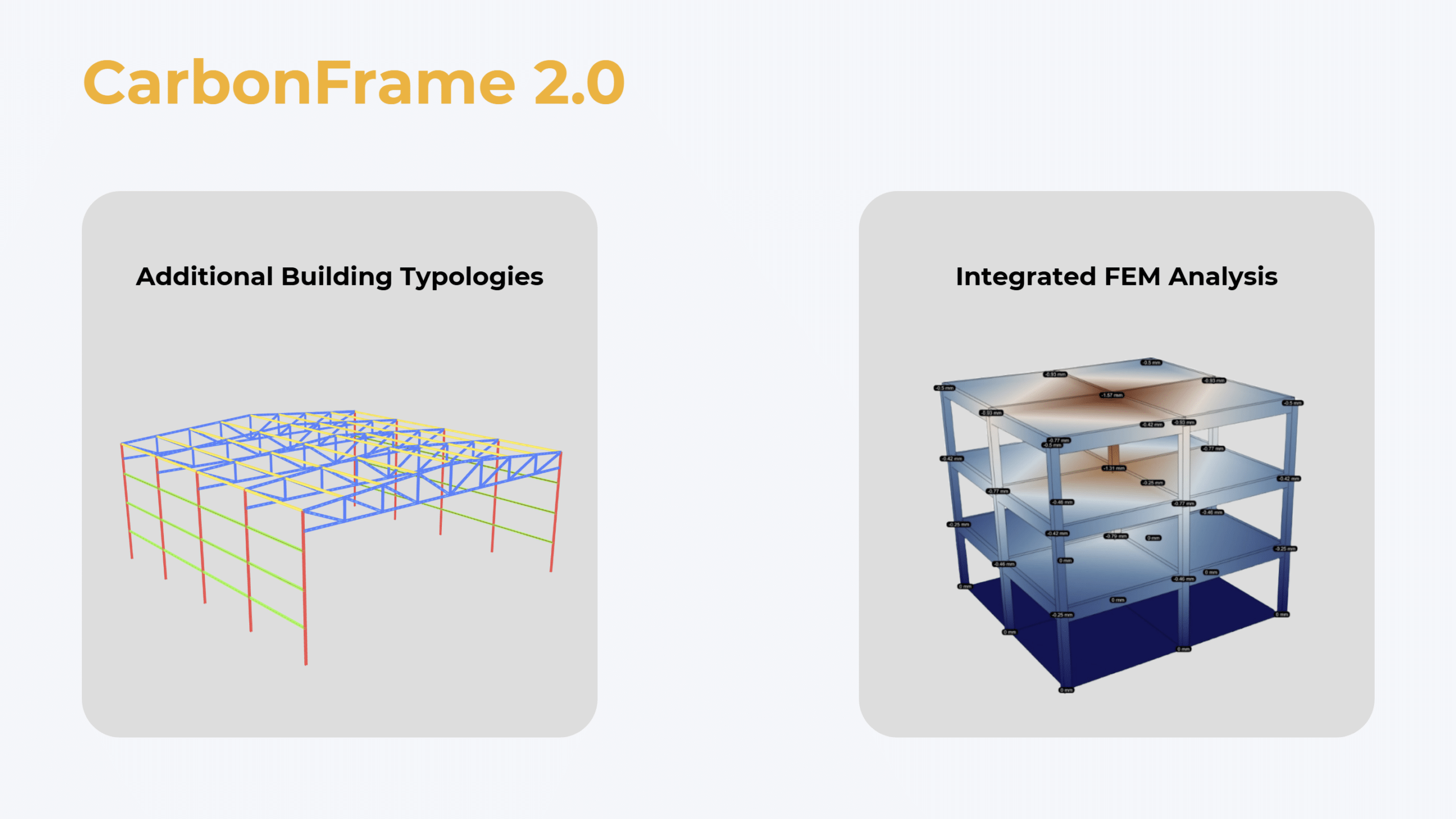
What can you expect from CarbonFrame 2.0?
The next step is to expand support to additional building typologies—such as industrial structures— as well as integrating built-in FEM analysis directly within the platform.