
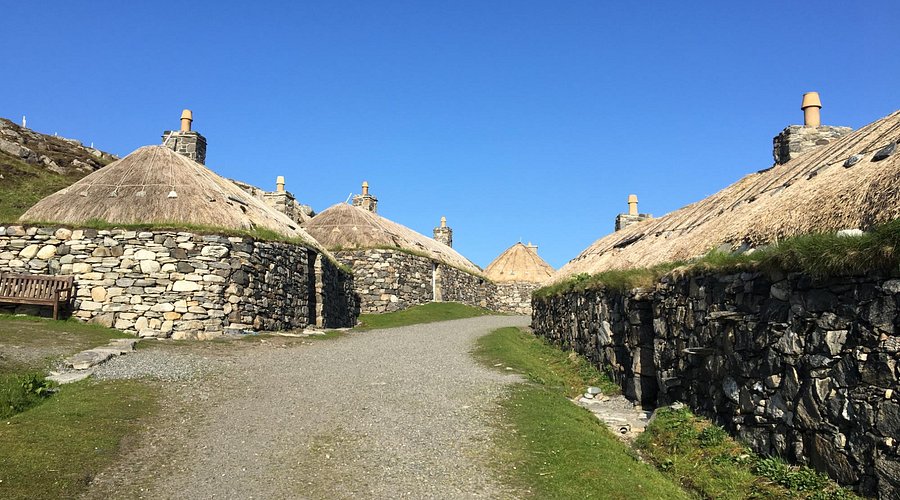
Mark Burry describes his professional identity as transcending the traditional boundaries of an architect, acting equally as an activist and a researcher. Early in his career, he sought out remote environments, moving to the Western Isles of Scotland. There, he designed fundamental community facilities, such as a waiting room for a ferry at Eriskay, and spent years renovating a traditional stone “blackhouse“. Dealing with extreme weather and meter-thick stone walls, he consulted national experts on insulation but quickly learned that theoretical advice has its limits, and an architect must ultimately rely on their own professional judgment. He later applied this mindset in New Zealand, where he built a low-cost, rammed-earth house on a seismic fault line. These projects shaped his core philosophy: buildings should never be over-structured, and architects must use materials as efficiently as possible.
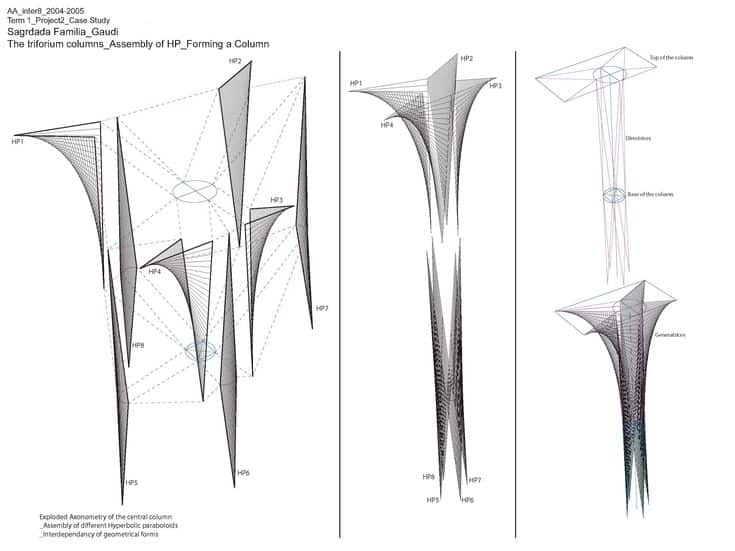
Burry’s career is heavily defined by his decades-long work as a senior architect at the Sagrada Familia, where he was initially the sole person responsible for unpacking Gaudí’s complex analog geometry. He observed that Antoni Gaudí transitioned from a sculptor to an architect, utilizing ruled surfaces like hyperbolic paraboloids and hyperboloids of revolution. Because these complex geometric surfaces are defined by simple straight lines, Gaudí could easily and accurately communicate construction parameters to builders and stonemasons on site. Interestingly, Gaudí was highly conservative regarding the actual building process; he believed innovation belonged in the design itself, not in taking risks with unproven construction methods, preferring traditional and affordable techniques. Despite this, the ongoing project embraced modern technology, becoming the first in the world to utilize 3D printing in construction around the year 2000.
Throughout his teaching and practice, Burry has championed transdisciplinary collaboration, insisting that architects are not solitary sculptors and must work alongside engineers, graphic designers, and scientists. He encouraged his students to build full-scale architectural details to truly understand material constraints. His collaborative teams found innovative solutions by working outside the box, such as using Photoshop as an unexpected 3D spatial design tool. This collaborative spirit extended into his research on parametric systems, long before digital tools were standard, culminating in projects like interactive architectural walls that physically respond to real-time inputs.
Today, Burry is applying his material philosophies to the Australian Outback. To combat the exorbitant costs of remote construction, where a simple house can cost over a million dollars due to transportation, he is training local communities to use robotic tools directly on site. By empowering locals with these techniques, they are able to efficiently construct functional buildings, like community sheds, in a matter of days.
How do you handle the fear of risk in modern construction, especially regarding innovative designs or timber buildings facing insurance hurdles?
Risk must be countered with absolute competence and confidence. It is not about taking blind risks on the construction site; rather, it requires collaborating with skilled engineers who can mathematically prove that a structure will stand.
Did Gaudí start his architectural concepts primarily with sketches, or did he rely more on hand modeling?
Gaudí definitely used sketches, although many of his original drawings were tragically destroyed in a fire during the Civil War. However, he was also highly tactile and relied heavily on direct hand modeling; for example, he would physically squeeze clay to determine the perfect ergonomic shape for a door handle.
How do you manage collaborative group work to avoid a diluted “design by committee” where the original idea loses its strength?
Burry acknowledged this danger, referencing the old joke that a camel is just a horse designed by a committee. To prevent weak outcomes, teams require strong chemistry and effective leadership—he noted that women often excel as leaders in these dynamics—as well as the political diplomacy to navigate different egos and personalities.
Beyond the aesthetic inspiration, did Gaudí explicitly replicate the ecological or biological performance of nature in his designs?
While his contemporaries used nature merely for decoration, Gaudí utilized it as a structural organizing principle. The branching columns of the Sagrada Familia, for instance, explicitly mimic cellular division and natural growth. While it is difficult to confirm if he measured ecological metrics as we do today, his overarching goal was to translate biological vitality into a profound spatial and spiritual experience.
