The Problem of Friction
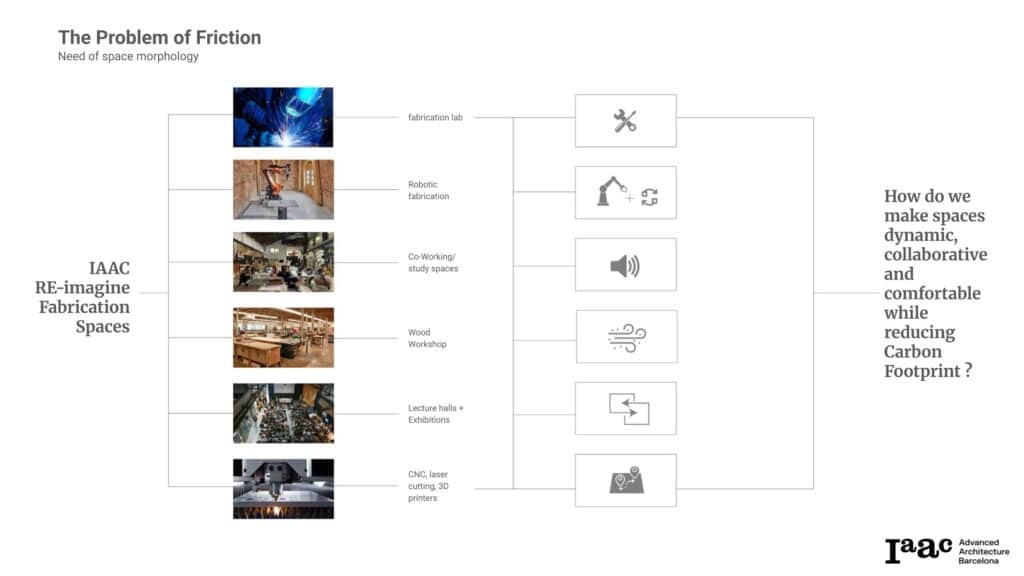
The fabrication hall of the new IAAC building is a single volume asked to do many incompatible things at once. Robotic arms run beside coworking desks; CNC routers and laser cutters share air with lectures and exhibitions. Across a typical academic year, from the September machine inductions to the July exhibition, the same floor cycles through demonstration zones, prototyping clusters, guest lectures for sixty people, and open public viewings. The friction between these uses is not metaphorical; it is acoustic, spatial, and temporal. Our studio brief asked a deceptively simple question: how can a space be made dynamic, collaborative, and acoustically comfortable while keeping its carbon footprint low?
An Ecological Material Question
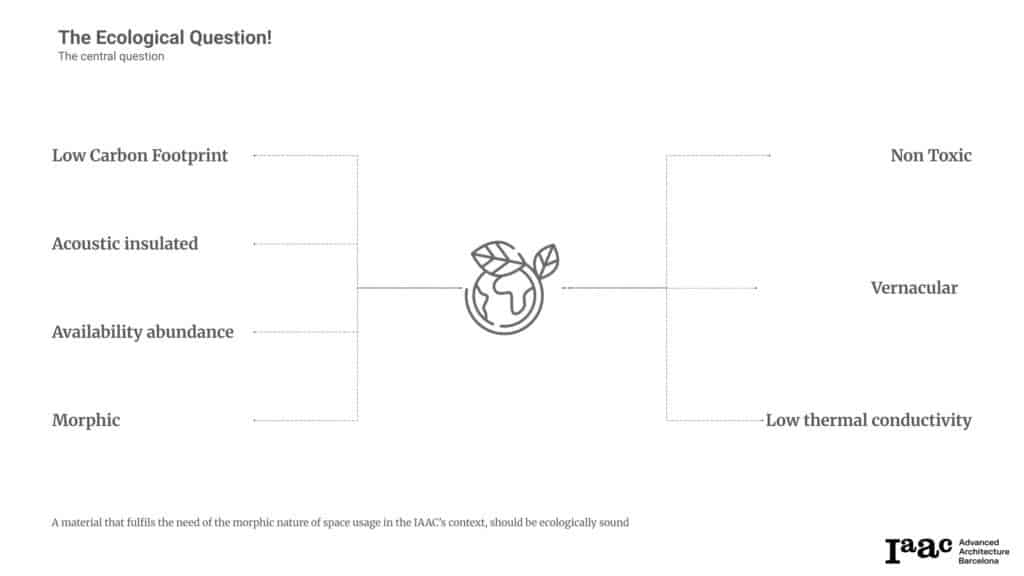
Rather than treat partitioning as a hardware problem, we framed it as a material one. A wall system suited to a constantly re-forming space must itself be morphic, easy to assemble, dismantle, and relocate. Layering that requirement onto ecological criteria (low embodied carbon, non-toxicity, low thermal conductivity, acoustic absorption, local abundance, and vernacular precedent) pointed consistently toward one agricultural byproduct: wheat straw.
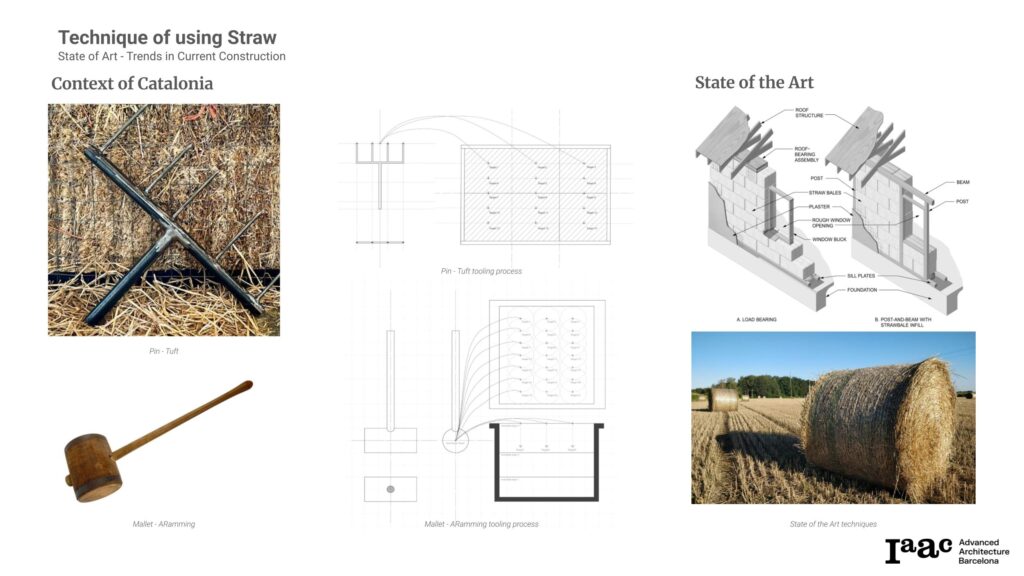
Catalonia produces it in volume. Barley dominates at roughly 154,500 hectares, and wheat follows at around 103,000 hectares, the latter offering longer, stiffer stalks better suited to fabrication. Straw also carries deep vernacular authority through thatched roofing, load-bearing bale walls, and clay-straw plastering, traditions we read not as nostalgia but as proof of performance.
From Manual Tests to a Robotic Workflow
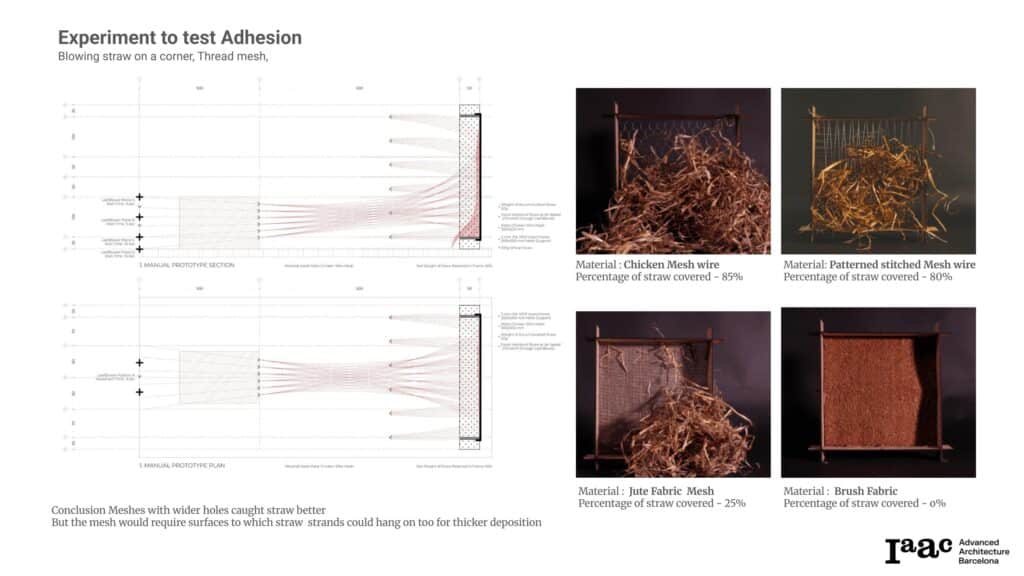
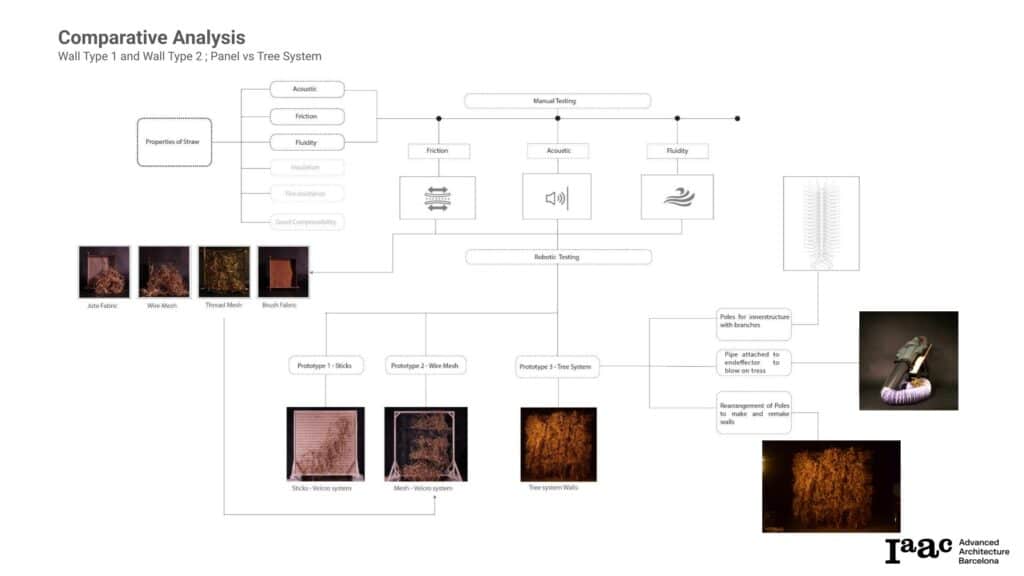
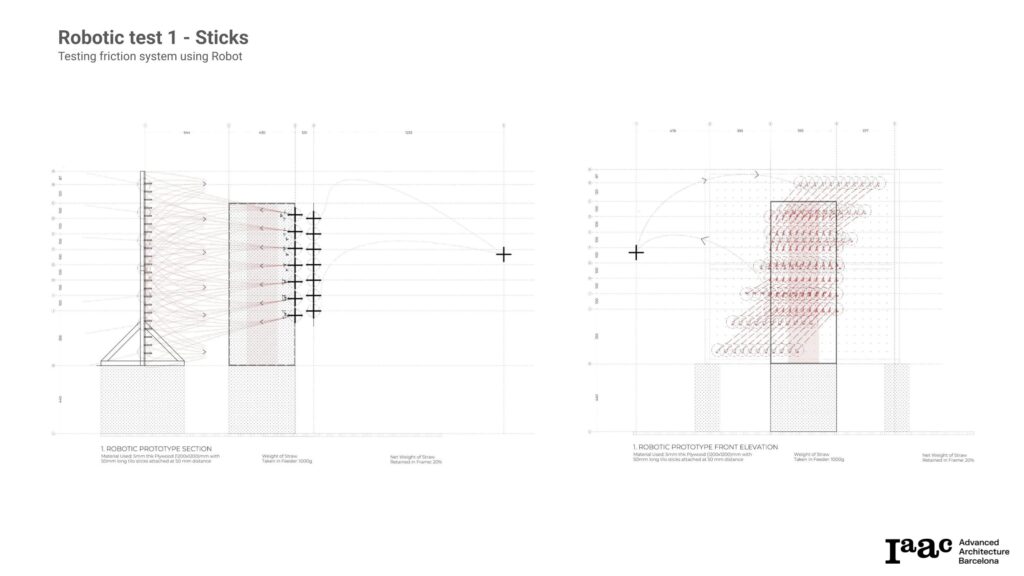
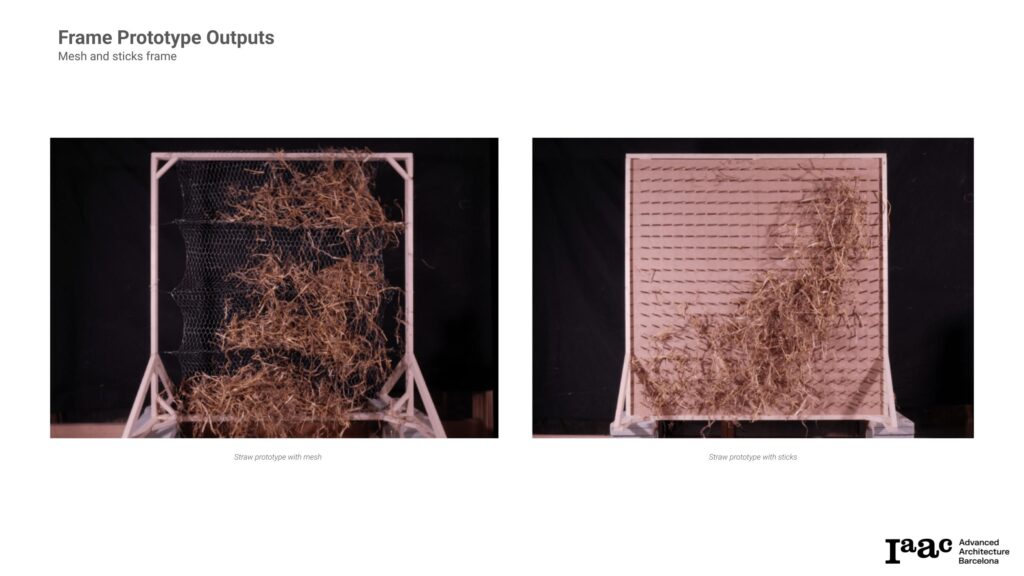
The central technical wager was that loose straw could be sprayed and made to hold without binders. Early manual experiments used a leaf blower to project straw onto framed catching surfaces. Adhesion depended almost entirely on the substrate: chicken wire mesh captured about 85% of the projected material, a patterned stitched mesh about 80%, while jute fabric captured 25% and a smooth brush surface effectively none. Meshes with wider apertures and protruding elements consistently outperformed flat ones, straw needs something to hang on, not merely land against.
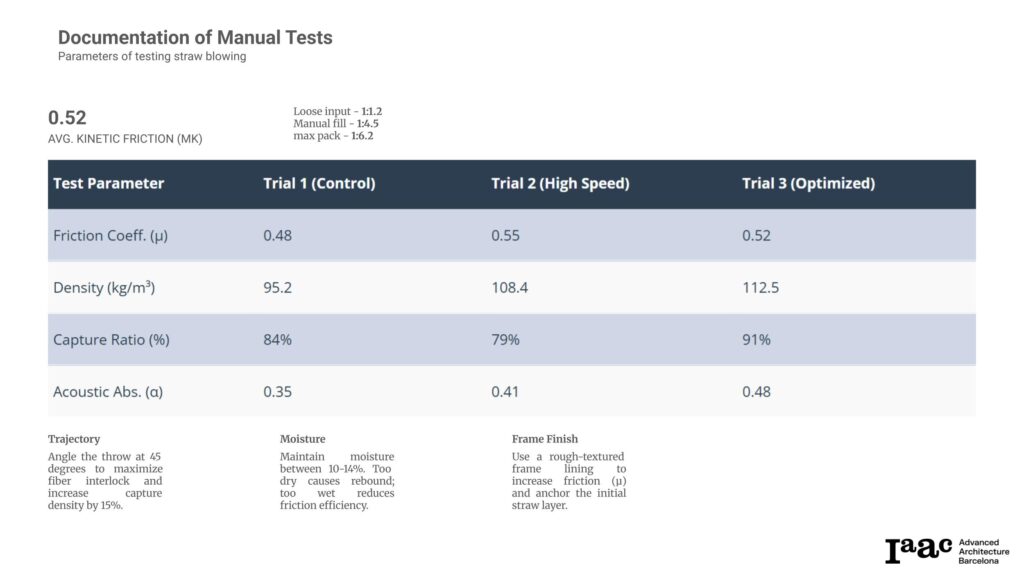
Documented trials returned an average kinetic friction coefficient of 0.52, with an optimized run reaching 91% capture ratio and an acoustic absorption coefficient of 0.48. Three parameters governed success: a 45-degree projection angle to maximize fiber interlock, moisture held between 10–14% to avoid rebound or clumping, and a rough frame finish to anchor the first layer.
The Tree System
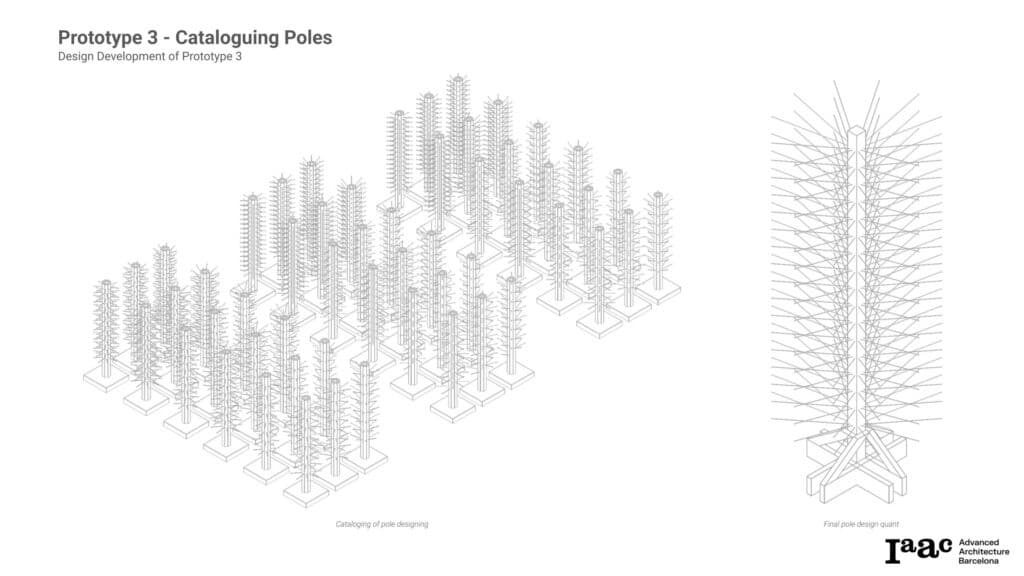
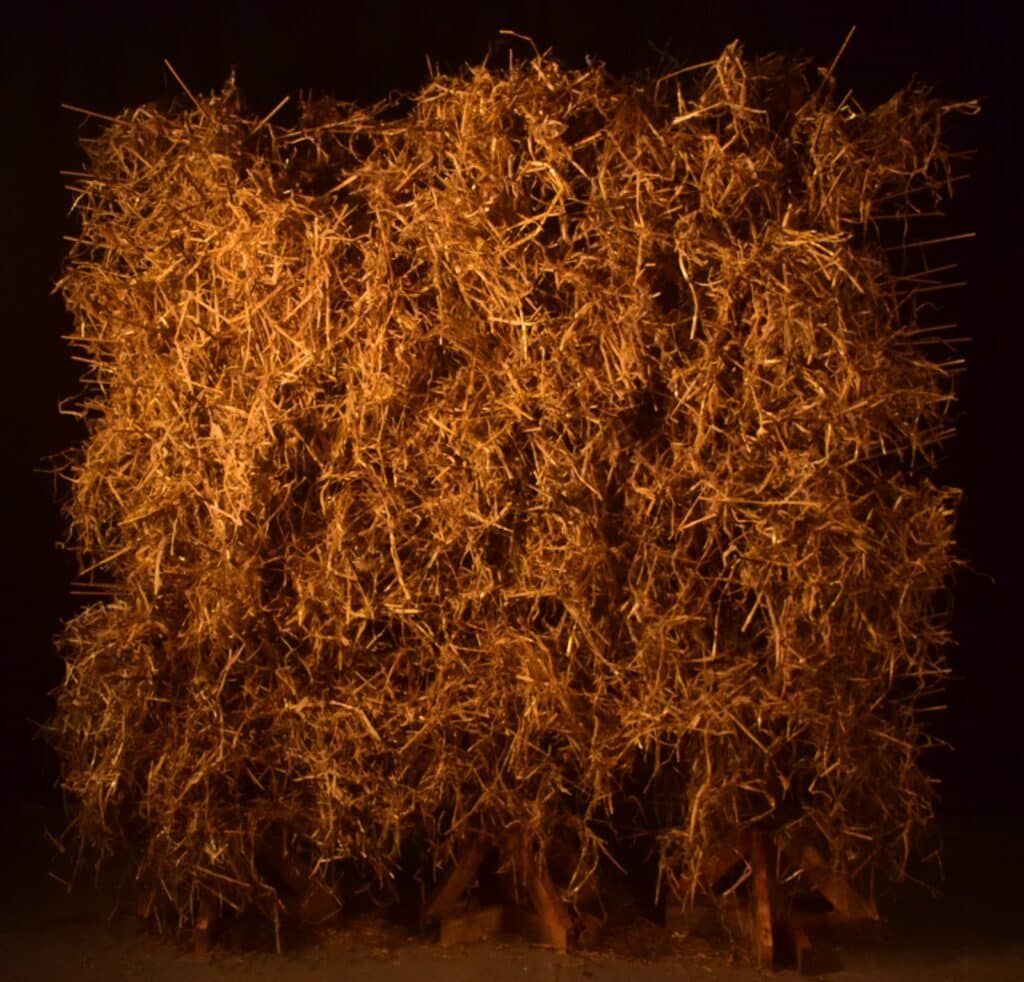
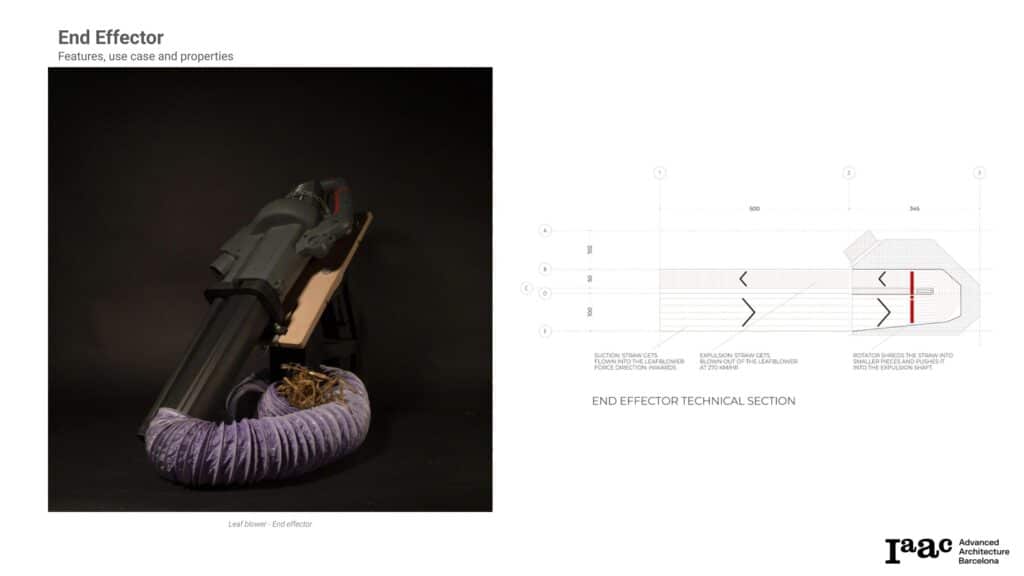
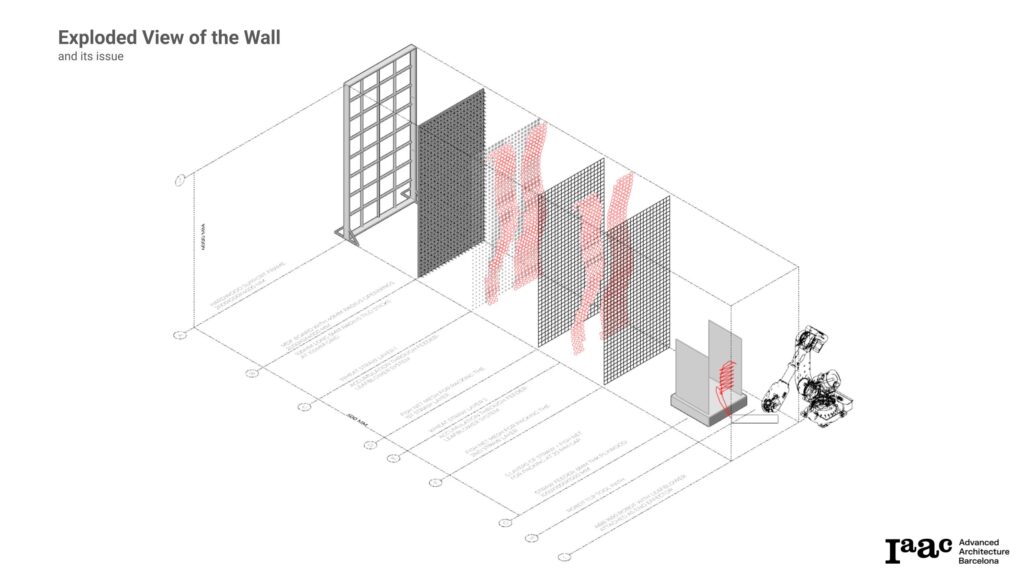
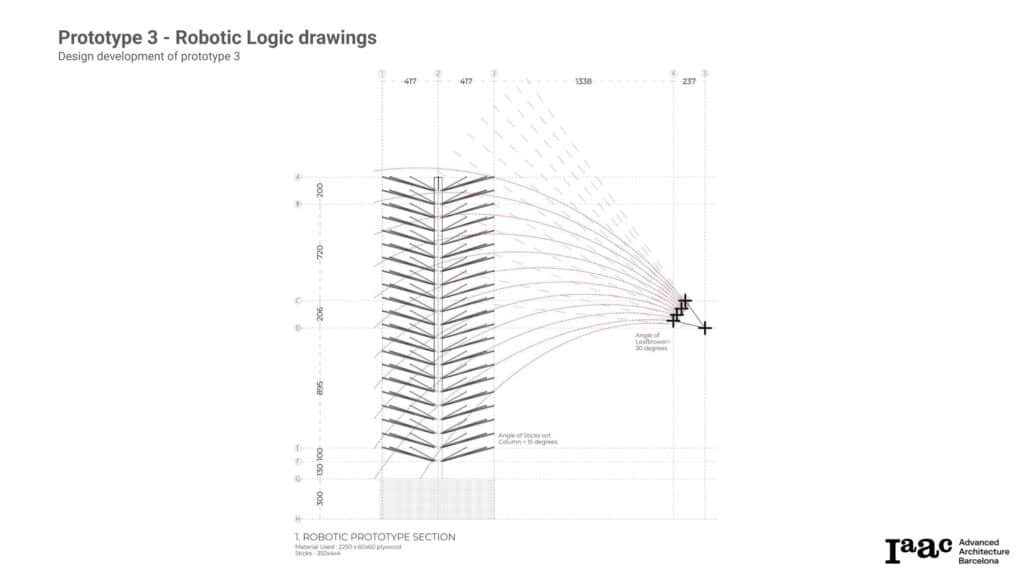
These findings drove the move from flat panels to Prototype 3: a tree-like system. Vertical poles carry angled “branches” (sticks set roughly 15 degrees from the column) that act as a three-dimensional catching matrix. A custom end-effector, built from a modified leaf blower with a shredding rotor, draws straw in, fragments it, and expels it at high velocity onto the branched poles, which the robot then layers into a dense, fibrous wall.
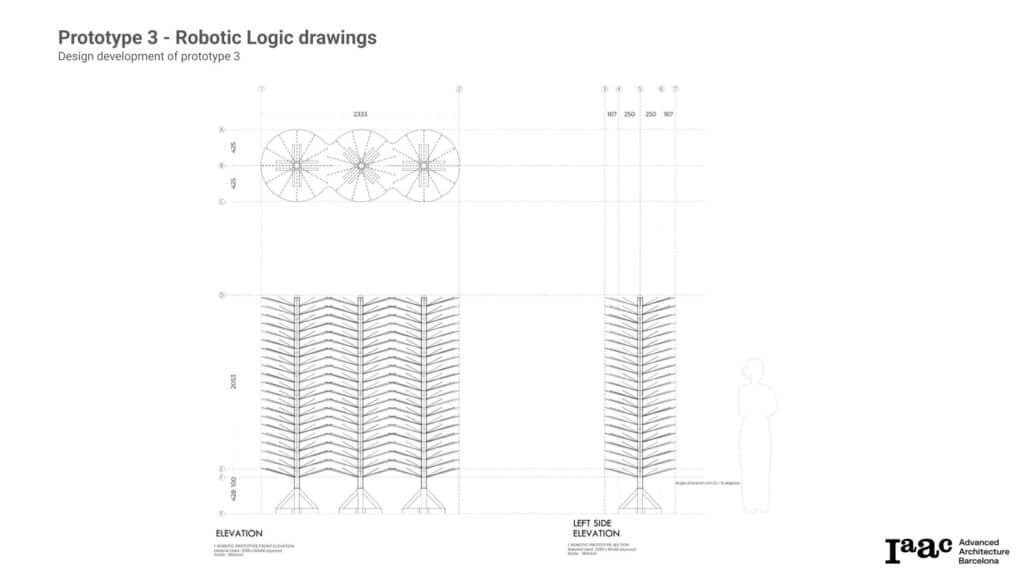
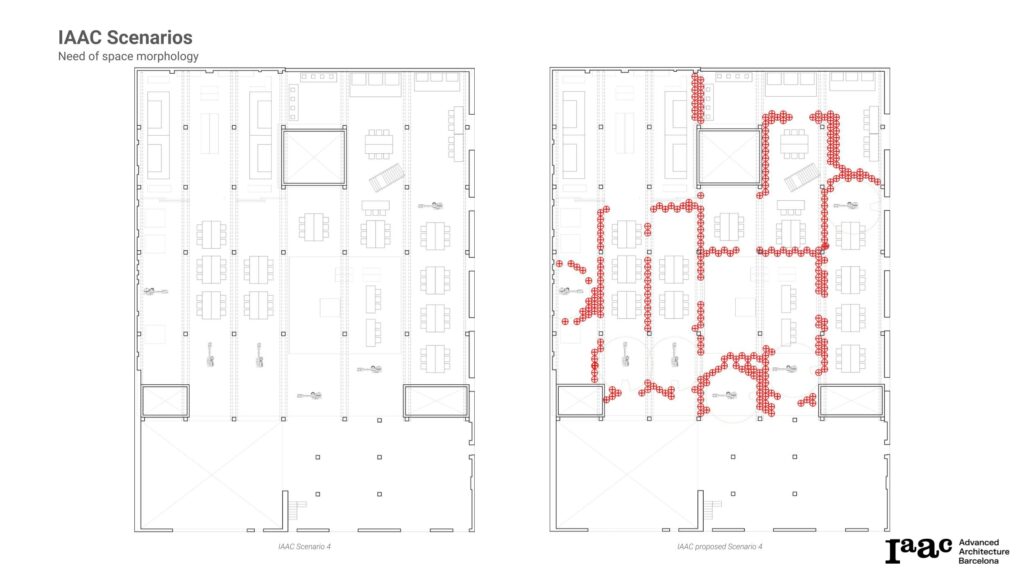
The decisive advantage is reconfigurability. Individual poles can be repositioned along a diagonal grid, blown with straw, stripped, and rebuilt elsewhere as the hall’s needs change across the year. Mapped onto our six documented scenarios, the same kit of poles produces acoustic enclosures for demonstrations, soft buffers around messy prototyping, and open circulation for exhibitions.
Reflection
The Straw System is less a fixed wall than a fabrication logic, a loop where an abundant waste material, a friction-based catching geometry, and a robotic spraying process together let architecture keep pace with how a space is actually used. The next step is consolidating material-property data and testing fire and durability performance before scaling to occupied conditions.