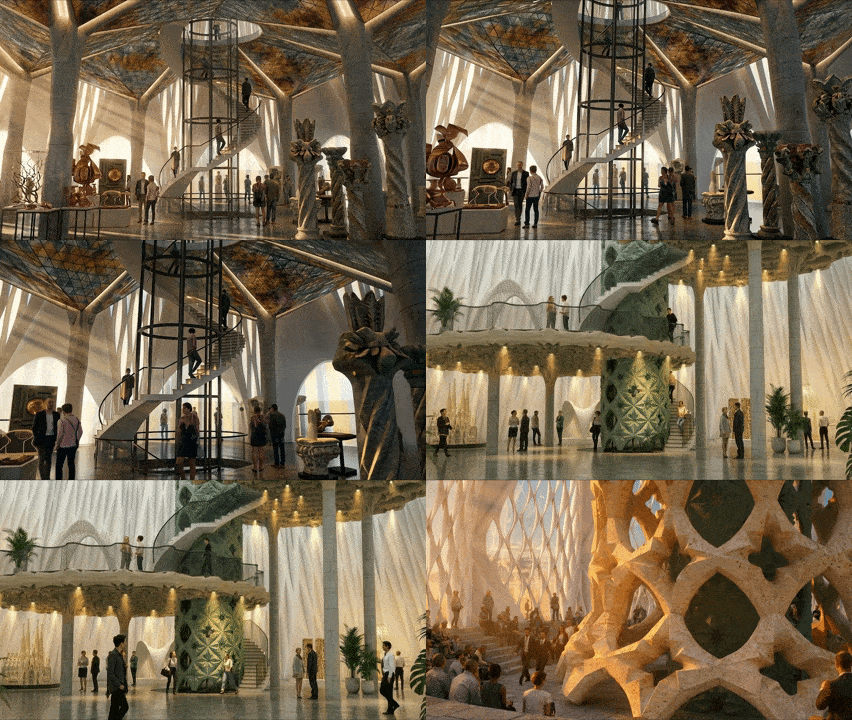
The After Gaudí vision is explored through the lens of an Interpretation Center, not by simply copying forms, but by deeply understanding his geometry and structural logic.
Project Framing: A 2026 Centenary Monument in the Born District.
The monument site is strategically located in the Born District, deeply connected to the urban fabric between the Sagrada Familia Basilica and the Cathedral.
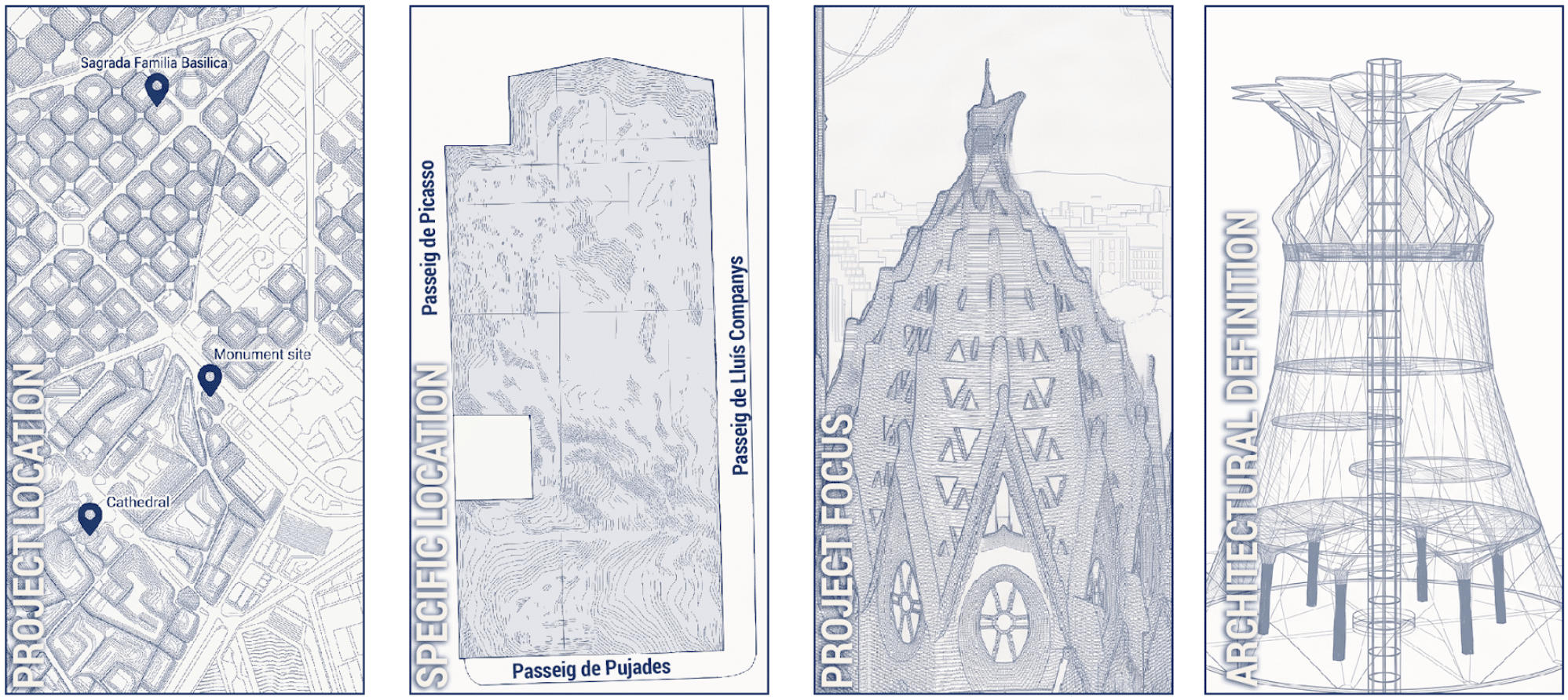
The Interpretation Center: Defining the Cultural Program
An Interpretation Center is not just an exhibition space; it is a spatial narrative and a new kind of interactive museum. In this case, it specifically communicates the cultural and architectural importance of the sacristy, honoring the 100th anniversary of Antoni Gaudí’s death. It becomes a device to translate his complex logic and architectural intelligence to the public.
Nature as Algorithm: Morphological Elements of Nature
Morphological elements derived from nature, such as water dynamics, airflow patterns, and the adaptive behavior of vegetation in response to environmental forces were systematically correlated.
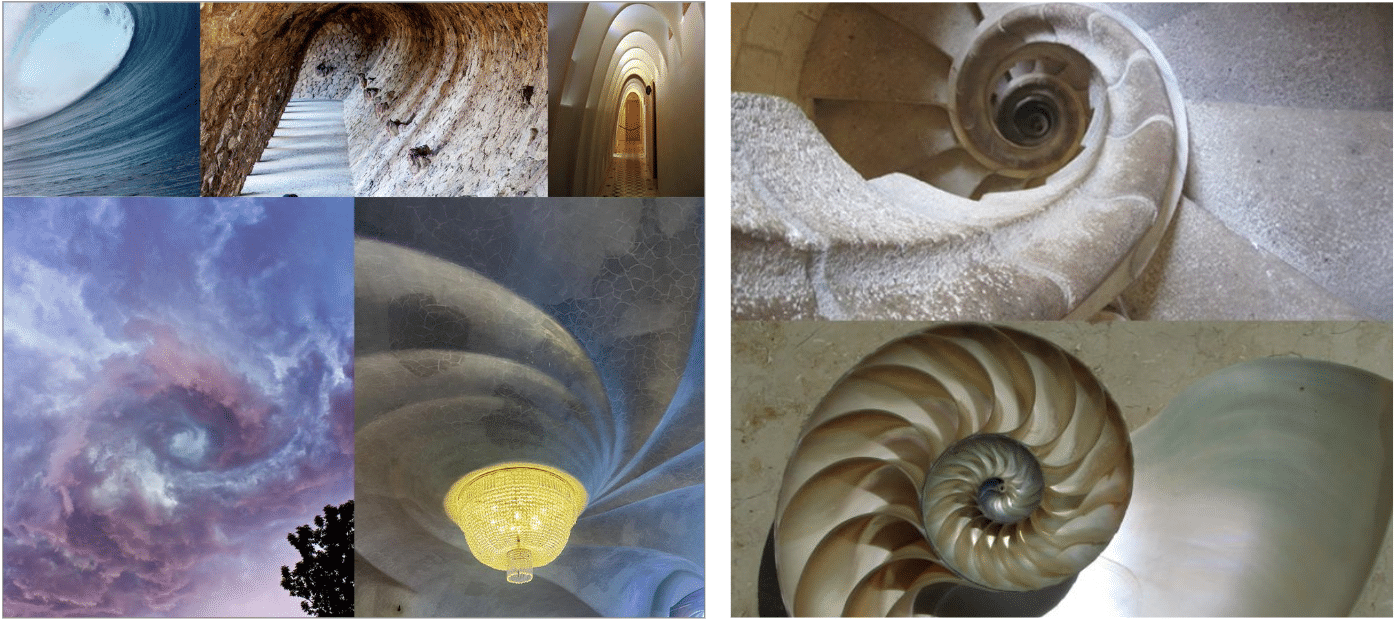
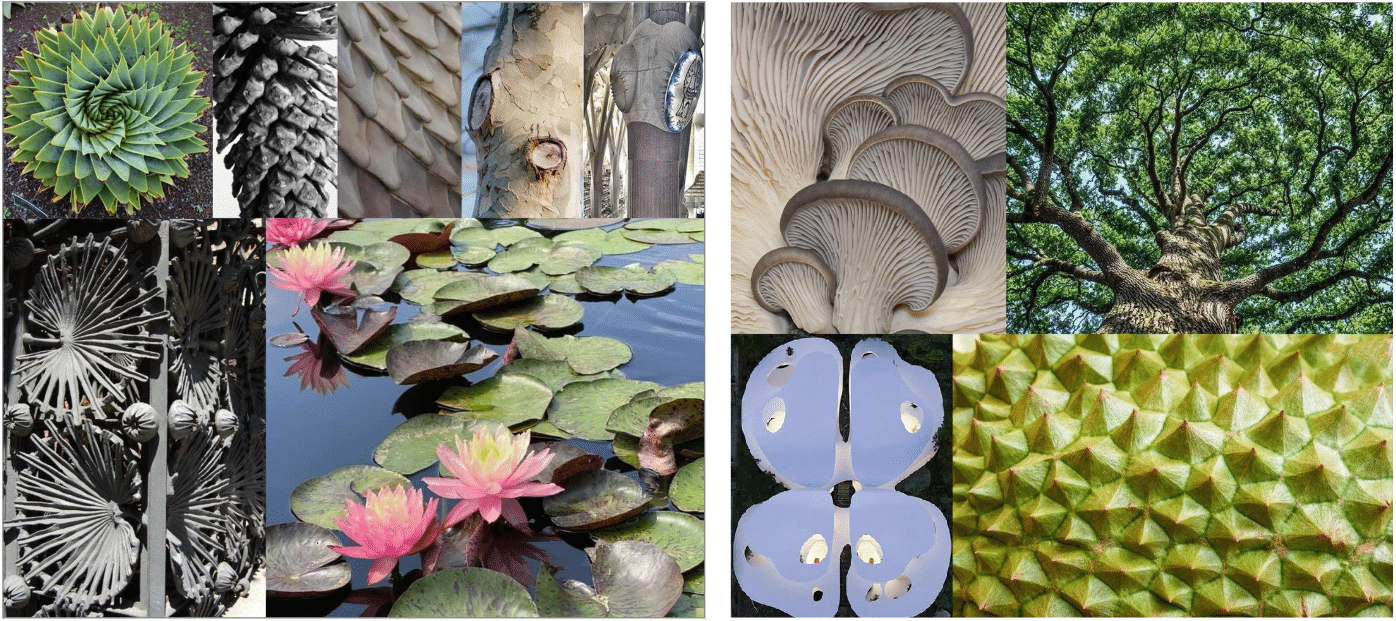
In parallel, the structure of the human body was examined, and its proportions were translated into a spiral, circular system that served as the foundational framework for the project’s structural elements. This biomimetic investigation ultimately functioned as the underlying algorithm guiding the generative design process.
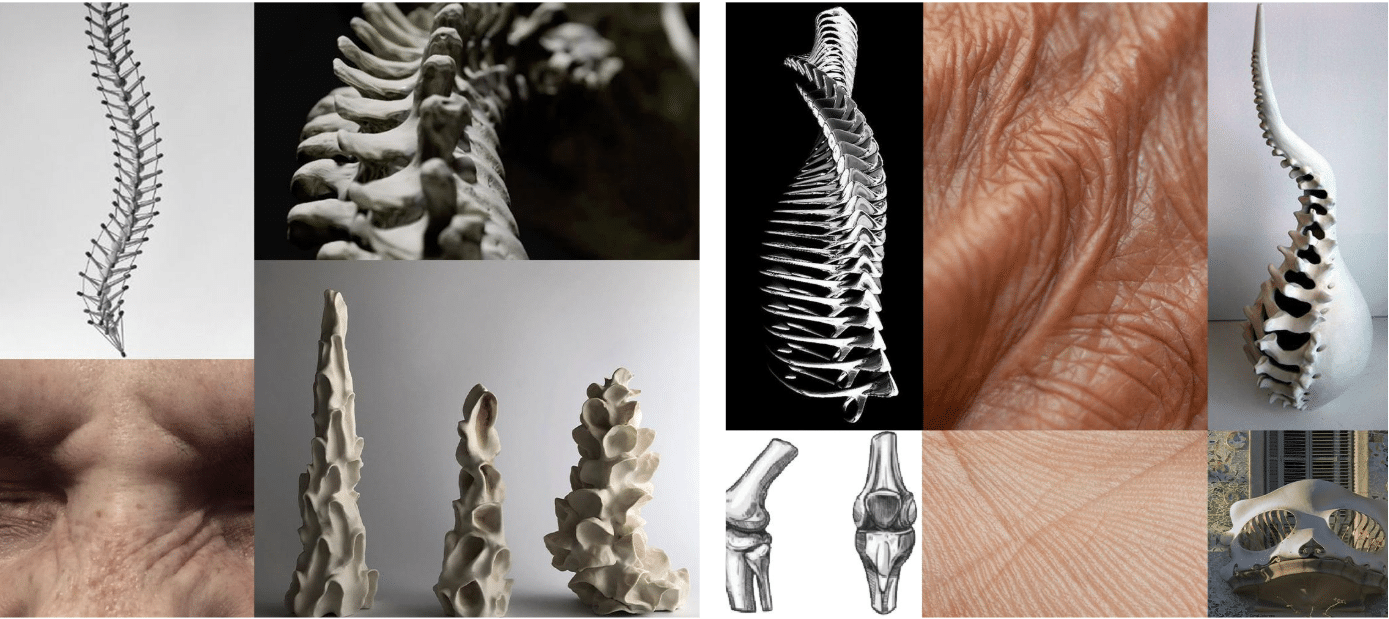
Tower Concept and Initial Sketches
Through abstraction and iterative sketching, a highly systematized “morphological catalogue” was developed. This system allowed for the generation of specific, parametric components that best align with Gaudí’s logic and the structural integrity of the Sagrada Família.
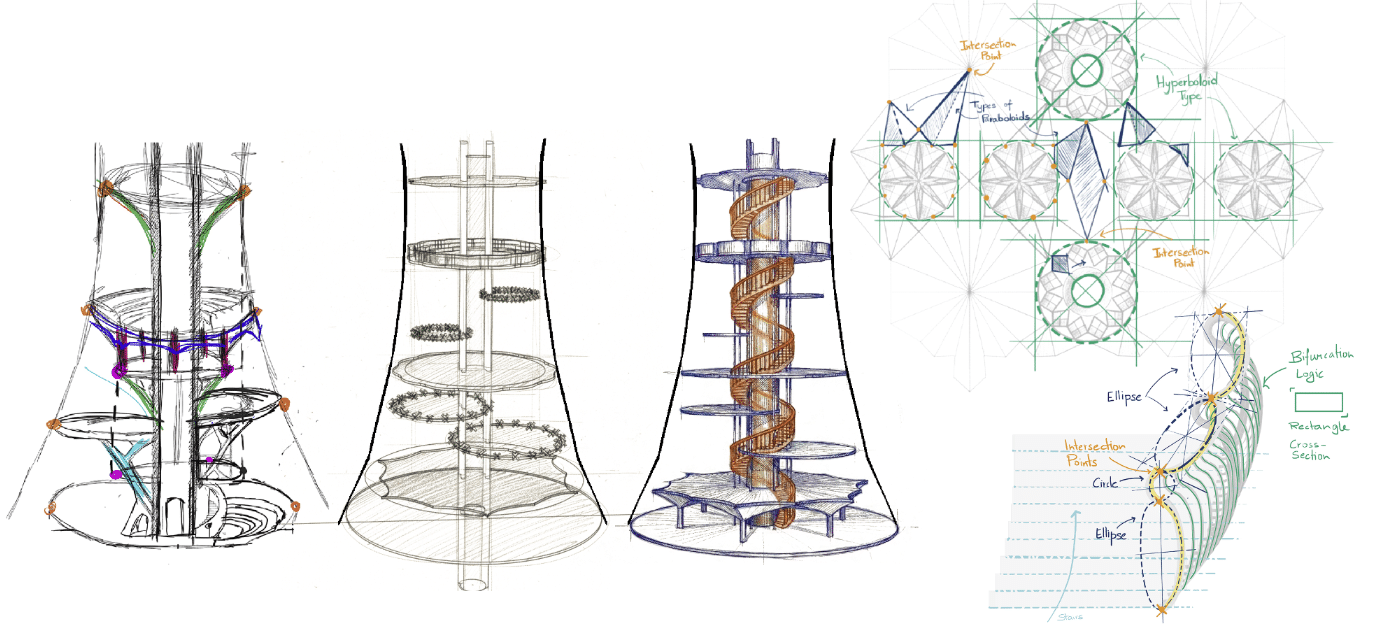
Spatial Narrative
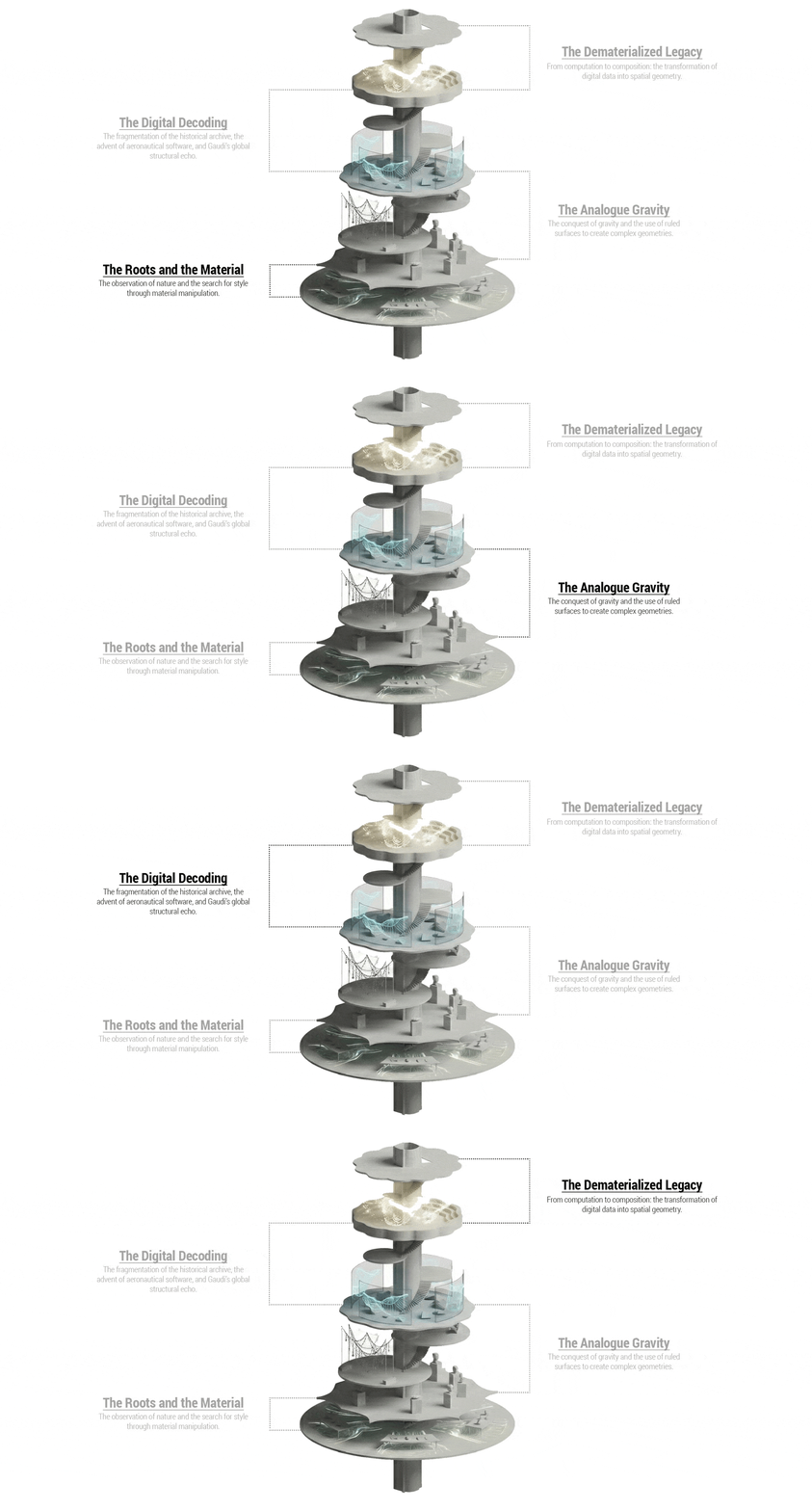
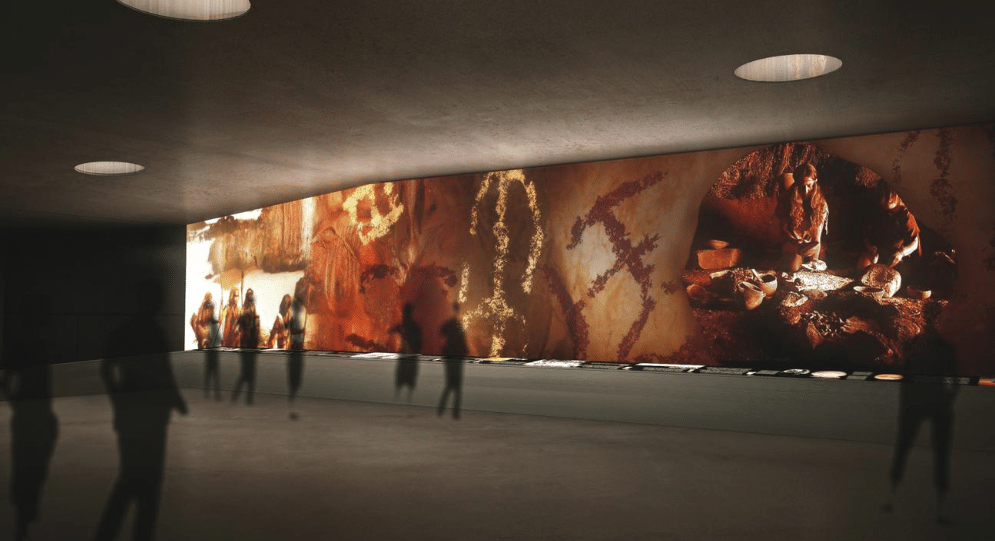
The narrative of the center follows a vertical ascent from the tactile foundations of Gaudí’s craft to the digital ether of his modern legacy. It begins in The Roots & The Material, where the raw textures of the natural world and traditional craftsmanship serve as the primary architectonic language. This evolves into The Analogue Gravity, a phase dedicated to his radical structural laboratories where physical forces were tamed through empirical, hanging models. As the journey moves past the architect’s life, The Digital Decoding explores the transition from fragmented physical archives to the aeronautical software required to finally map his complex ruled surfaces. The path culminates in The Dematerialized Legacy, illustrating how Gaudí’s geometric DNA continues to propagate through contemporary computational design, proving that his work is not a static history, but a living, generative framework.
Schematic Design

Form and Structure Catalogue
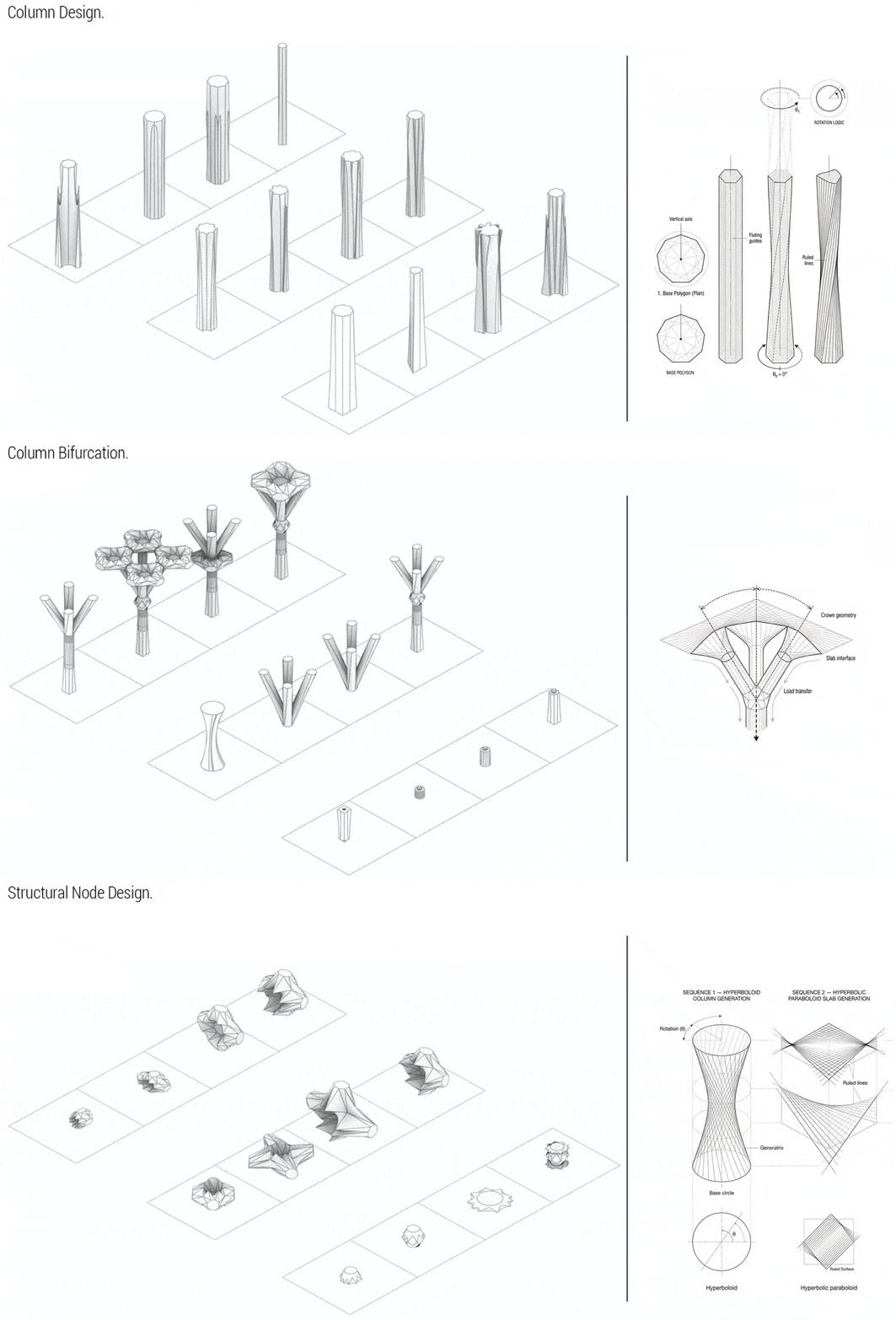
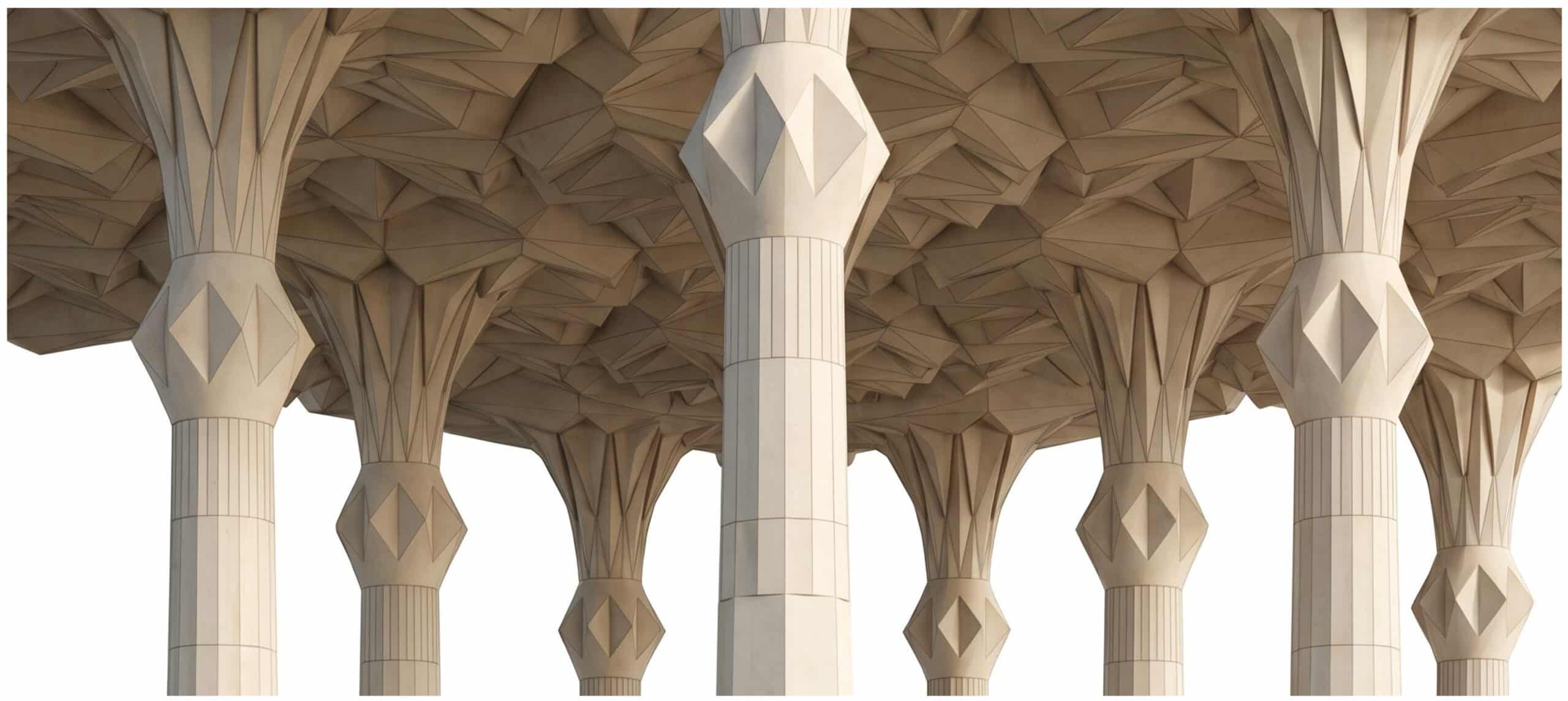
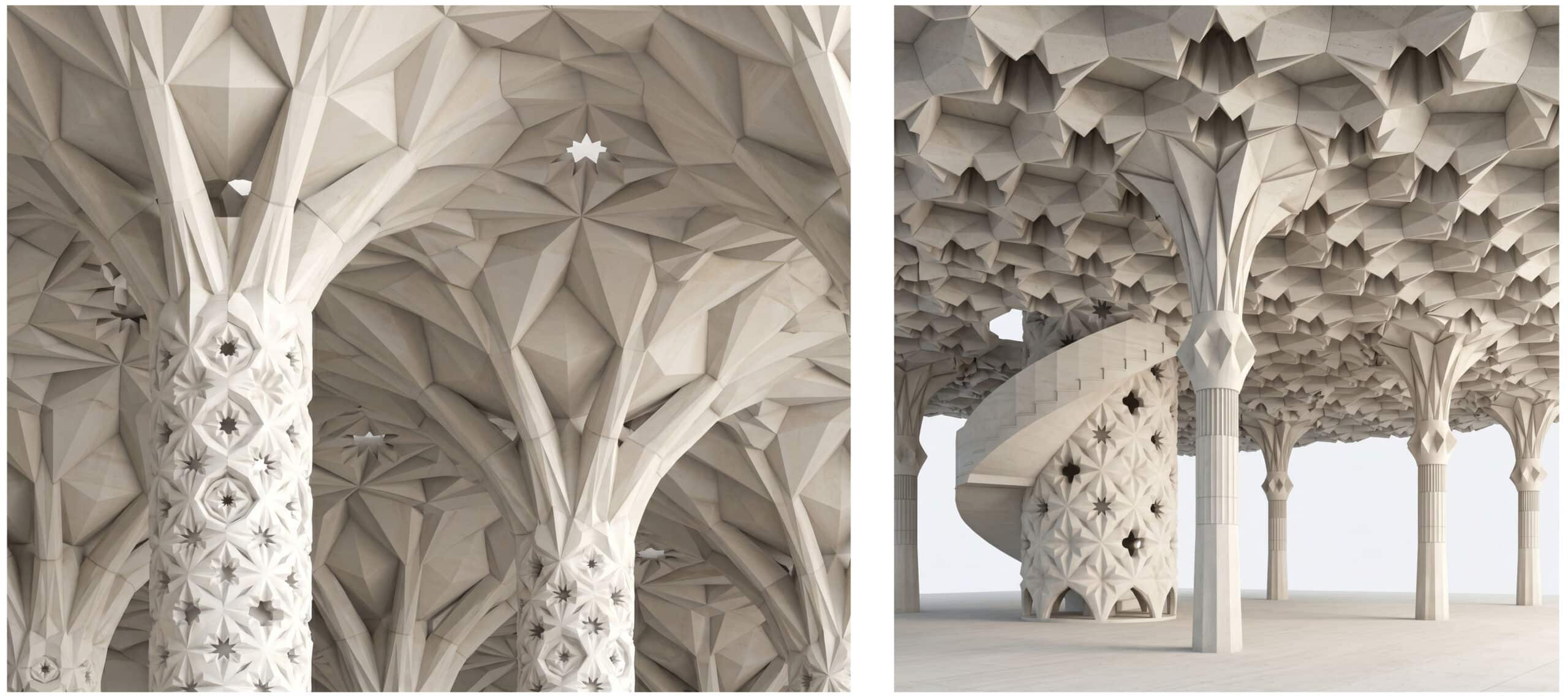
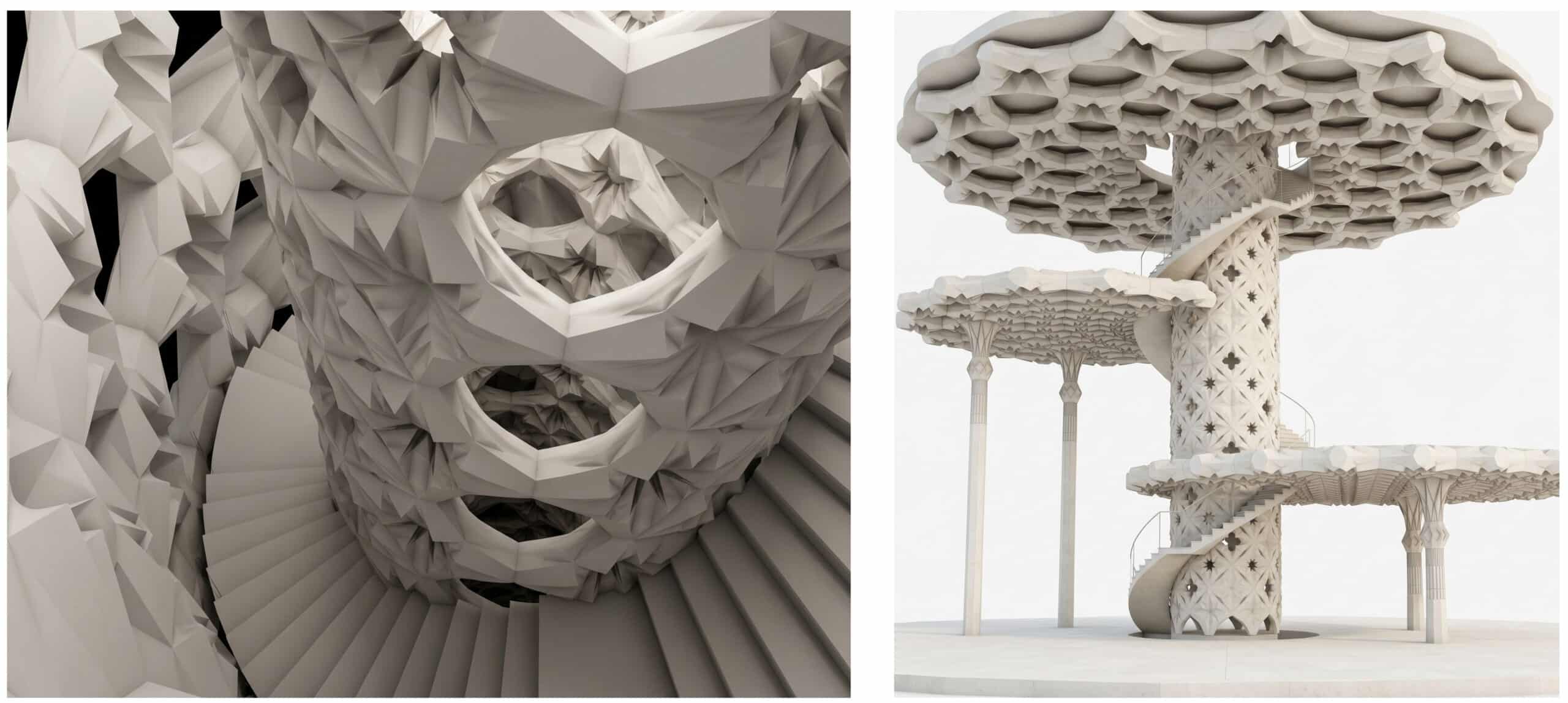
The design catalogues begin with column variations as a fundamental structural element, exploring how simple geometries can express directional force and transformation. The column evolves through bifurcation, allowing forces to split and redistribute, inspired by Gaudí’s branching logic where structure behaves as growth. At the core of this system, the node acts as the point of convergence, resolving transitions between vertical and horizontal elements through geometry rather than decoration.
Morphogenetic Seed
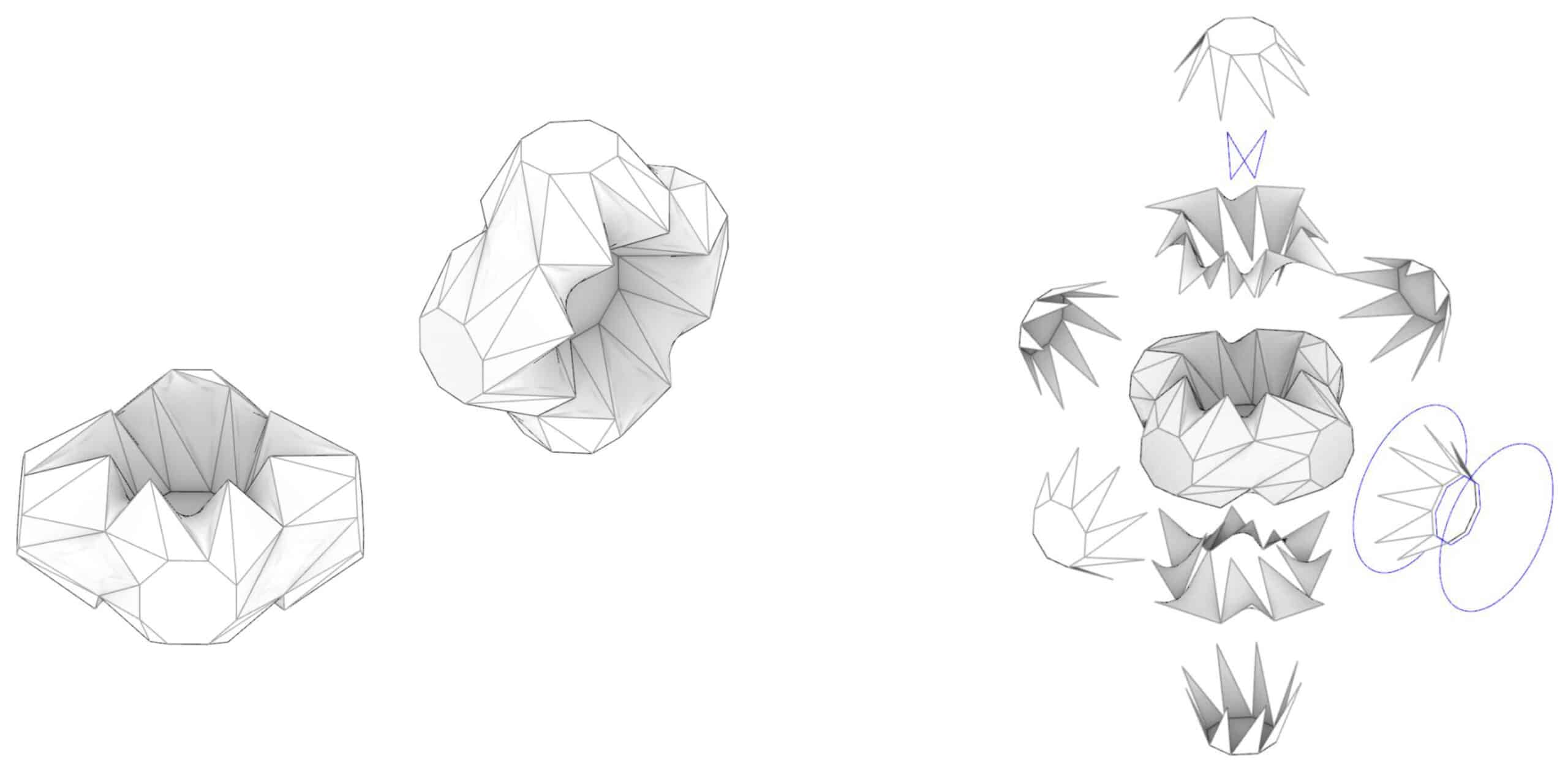
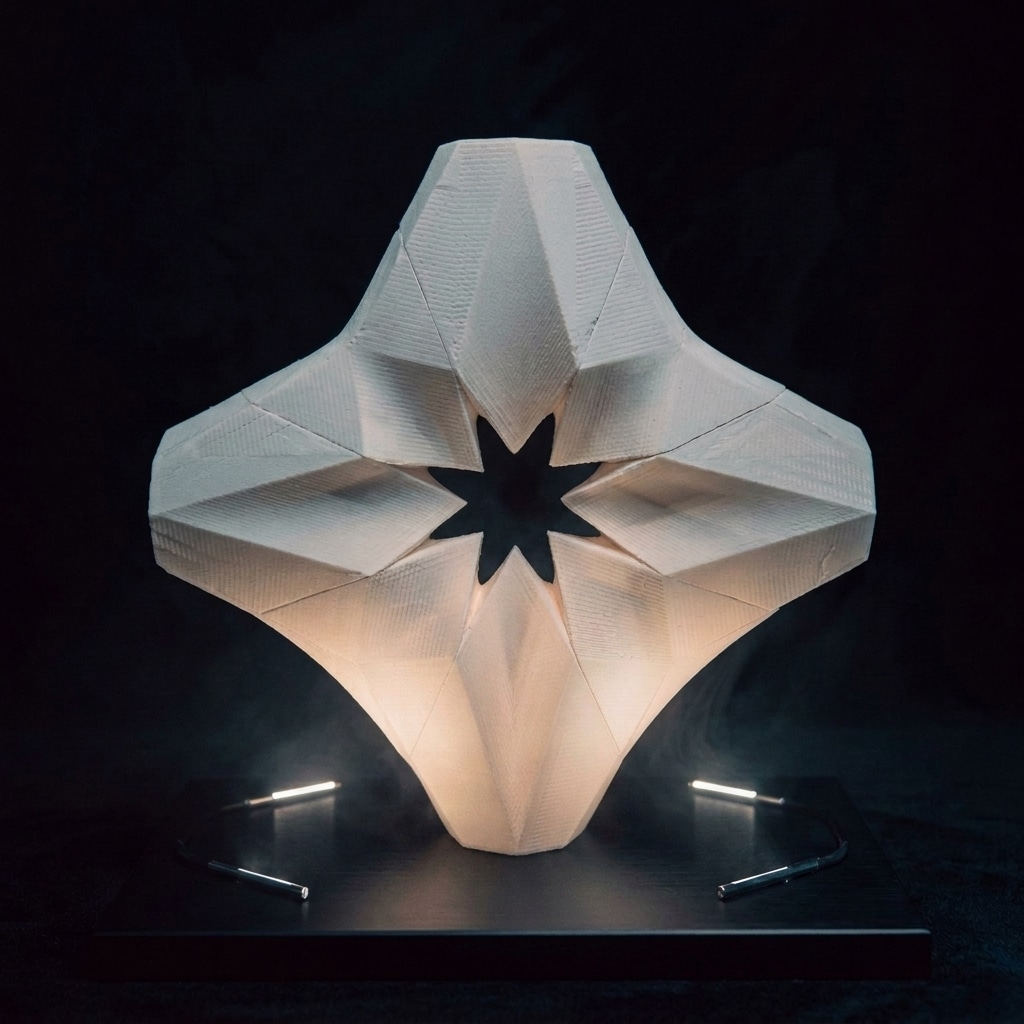
The exploration begins with a single morphogenetic node understood as a geometric system. The focus lies on how one element can generate complexity through variation, and on the development of an initial fabrication strategy derived from this process.
Design Exploration
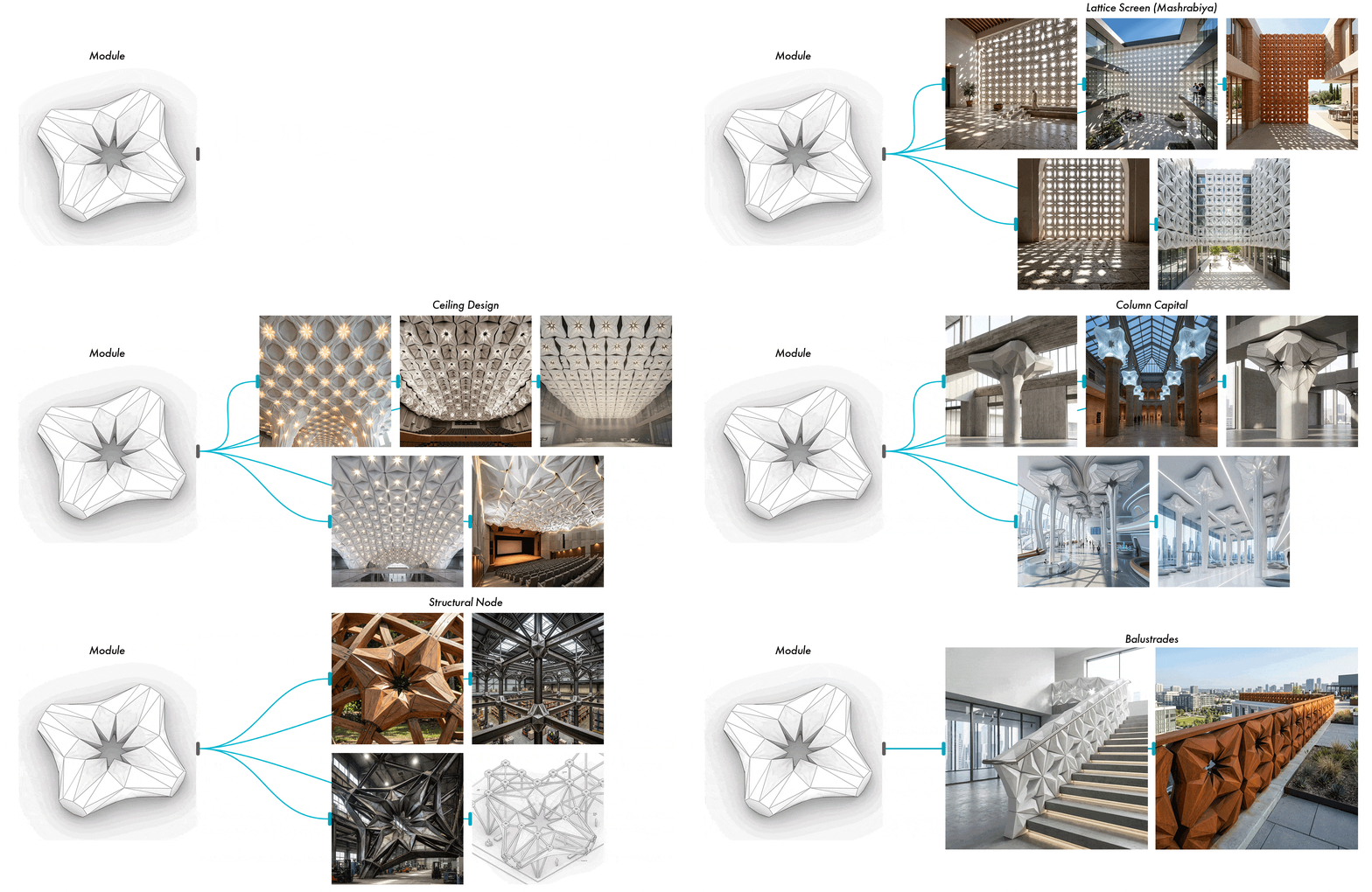
With the module fully developed, the next phase focused on exploring its potential across a range of architectural applications. Leveraging xFigura’s rapid workflow, we were able to generate and evaluate numerous design iterations in a short amount of time.
Rather than committing to a single outcome from the outset, the process encouraged experimentation and discovery. The module was tested as a screen wall system, ceiling installation, column capital, structural node, and balustrade, revealing its adaptability across different scales and functions.
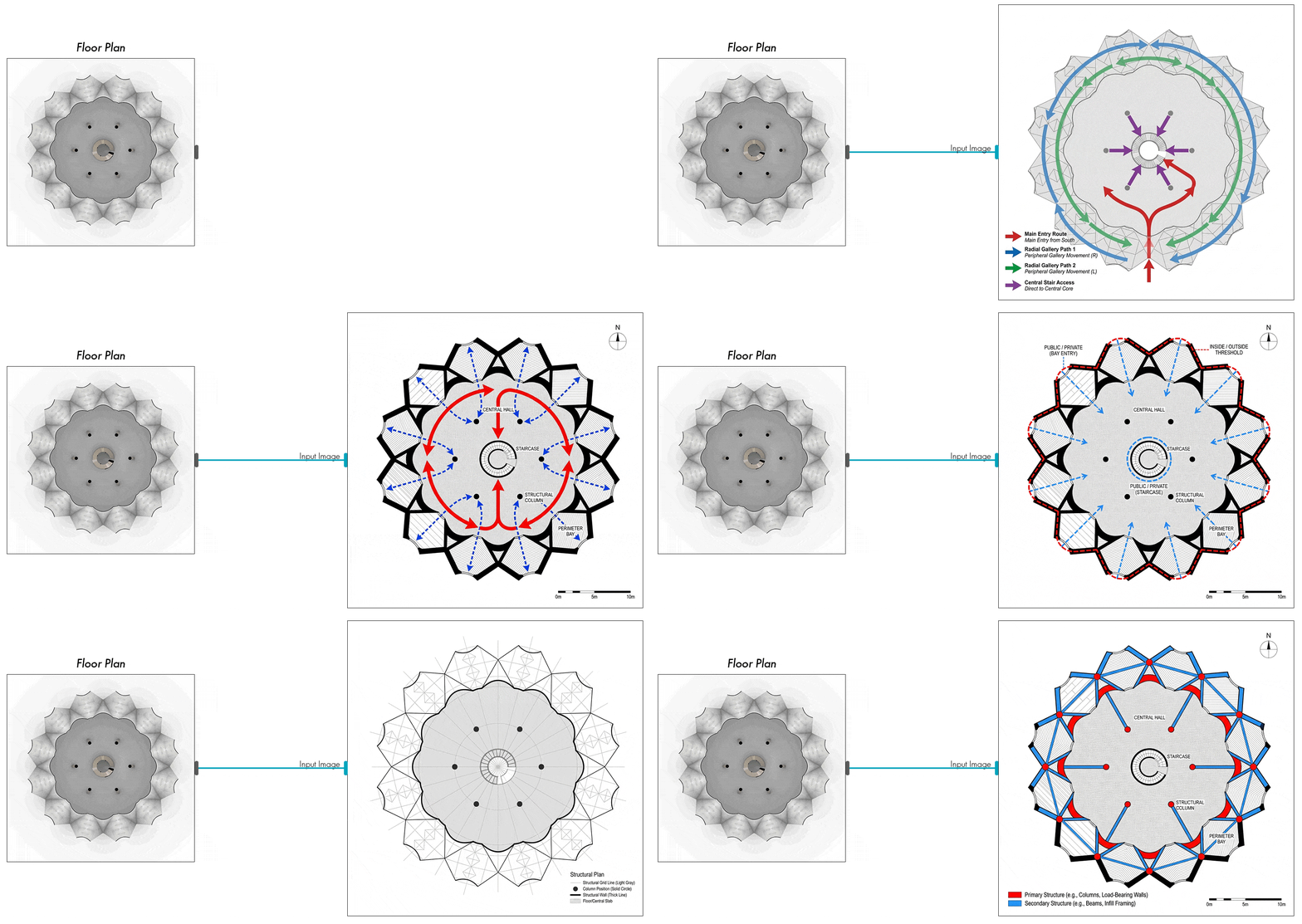
Alongside the exploration of physical applications, an investigation was carried out into how xFigura could support communication, analysis, and the interpretation of architectural information. Starting from a conventional floor plan, circulation diagrams and structural grid diagrams were generated experimentally.
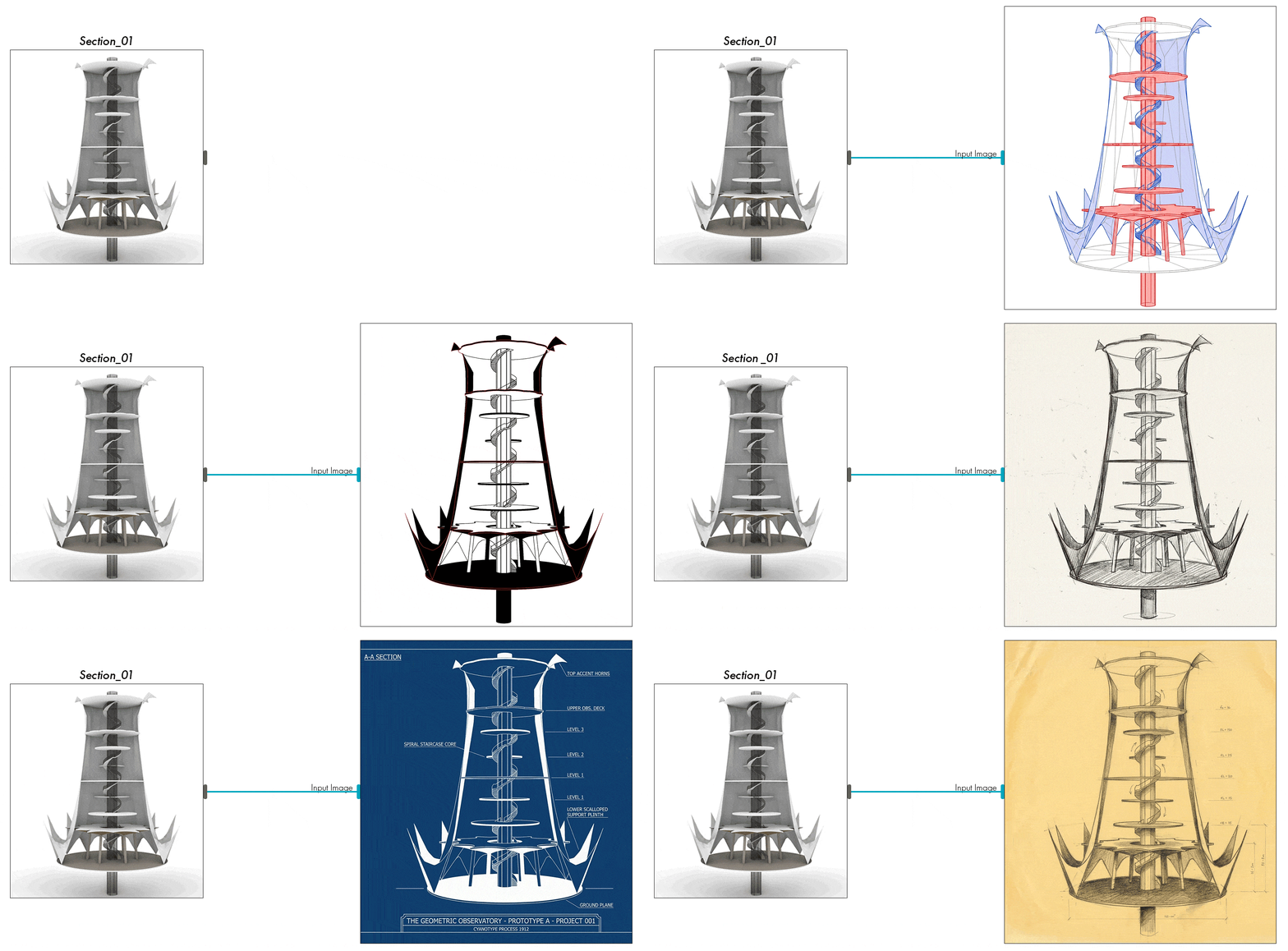
The exploration then moved toward sectional representations, with the emphasis shifting from design generation to visual communication. Rather than developing new forms, the objective was to investigate how the same three-dimensional information could be interpreted and presented through different graphic styles.
Through a series of targeted experiments, the ability of the workflow to transform sectional data into a variety of visual outputs was tested. The results ranged from precise line drawings and technical documentation to blueprint-inspired graphics and other representational styles, each offering a distinct way of communicating spatial information.
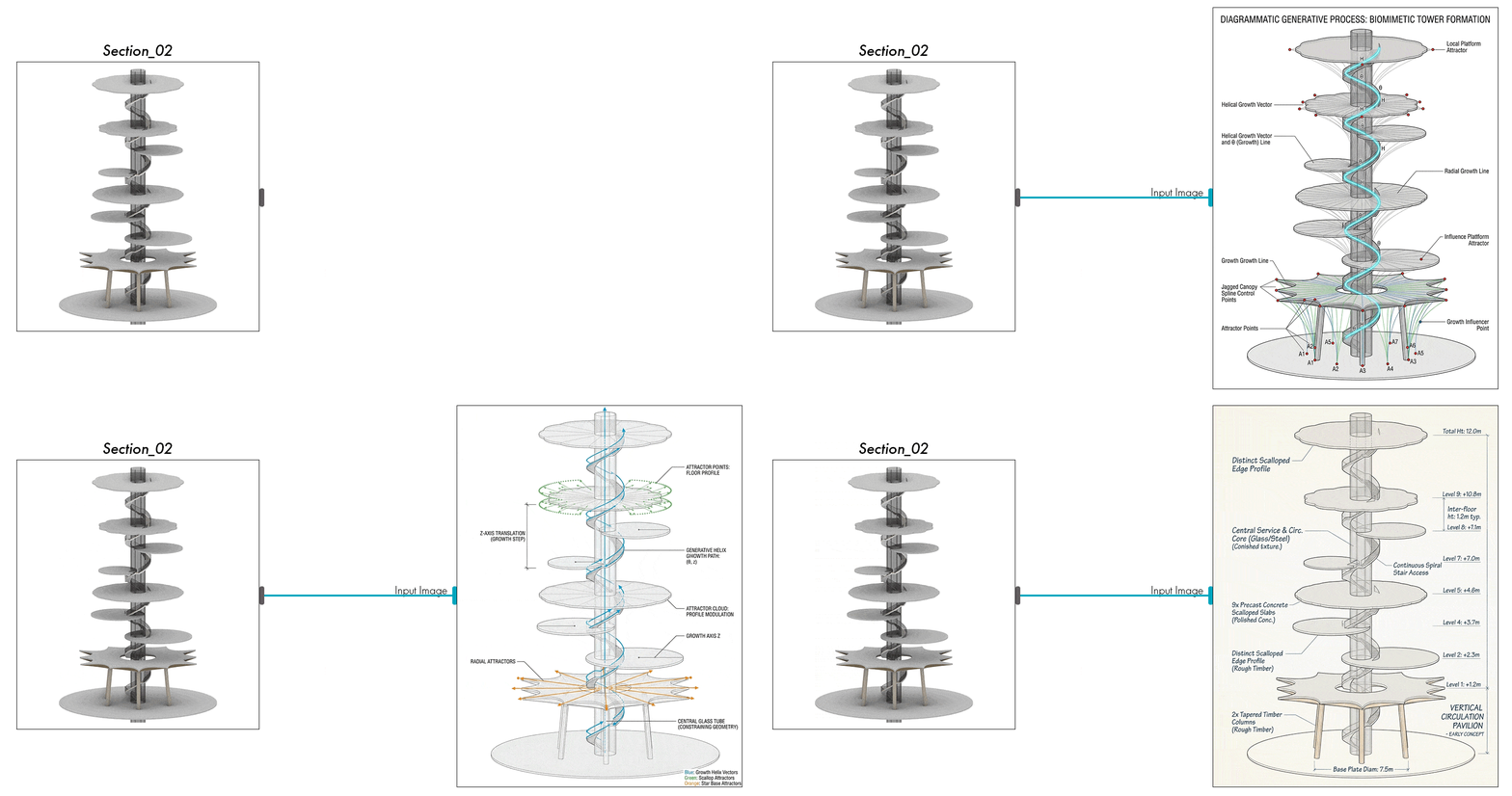
Another area explored was design explanation. Starting from the section, it was tested whether xFigura could help communicate the logic behind the project. This led to exploded axonometrics and diagrams illustrating the generative process, complete with annotations and dimensions.
Decoding the Morphogenetic Seed
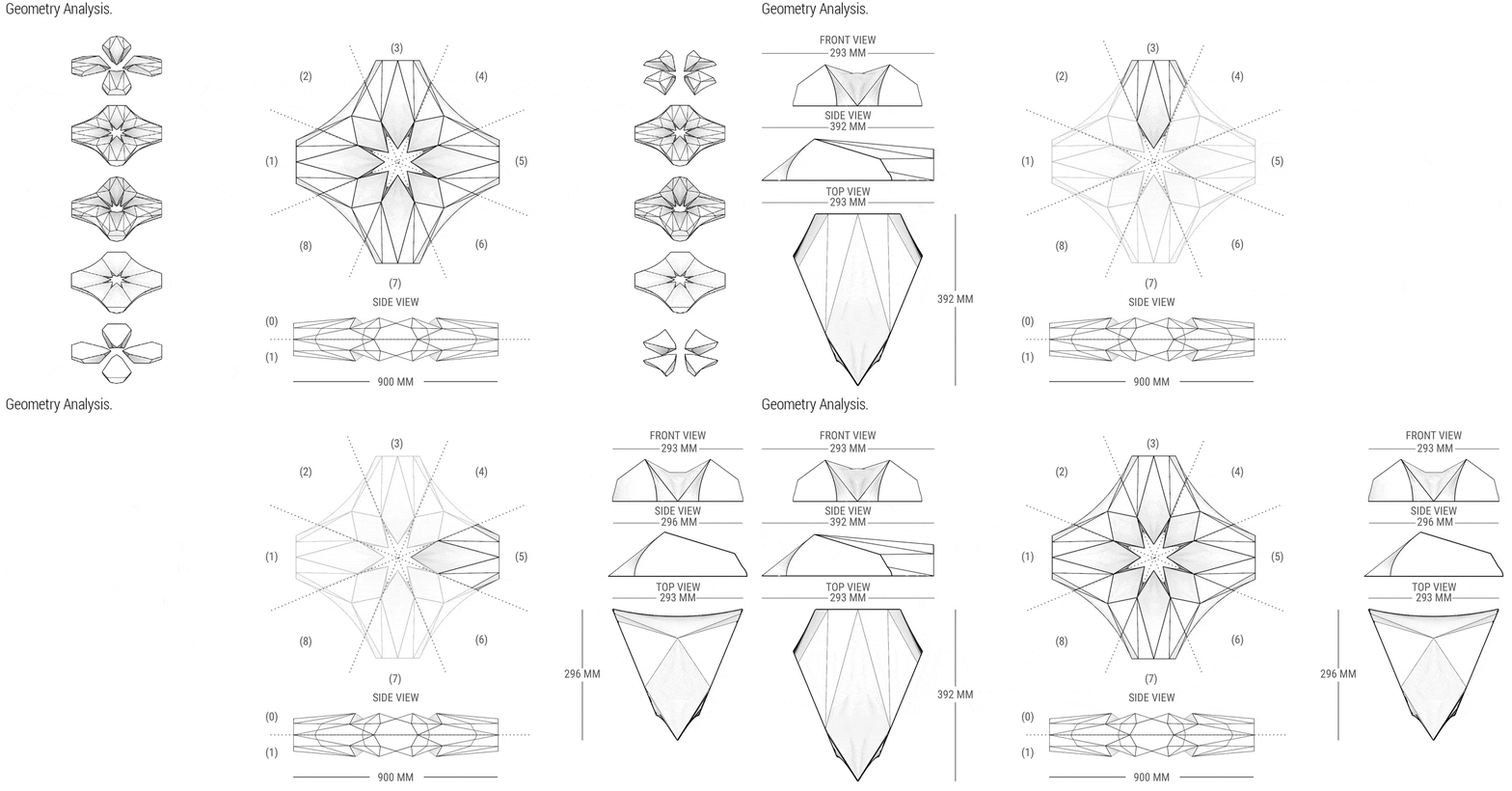
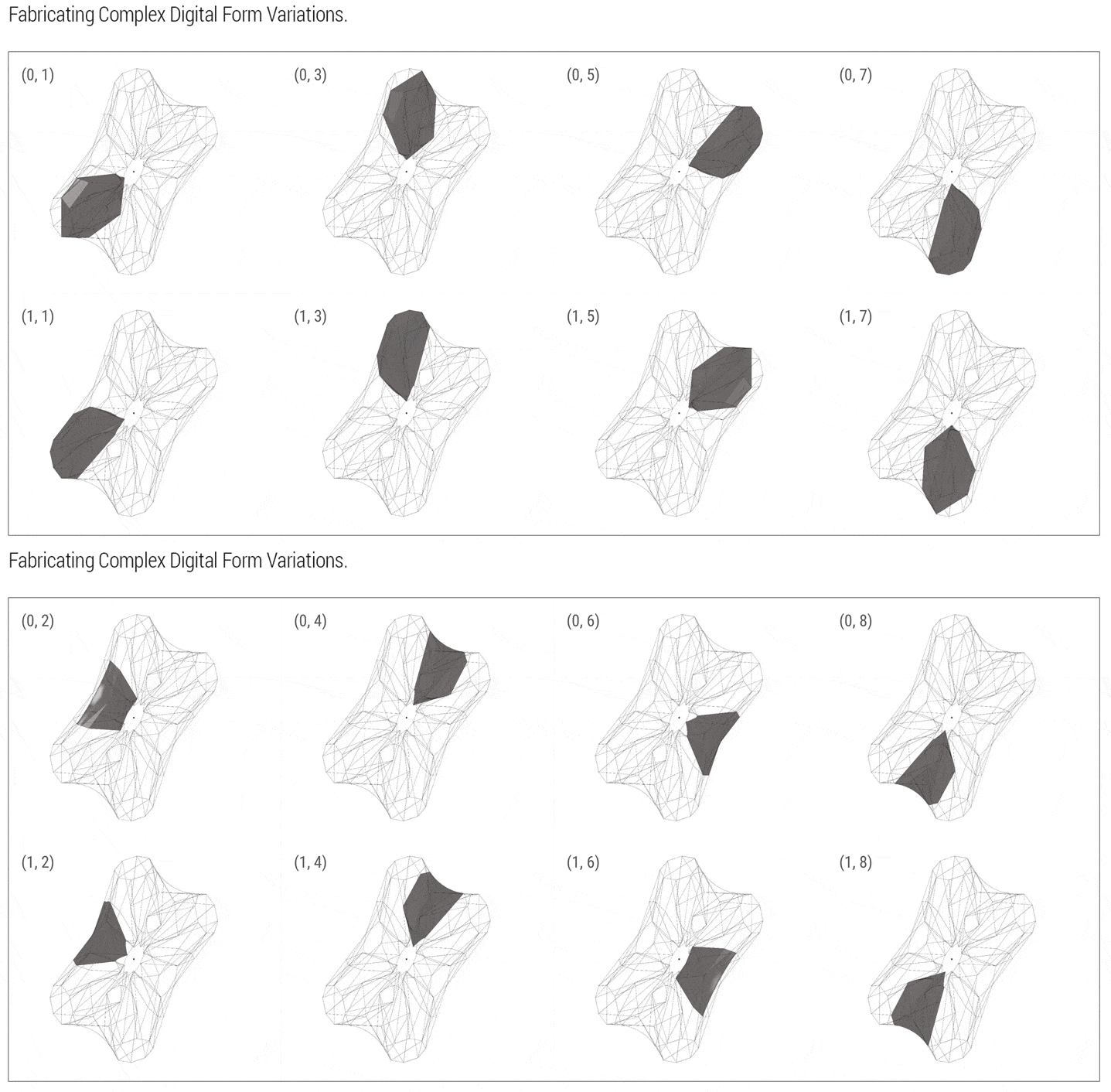
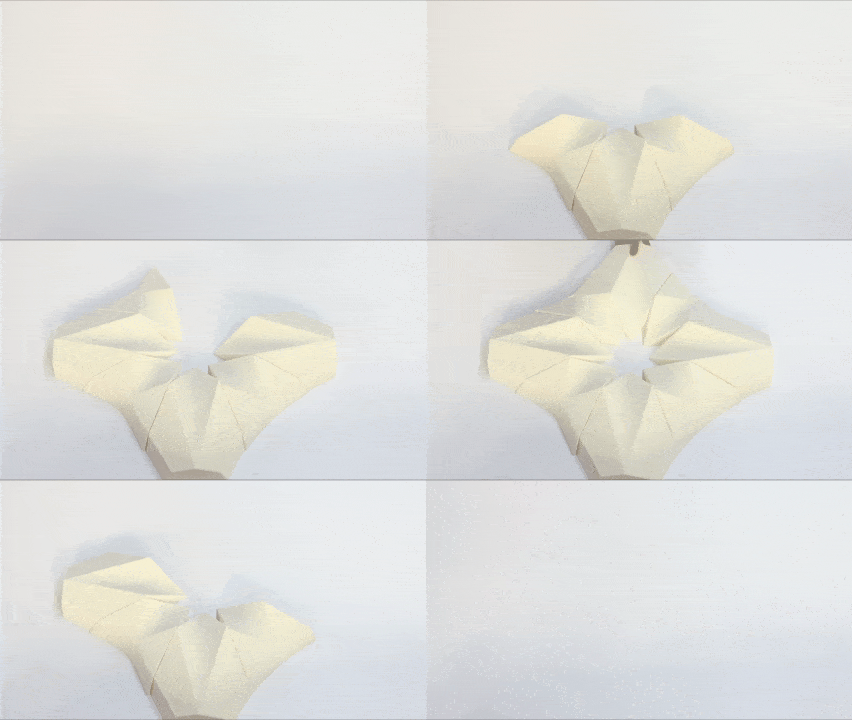
For fabrication, the geometry was subdivided into 16 pieces. The splitting strategy was based on the innermost hyperboloid-like regions, allowing cleaner segmentation along areas of higher curvature. This approach reduced fabrication complexity and improved tool accessibility, particularly in areas with steep geometries and restricted machining angles. The system results in two types of pieces, each with distinct dimensions: smaller modules, approximately matching 293 mm in length; and larger modules reaching depths of 392 mm. This differentiation optimizes both assembly logic and machining feasibility.
From Computation to Fabrication
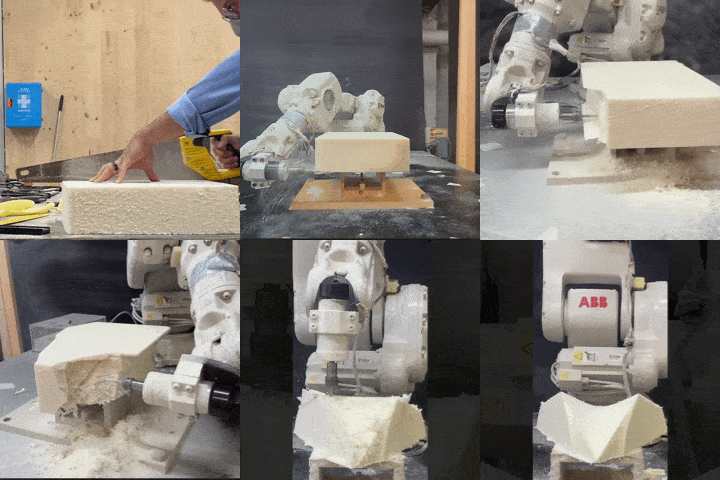
The fabrication process began with a solid foam block, which was progressively milled using a robotic arm. The workflow started by machining the lateral faces on both sides, followed by the back surface, and finally the top surface during the roughing phase. All roughing operations were carried out using a 6 mm flat end mill, ensuring efficient material removal. For the finishing stage, the tool was switched to a 6 mm ball end mill, allowing for smoother transitions across the faceted surfaces and a more precise definition of edges and folds.
Form and Structure Catalogue
The process shifts from cataloguing isolated elements to defining a generative system rooted in a morphogenetic seed a compact geometry containing both structural and spatial potential. Through decomposition, its logic is revealed by analyzing edges, vertices, and directional forces, establishing the rules for growth, transformation, and continuity.
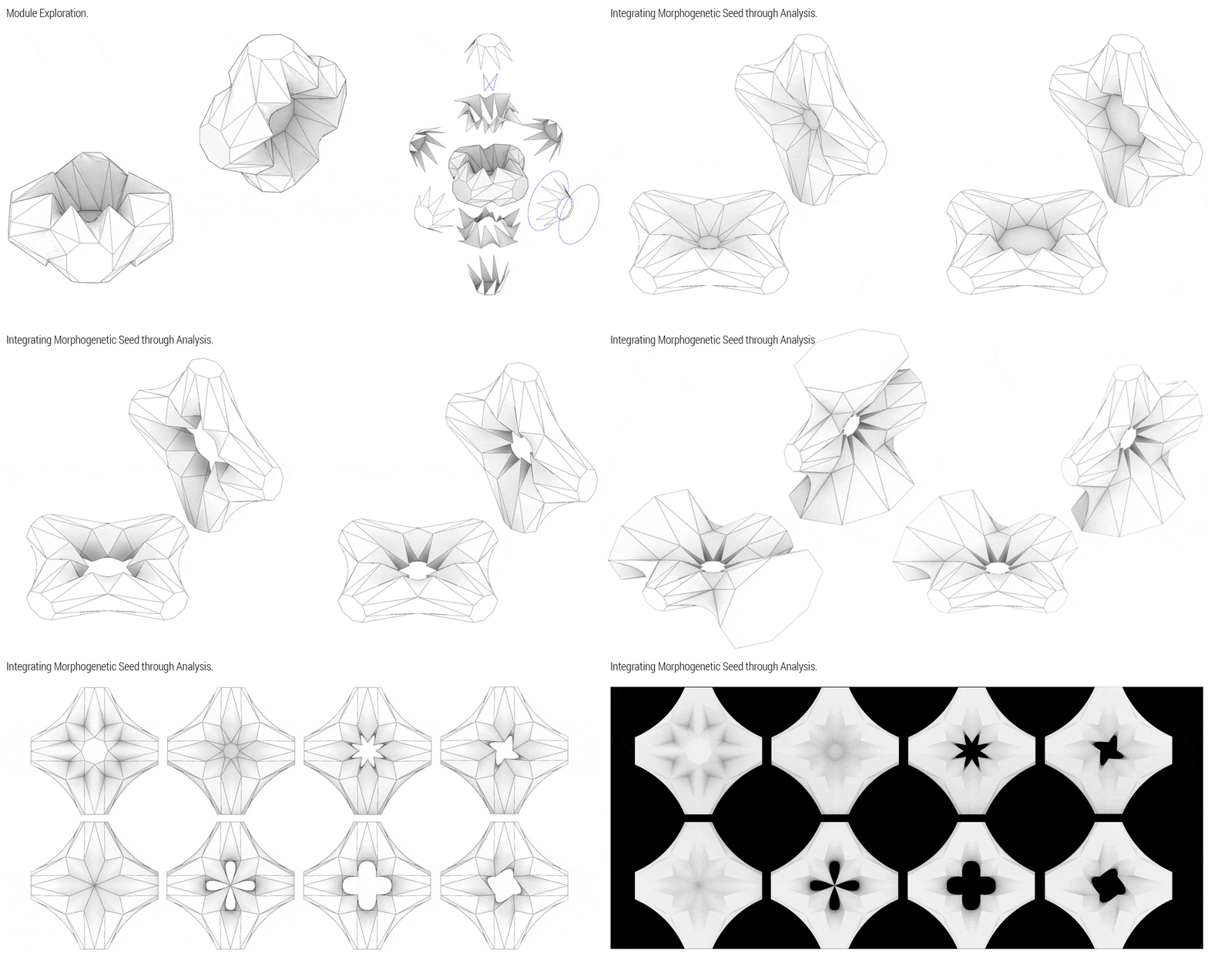
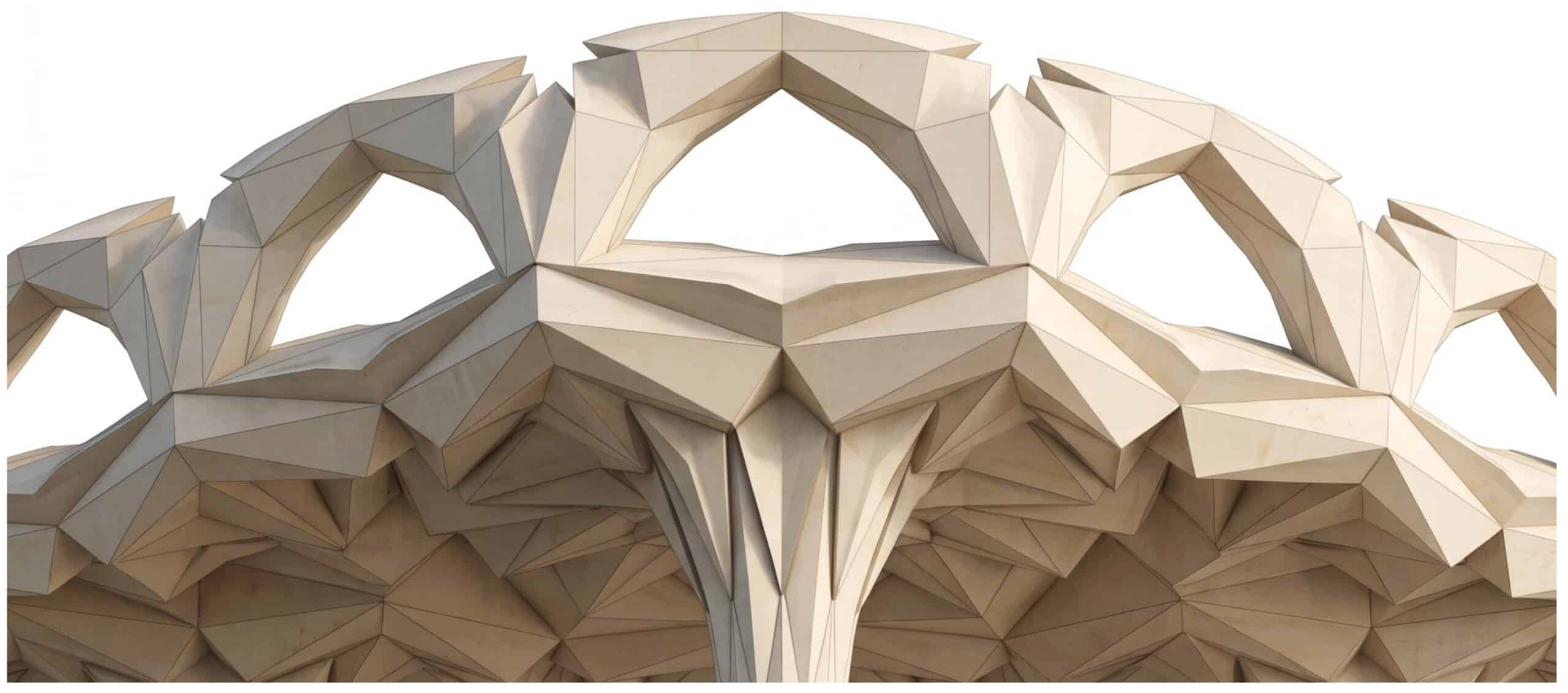
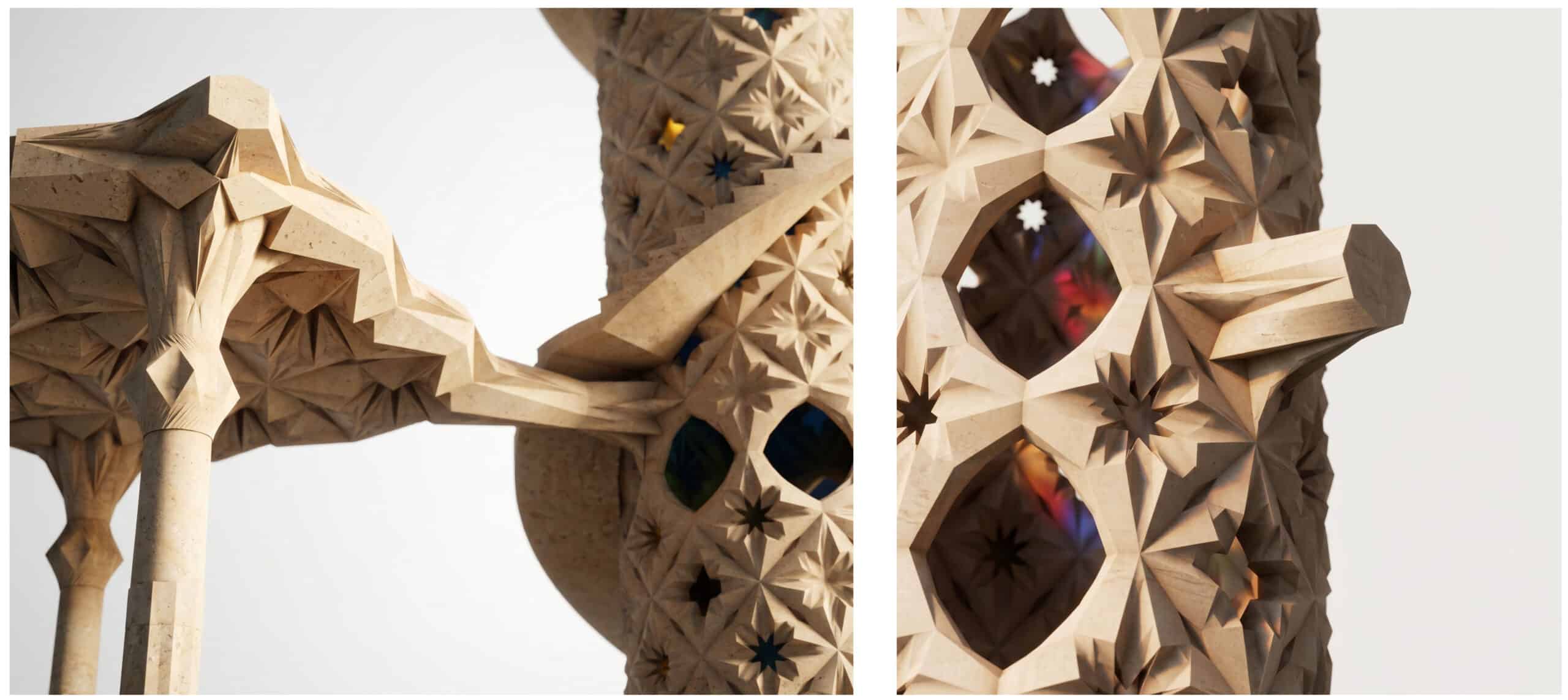
Module variations are explored to maintain a consistent identity while allowing controlled differentiation. Section and elevation studies evaluate structural and spatial performance beyond form. Openings are introduced strategically to regulate light, reduce weight, and maintain continuity, while geometric refinement removes noise and reinforces clarity.
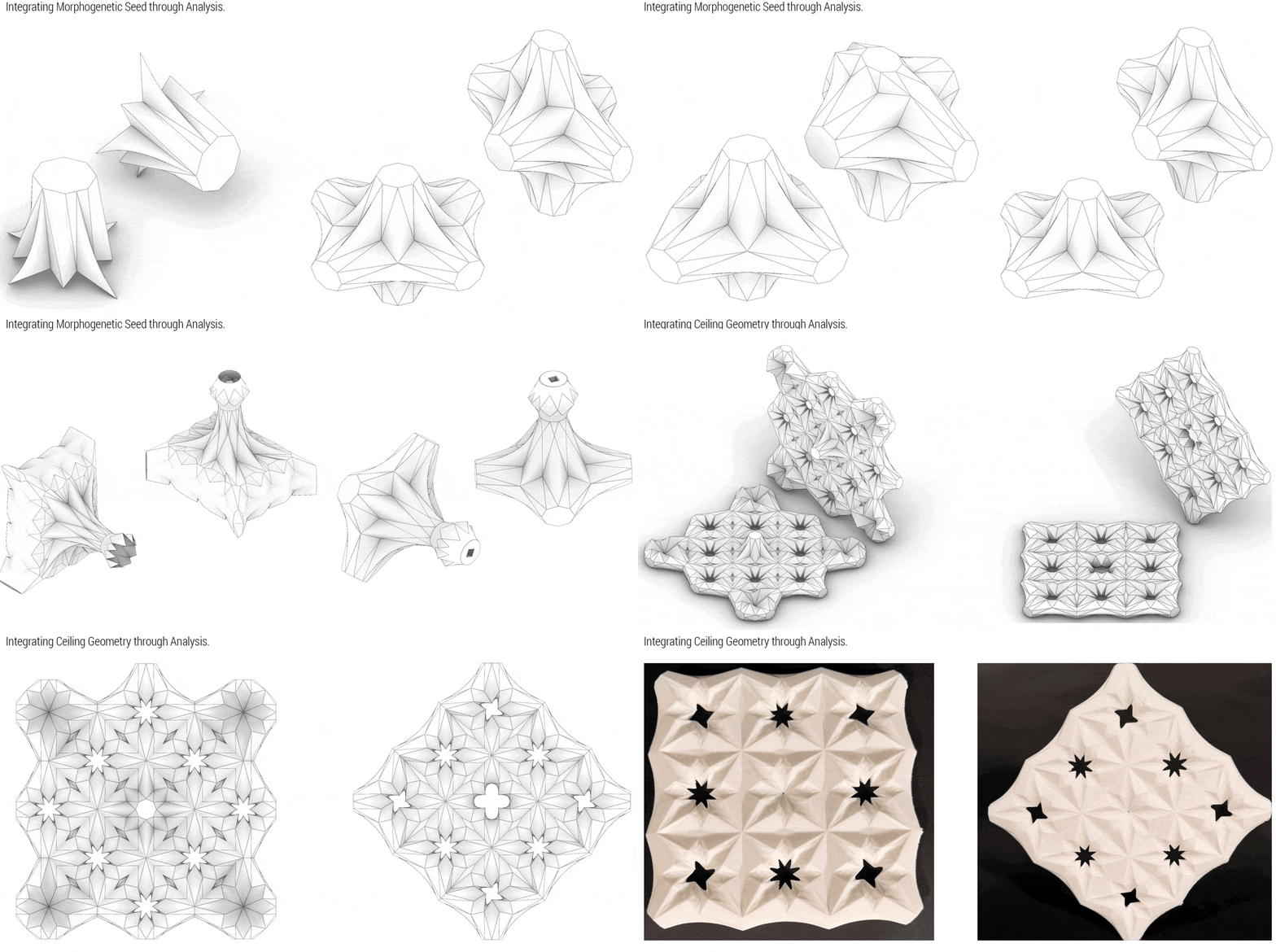
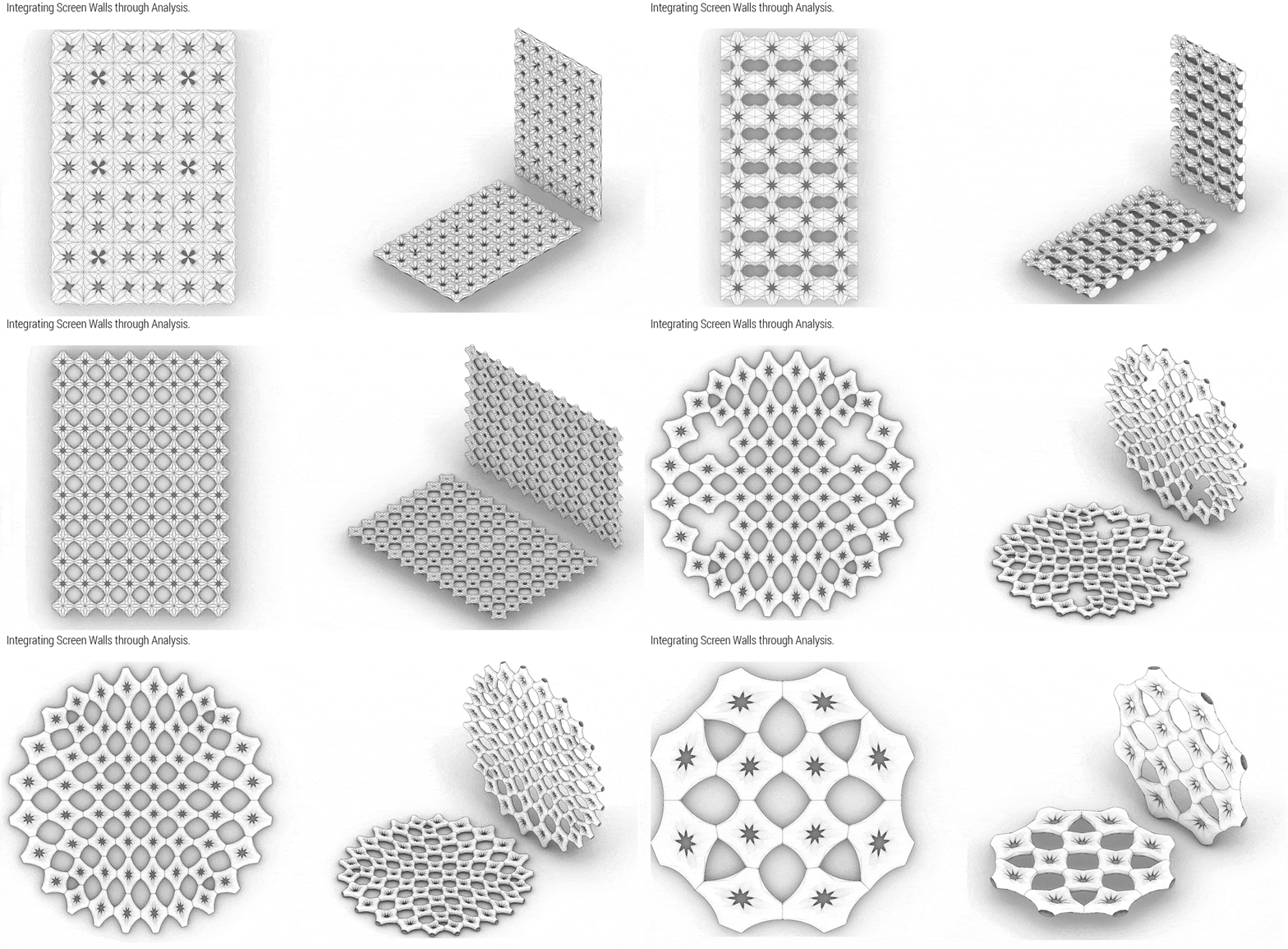
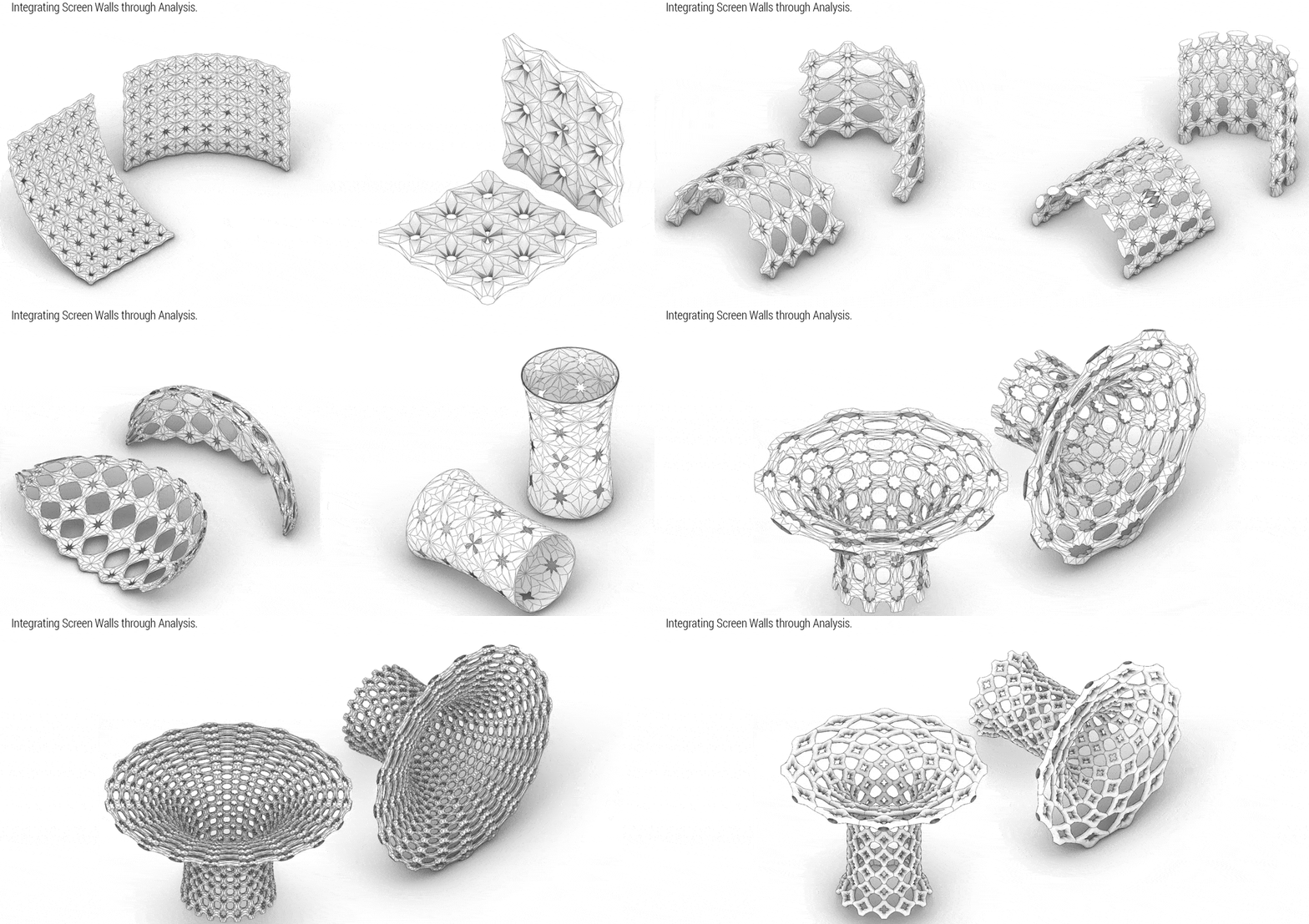
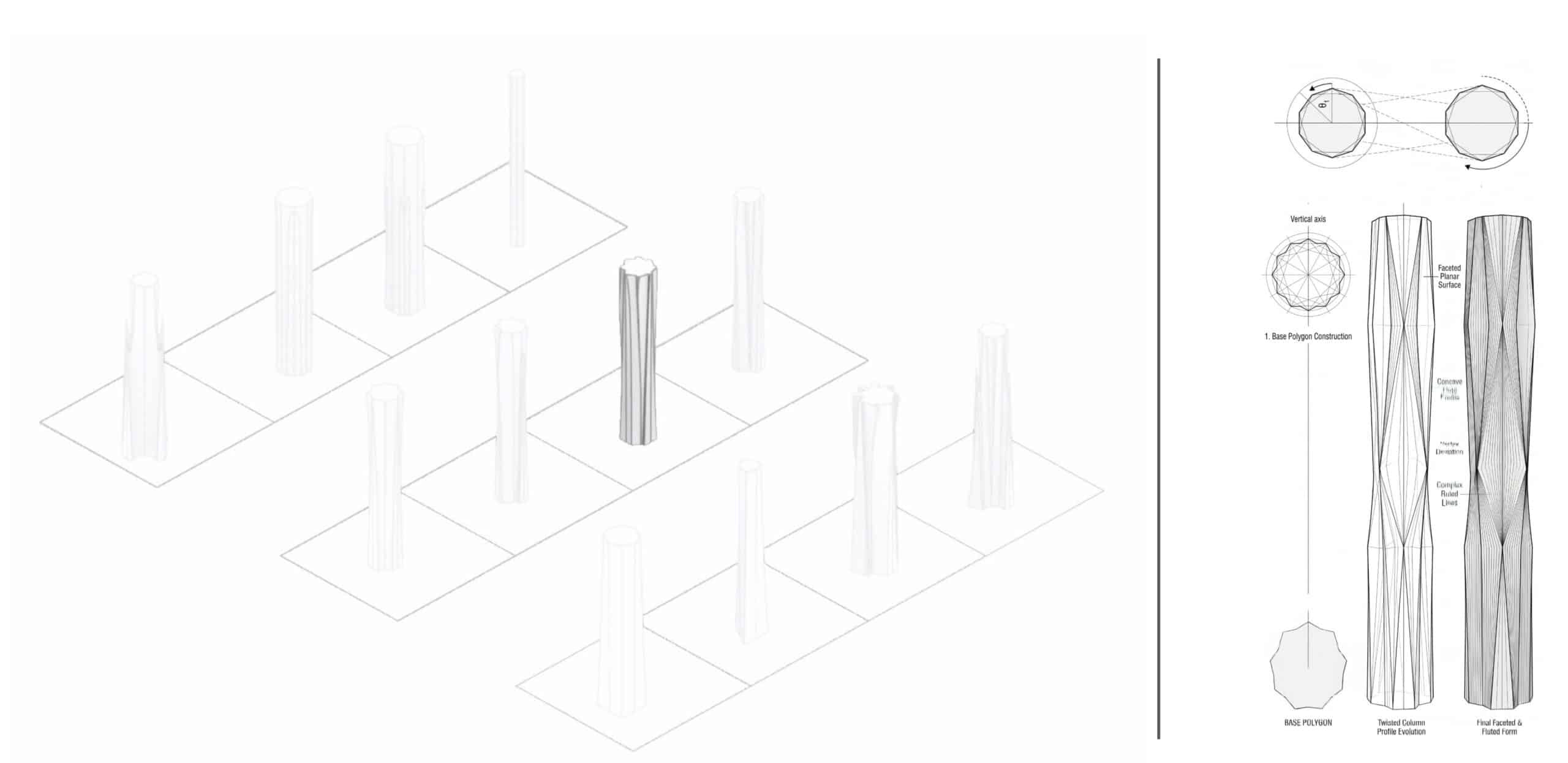
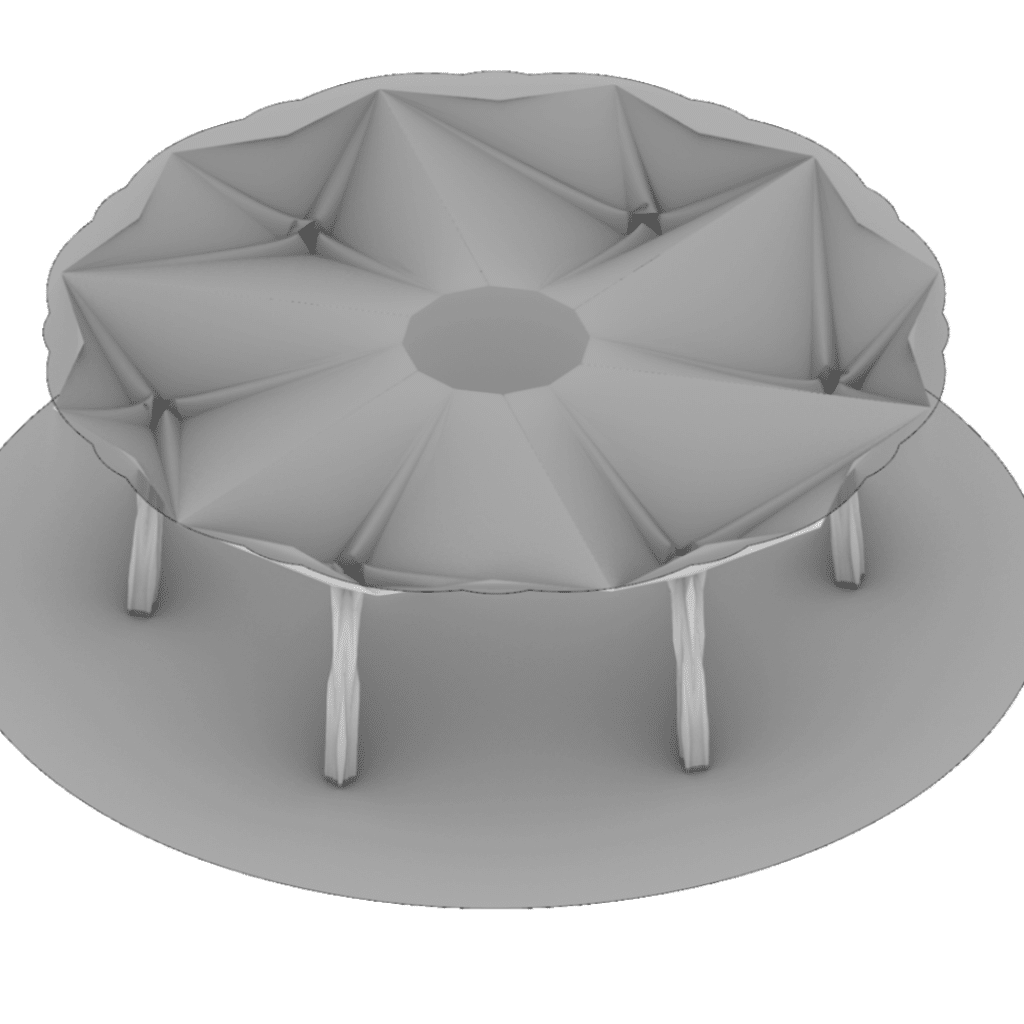
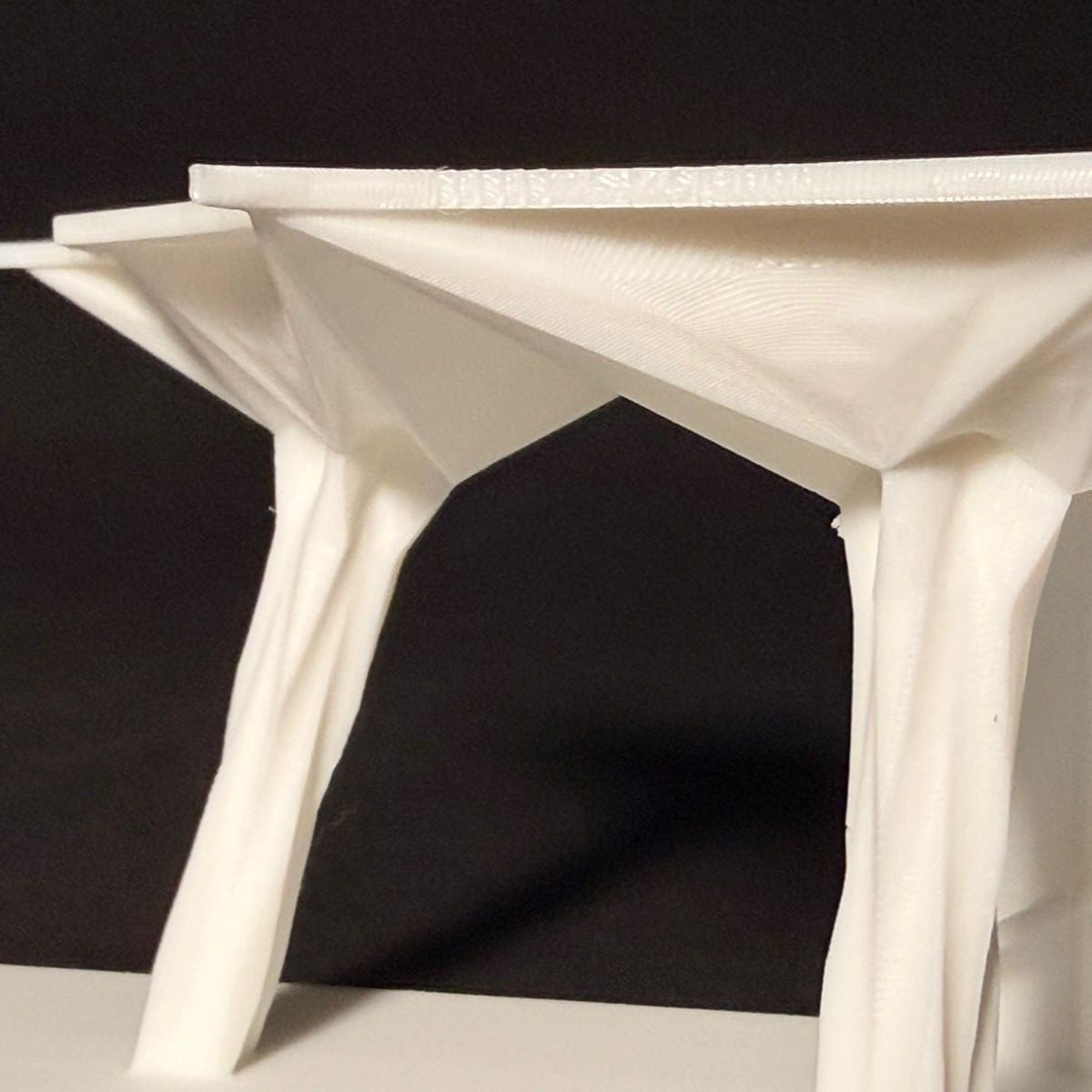
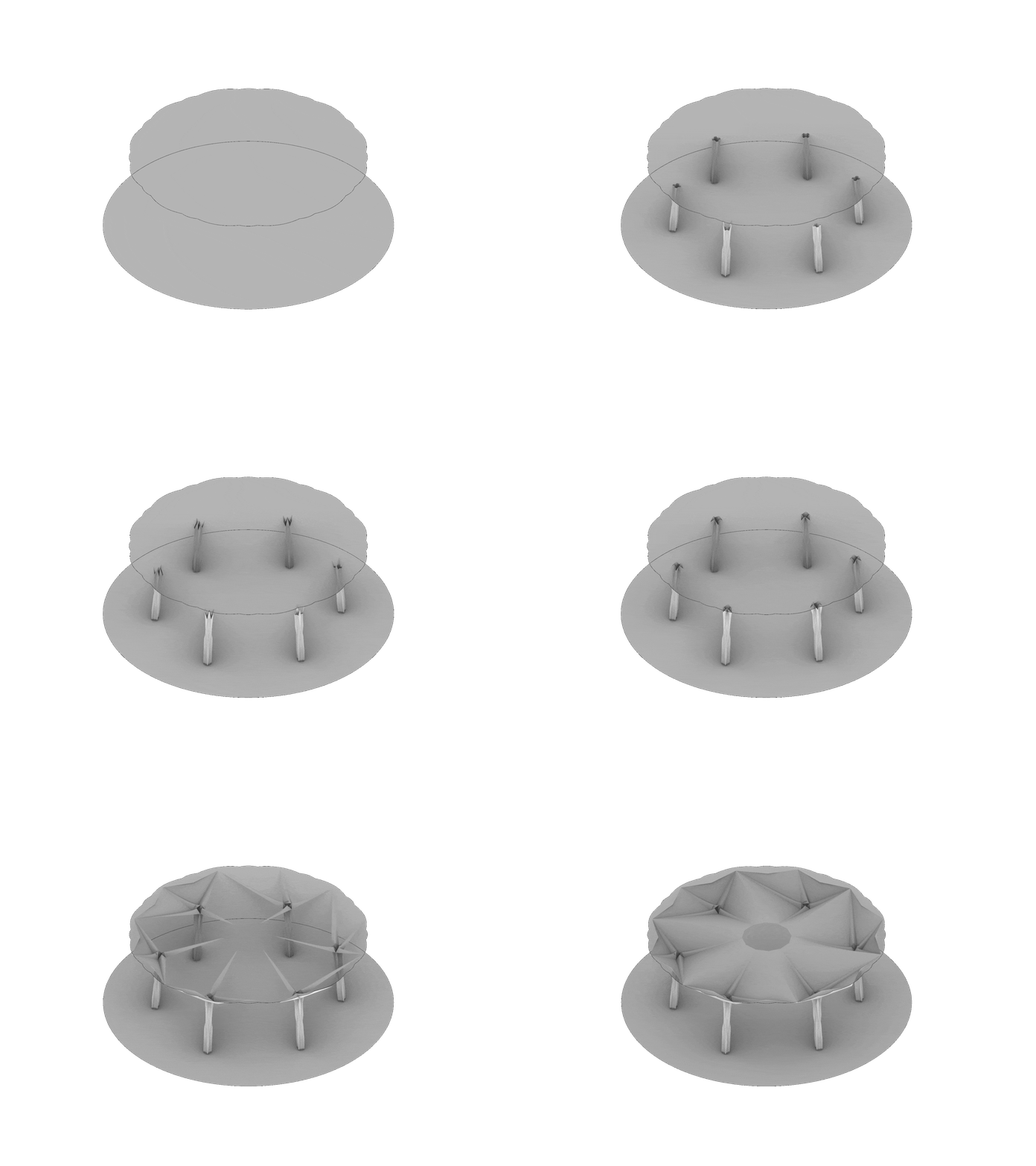
Figure 28: Ceiling Paramorph GIF by Author.
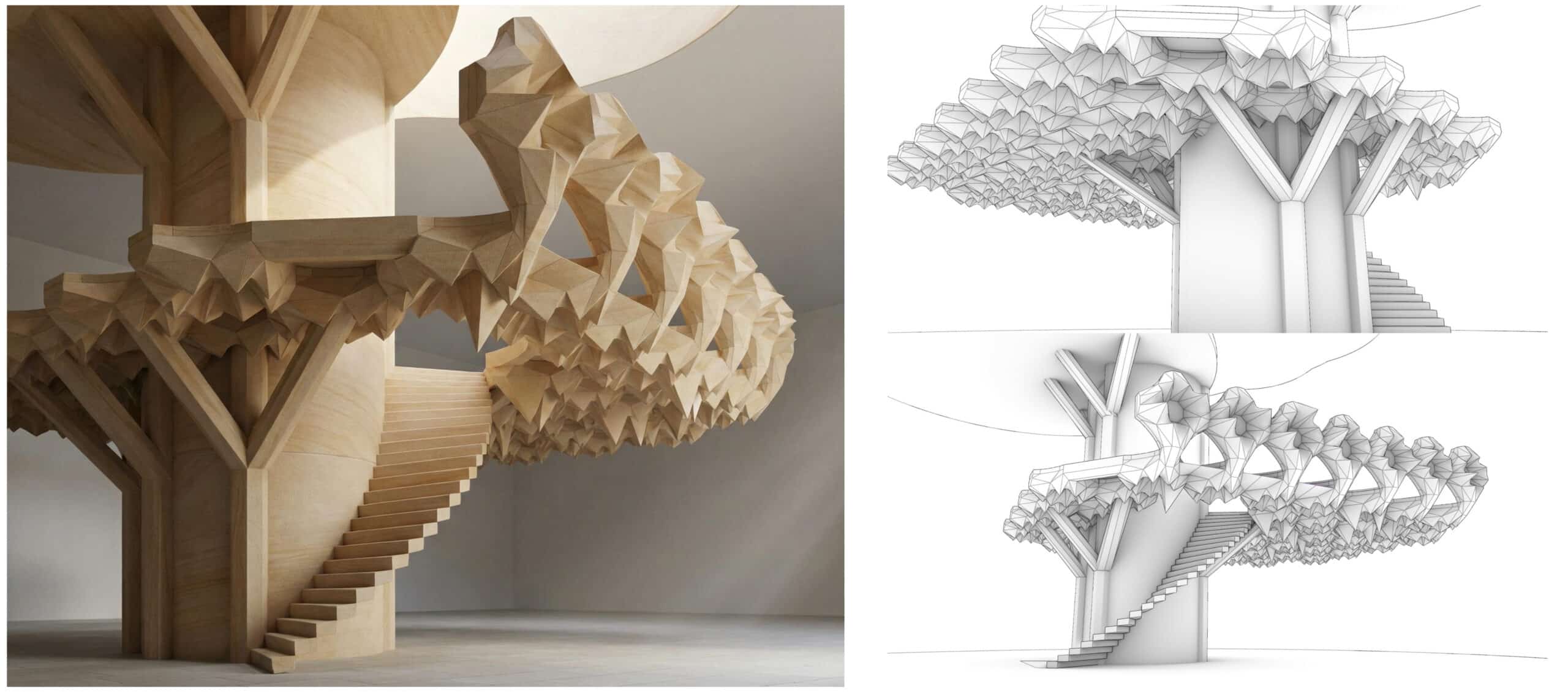
Inspired by the Sacristy of the Sagrada familia, the design evolves from the base of the column, with morphic design and defines itself to crate intersection between the ceiling connection, and spreads as beams which converges into the ceiling design, and carefully crafted paraboiloids are then are fabricated as ceiling design completing the frame.
Architectural Strategy – Schematic Design
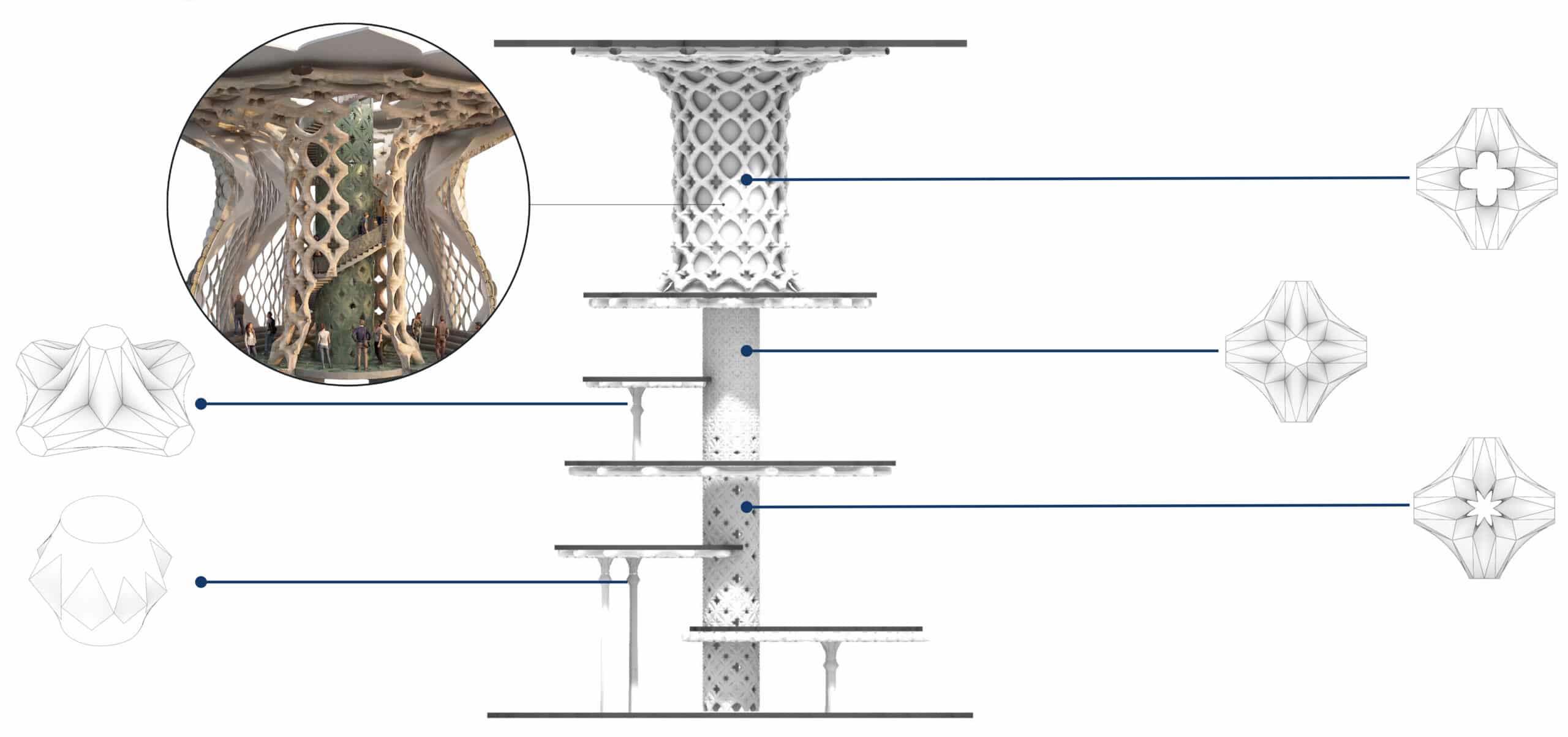
Process Overview – Progress and Methodology
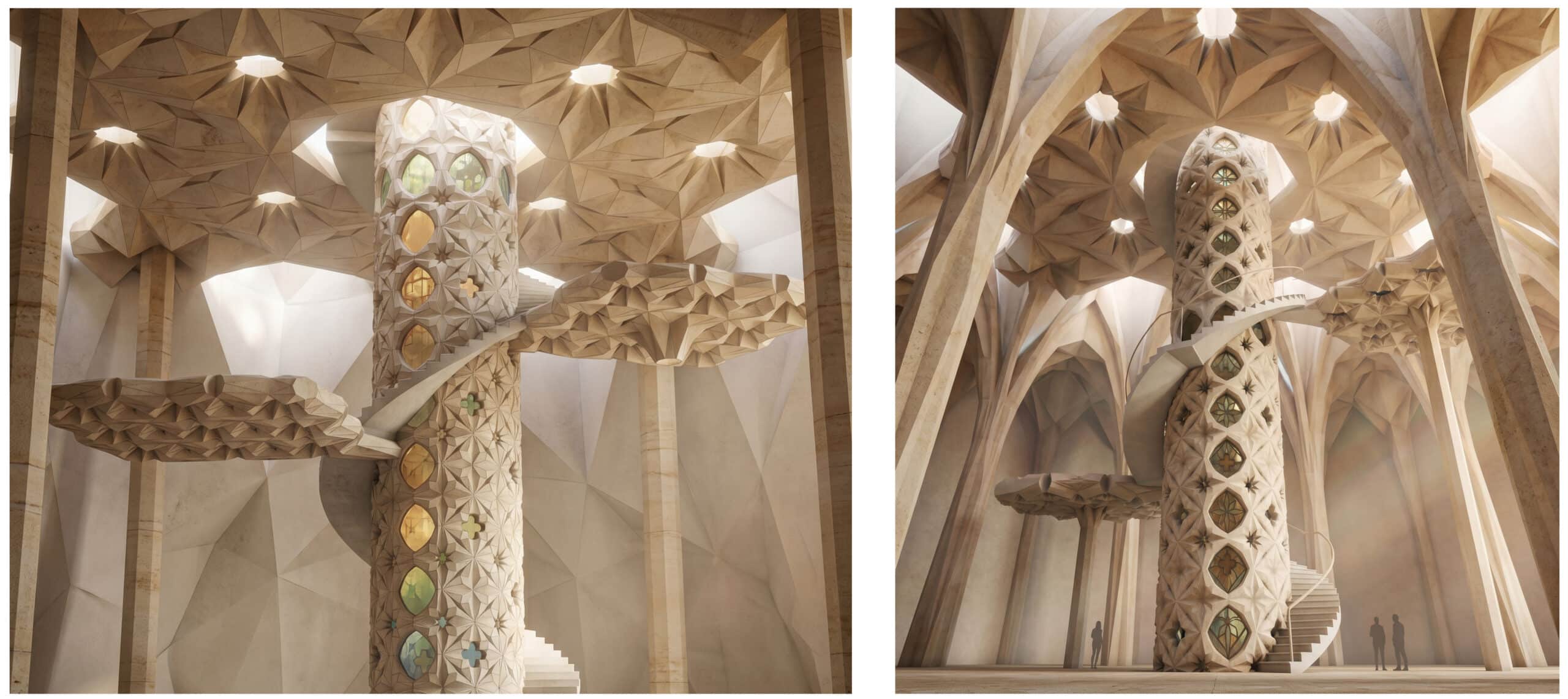
The system is consolidated across scales, integrating columns, slabs, and nodes into a continuous framework. Redundancies are removed to improve efficiency and structural legibility, while preserving adaptability. The result is a unified architectural system where form, structure, and space operate as a cohesive, inhabitable whole.
Process Overview – Material Selection
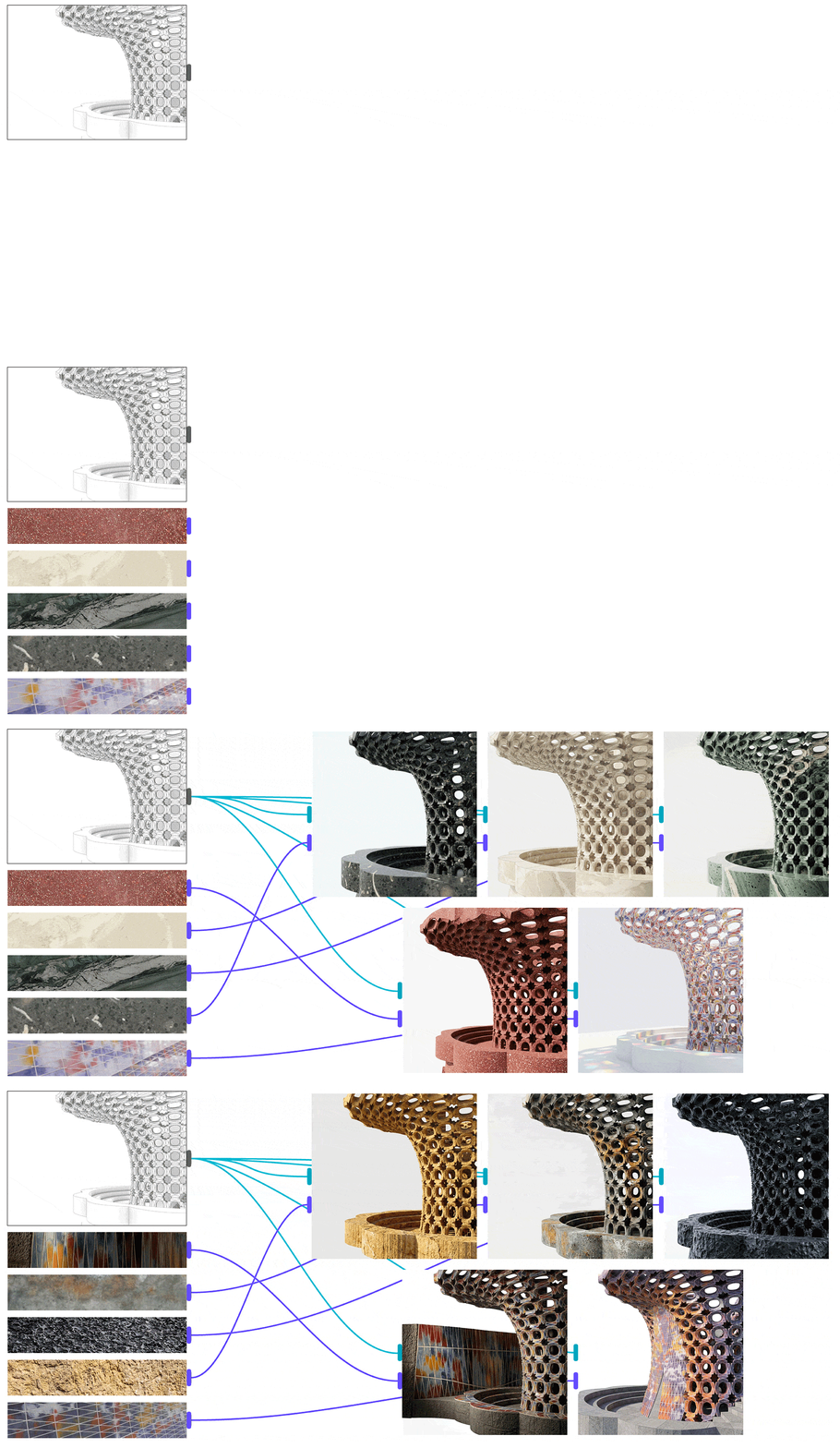
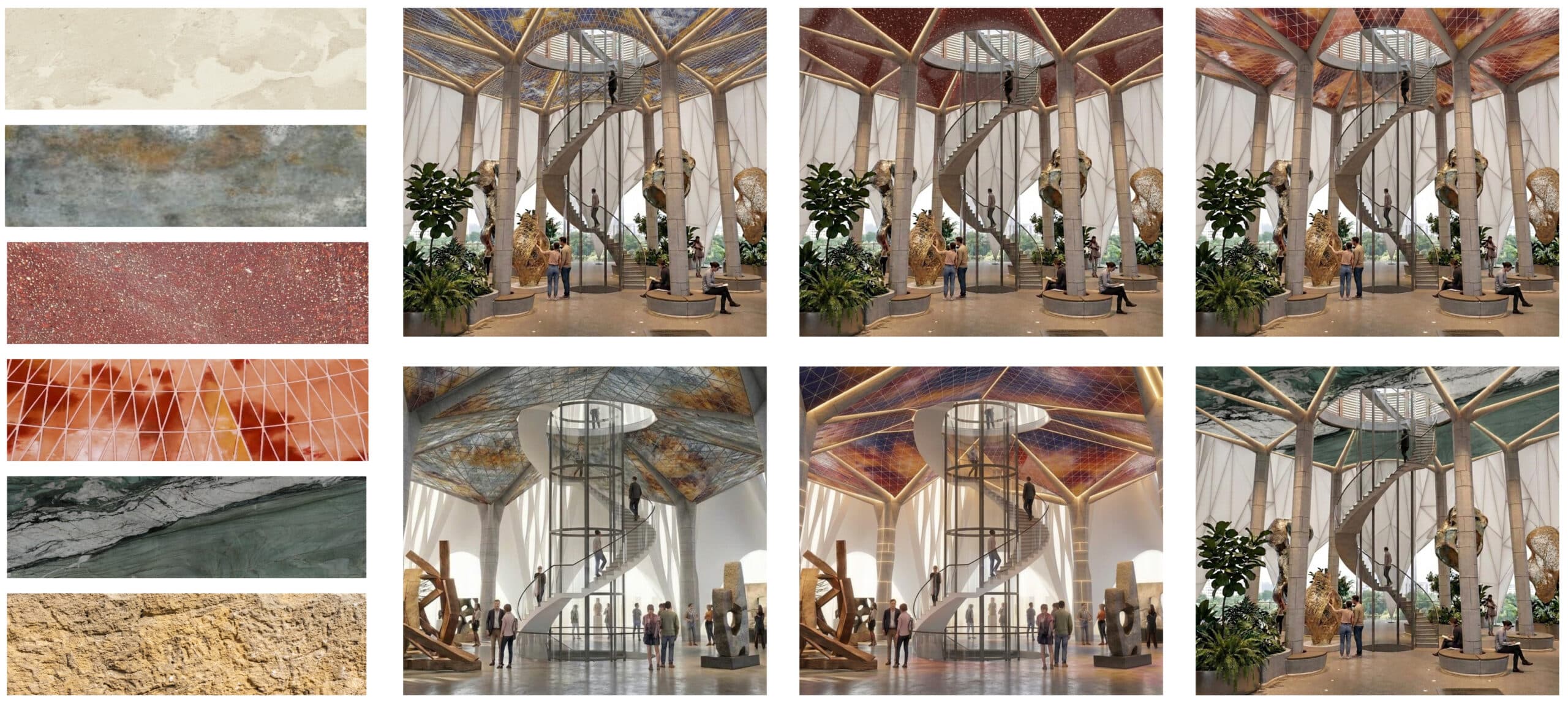
Before a single render was produced, the project demanded something deeper, a thorough investigation into materials and how they would truly read in space. Every surface was chosen deliberately, rooted in extensive research and directly inspired by the material language of the Sagrada Família itself.
Red granite, Montjuïc limestone, and Catalan marble ground the palette in the sacred textures of Gaudí’s masterwork. The custom tiles designed and crafted in collaboration with Ceràmica Cumella, the same atelier behind the iconic pieces of the Jesus Tower, carry that same spirit of artisanal precision into this project.
What proved useful here with the use of xfigura, was the ability to compare options quickly and immediately visualize how different materials affected the architectural expression.
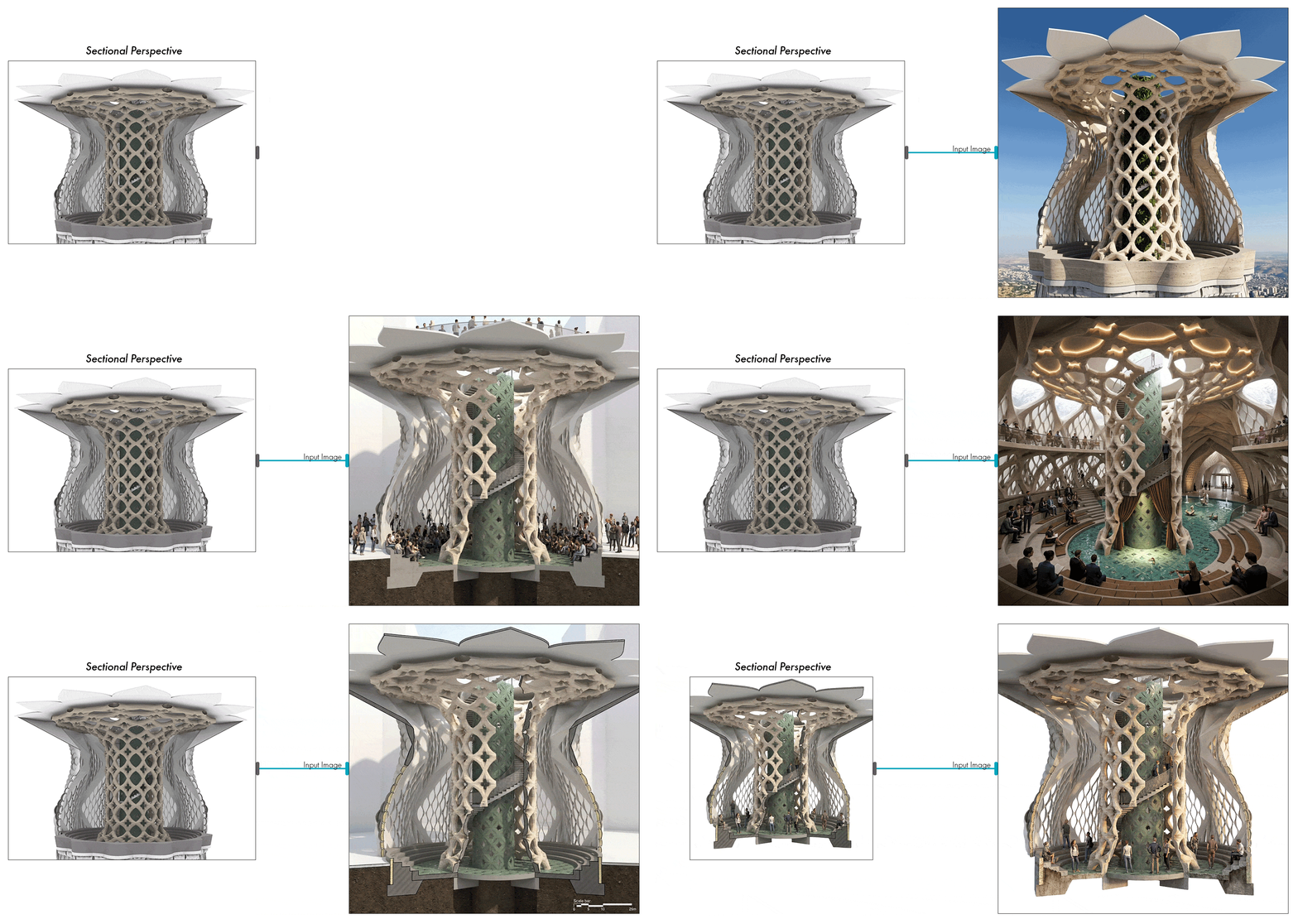
As the design became more resolved, an investigation began into how xFigura could support final visualizations. The starting point was the amphitheater. Rather than generating final renders immediately, sectional perspectives were first explored to better understand the spatial qualities of the space. Through a series of iterations, the images were refined until they clearly communicated the experience and organization of the interior.
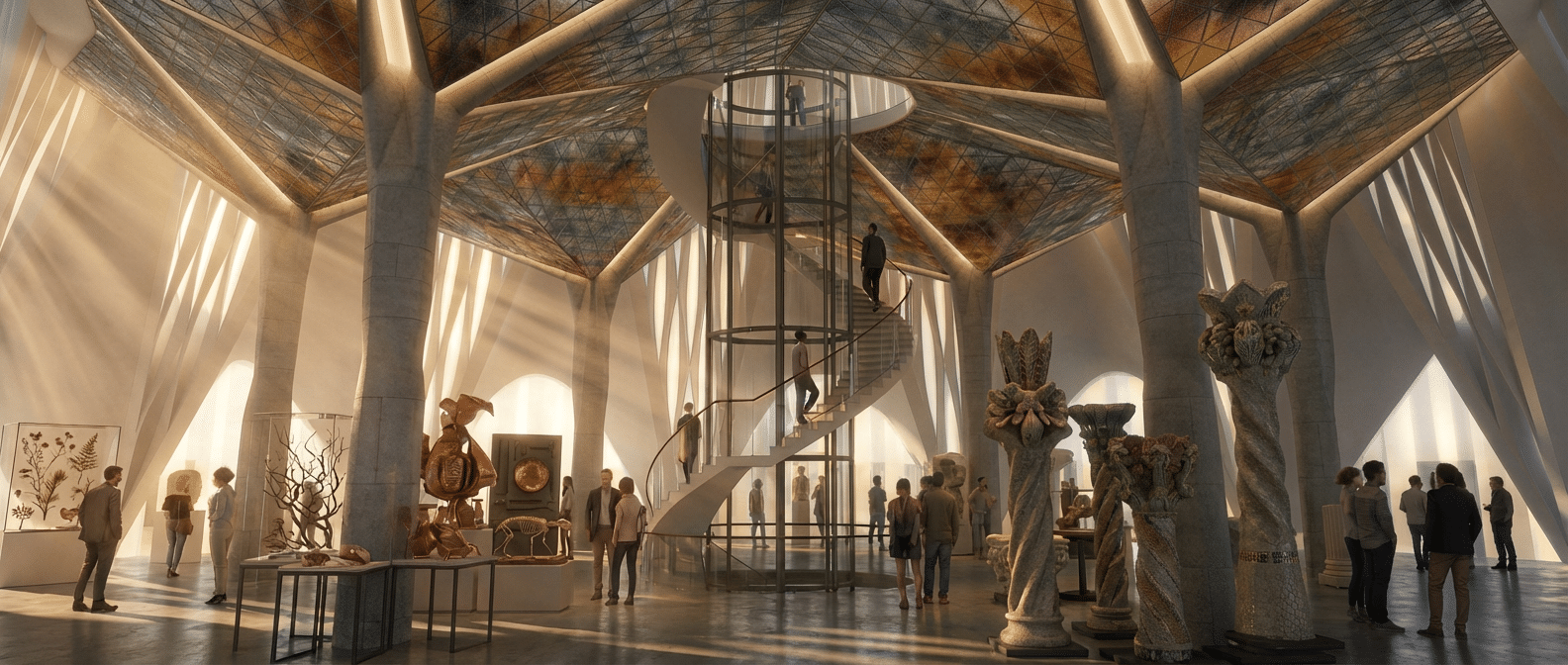
The Interpretation Center – Ground Floor Double Height
The project enters its most defining phase yet, the finalized interior spaces. The Ground Floor Double Height is where the architecture truly reveals itself. This space becomes a study in light and mass: daylight pierces through the intricate screen walls, casting ever-shifting patterns that animate every surface. Not simply illuminated, alive.
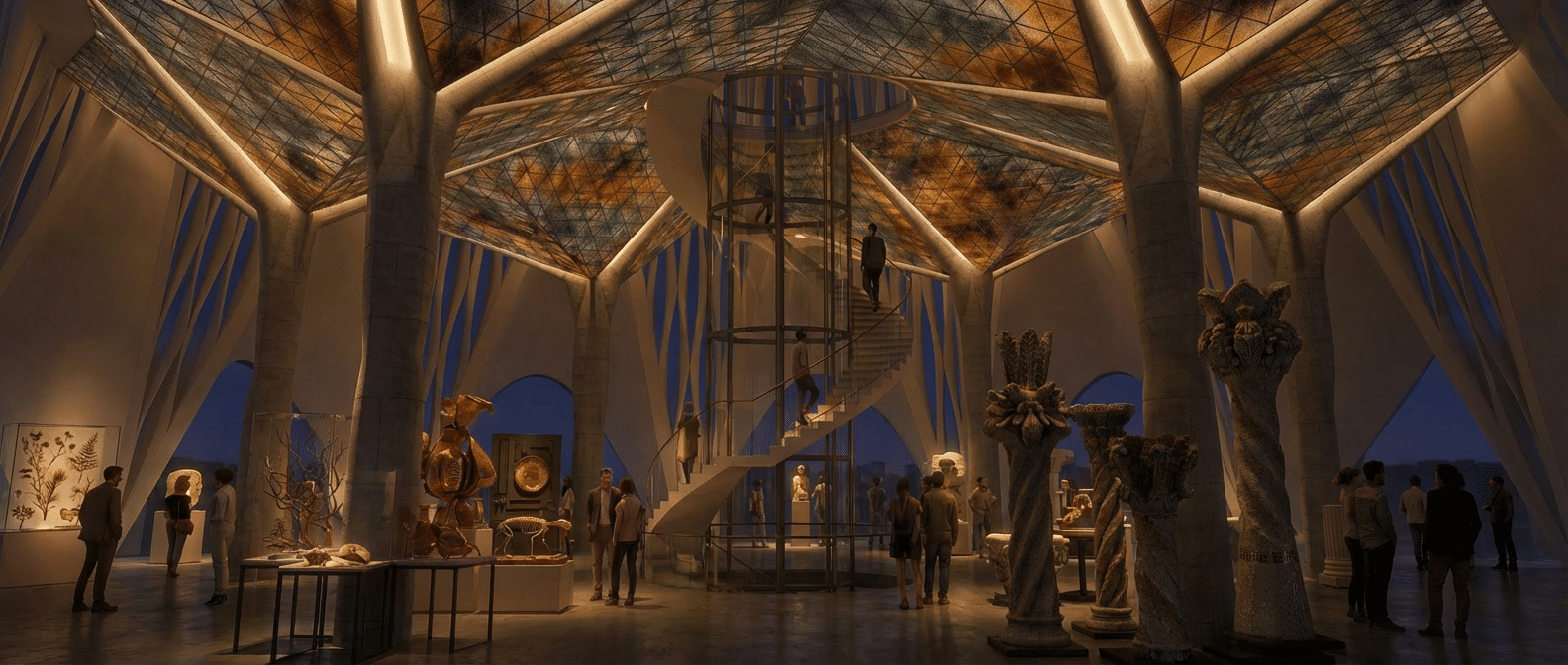
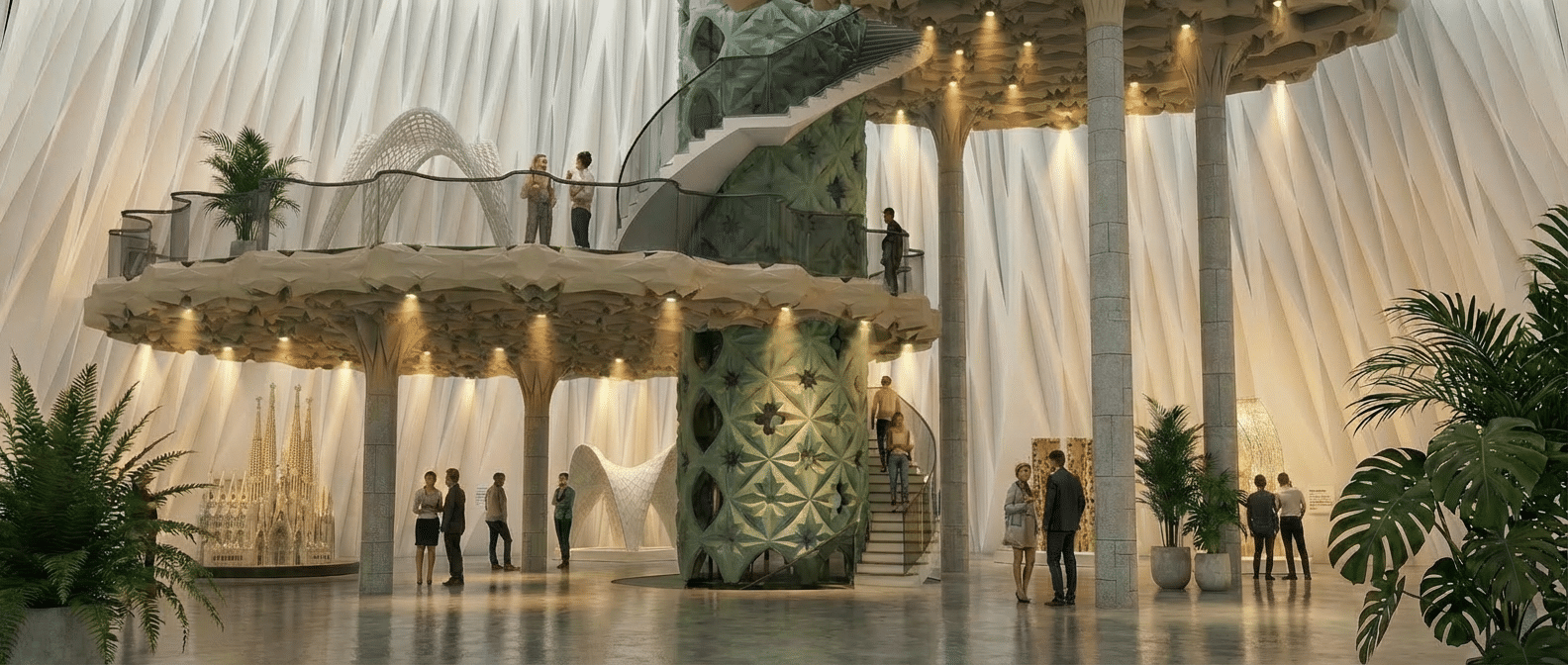
The Interpretation Center – First Floor Triple Height with Mezzanine Floors
Ascending the tower brings visitors to the First Floor Triple Height space, offering sweeping, multi-level views from the mezzanines.
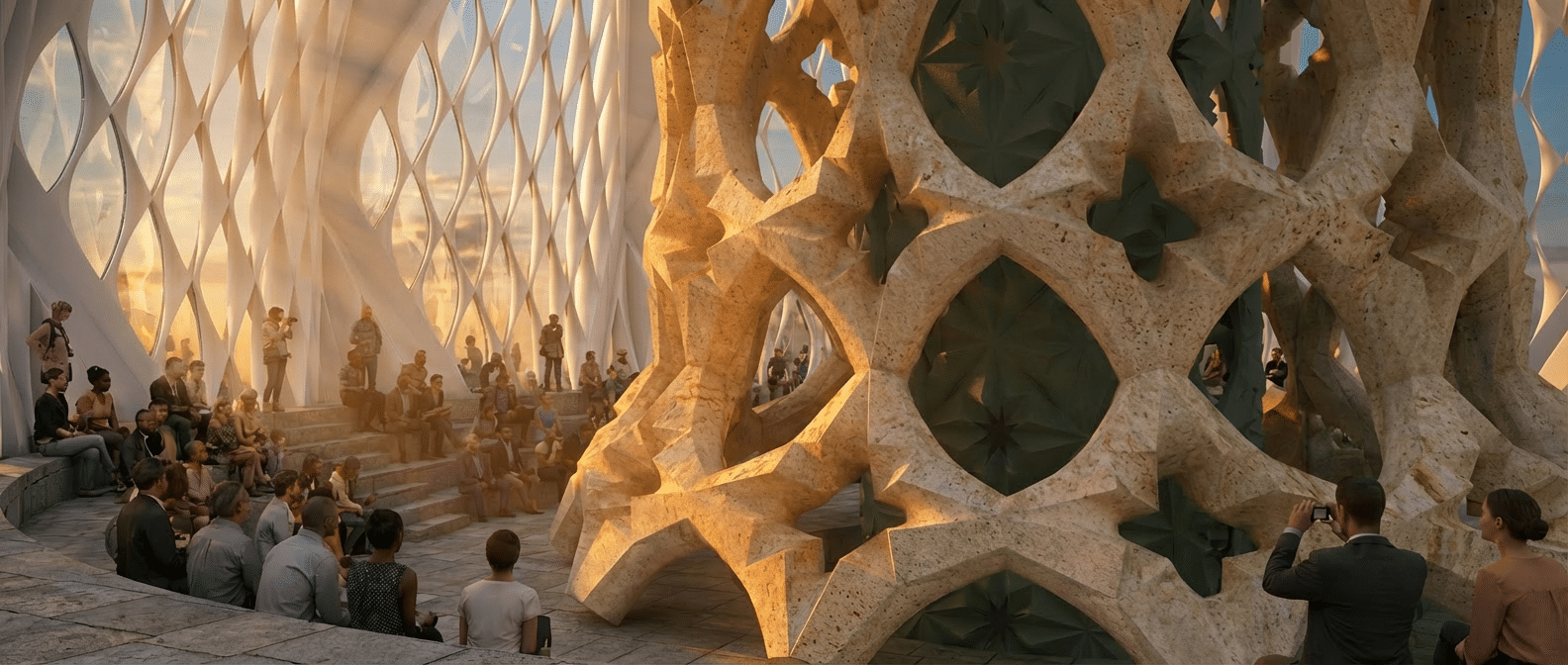
The Interpretation Center – Amphitheatre
The space seamlessly incorporates an Amphitheatre, fulfilling our goal of providing a dedicated zone for programming and education, as well as the resting area before someone enters the Mirador of the tower.
The Interpretation Center – Animation
Ultimately, After Gaudi stands as the final output: successfully translating a highly complex architectural vision into a beautiful, accessible public experience.