
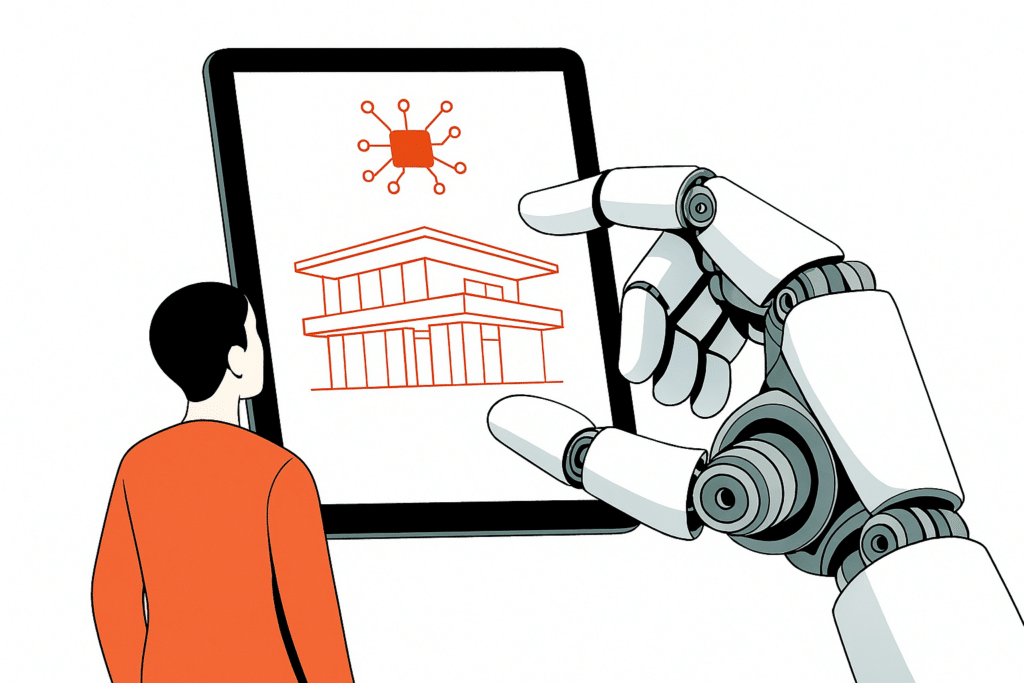
AI in intelligent architecture enhances design efficiency, sustainability, and user‑centric spaces. Key benefits include automation, data‑driven insights, and optimized building performance. Challenges involve data privacy, high implementation costs, and skill gaps. The future promises adaptive buildings, predictive systems, and seamless human‑AI collaboration shaping more resilient, responsive, and sustainable built environments.
1. AI-Driven Design Innovation
Generative Design: AI algorithms create thousands of design options based on constraints like cost, sustainability, and aesthetics.
Parametric Modeling: Dynamic models adapt in real-time to changes in requirements or environmental factors.
Virtual Prototyping: AI enables immersive simulations for testing structural integrity and user experience before constructions
Personalized Spaces: Designs tailored to user behavior and preferences using predictive analytics.
2. Smart Building Systems
Energy Optimization: AI predicts and manages energy consumption for maximum efficiency.
Predictive Maintenance: Sensors and AI detect issues before they become costly failures.
Adaptive Environments: Lighting, temperature, and acoustics adjust automatically to occupant needs.
IoT Integration: AI connects devices for seamless building automation and control.
3. Human-Centric Architecture
Behavioral Analytics: AI studies occupant patterns to enhance comfort and productivity
.Accessibility Design: Intelligent systems ensure inclusivity for all users.
Health & Wellness: AI monitors air quality, lighting, and ergonomics for well-being
Augmented Reality Interfaces: Interactive design experiences for clients and stakeholders.
4. Sustainable Architecture
Carbon Footprint Analysis: AI calculates and minimizes environmental impact during design and construction.
Material Selection: Intelligent algorithms recommend eco-friendly materials based on lifecycle data.
Climate-Adaptive Design: AI models predict future climate conditions to inform resilient structures.
Waste Reduction: Optimized resource planning reduces construction waste significantly.
5.Urban Planning & Smart Cities
Traffic Flow Prediction: AI analyzes patterns to design efficient transportation networks
.Green Space Allocation: Algorithms optimize placement for environmental and social benefits.
Disaster Preparedness: AI simulates natural disasters to improve urban resilience.
Data-Driven Zoning: Real-time data informs zoning decisions for balanced development
