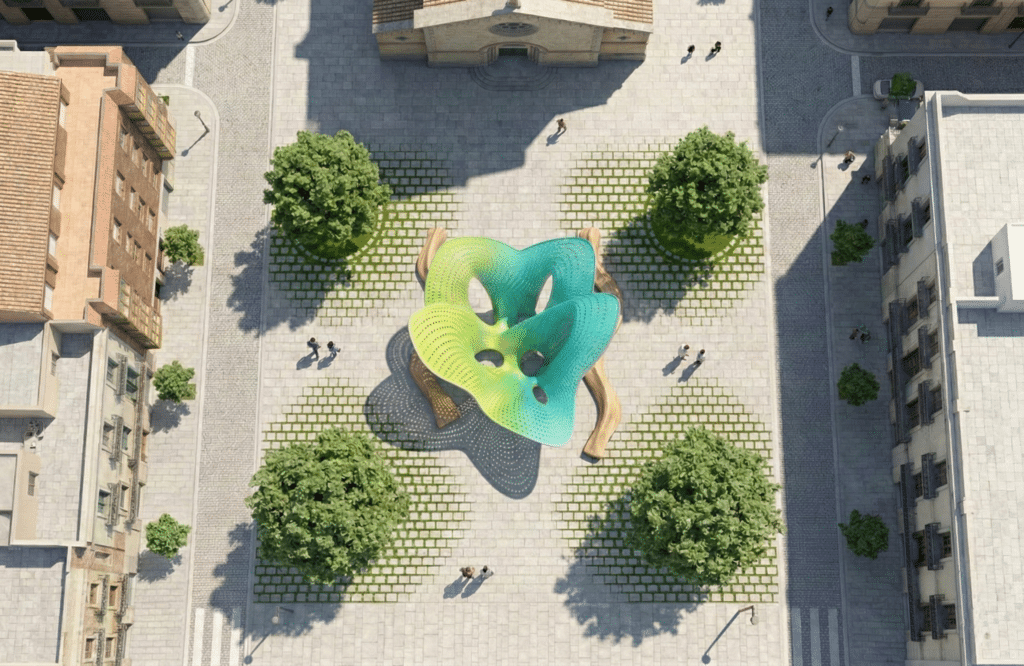
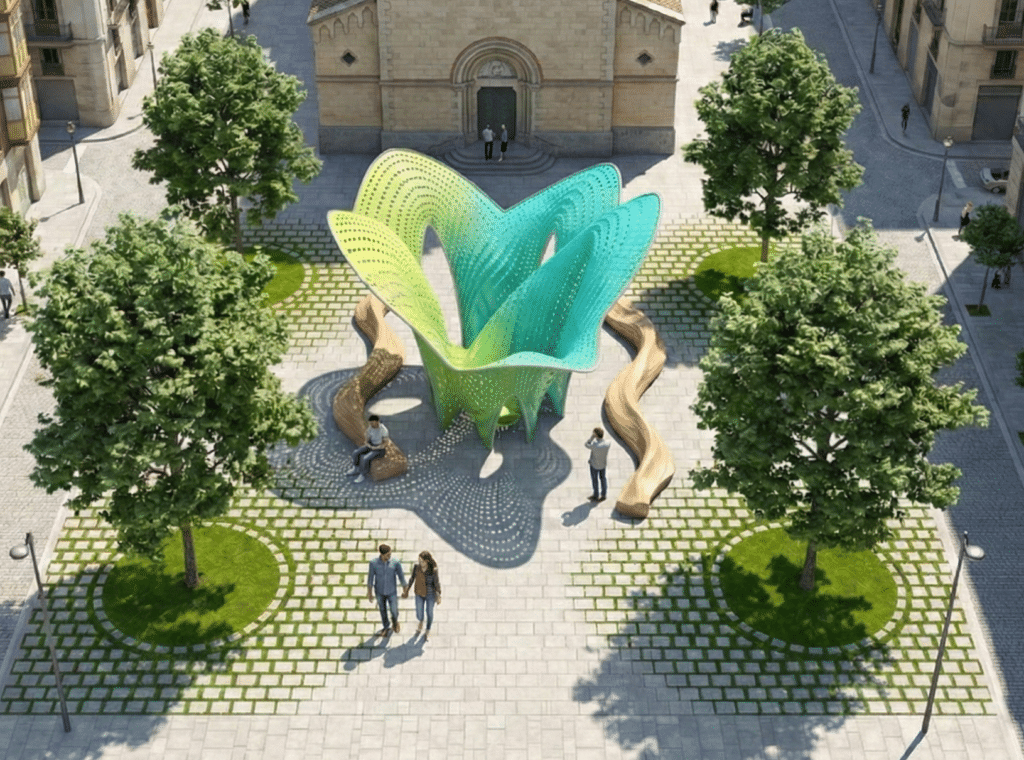
Site analysis
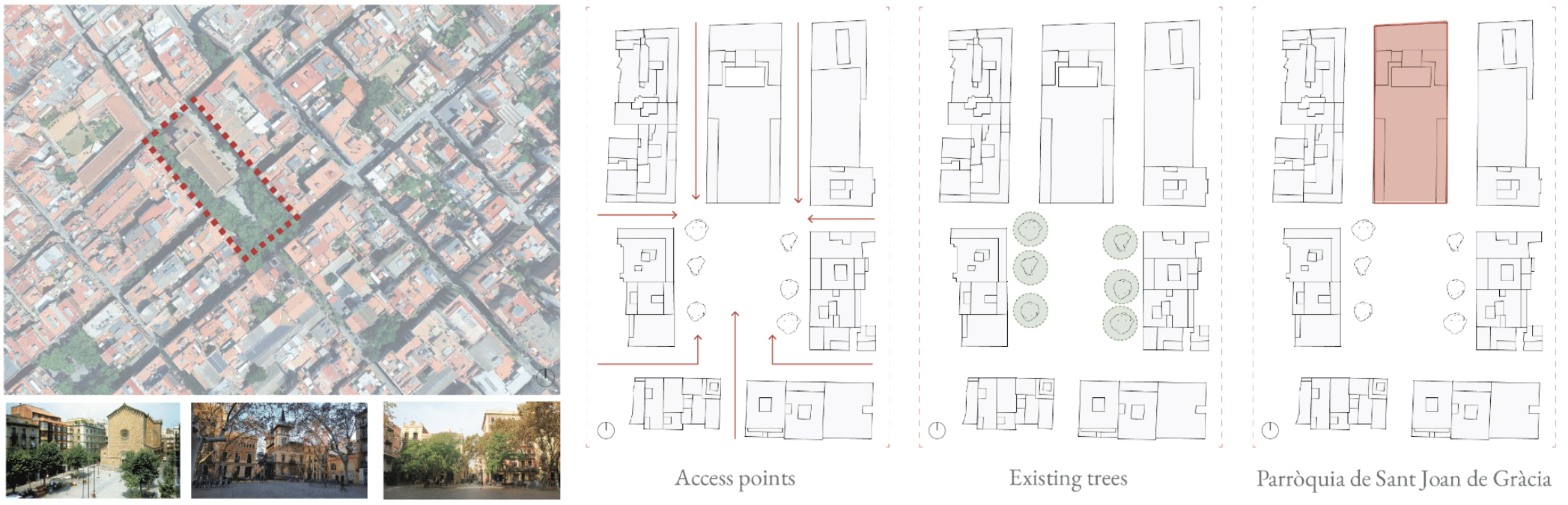
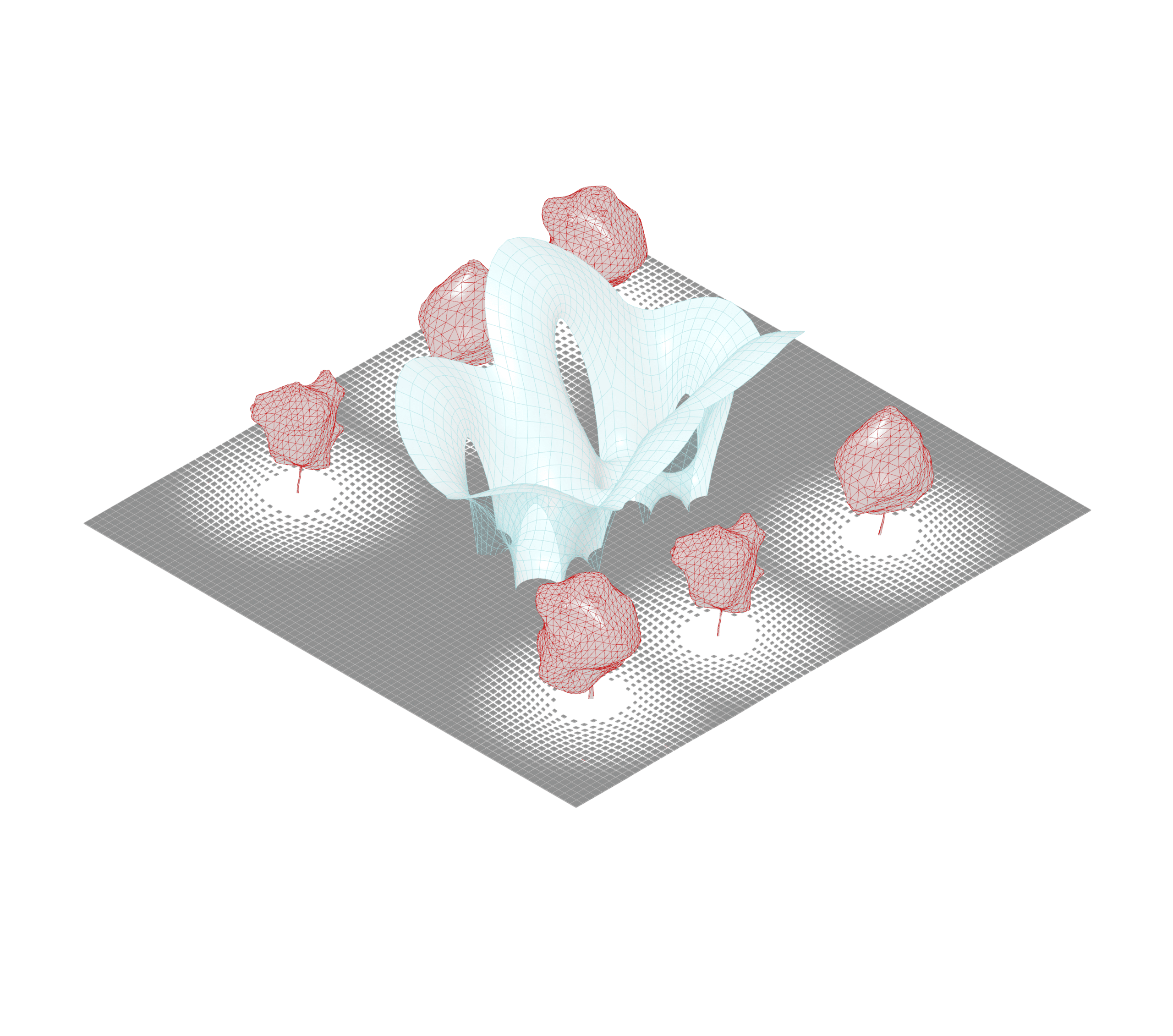
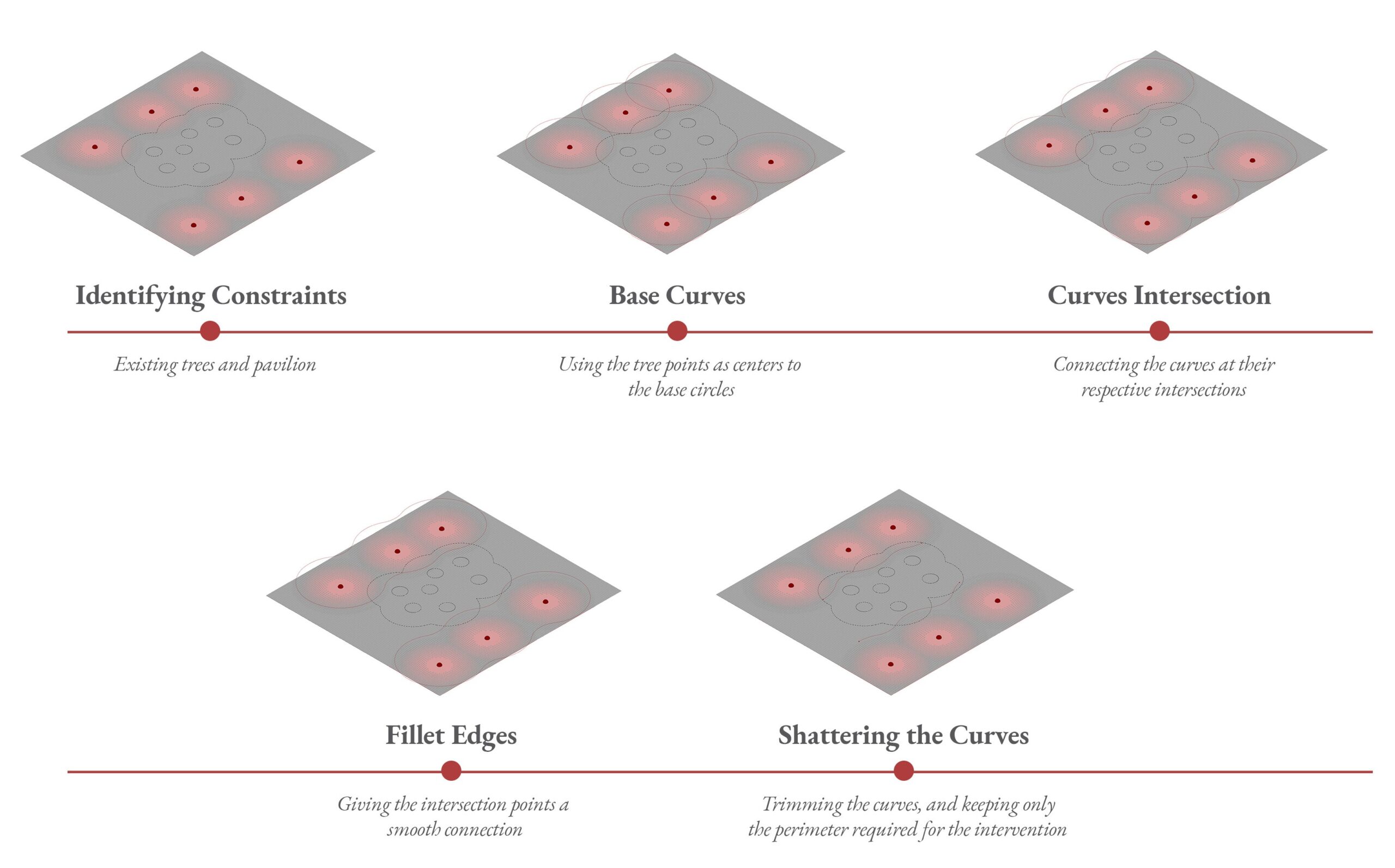
The architectural intervention is situated within Plaça de la Virreina, a prominent public square in the Gràcia district. The initial analysis involved a comprehensive mapping of existing urban conditions, specifically focusing on the primary access points to the square and the location of existing trees. These environmental constraints were not viewed as obstacles but as active parameters that dictated the spatial footprint and circulation patterns around the structure.
Referential work’s logic
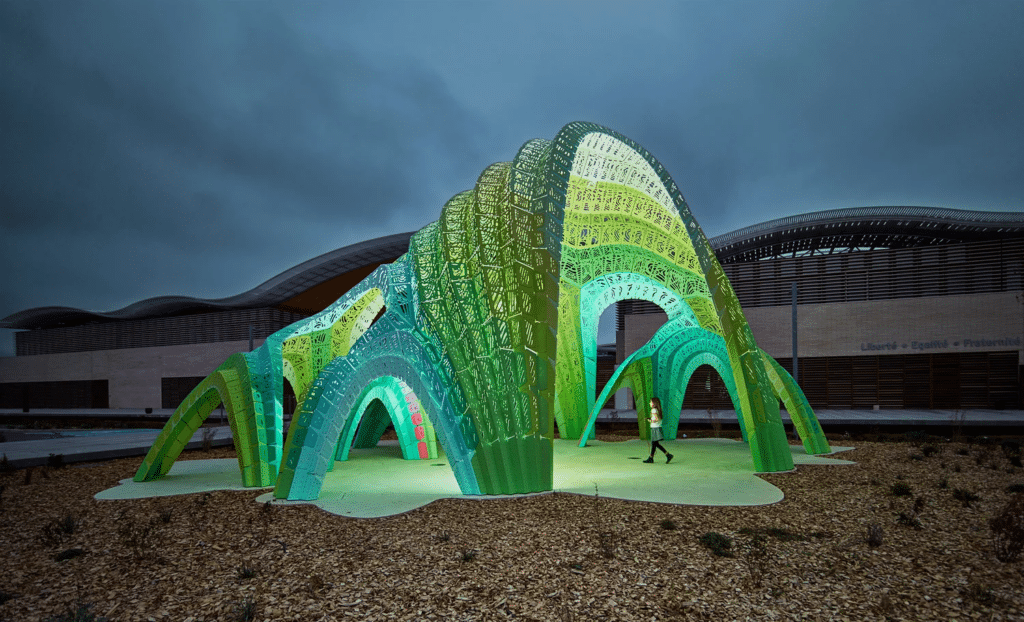
© MARC FORNES / THEVERYMANY
The reference project is the Pleated Inflation pavilion by Marc Fornes / THEVERYMANY.
Its generative logicrelies on structural physics rather than manual modeling, utilizing the continuous outer skin as the sole load-bearing element without a traditional internal skeleton.
The macro-logic employs physics simulations to transform a planar 2D network of lines into a 3D morphology. By manipulating forces as design parameters, an upward pneumatic “inflation” expands the digital grid, while static anchor points constrain the mesh at ground level, naturally generating the hollow pillars.
At the micro-level, structural integrity is achieved through two techniques: “pleating” (continuously folding the surface into a zigzag to increase depth and rigidity) and “stress-driven porosity” (parametrically scaling surface apertures based on geometric stress). This synthesis of pneumatic form-finding and pleated geometry generates a highly efficient, self-supporting architectural form.
System deconstruction
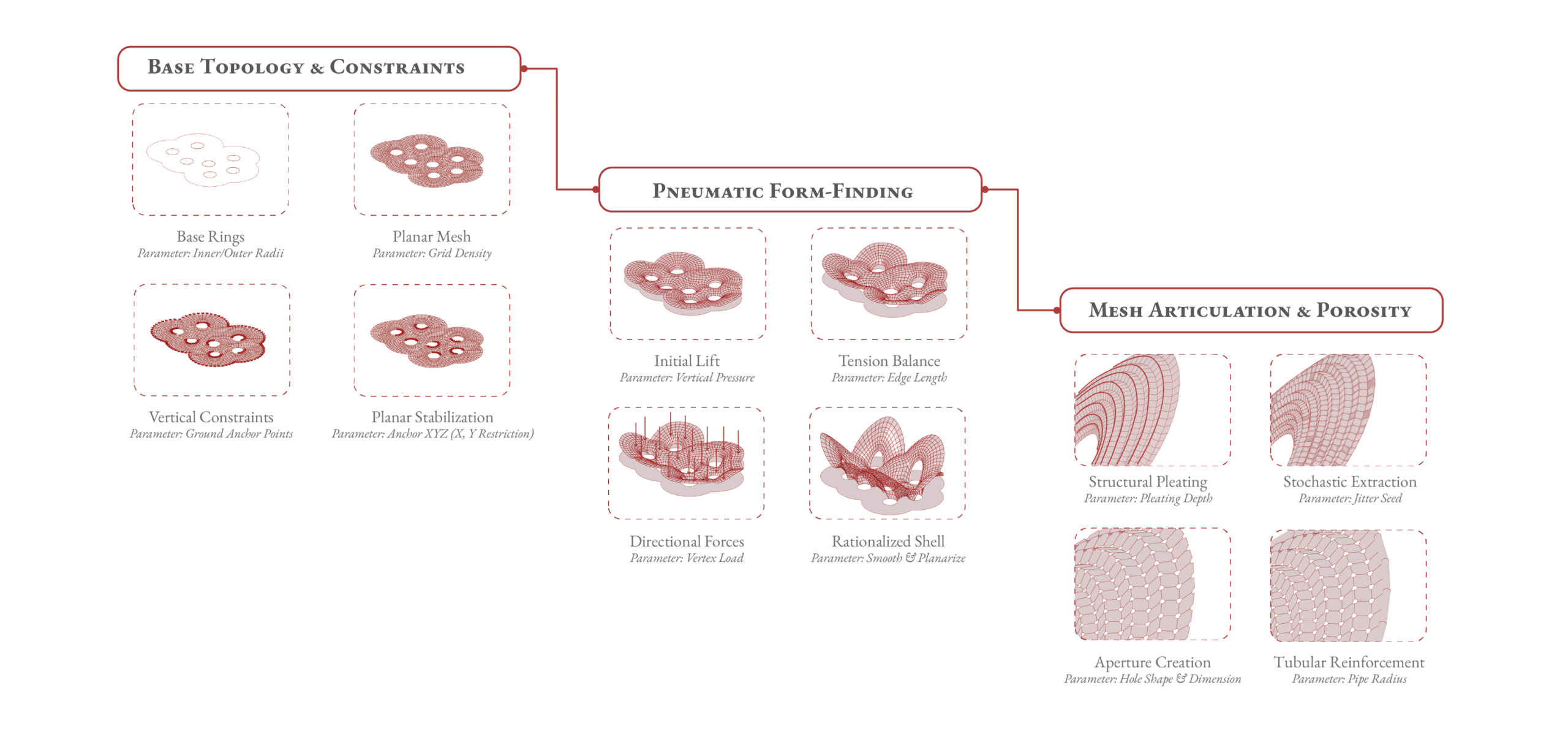
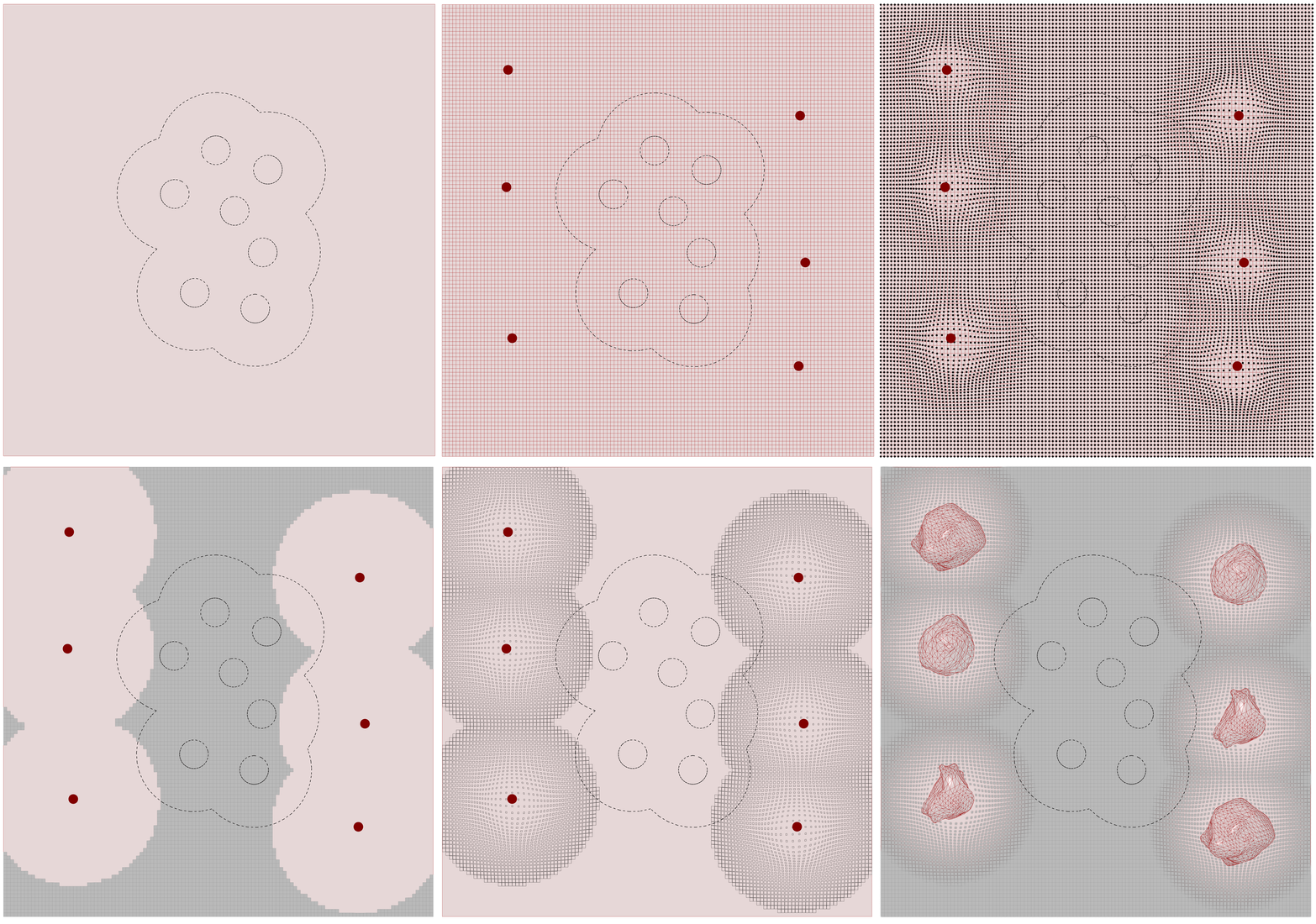
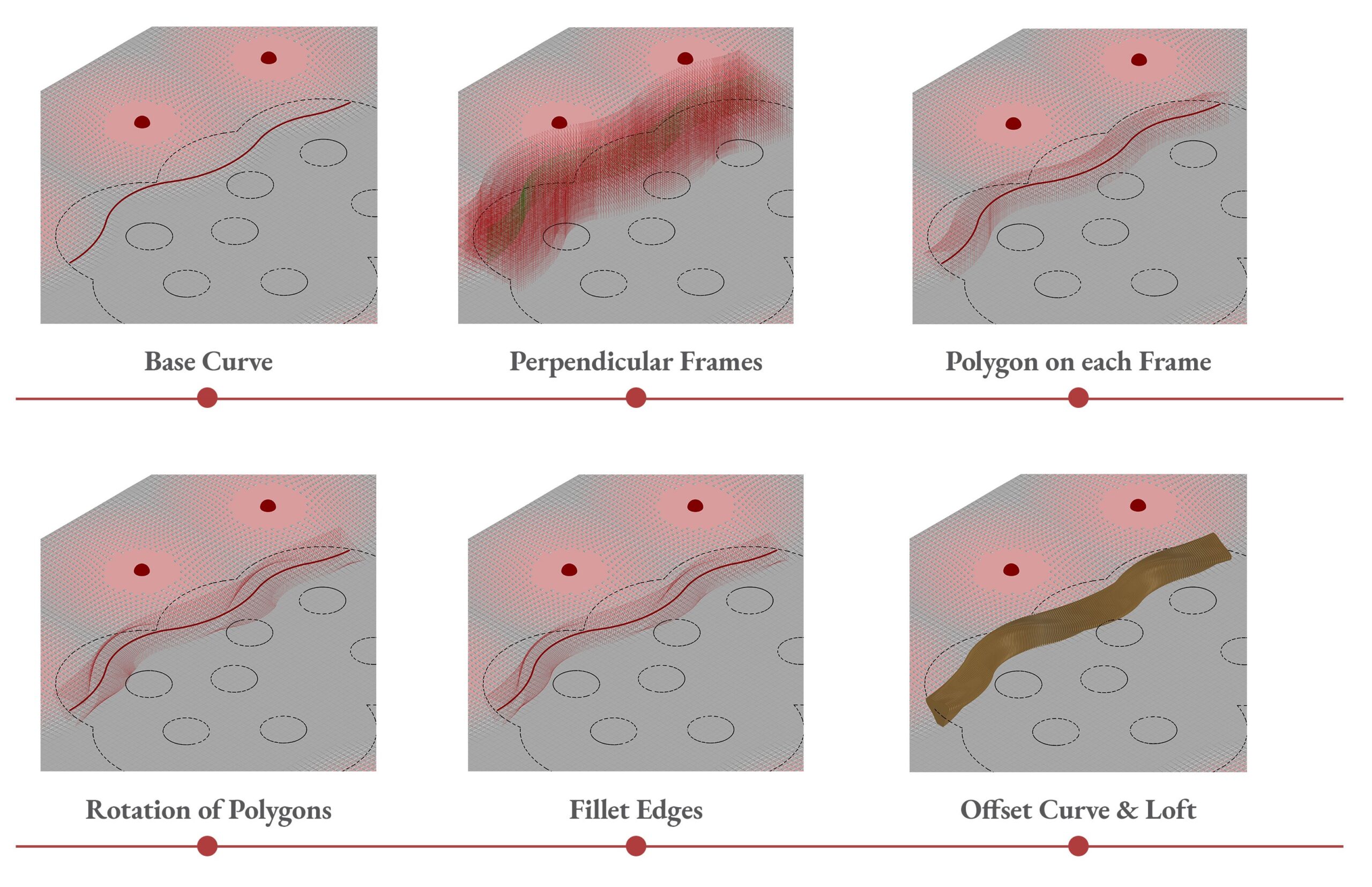
The generative workflow has been decomposed into sequential computational stages. Each logical block is governed by specific mathematical and physical variables that dictate the final three-dimensional output.
A. Planar Base Topology
The initial framework consists of a two-dimensional mesh defined by outer boundary circles and internal concentric rings.
Controlling parameters: spatial coordinates of the centers, magnitude of outer and inner radii, and the subdivision density of the starting polygonal network.
B. Pneumatic Form-Finding
The structural elevation relies on a physics simulation engine. The planar grid is subjected to opposing force vectors: a constant upward thrust and the rigid tethering of the bottom supports, thereby generating double-curved vaults.
Controlling parameters: Intensity of vertical pressure (inflation), stiffness index of the ground anchors, and the tensile resistance of the mesh segments (edge length).
C. Surface Articulation and Porosity
The continuous simulated geometry undergoes a 3D pleating process to significantly increase its structural depth and rigidity. Subsequently, a parametric pattern is mapped onto the mesh to generate targeted perforations across the outer skin.
Controlling parameters: Extrusion depth of the pleats, distribution density of the pattern, and variable radii of the apertures.
Workflow diagram
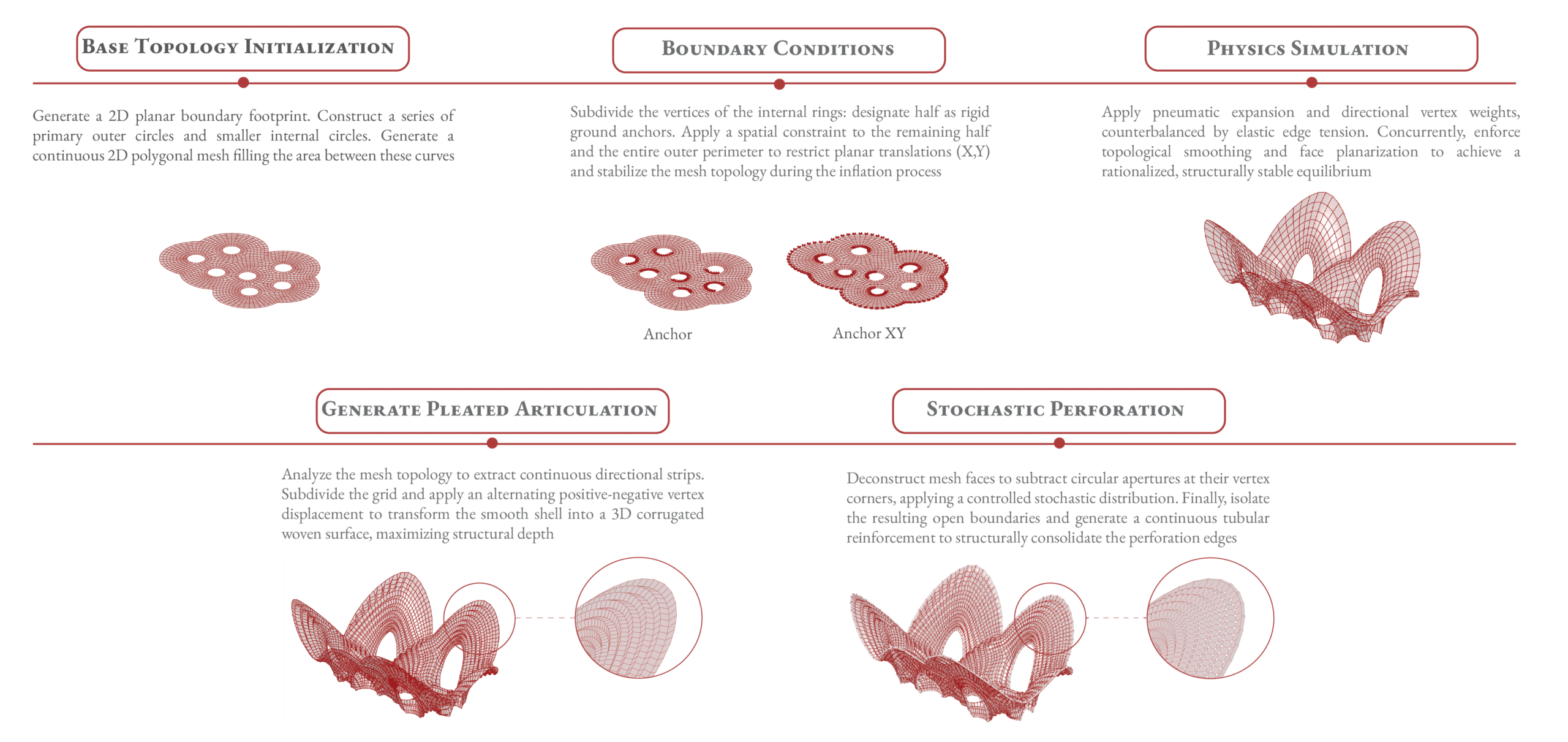
Design process
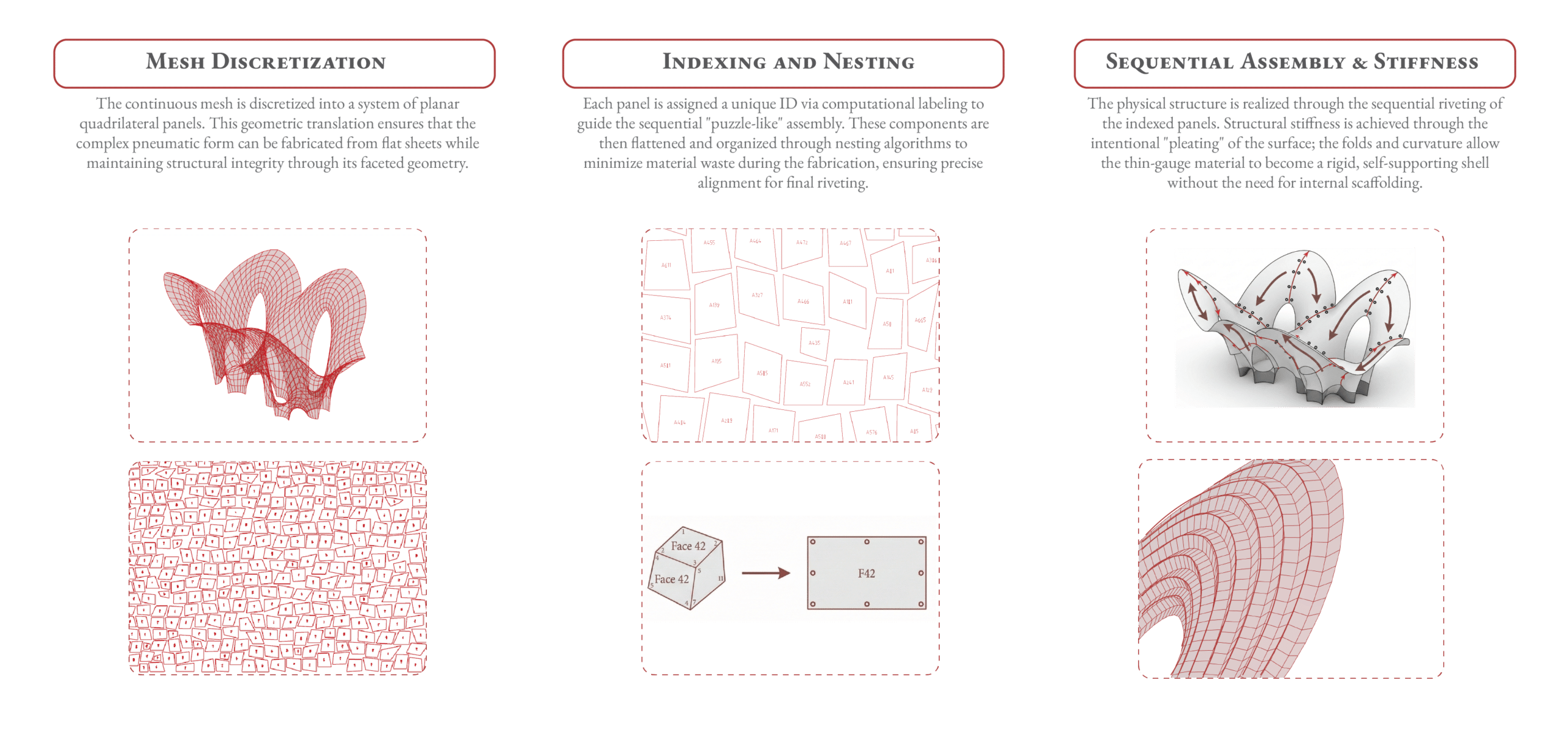
Fabrication and assembly methodology
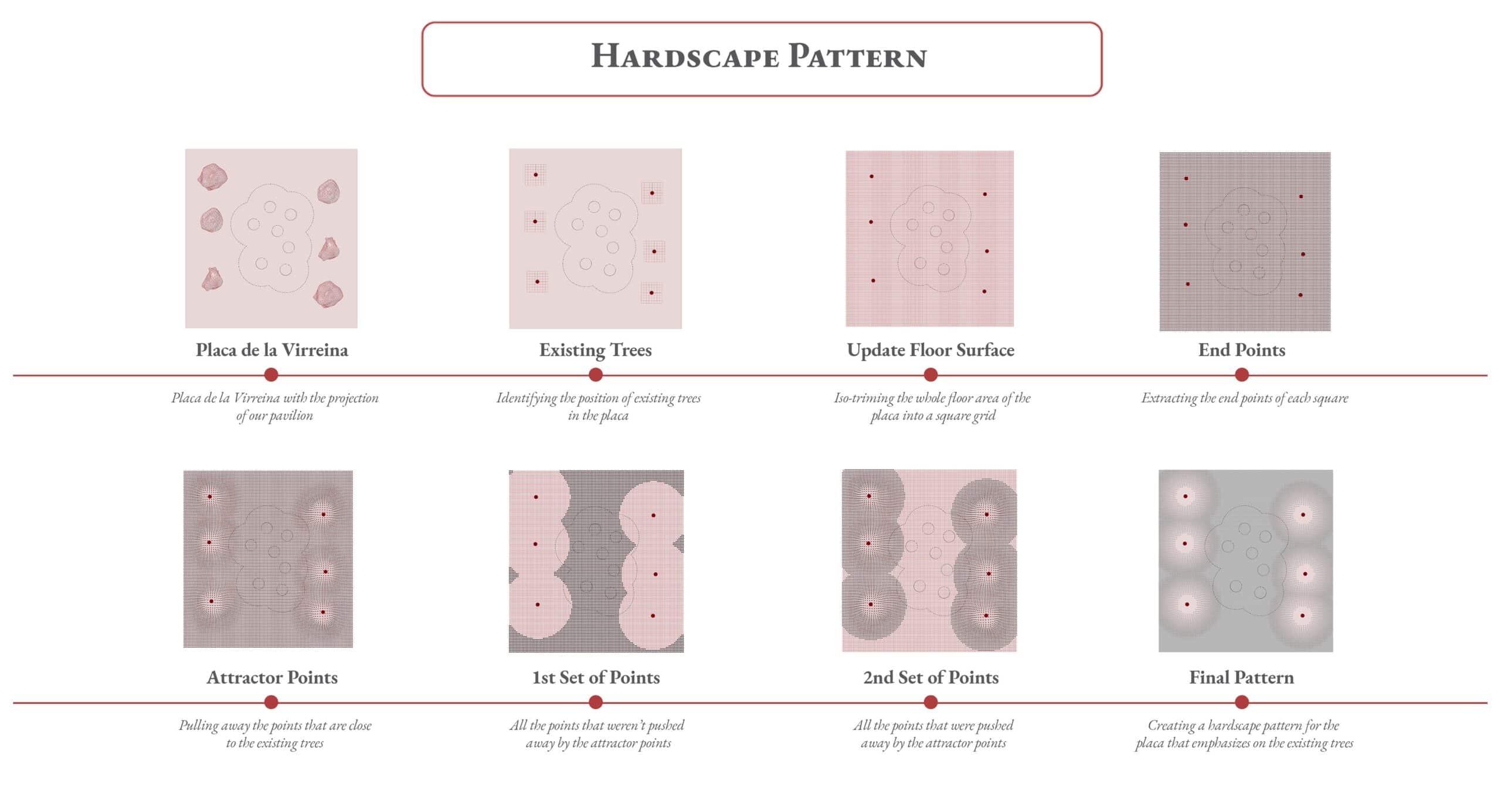
Placa Pavement
Public Benches

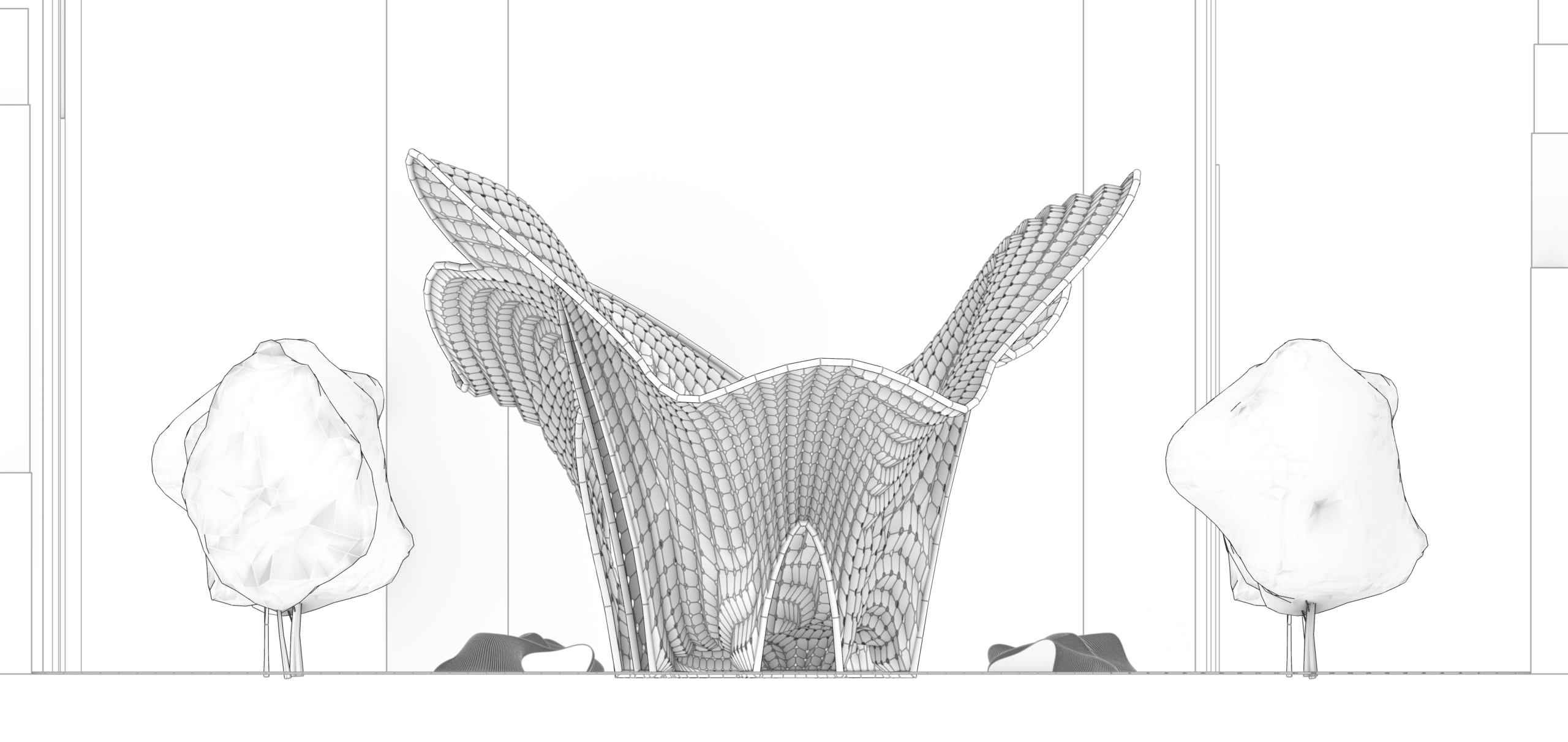
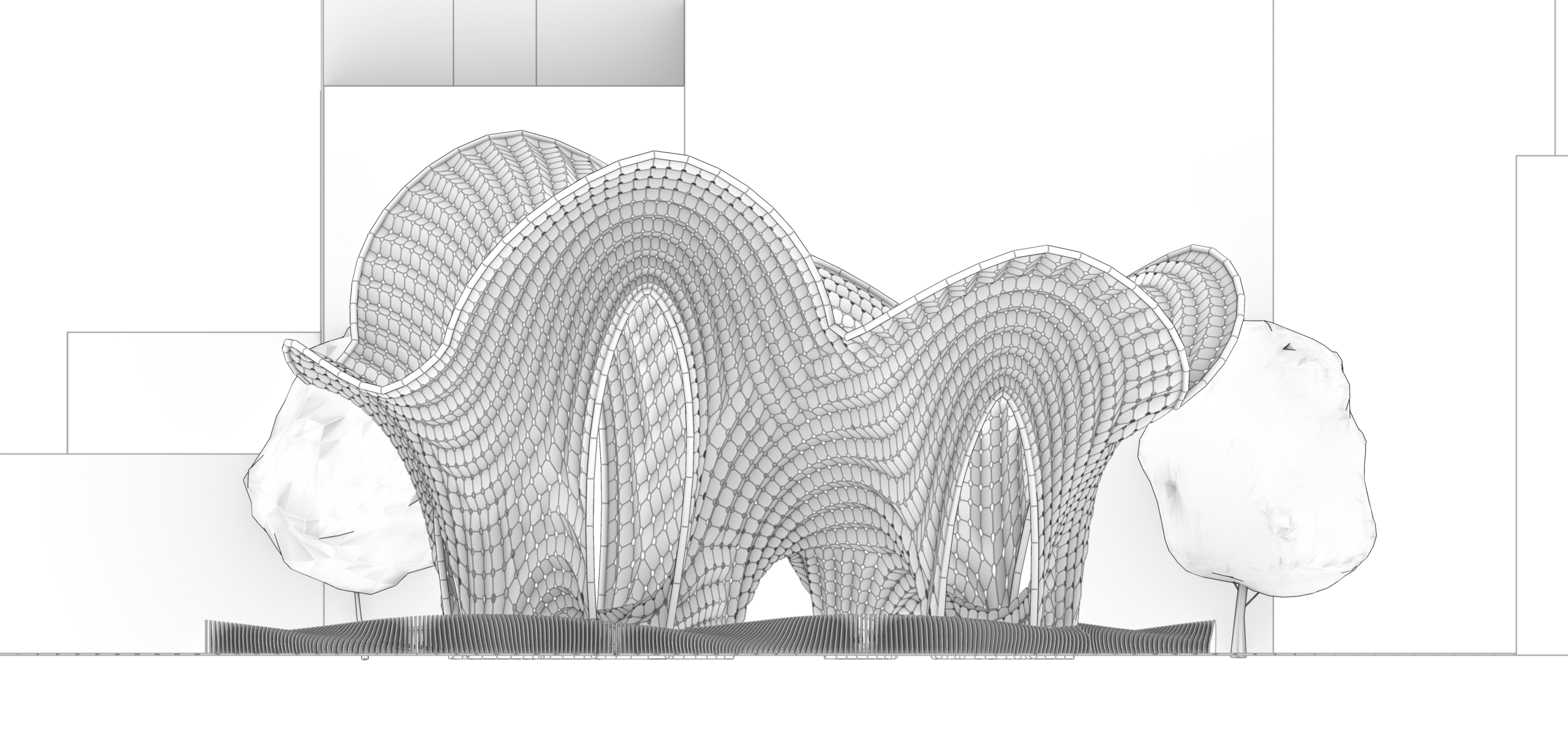
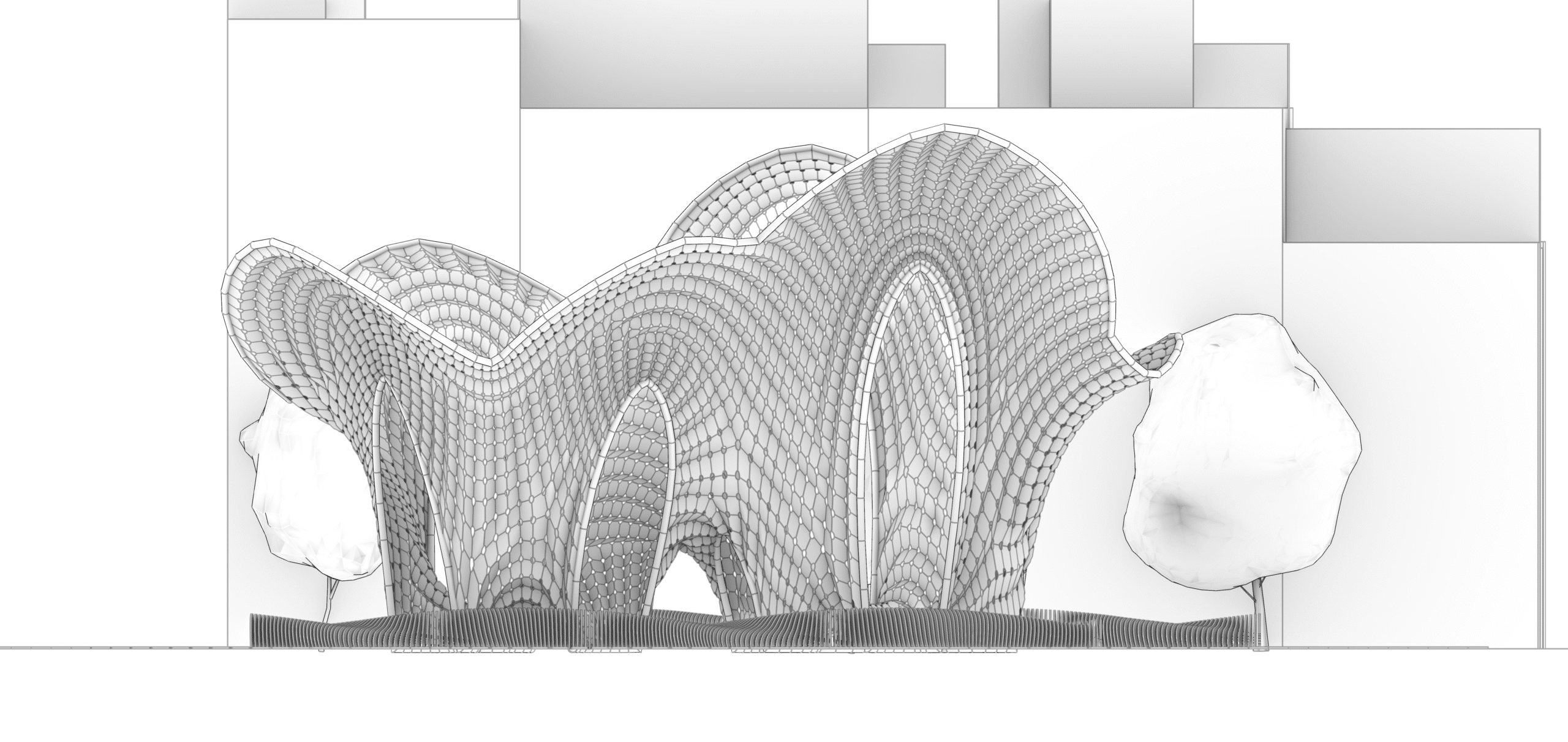
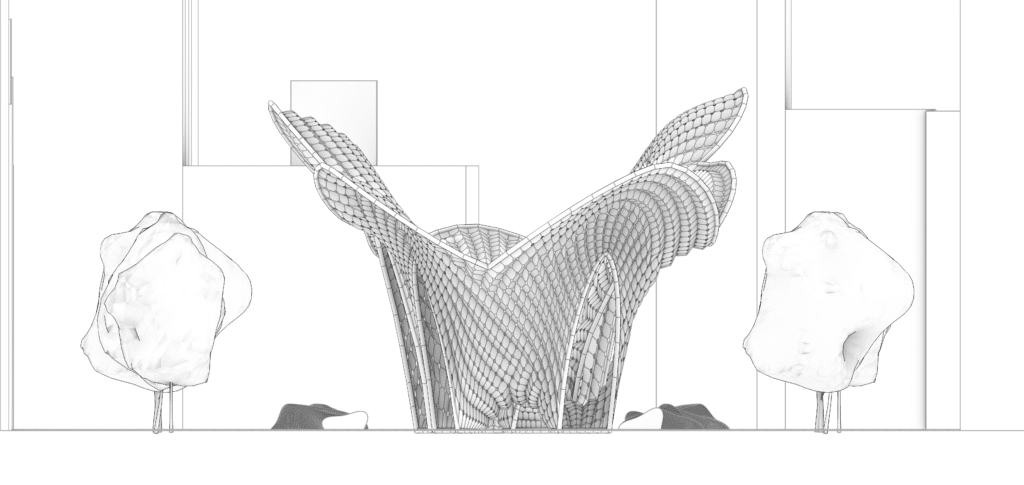
Project Elevations
Render