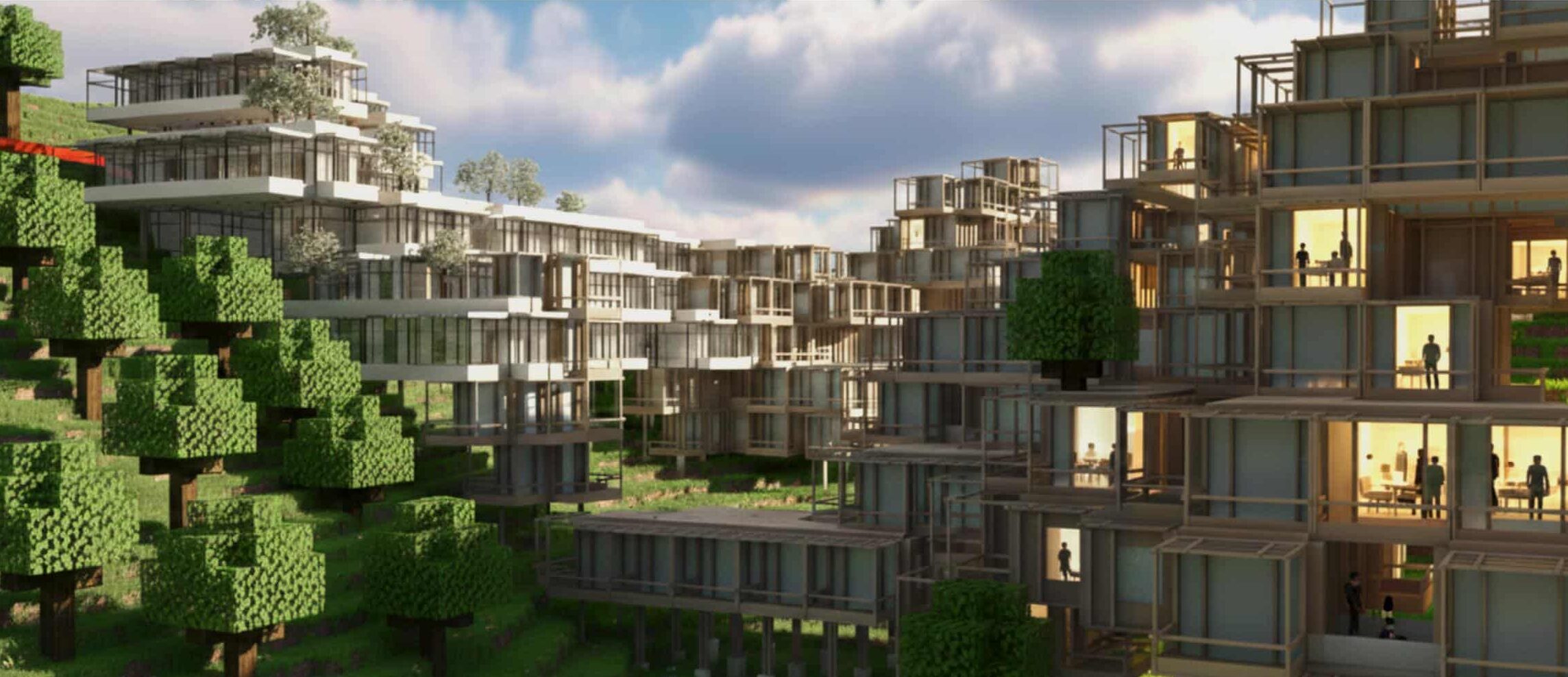
Credits: Roger Stirk Harbour + Partners
“The building isn’t the machine. Space is the machine.” Nick Dalton (Computer Programmer at University College London)
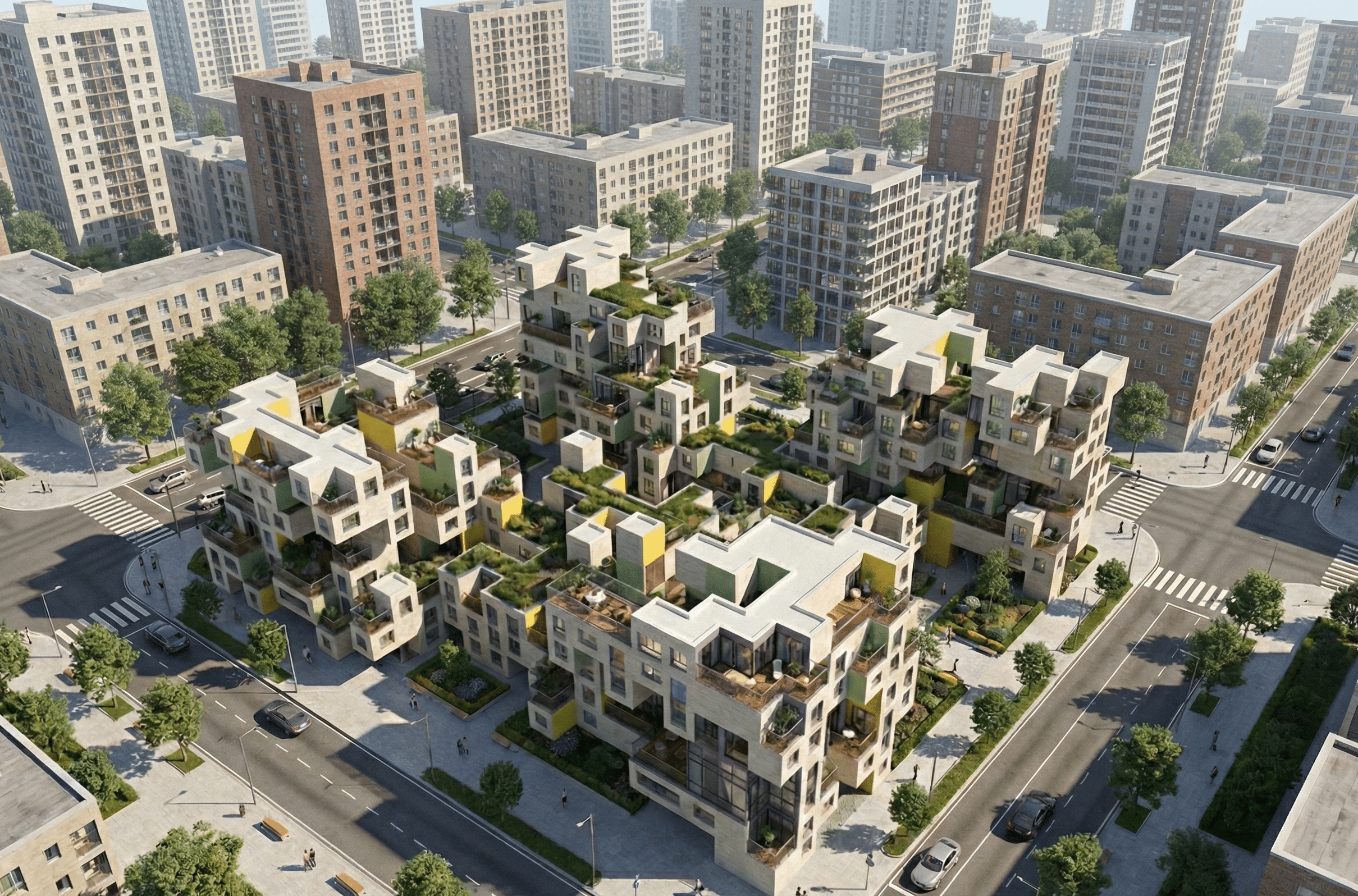
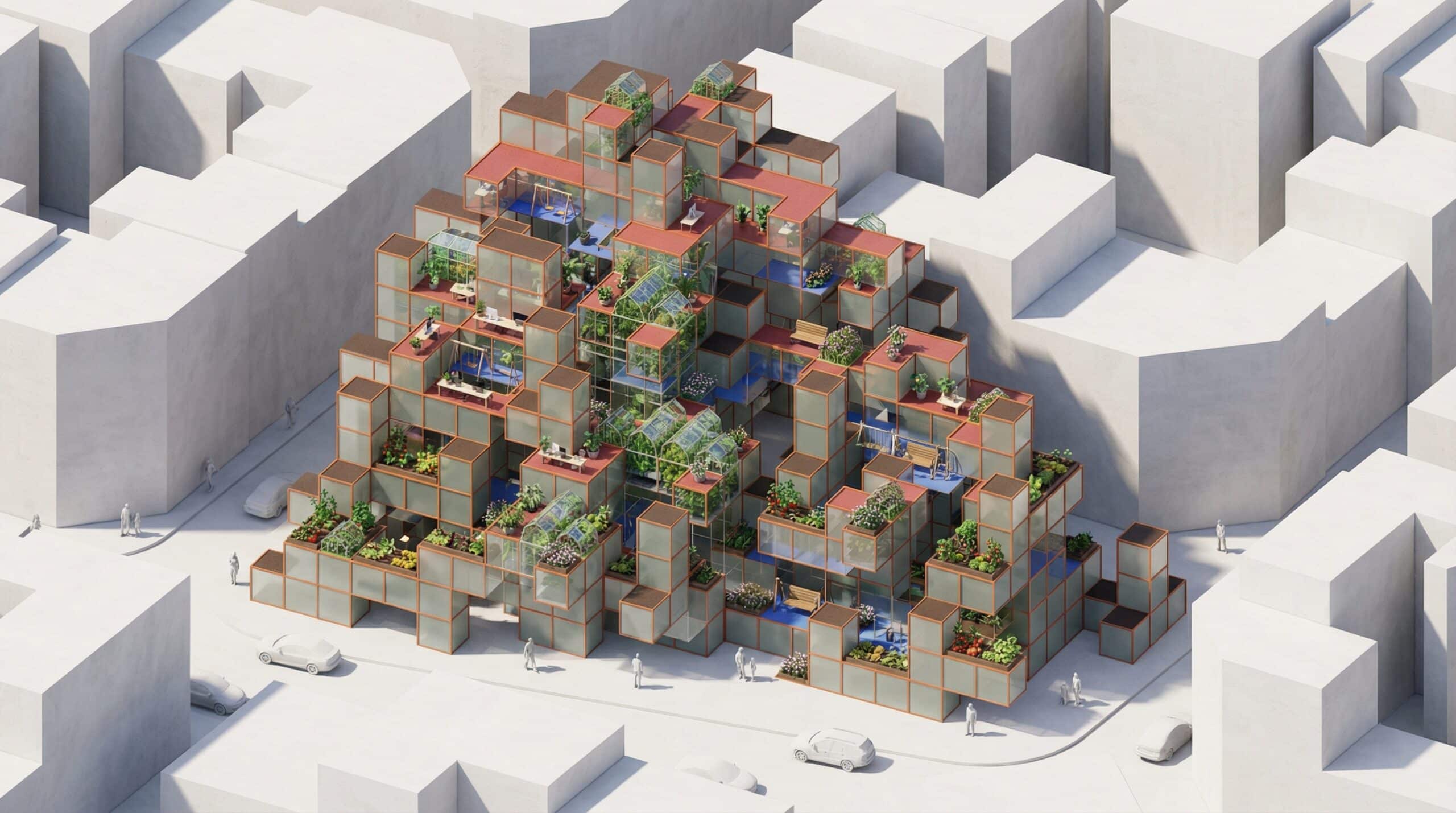
The coming future will force architects to address the issues/necessities of density as well as the urgency to create more data-informed spatial configurations, such as assemblages, and embed sets of specific architectural features. Being able to ‘inform’ large-scale systems, taking advantage of modularity, and defining the metrics to evaluate different spatial alternatives is a crucial ability.
The seminar focuses on computational thinking and logic to design assembly/growth processes, investigated through iterative algorithmic strategies starting from elementary spatial building blocks. The building blocks used are treated as basic units of computation, capable of storing and computing data due to their topological and spatial-geometric qualities. Assemblages are thus seen as coherent organisations able to store and process information. Starting from an initial element and position, the growth process is driven by internal and external conditions which limit and enhance the growth structure and system qualities. The aggregation is then investigated and discretised into modular elements defining the architectural features.
The seminar explores the dual geometric and topological computing nature of spatial systems, using basic iterative logics explored through Grasshopper and the Anemone plug-in. It then explores the blocks’ differentiation and articulation based on the specific aggregation geometric/topological properties. The cell process of differentiation to a more specialised type is driven by a variety of algorithmic rules, from network-based and topology-based to geometric conditions, leading to a coherent architectural system.

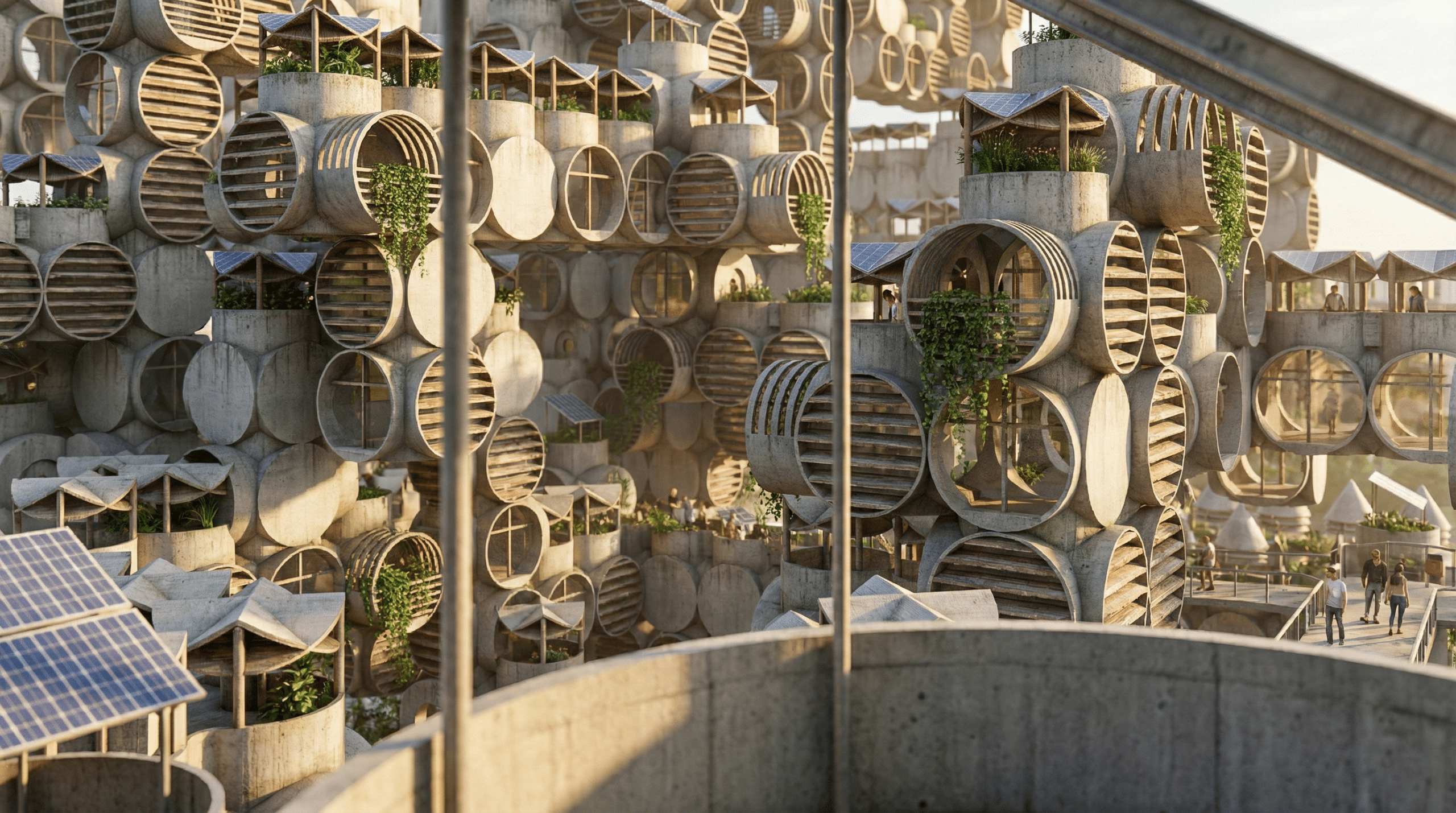
Credits: Andrea Graziano
Learning Objectives
At course completion the student will:
- Learn & reinforce computational thinking logic.
- Understand the concept of computation and the difference between computational and computerised in the design process.
- Understand the basics of non-linear and iterative processes and learn how to use iterative tools and manage data structure complexity.
- Learn how to create algorithmic strategies for approaching and evaluating building assemblages and urban block architectural design explorations.
- Be able to encode/decode data into/from geometry and exploit its spatial-topological structure to support design strategies.