

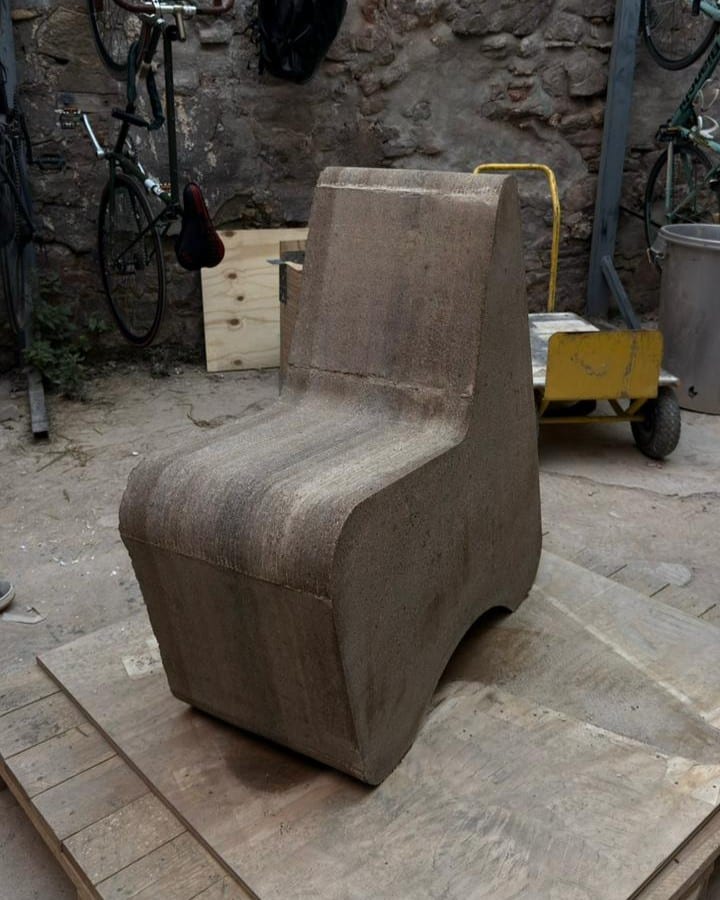
Rammed Chair
TOTEM INTERFACE ELEMENT STONE WALLS SLOPE WALL INITIAL RAMMED PROTOTYPE FINAL RAMMED PROTOTYPE FINAL RENDERS WALKTHROUGH VIDEO

Designing Multispecies Public Space with Recycled Matter
Design for GreenInCities explores the intersection of circular construction and multispecies design through the reuse of construction and demolition waste. This seminar introduces rammed earth techniques using recycled materials to position public space as an ecological interface that supports both human and non-human life. Working within the Besòs pilot project of the GreenInCities initiative, students engage in hands-on processes of material sourcing, processing, and fabrication to develop site-responsive design proposals. Through group work, participants design and prototype public space elements that address environmental conditions such as microclimate, water collection, and material performance. Emphasizing coexistence, this seminar fosters a design approach grounded in circularity, material experimentation, and the creation of inclusive multispecies urban environments.
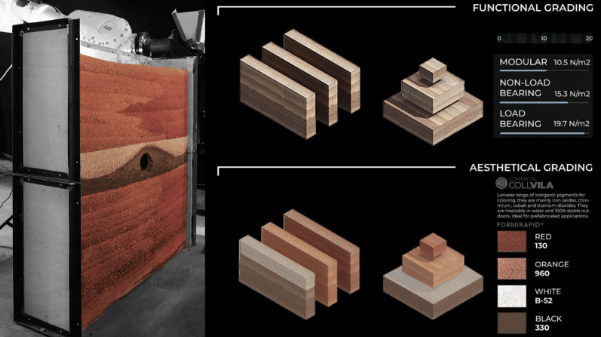
This seminar addresses the growing relevance of circularity and material reuse in contemporary architecture, focusing on the innovative potential of reusing construction and demolition waste (CDW) through rammed earth techniques (rammed construction and demolition waste). In parallel, it engages with an expanded understanding of the city as a space that fosters the wellbeing of both humans and non-humans, promoting coexistence through the design of inclusive public environments.
Within this framework, the seminar explores the design of public space elements for the Besòs pilot project, part of the GreenInCities initiative developed by IAAC. Through hands-on workshops and lectures, students will learn how to transform locally sourced CDW into new architectural components, engaging directly with processes of material collection, processing, and compression using rammed construction techniques.
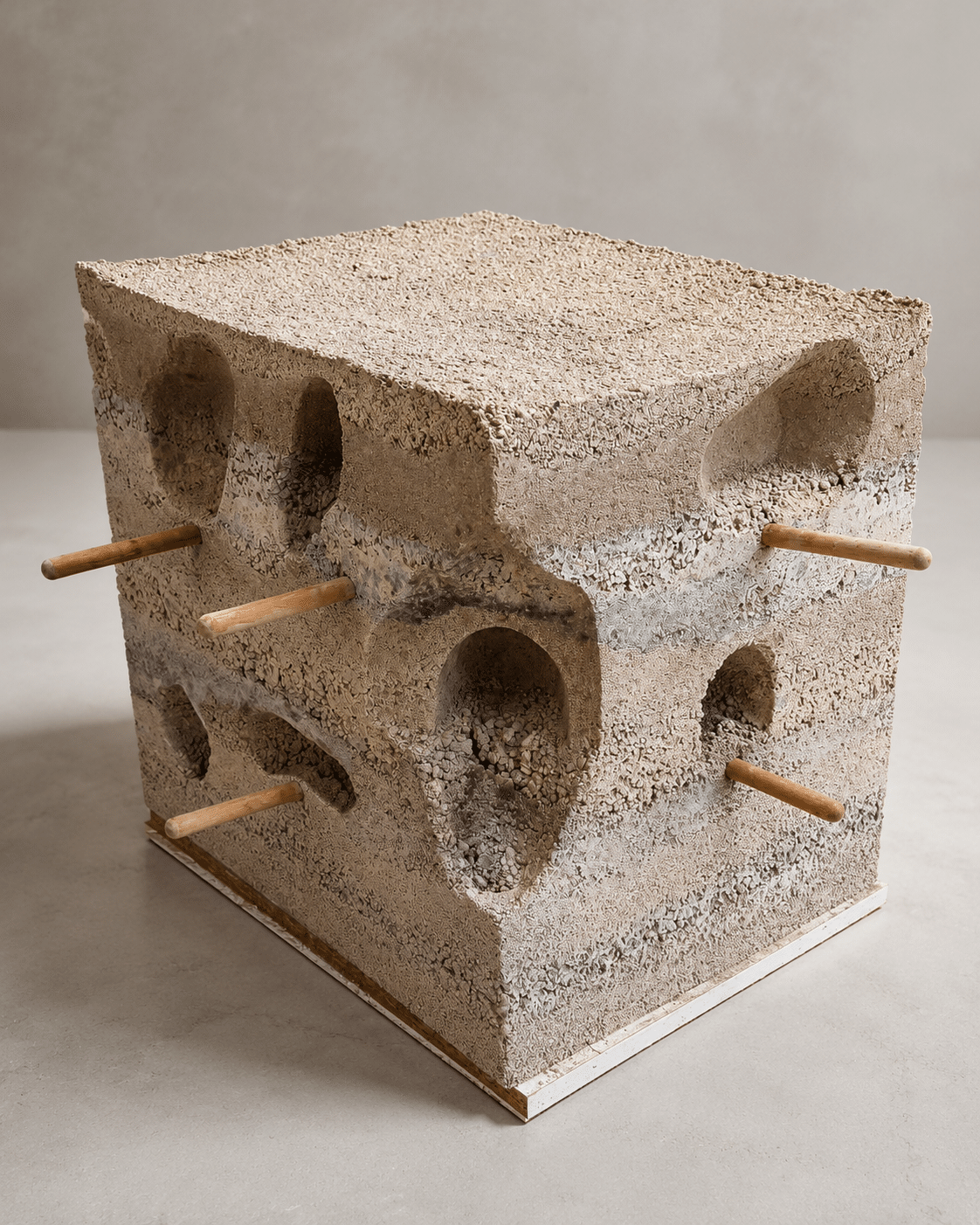
Public space is approached as an ecological interface: a shared environment where multiple species interact. Students will design elements that provide shelter and support for non-human life, fostering coexistence while addressing environmental conditions such as water collection, microclimate, and material performance. Qualities such as porosity, texture, light, and structural expression will be integral to the proposals.
Working in groups, participants will develop and prototype a series of public space elements, including vertical structures and inhabitable surfaces, testing them through 1:1 or scaled models. Selected outcomes may be integrated into the Besòs pilot project, which is scheduled for implementation starting in autumn 2026, positioning the seminar within a real and evolving urban transformation process.
At course completion the student will:
TOTEM INTERFACE ELEMENT STONE WALLS SLOPE WALL INITIAL RAMMED PROTOTYPE FINAL RAMMED PROTOTYPE FINAL RENDERS WALKTHROUGH VIDEO
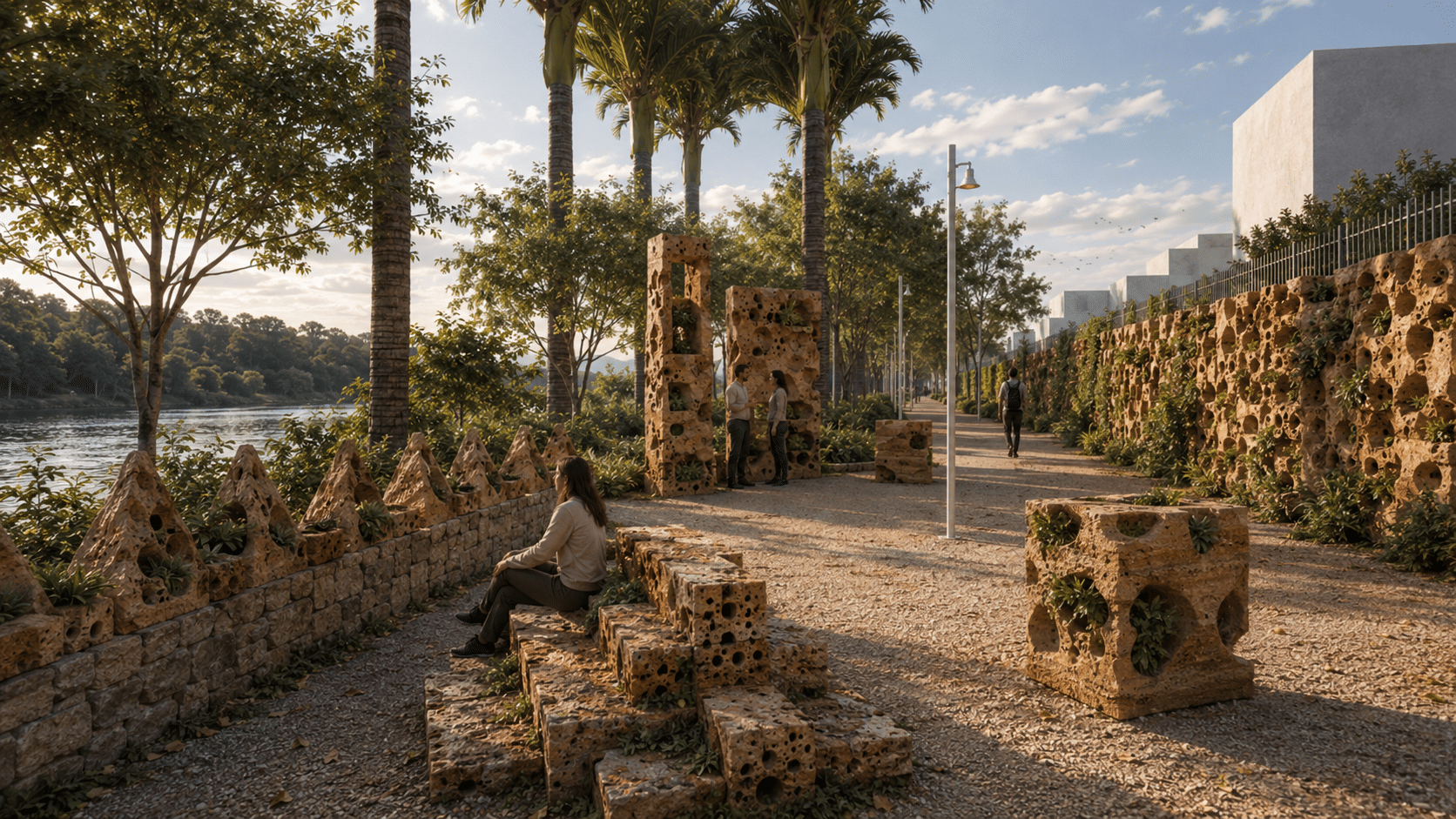
Concept: Corrosion Species: Interface elements Multi-Species Viewing Devices The Multi-Species Viewing Devices are ecological interface elements that frame different layers of the riverside habitat. Through varied openings, heights, and orientations, they guide people to observe birds, plants, water, and ground-level species, turning the ramp edge into a shared space of awareness between humans and non-humans. … Read more
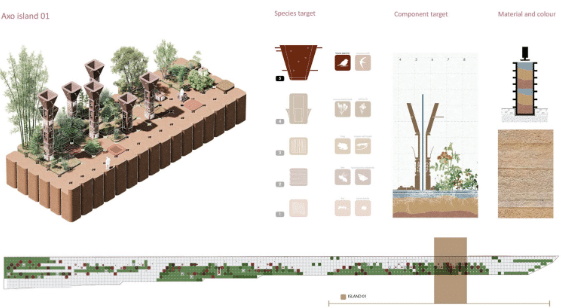
ELEMENT 01 – TOTEM – Species Selection ELEMENT 03 – RAMP – SPECIES SELECTION ELEMENT 04 – WAYFINDING – SPECIES SELECTION ELEMENT 05 – PARAPET – SPECIES SELECTION FINAL RENDERS
“If the architecture is any good, a person who looks and listens will feel its good effects without noticing.” — Carlo Scarpa Introduction The GreenInCities Seminar at IAAC explores the potential of circular construction practices and multispecies design within contemporary urban environments. Framed by the GreenInCities initiative in Barcelona, the seminar challenges students to rethink … Read more
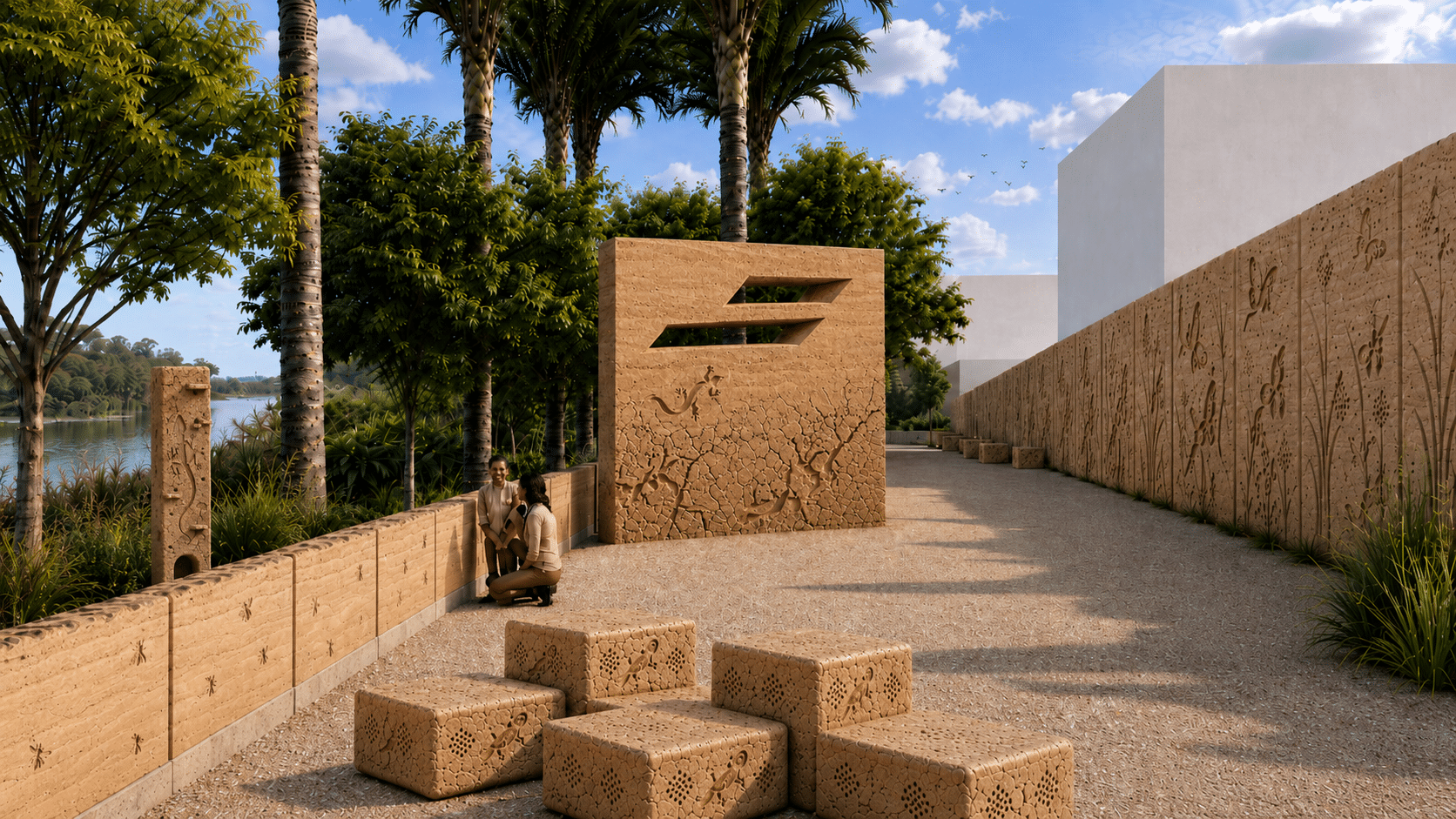
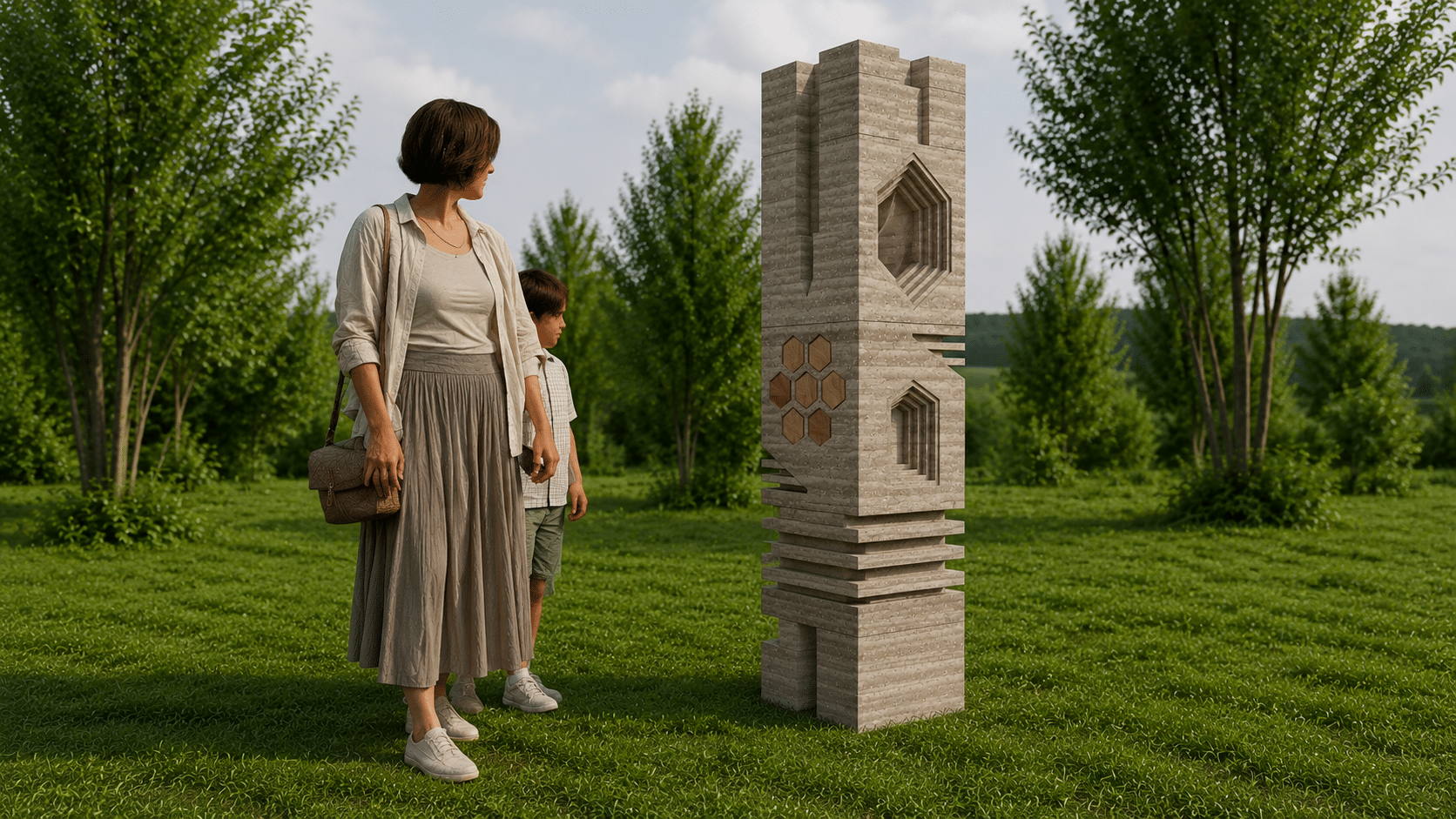
A Prehistoric Imagination for Urban Ecology We imagined the park at the mouth of the Bèsós River as feeling unearthed rather than built. Inspired by prehistory and the atmosphere of ancient landscapes, this project designs a family of rammed earth elements for the Bèsós River Estuary in Barcelona. Through monolithic forms, organic textures, animal reliefs, … Read more
