
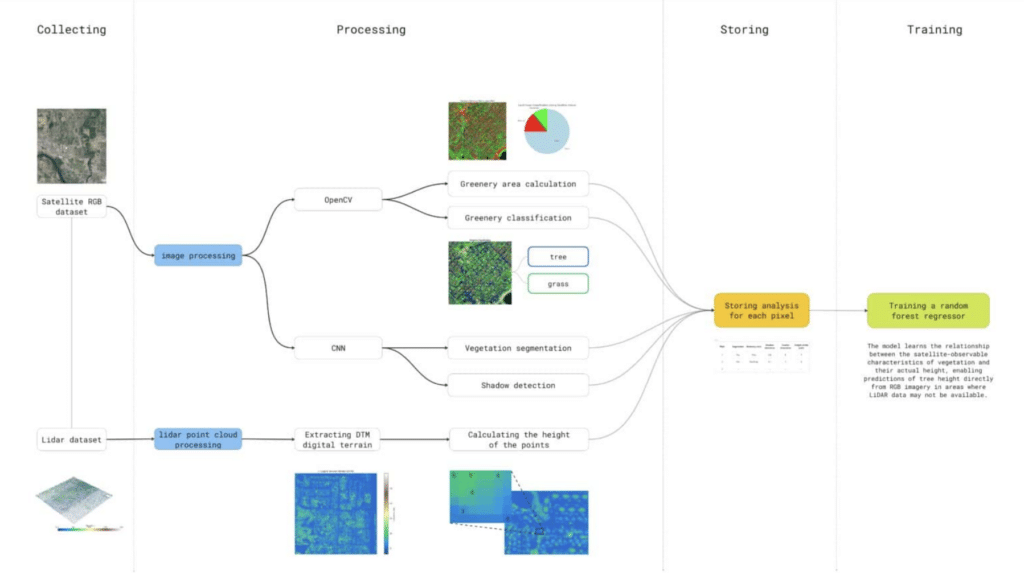
 This research studio trains AEC students to design, prototype and pilot AI-driven products for city-scale problems.
Syllabus
AI Solutions for Urban Innovation
APPLIED AI IN AEC RESEARCH STUDIO
This research studio trains AEC students to design, prototype and pilot AI-driven products for city-scale problems. Combining product-led workflows (user research → MVP → metrics → iterative growth) with rigorous research methods, the course guides teams from problem formation through data pipelines, model design, UX, deployment and ecosystem integration. Projects target urban domains: mobility, housing, energy, climate resilience, infrastructure, and inclusion while prioritizing pragmatic, non-disruptive interventions that improve existing workflows.
The studio emphasizes concrete technical and social competencies: urban data collection and curation, pipeline engineering, model selection and validation, interface design for diverse stakeholders, and strategies for pilots, procurement and scaling.
Key data challenges in modern cities that projects will confront include: fragmented and siloed data sources; poor data quality and inconsistent formats; limited spatial or temporal resolution; sensor heterogeneity and maintenance gaps; scarcity of labeled ground truth; privacy, consent and governance constraints; algorithmic bias and representational inequity; interoperability with legacy systems and procurement barriers; and the need for real-time processing/scalable architectures under resource constraints. Addressing these challenges is central to creating responsible, deployable urban-tech solutions. Evaluation combines participation, documented research deliverables, and a final product judged for technical rigor, design quality, societal impact and feasibility.
Learning Objectives
The studio equips students with essential theoretical foundations and practical capabilities for developing AI-driven methodologies addressing architectural and urban challenges. Specific learning objectives include:
- Mastering AI principles and applications specific to the built environment
- Developing robust data collection, transformation and management strategies
- Designing and implementing appropriate AI methodologies for architectural problems
- Creating intuitive interfaces for AI model interaction and deployment
- Crafting compelling visualizations of complex spatial data relationships
- Developing comprehensive project management approaches for AI-integrated architectural processes
Faculty

Faculty Assistants

Projects from this course

Curbside Intensification
Ertuğrul Akdemir MAAI · Master in AI for Architecture and Business Innovation 25/26 Advisor: Shajay Bhooshan An AI tool that reads how streets behave through the day and tests where the curb could change use, then shows how that change spreads across the city before anything is built. Streets are designed once and rarely questioned. The … Read more
Invest Through Behavior

Invest Through Behaviour reframes how capital decisions are made in social housing impact investment. Today, investment decisions rely on high-level financial and ESG indicators that assume impact rather than demonstrate it, and that obscure the real trade-offs between competing priorities. This project proposes a decision-support approach that treats neighbourhoods across London as a landscape of … Read more
Urban Safety Perception Among Women and Gender- Diverse People
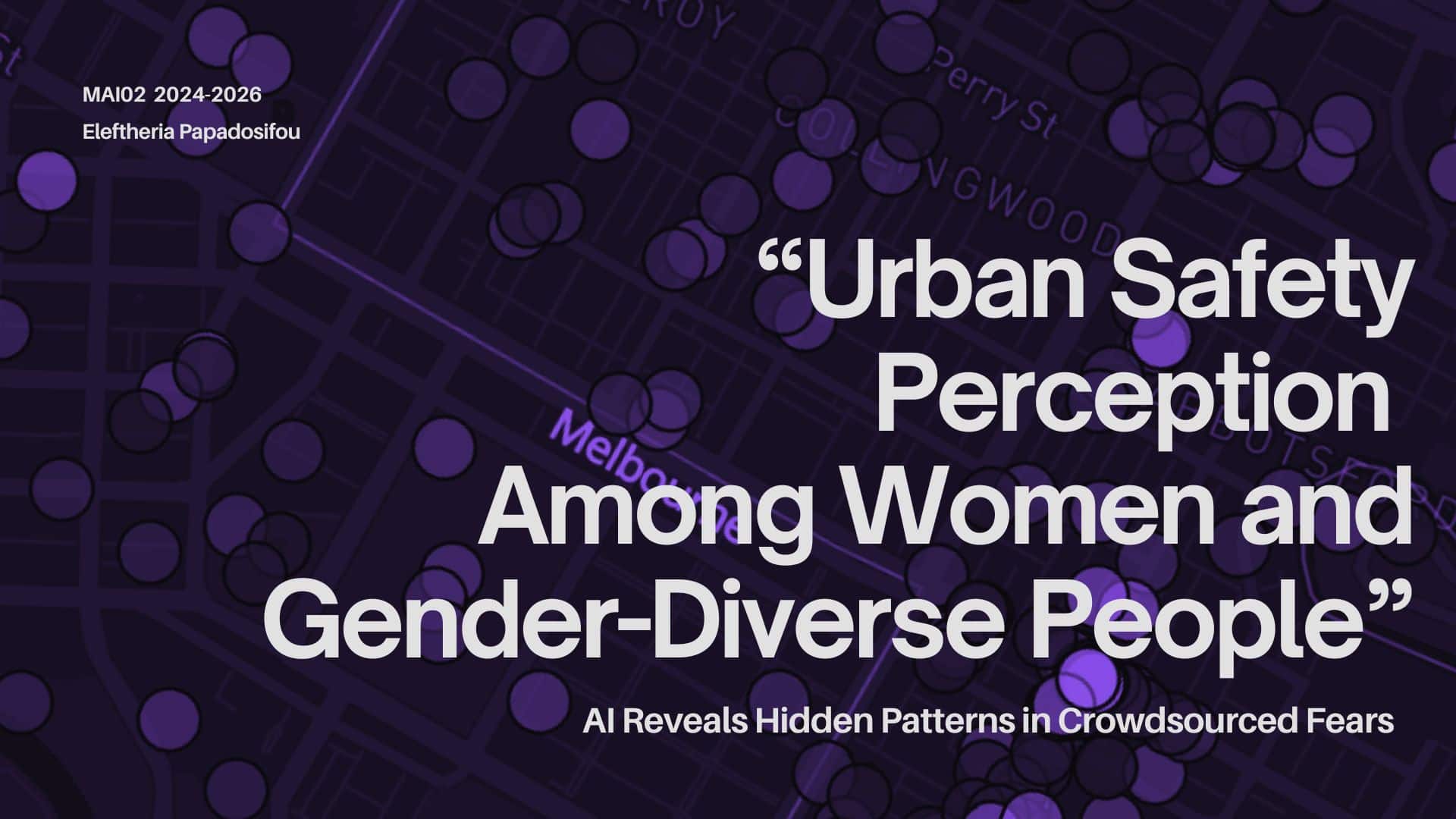
AI Reveals Hidden Patterns in Crowdsourced Fears The Problem According to the International Survey on Sexual Harassment in Public Spaces (L’Oréal Paris & Ipsos, 2023), 92% of young women in Spain have experienced street harassment. The same research states that this number is 80% globally. And yet, as Gardner puts it in Passing By: Gender … Read more
A Systematic Review of Toronto Architectural Heritage Register
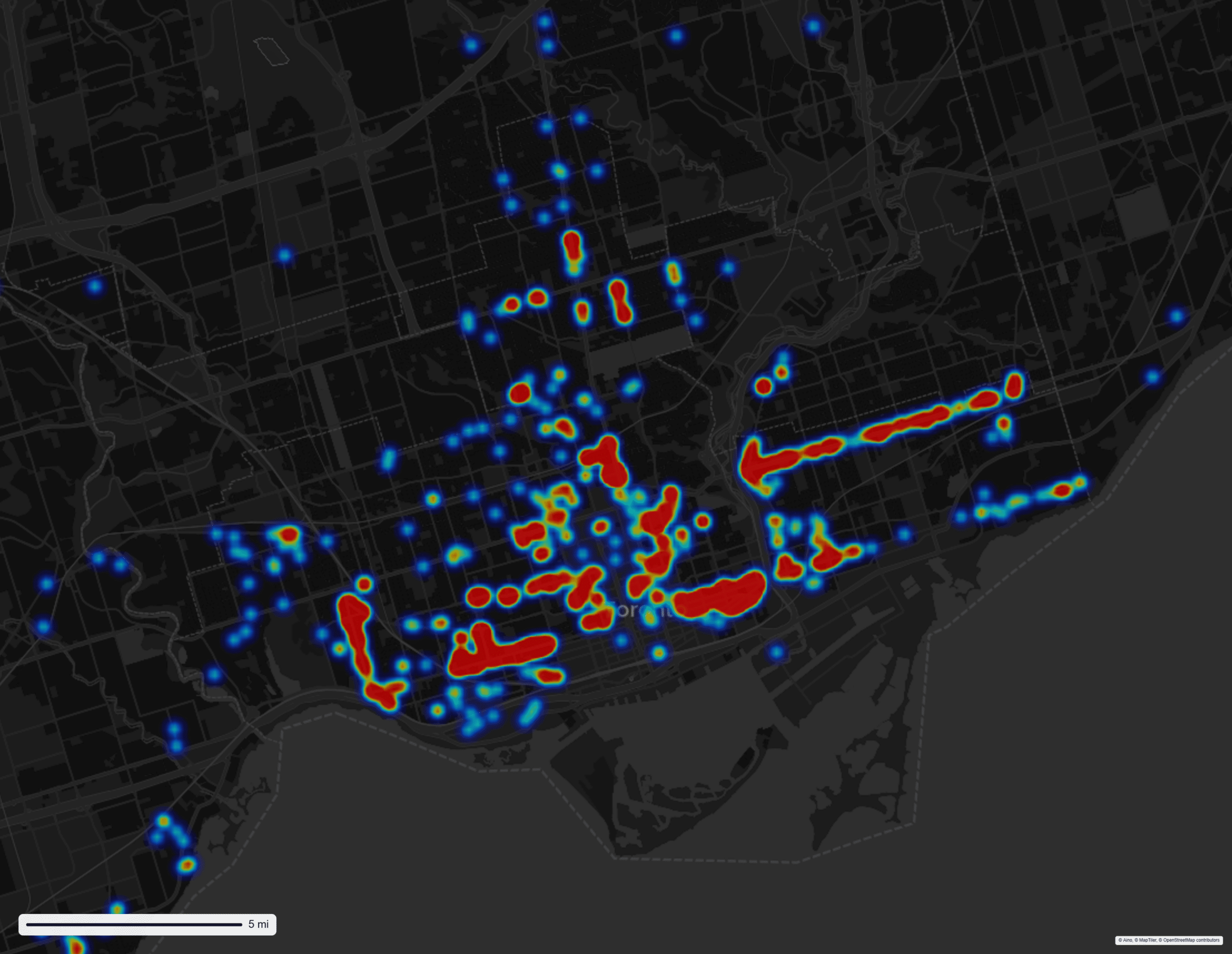
Applying CLIP vector embeddings to defensibly evaluate the architectural value of heritage-listed buildings Project Summary Project Presentation
Motion Pixels

Mapping out Spatial Intelligence Program: Master in AI for Architecture and the Built Environment (MaAI)Supervisor: Wassim Jabi Motion Pixels is a research project that explores how pedestrian movement can be transformed into spatial intelligence. By combining computer vision, trajectory analysis, behavioral mapping, and machine learning, the project converts video recordings of public spaces into spatial … Read more
Holy Woah

The global agricultural system is facing a severe crisis. Currently, agriculture is responsible for consuming a staggering 79% of global freshwater. Despite this massive consumption, the process is highly inefficient, with 60% of irrigation water being lost. Furthermore, modern farming relies heavily on chemicals, seeing a 70% increase in pesticides, while an estimated 40% of … Read more
