In this course, students will explore a suite of tools that support the creation of interactive 3D web applications. You will learn how to leverage your Grasshopper skills and convert your definitions into functions that can be accessed through the web.


Syllabus

Cloud based Data Management

Source: Biel Pitmans_MaCAD 24-25 Digital Tools for Cloud-based Data Management seminar.

It is 2025, and computing is ubiquitous—embedded in our pockets, our cities, and our homes. You are currently undergoing a course that is teaching you how to use computation to tackle critical issues in the built environment. This next step focuses on extending that computational logic to the people for whom you are designing.

A key challenge in contemporary practice is making computational design accessible: involving others in the design process, gathering diverse feedback, and sharing 3D information with audiences who may not have specialised software or technical expertise. Equally important is finding ways to communicate your design logic without exposing or giving away your underlying methods.

In this course, we will explore a suite of tools that support the creation of interactive 3D web applications. You will learn how to leverage your Grasshopper skills and convert your definitions into functions that can be accessed through the web.

At the core of this workflow is Rhino.Compute, an open-source project by McNeel that enables Rhino and Grasshopper to run on the cloud and be reached from any device with an internet connection.

Learning Objectives

  • Develop proficiency with modern web development frameworks and workflows for interactive applications
  • Understand and apply Rhino.Compute as a cloud-based engine for geometry processing
  • Learn how to transform Grasshopper definitions into fully functional web-based configurators accessible to end users

Faculty


Faculty Assistants


Projects from this course

FacadeIQ: Facade & Feasibility Estimator

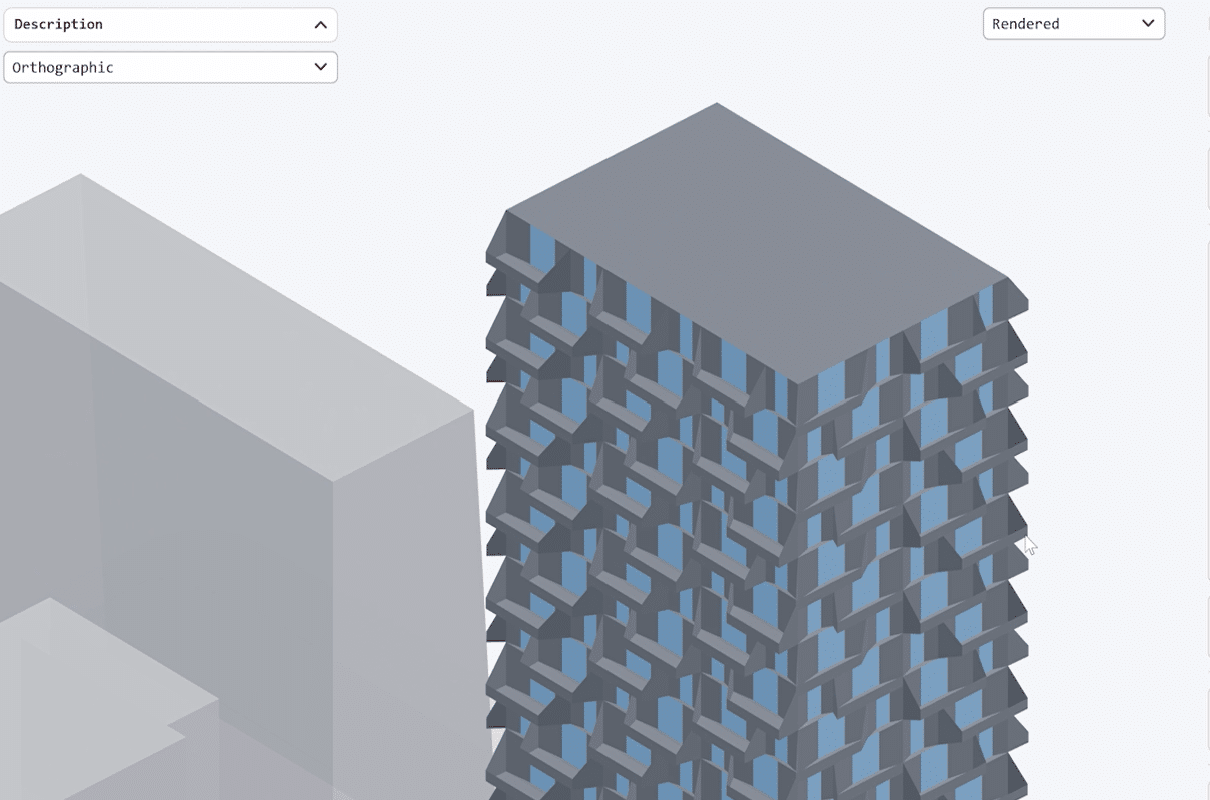
Description This interactive tool links facade design decisions to live cost and feasibility feedback. As users test different building dimensions, floor counts, and facade typologies, the model updates in real time to show how each choice affects spatial performance, facade cost, and overall project value. How it works Iterative Design: Toggle between unique facade typologies and … Read more

Title: A First-Person Parametric Exhibition: Bringing Architectural Design into the Browser

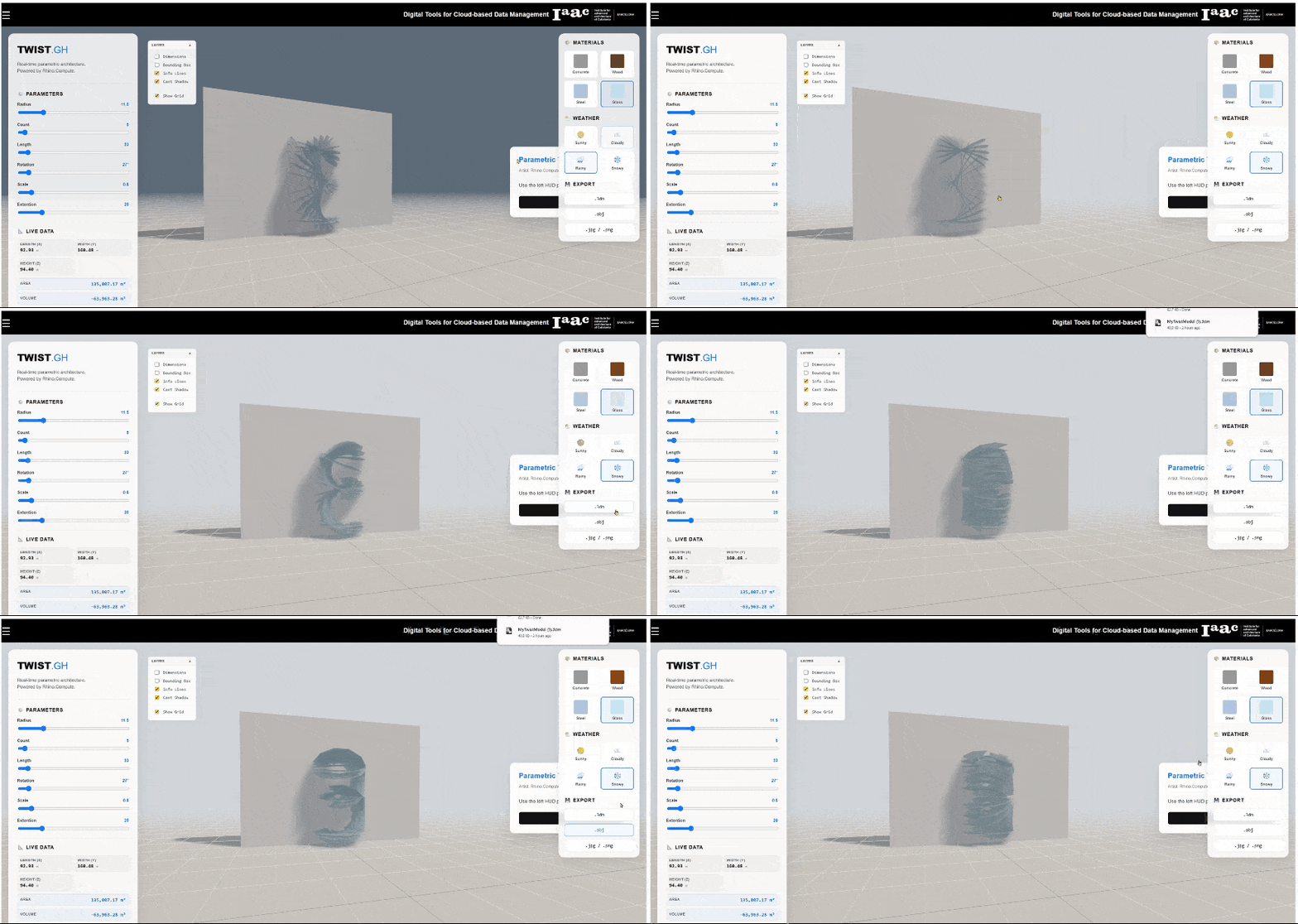
Shuai Zhang Have you ever felt that parametric architectural design is trapped behind a high barrier to entry? Traditionally, designers and clients must install heavy, complex software just to view or tweak a 3D model. For my final project in the Cloud-based Data Management module, I wanted to break down this barrier. The result is … Read more

sen.city – Sense urban heat and plant cooler futures for everyone

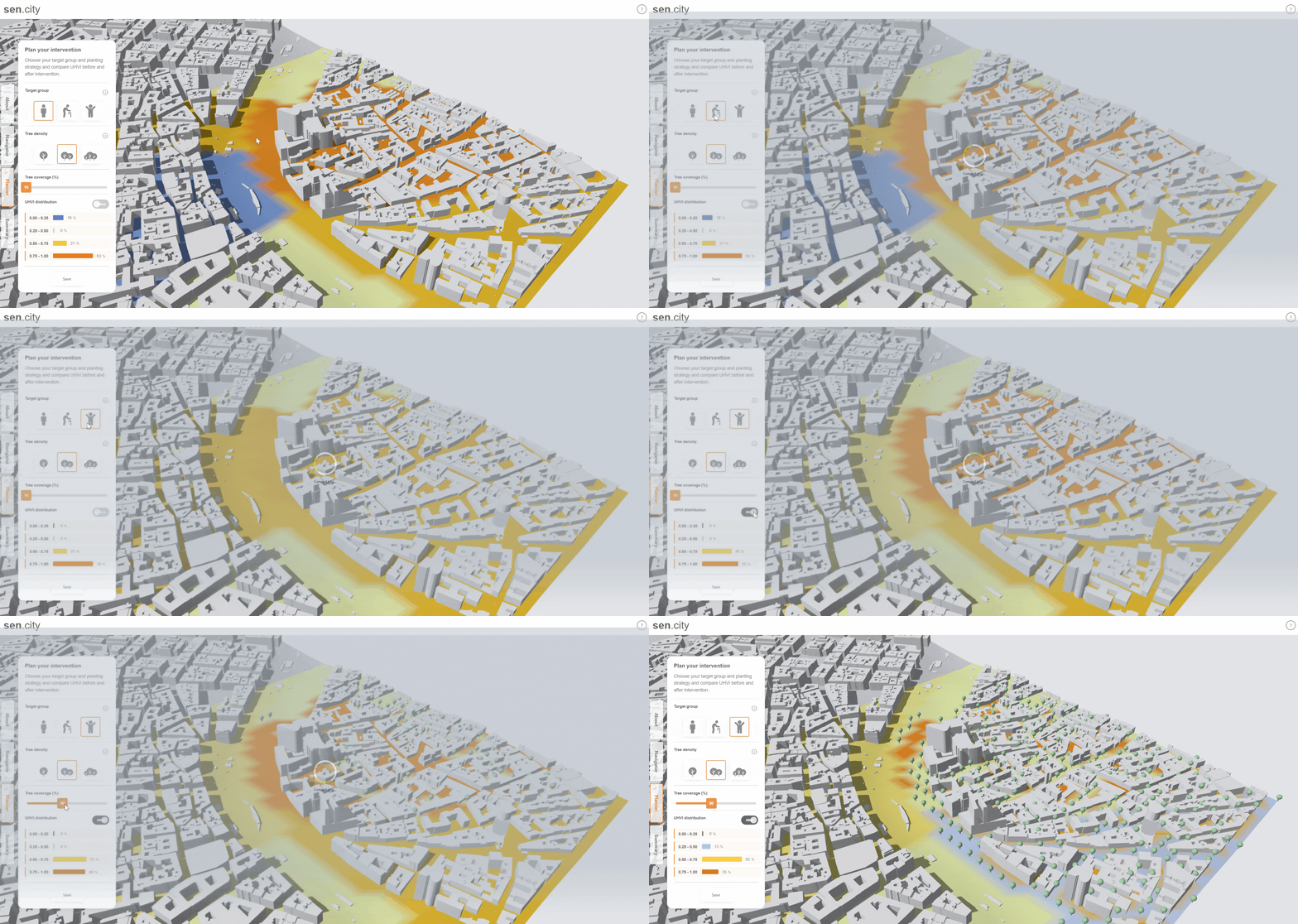
Cities are warming rapidly, and dense urban centers feel it the most — especially areas with little shade or vegetation. Heat doesn’t affect everyone equally: groups like the elderly, youth, and people with health conditions are far more vulnerable. Problem Statement Most existing tools focus on UTCI, the Universal Thermal Climate Index. It measures how … Read more

The Data Pipeline Behind NeuroSpace: From Sliders to Synapses

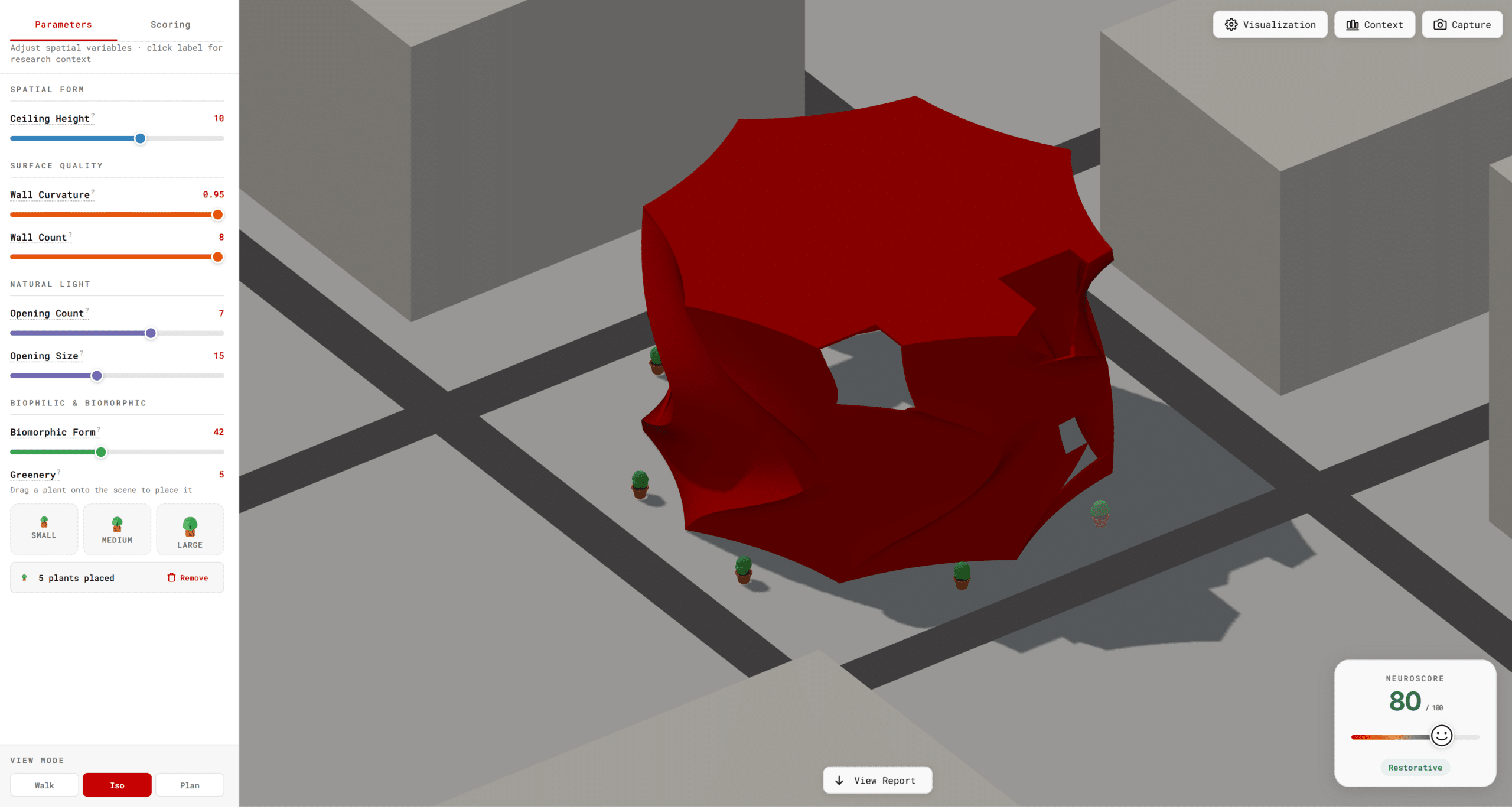
Abstract NeuroSpace is a browser-based parametric design tool that reframes Building Information Modeling as Behavior Information Modeling — encoding predicted neurophysiological outcomes into architectural geometry. This post traces the full data pipeline: from seven UI sliders through a dual-path architecture (server-side Rhino.Compute for 3D geometry, client-side JavaScript for real-time NeuroScore calculation), through reactive state management … Read more

A Parametric Detour: Designing Modular Cat Towers

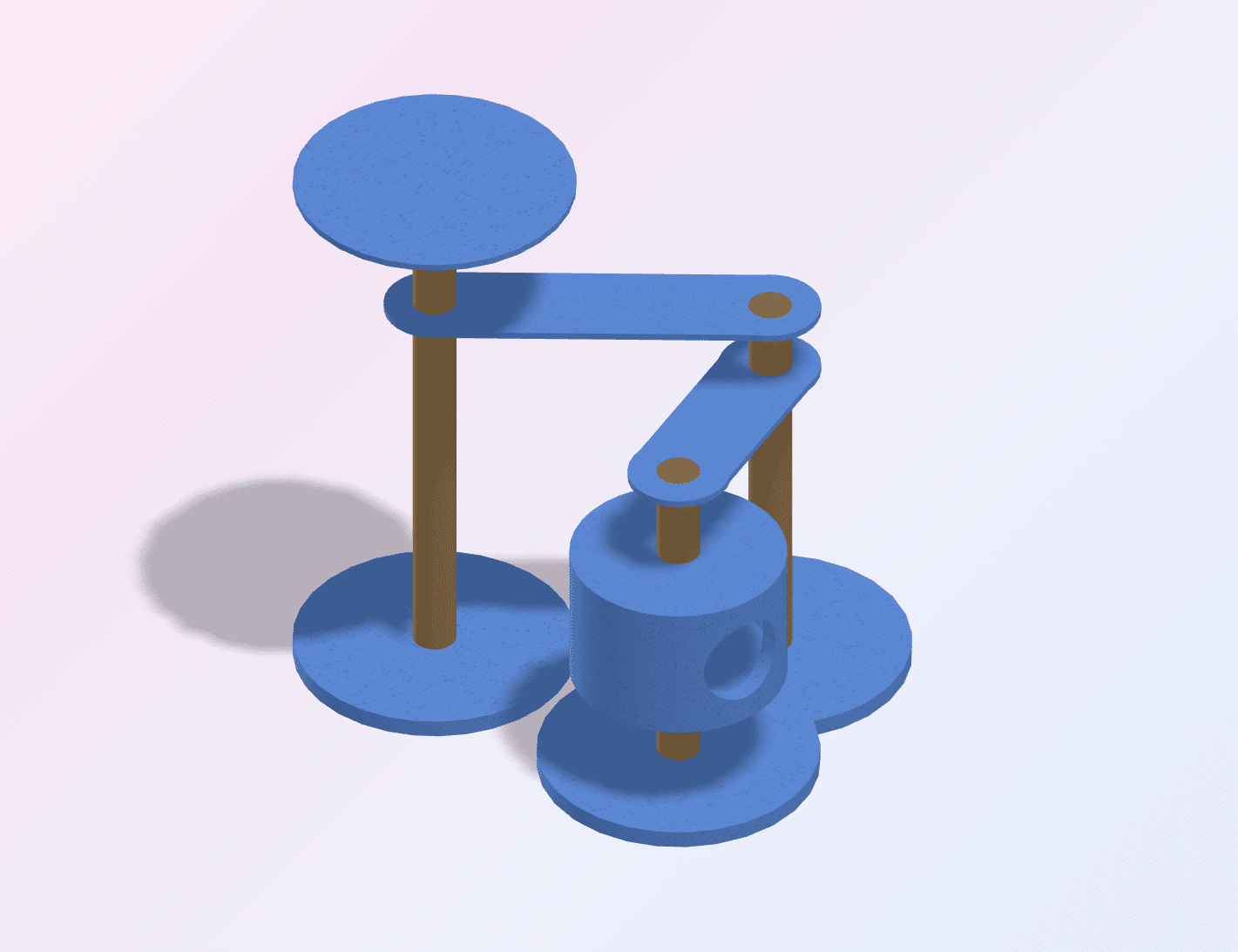
Concept After long periods working within architectural systems—parametric models, BIM workflows, data coordination—there is value in stepping sideways. Not away from design, but into a different scale and context. This project explores exactly that: applying computational design logic to something deliberately lighter—a customizable modular cat tower. From Grasshopper to Web Interface The application is a … Read more

WeaveLamp Configurator: From Craft Logic to a Web-Based Parametric Tool

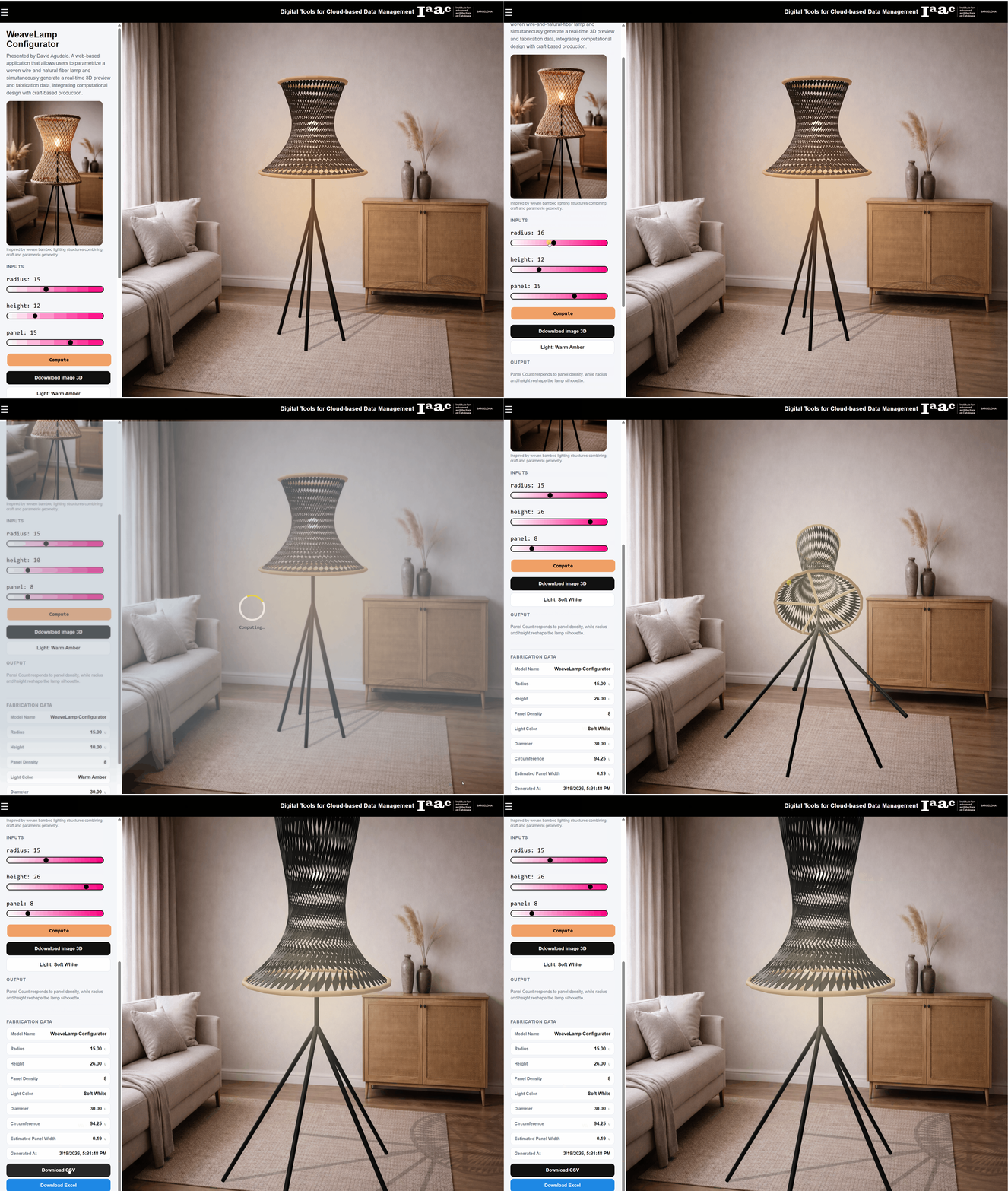
WeaveLamp Configurator WeaveLamp Configurator is a web-based application that brings a Grasshopper workflow into an accessible browser-based experience. The project explores how a craft-inspired lamp system can be translated into a clear digital tool for customization, spatial visualization, and fabrication-oriented output. Concept Origin The project started from a manual exploration of ring proportions, textile density, … Read more

Hyper Builder: Vertical Community Generator

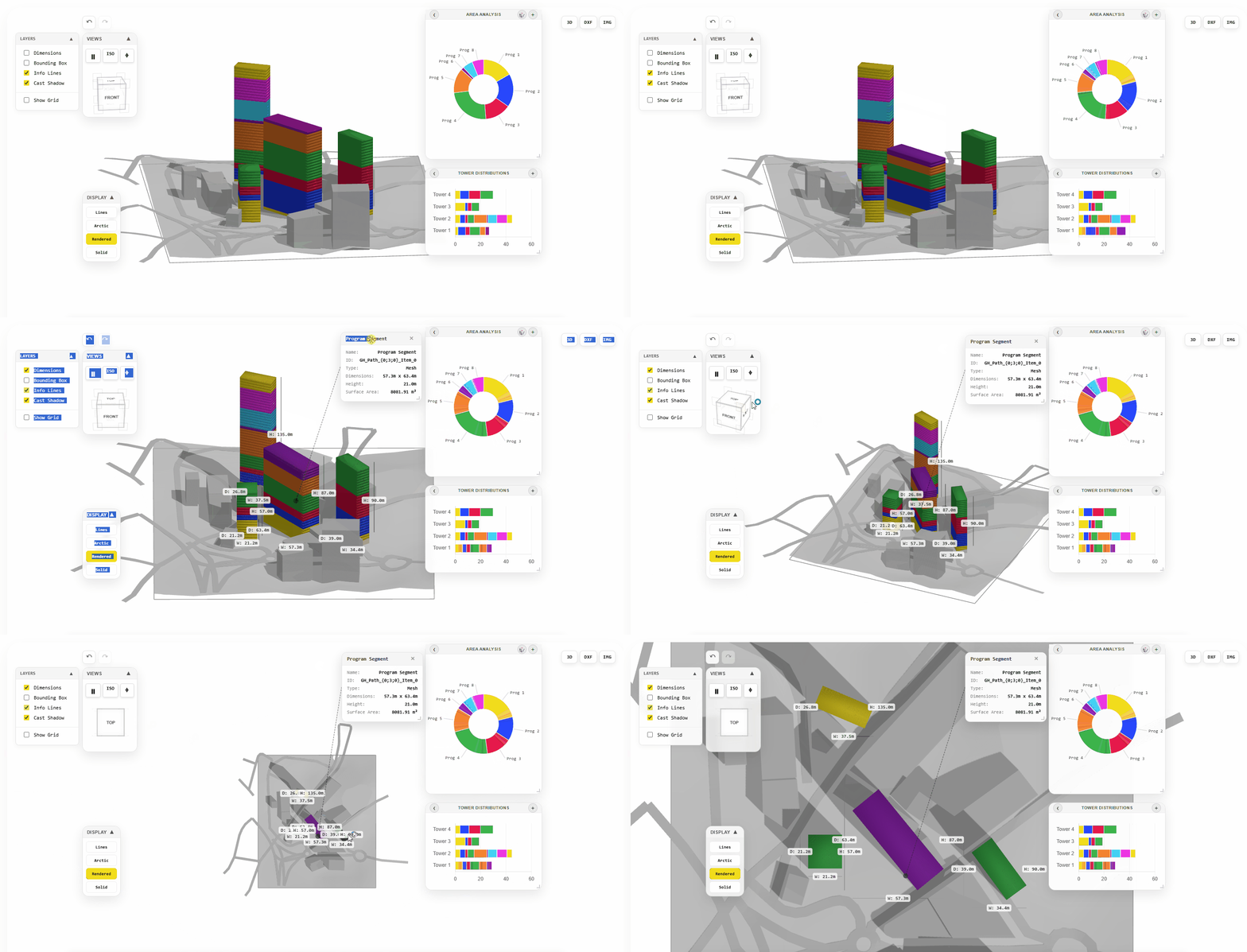
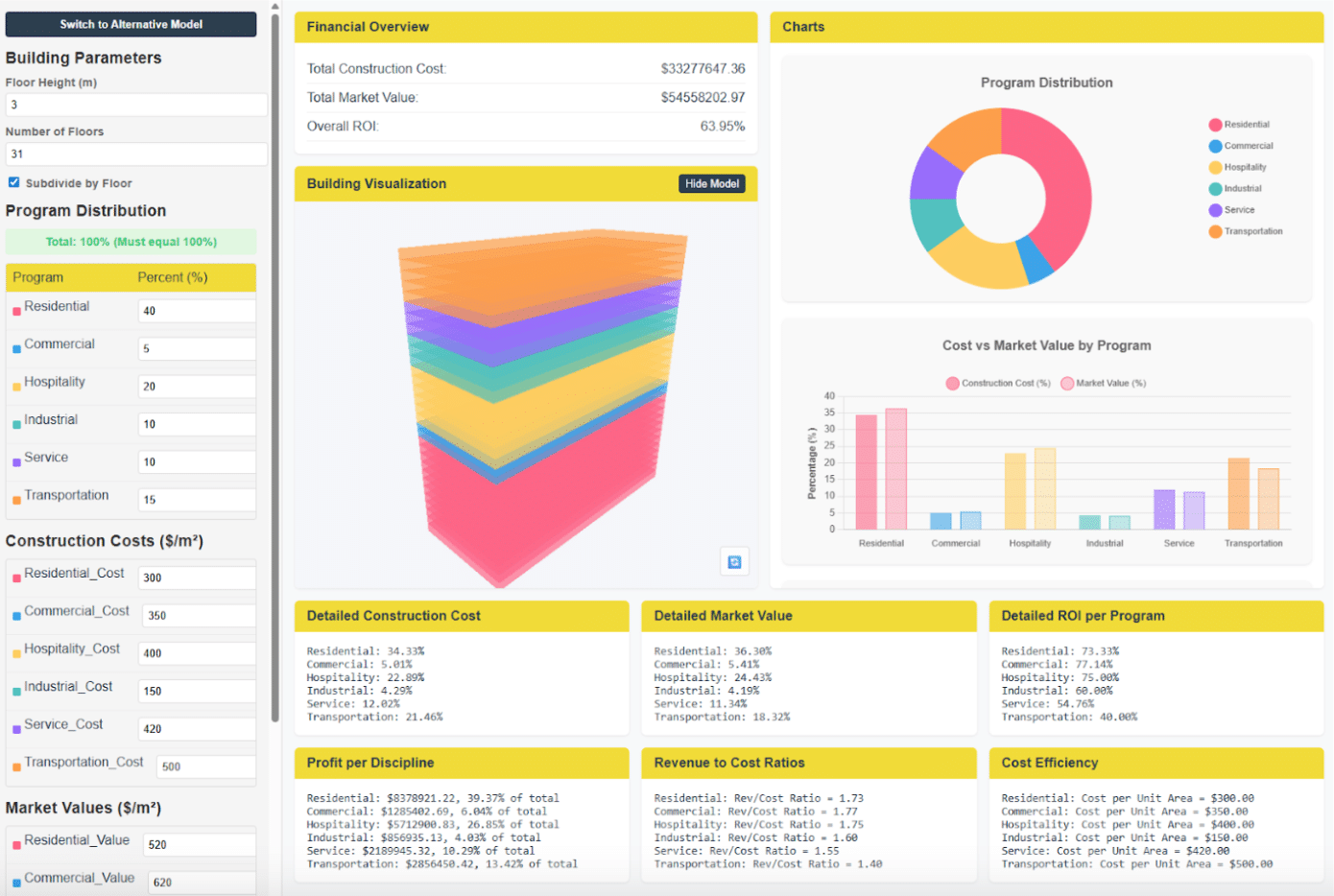
Hyperbuilder is a web-based parametric design app that transforms complex architectural modeling into a seamless, rapid-iteration process. Powered by a Grasshopper backend, it allows users to effortlessly generate, evaluate, and configure complex building massings and program distributions through a highly intuitive, simple interface. The Vision: Vertical Communities, Quantified The architectural industry is obsessed with “final” … Read more

Living Cubos

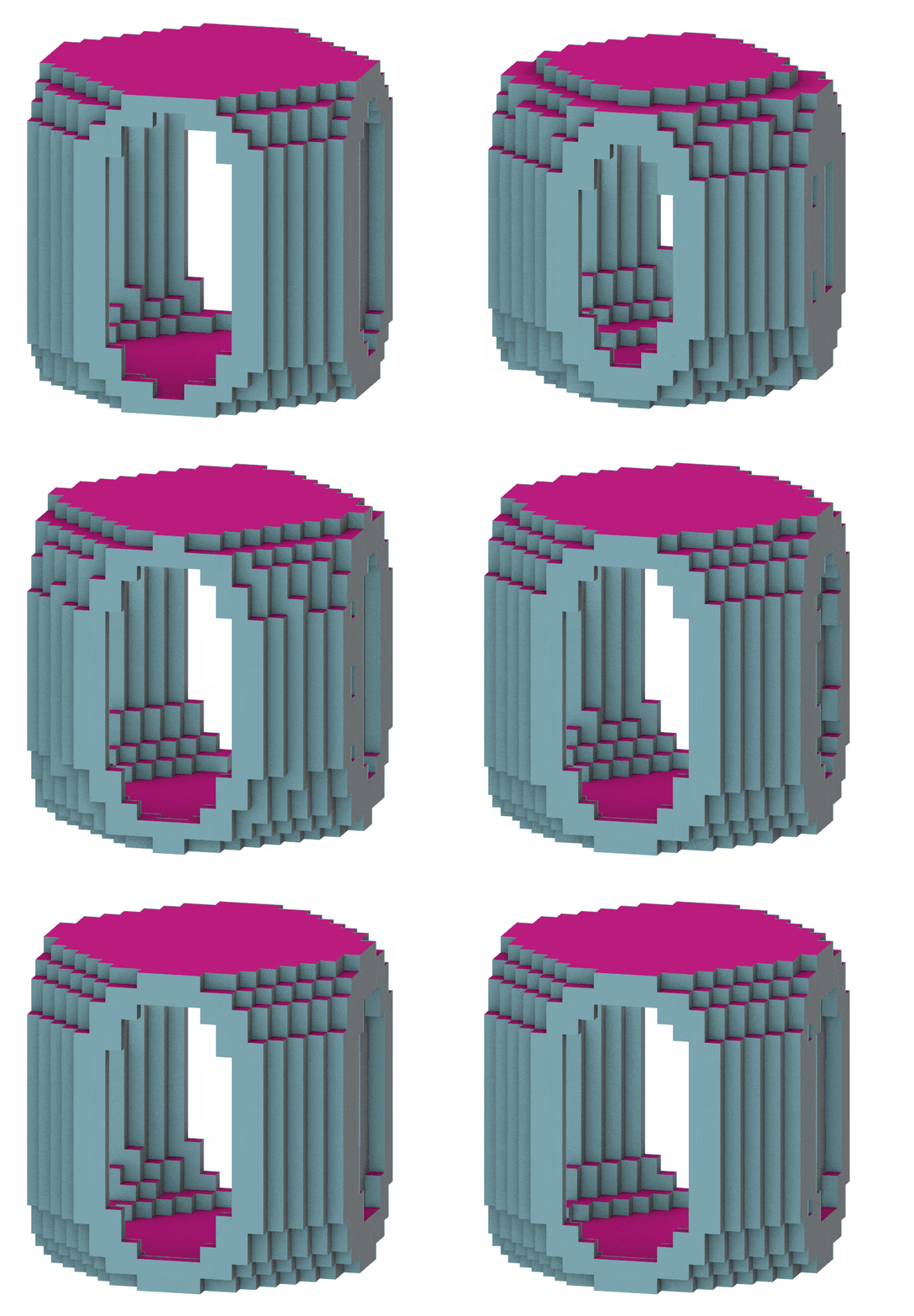
Living Cubos is a web-based voxelized geometry analysis tool developed in Grasshopper using the VoxelTool plugin. The goal of this project is to explore how voxel geometry can connect design decisions with material performance and environmental impact. The system allows users to interact with a parametric model directly through a browser interface. By publishing the … Read more

Street Cast

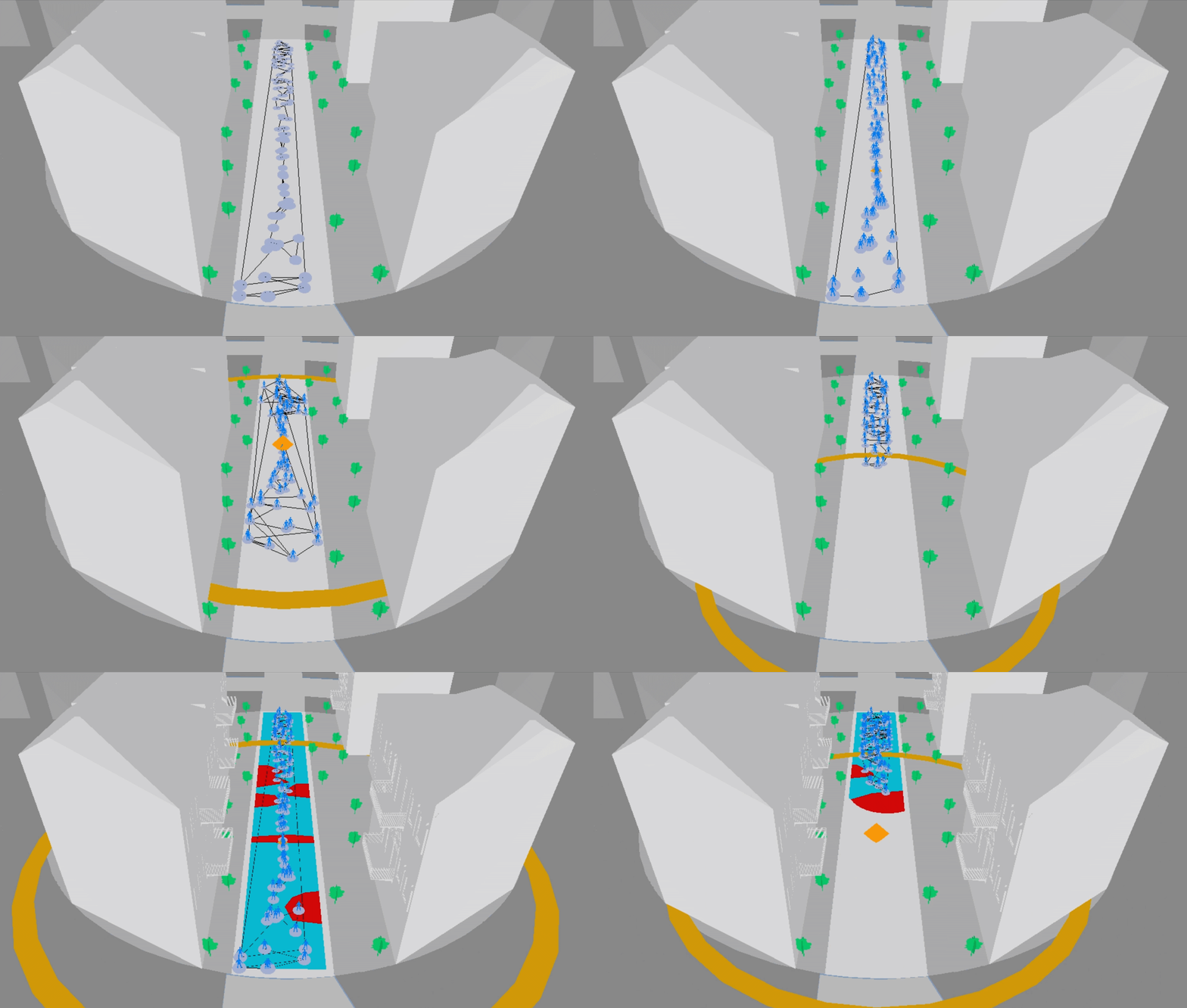
A parametric pedestrian simulation tool designed for event organizers, pop-up market curators, and temporary activation planners operating in urban pedestrian corridors. The tool allows users to place a programmatic attractor within a defined corridor and simulate how it redistributes pedestrian flow in real time. By adjusting parameters, users can predict where foot traffic will concentrate, … Read more

ThrowForm: Pottery Configurator

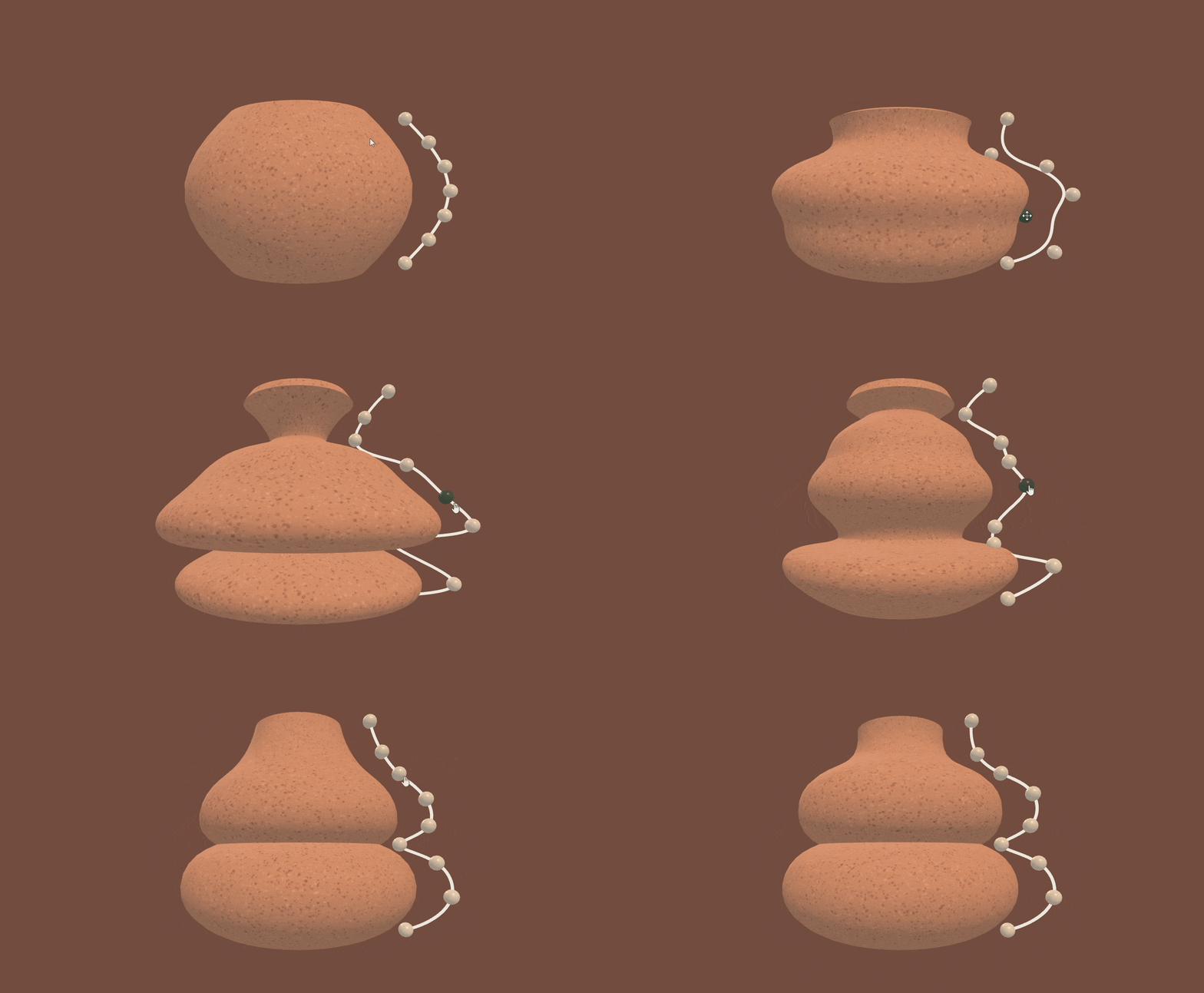
A simple app that turns a draggable profile curve into a fully customizable pottery form and exports a 3D-printable shaping tool to bridge the gap between computational design and hands-on wheel throwing. Pottery is one of humanity’s oldest crafts, shaped by hand and refined through repetition. ThrowForm is a web-based tool that lets you sculpt … Read more