
WeaveLamp Configurator
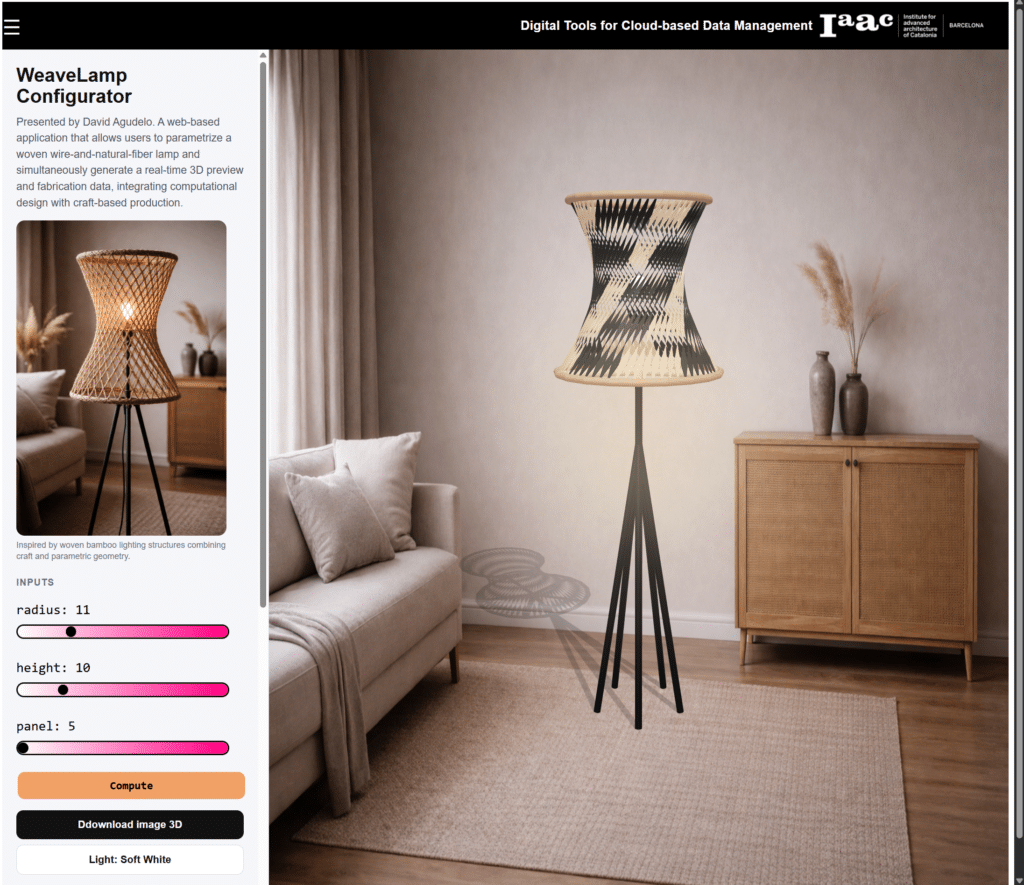
WeaveLamp Configurator is a web-based application that brings a Grasshopper workflow into an accessible browser-based experience. The project explores how a craft-inspired lamp system can be translated into a clear digital tool for customization, spatial visualization, and fabrication-oriented output.
Concept Origin
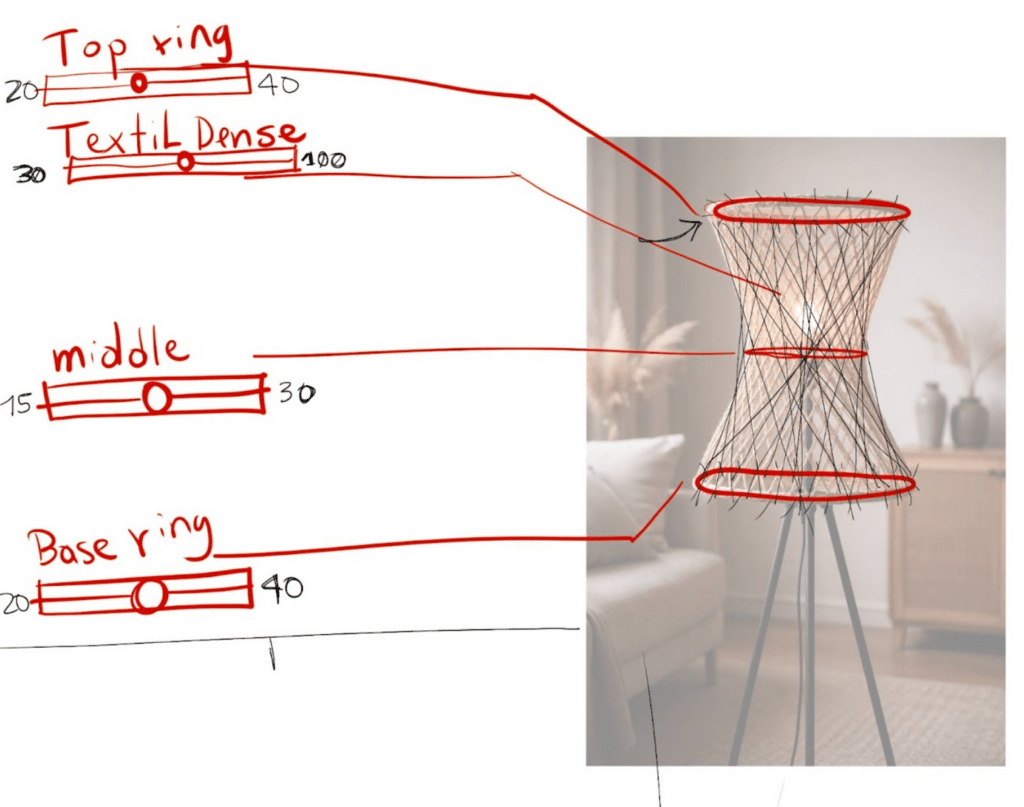
The project started from a manual exploration of ring proportions, textile density, and woven structure. This early study established the geometric logic that later informed the digital application.
From this analog sketch, the lamp evolved into a parametric system where spatial relationships could be translated into adjustable controls.
Translating Grasshopper to a Web-Based Interface
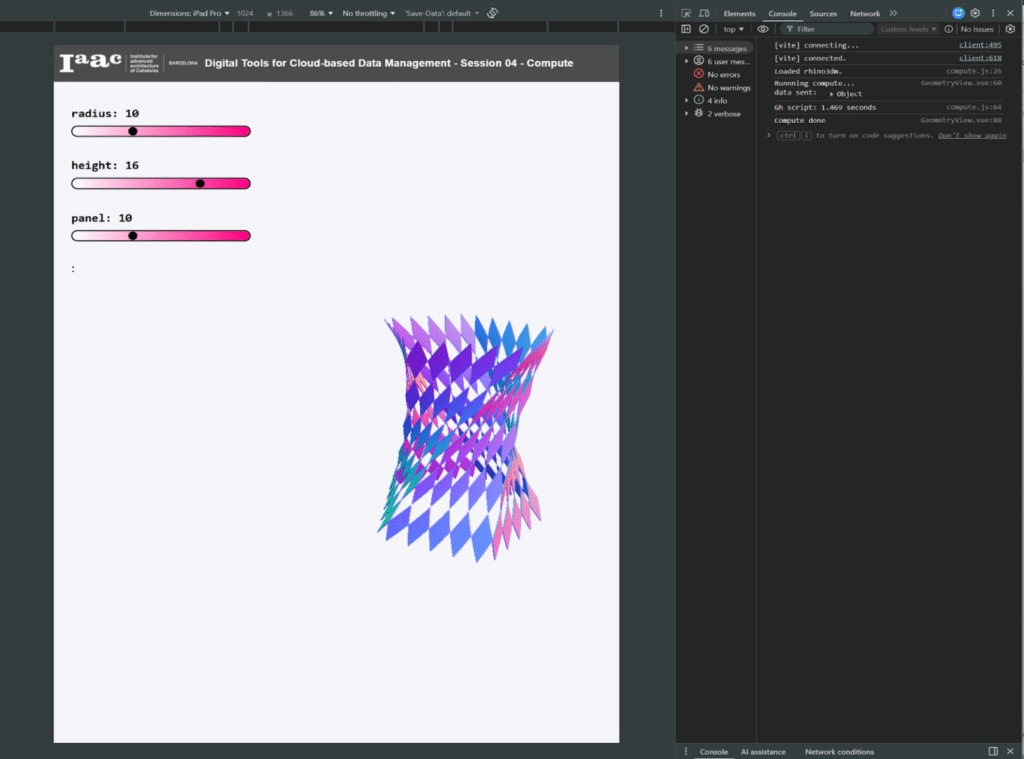
Publishing this workflow on the web expands access to parametric design by translating the functionality of a Grasshopper definition into a browser-based experience.
The application makes the workflow easier to access, easier to understand, and easier to share through a clear interface connected to Rhino.Compute.
Application Workflow
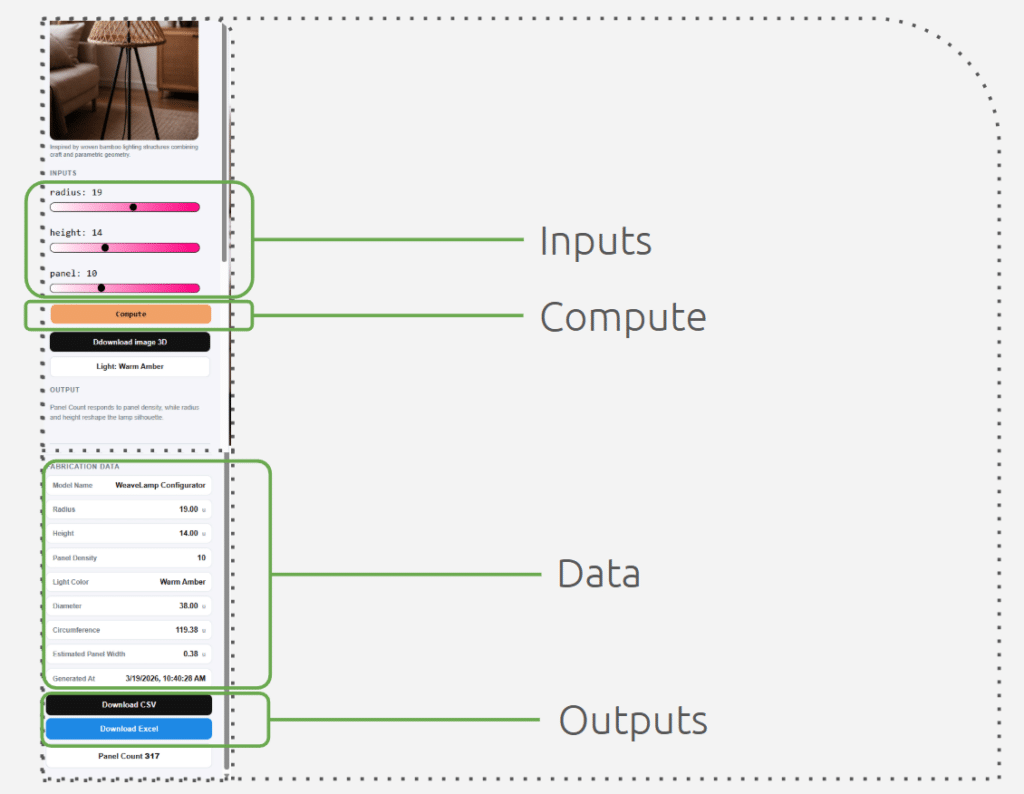
The interface is structured around four parts: Inputs, Compute, Data, and Outputs.
Users adjust radius, height, and panel density, run the Grasshopper definition through Rhino.Compute, and receive updated geometry together with fabrication-related information.
Inputs, Compute, Data, Outputs
The interface is structured around a simple user flow: parameters are adjusted, the definition is computed through Rhino.Compute, and the updated geometry and data are returned to the browser.
Inputs
Radius, height, and panel density define the main behavior of the lamp.
Compute
The request is sent to Rhino.Compute where the Grasshopper definition is solved.
Data
Geometric values are returned as usable fabrication-oriented information.
Outputs
The browser displays updated geometry together with exportable outputs.
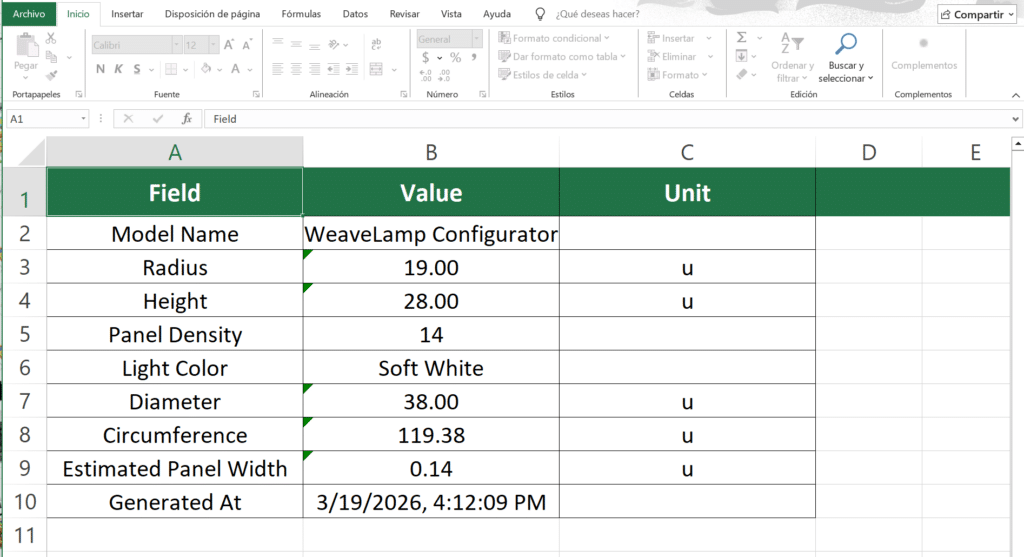
Fabrication Data and Export Outputs
Alongside the visual model, the application provides fabrication data such as radius, height, diameter, circumference, estimated panel width, and panel count.
These values can be exported as CSV or Excel files, connecting parametric customization to fabrication-oriented decision making.
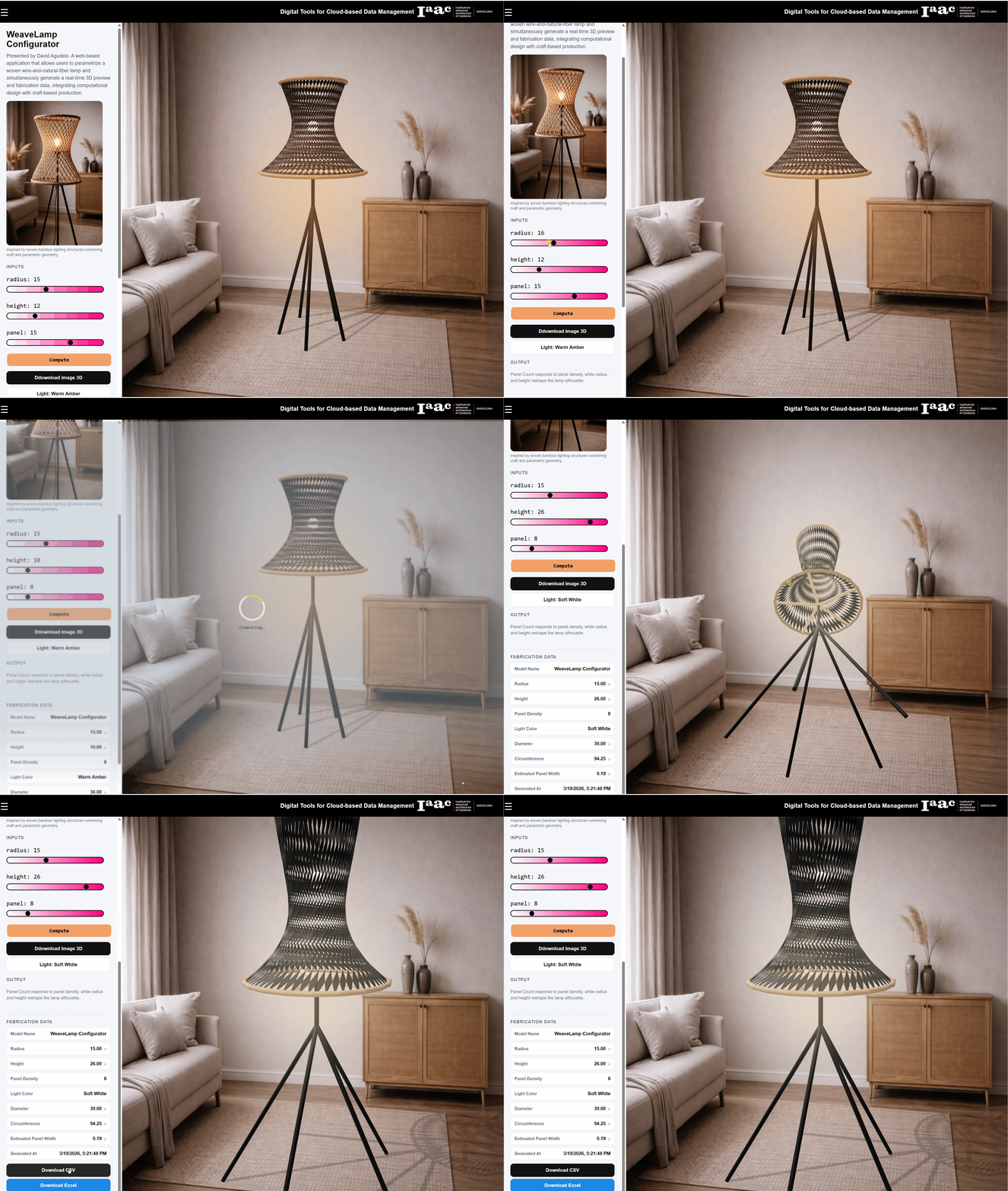
Application Demo and User Experience
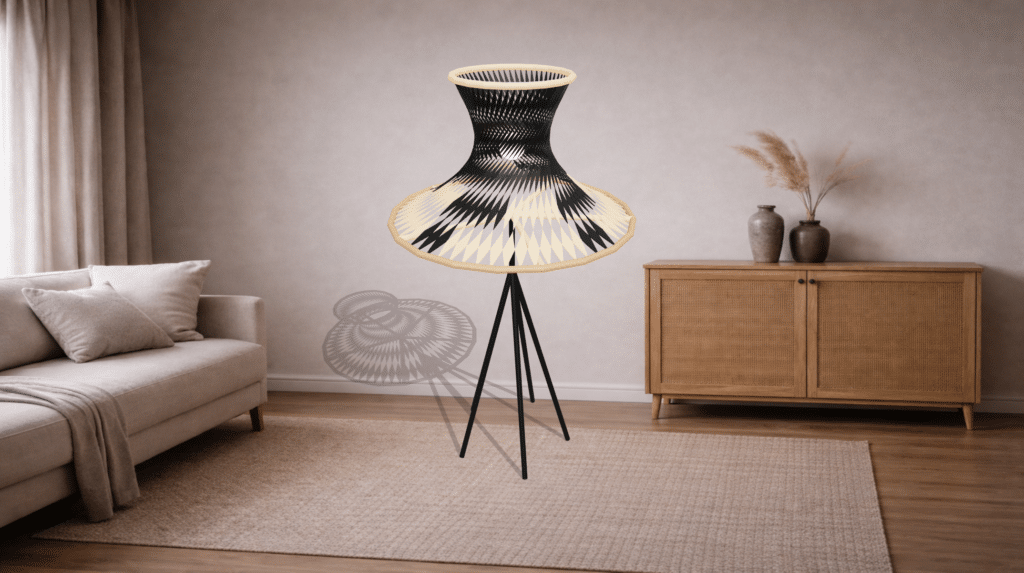
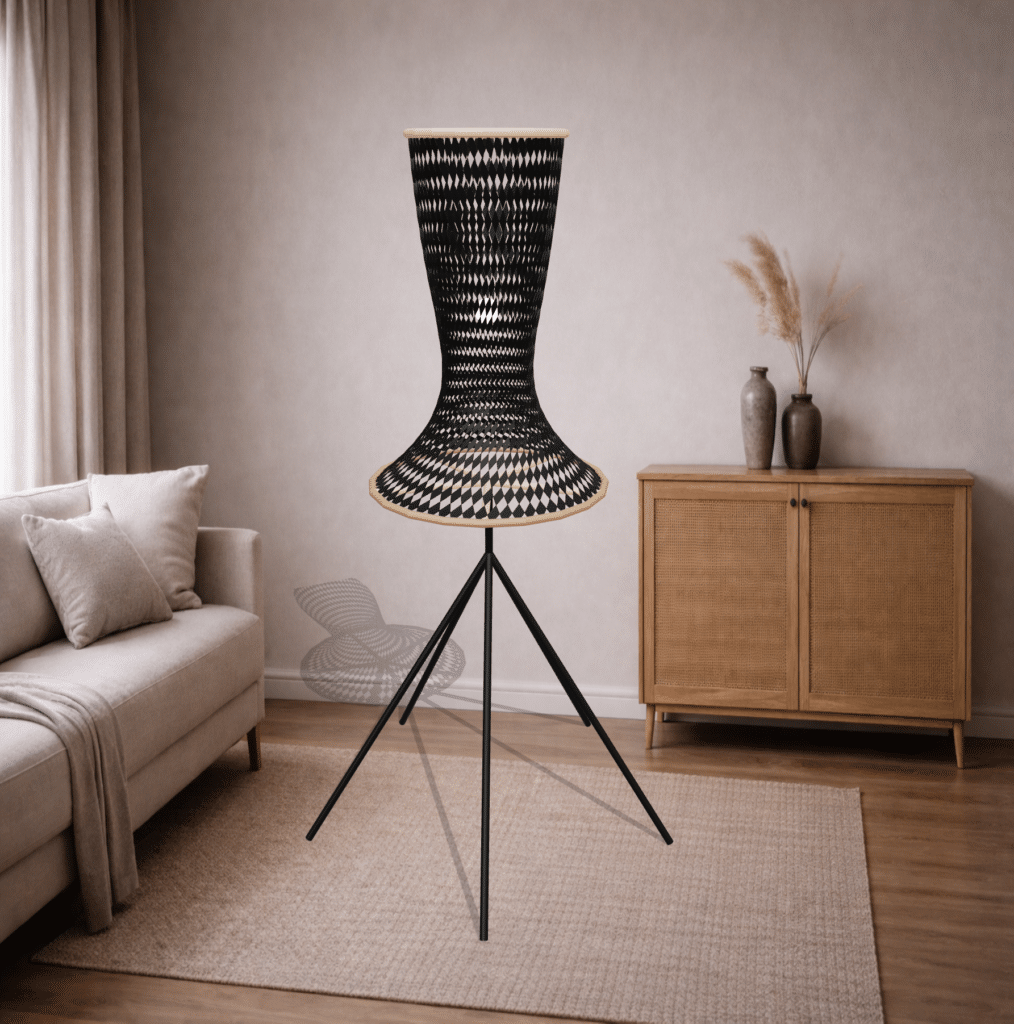
Through the browser, users can adjust parameters, compute geometry, review outputs, and evaluate the lamp in a styled 3D environment.
The result is an accessible workflow that translates an early craft-based concept into a communicative digital tool.
Conclusion
WeaveLamp Configurator proposes a bridge between material intuition, parametric logic, and web accessibility. By translating a Grasshopper definition into a browser-based interface, the project expands the reach of computational design through a workflow that supports customization, visualization, and fabrication-oriented output.
