This course is an introduction to Rhino.Inside Revit, but not as a typical software tutorial course, it intends to show the key elements to use Rhino.Inside Revit and what are the strengths of this software in the AEC environment.


Syllabus

Integrative Modeling
Source: MaCAD·24 Mohamad SERHAL, Hetal BAHRAWANI, Jahir ISLAM

This course is an introduction to Rhino.Inside Revit, but not as a typical software tutorial course, it intends to show the key elements to use Rhino.Inside Revit and what are the strengths of this software in the AEC environment. Revit works as a geometrical database, where geometry stores more information than just the geometry itself. It means that when working with Revit, it is important to keep control of that information, to represent it properly, and use it for your own purposes.

With these sessions, you will be able to learn how to face modelling and parameterization problems with new tools and techniques. How to organise the information and manage it in an intelligent way, using just the necessary information, deconstruct geometry and use it to rebuild that geometry in Revit as native elements.

The collaboration environment would use Autodesk Construction Cloud (ACC) for improving the workflow and make it easier for students.

Despite these practical tools, the course will have a theoretical approximation, trying to set the knowledge bases needed to use the software in a practical way. It will be focused on Revit and Rhino, but the concepts explained applies to all the BIM industry, so can be applied to Archicad, Tekla, IFC, and other BIM environments.

Learning Objectives

The purpose of this course is to develop, using Rhinoceros, Grasshopper and Revit, your skills and knowledge of parametric modelling and interoperability between both software, applying it to the AEC environment. 

During the seminar, students will:

  • Know and master Rhino.Inside.Revit
  • Understand interoperability concepts with Revit
  • Develop management criteria about parametric data and it application to existing elements in Revit
  • Master the ability to integrate data and geometry from several environments, like Revit and Rhinoceros

Faculty


Faculty Assistants


Projects from this course

From KPI Calculation to Native Revit Documentation

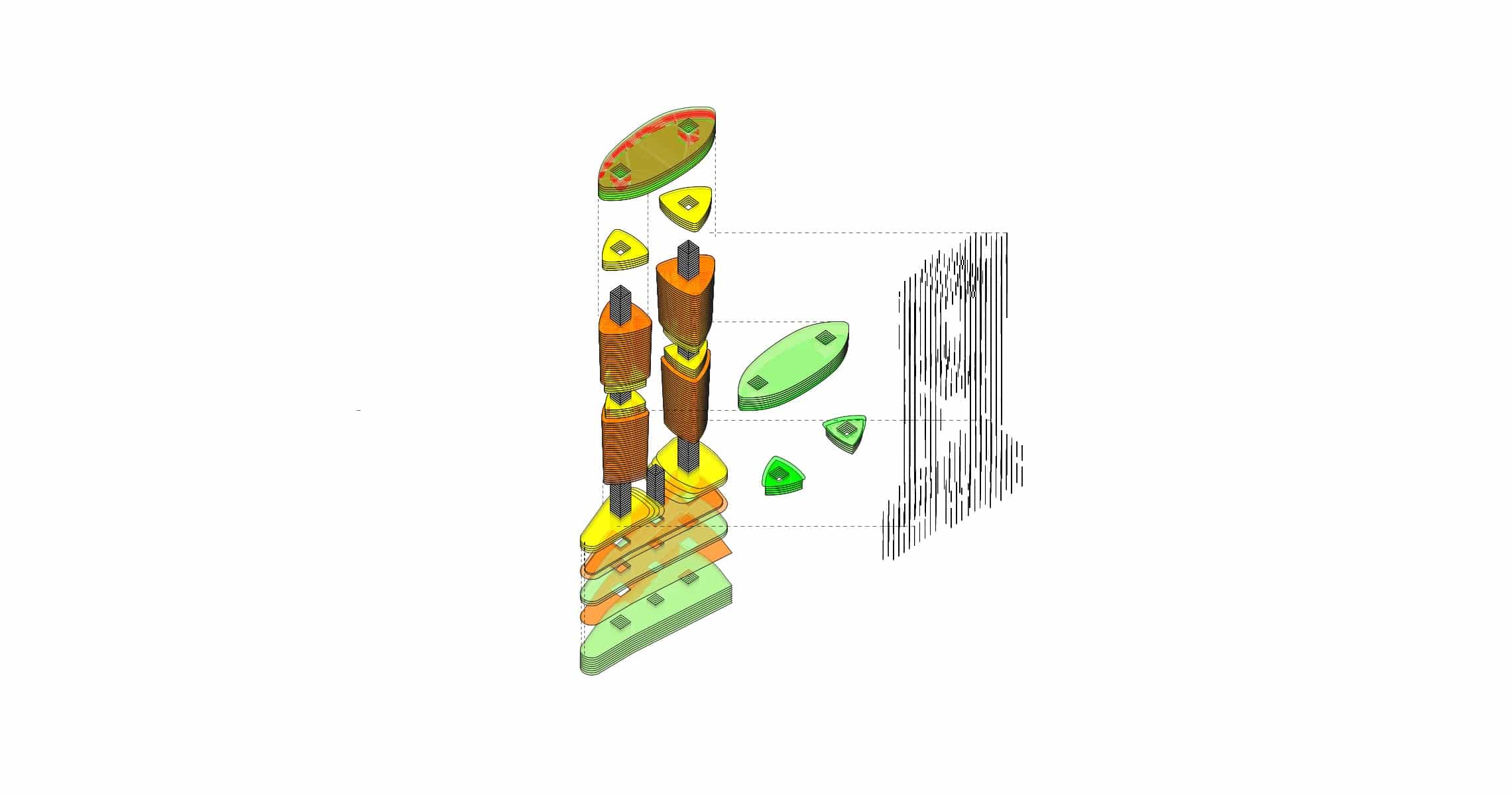
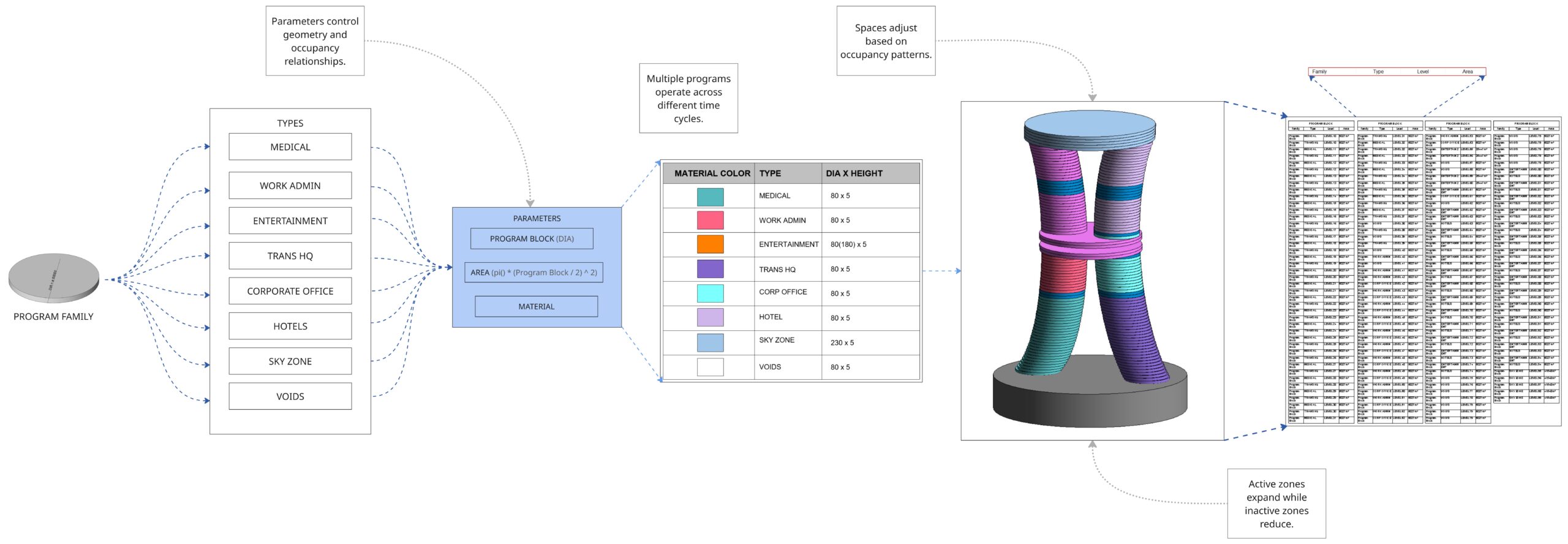
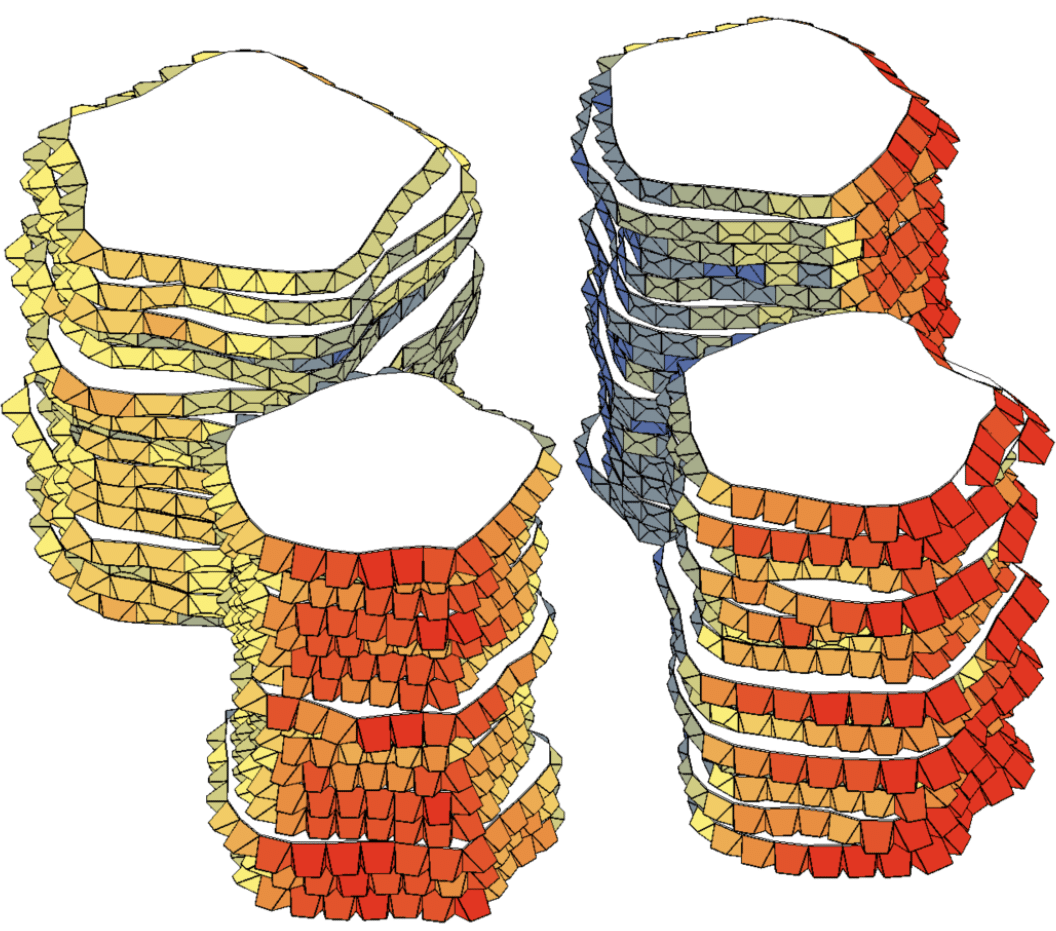
Hyperbuilding 02 Data Team: From KPI Calculation to Native BIM Documentation Introduction Hyperbuilding 02 Data Team developed an interoperability workflow that transforms analytical performance data into native BIM documentation. Instead of keeping KPI evaluation outside the architectural model, the project uses Rhino.Inside.Revit to transfer computed values into Revit, where they can be read through schedules, color-coded … Read more

Designing a Time-Responsive Tower: A Data-Driven BIM Workflow

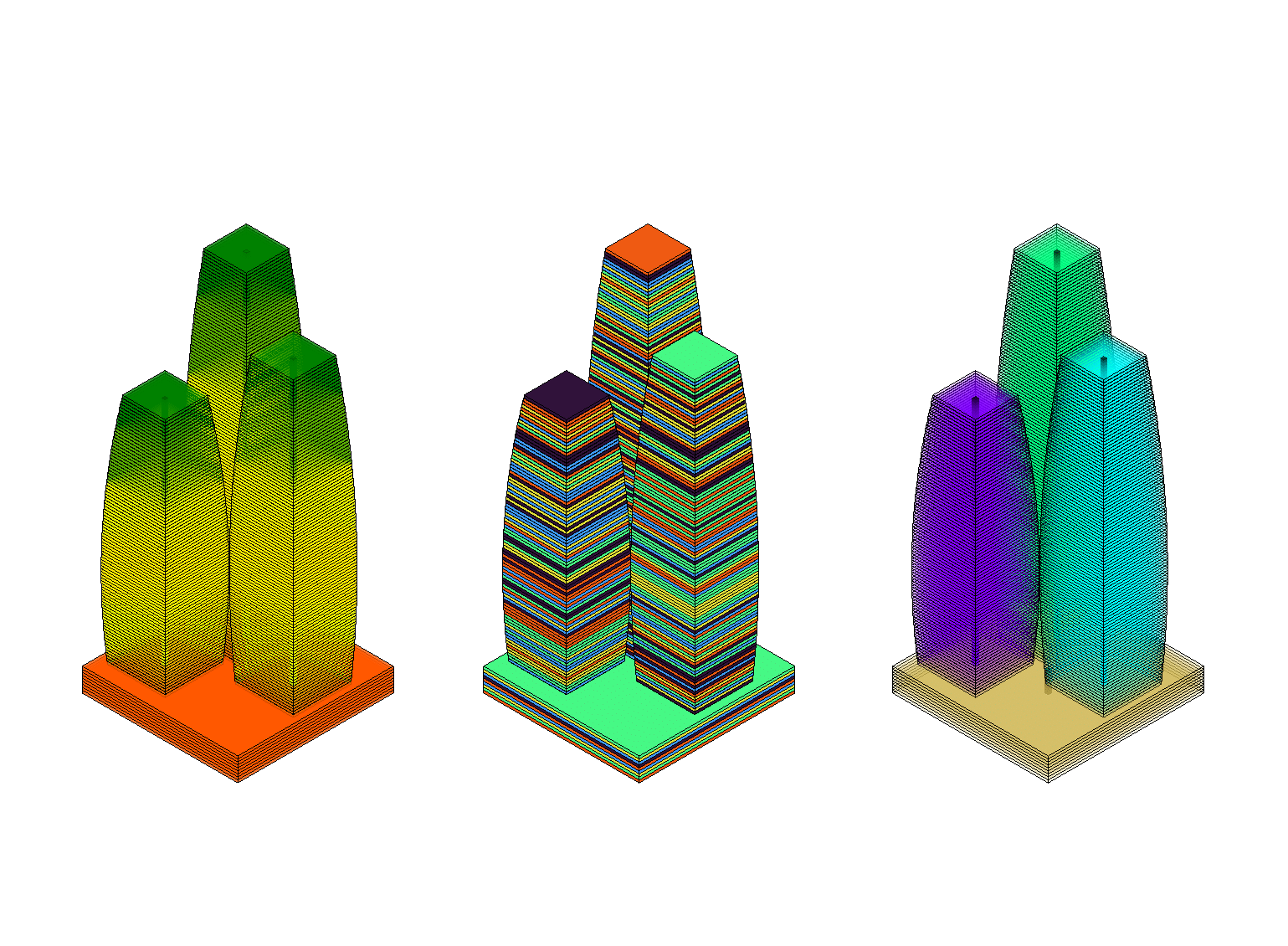
Hyperbuilding 2 functions as the transportation heart of the Vertical Machine, chanelling 20,000 passengers hourly while coordinating energy, logistics, and information flows across the entire urban system. Our team tackled the Program development for HB02, using Revit and Rhino Inside Revit to build a parametric system where occupancy data directly generates architectural form. The studio … Read more

Automating Interoperability with Rhino.Inside.Revit and ACC

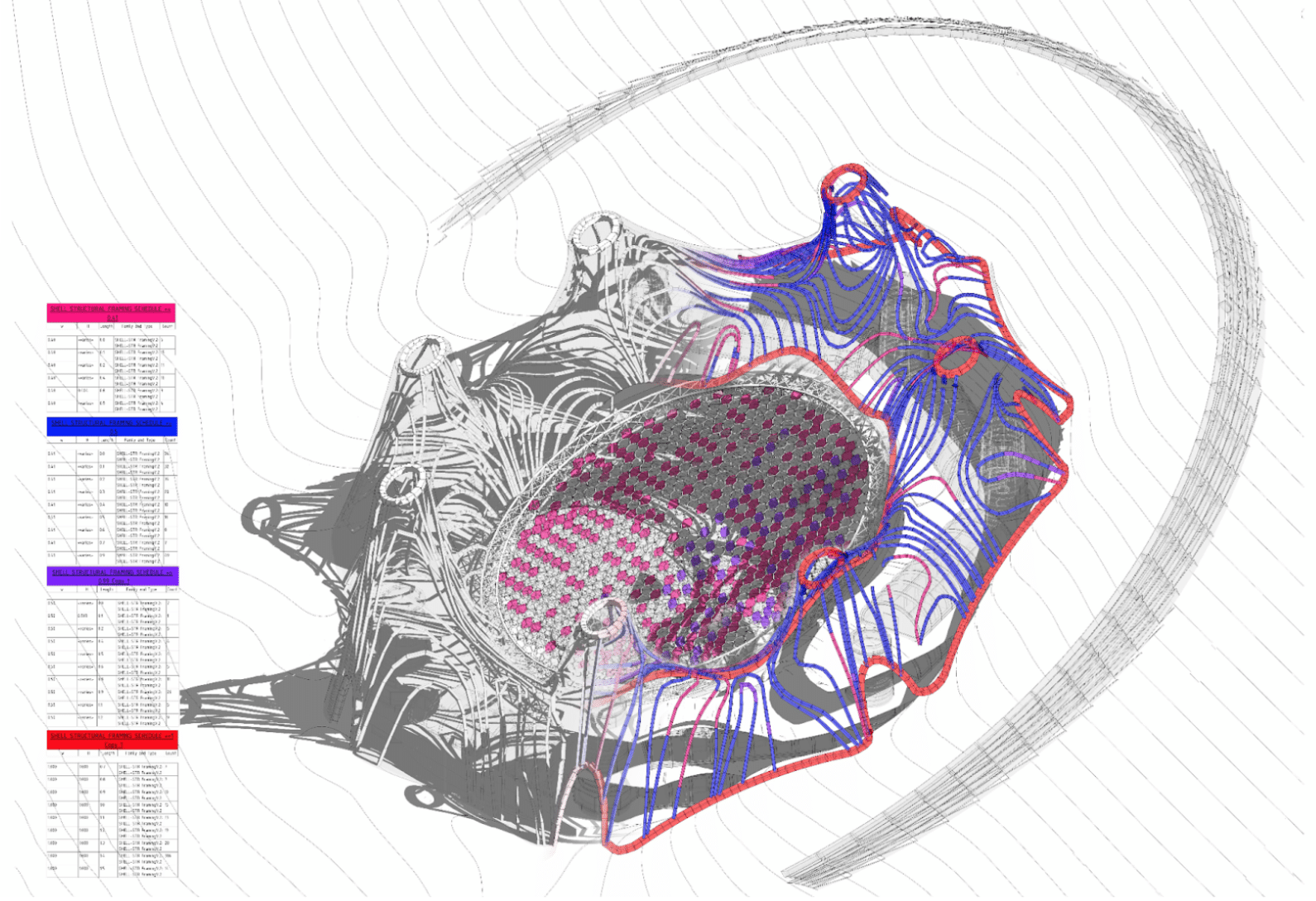
Designing dynamic, adaptive skyscrapers is no longer just a conceptual exercise; it is a computational reality. The true challenge lies not just in creating fluid, parametric geometries, but in translating those complex forms into rigorous, actionable building information models. Developed during the Master in Advanced Computation for Architecture & Design (MaCAD) Integrative Modeling Seminar at … Read more

Program Through Geometry: An Integrative Modeling Approach with Rhino.Inside Revit

INTRODUCTION As the program team our role is to define the overall program strategy, which we call The Living Cells, with the goal to create a livable neighborhood that supports daily life beyond residential use. This means integrating a range of supporting functions — public and green spaces, schools, retail, and community amenities — so … Read more

Architecture as Living Matter: Turning Data into Geometry

Introduction Hyperbuilding 03 In our project, the building is conceived not as an isolated object, but as a vertical living tissue within the broader human organism of the “Vertical Machine”. Much like a network of functional cells, it sustains life, maintains environmental balance, and coordinates with the system’s “lungs” and “heart.” This biological metaphor guided … Read more

Turning Data Into Geometry: Rhino.Inside Revit workflows for modelling & documenting

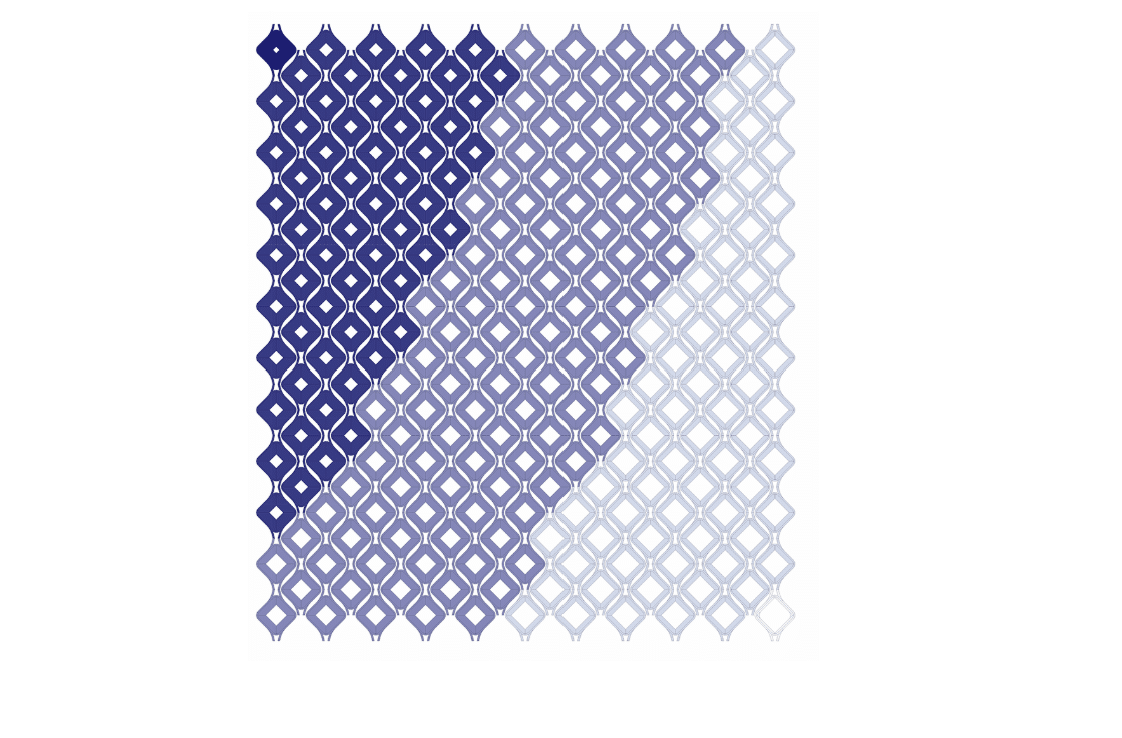
In the MaCAD Studio Seminar, our group worked as the Data Team for Hyperbuilding 01, one of three interconnected megastructures designed for Santiago de Chile, which together work as a single, cohesive vertical machine. Hyperbuilding 01 operates as both lung and skin for the urban environment. In response to Santiago’s severe air pollution, the building … Read more