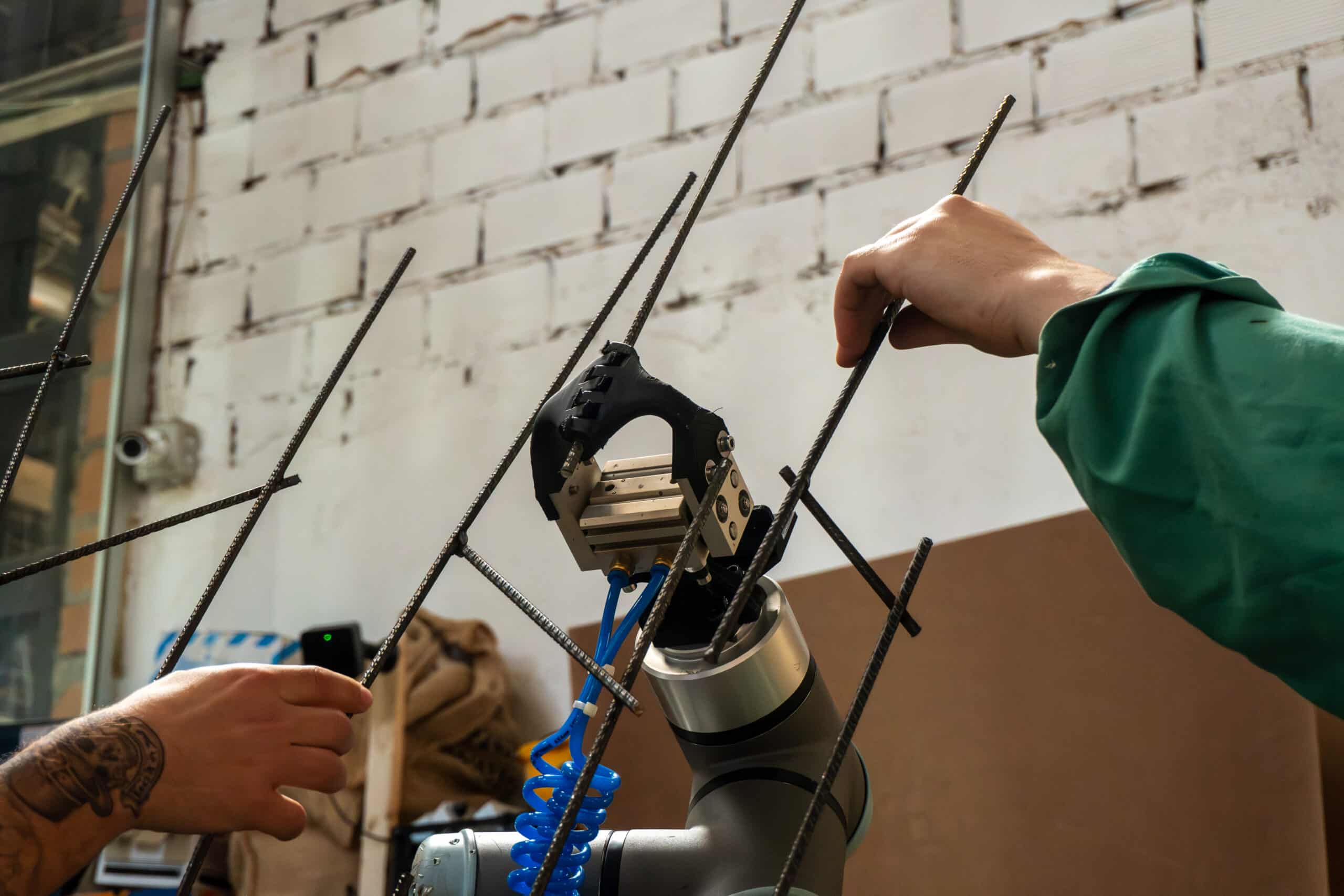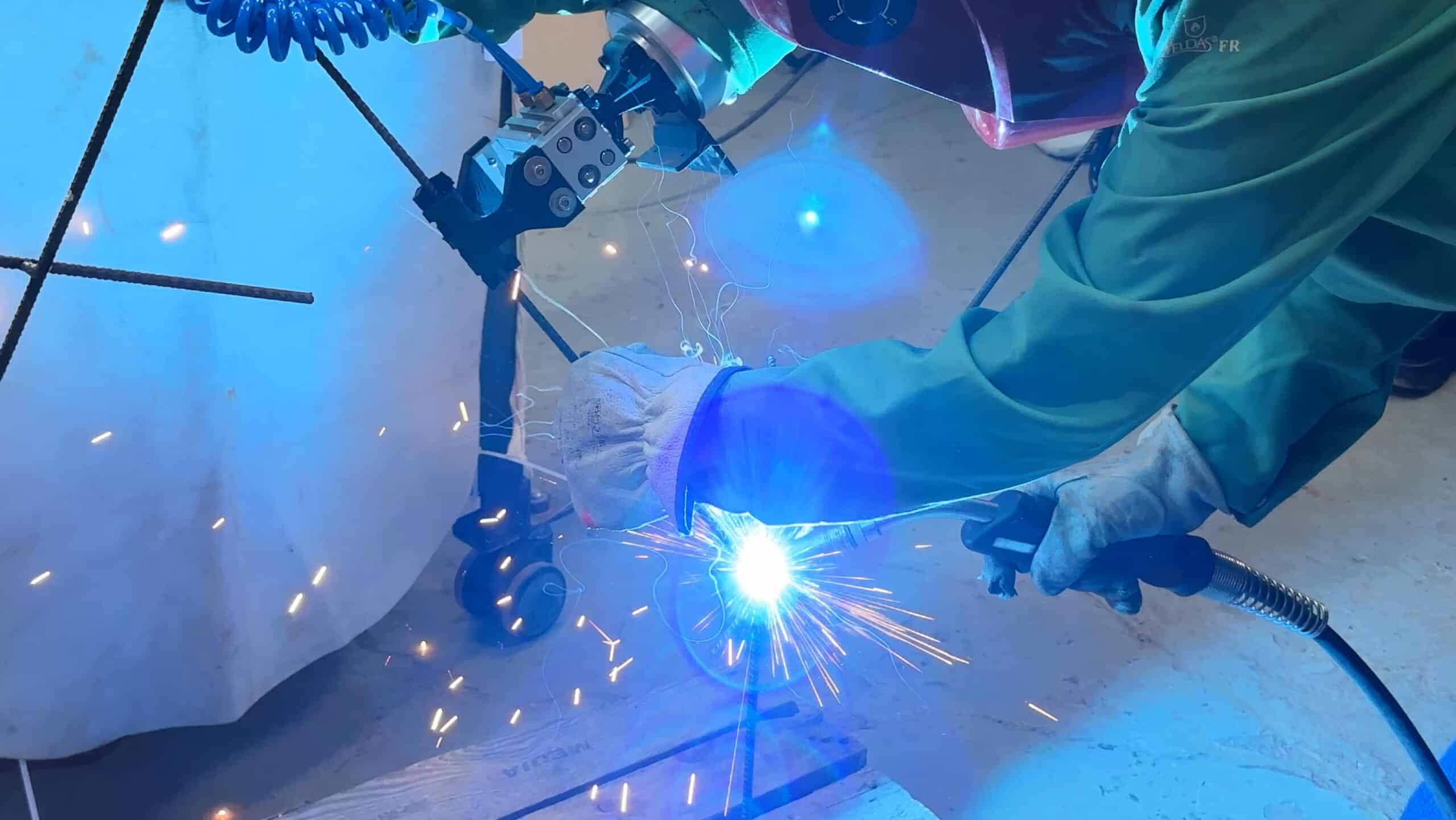
This workshop explores the boundaries of Human-in-the-Loop (HITL) manufacturing, moving beyond automated repetition toward a collaborative dance between man and machine. Participants will design and fabricate a space-frame structure using 6mm steel bars, where the robot acts as a dynamic jig—holding elements in 3D space—while the human performs the expert task of welding.
By integrating sensory interfaces like MediaPipe (computer vision) and HTC Vive (spatial tracking), we will develop a communication protocol that allows the robot to “understand” human intent and vice versa. The core of the experience lies in the development of a State Machine that manages Recursive Aggregation. This setup creates a real-time conversation where the robot positions the bars and the human confirms the geometry through spot welding.
Under the guidance of guest artist Maria Mallo, the human body and movement become essential sensors within the fabrication loop. Because manual welding introduces “unknown elements” and physical deviations, students will learn to reconstruct a Digital Twin in real-time. Through screens, sounds, and gestures, the system remains adaptive: the human and the robot exchange orders, ensuring that the final structure is a direct result of their shared decision-making.
Key Discussion Point: Adaptability
If we remove the human, the result changes because the robot lacks the “judgment” to handle the physical feedback of the steel. We ask: How do we give orders to the robot, and how does the robot give orders to the human? The interface is the language that makes this “Symbiosis” possible.
Learning Objectives
- Craftsmanship: Mastering manual spot-welding techniques as a programmed step within a robotic sequence.
- Human-in-the-Loop (HITL) Logic: Understanding how the presence (or absence) of human decision-making fundamentally alters the formal outcome.
- State Machine Architecture: Designing complex “If/Then” logic gates for seamless human-robot handshakes.
- Digital Twin Reconstruction: Learning to update digital models in real-time to account for physical tolerances and welding deviations.
- Adaptive Interaction: Using Computer Vision (MediaPipe) and VR (HTC Vive) to issue commands between the digital and physical realms.