A Computational Framework for Inferring Architectural Spatial Organization from Visual Input.

Abstract:
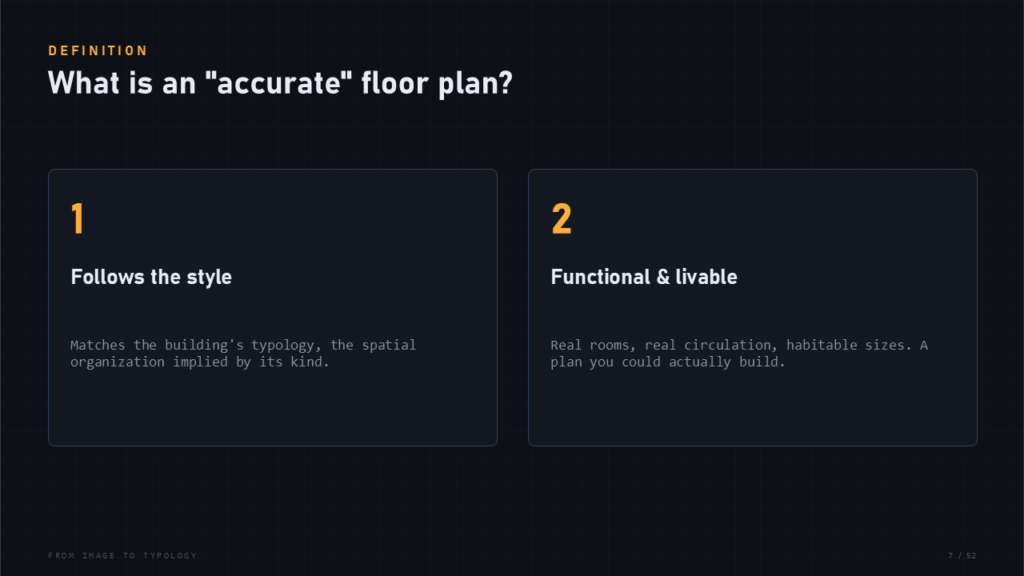
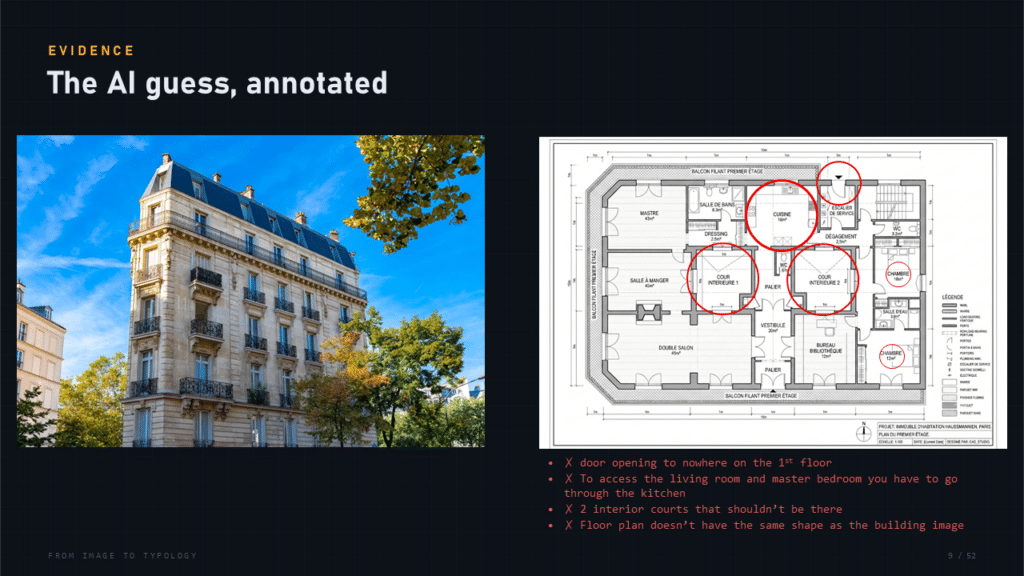
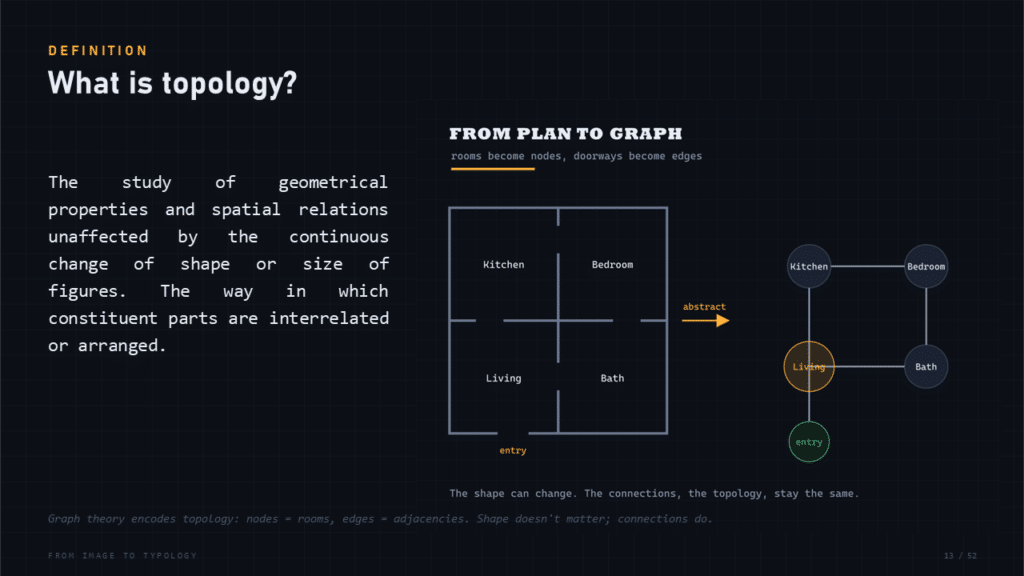
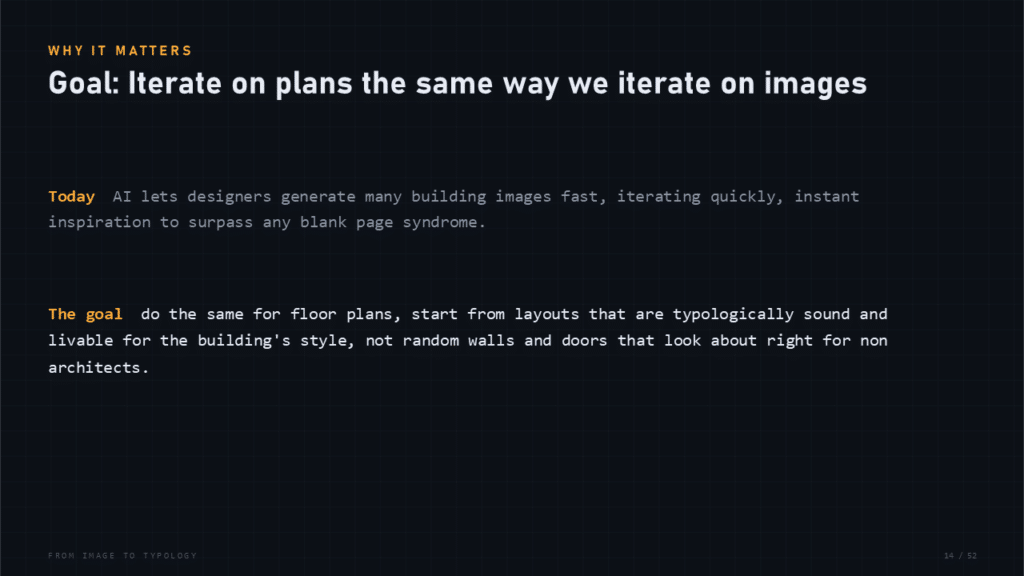
This thesis investigates whether Artificial Intelligence can infer a building’s internal spatial organization from its exterior image, using architectural typology as the mediating framework. Typology is treated here not as a stylistic category but as a relational, topological structure: a set of rules governing room adjacency, circulation hierarchy, and programmatic distribution that persists across geometric variation.
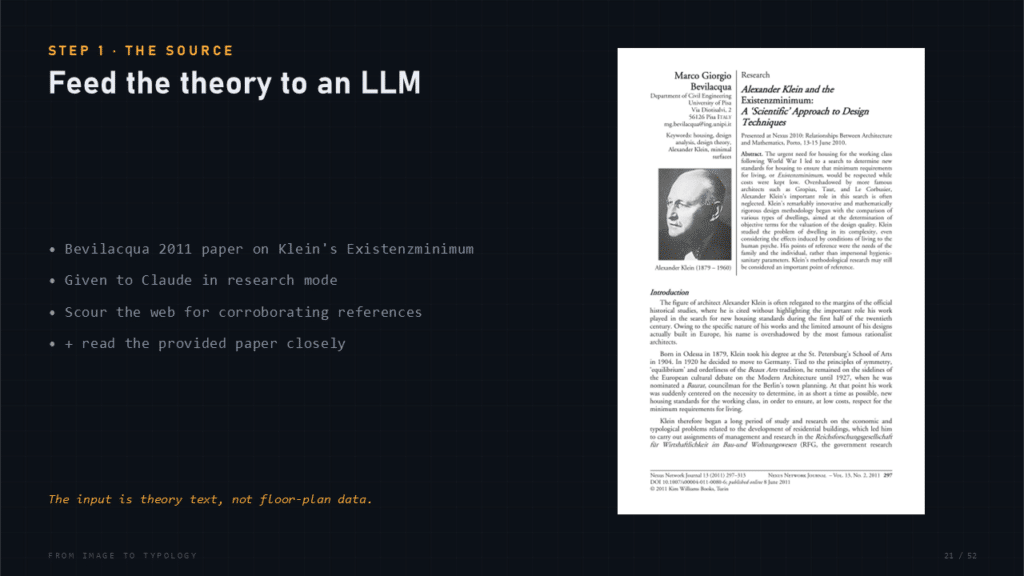
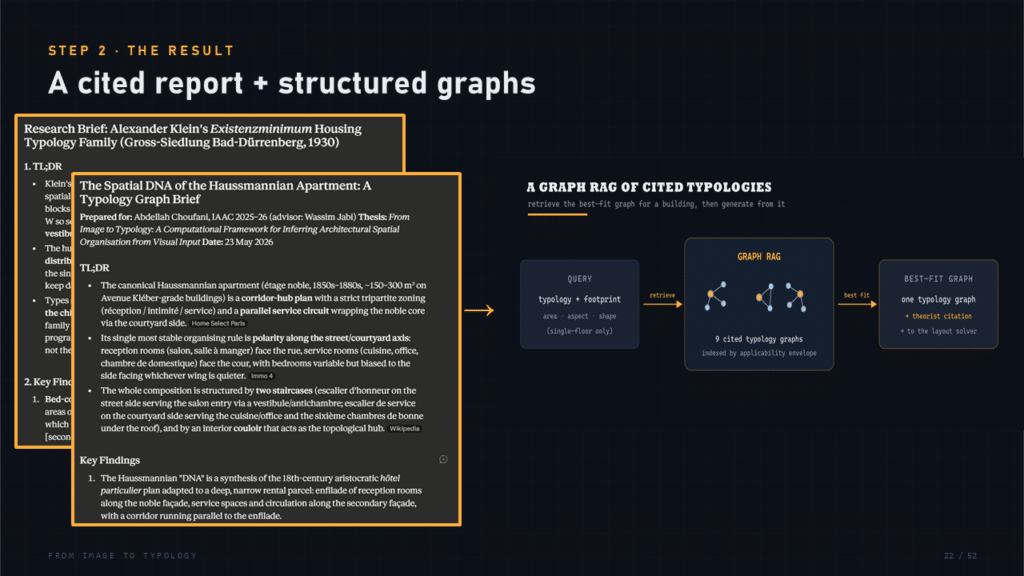
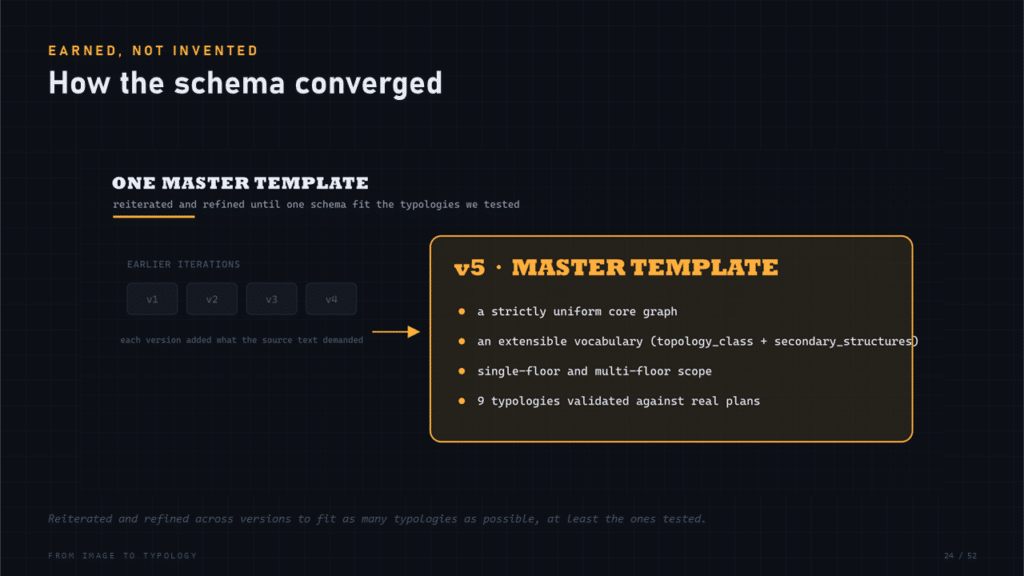
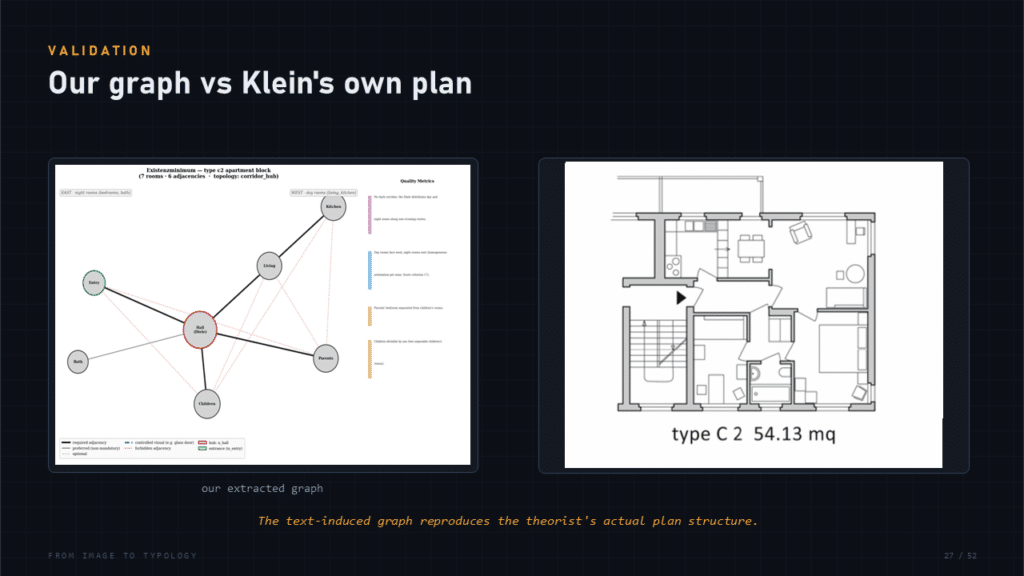
The central contribution is a method for inducing typological graphs directly from architectural theory texts, rather than from images or hand-authored archetypes. Using LLM-assisted extraction, the spatial logic a theorist describes becomes a cited, provenance-bearing graph. This sidesteps the absence of datasets that pair building exteriors with floor plans for historical typologies, and it removes the circularity of validating against ground truth one has authored oneself.
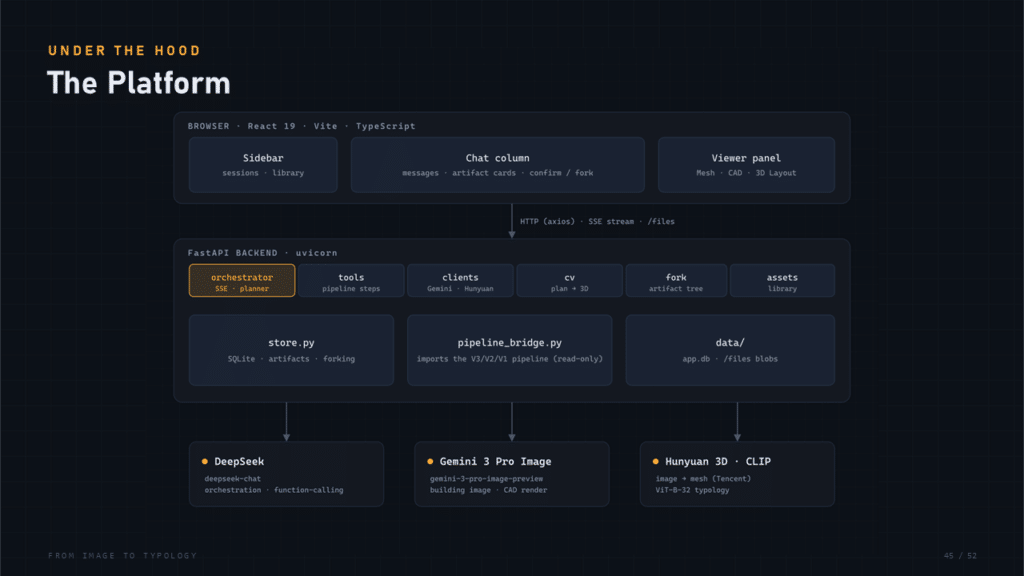
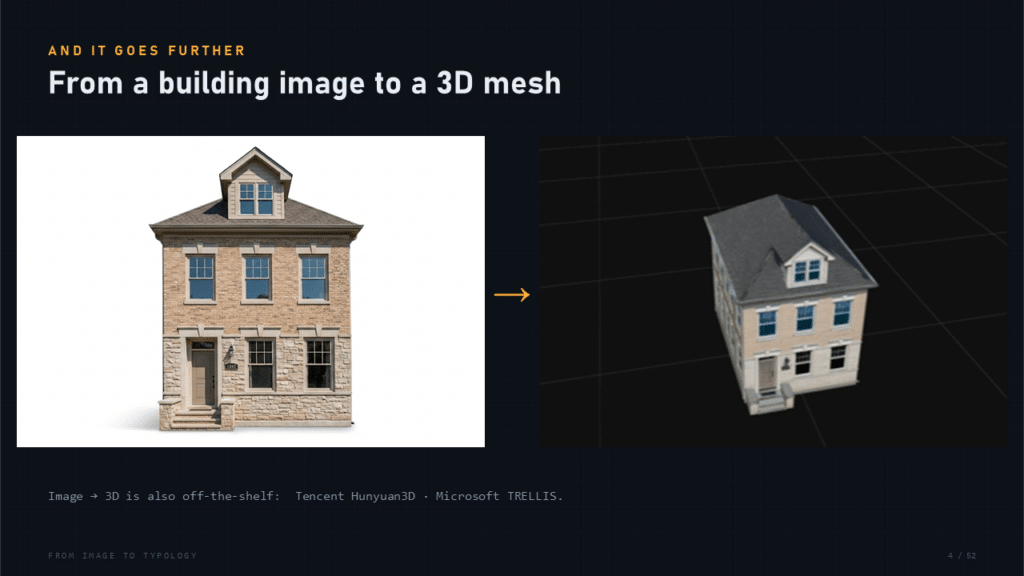
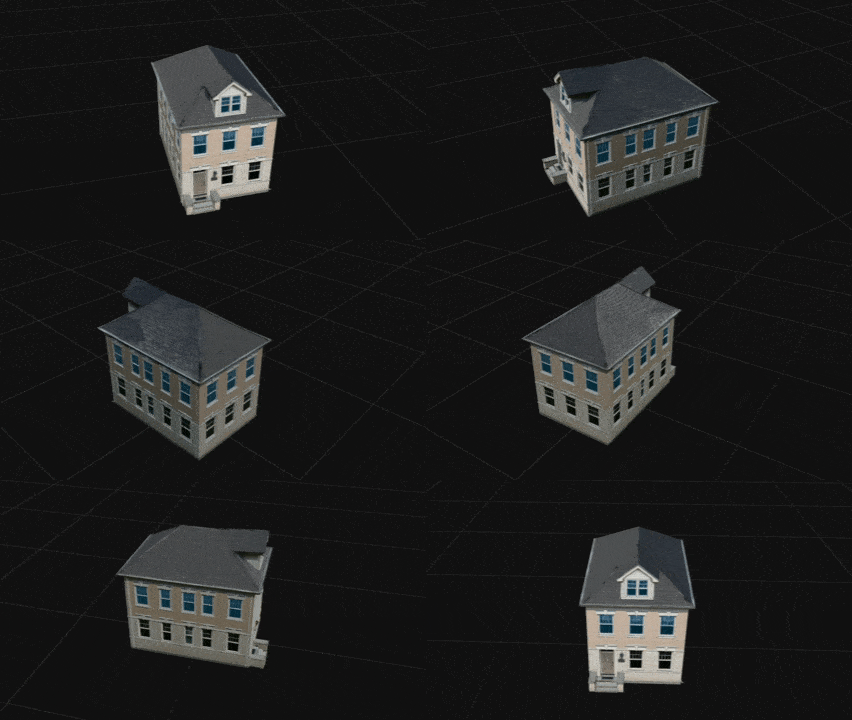
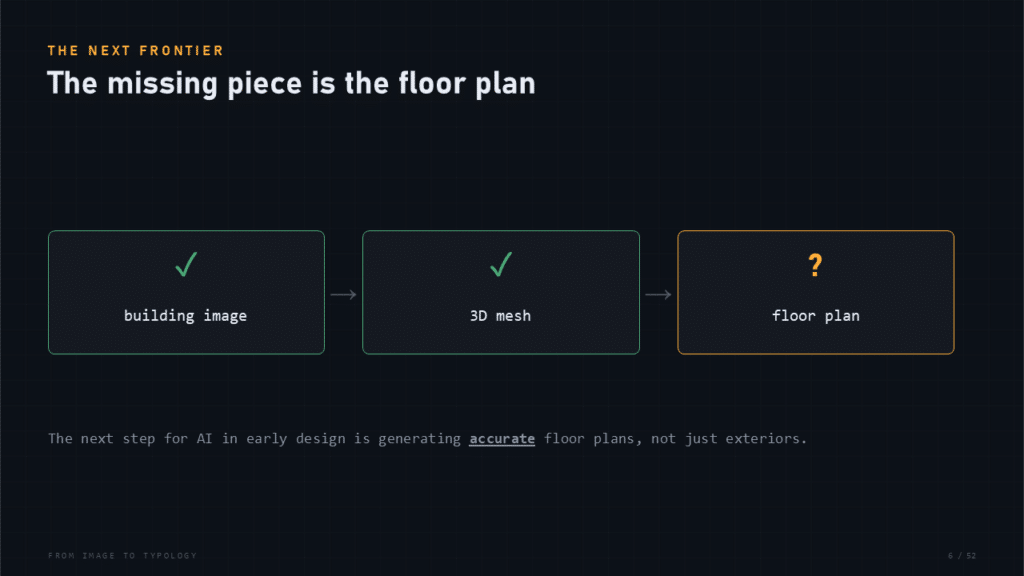
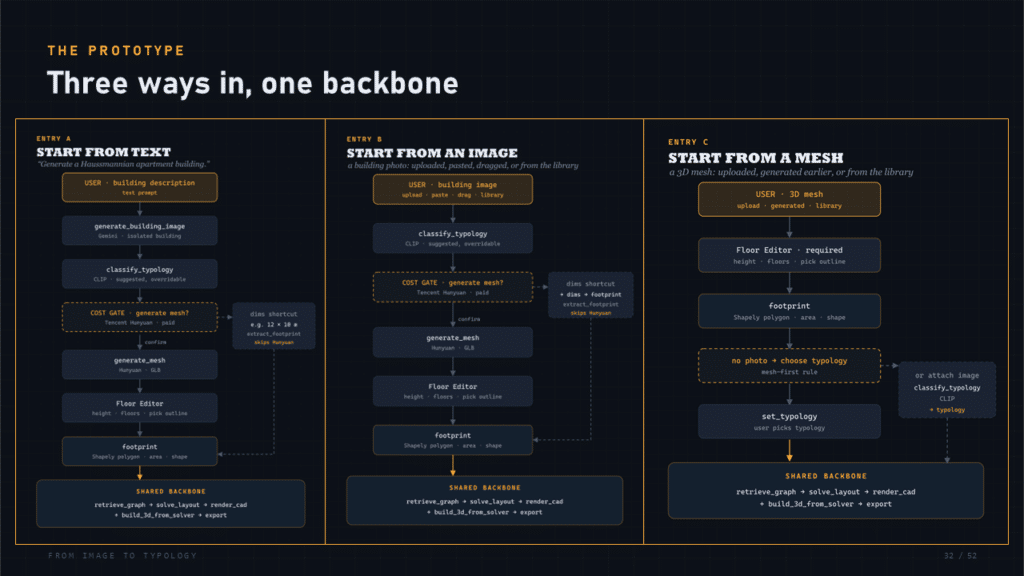
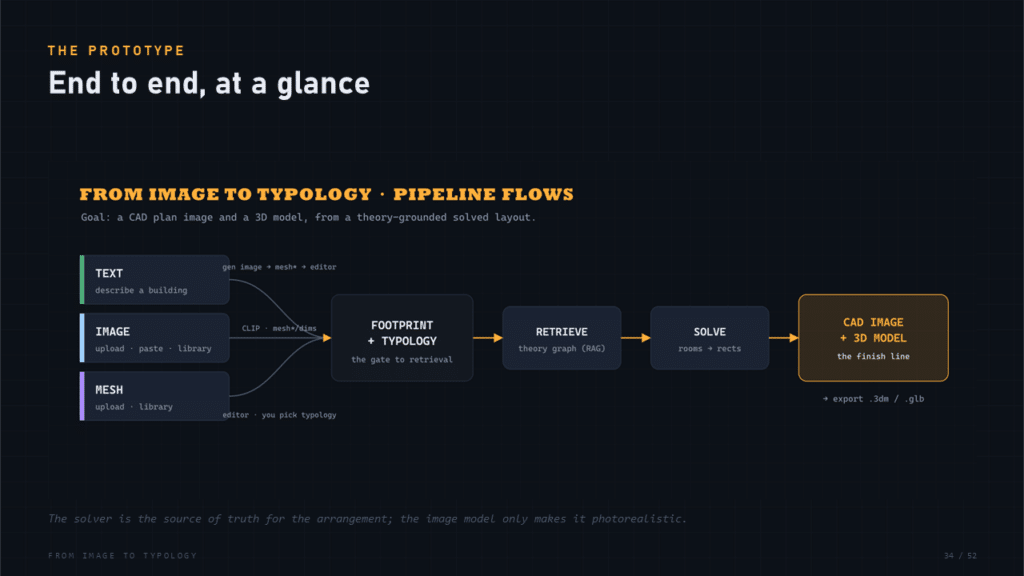
The pipeline classifies a single photograph to a typology (CLIP zero-shot, now a lightweight selector rather than the object of study), extracts a footprint from a 3D mesh, and retrieves the matching graph from this theory-derived knowledge base. A generative-AI step then populates the footprint outline with a habitable room arrangement and realistic proportions, conditioned on both the graph and the footprint shape, before the result is lifted to a 3D model.
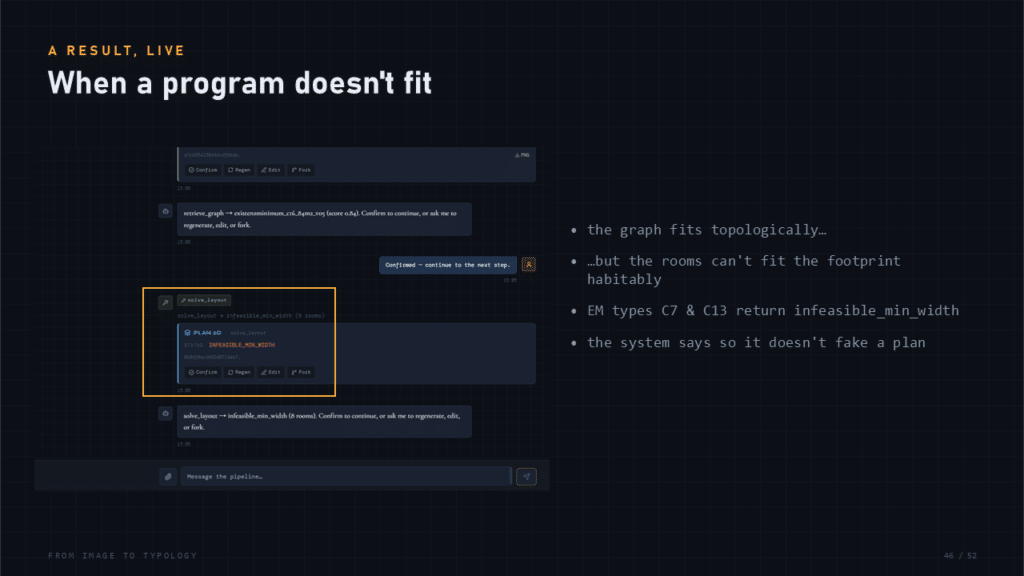
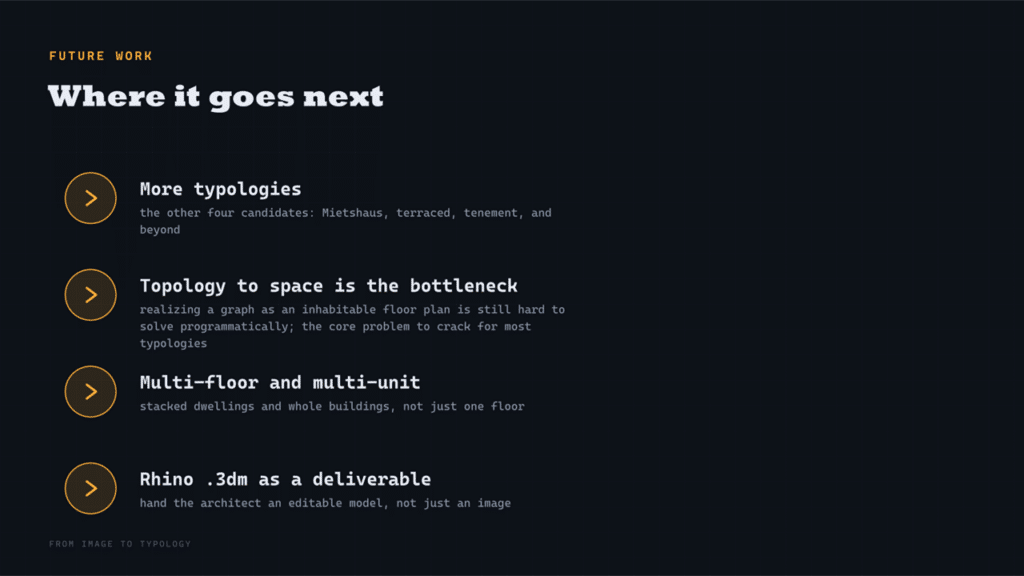
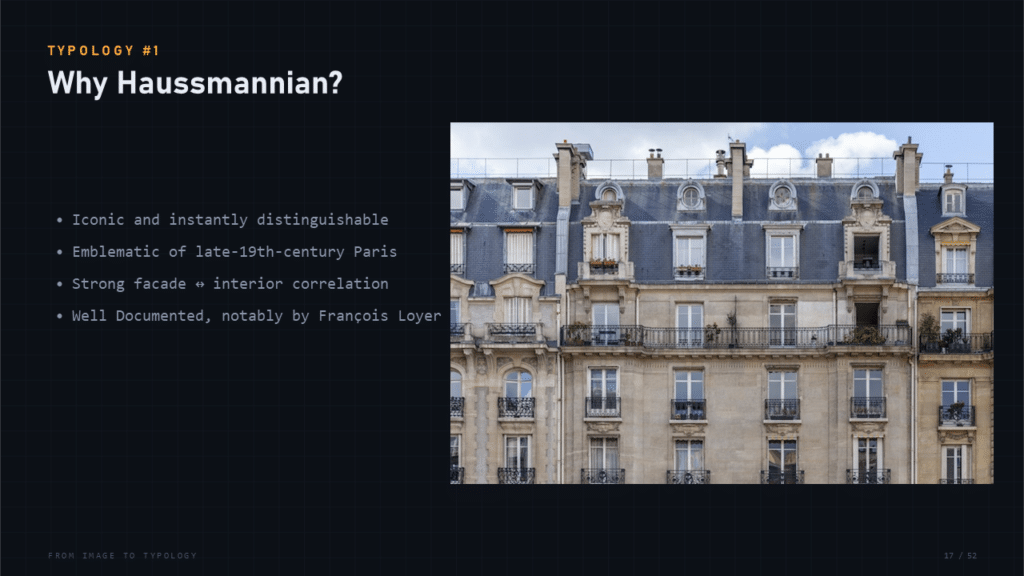
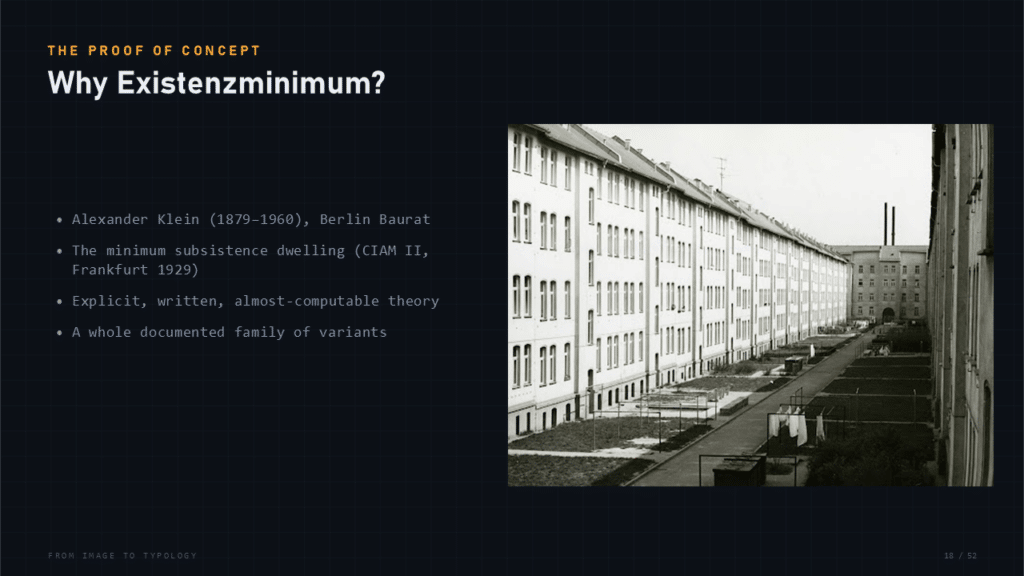
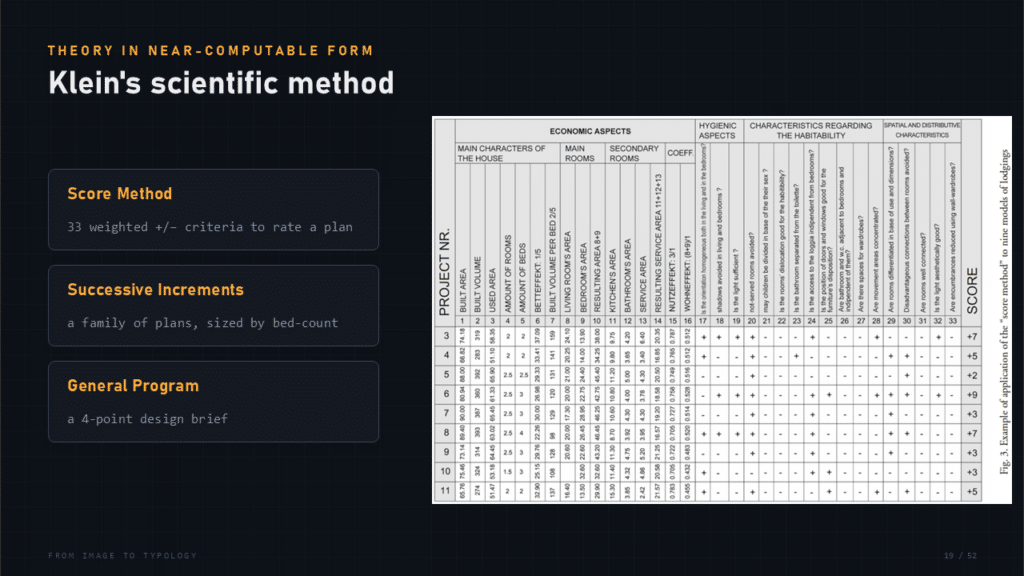
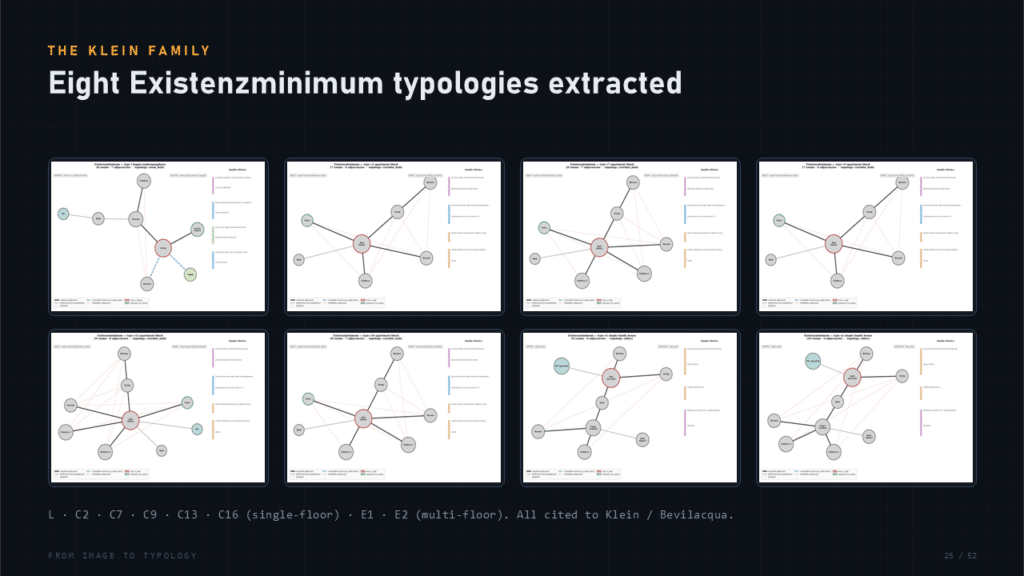
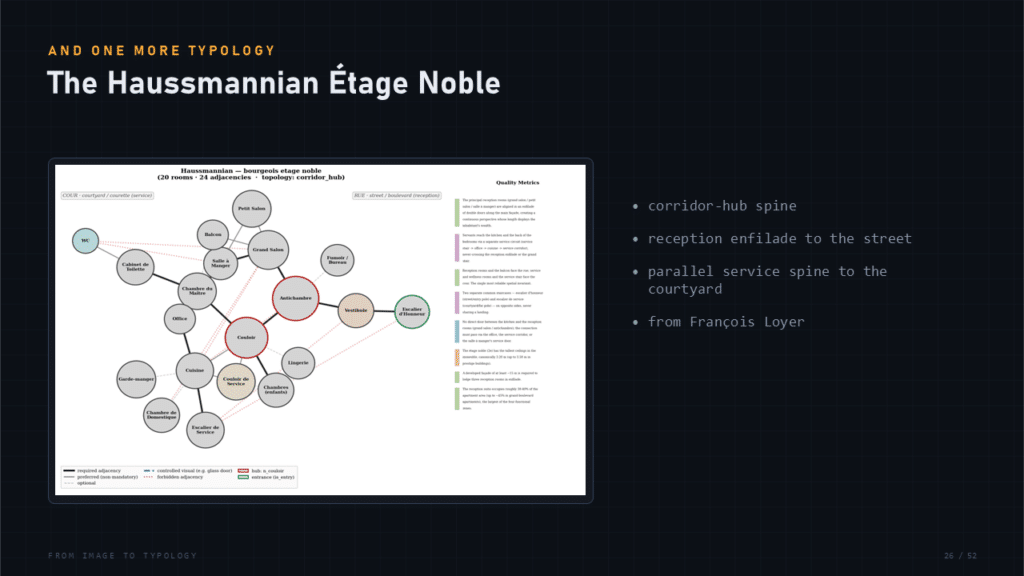
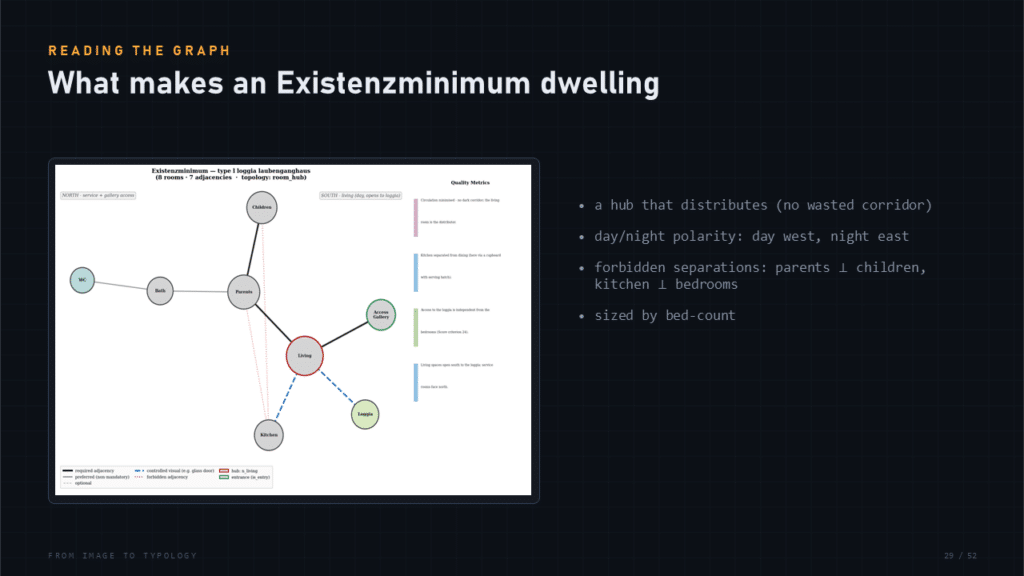
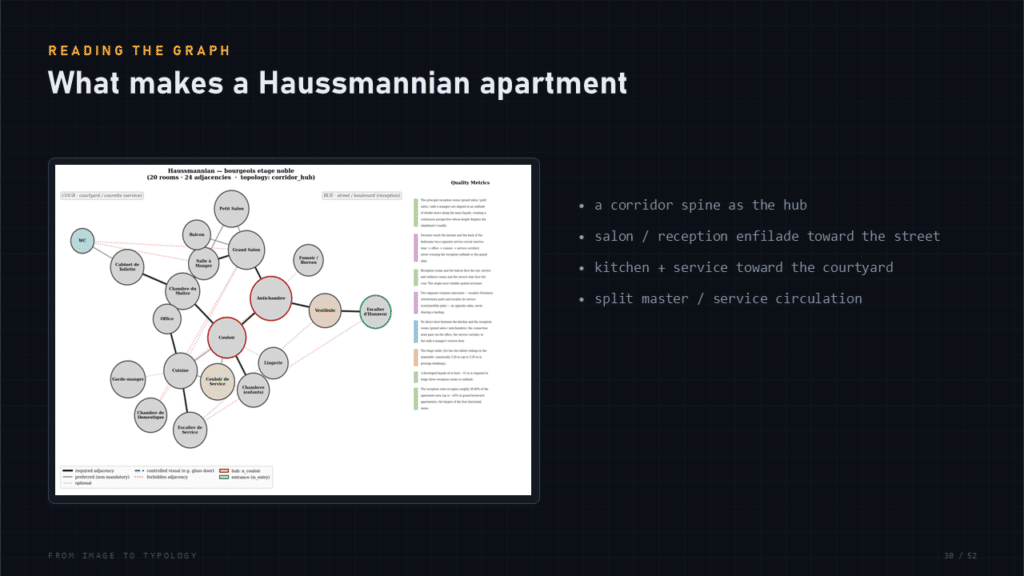
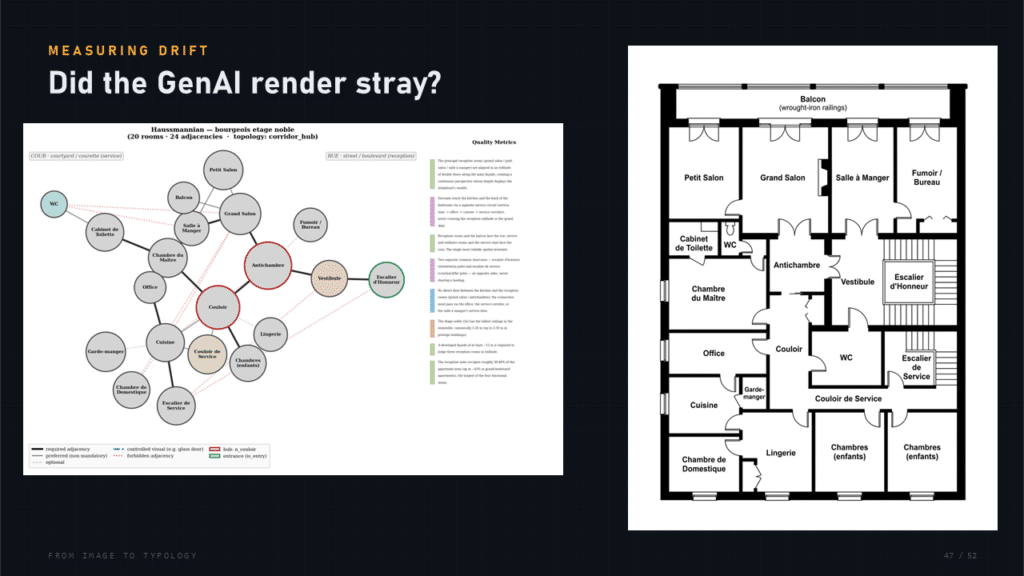
Two case studies test the approach. The first is the nineteenth-century Haussmannian Parisian apartment, a linear corridor-hub topology. The second is Alexander Klein’s Existenzminimum, chosen because Klein analysed dwelling types so systematically and quantitatively that his rules translate cleanly into graph form. One finding stands out: a theory-derived graph underdetermines the plan. Buildable layouts need a second, universal layer of habitability constraints that no theory text encodes, and that layer can show a given program simply does not fit a given footprint.
fzref




fzref


fzref


fzref




fzref

fzref
Step 1A: Start from an uploaded image

fzref
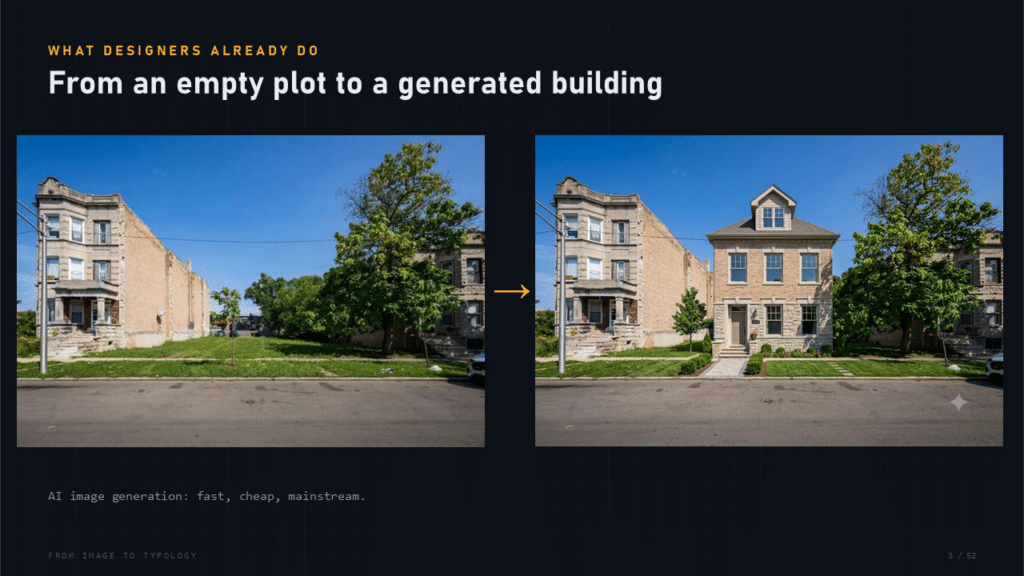
Step 1B: Generate a building image from a prompt

fzref
Step 2: Adding a mesh

fzref
Step 3: Classify the typology (CLIP)

fzref
Step 4: Generating the Mesh and Editing Floors
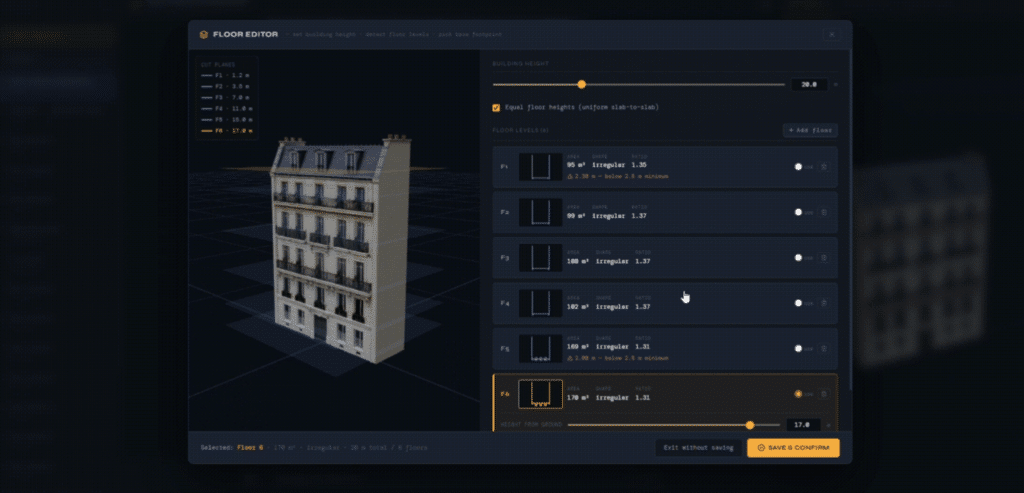
fzref
Step 5: Retrieve the typology graph from the RAG & Solve Layout
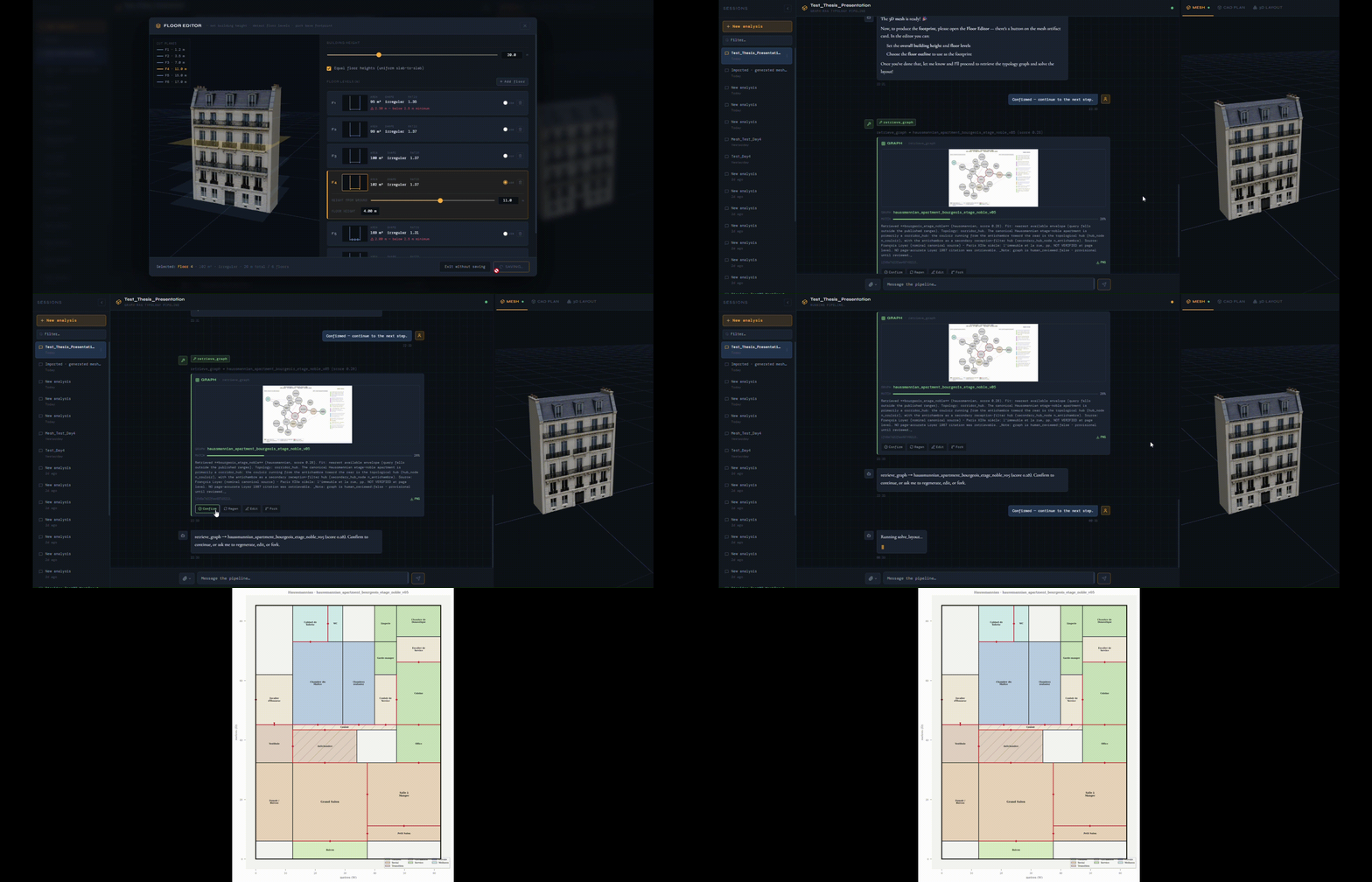
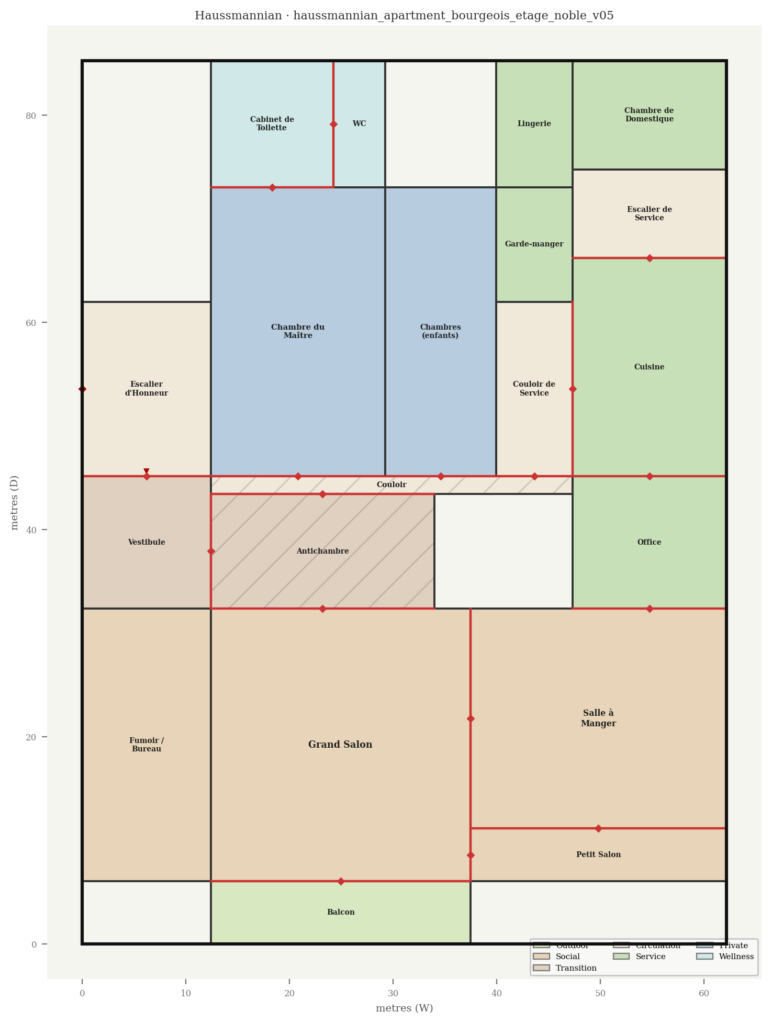
fzref
Solved layout based on the Floor outline and the Adjacency Graph Input
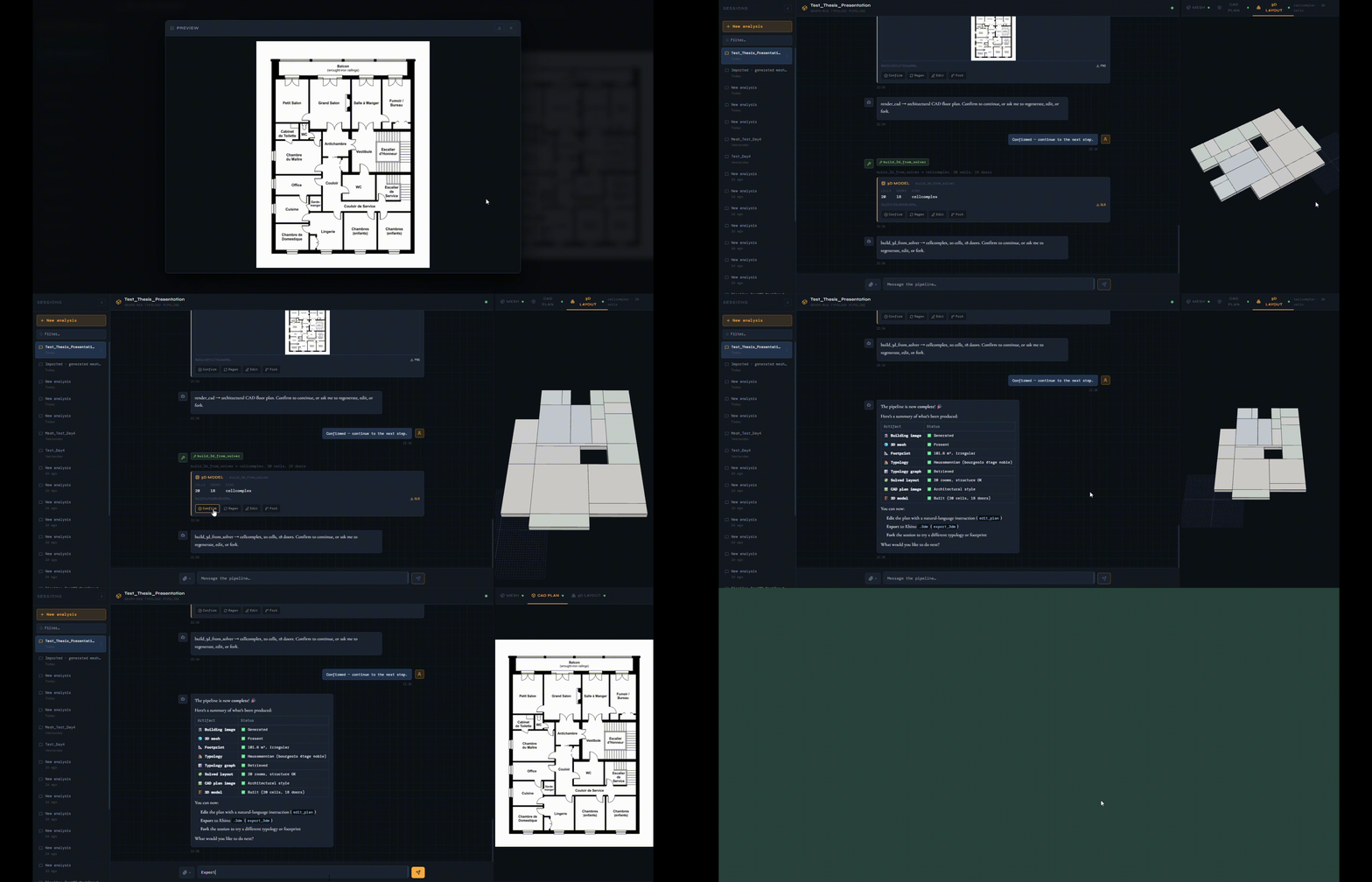
Step 6: Render the realistic CAD plan (Gemini)
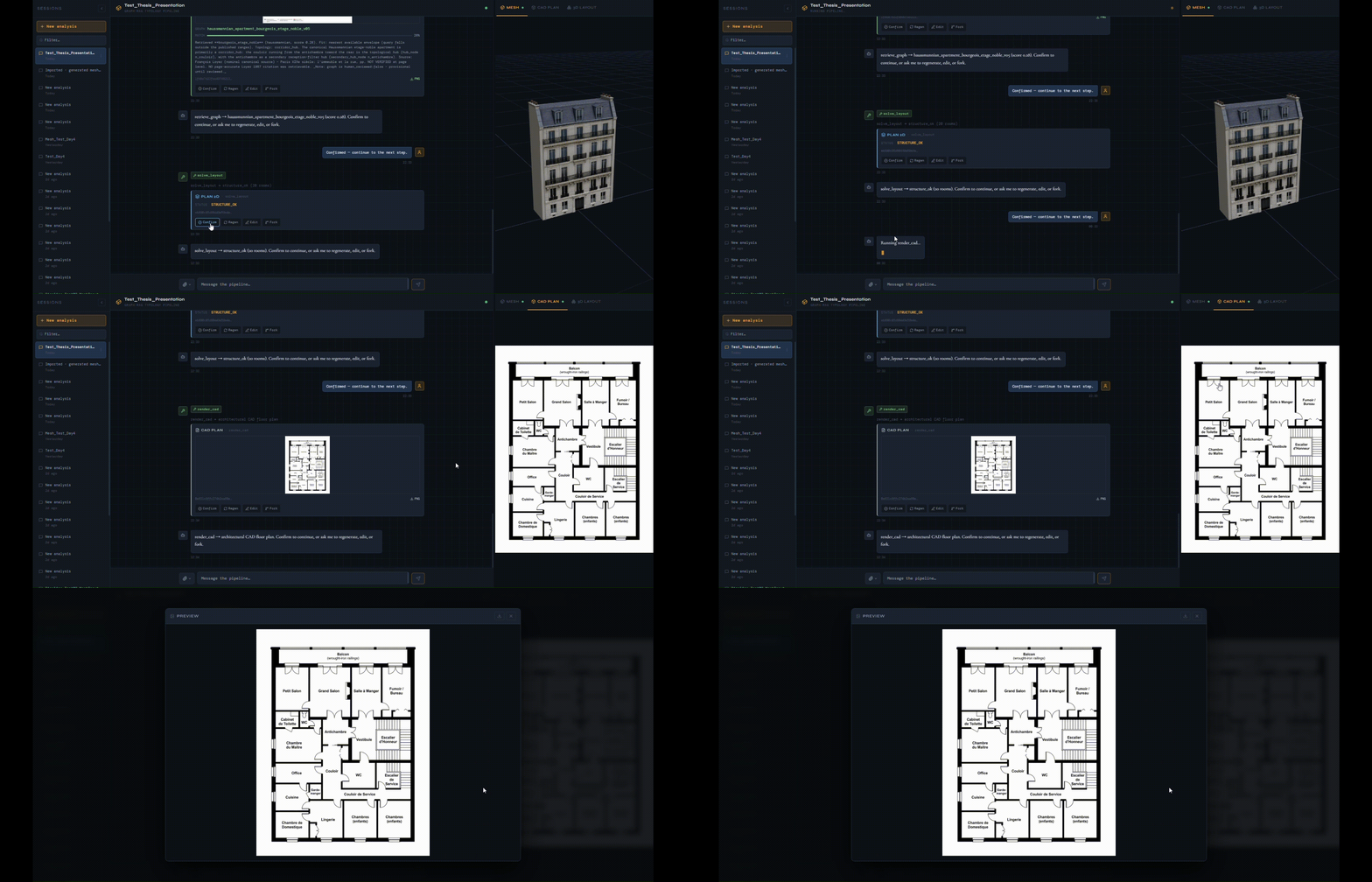
fzref
Step 7: Build the 3D model & export
fzref